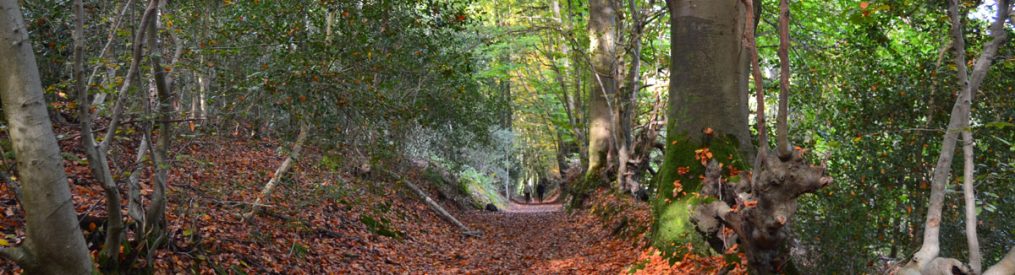
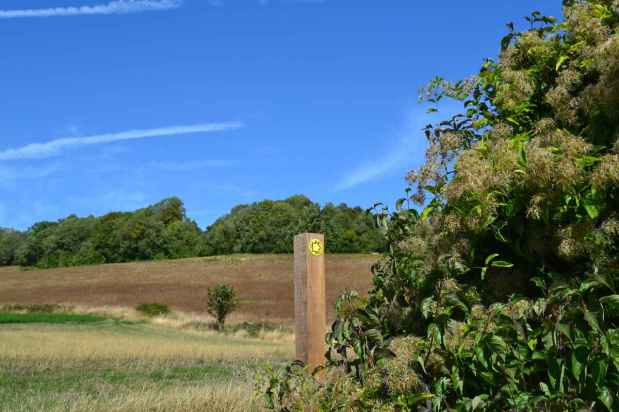
The sky comes into its own in September as the heat hazes of August dissolve into sharper outlines and more vivid colours. Often high altitude clouds reflect the changes in air masses and the reinvigorated jetstream. On the other hand I may not know what I’m talking about. We haven’t had thunderstorms this summer, well not since mid-June, so there’s been little drama in the sky until now. The past weekend saw a stunning dusk on Friday with colours from mauve to orange and odd cloud formations. On Saturday the sky paid tribute to the Cote d’Azur and on Sunday beautiful cirrus and entered the picture, at times resembling a charcoal sketch, at others a silk screen print. In meteorological terms I don’t know what’s going on but it used to mean rain in a few hours. It doesn’t any more, how many false dawns have we seen on that front this summer.
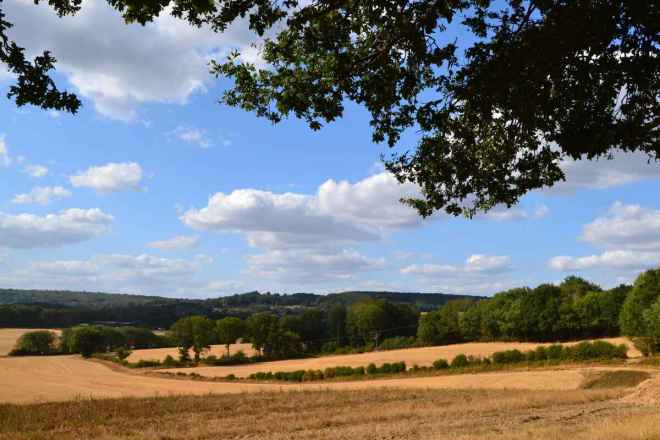
Looking across parched fields to the Greensand Ridge from the early stages of the Bough Beech walk 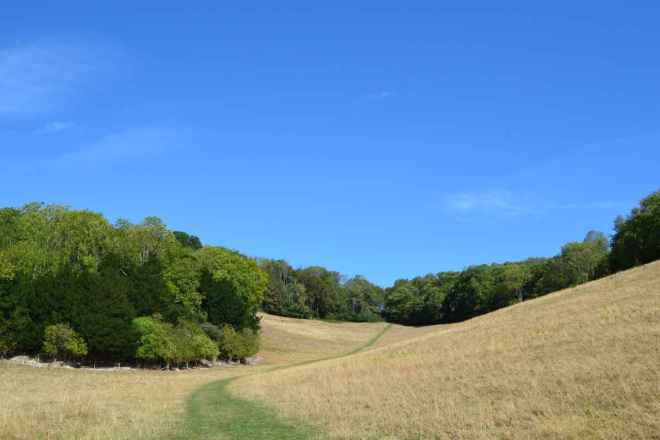
Looking up at the cleft in the scarp above Chevening 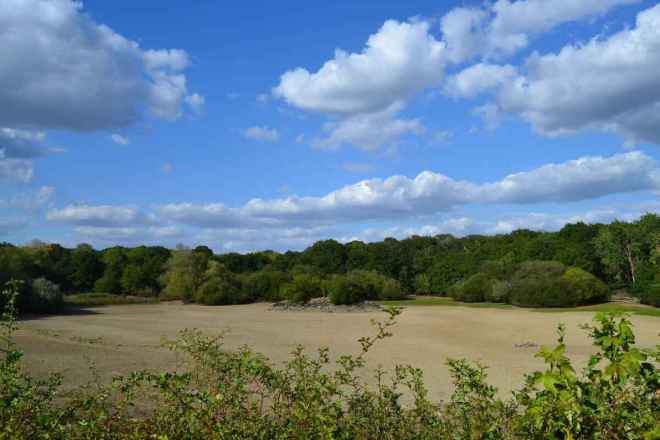
Dried lake at Bough Beech 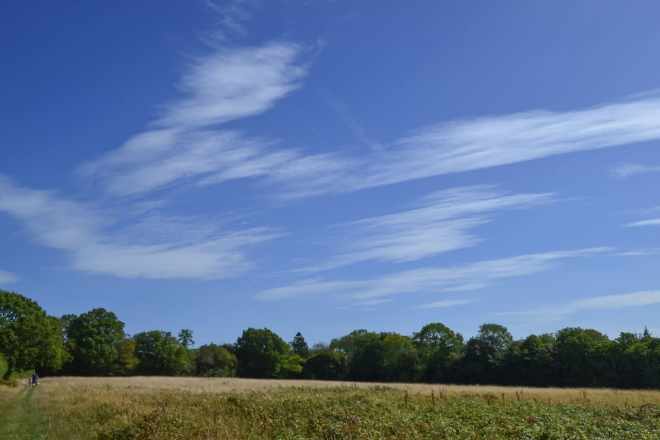
Wonderful high level clouds seen from the Knockholt walk 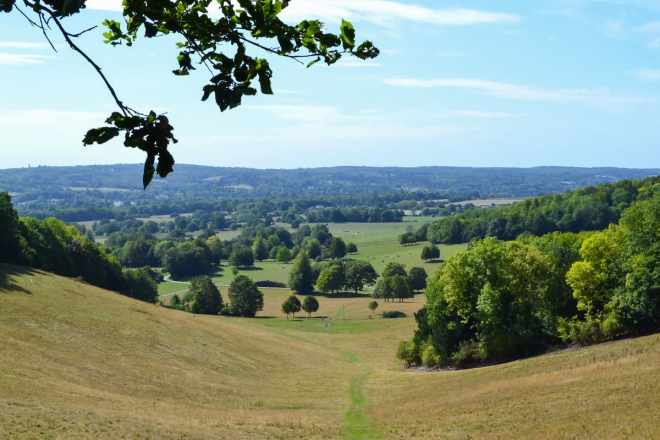
At the top of the Knockholt/Chevening ‘cleft’ 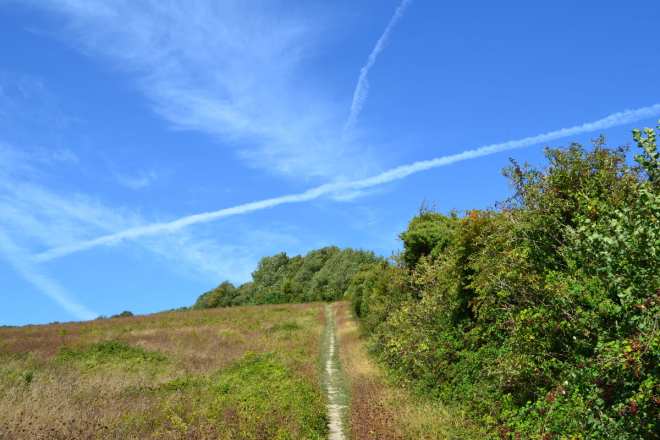
Heading up the escarpment on the Knockholt/Chevening walk 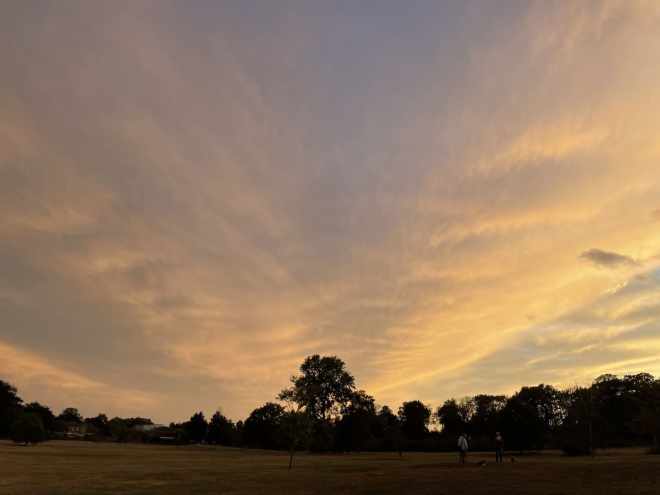
Beckenham Place Park dusk 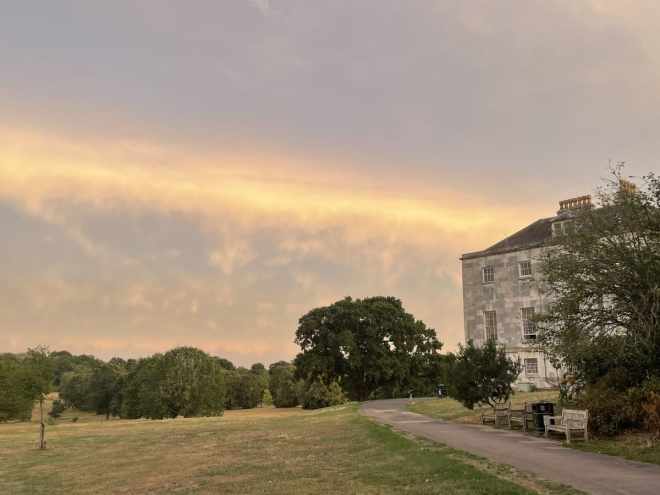
Beckenham Place Park dusk 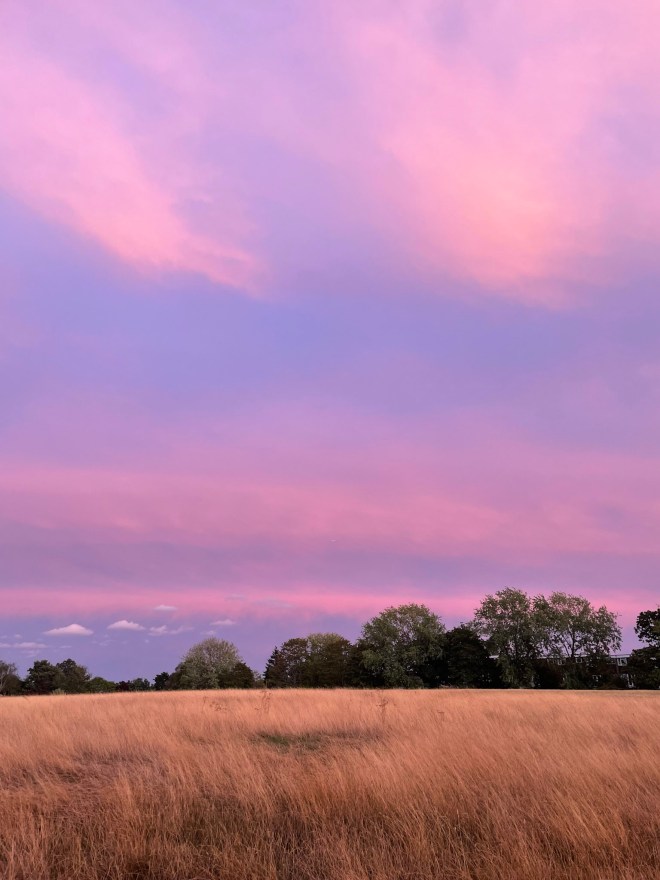
Beckenham Place Park, Crab Hill, dusk
Still, on my walks at Ide Hill, Knockholt/Chevening and Bough Beech over the past couple of weeks, I’ve notice that even the pathetic spits and spots of rain we’ve had lately have regreened the landscape to an extent, although I’m sure the North Downs and Greensand Ridge probably got a bit more rain that London being higher up. At Bough Beech the northern lake has completely dried up, as has the large pond by the bird hide in the Kent Wildlife Trust reserve. No kingfishers for now, and the dried mud of the lake leant an east African vibe to proceedings, particularly when a herd of deer trooped forlornly across it, watched by a motley crew of equally unimpressed egrets. The main reservoir still had a lot of water but was only at half capacity. Happily, at Ide Hill the many greensand springs were still seeping and burbling – keeping Emmetts Garden verdant – while an array of buzzards and red kites soared and glided around hoping for tired rabbit or vole.
There are no streams on the Chevening/Knockholt route, but then this is a chalk downs classic – water tends to disappear within the rock, although where the chalk meets the clay of the Holmesdale Vale springs do emerge, heading into the Darent river. Some of theses little streams can be seen at the Westerham Brewery. Another great feature of this walk is the mini Devil’s Dyke feature – a fairly dramatic cleft in the face of the escarpment.

