A Christmas trudge – then some fudge

A Christmas trudge – then some fudge

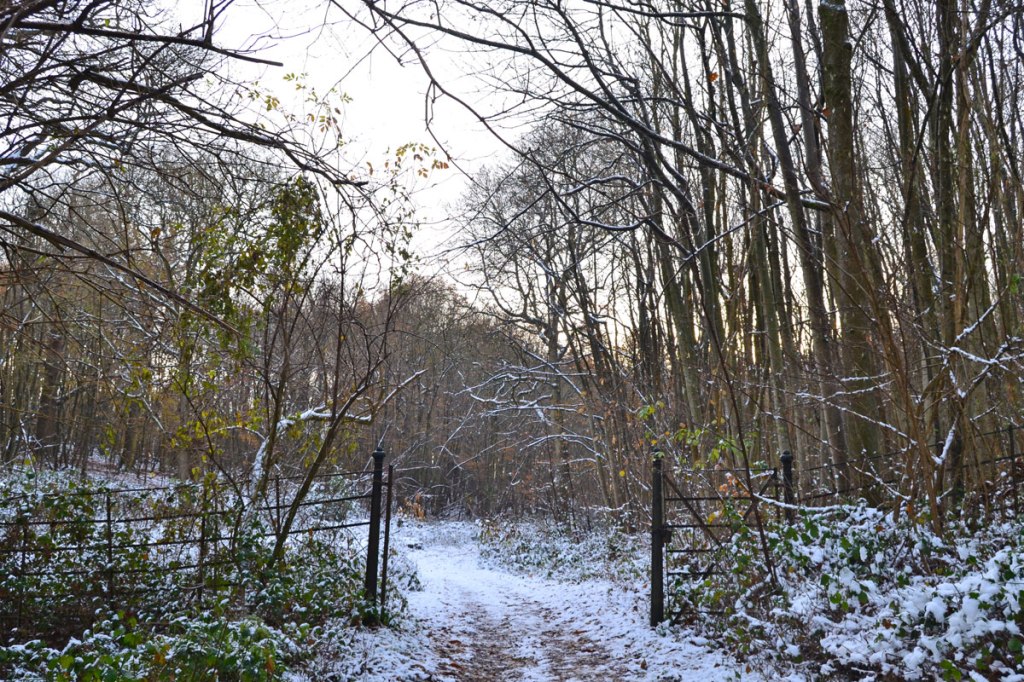
We chose Lullingstone for our Christmas morning walk. Well, I didn’t actually. It was the family choice, and a surprise one because I was, for once in my life, all for staying in and wrongly assumed my partner would be. I’m glad we did though: staying in all day and not walking anywhere is hardly ever the right choice, even with a turkey to roast and fudge to finish.

There’s no denying that in the mild, grey, mizzly, boring weather the Darent Valley landscape seemed to have lost a bit of its lustre. It felt as if we’d taken it by surprise – it’s usually ready for us and induces an inward gasp of delight as we get our first view of it. On Christmas Day it looked a bit bleak, a bit ‘meh’. It seemed to be saying, “oh it’s just them again – I can’t be bothered frankly.”

Fieldfare profusion
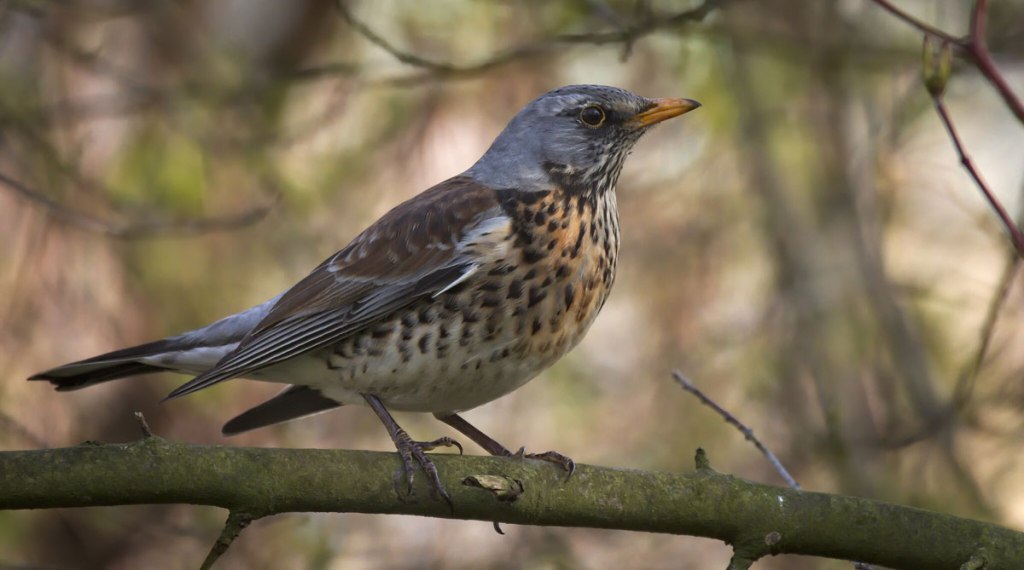
But on closer examination there was a lot to enjoy: huge groups of fieldfare (a winter thrush visitor from north-east Europe); a few chaffinch (relatively scarce nowadays in these parts) in brilliant winter plumage; loads of berries – haws, rosehips, elderberry in the main – and long-tailed tits flitting through open woodland. The profusion of berries was the attraction for the fieldfares. My regular Lullingstone kestrel did not appear, nor did the almost tame goldcrest I’ve encountered previously in Upper Beechen Wood. (Fieldfare photo: hedera.baltica/Wikimedia Commons)

Oh, that tree!

I’m often astonished at myself for not noticing things – I’ve been known to sit on sofas at home without realising they are brand new, turn on TVs that someone has just delivered and installed, and fail to remark on a room‘s entire renovation. I exaggerate, but it amazes me that I’ve walked past the extraordinary old oak at Lullingstone pictured below at least 200 times without really clocking it; a memory of it must have been lodged in my brain somewhere since childhood, but in the subliminal part. In a similar vein there’s an elegant art deco building opposite Brixton station that’s very familiar to me but it was only last week, on returning from the Ritzy, that I actually looked at it and saw it for what it was. I’ll never ignore it again, and the same goes for this incredible oak.

To be fair, there are several of these oaks at Lullingstone, mostly up towards the golf clubhouse in the west of the park (unlike this one). With some I’m not quite sure if they’re dead or alive. There’s one that you could actually hide inside. This one, which is maybe 300 years old, has a kind of elephant’s face embedded, is indicated on the map below. I’m going to try to keep eyes and brain a bit more joined up from now on. Probably means less daydreaming – let’s see!

Click on the link for a ‘live’, gpx version of this 4-mile Lullingstone route at OS Maps.

Festive walks in Kent

Festive walks in Kent

The true purpose of this website is to inform newcomers to south-east London from other parts of the UK, or from abroad, that great walks are to be had by just taking a train or driving for half an hour or so into Kent, where there are loads of paths to explore. So to all those who think “why’s he going on about Knole/Darent Valley/One Tree Hill/Hosey Common again – can’t he just go to Namibia or Baja California or somewhere interesting” – shut it!

Christmas and New Years’ strolls

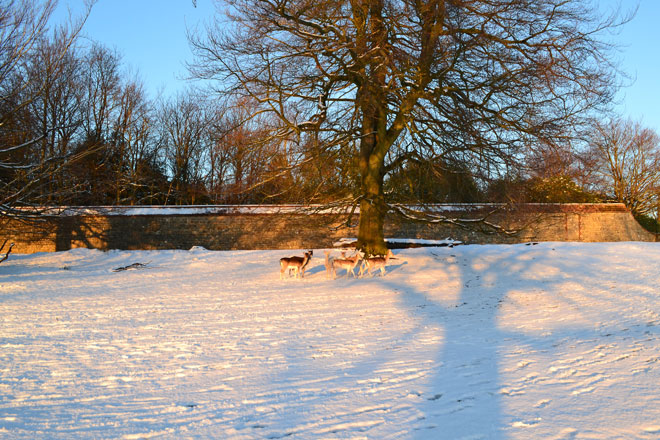
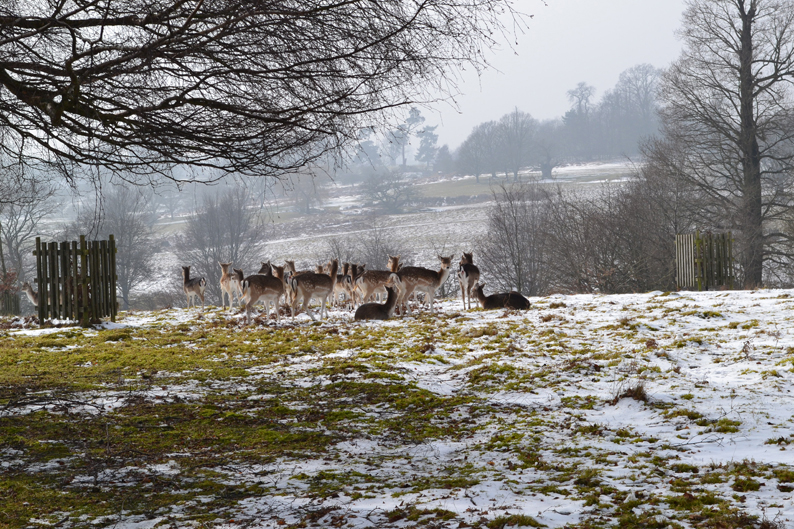
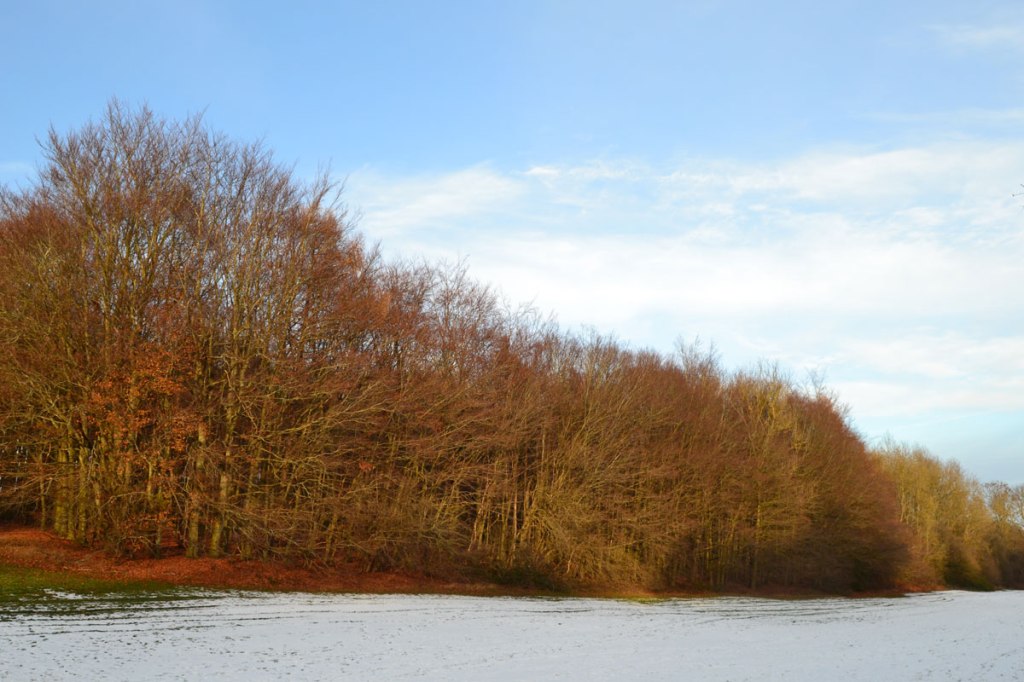
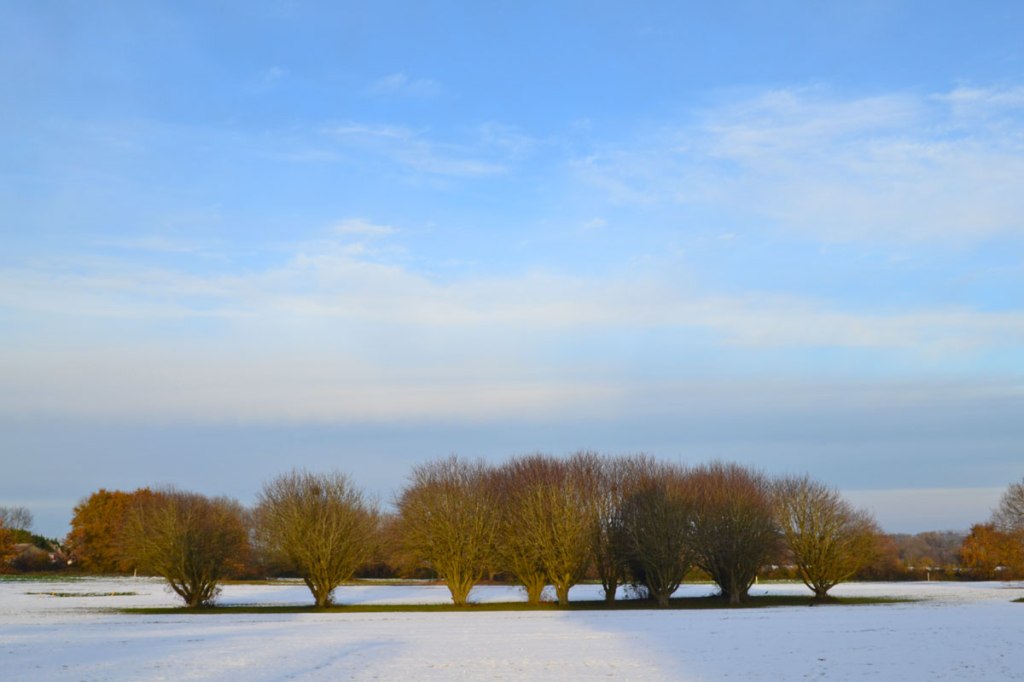
The relatives have come around. After a couple of days milling about in the house you all fancy going for a decent walk and getting some fresh air. No one has proper hiking footwear. The answer: Knole (Sevenoaks) Why? Because many of the paths have hard surfaces and you can walk for 4 miles without leaving this wonderful park if you pick your route carefully. There are secluded dry valleys to explore, an igloo-like 18th century ice house to find, some lovely woodland and a massive medieval/Tudor house – the largest in the UK in fact. You can’t take dogs because huge deer herds roam around the place. But you can take buggies, even wheelchairs. On a winter’s afternoon, with the last rays of the sun setting the house aflame it’s a magical place. And if there’s any snow it’s ludicrously brilliant. Among the photos below are reminders of some of the coldest walks I’ve ever experienced!
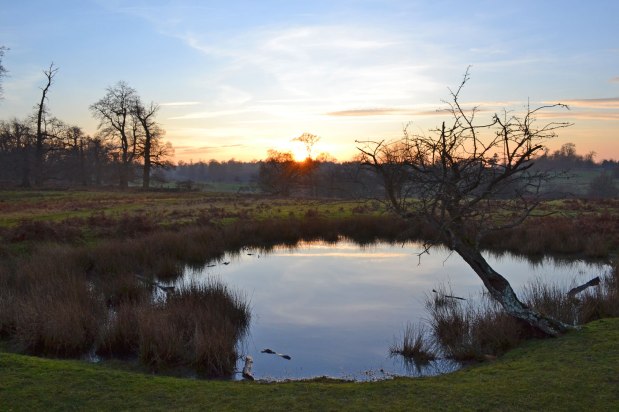
  • Knole, winter sundown
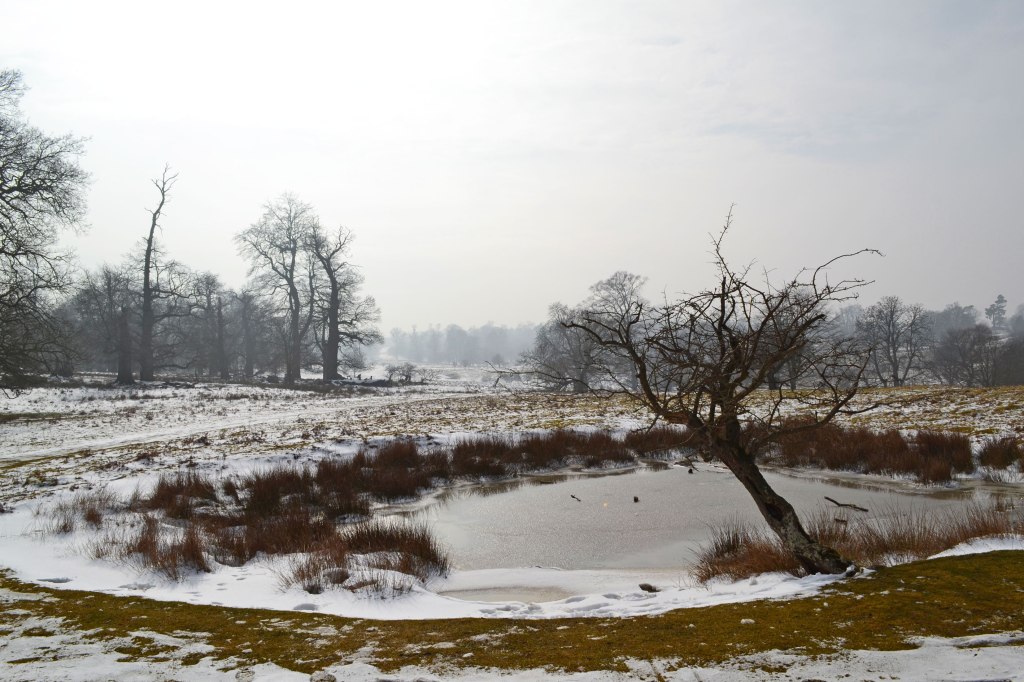
  • Pond at Knole in snow; March 2018
  • Knole Park

My 3.5-mile route leaves the hard path (the Chestnut Walk) immediately to take in the south-eastern open woods, part of Fawke Common, comprising fantastic oaks and beeches (you don’t have to park in the NT pay car park; you can leave the car in St Julian’s Rd and enter free, to the south of Knole, but this road can get a bit busy). Things then get a little darker as a fir plantation takes over and you dip down amid the high pitched calls of goldcrests to cross a little stream then emerge into the open by an ancient pond. Follow the route as it twists high and low before rejoining the hard path (the Duchess Walk) and heading to the house and around it before turning east back towards your arrival point. Know that you have been walking on acid grassland; a rare terrain type distinct from any of the other walks on this site. Fungi and lichen thrive here, not least because of the rotting wood from the arboreal victims of the 1987 ‘hurricane’. Birdwatching isn’t too bad either with buzzards, kites, sparrowhawks and tawny owls in attendance among the more common long-tailed tits, goldcrests, goldfinches, song thrush, wrens, robins and redwings. You don’t have to do my route – you can still do a fine walk by sticking to the hard paths (Chestnut, Broad and Duchess Walks), or you can extend my route by taking in the long south-west valley. Best just to wander and get a bit lost.

Lullingstone and the southern end of the Darent Valley around Shoreham in winter

Also recommended for a winter stroll – and closer to SE London than Knole – is the Shoreham circular, which may offer the added attraction of the smell of woodsmoke and a welcoming pub. Lullingstone is also highly atmospheric: I particularly recommend walking from the public golf club entrance, not the country park entrance – it’ll be less busy for one thing (note that the car park at the golf entrance is closed on New Year’s Day usually but you can usually park in the approach road). Closer to SE London, Beckenham Place Park and Petts Wood offer a couple of hours escape into the ‘Kent’ (London) wilderness. I haven’t checked the trains to Shoreham or Sevenoaks for these walks over this holiday period, so do find out whether they’re running – I don’t wish to encourage you all out only to have you waiting interminably for a replacement rail bus service, might still be fun though!

Lullingstone golf course closes

Lullingstone golf course closes

It seems that financial pressures brought on by the Covid lockdown and reduced footfall in winter has led to the closure of this beautiful, historic, and challenging public course and its owner Sencio’s other leisure facilities in Sevenoaks and Edenbridge. It’s very sad news not just because I’ve enjoyed the odd round at Lullingstone for many years, but because the course is a key component of the country park; the wild grasses, woods and scrub in between fairways is highly biodiverse and is home to a decent array of flora and fauna. I should know, I’ve tentatively had to search for my ball in these wild fringes often enough. Without the course you wonder what might happen to the rest of it what with the pressure for new housing. Let’s not worry about it too much for now; Sevenoaks District Council says it is confident that a new operator can be found for the course and the other Sencio facilities so let’s hope for the best. My main Lullingstone walk starts from Eynsford station but, if you’re driving, you can park just outside the golf course entrance (presumably shut now) and do a complete 5-mile orbit of the country park.

In the meantime it’d be good if people enjoying the new freedom in the park stay off the greens; I’m sure it’s fine to cross the fairways if you want but please leave the wildlife-rich rough well alone.

Skylarks nesting and wildflowers: put dogs on the lead

Skylarks provide us with the soundtrack of the countryside in southern England as they mark out their territories from around 100ft in the air. There are quite a few of them at Lullingstone, whereas birds that used to be seen in the park such as lapwings and yellowhammers have largely disappeared. I’m a bit worried that without the golf, people and their dogs will range all over the grassy slopes and will inadvertently destroy skylark nests. The birds nest in hollow scrapes in reasonably grass between 20 and 50cm high. I noticed last Sunday that quite a few dogs were bounding around in areas they wouldn’t normally be because of the golf closure. It’d be a shame to lose the skylarks and other flora and fauna that was protected by being in “islands” of grasses and meadow in between fairways.

A walk with Jupiter

A walk with Jupiter

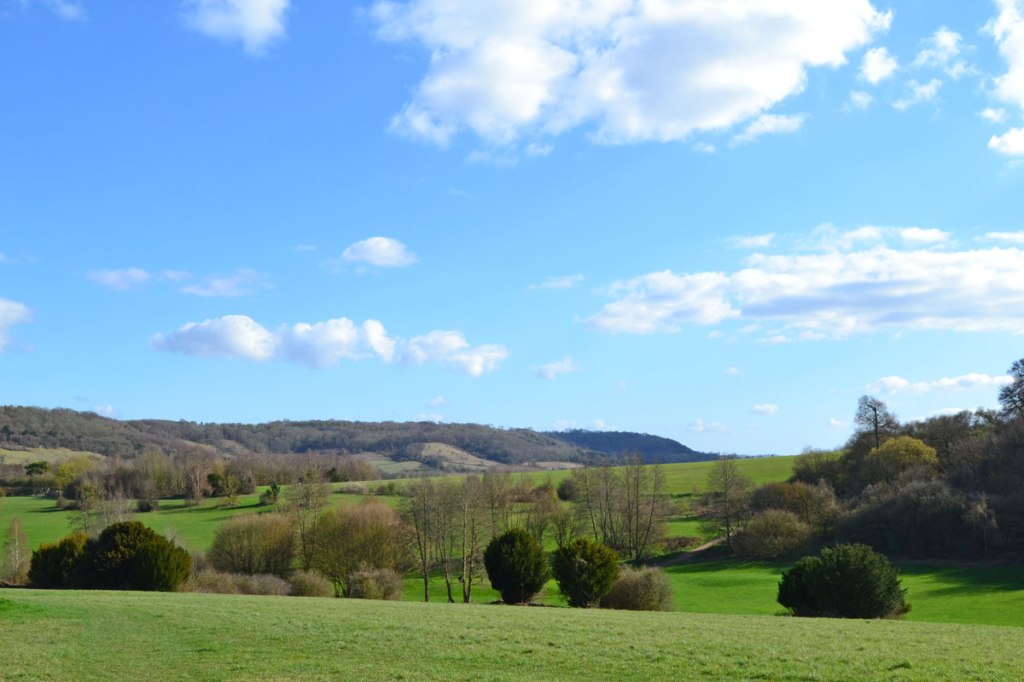
It’s proved an unexpectedly dry month, which has meant less mud when walking at this time of year than in any February I can remember (I don’t take measurements to be fair). There have been some gloomy weekends but some bright ones too leading to loose talk of spring having sprung. It hasn’t. Appreciating the longer daylight hours, we headed off in late afternoon for a circuit of Lullingstone yesterday, taking in the superb Beechen woods, the views down the Darent Valley and the blackthorn/hawthorn-dotted grassy high chalk hillsides on the return (we’d started the walk from the golf club car park, not the visitor’s centre). The cloud-shrouded sunset was magnificent with glimpses of Jupiter and Venus in the twilight. Very few birds around apart from a few fieldfare feeding late on the eighth hole fairway in the gloom. The last golfers had gone and with few people around it was all very tranquil, leaving a lovely imprint on the memory that will last me through the week.

See a GPX map of the 4.5 mile version of the walk (2.5 hours)
See GPX map of 3.3 mile version of the walk (1.5 hours)

Chilled at Lullingstone

Chilled at Lullingstone

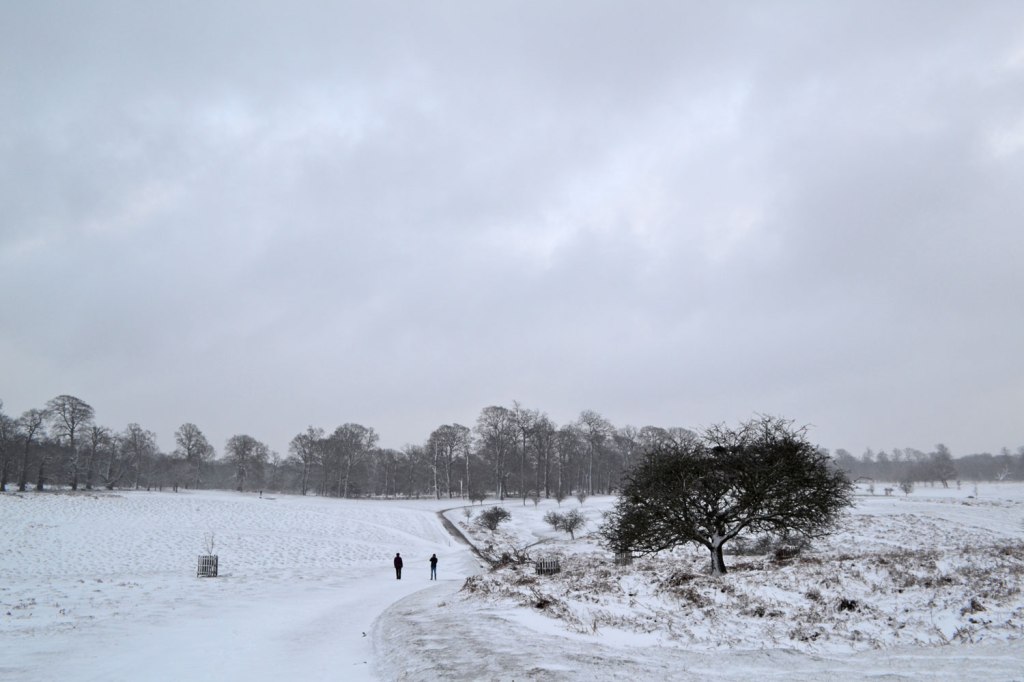
Lullingstone park is a great place to feel the winter vibes in the North Downs, with sweeping views of the Darent valley, big skies, mists swirling down by the river and a variety of terrain: from grassy expanses to rich beech and oak woods. Some walkers in Kent on Saturday saw a double sun – a trick of the light in which the sun seems to appear twice. It’s also called a sun dog, and is a type of halo. We weren’t so lucky, but the atmosphere was superb – wispy cloud, patches of cobalt sky, a low sun and a light mist. Small flocks of linnets were feeding in scrubby fields at the start of our route, up by the golf course entrance. It was the last day of this week of snow and freezing temperatures so we wanted to make the most of it, taking a 4-mile route around the park. A very deep frost had formed on top of the snow, producing some incredible branch-like crystal structures. It was a truly memorable stroll.

See an Ordnance Survey map of the route we took across Lullingstone – with GPX.

A lull after Lullingstone

A lull after Lullingstone

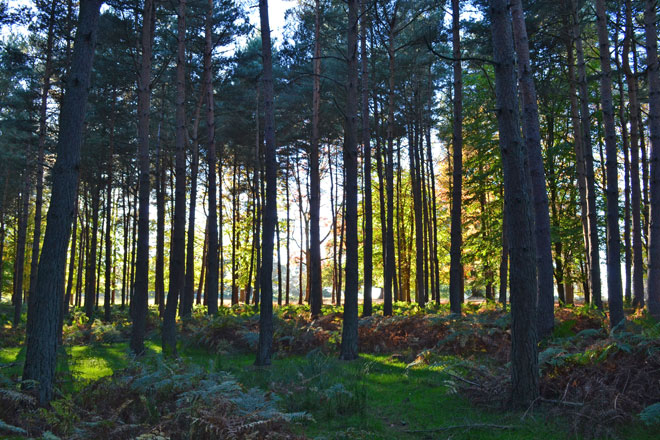
It’s time to batten down the hatches again. For some of us, the need to walk in in the open and find a bit of solitude is strong; others can adapt perfectly well to spending the whole day indoors. Personally I’m glad the football is still on! Let’s stay safe in all circumstances but not judge each other too much, unless someone is really busting the spirit of the rules. We know the situation in hospitals is dire and to add to the crisis by carelessness or selfishness would be terrible. Anyway, it’s horrendously muddy out there. I think we can let the paths, meadows and woods recover from our feet for a bit. Those walks will still be there once that pinprick of light at the end of the tunnel starts turning into a dazzling orb in the spring. My last proper country walk was at Lullingstone Country Park (pictured) over Christmas where I walked the whole circumference of about five miles. Highlights included a panoramic view of the Darent Valley from the lonely plane tree a mile south-west of the Roman Villa, the amazingly tall and straight beech trees in Beechen Wood and a beautiful goldcrest, Britain’s second smallest bird, that had unusually come down to ground level to feed amid bracken and ignored me even as I stood just a few feet away. I reckon they’ve been doing a lot more of that in recent days as frost and ice has coated trees in the North Downs. I’ll describe my ‘new’ Lullingstone route in the next few weeks.

Crisp and clear

Crisp and clear

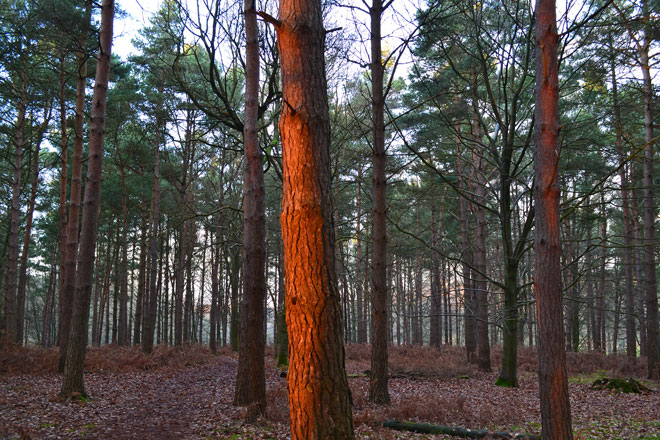
Despite all the rain and mud, winter was at it’s best on Christmas Day. Today (27 December) looks good too. Things get a bit cloudier – and colder – from tomorrow. Maybe enough ground will freeze up to take the edge off the mud. Keep a look out for birds – we saw sparrowhawks and a tawny owl hunting on Christmas Day at Lullingstone – and enjoy the fantastic light effects created by the afternoon sun as it illuminates the stark trees. Another bird you’ll be sure to hear is the high-pitched calls of goldcrests particularly in pines and cypress. It’s quite hard to see them though, because they are tiny and stay high up generally. Watch out for small flocks of redwings on the search for berries. But generally speaking I haven’t seen a lot of birds this winter on my walks.

This slideshow requires JavaScript.

Lullingstone’s wild garden is a match for its World Garden

Lullingstone’s wild garden is a match for its World Garden

I don’t publicise Lullingstone Country Park that much because it’s busy enough already and it’s easy to devise your own walk around its lush acres. The visitors’ centre car park is full to brimming by mid-morning of a sunny weekend and, just down the road, Castle Farm catches much of the overspill and is a lovely attraction in its own right with its lavender fields and local produce. And then there is the excellent World Garden at Lullingstone Castle. Throw in picnic tables, viewpoints, a cafe, the river path and there’s no mystery about its popularity.

Credit where it’s due; whoever looks after the place – I guess it’s Kent County Council – has done a wonderful job of rewilding areas of meadow and wildflower around the paths and fairways of the golf course. In spring it’s all about orchids, bugle, speedwell and cowslips but at this time of year the profusion of marjoram, thyme, fine grasses and wild carrot growing all over the place is spectacular. 

This slideshow requires JavaScript.

A walk around the park’s curvy contours and its superb ancient woodland (probably the quietest parts of the park) is a very civilised activity indeed. Those big North Downs skies are good for spotting birds of prey (I’ve seen all the major UK species here) and yellowhammers have made a comeback in the hawthorn/buckthorn thickets on the slopes. I’ve seen grass snakes here, too. Biggin Hill’s Spitfires often appear overhead on their joyriding flights … all in all it’s a real picture. Maybe visit later in the day on a fine weekend – they say the car parks are freed up a bit after 3pm. 

I think during the pandemic it’s best to avoid the river path, however. It gets a little too busy for my liking with myriad dogs confusing the issue. I’ve got two walks on here (3 and 12) that venture into the park from nearby Eynsford and Shoreham railway stations, but I’m considering adding another … perhaps starting at the public golf club entrance and taking in more of the woods. We’ll see.

Lullingstone CP’s Facebook page has all the latest news including whether or not the car park is rammed.

Sunshine and showers

Sunshine and showers

After the watery dip into the Ashdown Forest in midweek it was back to terra-not-so firma today with a squelchy trip to Lullingstone. Up the steps we went, past the Roman Villa to vast flint and chalk fields where several buzzards glided. It’s strange how wild birds of prey congregate near Eagle Heights; I guess they just want to peep at their captive exotic cousins. Storm clouds were fragmenting to the east having a deposited another ocean on our blighted county.

The river was extremely high and the water meadows living up to their billing with Eynsford’s small herd of highland cattle looking a bit hacked off as they nuzzled soggy hay bales and pondered their liquid domain.

On the way home we popped in on Eynsford Castle, basically a bunch of Norman ruins. The place was built within 20 years of the Battle of Hastings on the site of a Saxon tower by William de Eynsford I (for it is he) but was vandalised and left derelict 300 years later after an ownership dispute. Such a shame, it enjoyed a beautiful setting close to the river and would have contributed significantly to English Heritage or the National Trust if it had been maintained. Such a lack of foresight some of these medieval people.

This slideshow requires JavaScript.


Winter dusk in the Kent downs

Winter dusk in the Kent downs

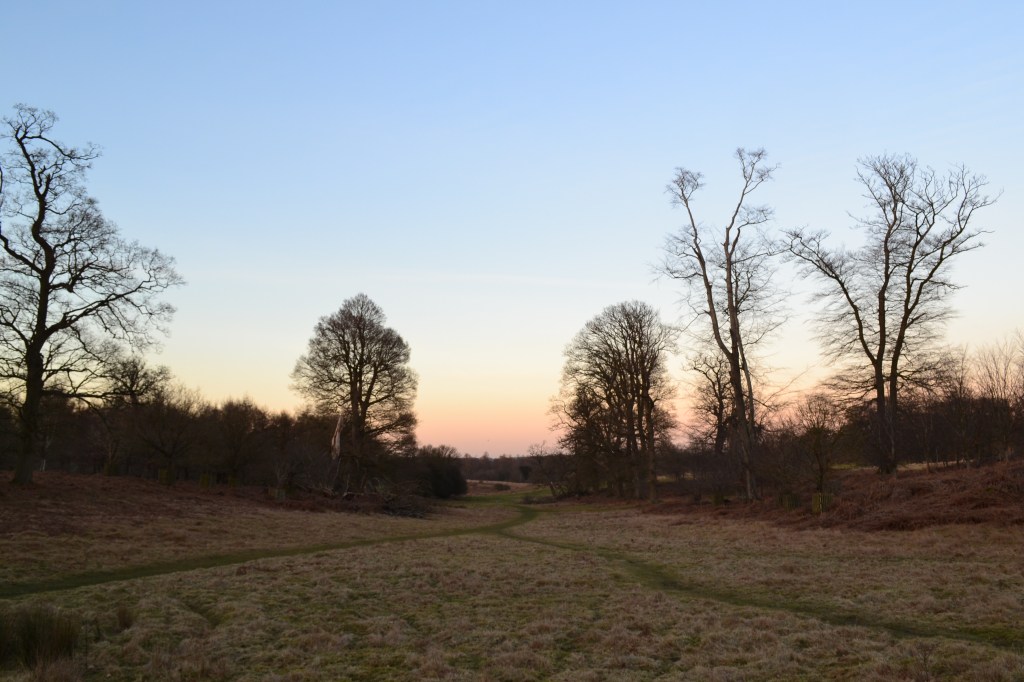
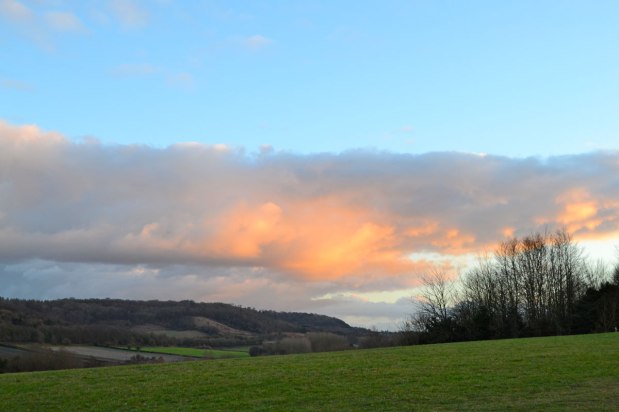
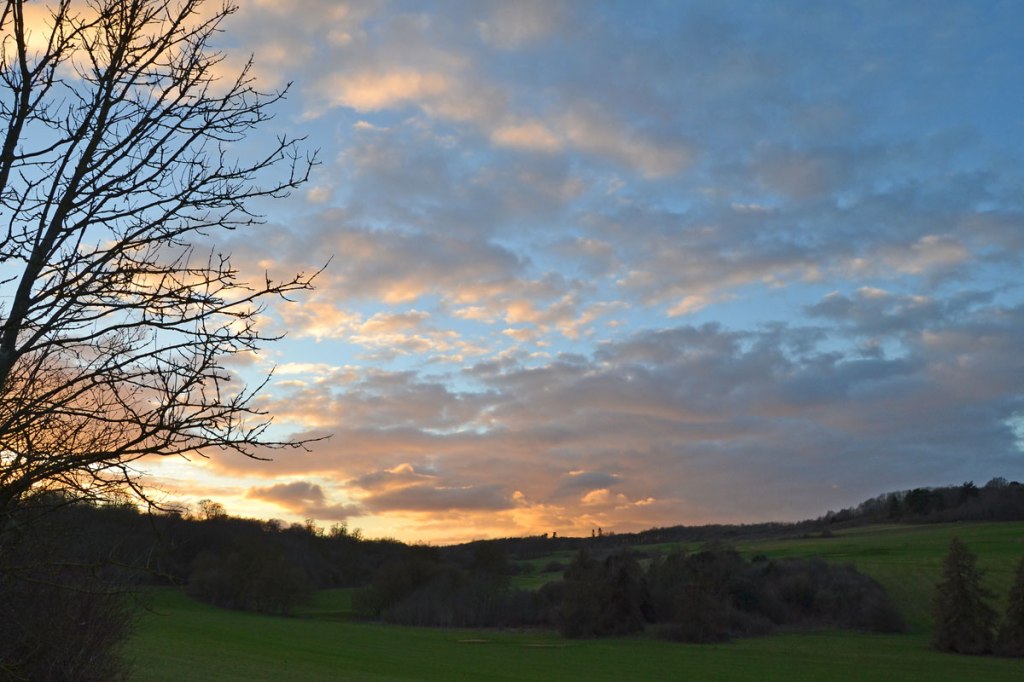
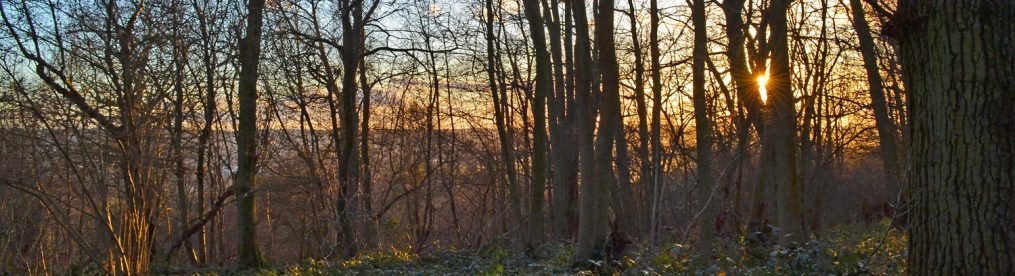
I followed my own advice and stuck to Knole and Lullingstone over the Christmas break, with the family. Christmas Day was a real beaut as were the past two days. When it’s clear, it’s fine to walk until 5pm, after sunset; you’ll be rewarded with vibrant sky colours, maybe drifting mist and even the silent flight of an owl. The next few days look fairly dull but the walks on here have great atmosphere in all conditions. Here are some pictures of Knole and Lullingstone from the past few days.

This slideshow requires JavaScript.