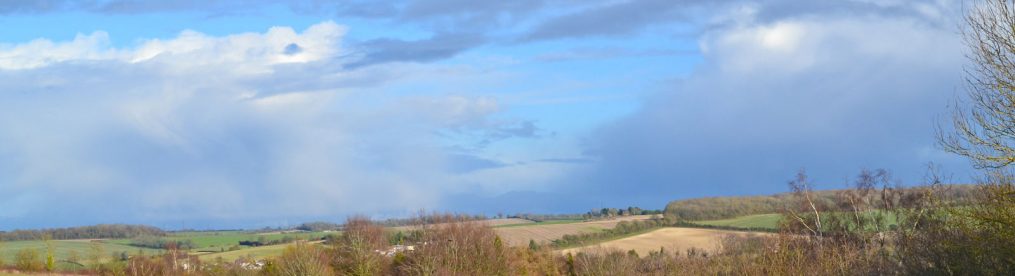

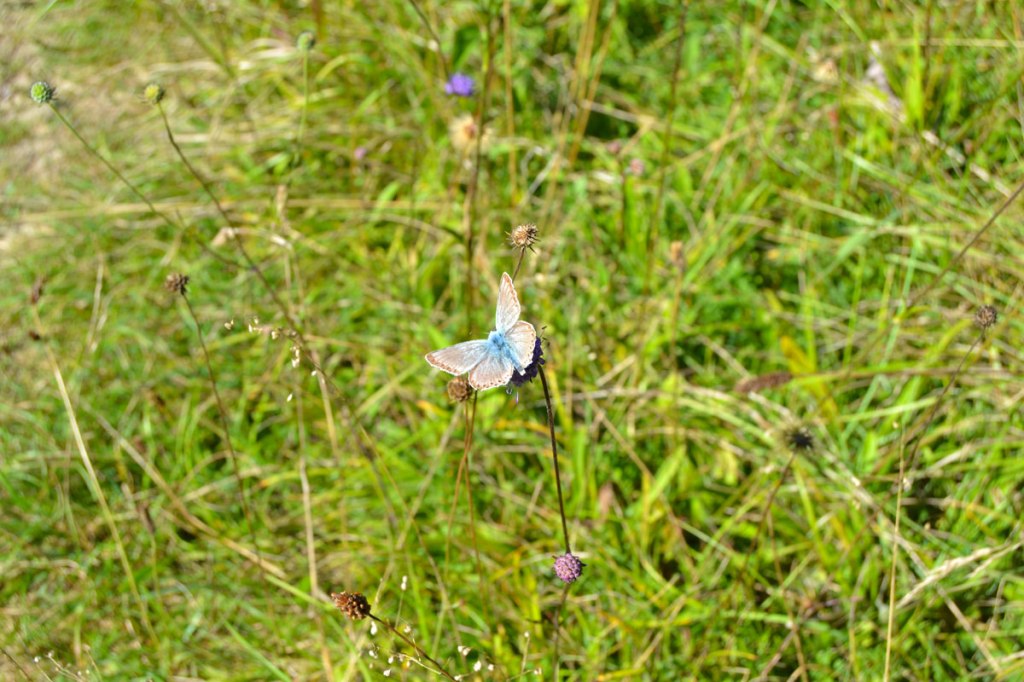
The hot sunny weather – this September has been pronounced already as one of the hottest on record in the UK – has been good news for butterflies. The Fackenden walk is particularly good for viewing them; the first few sections after the right turn on White Hill were awash with chalkhill blues, red admirals, large whites, meadow browns and gatekeepers this week. I was particularly intrigued by the numbers of brimstones flying during my sultry stroll there last Monday. These beauties are the offspring of the butterflies that emerged from hibernation in April and May. With so many scabious and devil’s-bit scabious still flowering along with the likes of fading marjoram, valerian, wild carrot and trefoil, there is plenty of foodstuff still around. That wonderful ‘garden’ running halfway up between White Hill and Fackenden Down is great for other creatures too: it’s clearly good habitat for reptiles and birds, though I’ve never personally seen much there, not even a whitethroat, blackcap or yellowhammer this summer – just a few goldfinches (a beautiful but common bird), red kite, buzzards and green woodpeckers after the many ants on these slopes. I did spot a rapidly disappearing common lizard though, after hearing a rustle in the leaf litter. Earlier in the walk, at Austin Spring I was delighted by a view of a hobby (a smallish, fast-flying falcon) hurtling straight towards me, presumably chasing dragonflies.

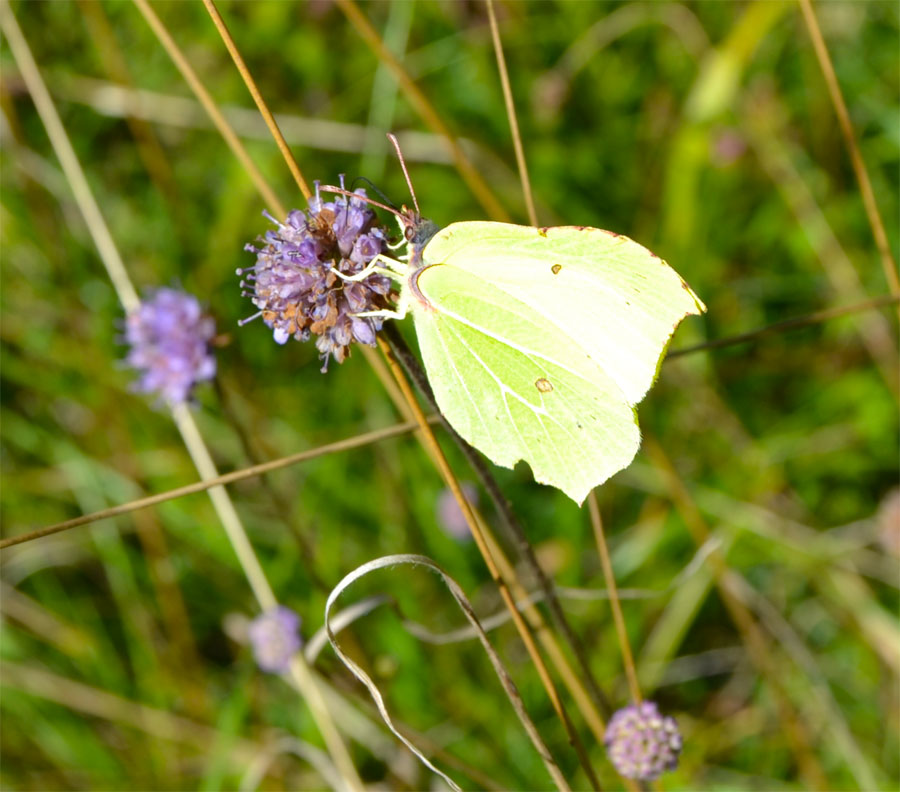

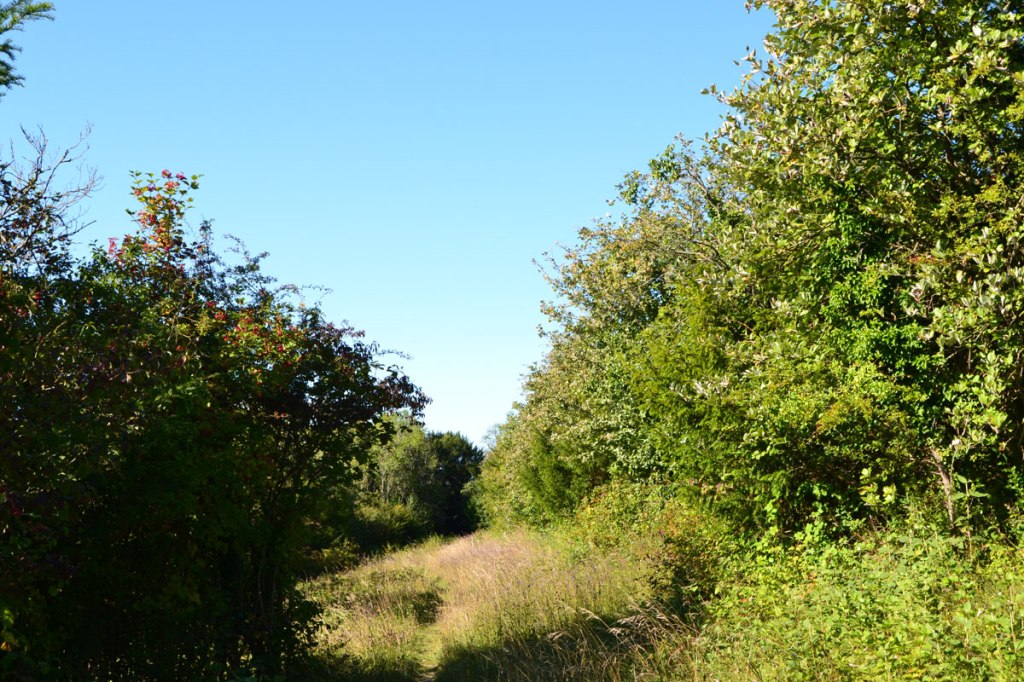

I’ve taken to doing the Fackenden route the ‘wrong’ way round these days: so I take the path on the left up White Hill that culminates in the steps, then across the Dunstall Farm fields to Austin Spring and Romney Street, Magpie Bottom (also great for flowers and insects) and eventually to Fackenden Down. Either way is great, I suppose I just want to save that ‘garden’ with its kaleidoscopic haze of grasses, scabious and insects until last. (Pictured: red admiral, brimstone, red admiral, the path linking White Hill and Fackenden Down looking north, a scabious flower and, below, a male chalkhill blue.)
 Kent walks near London