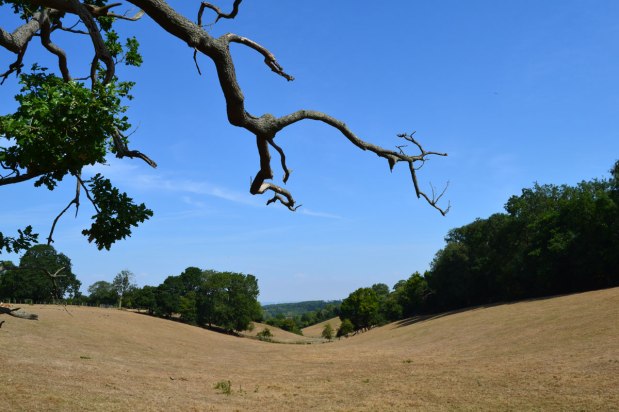
These parched lands

These parched lands

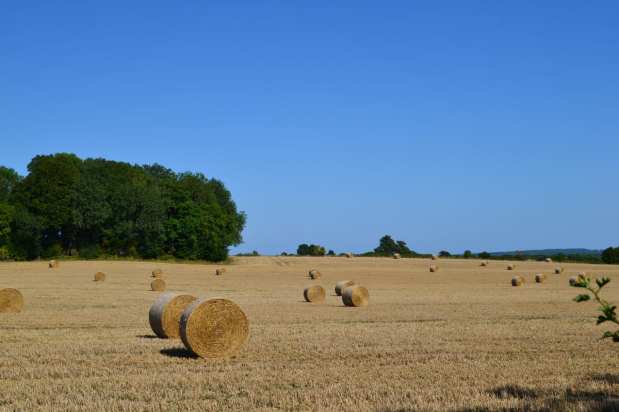
As I write there is a hint of rain in the forecast. The Met Office has the ‘odds’ at 30%, yet the sun is once again blazing on this delightful Monday morning. I say delightful but of course many of us feel a bit torn about the whole thing. I love being able to nip down to Camber Sands or Hastings whenever I can, in the knowledge the weather will be great, but unlike the smarmy opinion writers in the Telegraph or Times, you can’t help but be extremely worried about the unpredictability of British weather in the age of global warming. Flooding is quite likely to follow drought and the effects of it all won’t just be felt on food prices and farmers’ livelihoods (as if that wasn’t enough) but on our houses, gardens, trees, wildlife. You know all this.

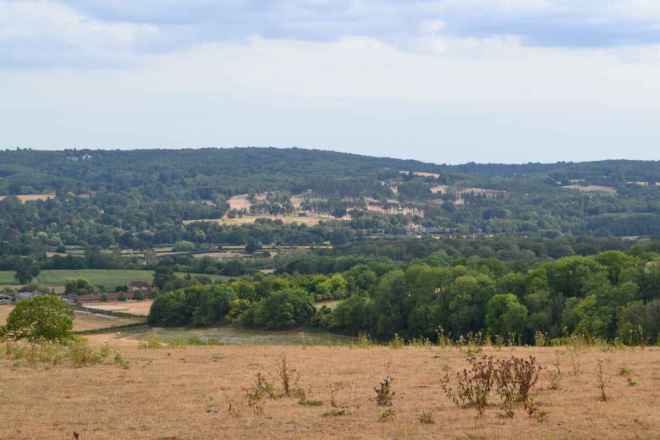
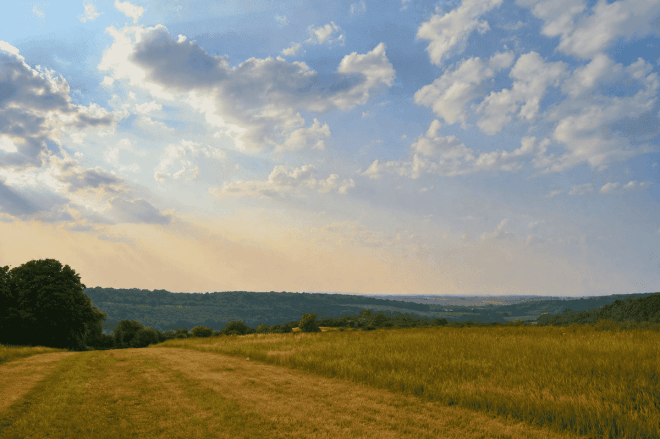
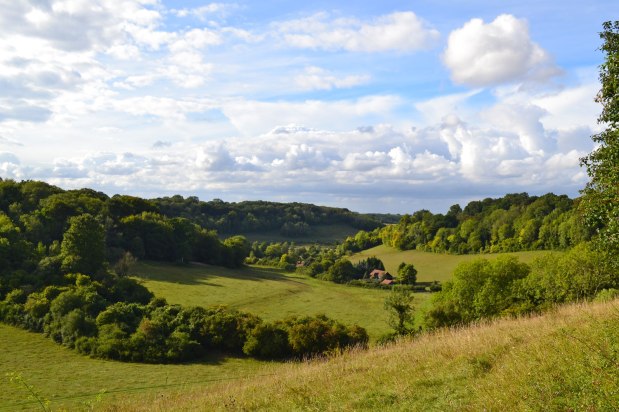
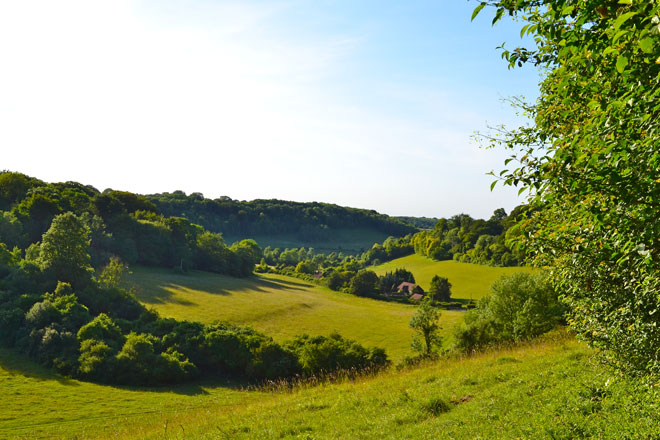
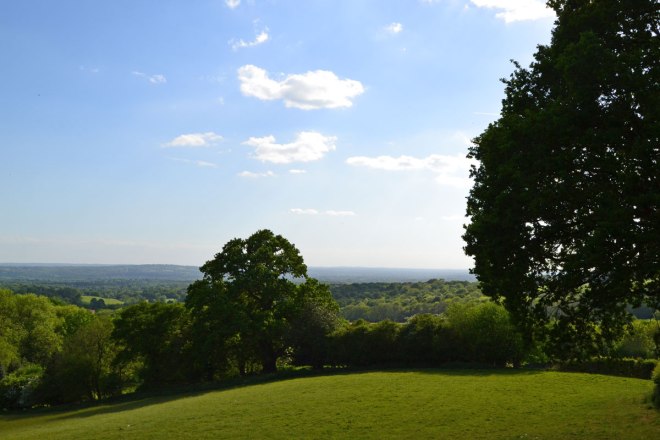
  • from the North Downs escarpment near Brasted
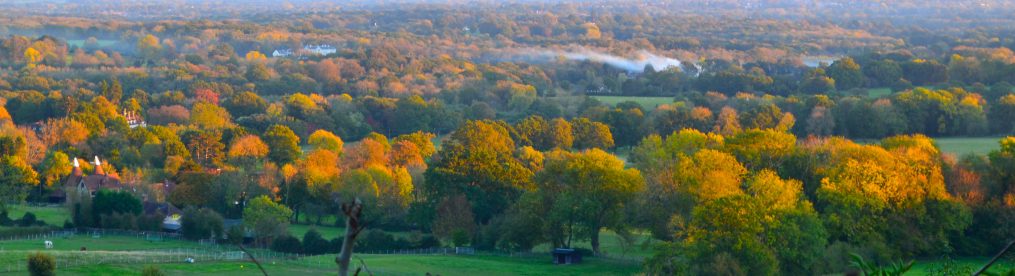
  • Farmhouse near Knockholt
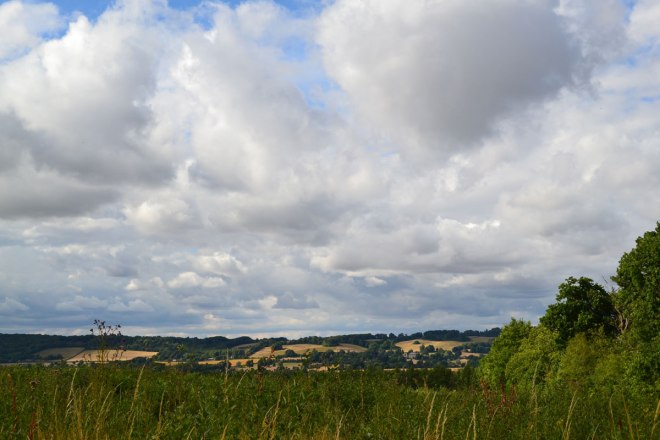
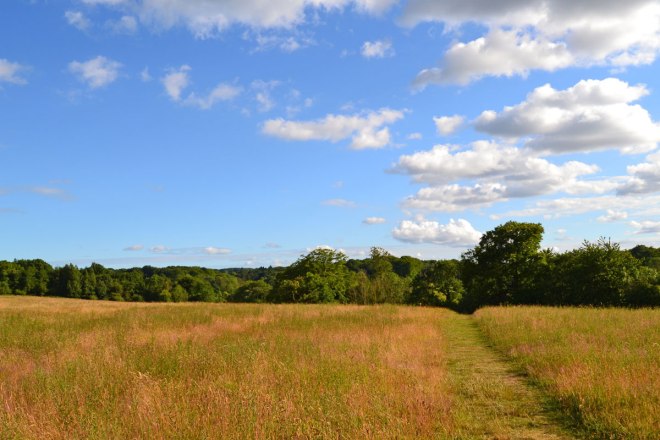
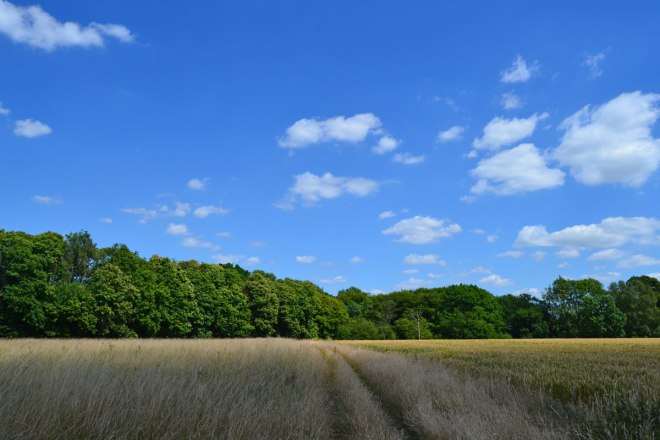
  • Cudham countryside big sky

As for Kent walks, I like the usual late August ‘tiredness’ in the countryside, the quiet, the drowsy beer-thirsty wasps and the sense of being on the cusp of change (swallows gathering their forces to head to Africa etc). But this year the aridity, the colours, the mood has hugely exaggerated that normal late August vibe. On yesterday’s cycle from Downe to Knockholt and back via Green St Green and Cudham the sombre browns, dustiness and silence were at times wonderful, at others dispiriting. I supposed it depended whether I was going downhill or not.

I’ve taken to my bike with friends and family for North Downs rides of late, creating our own breeze is rather refreshing, and put actual walking a bit on the backburner (I quite often walk alone but lately I’ve preferred company – which isn’t always available). A ride from Sevenoaks to Penshurst via Tonbridge was particularly pleasurable. But yesterday, on the escarpment, the humidity felt suffocating in the unusually cloudy conditions. After a pint of Harvey’s at that excellent boozer the Three Horseshoes in Knockholt the remainder of the ride back to Downe passed in a blur of sweat and haziness. Should have drunk more water, deffo.

Nightjars in the Ashdown Forest

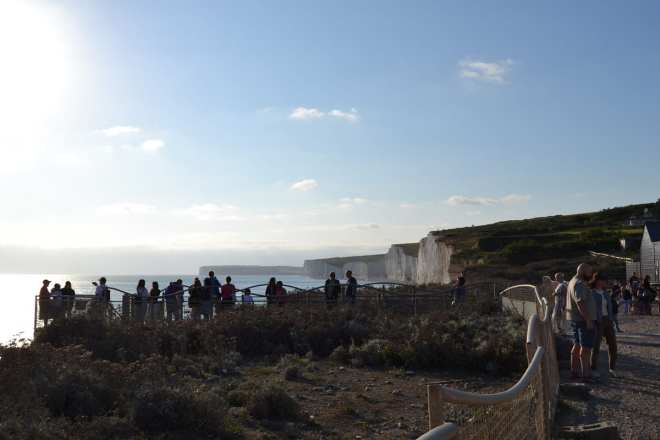
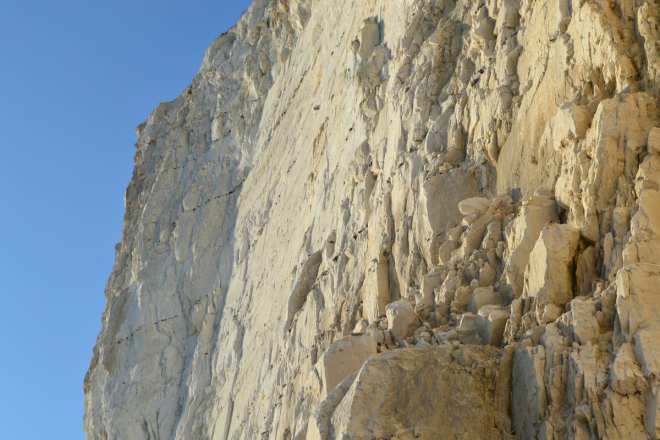
A memorable outing this weekend was to the Eastbourne air display. When the tide is in the stony beaches they are excellent for a swim, with the added frisson of aerobatics by Spitfires and so on. There are some good cafes amid the glorious Victorian white stucco in the side streets too. For a free event that attracts thousands, it really does work well because there is lots of space in the town and plenty of beachfront. And just a short walk to the west is spectacular Beachy Head and beyond that, the Seven Sisters, which in the late afternoon light are utterly magical. After a delightful pint at the Tiger Inn in East Dean, just up from Birling Gap, we set off for home via the Ashdown Forest.

At Gill’s Lap (Galleon’s Lap in Winnie the Poo), one of the highest points of the heath, we parked up and took a stroll among the heather and pine clumps, visiting the Heffalump trap, Kanga’s sandy pit and the Enchanted Wood (yes, they are real places – and just to the east is Eeyore’s Gloomy Place I kid you not). In the twilight the surrounding landscape and huge views turned pink and purple; it really did feel enchanted. As we headed back to the car we were suddenly surrounded by elegant, long-winged birds of a kind I had never seen before. I knew right away they were nightjars. There were four or five of these nocturnal creatures, gliding and side-slipping so beautifully in the dusk but totally invisible after they landed in the heather. My son managed to get video footage (see below).
Evening sun walks – pick Shoreham!

Evening sun walks – pick Shoreham!

Why didn’t I write this a month ago? Anyway, I am now. The heat is on. Obviously there are negatives to this extended dry, hot period for our water supplies, agriculture and some of our trees (I’ve been checking on our nearest street trees which are still pretty young and thirsty). But our countryside has taken on a drowsy, hazy quality that’s best enjoyed in the evening. My advice is this: take the Thameslink train out to Shoreham (in Kent, not -on-Sea in W Sussex!!!) from a station on the Denmark Hill-Bromley South-Sevenoaks line at between 5 and 6pm. Step out from the station and head up the track almost opposite on the Fackenden Down or Eastern Valley (take secateurs!) walks. Complete the walk in 2.5 hours and head to the Samuel Palmer pub for refreshment then catch the 9.32pm or 10.02pm train back to London.

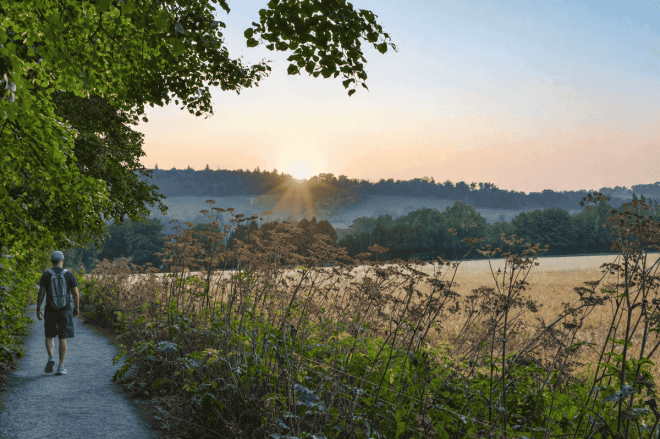
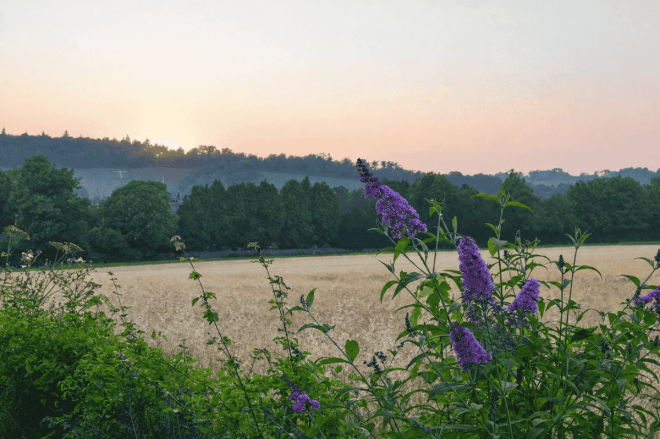
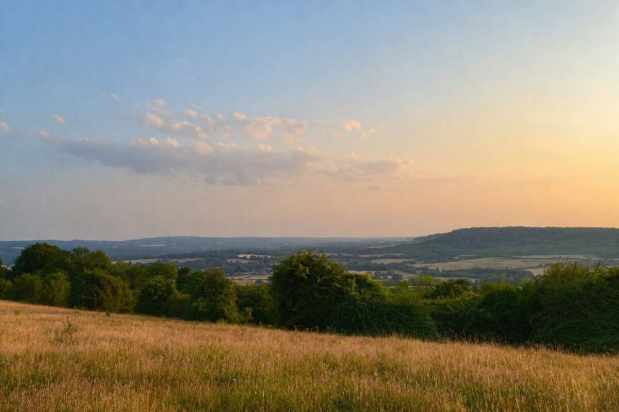
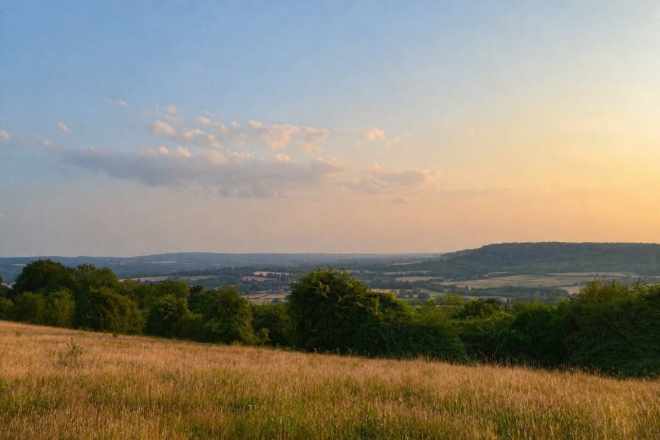
  • Summer evening View across head of Darent Valley
  • Darent valley summer sunset, July 2026
  • Nearing Romney St on the Fackenden walk summer evening July
  • View from Fackenden Down
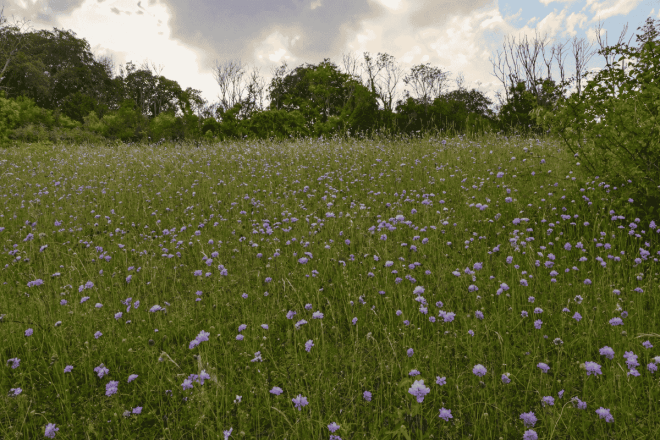
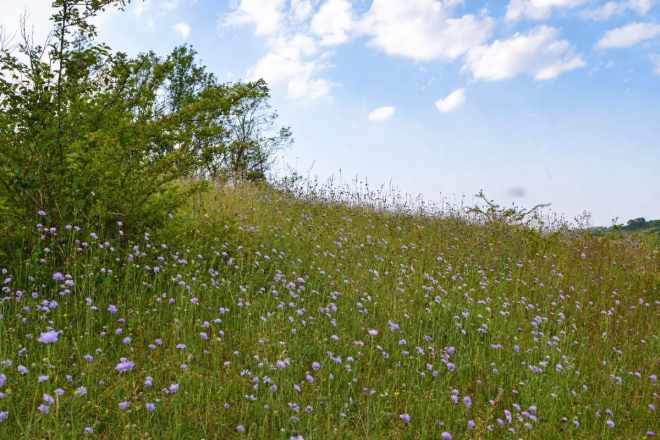
  • Scabious flowers Magpie Bottom

What’s particularly wonderful about these walks just now is the spate of wildflowers. Namely, scabious, marjoram, oregano, wild carrot, knapweed, hawks-beard and so on. The extent of scabious coverage on the Fackenden route right now is amazing, particularly in meadows of Magpie Bottom and Austin Spring; no doubt it’s the same on the Eastern Valleys route. We were amazed. We also heard yellowhammer calling and watched a kestrel gliding and wheeling around. I usually do the Fackenden route in reverse, so starting with the steps, so only get to the second wonderful view at Point 4. The North Downs escarpment above Chevening appeared silvery in the dreamlike light, the meadows seemed to float like gossamer in the warm air. Beauty was everywhere. When we got to the pub 80s music was booming out – Whitney Houston, Madonna, Cyndi Lauper. It was great fun.

Allow 10 minutes to comfortably make the train from the Samuel Palmer; I’ve been caught out before if I try to cut it finer.

A summer of Kent walks lies before us

A summer of Kent walks lies before us

Lazy days, slow walks, plenty of water (and pub stops), the quiet humming of bees and scuttle of lizards … it’s a great time for a Kent walk near London now the intense heat has been turned down.

For the first time in years I have failed to take a Kent walk of a weekend. The energy-sapping heat of the past week has left me enfeebled and lazy, though as I write I’m preparing to play tennis – something that feels a bit daunting just now. Sleep has been elusive, especially when the early hours are given over to thunder and lightning. The World Cup has been quite useful when looking for a way of drifting off – not really a comment on the football, which has been above par, but an expression of admiration for its ability to trigger sleep and keep your mind off just how sweaty you are.

On the other hand a trip into London on Friday night to meet old friends proved joyous despite the tropical heat. The atmosphere was infectious, the absence of jackets and jeans liberating, and the tube train from Charing Cross up to Warren St nothing like as overheated as feared.

Recent walks have included a longer take on the Down walk, taking in Darwin’s orchid meadows on the slopes east of Christmas Tree Farm; a lovely foray to Bough Beech in search of spotted flycatchers (birder Dave heavily implicated in that one); a trip to Knepp in West Sussex; and the aforementioned brush with the Long Distance Walking Association masochists in Oldbury. Each walk was magnificent, though do watch out for ticks now we’re all wearing shorts. My friend Steve found one on his lower leg after Downe. They are encouraged by deer apparently, with herds being particularly frequently spotted in the Downe, Cudham, Knockholt areas.

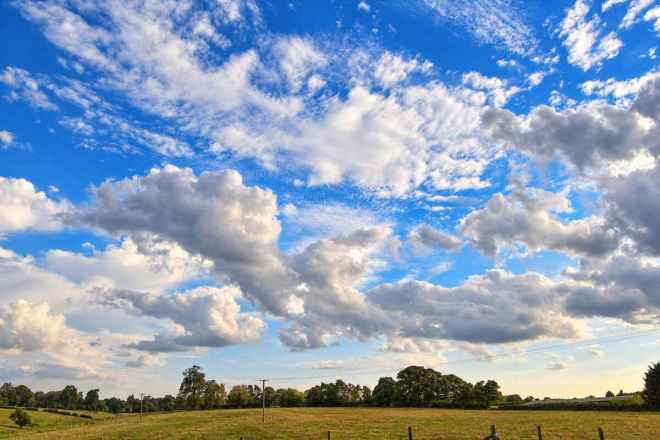
  • Cirrus at Fackenden Down, June, 2019
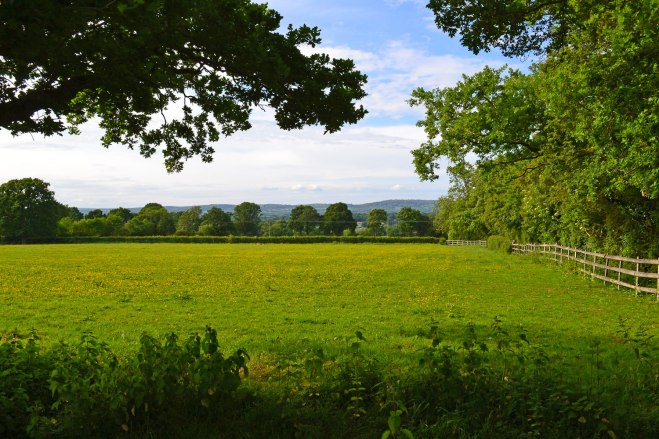
  • Kent countryside

The month has also seen me venture on a long weekend jaunt in Lisbon – one of my favourite cities anywhere. Such a bright, breezy, colourful, diverse, cultural and optimistic place, with great views, buildings, transport, museums etc. And beaches too, beyond Belem, which you can get to on the train easily enough.

Sorry not to keep the newsletters up. I had more than 1,500 subscribers, which was brilliant, but once the provider started exponentially increasing its fees I just sort of thought “sod this”.

With the heat you hardly need advising that shady walks are best, so once again I commend Hosey Hill, Cudham, Oldbury, One Tree Hill and Petts Wood as particularly woody walks (see links above) but to be fair you won’t encounter scorpions, mirages or get lost in the sand dunes as you gasp “water” on any of these walks.

Oldbury’s trees make for a cool heatwave stroll

Oldbury’s trees make for a cool heatwave stroll

The recent heatwave was great for a short Kent walk – especially under a tree canopy. Last week I headed to Oldbury, near Sevenoaks for the Iron Age Fort walk. It is the shorter of the two Oldbury walks, at 4.2 miles; the longer one is more like 7 miles and takes in Ightham Mote and Stone Street. I didn’t have time for that, great though it is, having set off mid-afternoon.

Check out the interactive OS map of this walk here

Both Oldbury walks take in two wonderful, contrasting woods: Oldbury woods (and its adjoining Styants wood), on the iron age fort; and sandy Fishpond woods behind the steep cliff of Raspit Hill. The fort – one of the largest in Britain – is clearly defined. It has a deep ditch round it, a flat top and holloway paths through the sandstone. Its woodland is a site of special scientific interest and is mostly of oak, birch, rowan and beech. The ramparts of the 2,100-year-old fort – 2.5 miles long and enclosing an area of 124 acres – are really impressive and apparently built by the Celtic ‘Wealden’ people who spoke the common Brittonic language. The National Trust looks after the woodland and reckons it’s possible that the hill was the site of a battle against Roman invaders around 50BC. It may not have been Celts fighting against Romans but Belgae, the old foe of Julius Cesar in Gaul, who had displaced Celts in the region a few years earlier. Anyway, it’s easy to appreciate the strategic value of the fort as you look out across the Vale of Holmesdale and Heaverham/Kemsing on the chalk escarpment to the north and towards the Weald to the south. Saxons took over the area after the Romans left and began coppicing the trees – a practice that has continued to this day.

It’s natural attractions, away from the arboreal wonder, include plenty of orchids in the grassy wild meadows just north of the fort, wheeling buzzards and red kites, song thrushes, chaffinches and amphibians.

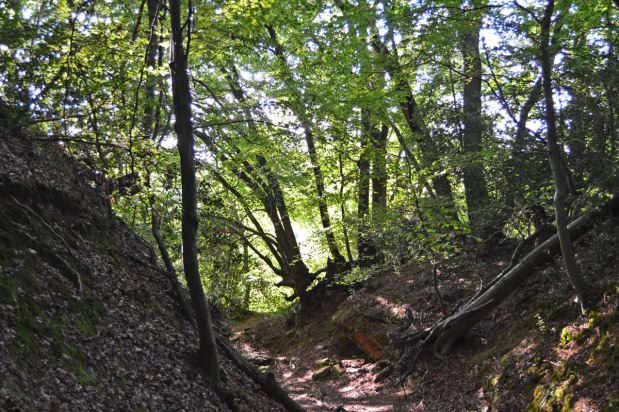
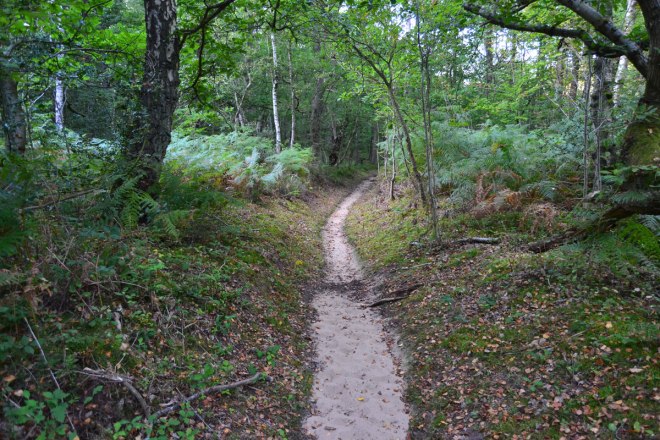
  • Sand path through Fishpond Woods, Oldbury

My walk was made even more interesting by my encounter with Long Distance Walkers’ Association hikers on their annual 48-hour 100-Mile Challenge (a circular route via Meopham to Crowborough). One them told me they had to walk through the night and would just take a few minutes’ sleep by the path. They were complaining a bit about the heat, having walked 18 miles already. It didn’t look like fun or even particularly companionable with many walkers seeming to stagger slightly. I’m sure it will have felt good when they finished though – 82 miles later! Perhaps a good bath may be on the agenda … I’ll never know.

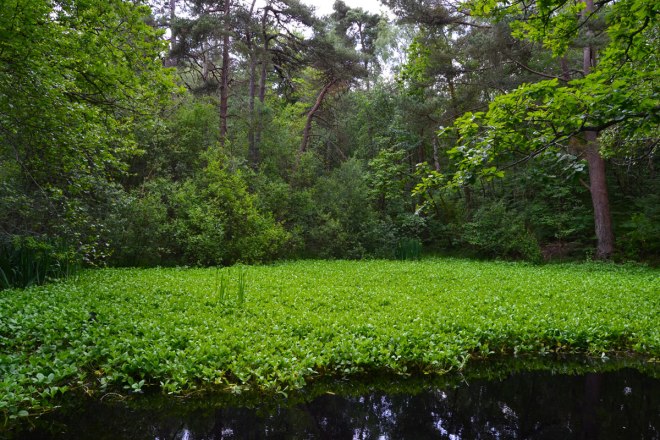
I left the brave LDWA walkers close to the picturesque school and church above Stone Street. I turned east, along the cliff top to Raspit Hill then down through Fishpond woods. There are more conifers here than at Oldbury, which make them popular with goldcrests and coal tits, I noticed. A small frog hopped out of my way on the sandy path, alerting me to the ponds themselves, shrouded in lily pads, reeds, irises and fallen logs. The first two, as you head north back to the Styants car park, are particularly beautiful, the final one more of a muddy pit. Overall, it’s a fantastic woody walk – up there with Chislehurst/Petts Wood, Ide Hill and the nearby One Tree Hill figure of eight route as my favourite tree strolls.

Quiet North Downs, busy South Downs; all good

Quiet North Downs, busy South Downs; all good

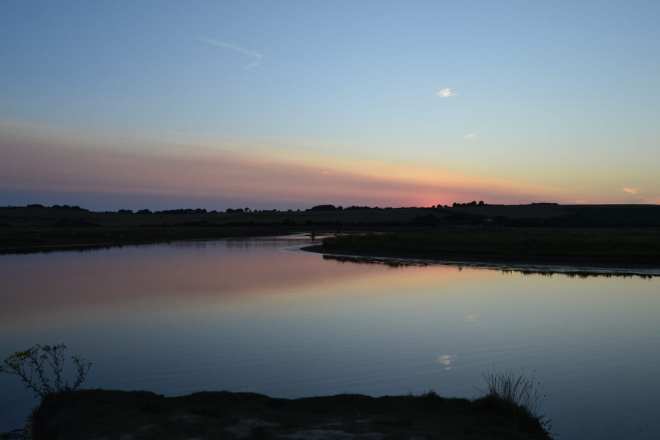
A walk around Birling Gap in East Sussex amid the famous Seven Sisters chalk cliffs was just the tonic for a dreamy August last afternoon. It’s a brilliant trip that we do fairly regularly. We started on the beach at Eastbourne with a picnic while enjoying the August airshow, before hitting Beachy Head and the Gap. After a pint at the superb Tiger Inn in ancient East Dean, we topped off the adventure with a 45-minute sunset stroll along the lower Cuckmere river from the Seven Sisters visitor centre to the sea. It was blissful but busy with tourists and folk down from London … which is just fine with me; it’s great to see everyone out enjoying the beautiful countryside, and the joy people were feeling in the sea air was kind of infectious. It felt a bit like going to the cinema – the pleasure of a shared experience of wonderful scenes is a great thing. Sussex by the Sea is a special place.

  • North Downs view
  • An egret at dusk in the Cuckmere river

The following day it was back to the North Downs for the Knockholt / Chevening route; the first time this year I reckon. As mentioned in my previous post I was tipped off by a helpful KWNL’er that there was a useful diversion at the Point 5 which means you don’t have to walk on Sundridge Road anymore. And so there was. It was great. Very sleepy, dry, Augusty, quiet. And so few people! I missed the crowds at Birling Gap. Well, I didn’t reeeeeally; I love solitude too. Without the waves, gleaming chalk, and sea breeze, the western North Downs don’t have quite the easy allure of their southern counterparts; but for quiet, great views, glimpses of the medieval past and atmosphere they are wonderful. But so few south-east Londoners seem to quite know what’s on the doorstep – which is the point of this website I suppose.

Secret valleys on these NW Kent walks

Secret valleys on these NW Kent walks

Kent Walks Near London can offer several lovely, lonely little valleys with their own microclimates, special flora, shelter and that precious sense of seclusion. Here are four of the best on the walks here.

1 The Darent… but not as you know it

Tower Hill, Westerham viewed from the ‘secret‘ valley of the infant Darent stream

On the Hosey and Westerham walks I love the little south-north valley that winds its way from the sandstone ridge at Mariner’s Hill down to Westerham. It’s actually the valley of the River Darent just after it rises from a spring just behind the Greensand Ridge. I was delighted to realise this was where the Darent started, the stream is more associated with the chalk of the proper Darent Valley of Samuel Palmer fame – Shoreham, Otford and so on – not this obscure place near Chartwell.

Harebells
Harebells in the shadow of Tower Hill, Hosey walk

The river is bounded by beech and conifer (with Tower Hill a dark bump just to the east) and initially runs through a delightful meadow of wild grasses, unseen from the path. It suddenly broadens into large shallow pools as it heads to Westerham before turning east and making its way to its ‘proper’ valley. Autumn colours here are wonderful.

2 Magpie Bottom – great name, great valley

Magpie Bottom viewed from Austin Spring on the Fackenden walk

This stunning little rift in the landscape features on the Fackenden Down, Otford/Romney Street/Shoreham and the Eastern Valleys walk in different guises. It is so secluded that only walkers know of it. And the few residents of the curious hamlet I think called Upper Austin Lodge on the OS map.

Magpie Bottom is a classic steep-sided chalk dry valley (similar to but more dramatic than the ones on the Downe, Polhill and Cudham walks) running north to south from behind the escarpment. These are caused by glacial meltwater long departed. The valley’s head at Great Wood and Eastdown just behind the chalk escarpment of the North Downs to Rose Cottage farm is a series of wonderful spots unreachable by car, but really it’s gorgeous all the way down past Romney Street, Round Hill, Upper Austin Lodge and Eynsford where it meets the Darent Valley. Possibly my favourite place on all the walks, and all the better for no longer having a golf course in it!

3 A verdant vale on the way to Ightham Mote

Hidden valley behind Wilmots Hill, Ightam Mote
Broadhoath woods in the hidden valley behind Wilmots Hill, near Ightham Mote

My final Kent canyon (it’s not a canyon) features on the longer version of the Oldbury/Ightham Moat route and is mentioned as a route alternative on the One Tree Hill figure of eight walk (see the blue line on the Google map at the KWNL page). So on the One Tree Hill routes it’s a diversion, a short cut that you’ll have to check your maps to include. But on the longer Oldbury walk it’s part of the deal. What shall we call it? It’s round the back of Ightham Mote and passes through a wood called Broadhoath behind Wilmot Hill (which has some of the greatest views in Kent). It has a lively little stream that rises just behind the Greensand Ridge, a terrific pond with viewing platform and interesting flora as it descends west to east to Ightham Mote itself, passing a shed built to house early 20th century hop pickers (you’d think hop pickers were in fact horses judging by the design of the housing – the landowners obviously weren’t too bothered by other people’s comfort levels). Like the other little valleys it’s good for birds: marsh tit and bullfinch have been seen here. It’s another totally secret dip, accessible only to walkers, that’s like an entry to another realm; a world away, but its paths are only 55 minutes from Sydenham.

Take secateurs on your Kent walk!

Take secateurs on your Kent walk!

Things have got a bit overgrown on some of the more neglected paths. Despite the lack of rain, brambles have been getting busy and are giving their full attention to any bare legs they come across. Nettles too. The brilliant Eastern Valleys of Shoreham walk is the worse offender here… along the field edge coming up to point 3 in particular. That path is little used and things have got a little wild (there could well be an alternative route on a path within the woods, not along the field but I’m a little hazy on the details, it’s hot and I’ve been watching Glasto). I say secateurs, but a sickle or shears wouldn’t go amiss – whatever your implement, it’ll help keep things civilised. Obvs, don’t go crazy, just a little snip here and there to clear your path, we don’t want anything apart from brambles, the odd nettle and dogwood being snipped. Even on my brief Bough Beech stroll today I was assailed by prickles while on the pavement walking back towards the nature reserve (the kingfisher was showing well if you must know). Still, I survived; I always seem to, whatever terrible hazards the Kent walks near London throw at me.

Not too hot to trot in Kent

Not too hot to trot in Kent

When the temperature hits 30C a lot of us prefer to sit in the shade, sip a drink, maybe head to the park cafe, try to keep cool. But Kent Walkers Near London are rather like mad dogs and Englishmen – they go out in the midday sun and hit the trails of the North Downs and Greensand Ridge and anything in between. My cut off is closer to 35C when it comes to walking – I once did a few miles in Joshua Tree national park in the Mojave desert (not a Kent walk near London) at about 38C. It was great! No problemo. Just bring water and don’t get too lost and you’ll be fine! In fact doing the Kent walks are a better way of keeping cool than hanging in SE London – there’s usually a breeze on the downs and trees for shade. Plus they’ll be butterflies and wildflowers to enjoy. And unlike Joshua Tree there’s a decent pub never much more than a mile away. In terms of distance, as long as you’re feeling good there’s no problem with doing a walk up to 6 miles in high temperatures. One little tip though: if you do the Eastern Valleys route (quite taxing on a hot day as the valley kind of magnifies the heat) take secateurs as one of the paths gets overgrown a bit at this time of year and you don’t want want those pristine bare legs to be ripped to shreds! Enough. Enjoy!!

  • Magpie Bottom in the August heat
The orchids of Oldbury, Kent

The orchids of Oldbury, Kent

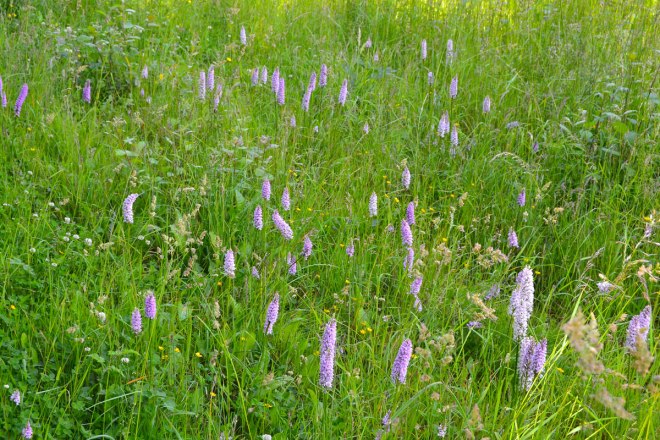
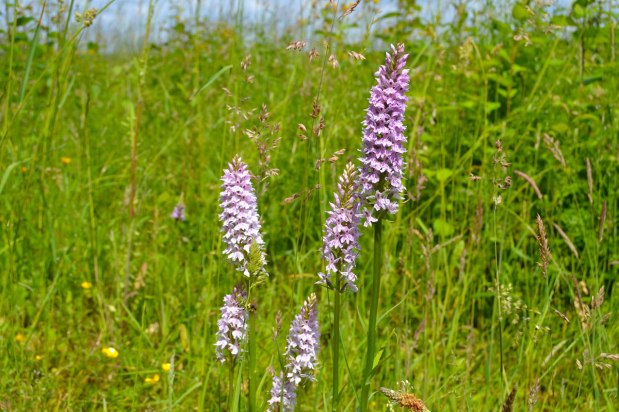
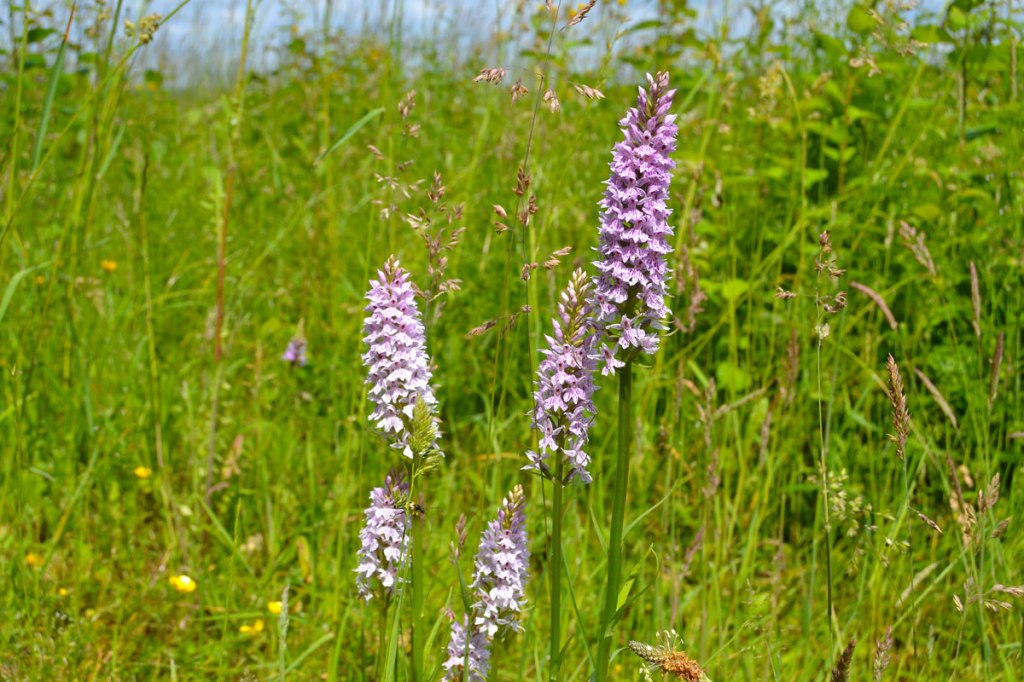
Orchids are in full flower across almost all the Kent Walks Near London. They particularly like the chalky North Downs routes, such as Heaverham, Chevening, Fackenden Down, Polhill, Lullingstone, Eastern Valleys etc (see list of walks above) but I’ve found great clusters at Hever and meadow fringes at Oldbury too, on the sandstone/clay of the weald and Holmesdale Vale. We unexpectedly came across the pictured common spotted orchids (the UK’s most often seen variety) on the Oldbury walk this week. This is one of the routes I’ve walked the least often; in fact I can count the times I’ve hiked the long and short versions on the fingers of one hand. I don’t know why, they are both brilliant strolls. The shorter version is mainly through woods and is one of the quietest walks on this website (apart from the bit near the A25). It takes in an enormous Iron Age fort, meadows facing the North Downs escarpment and a sandy trail past beautiful old fish ponds in rich woodland. I really recommend it – it’s got a special atmosphere, some might say even a bit spooky.
See the best places to see orchids on these routes.

How to use Kent Walks Near London

How to use Kent Walks Near London

It’s a great time of year for walking, as the visitor figures at Kent Walks Near London are showing. Wildflowers, birdsong, the sound of the breeze in the foliage, dry conditions and warmth are all balm for the soul – and how needed in these perplexing times.

It’s been great to bump into walkers using the website lately; generally all have been on the correct route and enjoying themselves! Only one couple were off piste, and this was because they had been following Bromley council’s signs for the Cudham circular rather than read the pdf they were holding of the Cudham Chalk Paths walk.

Ide Hill, Kent
Looking south-west across the Weald from Ide Hill

A smartphone can help

It’s been mentioned to me lately that it is still quite easy to take the wrong path at times. I really recommend using the GPX on the smartphone with takes you to my routes at Ordnance Survey or AllTrails. Here’s my Fackenden Down route at Ordnance Survey maps (actually done in reverse, but it doesn’t matter as the dot will show you where you are against the route whichever way round you’re doing the walk). If it all sounds a bit technical and you don’t want to be marching around peering at your phone, don’t worry – just take your time and read the instructions ahead so you’re not stopping every time there’s a side path and wondering if you should go down it. And if it does go wrong, enjoy that too… the countryside will still be lovely and all will come right in the end. It’s Kent, not the Amazon.

flax
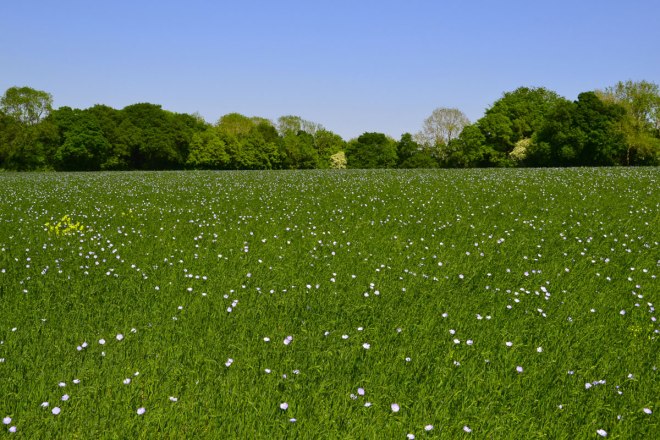
Flax (linum) in a field in May, on the Fackenden Down route (walk 19), May 2025

A lot of KWNL users print off the PDF and go from there, but be warned: the PDFs are space-limited so I have to abbreviate at times. I think it’s best to use a combination of GPX map, the website on your phone and the pdf or just use a paper OS map just to check out the route in advance. Perhaps one day I’ll invent a special talking SatNav for KWNL so I can say ‘turn right, climb over the stile’ in real time. Actually, no; who wants that?

Contact me with route complications/updates

I really would appreciate people telling me when I need to update information, however. I can’t cover all the walks all the time so when things change – as they did on the Downe and Cudham walks in the past couple of years – it’d be great to get a heads up! Also, please send in bird/wildlife or plant observations… all welcome.

My best email is ammcculloch49@gmail.com for comms. I don’t bother with Facebook or Instagram much anymore (maybe I should try harder with the latter) – there’s just too much of all that and I consider social media to be run by awful people determined to do bad things generally. I deleted Twitter and I’m now on Bluesky if that’s any good to anyone (amackentwalks.bsky.social) but please excuse any tangential rantings you come across – I have other interests apart from walking (saxophone, Tottenham Hotspur etc) so it all ends up in one place.