Hosey heights

Hosey heights

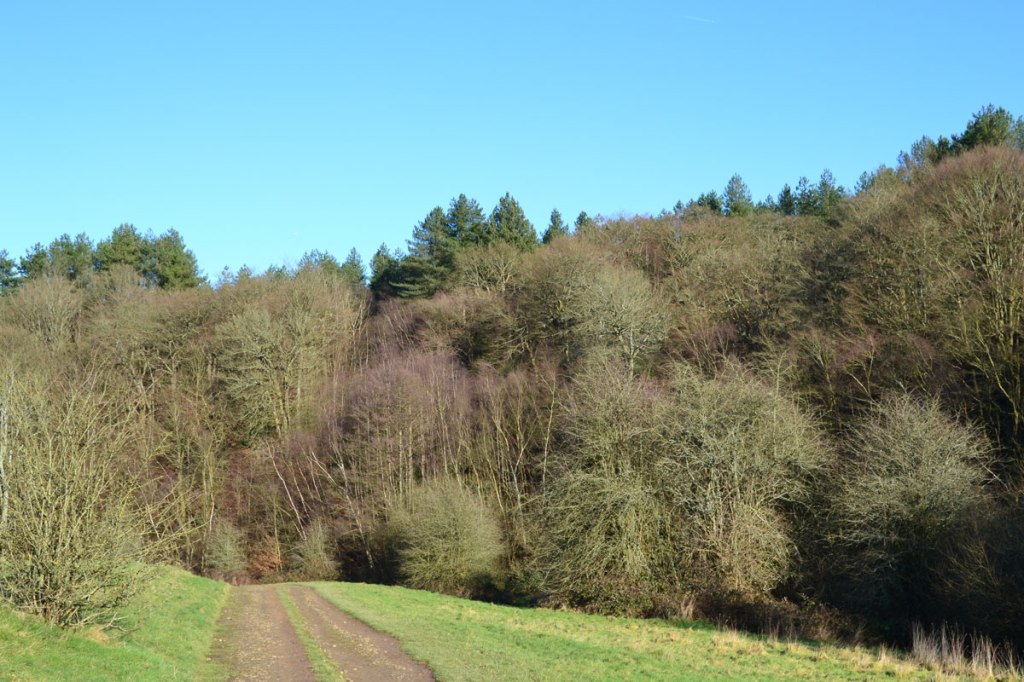
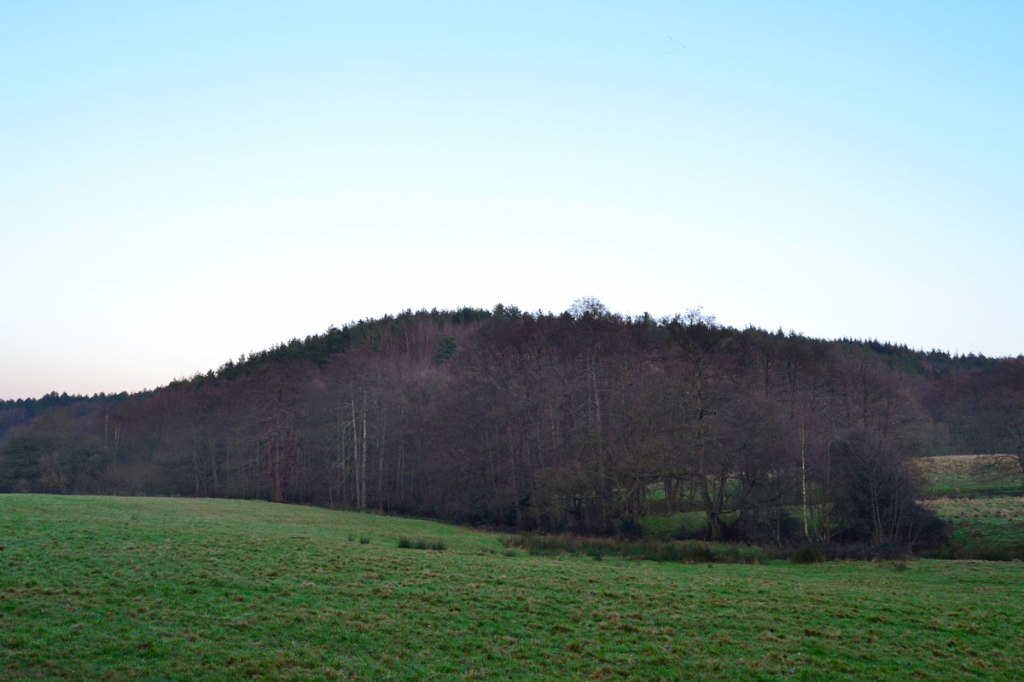
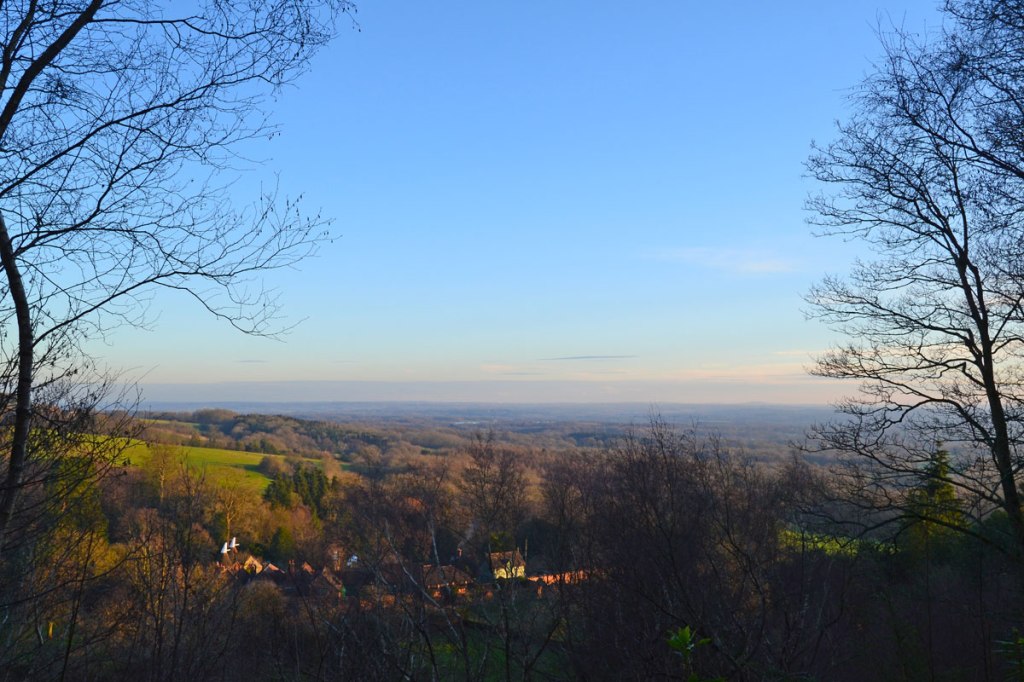
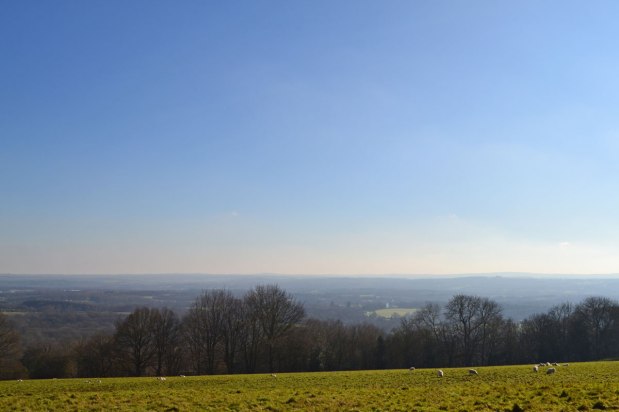
Three weeks after the previous perfect winter’s day – and another grey, wet interlude – another stupendous afternoon drew me out of SE London for a walk. I resisted the winter allure of Fackenden Down and chose Hosey Common for my pre-football walk. The early morning frost had gone, leaving the ground horrendously squelchy in places – many places – but the cloudless sky and sharp light were dazzling. The temperature was around 7C but somehow felt warmer; the lack of breeze meant you felt the sun and I reckoned a t-shirt was all I needed, though I had committed to a puffa jacket. As you can see from the photos, in this kind of light even the skeletal trees of February in England lose their bleakness; colour came back in to the countryside.

Using the OS Map app on my phone I came across OS Locate Me which displays a digital compass and an altitude reading. I’d never have guessed the Hosey walk reaches 715 feet above sea level (just after crossing Hosey Common Lane before the descent into Chartwell) making it probably the most lofty route at Kent Walks Near London (maybe the Ide Hill route near Emmett’s Garden pips it, as do routes starting from nearby Toys Hill). The OS site is great, not just for pinpointing your location but for lots of other stuff – if you pay, you get the 3-D ‘fly through’ feature, which is really great for getting a sense of the terrain and slopes you’ll encounter on the walk.

With my boys I once did the Hosey/Westerham walk in rather different winter weather. It was early 2018 and the Mini-Beast from the East was about to strike in earnest, but we didn’t realise this having not watched a weather forecast. The photo below reveals the conditions we faced near the end of the walk.
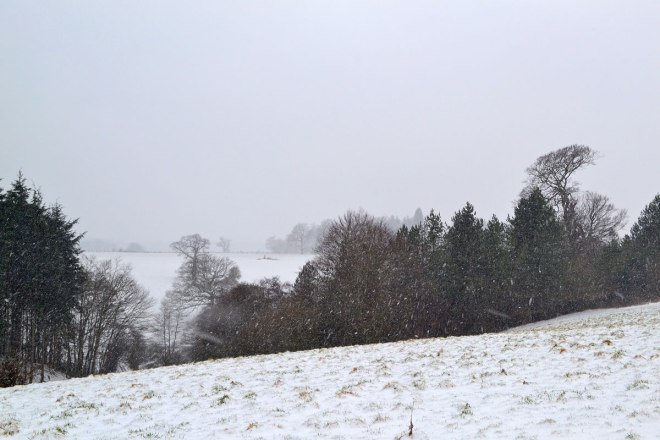
snow in Kent
Nearing the end of the Westerham walk in snow, 3 March 2018
Weald of wonder near Westerham

Weald of wonder near Westerham

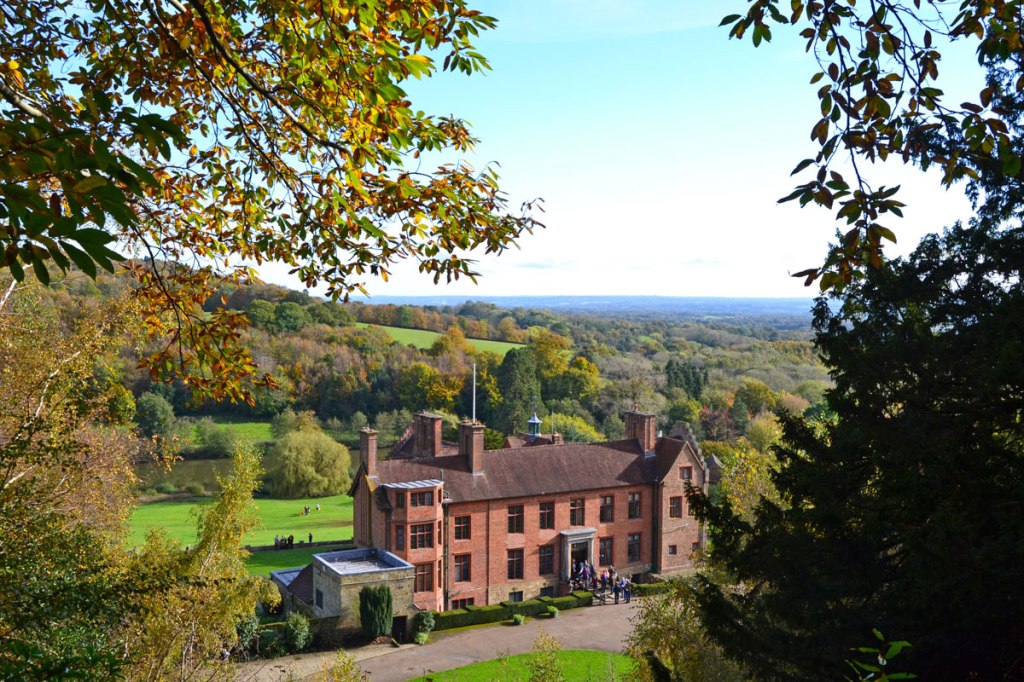
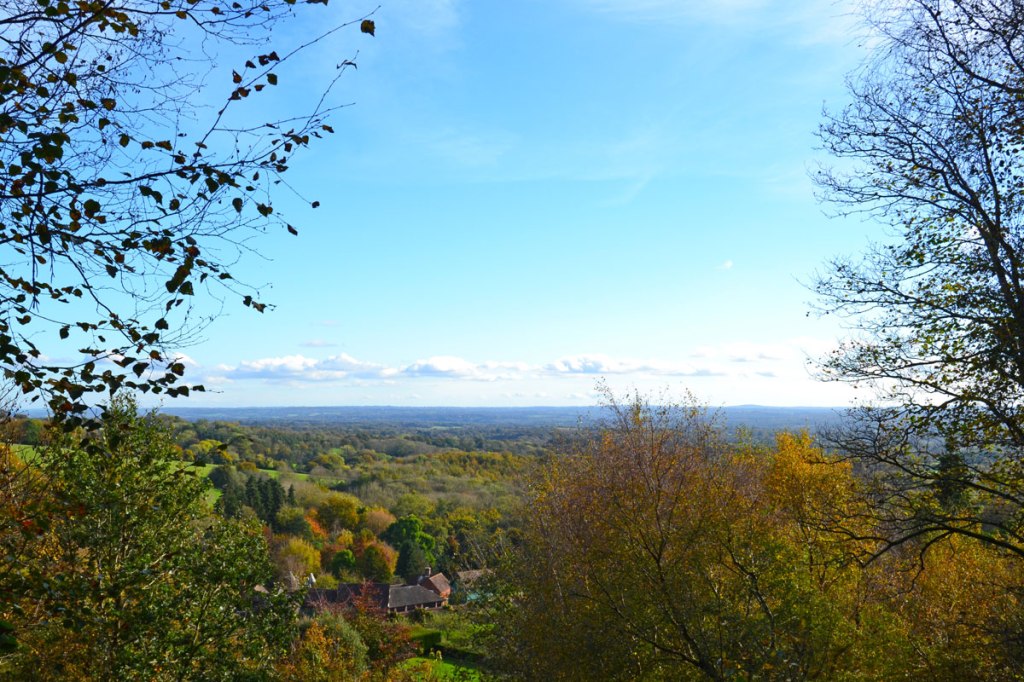
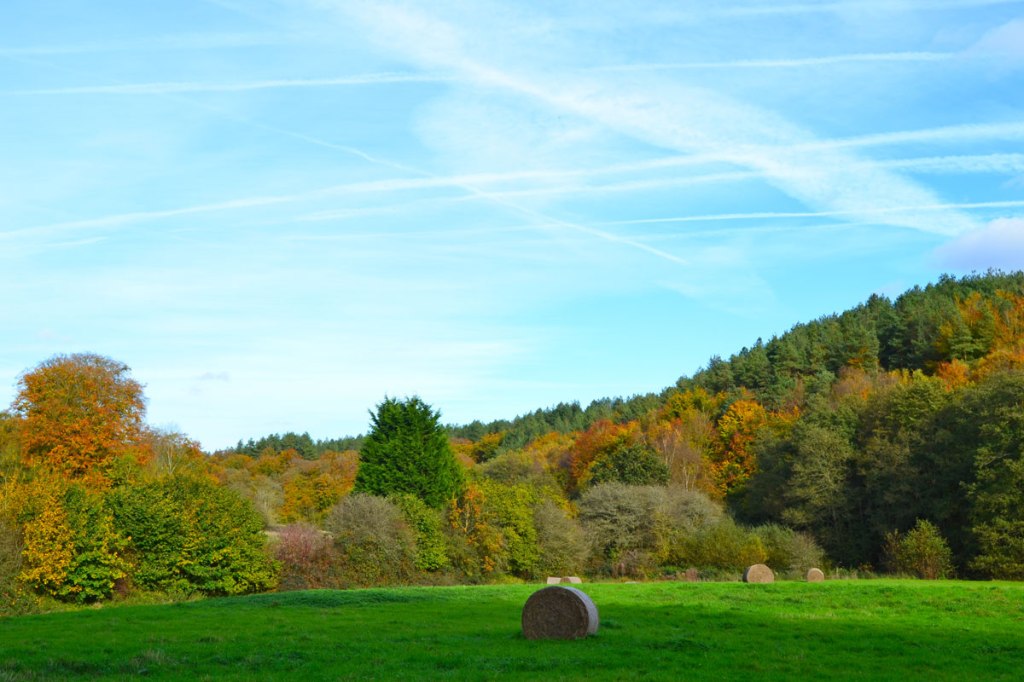
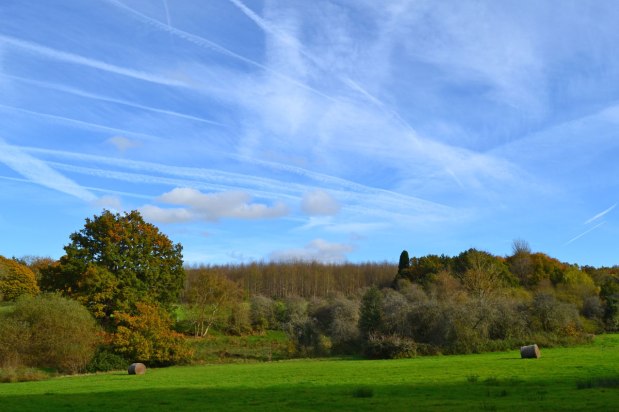
An El Classico of an autumn day. And about time too. We decided that the Hosey walk on the Greensand ridge route at Westerham was the one for us, given the foliage, and views of the Weald from Mariner’s Hill. This time last year the Heaverham circular walk at Kemsing provided something very similar but the warmth of that late October 2023 day seemed freakish at the time. Today was more normal, just a lovely day – neither warm nor cool. The leaf colours, especially in the little valley of the infant River Darent, were superb as hopefully the photos below show, and the vista across the roof of Churchill’s Chartwell gaff as magnificent as ever. I was expecting to see redwings recently arrived from the Netherlands and generally more birds flocking together. But nothing much happened on that front, although mistle thrush were heard and a large buzzard lifted off close to us in one meadow. A pint at the Westerham Brewery place on the way back was an outstanding finale. However, the effect wore off as my football team lost.

Sand, clay, chalk and bluebells

Sand, clay, chalk and bluebells

“When spring came, even the false spring, there were no problems except where to be happiest. The only thing that could spoil a day was people and if you could keep from making engagements, each day had no limits.

That’s a fun quote from Hemingway. I take it to mean prioritise walks above socialising, now it’s a bit warmer (I reserve the right to be wrong about that) and to get out in the woods and downs, witness the transformation from grey and brown to green, blue and yellow. I say “witness” but it happens suddenly, overnight perhaps, when you’re not looking. Suddenly the air is soft, the countryside hues have changed and spirits have lifted.

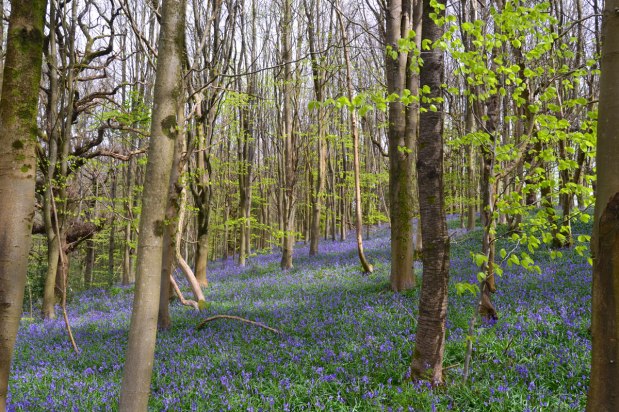
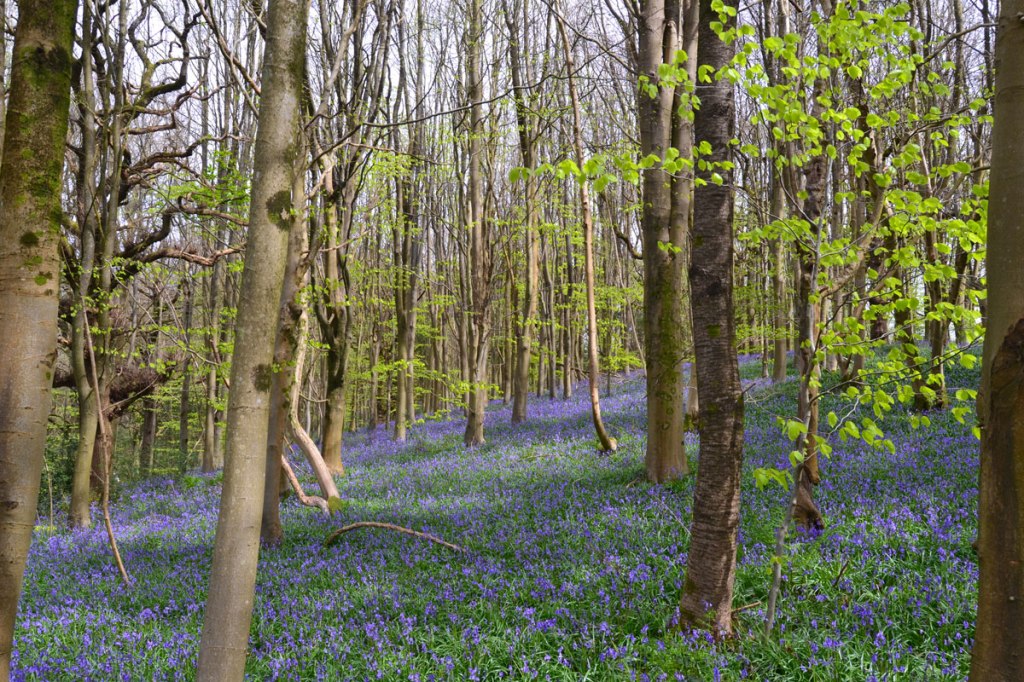
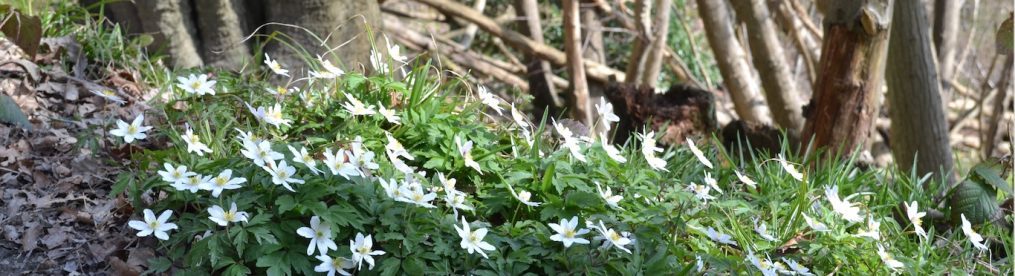
We chose the 3.5-mile Knockholt/Chevening North Downs route for late Saturday afternoon and a 4.5-mile stroll on the Greensand Ridge at Hosey for the following morning. On the Hosey route bluebells were two-thirds in bloom and were mixed beautifully with stitchwort and anemone. We heard coal tit, nuthatch, song thrush, chaffinch joining in the merry burble of song from great and blue tits, robins and wrens. A delightful pint of Westerham Brewery’s Light Ale ensued after the walk at Squerry’s Winery.

At Knockholt, along the escarpment, three red kites drifted overhead throughout the walk and a pair of buzzards hung in the air. These raptors love the updraft along the ridge and I think this walk is the most reliable route for seeing them on of all the walks here, though they can pop up on any. Please don’t think me callous but I rather hope the birds of prey feast on pheasants; there are too many of the latter human-introduced birds in these parts and they kill a large number of reptiles and amphibians.

  • Redwood
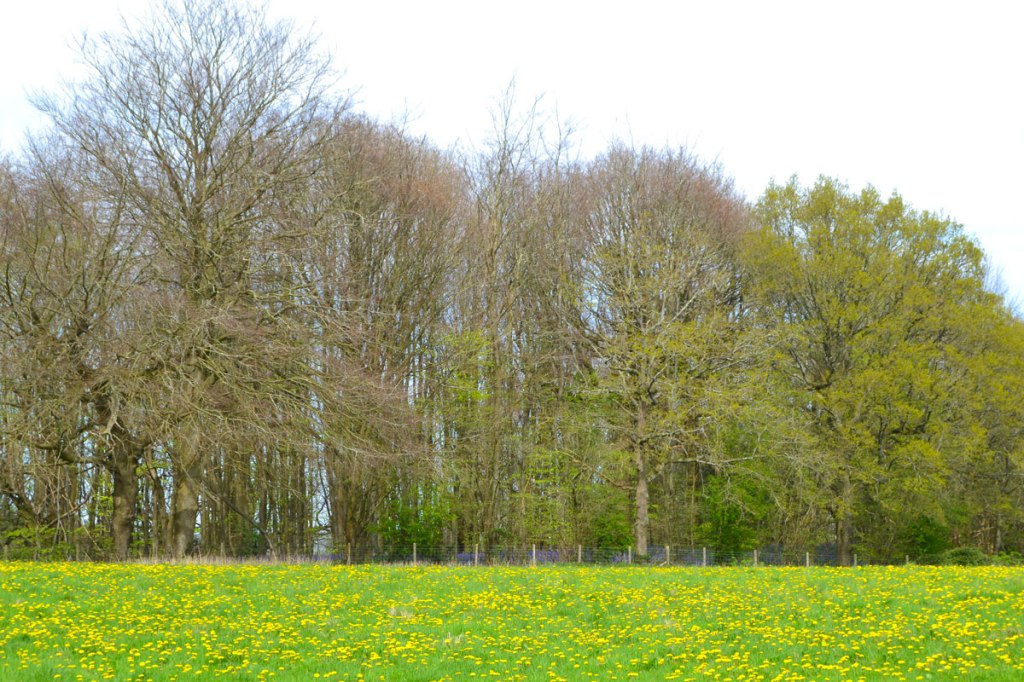
  • Dandelions
  • Bluebells
  • Chevening
  • The cleft in the Downs

The chalk Knockholt/Chevening walk on the North Downs ridge is separated from the Hosey walk on the Greensand Ridge by the clay Vale of Holmesdale, an east to west valley that runs in parallel to the two lines of hills and which contains the M25 and M20 motorways. Holmesdale clay runs between the chalk and sandstone yet despite the starkly different geology in such a small distance the plants and tree species don’t superficially appear to differ that much – presumably the plants have adjusted to the contrasting soils over the millennia. But there are some differences – there are more likely to be orchids and expanses of grassland on the less densely wooded chalk hills; while on the greensand the woods seem a tad more extensive and are more likely to include stands of pine, which like the sandier soils. I’m no expert so I won’t go on. Bluebells like both; that’s the main thing and this week they are reaching their peak at sites like Meenfield Wood, Scords Wood, and Mariners Hill. Enjoy them, they’ll be gone within about four weeks.

Hosed down after Hosey

Hosed down after Hosey

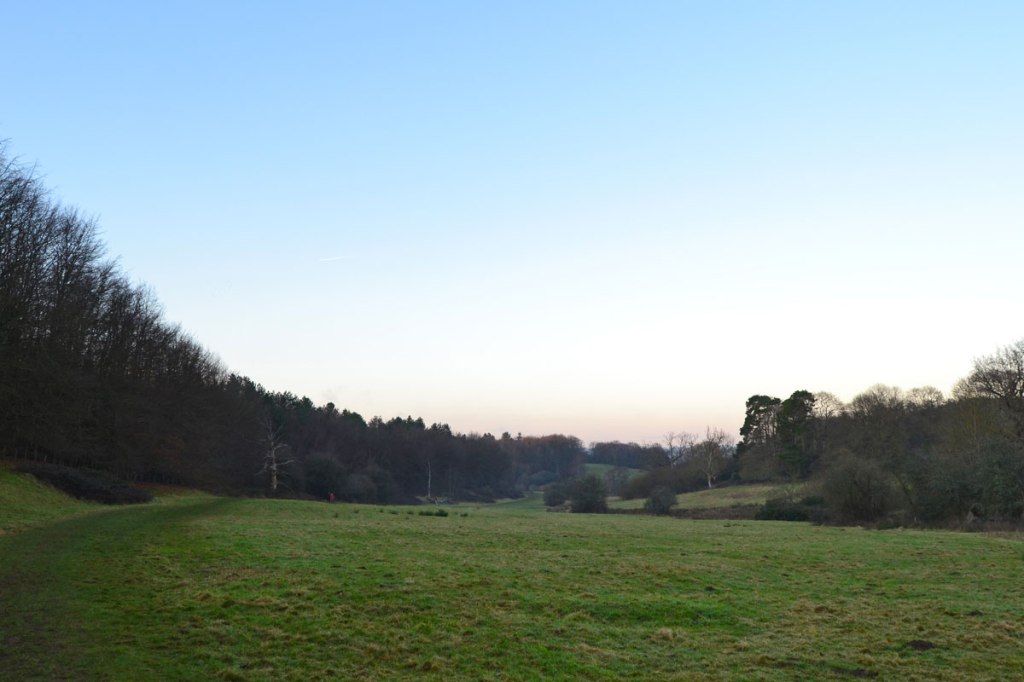
A beautiful dusk walk around Chartwell and Mariners Hill on the Hosey route, accompanied by a stunning full moon and the mew of a buzzard, hit the spot last Sunday afternoon. It’s not always the early bird that catches the worm, you know. The mud just before point 8, the ‘dramatic’ crossing of the infant River Darent, is hilariously sloshy and treacherous enough to defeat any footwear bar stilts fitted with spikes but can be avoided by walking parallel in the grassy field alongside and rejoining just before the log bridge. A satisfying hose down of boots after returning home was called for.