Dungeness dallying

Not that near London…

That weird peninsula in ultra south-east Kent has a particular allure for many. Strange but wonderful light, mystical buildings from down the ages – all clashing; the delightful miniature railway that goes for miles, a lovely pub and interesting flora and fauna – particularly birdlife.

Fishermen often land cod, plaice, bass and mackerel off the shingle close to the power station and twitchers delight in the migrant species that drop by. Historic structures abound and very trendy modern architecture peppers the shoreline among the fishing hulks, converted old railway wagons, coast guard and lifeboat buildings, nuclear power station and two-and-a-bit lighthouses. Local residents probably get a bit hacked off at the sightseers trampling noisily in the shingle around their homes (especially whoever lives in Derek Jarman’s old gaff these days) but that’s the price of living in a nice place.

This slideshow requires JavaScript.
Well, ‘nice’ isn’t really the right word. It’s ‘different’, not nice.

We went hoping for some sun but got little last Thursday. We were really taken by the fish’n’chips at The Britannia pub though, and the cool nautical decor (best pub loos ever). The Brexit Phonebox installation was quite striking too. I forgot my binoculars so relied only on mk1 eyeball to spot marsh harrier, a curlew, a hobby (I think) and a few wheatears. Probably wouldn’t have helped much anyway; my binox are rubbish. We popped in at the RSPB reserve later where there was a plethora of digging bees; an apparently rare sub species (More on Dungeness at North Downs and Beyond.)

One thing, if driving down (not the only way; you could get a train/bus/Dymchurch Railway combination from London) I’d avoid the M20… because of well publicised reasons (too depressing/boring to go into here), but also the lorry-up-your-arse thing. Instead, leave early take a leisurely and really scenic drive down the A21, turn off to Hawkhurst, Northiam then past Rye and Camber.

This slideshow requires JavaScript.
 

Wakey wakey woodland

The countryside has truly woken up. I saw my first peacock butterfly of the year at Ide Hill on Sunday (the more observant among you will be wondering what took me so long I’m sure, they’ve been around for a couple of weeks now) although oddly I haven’t seen a brimstone yet. Maybe I’m just walking along, daydreaming, not really taking stuff in. Anyway, I have noticed the woods developing a healthy green sheen, patches of primroses, and even the odd impatient bluebell bursting into flower. In Scord’s Wood, below Emmetts Garden, I came across clusters of cardamine pratensis – cuckoo flower, a somewhat overlooked spring flower (it’s pretty but not vividly colourful). My camera ran out of juice though, so no pix.

Birdsong has gone up several notches, with chiff chaffs arriving from African and great tits getting particularly busy, blackbirds clearing their throats and robins getting very territorial about everything. Out running recently I surprised a couple of fieldfare picking out worms at Beckenham Cricket Club, no doubt soon to head east to their breeding grounds in continental Europe and further afield. They might have been mistle thrushes, when I come to think of it. Up close very beautiful.

This slideshow requires JavaScript.
 

Knockholt Pound on woods

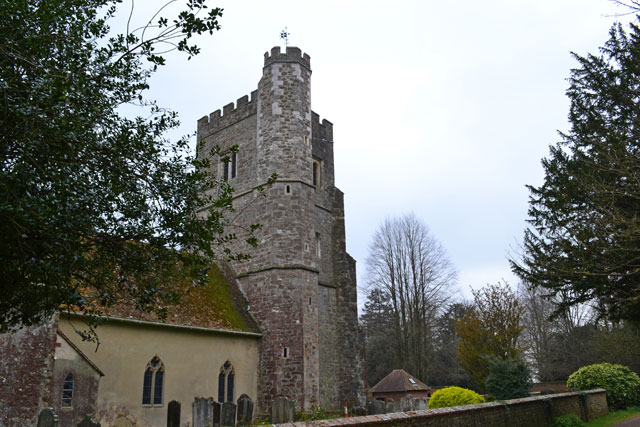
I tried to find a new walk today and decided that the Chevening area round the corner from the Darent Valley looked good. It’s got a lovely old church, a secluded 17th-century grand mansion used by the government for dignitaries (are there any still?) and the North Downs chalk escarpment. The house was probably designed by Inigo Jones (trendy name you’ve got to say).

It’s an area I often cycle around out of winter, using the Pilgrims’ Way road at the foot of the scarp and climbing steeply on the likes of Sundridge and Brasted hills. A lovely area in summer.

This slideshow requires JavaScript.


My route started at the end of Chevening Lane, Knockholt Pound, where I parked up. I followed the path down the slope through woods toward Chevening, then swung a right across farm/park land with great views of the mansion. Eventually you enter more woods and emerge on Sundridge Hill by a house with the most extraordinary number of bird feeders. With tits and finches all a flutter around me I strode up the hill on the narrow lane then took the North Downs Way back to Chevening Lane with more woods to the south, blocking the view. All in all about 3.5 miles.

This slideshow requires JavaScript.

It was boring. And muddy.

I passed very few people; there was an angry woman shouting at her dog. The woods seemed lifeless and over-managed. The agricultural land was dull. I saw a buzzard. Great. And some violets flowering. I was pleased with the views of Chevening House, but then I remembered Boris Johnson stayed there sometimes when he was (a useless) foreign secretary. And that was it.

I’ll need to add something, a diversion of some sort, before I can include it on this site. I’ll think of something. But all the paths around Knockholt are a bit stop start. It’s a better area for cycling perhaps.

Catkins and baubles decorate early March

You can now see bluebells growing strongly on these walks and wood anenomes are about to flower; primroses too. But, other than early fruit tree blossoms, much of the colour in the countryside at the moment is provided by catkins. Sometimes they make up a golden sheen in the undergrowth – really rather alluring. Most catkins you can see in north west Kent and the burbs are on hazel, alder, goat willow, silver birch and pedunculate oaks, but walnut, hop hornbeam (not many in UK) and white poplar trees all develop them too.

Alder catkins

Alder catkins in Pilot’s Wood, Shoreham

Essentially they are flowers without petals that distribute pollen. They help the female flowers to be pollinated after the pollen from the male flowers is taken by the wind. Once the seeds have developed the wind disperses them so they don’t growing right beneath their parent. Willow uses insects for pollination rather than wind. Here’s Countryfile’s guide to how to ID them, and here’s the Woodland Trust’s. I suddenly started noticing them on the Ide Hill walk that I did last Sunday in wind and rain. Took them for granted before. A bit unobservant that.

Another lovely little thing to see at this time of the year are the ‘baubles’, dainty balls, hanging off London plane trees. Mostly you’ll see them closer to and in the city but there are plenty in the suburbs. Funny tree the London plane… a hybrid of sycamore and oriental plane, they didn’t exist before the 16th century. Here’s a guide to them, by the excellent Londonist.

Catkin

Hazel catkins © Wikimedia Commons

On a completely unrelated subject, what a magnificent band Steely Dan are. SE London legend Danny Baker’s a huge fan and I’m hoping he was at the Wembley Arena gig last week for their show. Here’s my review at Jazzwise and a better one by ex-Melody Maker chief reviewer Chris Welch.

Ah, the warming winds of … February?

What a strange, beautiful day. Golden light flooding in from a cloudless sky and a startling clarity in the warm air produced scenes as colourful as anything I’ve seen in an English winter. February? We toiled up the steps ascending the steep hillside of Dunstall Wood amid hectic birdsong; the trees were silent only two weeks ago. I half expected humming birds to zip by and howler monkeys to playfully crash through the canopy.

Dunstall Wood steps

Dunstall Wood steps – quite a climb on a warm day

At Austin Spring (this was, again, the Fackenden walk) a huge flock of finches rose from the unkempt fringe and flitted into that row of oaks that strides through the fields there. Without binoculars I couldn’t be sure of all the species but among them were goldfinches, chaffinches, greenfinches and siskins. There must have been 100-plus; quite a surprise.

On Walk 19, steps up White Hill; Dunstall Farm, Austin Spring

Austin Spring – trees full of finches that had been feeding below

Later, in the twilight at White Hill, a tawny owl flew past us – my younger son saw it first as a silhouette on the path ahead of us, and I’m ashamed to say my first reaction was to think ‘pigeon’.

No butterflies though, not a single brimstone, the first to fly most years. You’d think on such a warm day they’d be present. All in all an excellent way to exorcise an away defeat at Burnley.

Dunstall farm house

18th-century Grade-II listed Dunstall Farm House – an attractive building, with a hint of Normandy

Fackenden Down above Otford Mount

Fackenden Down dusk: end of an amazingly mild February day, looking south-west towards Brasted

Super Sunday for walks

With such gentle southern breezes up from Spain and a cobalt February sky we joined hundreds of others in getting out into the nearby Kent countryside today. Once again we chose the Shoreham Fackenden Down route, but this time in reverse: up the steps in the ancient Dunstall woods, across the muddy eponymous farm and down into the steep Austin Lodge valley then the climb to Romney Street. By the time we reached superb Magpie Bottom low clouds had drifted in and a strange quiet had descended, rendering that solitary place strangely eerie. Great! Our only notable bird sightings were both in the fallow fields at Romney Street: a female kestrel hunting exactly where we’d seen the short eared owl a few weeks ago and a huge buzzard lazily enjoying the mild weather. We’d expected to see more. Among the pictures, note the trees growing out of the obvious bomb crater.

Thanks to those who donated to the site today.

This slideshow requires JavaScript.

A brilliant wildlife blog from further west…

I’m often accused of being Kentist or Kentcentric. Maybe north-west-kentcentric. So in the interests of clearing my parochial name, I recommend this magnificent blog on local flora and fauna a bit further west along the North Downs. It’s called ND&B the author of which, Steve Gale, has dedicated years to observing what goes on in his ‘uber-patch’ in north-east Surrey and has racked up an astonishing list of species. On a sombre note, however, he is somewhat downcast about the future of wildlife and has documented a steep decline in bird, plant and invertebrate numbers over recent years. Gale’s writing and photography is of the highest order, and his work is an education for anyone interested in life outside.

Snow on the North Downs ridge

Stunning walk at Fackenden Down today. Far more snow than I expected. Just a few extra metres at the top of the ridge made all the difference and there were some reasonable accumulations in Magpie Bottom. I had birdwatcher Dave for company which led to some more exciting sightings than I even manage without him. We saw bullfinch, coal tits, heard linnets, a probable marsh tit and, best of all, saw a short-eared owl hunting low over a rewilded field at Romney St. Big thanks to those who donated to the site today, much appreciated.

This slideshow requires JavaScript.