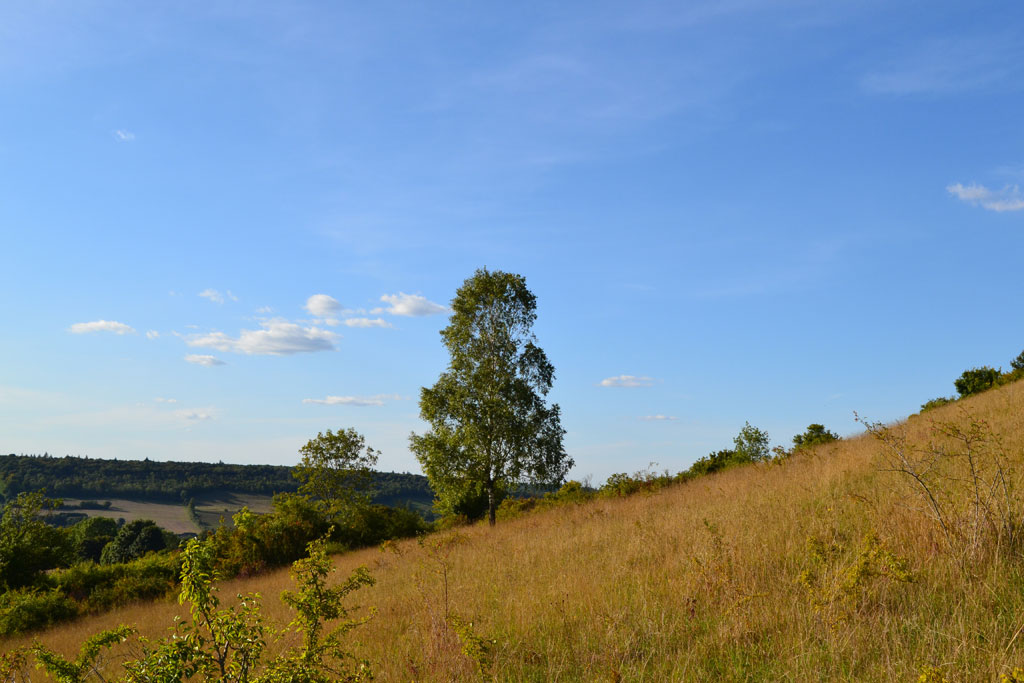
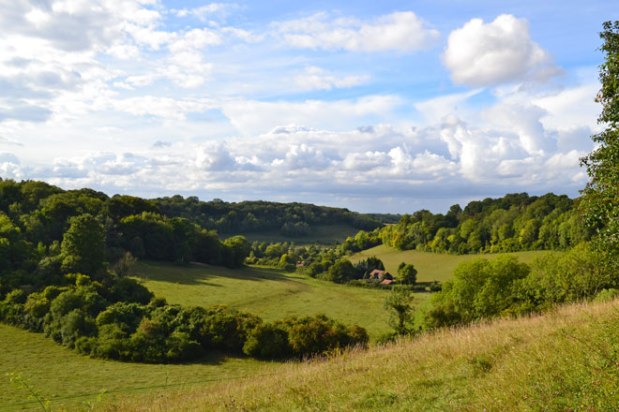
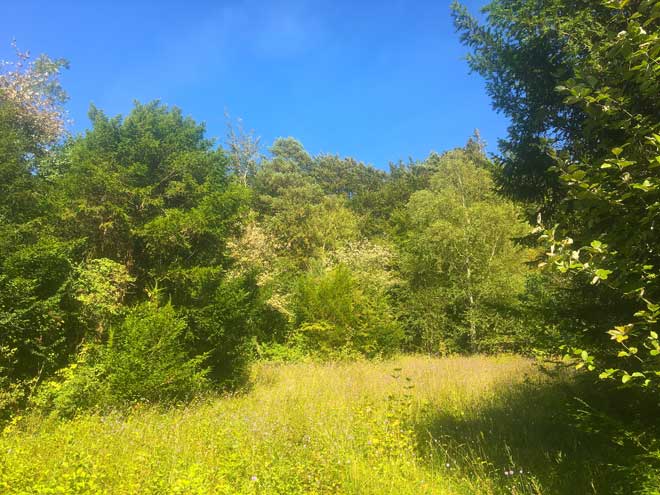
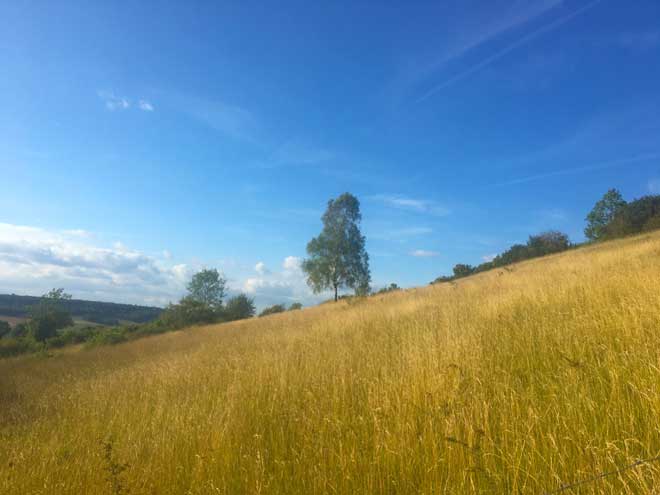
Interesting to see the effect of normal weather on the colour of the landscape. The first picture was taken on 15 August on the Fackenden Down route with the summer drought at its peak; the second picture on 17 September. It had rained during the week of 4-11 September.
Parched ground near Dunstall Farm – the tree branch was dead years agoBack to normal after the early September rains – and, below, a silver birch tree on Fackenden Down photographed on the same days
Of all the walks on this site the one I’ve done the least is probably the Knockholt/Chevening circuit. I’ve not always been wildly effusive about it, even describing the early stages as dull. I was completely wrong it turns out. I strolled the route today and found it superb. The fields on the right of the North Downs Way in the early stages have been left fallow and look to be in a pretty advanced stage of rewilding – the flora is high enough to hide the odd lynx! As I hit Sundridge Hill the instantly recognisable and repetitive song of the yellowhammer burst from the hedgerows like some sort of alien morse code. A huge buzzard (what are they feeding them around here?) eyed me up from above. The views over Chevening House towards Ide Hill were delightful as I cleared the scarp face woodland. Chevening hamlet was as spooky as ever and the following climb back to Knockholt took in a broad vista of the Vale of Holmesdale under a moody sky with plenty of butterflies and wildflowers to admire. A red kite skidded and yawed above in the thermals and I startled a pair of greater spotted woodpeckers which suddenly took off from a fallen tree trunk a couple of metres ahead of me. I think my previous aversion to this walk was to do with the “private” signs around Chevening House, its association with some deeply unpleasant national figures, and the slightly creepy feel of the hamlet – it’s just so quiet, but it’s me, it’s not them – the road noise between points 4 and 5, and having to walk on the road for 100 metres by the farm at point 5. The truth is, there are great views, loads of wildflowers, wonderful trees and nothing much not to like.
As quite often happens in these parts the camera doesn’t capture the walk; slopes are flattened out so the scenery looks blander than it really is.
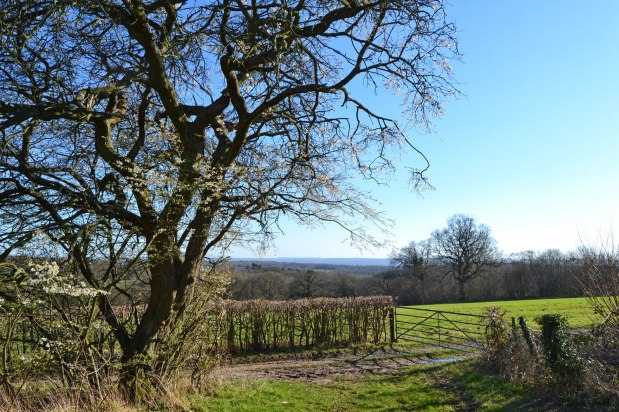
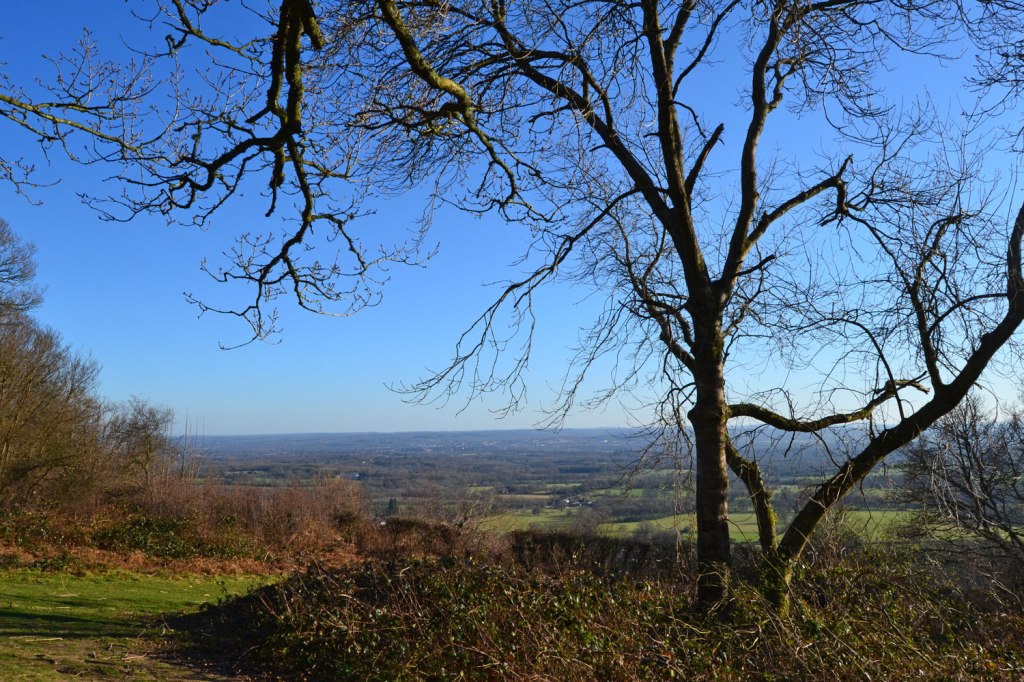
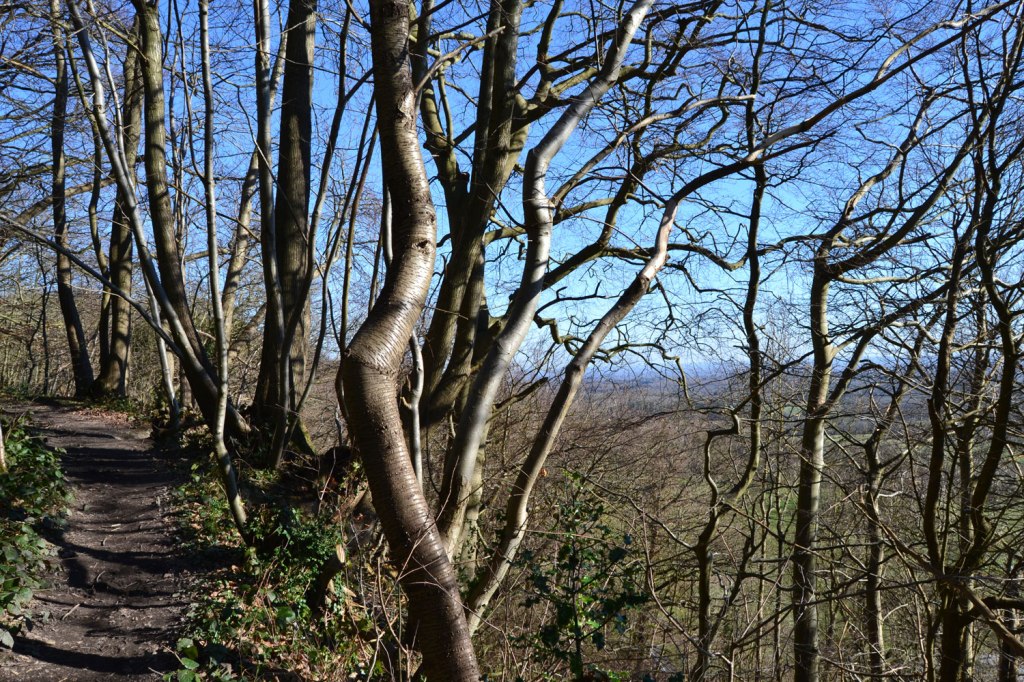
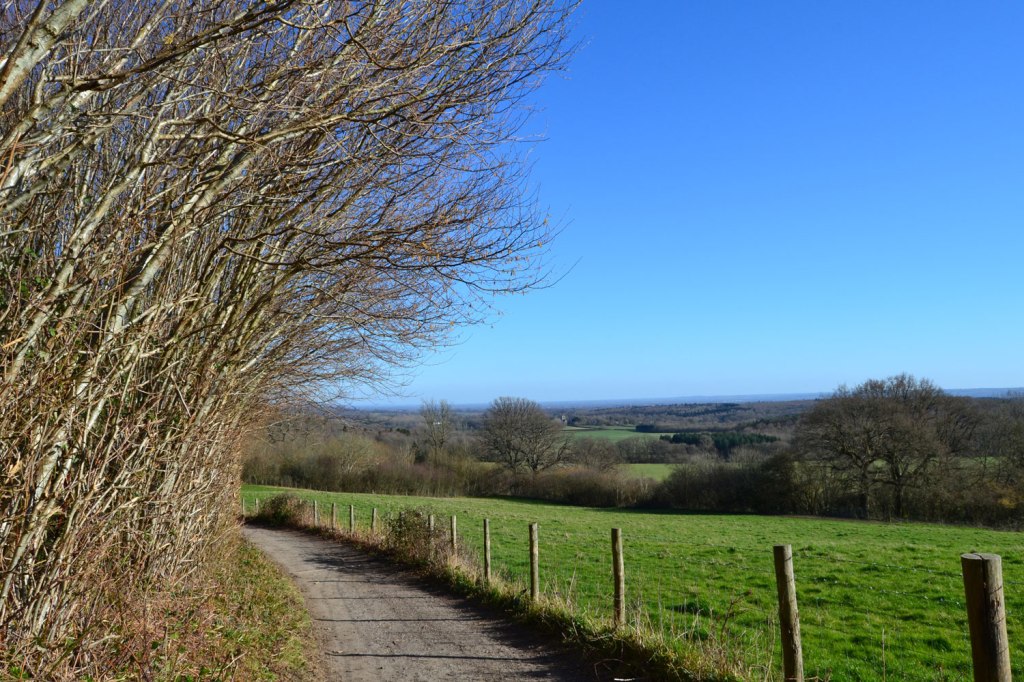
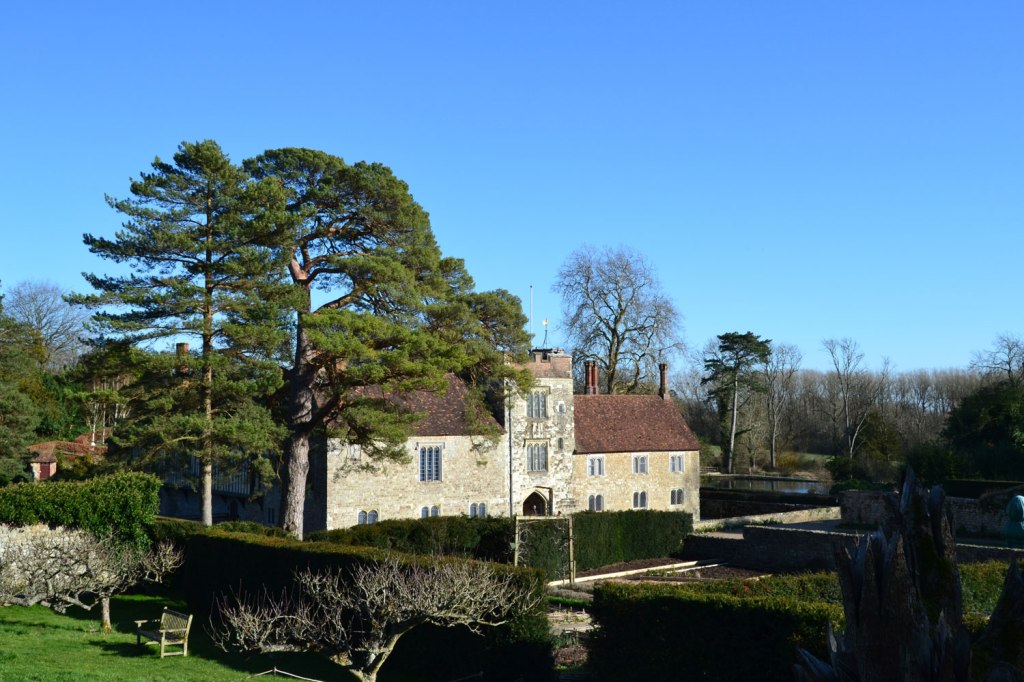
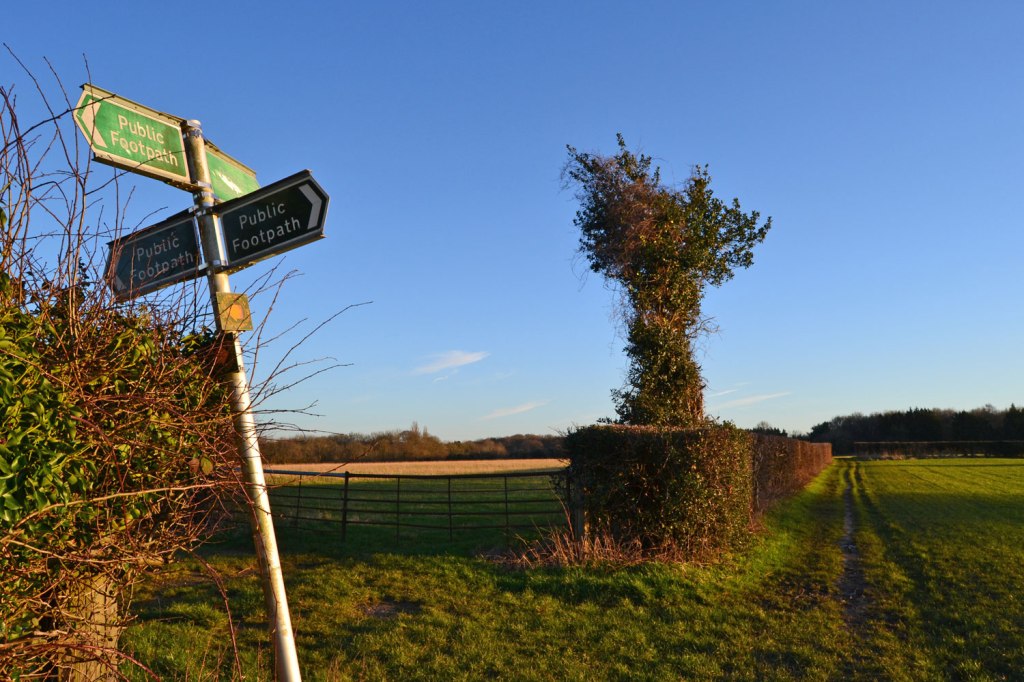
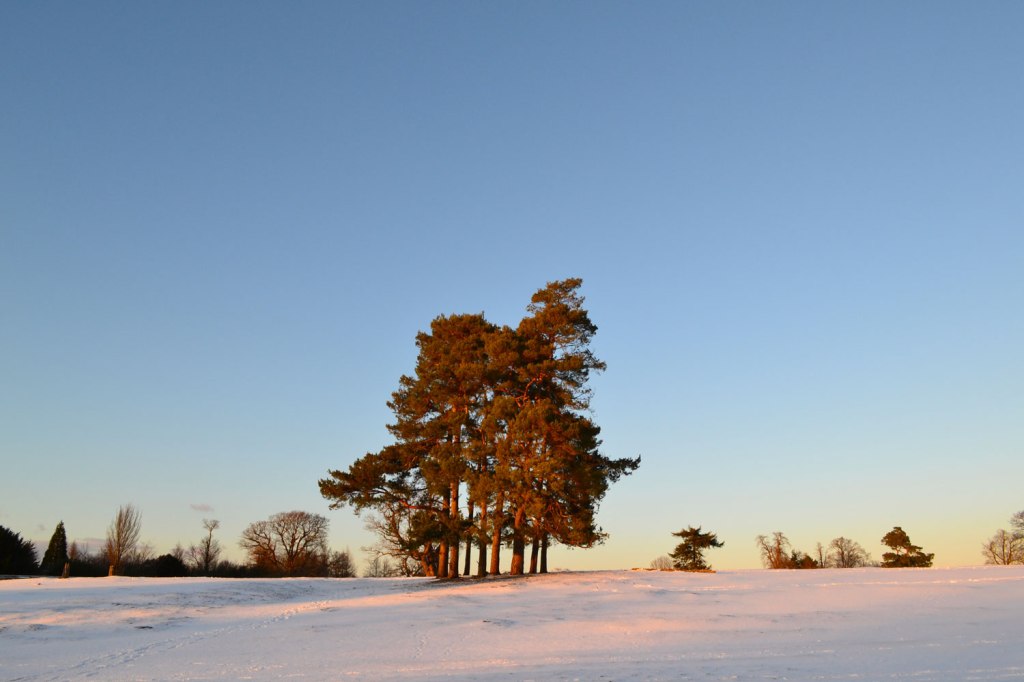
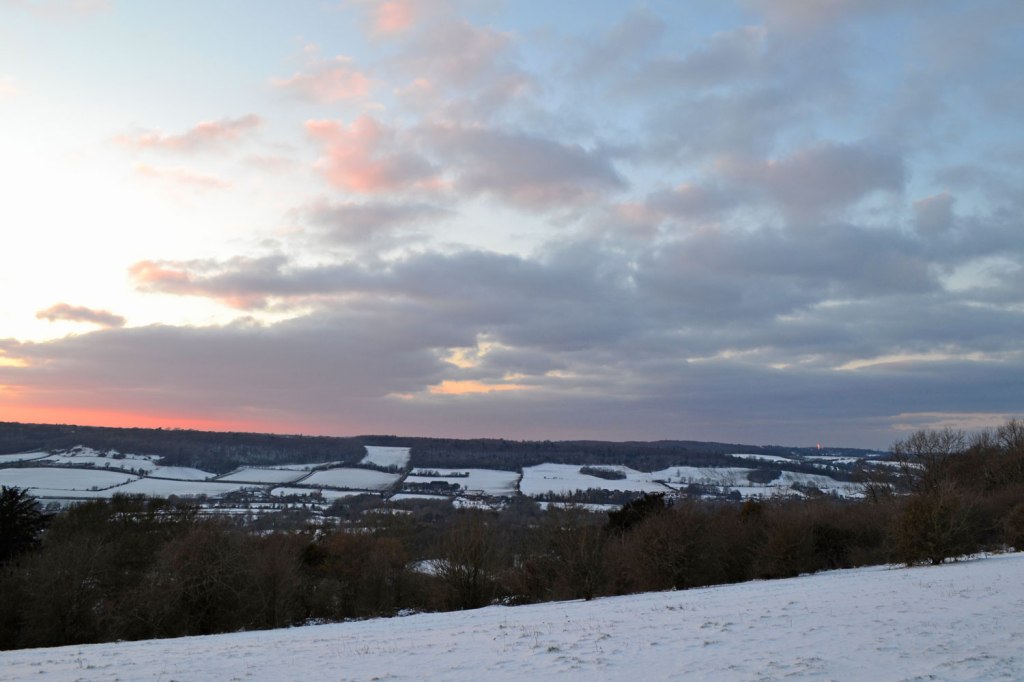
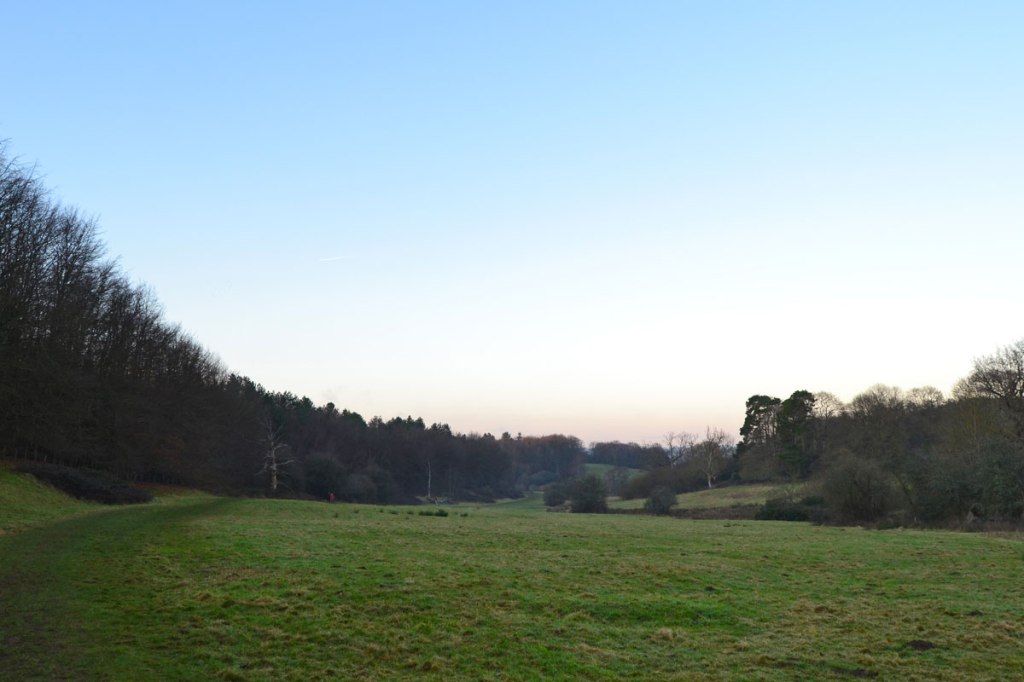
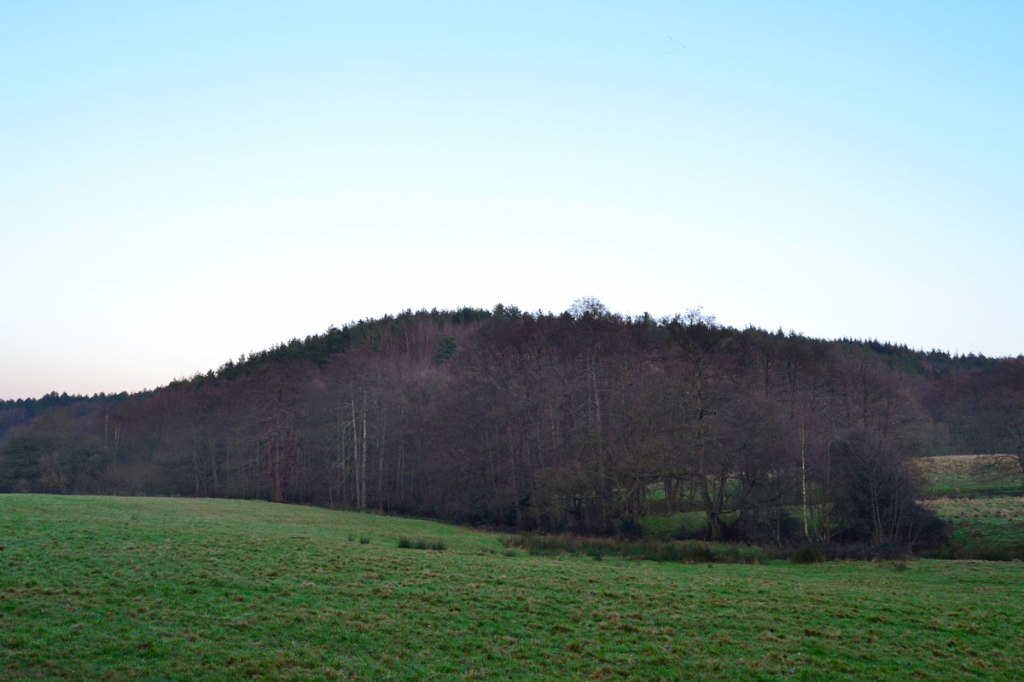
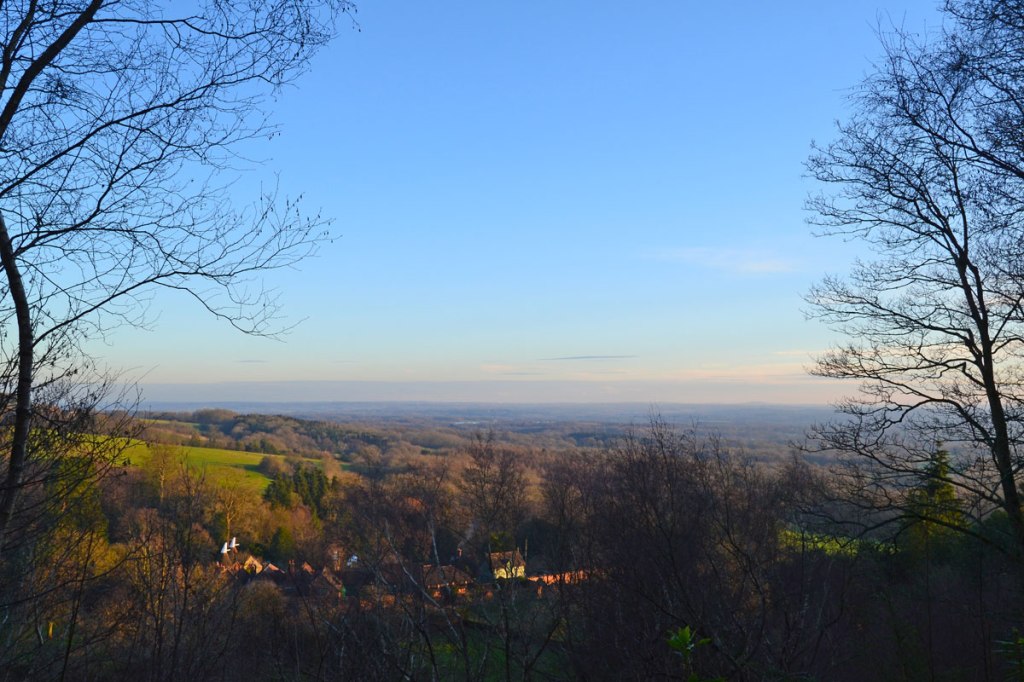
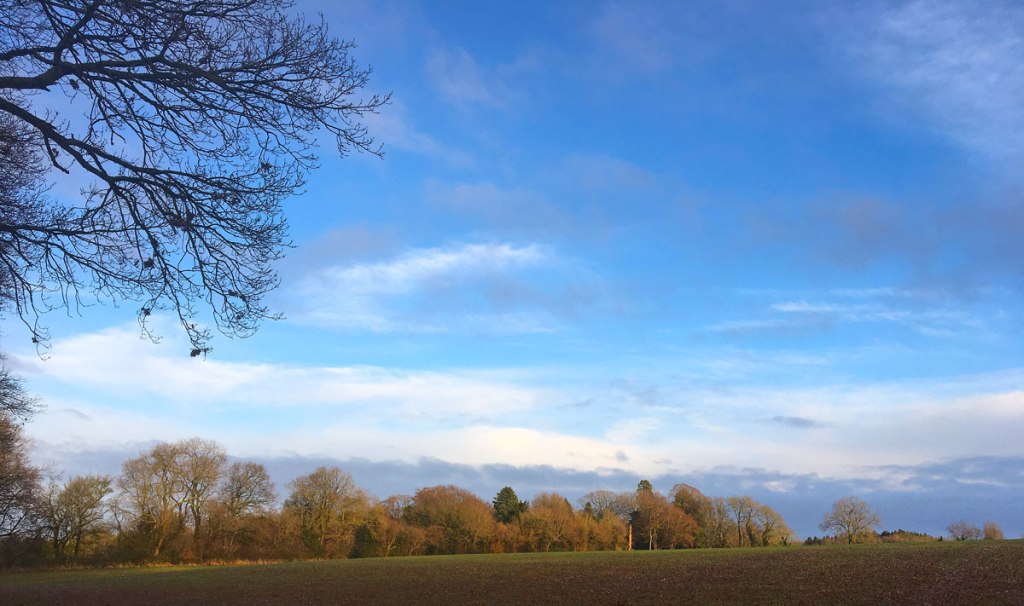
Kent walks near London scrub up well on crisp late winter days like … today! Here are views of the One Tree Hill walks and the Downe walk from recent sunny days.
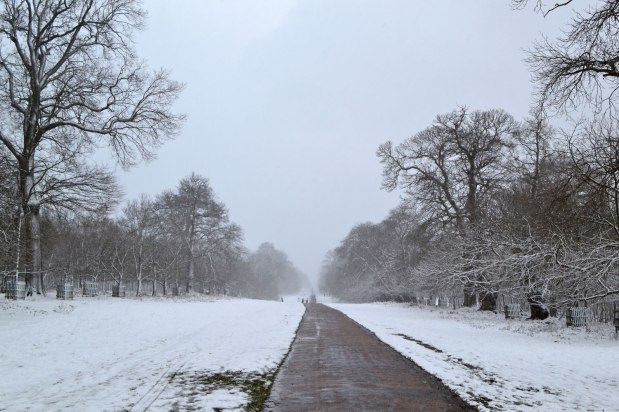
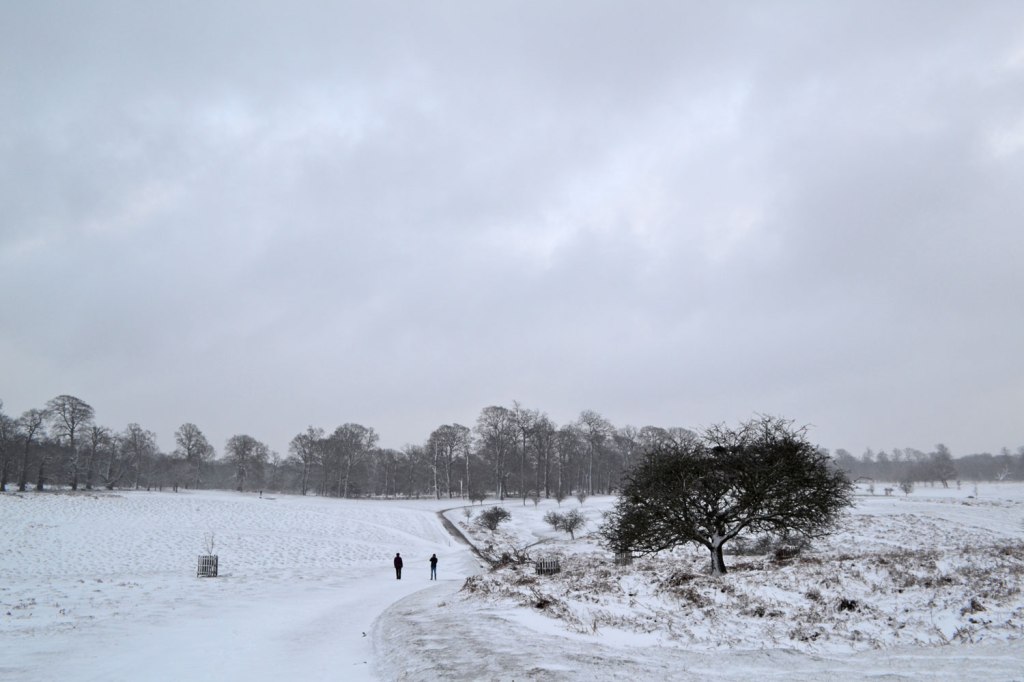
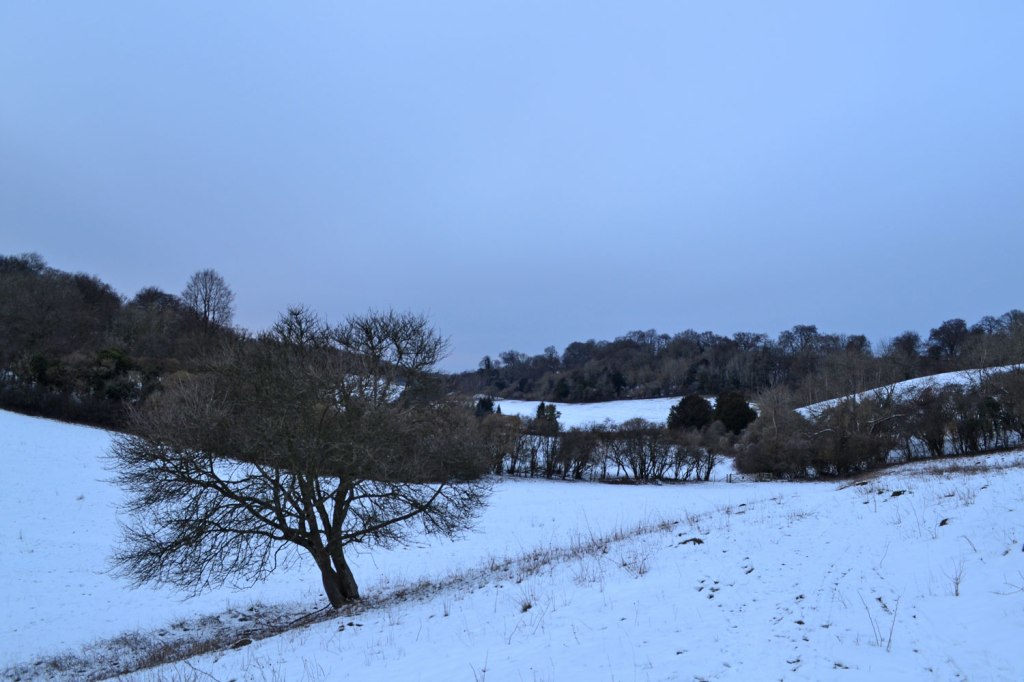
The gloom of December and early January has lately given way to bright, often mild conditions. Great tits are blasting out their rhythmic calls optimistic that spring is around the corner and thrushes have been showing off at dusk with their varied, almost tropical-sounding tones. But this time last year all was silent: we were in the grip of a rare icy blast with heavy snow on the 7th and freezing conditions for the following week. If you’d stayed in south-east London you might have thought the snowfall was very light. But out in Kent, beyond the M25 and on the escarpments of the chalk North Downs and the Greensand ridge, the storm struck more powerfully. It seemed a good time to get out and get the feel of things, so here’s a photographic reminder of what real cold actually looks like. And believe me, the top of Fackenden Down on 12 February was bone-shakingly cold. Enjoy the photos! (Pictured are scenes from the Knole and Fackendon walks)
Personally I don’t mind ‘busy’ walks. Anyone who’s hiked the Samaria Gorge, climbed Snowdon or sauntered along the Amalfi coast’s spectacular ‘Walk of the Gods’ trail, will be familiar with routes’ long lines of dehydrated tourists in frankly inappropriate footwear. These Kent walks offer comparative splendid isolation and are undertaken by people who are generally dressed for the conditions. But if it really is solitude you are after you might find that the Shoreham circular isn’t the best choice on a sunny Sunday, and Petts Wood’s main paths are much frequented by families and dog walkers – unsurprisingly considering its suburban location. Lullingstone is particularly busy around the visitor’s centre and river and Knole around the house – but both are big enough country parks to escape the crowd. There were snaking queues of day trippers on the One Tree Hill routes before the winter mud arrived on sunny weekends. Personally I like to see everyone out and about; it’s great to see people of all ages enjoying the local countryside and greeting strangers as walkers do. But if you want a quieter walk the best routes are Shoreham’s eastern valleys, Otford to Kemsing, Hever, Otford circular and Fackenden Down. The Cudham and Knockholt walks aren’t exactly choc-a-bloc either usually. Don’t get me wrong, there are always people around on these walks – you won’t feel like Cheryl Strayed in Wild (as portrayed by Reese Witherspoon in the film). By the way, if you do choose a Shoreham route and happen to be hungry, the Mount Vineyard does great pizzas I’ve found recently – and it’s a great spot for a drink if you’re waiting for the train (the station’s an eight-minute walk up the road).
A beautiful dusk walk around Chartwell and Mariners Hill on the Hosey route, accompanied by a stunning full moon and the mew of a buzzard, hit the spot last Sunday afternoon. It’s not always the early bird that catches the worm, you know. The mud just before point 8, the ‘dramatic’ crossing of the infant River Darent, is hilariously sloshy and treacherous enough to defeat any footwear bar stilts fitted with spikes but can be avoided by walking parallel in the grassy field alongside and rejoining just before the log bridge. A satisfying hose down of boots after returning home was called for.
I hope everyone who dips into this website had a decent Christmas.
Yesterday (Boxing Day) there was a strange interlude on the Downe walk: a shard of blue sky suddenly appeared ahead, to the north. This was a most welcome sight given I’d accepted the walk would be a uniformly grey and dank trudge. It was also completely out of context with what has been a remarkably gloomy couple of months.
I hadn’t realised that a similar clear gap had developed behind me to the south west. Suddenly, without warning, the landscape was bathed in an utterly spellbinding glow. This reminder that the sun also rises in the UK lingered on for 45 minutes or so as curtains of impenetrable low cloud with rain began to threaten from the London direction. It was pure magic while it lasted.
The final field on the walk (pictured below) was laughably squelchy – definitely wellies only. The mud on all the walks is fairly horrendous at the moment. I was concerned to see the Polhill Bank/Pluto walk being viewed a lot on this site over the past 24 hours. The steep escarpment slope will be absolutely treacherous at the moment. The Fackenden route would be best avoided for the same reason. The best bets for lower mud levels are Knole and Lullingstone (although the woods will be a quagmire). One thing about mud though: I reckon you get more fitness benefits from trying to squelch your way round the walks, necessitating extra and lighter steps. (Best not to take dogs to Knole because of deer; they must be kept on lead at all times.)
The final (horrendously muddy) field during Boxing Day 2021’s half hour sunny interlude. This was once a lovely wildflower meadow with hawthorn trees, alive with bees and home to yellowhammers and bullfinches. But all biodiversity was ripped out around 2014.
Petts Wood is brilliant for 2-3 mile walks combined with a cafe or restaurant visit to the town itself. The superb National Trust-maintained woodland has a multitude of paths, plenty of birdlife, some atmospheric heathery glades and a field with a nice view. There are little streams, a wonderful variety of trees from chestnut groves to scots pine, tulip trees, yew, holly and stout oaks, and lots of mud I’m afraid. I strongly advise travelling there by train if possible especially at the moment because the west side of town is gridlocked having been hit by petrol queues and major roadworks. It’s only a few minutes on the train out of Bromley South, on the Victoria-Orpington line; or 15 minutes from Hither Green/Lewisham on the Charing X-Sevenoaks route. The woods are a 10-minute walk to the north of the station, as is Jubilee Country Park. I’ve created a GPX map (revealing where you are on the route in real time) that ties in many of the more interesting parts of Petts Wood and its neighbour Hawkwood (see bottom of post for OS and All Trails versions).
Oh yes, by the way, there’s a major running event in the woods on Sunday October 10 so best avoid then.
To help you find suitable walks here’s a rather rough-looking interactive Google map. Just click on the lines and blobs to get more information about that walk. You can use the menu at the top of the page to print off pdfs and to look at more detailed directions. Each walk description has a GPX map attached so you can follow your progress in real time – if you have signal. Failing that please use an Ordnance Survey map to check the route (OS Explorer 147 has them all).
Best walks for travelling without a car are those in the Darent Valley – the ones starting from Shoreham, Eynsford and Otford/Kemsing stations. Knole Park can also be reached from Sevenoaks station.
Devil’s-bit scabious (Succisa pratensis) is a flower from the honeysuckle family and it looks so cool right now. Maybe not for much longer but it’s currently fairly prominent on the chalky walks such as Fackenden, Polhill, Chevening and Kemsing. Where the grassy hilly slopes are looked after by naturalists, the Kent Wildlife Trust for example, the flower supplants regular scabious – another superb flower and particularly sweet smelling – by mid September. The marjoram is no longer flowering much, and thyme has died down somewhat too so for pollinators the devil’s-bit, which looks a bit like knapweed at first sight, is the main show in town. It is certainly being enjoyed by butterflies and bees on the wonderful ‘wild garden’ path – which in June is great for orchids – leading to Fackenden Down this week. But the star of the walk – apart from the landscape and sky – was a superb green common lizard in a sunny spot near the top of the down. Few birds were in evidence but chiffchaffs called from the hedgerows, a buzzard soared in the distance and being I’m optimistic I’d say I may have seen a pair of late-migrating turtle doves heading south. Apparently devil’s-bit scabious got its name from its ability to treat scabies, a property that the devil didn’t like much (the devil wants us all to be itchy you see). Slightly weird but there you go.
The accompanying photos were taken on my iphone and hence are poor quality – they certainly don’t do the blue-purple sparks of devil’s-bit any justice; my camera is once again defunct at the moment. (Close up of flower photo by Anne Burgess/Geograph creative commons.)
























 Kent walks near London