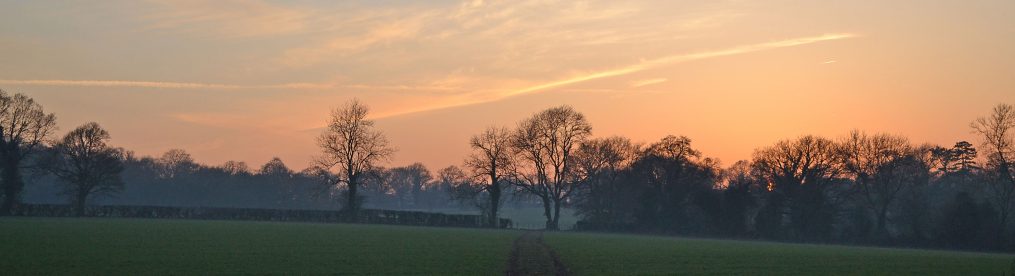
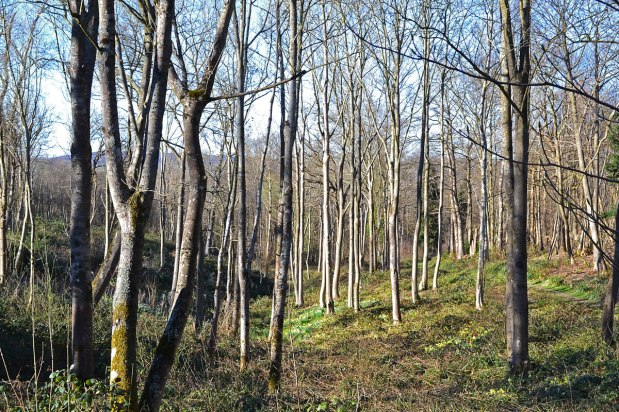
Now that there’s some prolonged sunshine, some of the humungous amounts of mud from February are beginning to dry up. ‘Some‘ being the operative word. Still, let’s welcome the bright weather, which is set to continue this weekend. Saturday could be a bumper day for Kent Walks near London but wellies are definitely still needed – because shaded mud patches will not have dried as yet, not even close. Early spring can be an odd time of year – the trees still appear brown and grey from a distance, though close-up you can see buds. Soon the blackthorn will flower – that’s when spring has sprung for me. Early March in good weather is a very particular time of year – it’s as if spring caught the natural world asleep, and it takes a little time to wake up. But already there’s more birdsong and a bumblebee or two getting busy. I particularly like the Ide Hill, One Tree Hill, Bough Beech and Hever walks at this time of year, the south-facing slope of the Greensand Ridge focuses the warmth and is protected from any cold easterly or northerly winds. You can’t help but feel a bit of optimism, despite you know, everything. The pictures below are from the Bough Beech, Petts Wood, Chevening, Ide Hill and One Tree Hill routes. I love the blackthorn. The featured picture for this post is the woods at Hever in late March. There’s a sheen of primrose and celandine on the woodland floor; I really like the photograph, I can remember every detail of that day.
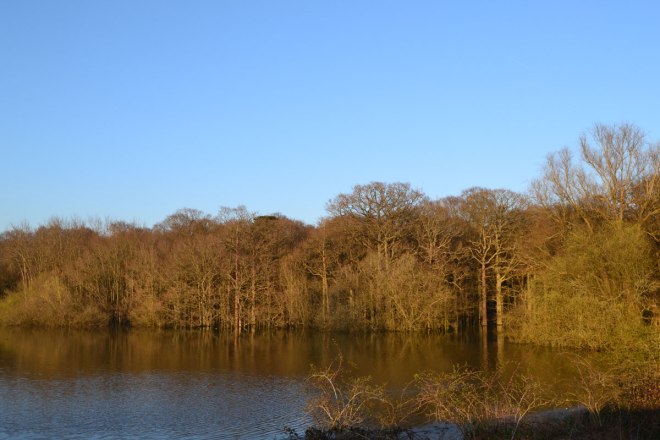
Flooded woods, Bough Beech, March
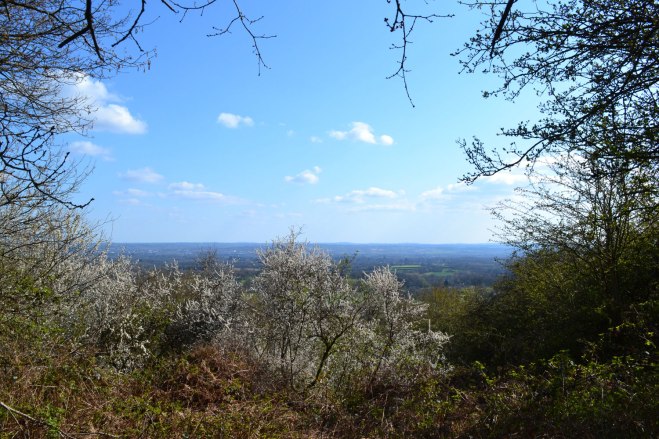
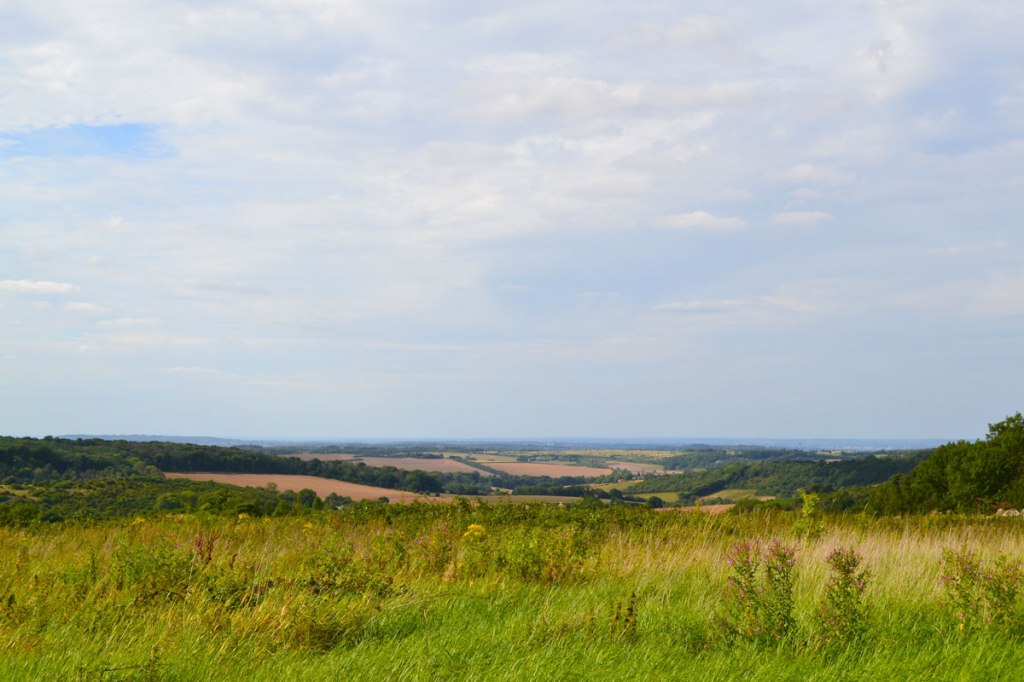
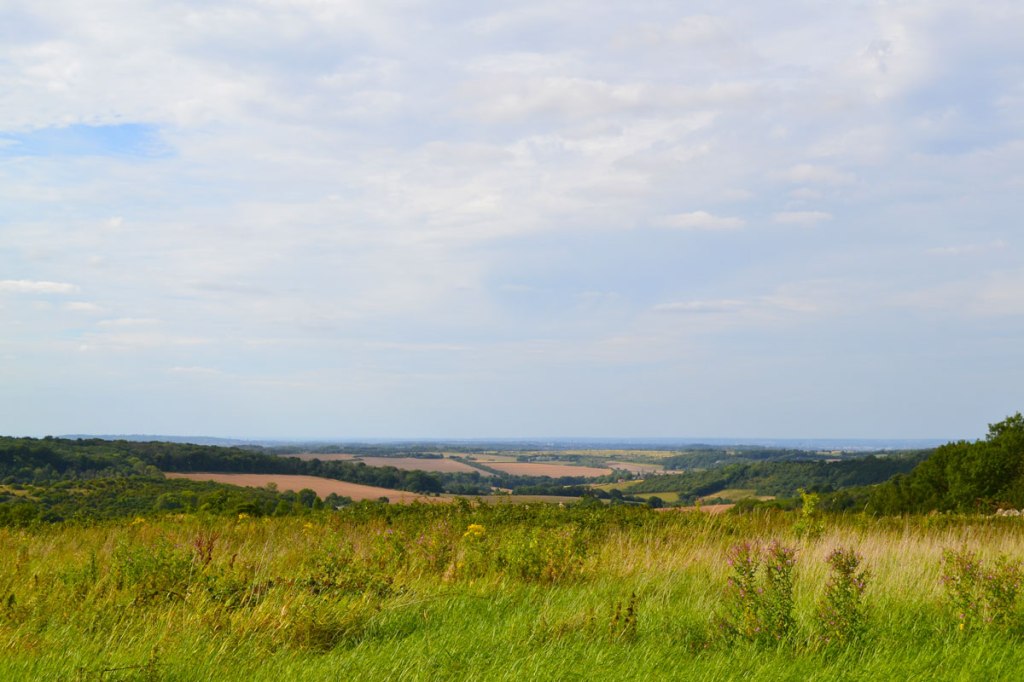
March view over Brasted and Sundridge
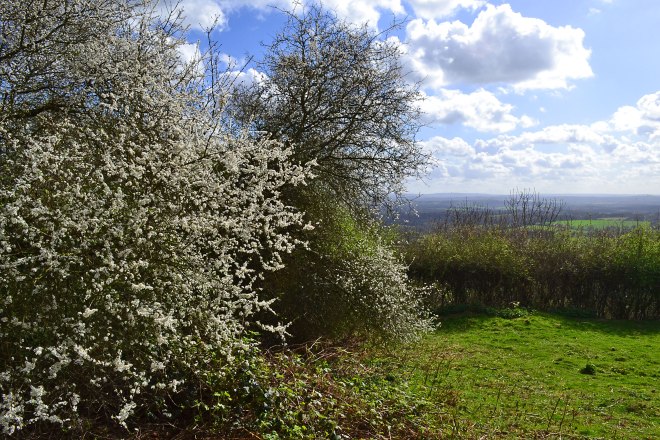
Blackthorn blossom on One Tree Hill, Sevenoaks, Kent
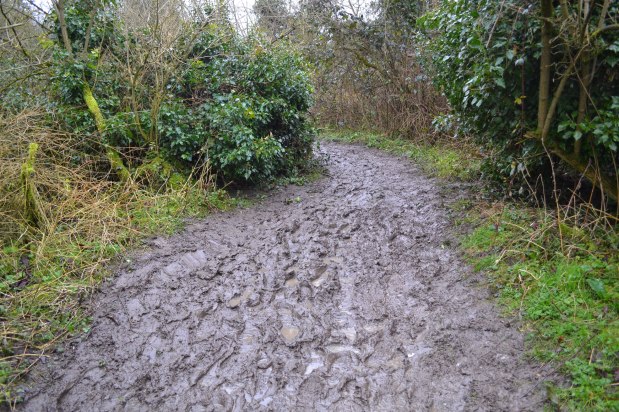
A cursory glance at this website may suggest that the north-west Kent walks are permanently sunny. Or snowy. Or bright and breezy. My choice of photographs suggest the routes exist in a world rich in colour, and one must only stride out purposefully with map in hand and trainers on foot to have a great time. Alas, it is not so. Walkers are squelching through giant puddles, inching their way around horrific mud patches and sliding back down liquid hillsides. They are arriving back at home dishevelled, slightly disorientated and in need of a good soak. As I write in mid-February, during one of the cloudiest and wettest winters I can recall, the truth is that unless your need is great, it might be better to abandon the notion of walking in the countryside for the time being. One friend terminated his walk at Westerham after a few hundred yards last week, while another KWNL reader informs me that Polhill and Meenfield woods (west of Shoreham) are impassable. Polhill is simply too steep to bear most humans’ weight in these slippery conditions, while Meenfield woods’ tracks are seas of horrific mud made worse by bulldozers and diggers being used for forestry work there (thinning some of the trees).
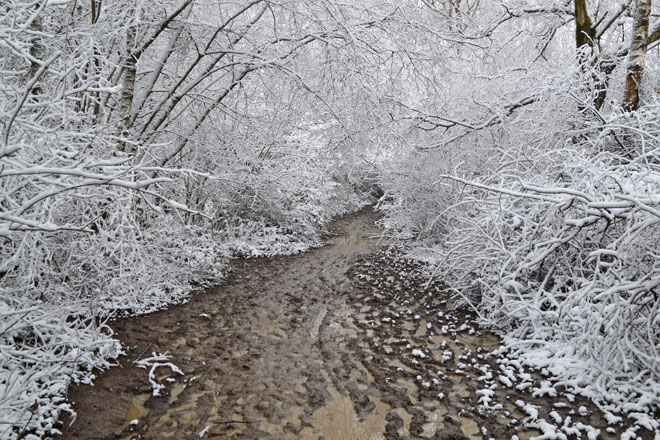
Path turned to mud, amid snow and frost at One Tree Hill, February 2021. I’ve never seen anything like this scene before or after
Has anywhere survived the mud?
If you must walk, I suggest: Knole Park in Sevenoaks, where there are solid, firm stone and tarmac paths; Lullingstone, where the chalk downs spirit away a lot of the surface water into aquifers (but avoid the busy, ridiculously muddy path alongside the Darent river); and perhaps High Elms, but don’t blame me if that proves a morass too. Avoid the Greensand Way walks, such as One Tree Hill, Hosey Common, Ide Hill and Underriver. Even the trusty old Downe walk, which once was dependable in all conditions, is in an appalling state now, partly because the ‘new’, hemmed-in paths around the children’s farm compress the footfall.
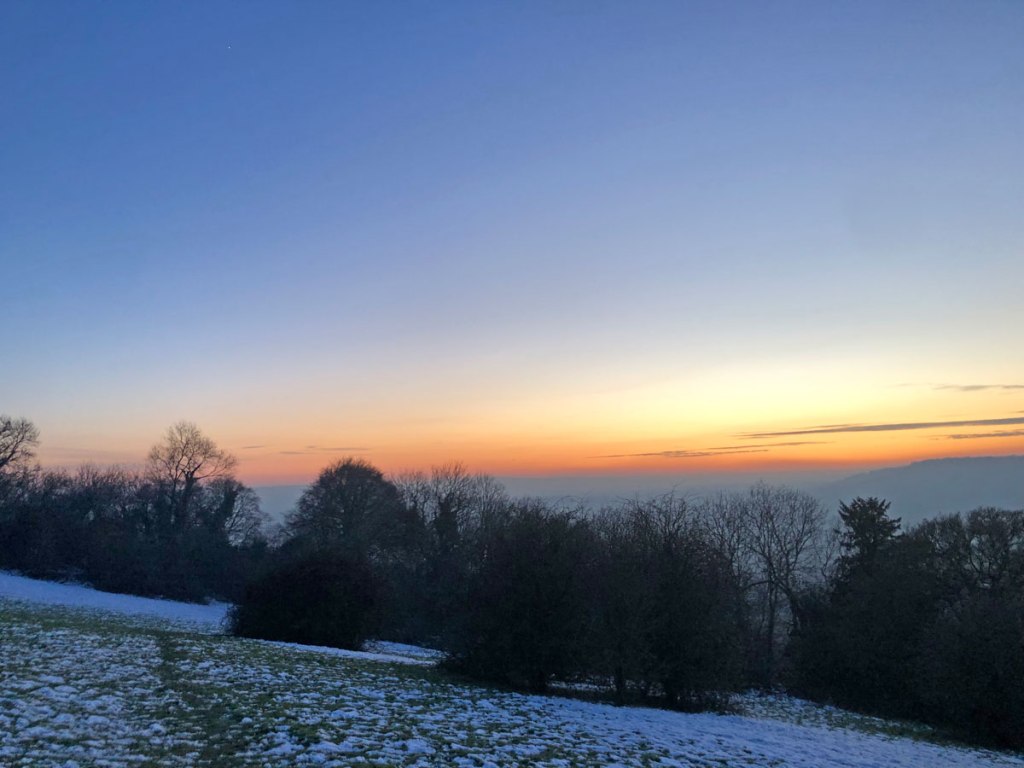
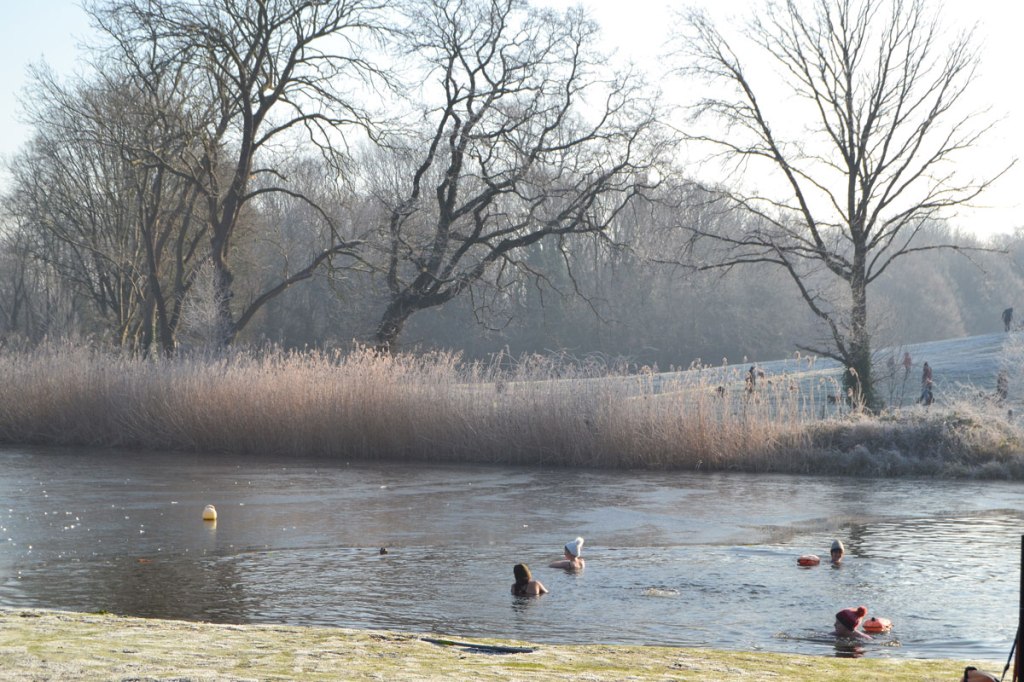
At last, sharp sunny days with frost. Walkers in the North Downs were rewarded at the weekend by a cobalt sky, heavy frost, colourful sunsets and perhaps the remnants of snow from the previous Wednesday night – it was hard to tell where the frost stopped and the snow started. I walked at Beckenham Place Park on Saturday morning before taking the Fackenden Down walk in the afternoon. As soon as we got a bit higher in the hills, the conditions became increasingly picturesque. Magpie Bottom, a hollow that faces north, was a picture, but unfortunately my camera battery had died and we resorted to phone camera images. The last time I saw similar conditions was in January 2022 but on that occasion the temperature must have been even lower because the frost remained glued to the trees even in mid afternoon whereas on Saturday there was some kind of thaw happening where the sun was felt. A sublime, memorable walk.
Please contact me at ammcculloch49@gmail.com with comments about the walks.
Pictured below: sunset from the top of Fackenden Down; moonshine at Fackendon Down; Adam (the author) and Bonny (Photo by S. Hart); looking east into Magpie Bottom; looking along the little valley north from Dunstall Farm; Dunstall Farm; ice on Beckenham Place Park’s lake; swimmers in the lake; looking east along the lake; the lake amid frosty reedbeds
Happy Christmas and New Year everyone! Great to see so many people use Kent Walks Near London for their end-of-year outings once again – particularly as yet again the festive season has failed to produce those ‘crisp’, ‘frosty’, ‘bracing’ walks the Sunday supplements are so fond of telling us about. But we plough on regardless… learning to enjoy the dankness and the shades of grey, the browns and blacks of the Kent countryside at this time of year. Well we would have ploughed on if it hadn’t been for horrendous bouts of cold and flu that has grounded even this most militant of militant Kent walkers. I’ve barely managed a foot-foray in the past couple of months.
Yesterday, though, I took on the mighty High Elms loop – adventure is guaranteed once you’ve got past the social dog walkers, many of whom don’t seem to get more than few hundred yards from the car park. I really enjoy the woods on this walk, one huge holm oak particularly commanding attention on the quiet side of the loop away from the High Elms centre. There are also pines, and some larches, and an unlovely but wildlife-friendly scrubby field on the opposite side of Shire Lane that always attracts kestrels (perhaps owls too, late in the dusk) hunting for mice etc. Birds were thin on the ground. I heard a thrush, but other than a solitary kestrel and the usual robins, great tits and parakeets there was nothing to report. I thought I heard an owl, but I suspect it was just some bloke putting on a silly voice while calling his dog.
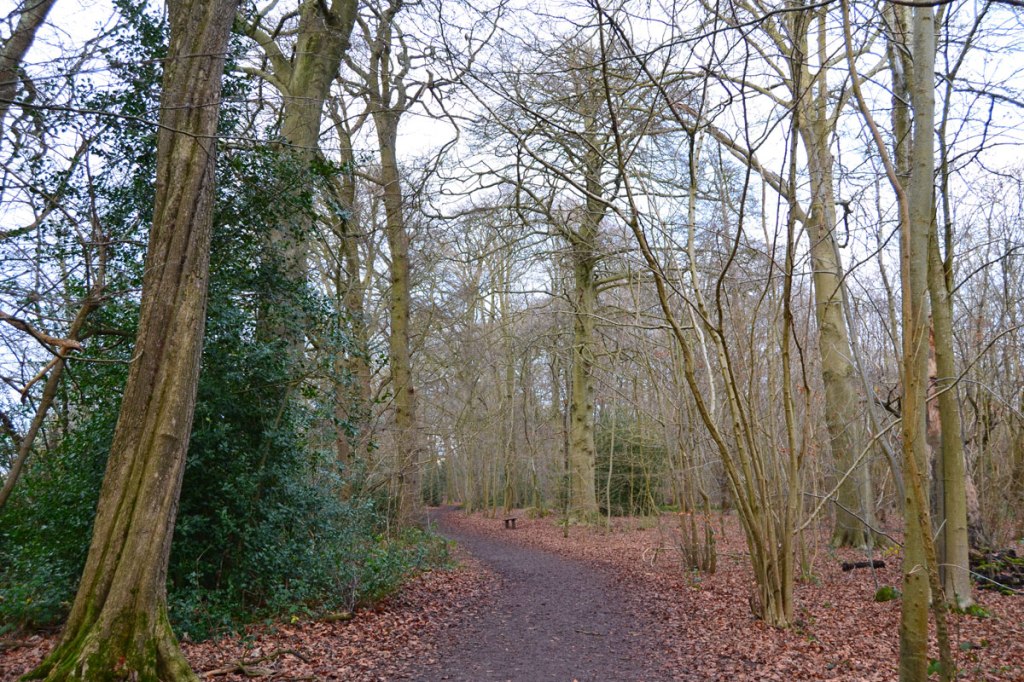
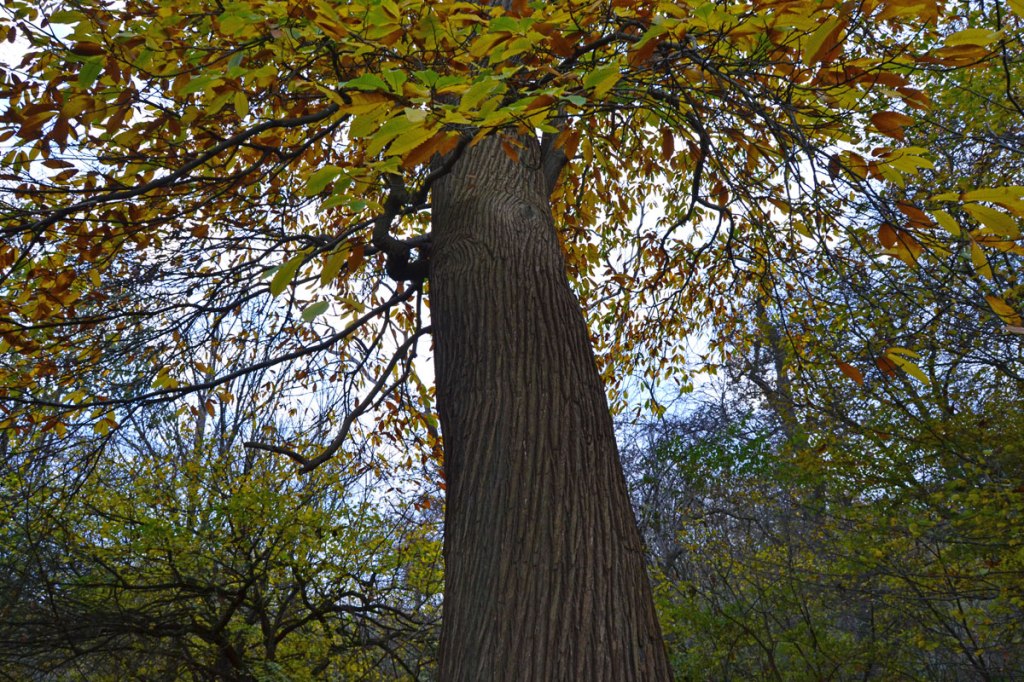
Photographs: A kestrel wheels away after hovering over the scrubby field between Farnborough and High Elms; winter dusk in the woods; one of High Elms’ many paths; a sweet chestnut in late November at Lullingstone’s Beechen Woods.
The area around the Beeche centre and cafe at High Elms – the old Lubbock gardens – are great to explore, especially with kids. The walk is pretty gentle, with no steep sections and it’s easy to shorten it if you need to. I needed to as dusk and a bout of sneezing settled in. Parking in the car park at High Elms is ideal but it gets very busy, which is why my route suggests parking in Farnborough village near The Woodman or the church and starting/ending there.
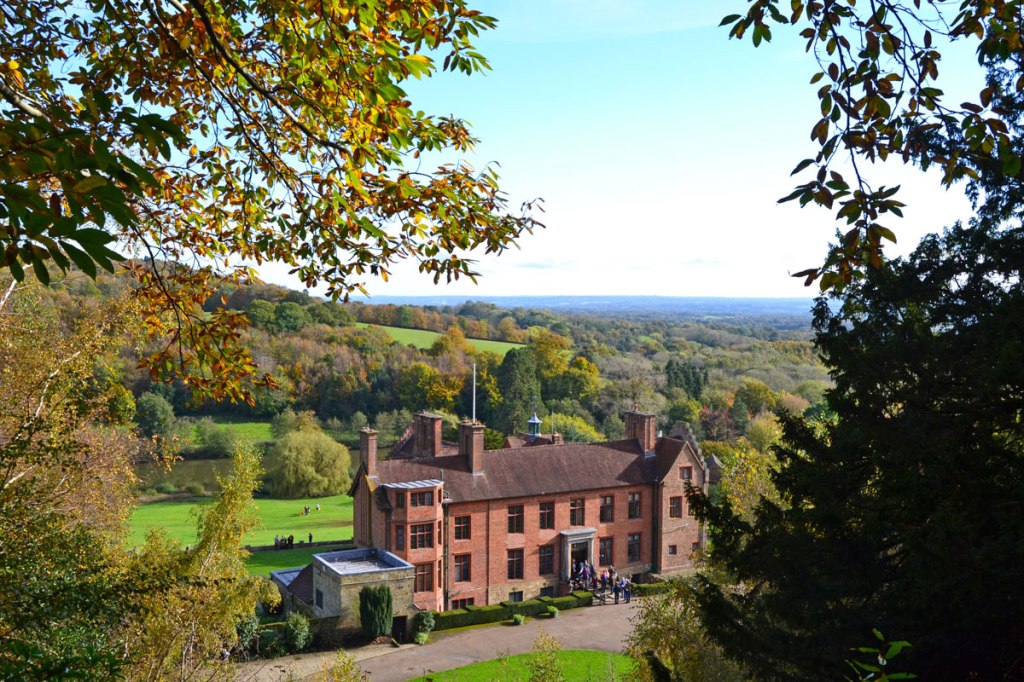
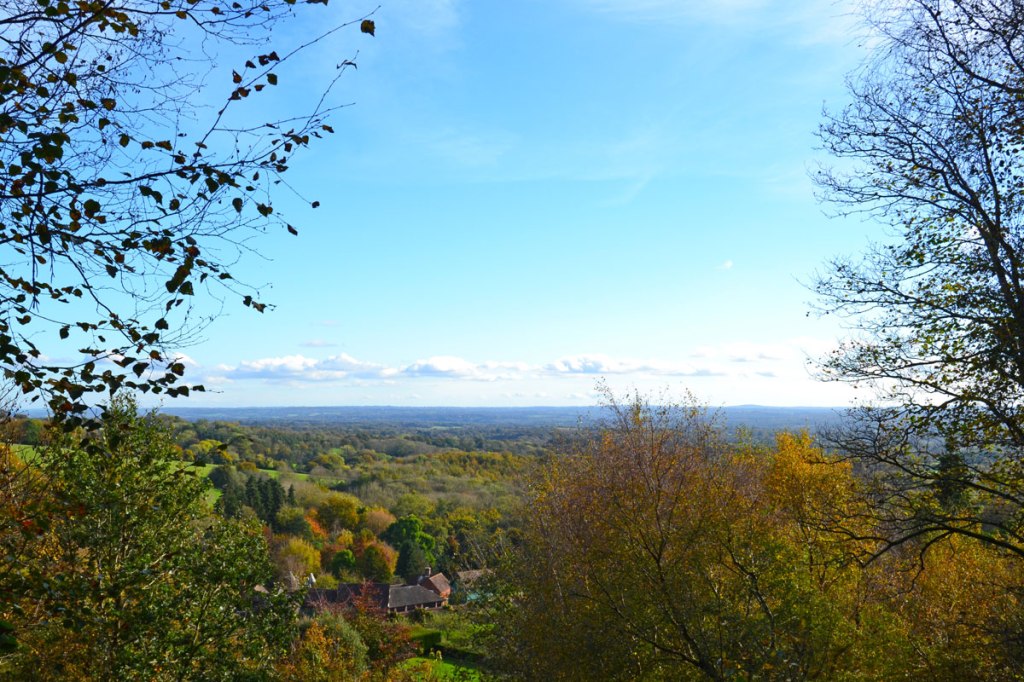
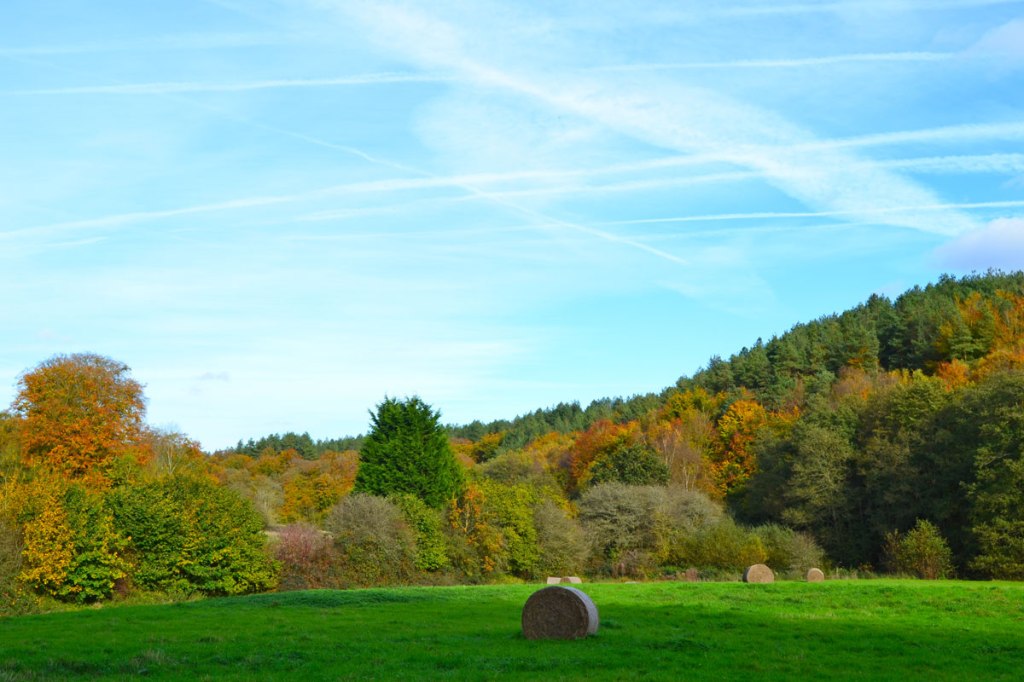
An El Classico of an autumn day. And about time too. We decided that the Hosey walk on the Greensand ridge route at Westerham was the one for us, given the foliage, and views of the Weald from Mariner’s Hill. This time last year the Heaverham circular walk at Kemsing provided something very similar but the warmth of that late October 2023 day seemed freakish at the time. Today was more normal, just a lovely day – neither warm nor cool. The leaf colours, especially in the little valley of the infant River Darent, were superb as hopefully the photos below show, and the vista across the roof of Churchill’s Chartwell gaff as magnificent as ever. I was expecting to see redwings recently arrived from the Netherlands and generally more birds flocking together. But nothing much happened on that front, although mistle thrush were heard and a large buzzard lifted off close to us in one meadow. A pint at the Westerham Brewery place on the way back was an outstanding finale. However, the effect wore off as my football team lost.
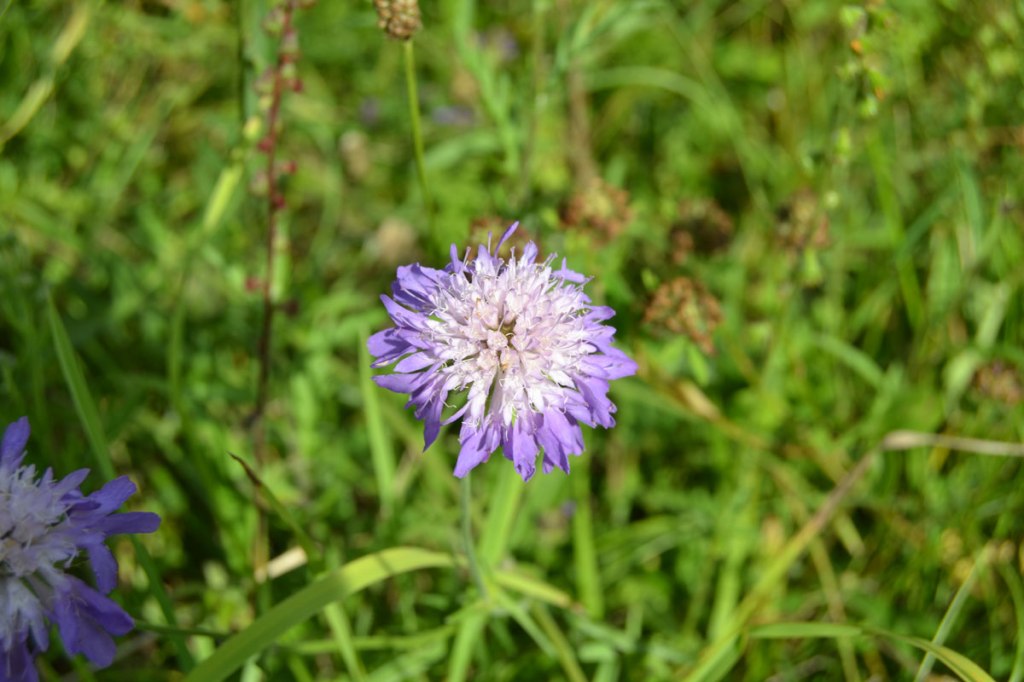
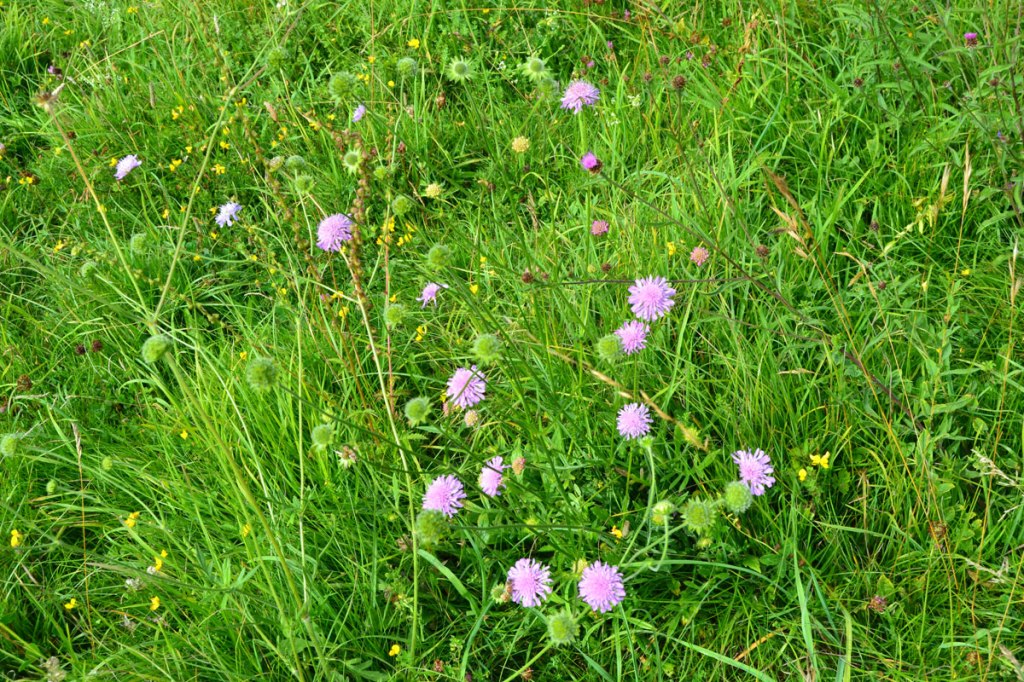
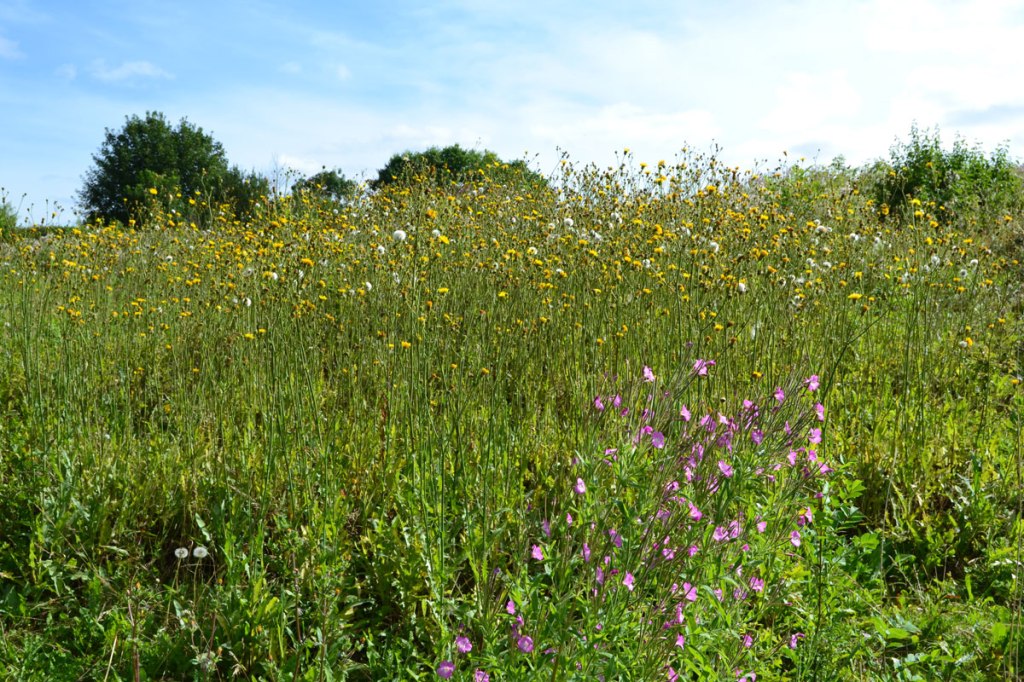
Sunny weekends have been in short supply this year. Hopefully we are overdue some. It’s a great time for butterflies and wildflowers like scabious, particularly in the chalky North Downs walks. I also love the displays of rosebaywillow herb… so colourful alongside ragwort. And there’s the wild marjoram and thyme to enjoy. It’s a great time of year, though look carefully and you’ll notice the grass is yellowing, the trees looking a little tired in places as August continues. I love a hot walk, and nothing beats the Mysterious eastern valleys and Fackenden Down walks for trapped heat and big-time humidity. These walks can be combined for a 7-mile epic, as can all the Shoreham, Otford and Eynsford routes. And they are only a 40-minute train journey away from Peckham Rye/Crofton Park/Catford etc. I’ll be setting off shortly …
Great to see so many people enjoying walks this weekend, a fair few using the KWNL routes and following the GPX from the look of the WordPress dashboard. I’ve helped a few out with directions from time to time – people are always tickled pink when they realise they’re talking to the actual bloke who wrote this site.
Today I walked the ‘mysterious eastern valleys of Shoreham‘ route. The path by the field is very overgrown. I was prepared for it so brought secateurs. Despite my snipping that path will still be daunting and slow going. I advise a diversion: check out the map on the route’s web page to see it – it involves walking down to Shoreham church from the station then taking the path heading north and eventually crossing the railway line and the A225 before heading east, steeply uphill and joining at Point 3. It’s not difficult, honest.
And it’s worth it. Right now this is a brilliant route. From the hamlet at Austin Lodge up to Romney Street the wildflowers are fantastic: wild marjoram and scabious; mauves, lilacs and purples with knapweed, devil’s bit scabious, the yellows of trefoil and ragwort, the deep pink of rosebay willow creating a sheen of vibrant colour. I walked with clouds of meadow brown and gatekeeper butterfiles with the odd brimstone and chalk hill blue thrown in. As ever in summer, the Magpie Bottom valley – between Knatt’s valley and the Darent valley – was humid, still and quiet. A little owl called, buzzards soared. I decided to extend the walk past Romney Street to Magpie Bottom and over Fackenden Down, bringing me out at Shoreham station just in time for the 5:38pm Blackfriars service. Perfecto.
It was great to hear that Kent Wildlife Trust made it to their £196k target to buy an extra 26 acres to extend their Polhill Bank reserve, which features on a couple of KWNL routes – Pluto and Meenfield Woods. I headed out there earlier today, sacrificing the first set of the French Open tennis final. I had a subsidiary mission – to buy a shrub. I was actually planning to go to Coolings for this purpose, near Knockholt, but the traffic was so horrendous on the pertinent routes past Bromley and Hayes that I diverted to Polhill Nursery so I could return to SE London via the Orpington bypass road, up through Chislehurst. I had a good look at Polhill Bank. The first pyramidal orchids were showing, along with loads of milkwort, speedwell and all the June usuals. My expertise does not extend to plants beyond the common species. There were few birds around: I heard a cuckoo briefly, which is something, a whitethroat and eventually a yellowhammer. Buzzards soared, a swift swooped around; there were no swallows or martins disappointingly. However, for the first time I saw a lizard at this reserve. I’ve long wanted to see one here because KWT’s website proclaims their presence on these sunny slopes. So I was delighted. I really had to look and just caught it in the corner of my eye in a gap between vegetation. I stayed on the path and was determined not to disturb it in any way as it was sunning itself on a piece of wood. As a result my photos are rubbish. But that is less important to me than the fact I documented it and didn’t tread on anything I shouldn’t have – and left it in peace.
Common lizard at Polhill
Heavy rainfall has formed pond just beyond Polhill
My wellies came in useful on the Hever walk on Saturday. I’ve never worn them in early summer before. But my hunch was right… there are still a few quagmires out there. Watching a young couple ahead of me try to negotiate the mud in lightweight trainers made me wince. There’s not really the same problem on the North Downs chalk walks, where the drainage is much better thanks to the geology. Except where there’s clay (Andrew’s Wood hillside I’m looking at you).
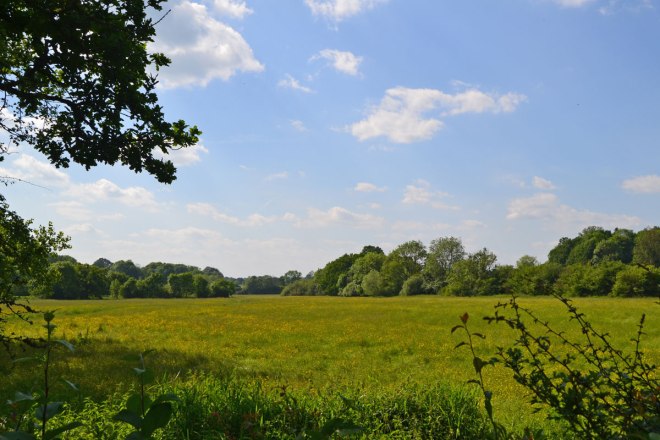
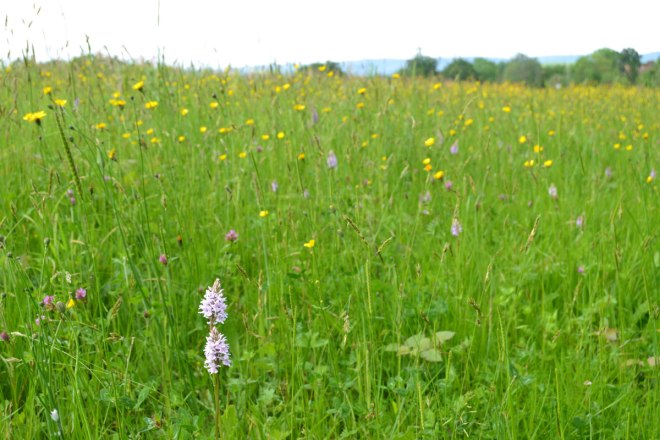
Meadow, Penshurst
Common spotted orchids, Hever
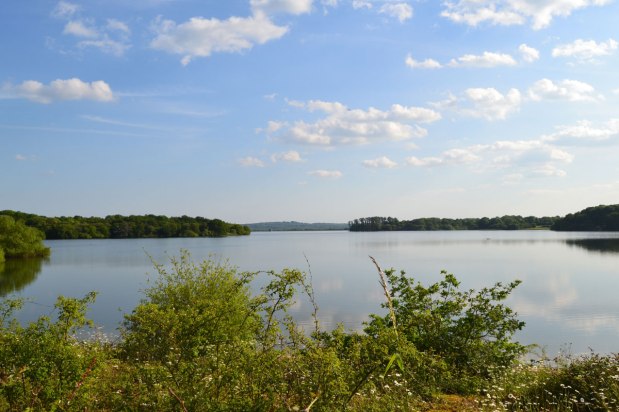
Northern lake at Bough Beech
In June it’s generally a good idea to stick a pair of secateurs or tough old scissors in your rucksack if you’re doing a Kent walk. It seems odd I know. One or two of the less well used paths become entangled in brambles, nettles etc this month and next. This is particularly the case this year because rain has kept hikers away and some of the paths have been left unused. The Eastern Valleys walk east of Shoreham definitely requires a bit of snipping as you walk along the fields on the Darent Valley rim. The diversion to the Percy Pilcher memorial viewpoint is in need of a trim at the best of times. And at Chiddingstone, near the start, the path leading into the swampy woods is nearly impassable. If you prefer, you can divert to walk along the field edge – it joins the main path as you enter the woods. The same thing happens later as you near the River Eden on the return leg. There are parts of the Hever walk, in Stock Wood and Newtye Hurst Wood where you might need to divert off the main path and it‘s easier to do a little judicious snipping than try to battle your way through. Especially if you’re wearing shorts!
Overall the Weald of Kent is obviously wetter than normal for the time of year. Bough Beech reservoir is brimful for once and the mires and ponds in the woods of Hever and Chiddingstone are well topped up.
There are plenty of smartphone apps for this purpose but without knowing what you’re likely to see or hear software such as Merlin or Birdnet can mislead if used in isolation. I’m not an expert but birder and fellow Kent walker Dave most definitely is. I’ve never seen him use an app. He just stands in the middle of the path for ages building up an aural picture from the space around us. “Chaffinches somewhere in that oak 30 metres to the right; greenfinch behind us, maybe 200 metres, nuthatch flying to those conifers… look, there it is, mistle thrush down low …” I find it quite annoying to be honest. But it’s a remarkable display of skill, patience and knowledge built up over years.
What doing the odd walk with Dave has taught me is that it’s best to learn a few calls of birds you are likely to see/hear and then, once you are familiar with them, start adding other likely species. Some, robin, blue and great tits, blackbird, you can learn from the garden or park. Cuckoo is obvious and one you can hear this month and in June on the Ide Hill, Chiddingstone and Hever walks in particular. Greenfinch is very distinctive too and dead easy to pick up once you know its chatter and “wheeze” – similar but different enough to more common goldfinch. You hear it more in parks and gardens though than on the KWNL walks.
Wren – one of our smallest, but loudest birds. Photo: Wikimedia Commons
It took me ages to realise that wrens were incredibly loud and identifiable; I’ve got that one down now, along with song thrush, greenfinch, chaffinch, long tailed tits, chiff chaff, blackcap, coal tit, goldcrest, and most recently, nuthatch. I’ve no idea what dunnocks sound like, so I better give that a listen, and treecreeper too. Bullfinch is a toughie because you really have to listen out for their weird “rusty gate”-like whistle and toots. Yellowhammer is easy. To see one of these I recommend the hedgerows on the Polhill route, once down on the valley floor; Fackenden Down hedges; the Eastern Valley walk and the Chevening walk. A great one to listen for now is common whitethroat. These have arrived from Africa now and are filling our hedgerows with song; they sound a bit like their cousins the blackcap but less rich and burbling. There are loads of other, less common, summer visitors to tick off, which all may be encountered on a walk at KWNL – willow warbler has a lovely song, nightingale obviously, garden warbler… Cetti’s warbler is startlingly loud and a bird that sings disconcertingly close to you but from deep inside a thorny dense bush, so you can’t see it.
So, I’d say use a combination of memory and app to recognise birdsong. Use the RSPB site and British Birdsongs to learn two or three bird species at a time, then use one of the smartphone apps to record and analyse what you hear – having listened out for the birds you’ve tried to memorise. It doesn’t seem easy at first but pretty soon you’ll start recognising the patterns. After all, it’s just music in another form and the difference between a chiffchaff and a wren will soon be as obvious as between Dua Lipa and, say, Raye. Or Chaka Khan and Whitney Houston. Or Teena Marie and Cindy Lauper. Or George Benson and Philip Bailey; Luther Vandross and Maurice White. I could go on, and would quite like to.




















 Kent walks near London