Sand, clay, chalk and bluebells

Sand, clay, chalk and bluebells

“When spring came, even the false spring, there were no problems except where to be happiest. The only thing that could spoil a day was people and if you could keep from making engagements, each day had no limits.

That’s a fun quote from Hemingway. I take it to mean prioritise walks above socialising, now it’s a bit warmer (I reserve the right to be wrong about that) and to get out in the woods and downs, witness the transformation from grey and brown to green, blue and yellow. I say “witness” but it happens suddenly, overnight perhaps, when you’re not looking. Suddenly the air is soft, the countryside hues have changed and spirits have lifted.

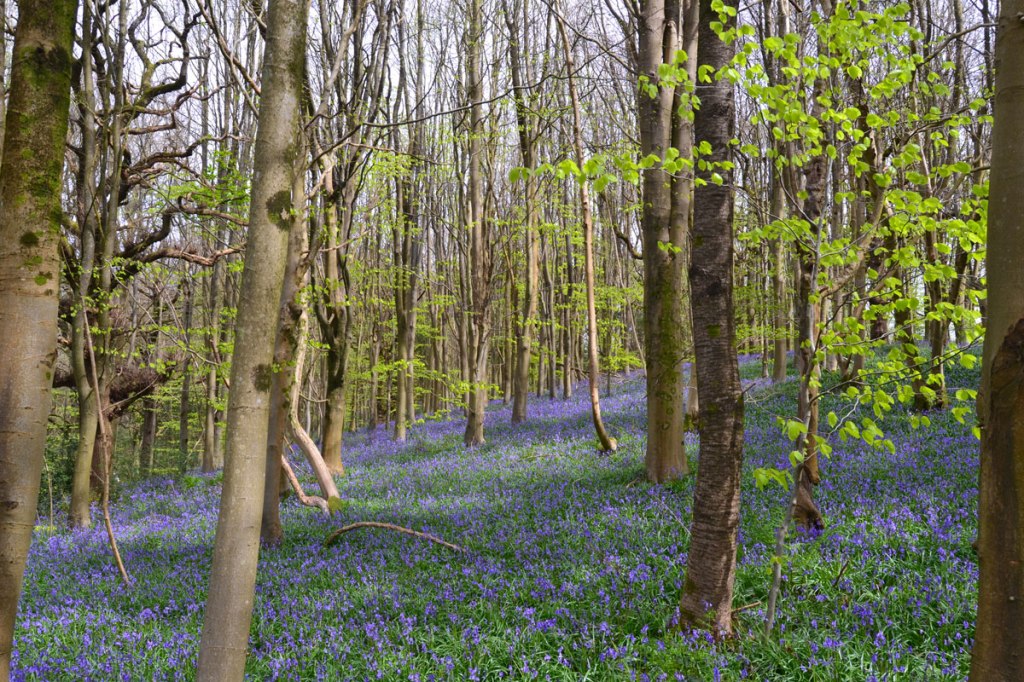
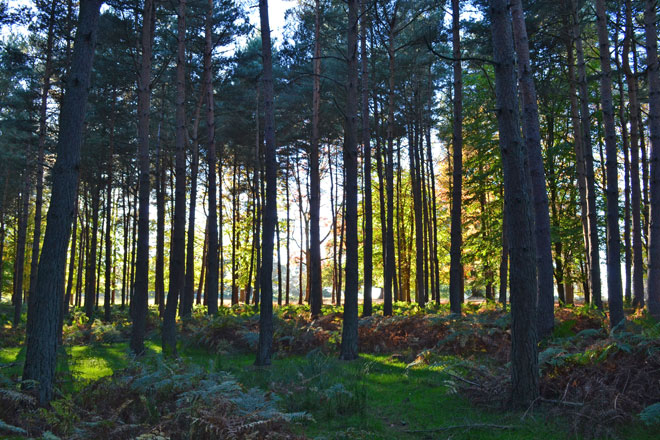
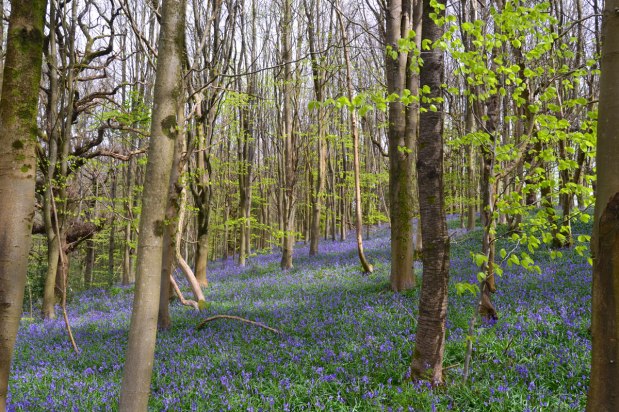
We chose the 3.5-mile Knockholt/Chevening North Downs route for late Saturday afternoon and a 4.5-mile stroll on the Greensand Ridge at Hosey for the following morning. On the Hosey route bluebells were two-thirds in bloom and were mixed beautifully with stitchwort and anemone. We heard coal tit, nuthatch, song thrush, chaffinch joining in the merry burble of song from great and blue tits, robins and wrens. A delightful pint of Westerham Brewery’s Light Ale ensued after the walk at Squerry’s Winery.

At Knockholt, along the escarpment, three red kites drifted overhead throughout the walk and a pair of buzzards hung in the air. These raptors love the updraft along the ridge and I think this walk is the most reliable route for seeing them on of all the walks here, though they can pop up on any. Please don’t think me callous but I rather hope the birds of prey feast on pheasants; there are too many of the latter human-introduced birds in these parts and they kill a large number of reptiles and amphibians.

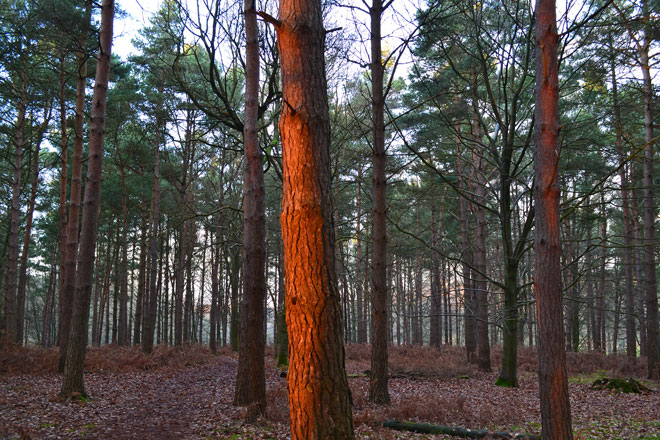
  • Redwood
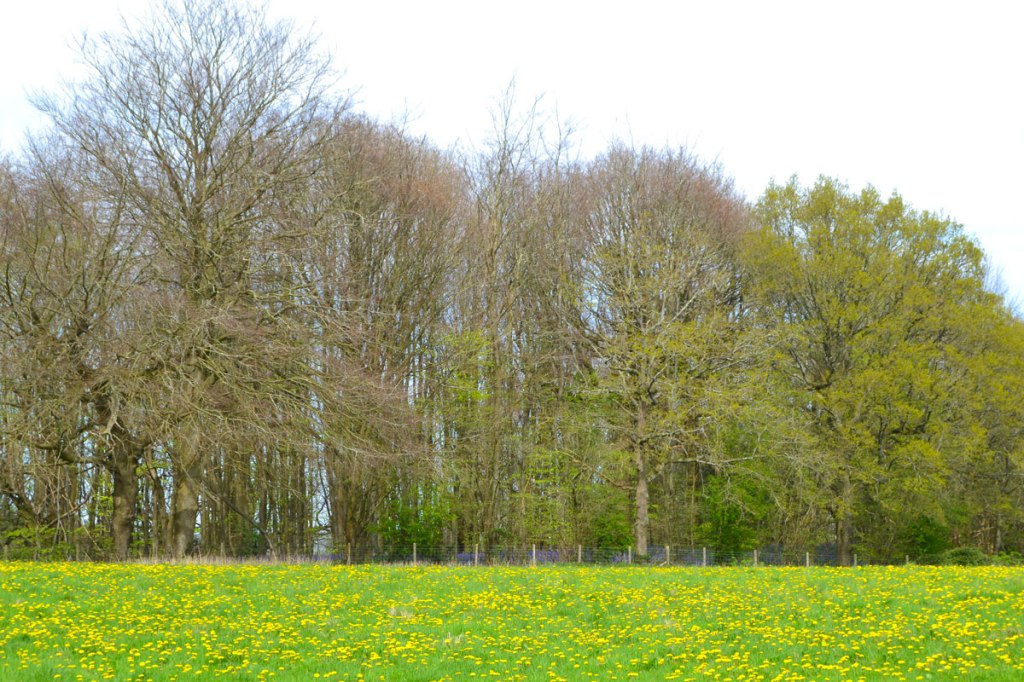
  • Dandelions
  • Bluebells
  • Chevening
  • The cleft in the Downs

The chalk Knockholt/Chevening walk on the North Downs ridge is separated from the Hosey walk on the Greensand Ridge by the clay Vale of Holmesdale, an east to west valley that runs in parallel to the two lines of hills and which contains the M25 and M20 motorways. Holmesdale clay runs between the chalk and sandstone yet despite the starkly different geology in such a small distance the plants and tree species don’t superficially appear to differ that much – presumably the plants have adjusted to the contrasting soils over the millennia. But there are some differences – there are more likely to be orchids and expanses of grassland on the less densely wooded chalk hills; while on the greensand the woods seem a tad more extensive and are more likely to include stands of pine, which like the sandier soils. I’m no expert so I won’t go on. Bluebells like both; that’s the main thing and this week they are reaching their peak at sites like Meenfield Wood, Scords Wood, and Mariners Hill. Enjoy them, they’ll be gone within about four weeks.
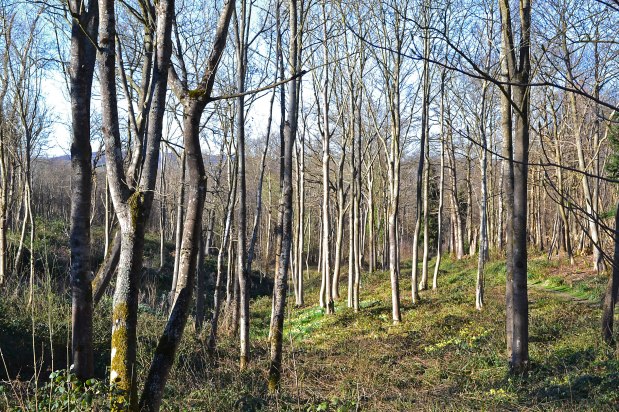
Thoughts of spring

Thoughts of spring

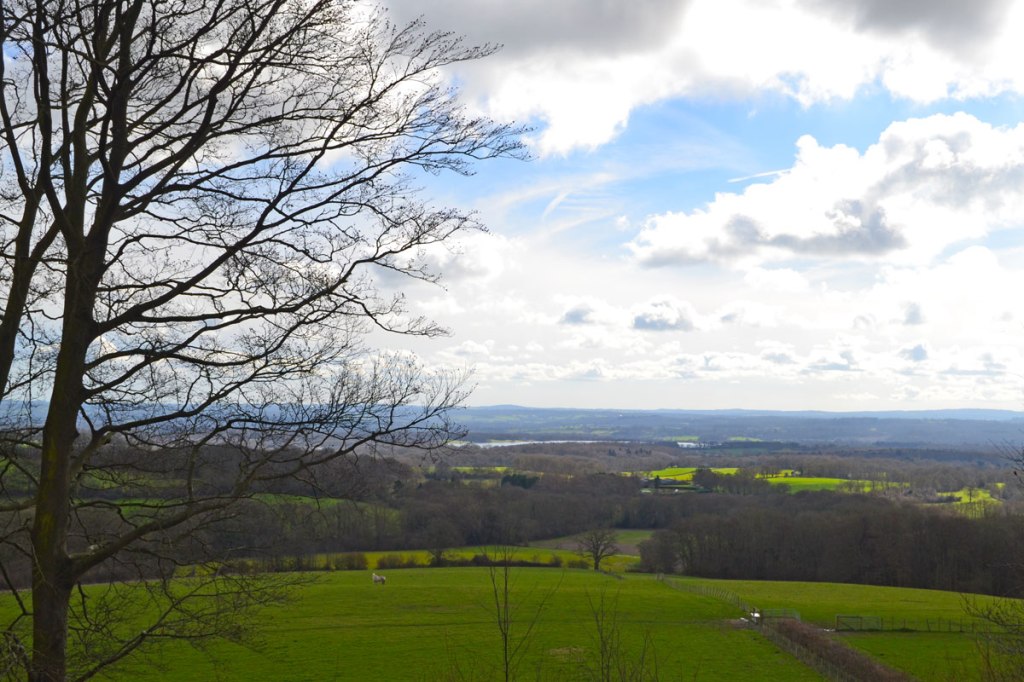
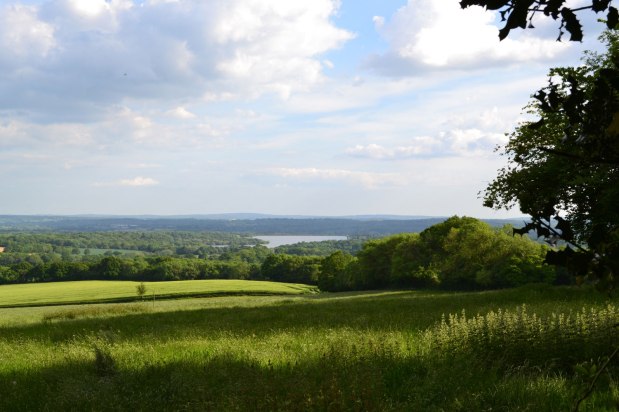
Spirits have fallen almost as steadily as the rain as we slipped mildly and humidly from winter to spring . The Met Office have gloomily talked of precipitation records being broken, and a sense of oppressive drudgery has undeniably taken root as indoor life seems the only option. Still, I’ve been impressed by the amount of runners and cyclists still out in the lengthy downpours, clocking up the miles. Me, I’m a fair weather fitness fan. A lot of the rain has been too heavy for walks; I’m happy in drizzle but the stuff that stings your face definitely takes the pleasure away at this time of year, though can be fun in summer. But hey, spring is around the corner somewhere, the temperatures are mild, the crocuses are out in the park and the daffodils gaily wave in the breeze. I love to walk on the Greensand Ridge at this time of year, to see signs of spring seeping into the colours of the miles of countryside stretching before you as far as the Ashdown Forest. It’s muddy, sure, but there’s also optimism in the snowdrops, primroses and sudden uptick in birdlife among the skeletal trees. Toy’s Hill south of Westerham has been fertile ground for walking.
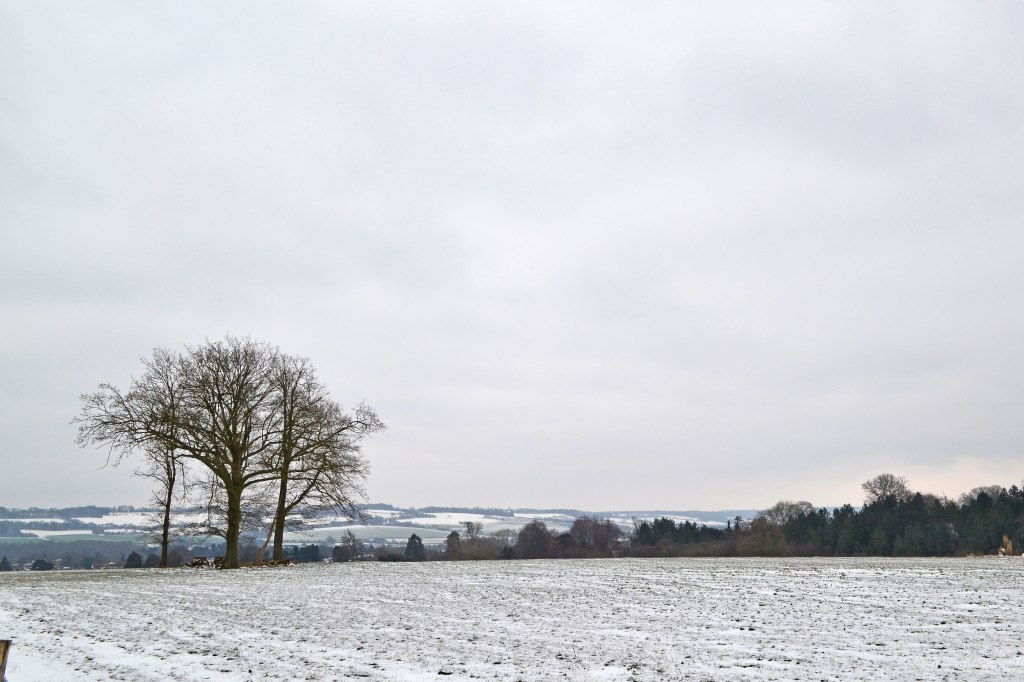
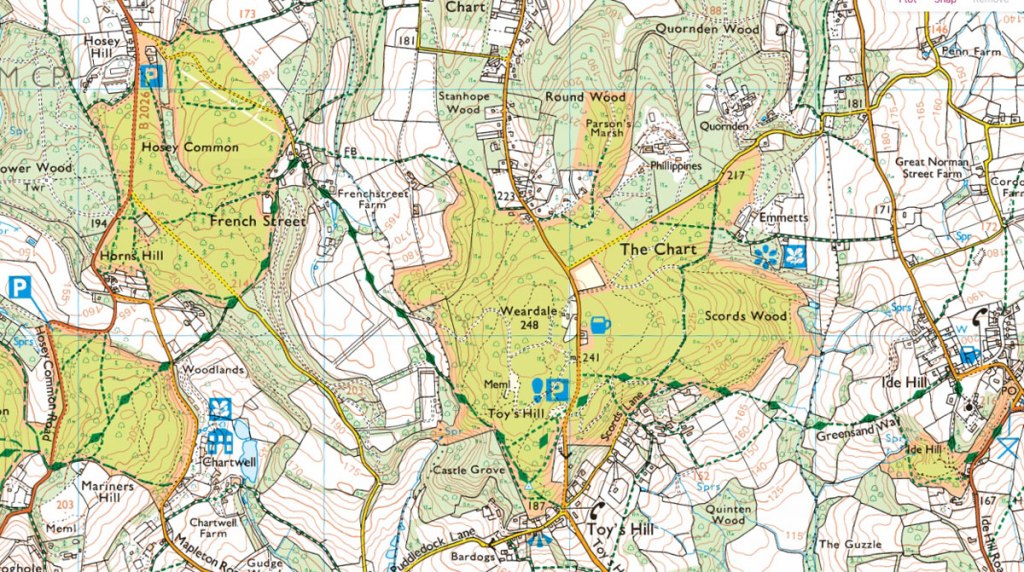
I haven’t got a Toy’s Hill walk on KWNL but there are several routes from the NT car park (the map above shows the car park, lower centre, and Toy’s Hill’s proximity to Hosey, Chartwell and Ide Hill) that are well signposted, such as the shortish Red Route, which will take you to Emmetts Garden and back. You can do my Ide Hill walk from Toy’s Hill easily enough, or even the Hosey Common route, but obviously you’ll be adding on a few miles. I really like the spot near the NT car park where the old mansion used to stand. From here you can see four counties including Leith Hill and even the South Downs on a fine day. The photos below were taken in early March; appearances change quickly at this time of year so expect less bleakness in the days ahead!

  • Toy's Hill
  • Ram Pump pond
  • Scords Wood, awaiting signs of spring
  • Scords Wood view

As for colour, look out for yellow lesser celandines, very spectacular at this time of year on the Fackenden Down walk in the woodland between the Down itself and Magpie Bottom. One of my favourite places for wildflowers in late March is on the Hever walk in the woods between Points 1 and 2, close to Hever Castle gardens (headline photograph). A yellow and white sheen seems to rise from the mossy forest carpet ushering in better days. But look if you want to keep your powder dry on the walking front, and not go out until mid-April and the blooming of the bluebells, that’s perfectly understandable.

.

A Christmas trudge – then some fudge

A Christmas trudge – then some fudge

We chose Lullingstone for our Christmas morning walk. Well, I didn’t actually. It was the family choice, and a surprise one because I was, for once in my life, all for staying in and wrongly assumed my partner would be. I’m glad we did though: staying in all day and not walking anywhere is hardly ever the right choice, even with a turkey to roast and fudge to finish.

There’s no denying that in the mild, grey, mizzly, boring weather the Darent Valley landscape seemed to have lost a bit of its lustre. It felt as if we’d taken it by surprise – it’s usually ready for us and induces an inward gasp of delight as we get our first view of it. On Christmas Day it looked a bit bleak, a bit ‘meh’. It seemed to be saying, “oh it’s just them again – I can’t be bothered frankly.”

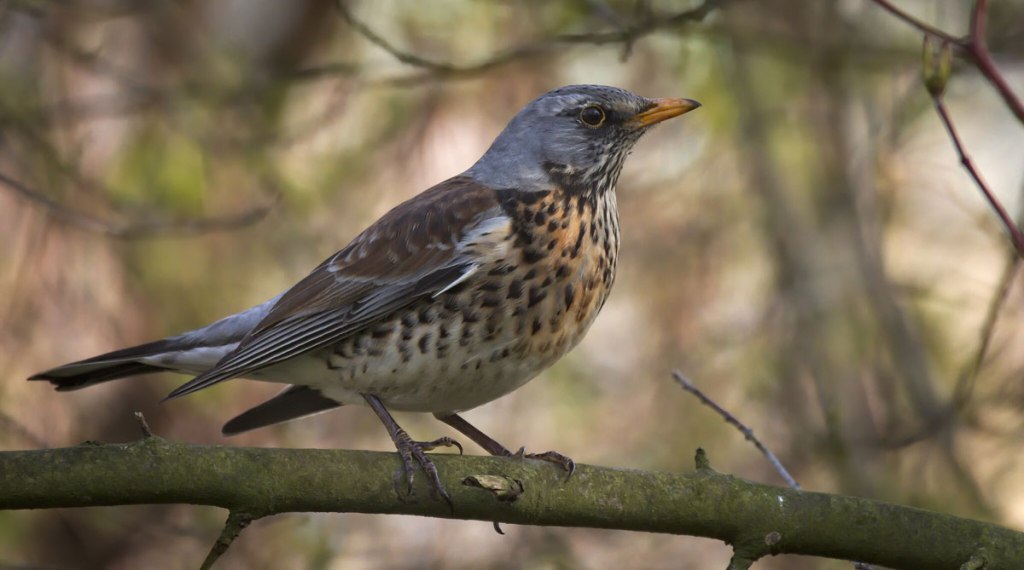
Fieldfare profusion

But on closer examination there was a lot to enjoy: huge groups of fieldfare (a winter thrush visitor from north-east Europe); a few chaffinch (relatively scarce nowadays in these parts) in brilliant winter plumage; loads of berries – haws, rosehips, elderberry in the main – and long-tailed tits flitting through open woodland. The profusion of berries was the attraction for the fieldfares. My regular Lullingstone kestrel did not appear, nor did the almost tame goldcrest I’ve encountered previously in Upper Beechen Wood. (Fieldfare photo: hedera.baltica/Wikimedia Commons)

Oh, that tree!

I’m often astonished at myself for not noticing things – I’ve been known to sit on sofas at home without realising they are brand new, turn on TVs that someone has just delivered and installed, and fail to remark on a room‘s entire renovation. I exaggerate, but it amazes me that I’ve walked past the extraordinary old oak at Lullingstone pictured below at least 200 times without really clocking it; a memory of it must have been lodged in my brain somewhere since childhood, but in the subliminal part. In a similar vein there’s an elegant art deco building opposite Brixton station that’s very familiar to me but it was only last week, on returning from the Ritzy, that I actually looked at it and saw it for what it was. I’ll never ignore it again, and the same goes for this incredible oak.

To be fair, there are several of these oaks at Lullingstone, mostly up towards the golf clubhouse in the west of the park (unlike this one). With some I’m not quite sure if they’re dead or alive. There’s one that you could actually hide inside. This one, which is maybe 300 years old, has a kind of elephant’s face embedded, is indicated on the map below. I’m going to try to keep eyes and brain a bit more joined up from now on. Probably means less daydreaming – let’s see!

Click on the link for a ‘live’, gpx version of this 4-mile Lullingstone route at OS Maps.

Festive walks in Kent

Festive walks in Kent

The true purpose of this website is to inform newcomers to south-east London from other parts of the UK, or from abroad, that great walks are to be had by just taking a train or driving for half an hour or so into Kent, where there are loads of paths to explore. So to all those who think “why’s he going on about Knole/Darent Valley/One Tree Hill/Hosey Common again – can’t he just go to Namibia or Baja California or somewhere interesting” – shut it!

Christmas and New Years’ strolls

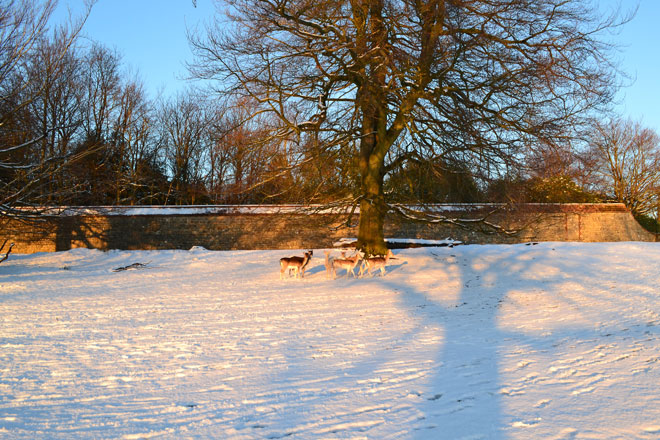
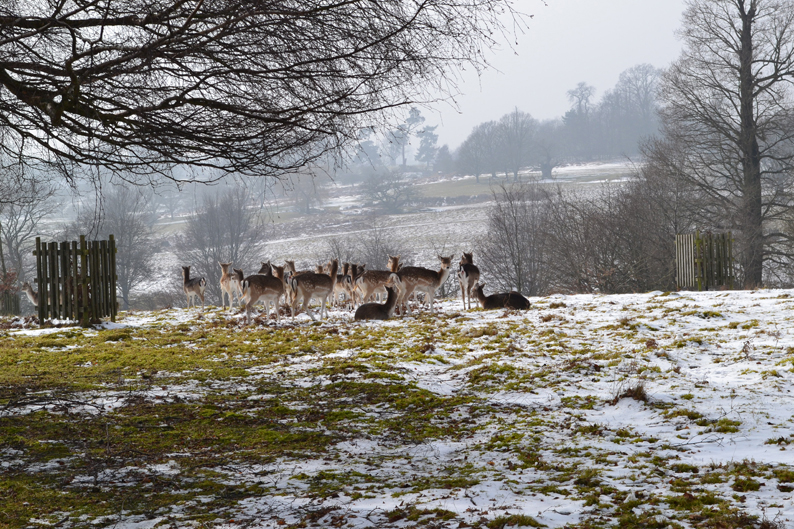
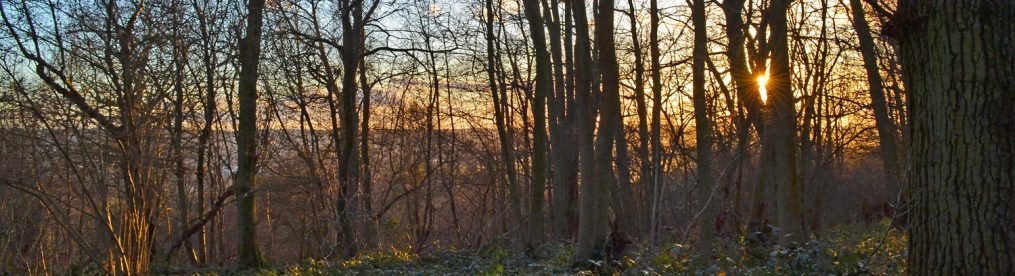
The relatives have come around. After a couple of days milling about in the house you all fancy going for a decent walk and getting some fresh air. No one has proper hiking footwear. The answer: Knole (Sevenoaks) Why? Because many of the paths have hard surfaces and you can walk for 4 miles without leaving this wonderful park if you pick your route carefully. There are secluded dry valleys to explore, an igloo-like 18th century ice house to find, some lovely woodland and a massive medieval/Tudor house – the largest in the UK in fact. You can’t take dogs because huge deer herds roam around the place. But you can take buggies, even wheelchairs. On a winter’s afternoon, with the last rays of the sun setting the house aflame it’s a magical place. And if there’s any snow it’s ludicrously brilliant. Among the photos below are reminders of some of the coldest walks I’ve ever experienced!

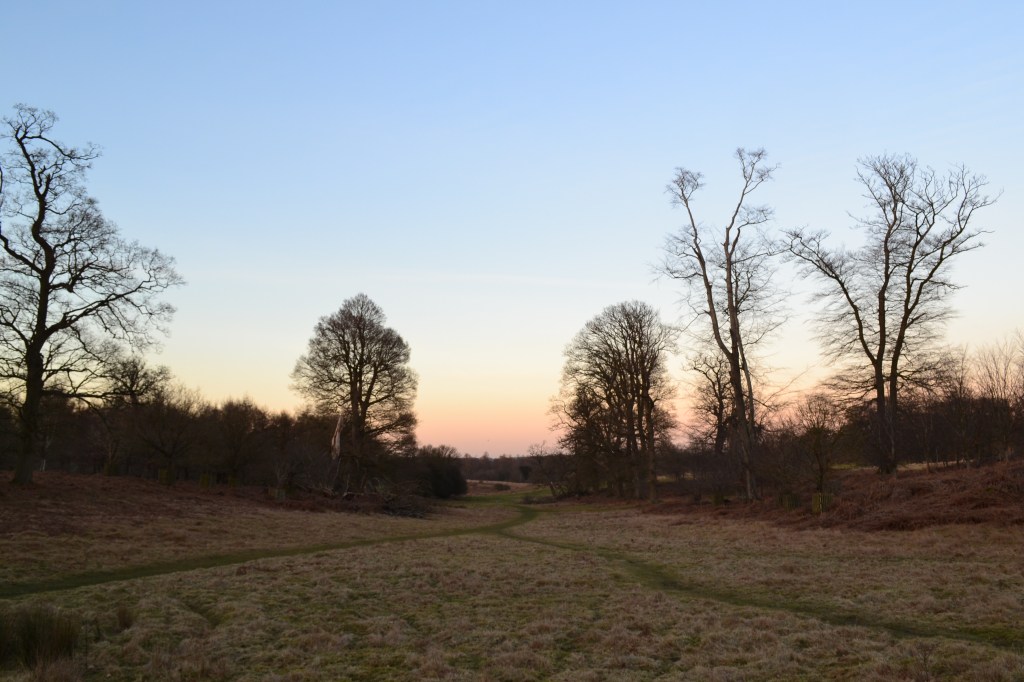
  • Knole, winter sundown
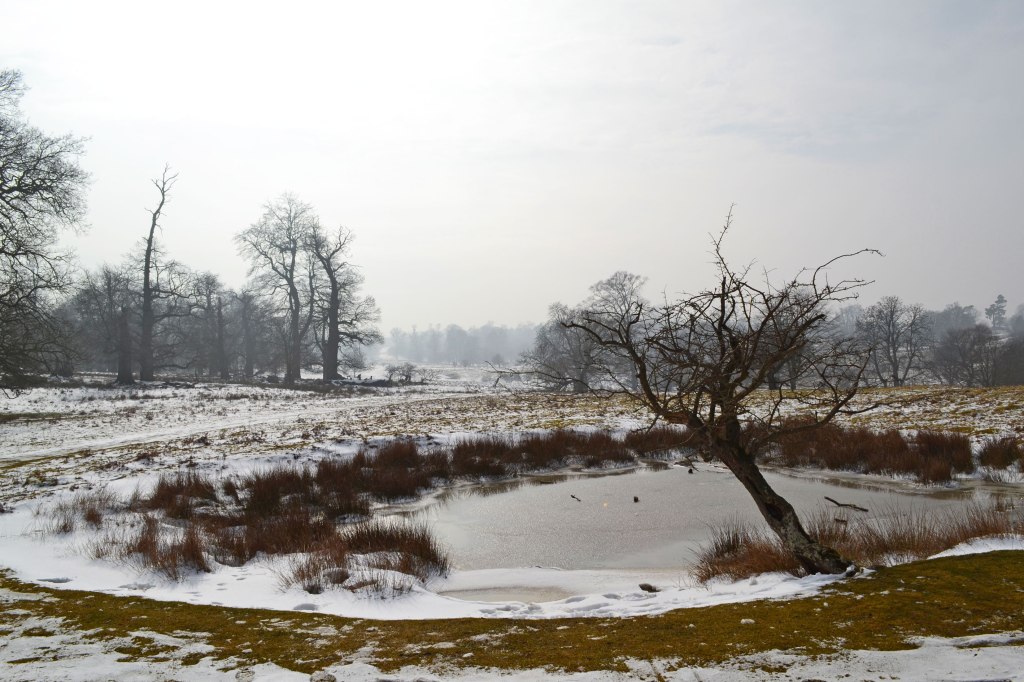
  • Pond at Knole in snow; March 2018
  • Knole Park

My 3.5-mile route leaves the hard path (the Chestnut Walk) immediately to take in the south-eastern open woods, part of Fawke Common, comprising fantastic oaks and beeches (you don’t have to park in the NT pay car park; you can leave the car in St Julian’s Rd and enter free, to the south of Knole, but this road can get a bit busy). Things then get a little darker as a fir plantation takes over and you dip down amid the high pitched calls of goldcrests to cross a little stream then emerge into the open by an ancient pond. Follow the route as it twists high and low before rejoining the hard path (the Duchess Walk) and heading to the house and around it before turning east back towards your arrival point. Know that you have been walking on acid grassland; a rare terrain type distinct from any of the other walks on this site. Fungi and lichen thrive here, not least because of the rotting wood from the arboreal victims of the 1987 ‘hurricane’. Birdwatching isn’t too bad either with buzzards, kites, sparrowhawks and tawny owls in attendance among the more common long-tailed tits, goldcrests, goldfinches, song thrush, wrens, robins and redwings. You don’t have to do my route – you can still do a fine walk by sticking to the hard paths (Chestnut, Broad and Duchess Walks), or you can extend my route by taking in the long south-west valley. Best just to wander and get a bit lost.

Lullingstone and the southern end of the Darent Valley around Shoreham in winter

Also recommended for a winter stroll – and closer to SE London than Knole – is the Shoreham circular, which may offer the added attraction of the smell of woodsmoke and a welcoming pub. Lullingstone is also highly atmospheric: I particularly recommend walking from the public golf club entrance, not the country park entrance – it’ll be less busy for one thing (note that the car park at the golf entrance is closed on New Year’s Day usually but you can usually park in the approach road). Closer to SE London, Beckenham Place Park and Petts Wood offer a couple of hours escape into the ‘Kent’ (London) wilderness. I haven’t checked the trains to Shoreham or Sevenoaks for these walks over this holiday period, so do find out whether they’re running – I don’t wish to encourage you all out only to have you waiting interminably for a replacement rail bus service, might still be fun though!

Frisson in the North Downs freeze

Frisson in the North Downs freeze

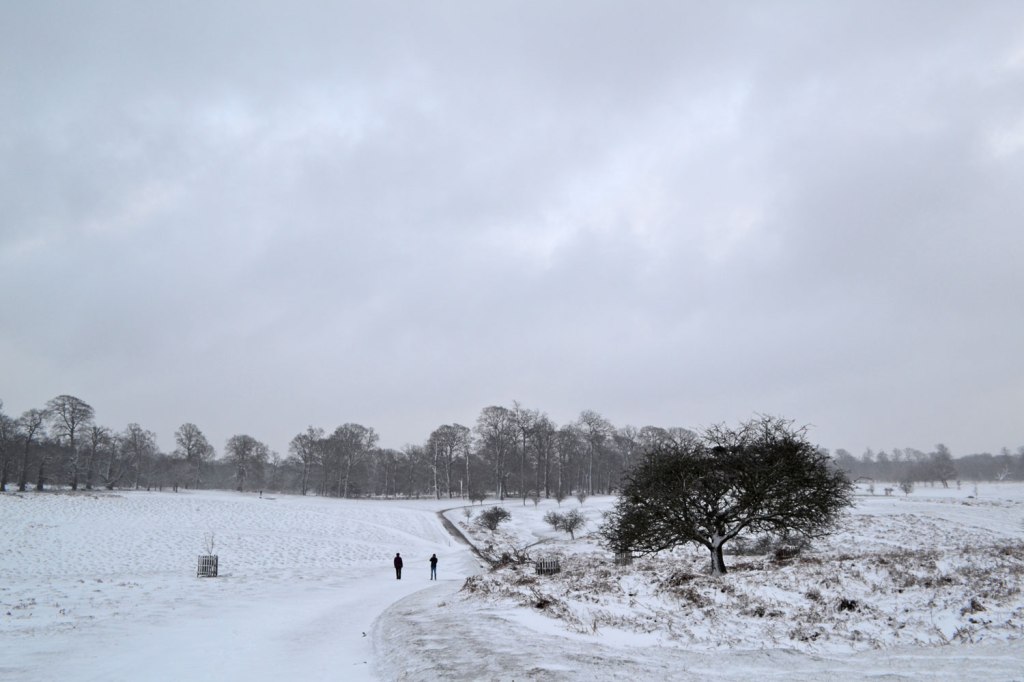
There’s a real pleasure to walking in very cold conditions and not only because you’ve bought some hot chocolate with you with a shot of rum in it. The light, the clouds, the wonder of winter and the sudden dusk all bring an edge of adventure. It’s a great time for a walk. Often the mud is hardened by frost too so you can stride without getting bogged down. We don’t often get snow in these parts but remember that if there’s a hint of the white stuff in south east London there’s a good chance there’s a lot more of it on the North Downs. So if you have children pining for snow larks, there’s always a chance that by heading to say Fackenden Down, Polhill or Knockholt you might have a bit of luck. It’s worked for me over the years. I particularly love the atmosphere of Knole in winter – the frosty hollows and rich (ish) bird life coupled with that huge medieval home that is lit so beautifully by the setting sun and from within as twilight comes on, are an essential part of my mid-winter wanders. This little cold snap will be over by tomorrow evening but there’ll be more to come.

  • Downe, Kent, England
Bough Beech – the lake you can’t quite get to

Bough Beech – the lake you can’t quite get to

From the heights of Emmetts Gardens, perched on the Greensand Ridge by Ide Hill, the reservoir at Bough Beech off to the south looks so inviting on a hot summer’s day – a cool dash of blue among shades of green, dotted with the white of small sailing dinghies breezily tacking this way and that.

On a hot day you might even think: “Cor, let’s get down there, hire a boat, a pedalo, splash about, perhaps a bit of waterskiing, finish off with a swim followed up by a nifty little sundowner in a trendy bar surrounded by people almost as slick as me.”

Crushing disappointment awaits you; none of these things are possible. The clue is in the name: look how they spell Beech – there’s no ‘a’.  True, there is a sailing club and it does have a bar (at the weekends at least) but its home page proclaims it is “run by the members for the members”. Which is lovely … for the members. Fair enough. All good.

Oh well, we can’t get on the lake to cool us off on a summer’s day, so how about a picnic in a delightful meadow with a spot of paddling in the softly lapping water?

Bough Beech reservoir – don’t even think about it.


Er… absolutely not! Much of the lake’s boundary is a nature reserve and you can’t get close to the water. Again … OK, fine. Nature is good, we love nature, even if we can’t touch it  – in fact it’s best if we don’t touch it.

Right, we can’t go in it or stop next to it. We’ll just have to walk or cycle round it while enjoying views across it, in the same way as you can at Bewl Water, an even larger reservoir not that far away. I suspect you may by now have worked out the format of this post and are anticipating me writing “Sorry, but you can’t walk round it”.

Sorry, but you can’t walk round it. I did try a couple of times with no real luck. Although there is a nice walk nearby that goes to Bore Place organic farm and takes in some nice little meadows and woods. You can even glimpse the reservoir if you crane your neck.

Where you can almost see the lake

Ah, here’s the Kent Wildlife Trust to the rescue. I read the KWT has a visitor centre in an oast house, a habitat reserve, nature trail and bird hides. There are picnic tables, and a car park. Big whoop! We’ve got our beautiful lakeside view after all, co-existing nicely with nature. Haven’t we?

Don’t be so naive, joker. It’s closed down. Now it’s an educational facility for some school or other. Anyway, even when KWT ran it you could barely see the lake from the visitors’ centre. And the nature trail went for about a third of a mile close to the reservoir’s western edge without quite giving you a view of it. Well, it did at one point, but there’s a huge fence in the way to prevent people from messing with nature. Then you had to walk back on a country lane down which vast 4WD vehicles hurtle along at colossal speeds, often driven by morons.

I’m told the ex-KWT site is still a great spot for birdwatching (even us dullards spotted greylag geese and great crested grebe) and you can indeed still use the bird hides and unleash your binocular power. Don’t expect any riveting conversation. It’ll most likely be “Seen the osprey?” Suspicious look, “who’s asking?”. Birdwatchers aren’t always the most communicative. (Not my mate Dave though, he’s brilliant.) Bough Beech does in fact have ospreys from time to time – not a beast fond of beautiful natural areas being opened up to the masses for frolicking.

Damn it. We’ll have to just drive around the lake on the adjacent country lanes, admiring it from various viewpoints. Off we go. We pass a sign that seems to be warning us about frogs. Oh I see, they cross the road here.

Glimpse of Bough Beech near end of Walk 17

Ah, hmmm, the lake should be over there … no – there’s woods, there’s fields… it’s over there somewhere, but now there’s a shallow hill in the way. Bloody hell, I give up – you can see it from Emmett’s but I’m beginning to think it was a mirage, it doesn’t exist. I’ll have to join the yacht people.

There it is!

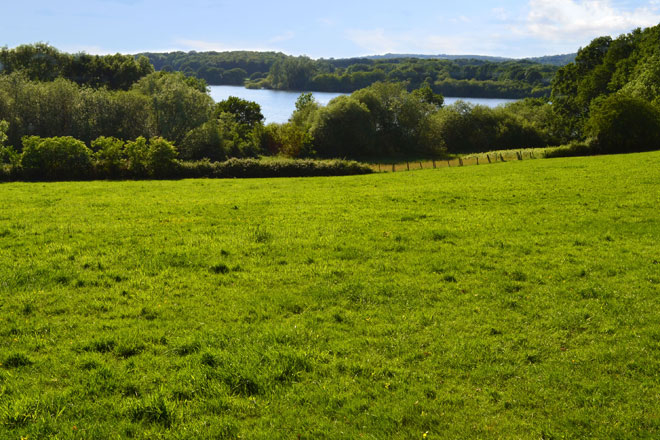
Hold on though, what’s that? Suddenly there it is; a roadside vista of Bough Beech lake. And you can park up. In the north-east corner of the lake, close to the KWT reserve, there’s a causeway traversed by a lane; handily there’s a pavement so it’s a good spot to get out of the car and have a gaze and a twitch maybe. The photos here were taken from there.

I suppose Bough Beech lake might be ruined if we were able to do what we want on it and around it. So really I’m glad I can’t organise a barbecue on a summer’s evening on the shoreline, and that there’s not a kiosk charging £7 to plonk one’s jam jar there with an ice cream van for company. I’m delighted not to be able to pedalo on it – disturbing the geese – or cycle round it – and risk squashing toads.

I rest easy at night knowing I haven’t had a snifter while watching the sun go down over this elusive but idyllic spot. But suddenly my sleep is broken; I jolt upright – did I just run over a frog?

June 2020 update! In a barely credible incident totally in tune with these disturbing times, a young couple climbed over a fence at Bough Beech early in June and sat by the lake in the heat, dangling their feet in the water and eating Doritos (chili flavour). This endearing but incendiary scene lasted for about 7 minutes before irate birdwatchers rounded on them and ordered them out. I witnessed these events unfolding in real time; it was all so shocking that I forgot to film it and put it on social media.

Bough Beech/Bore Place walk