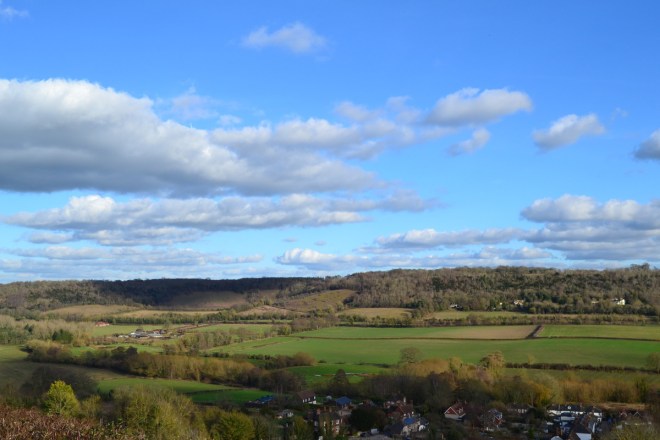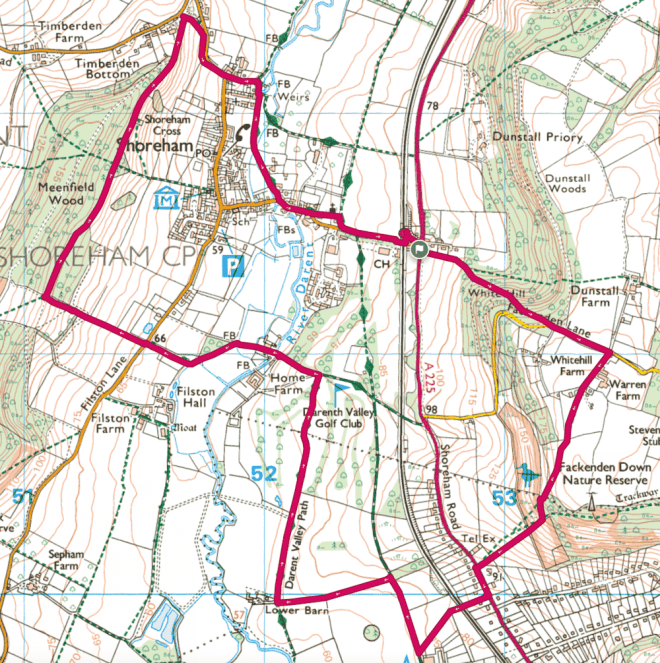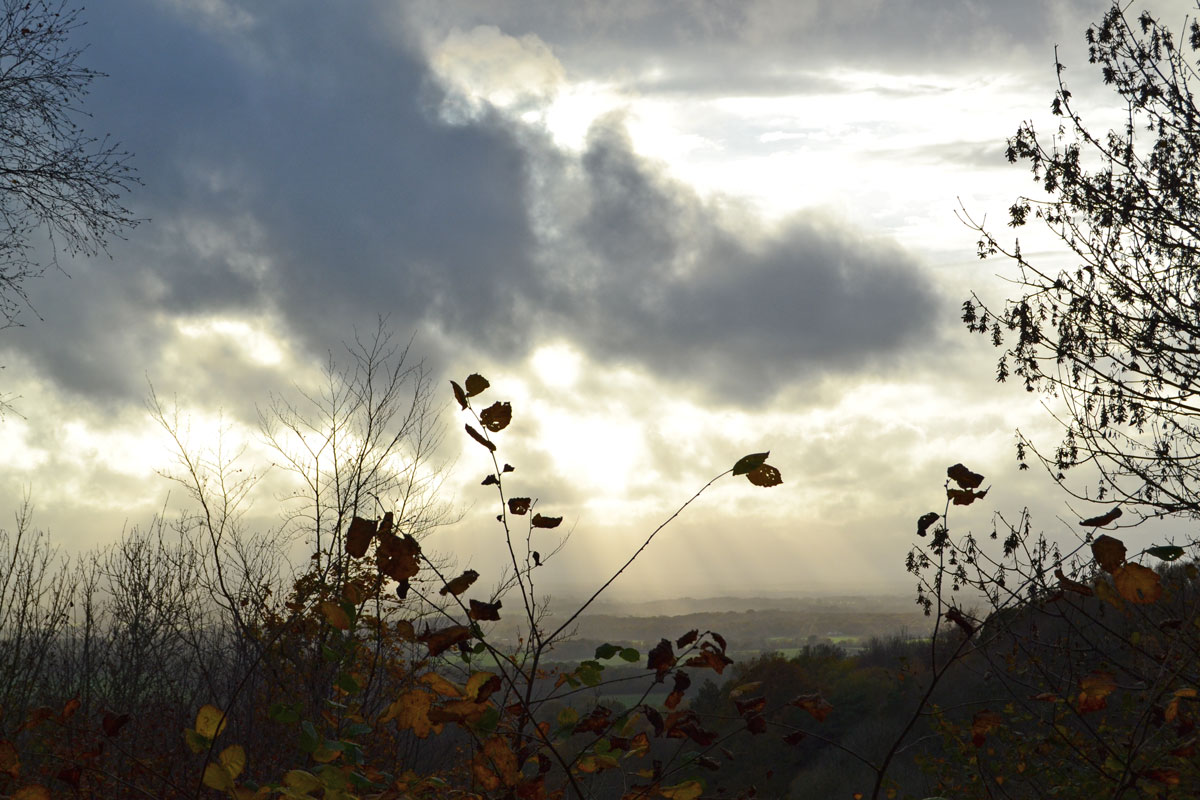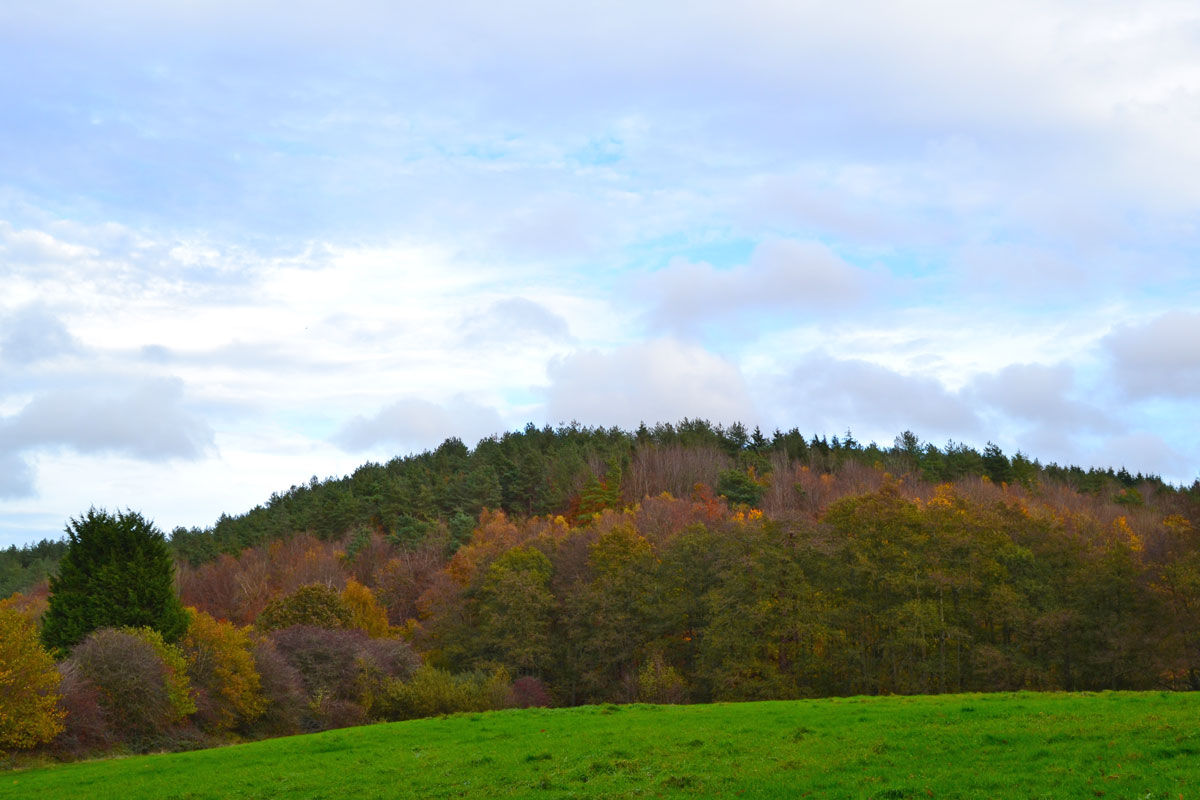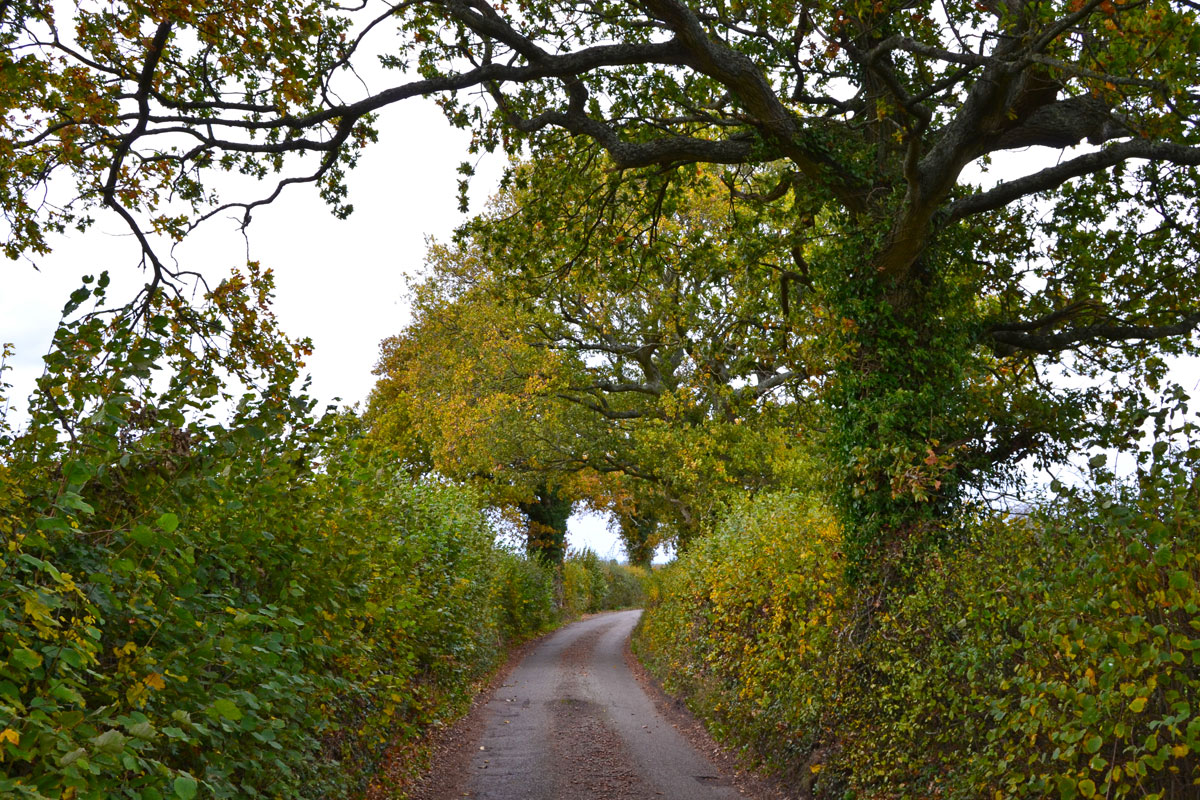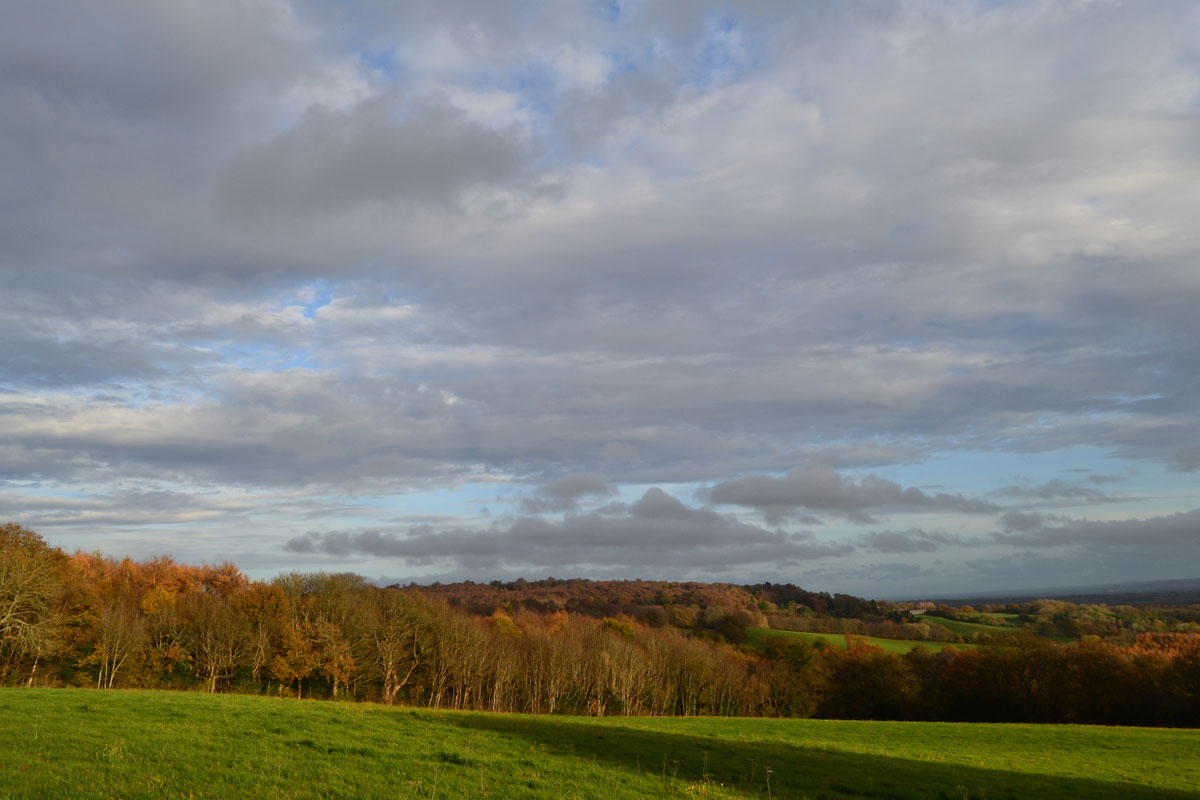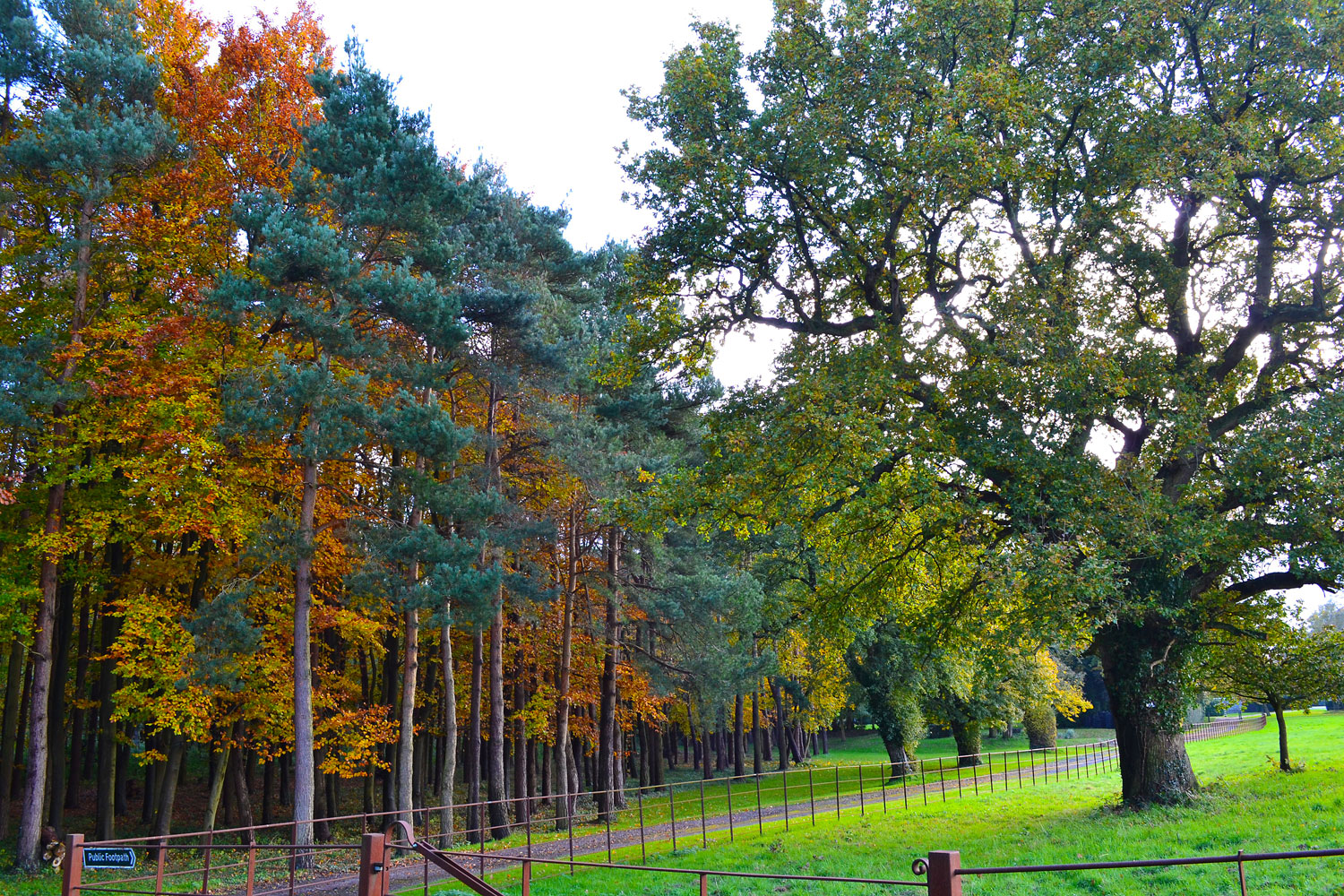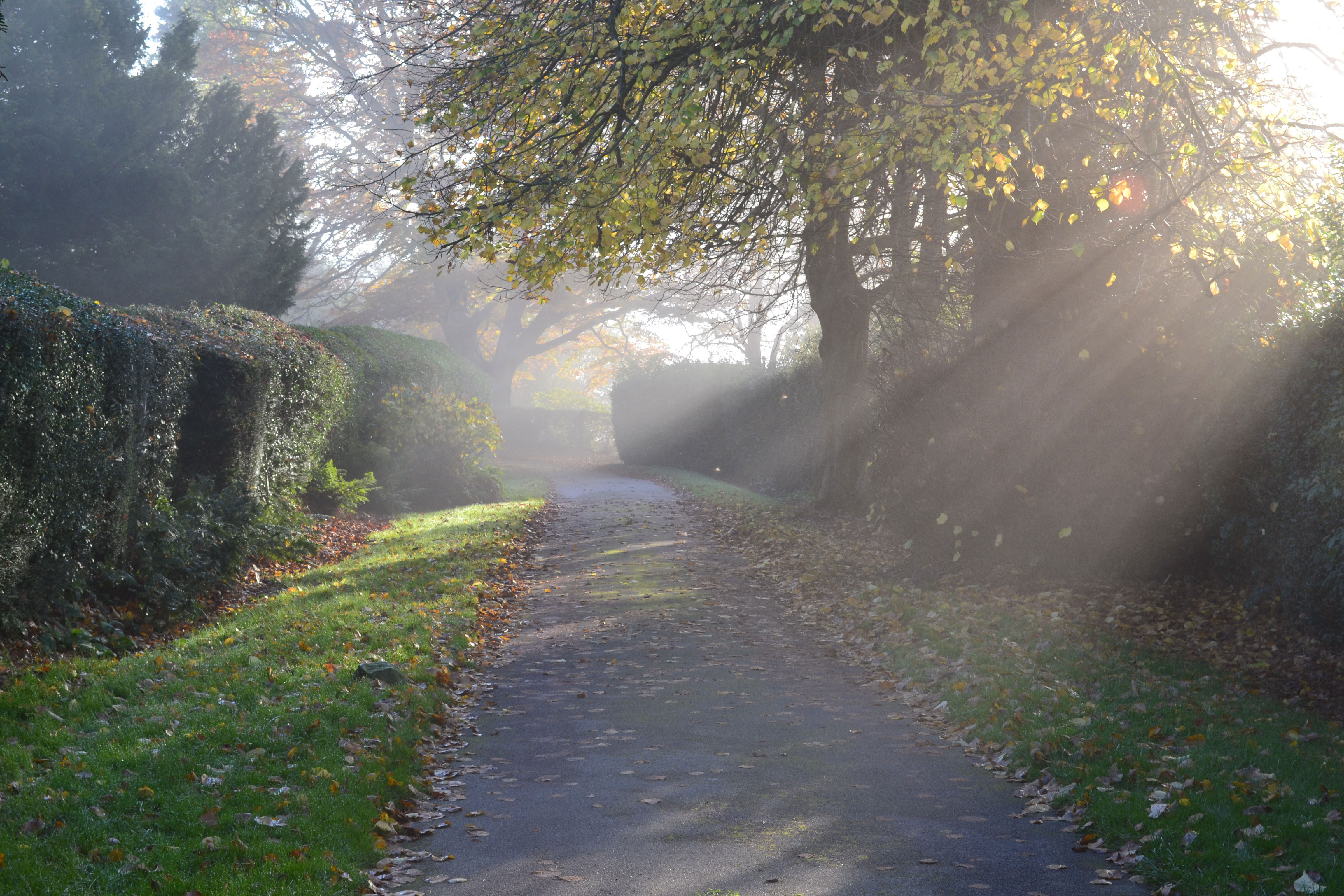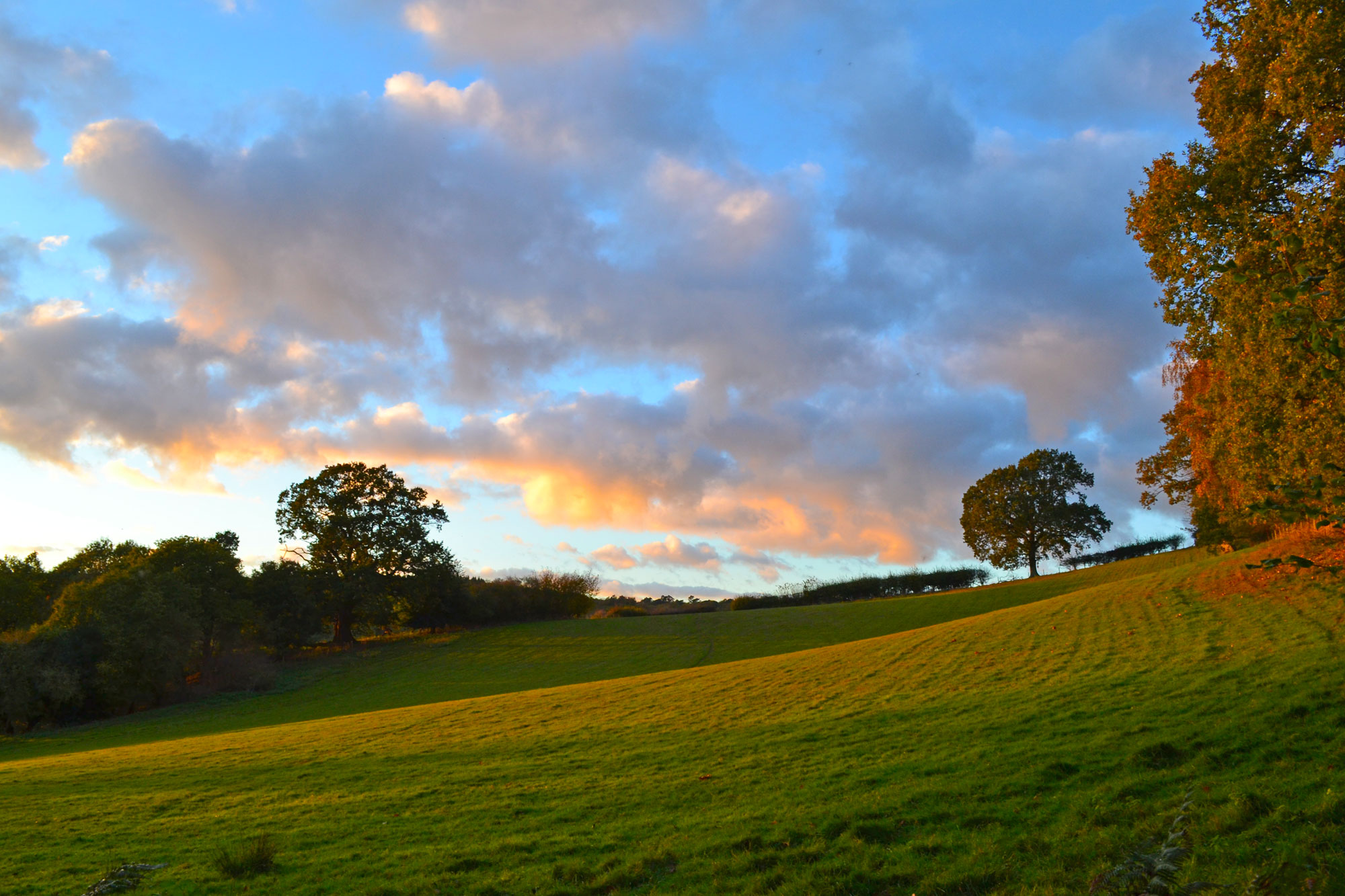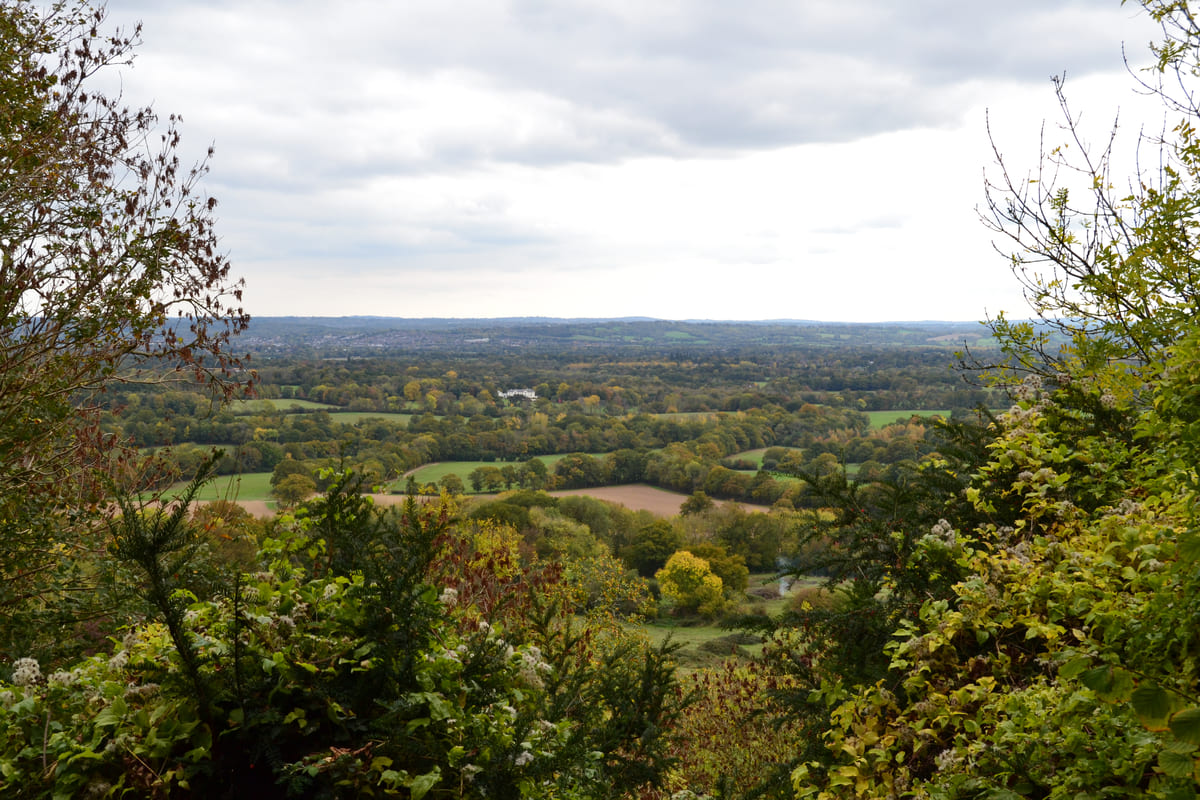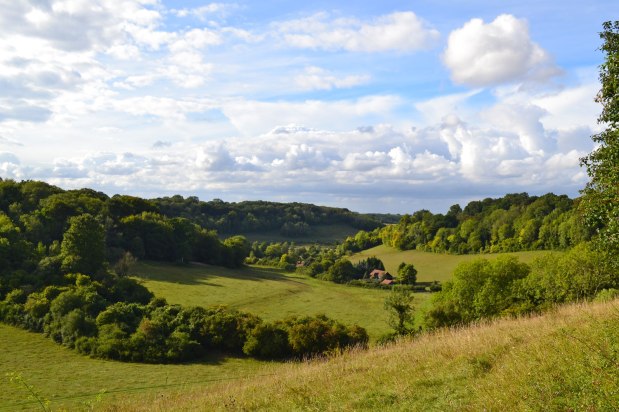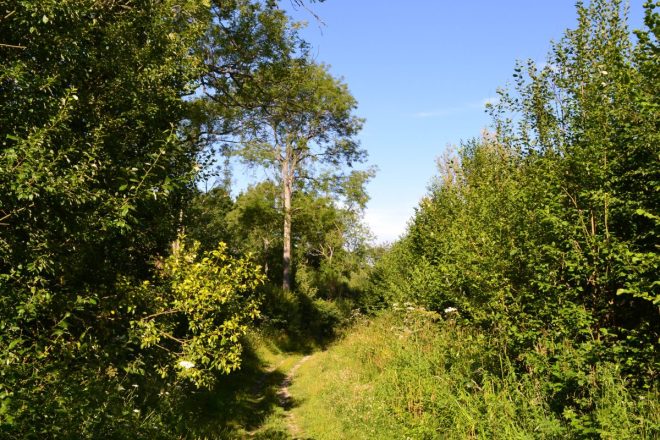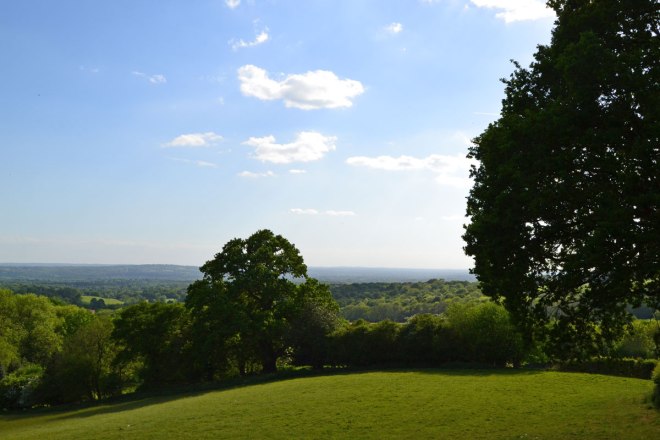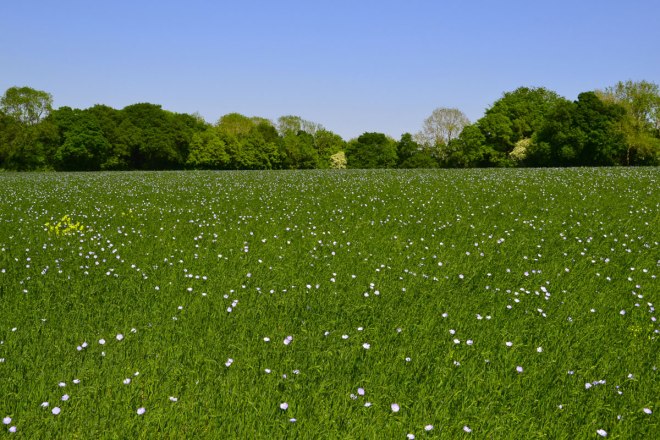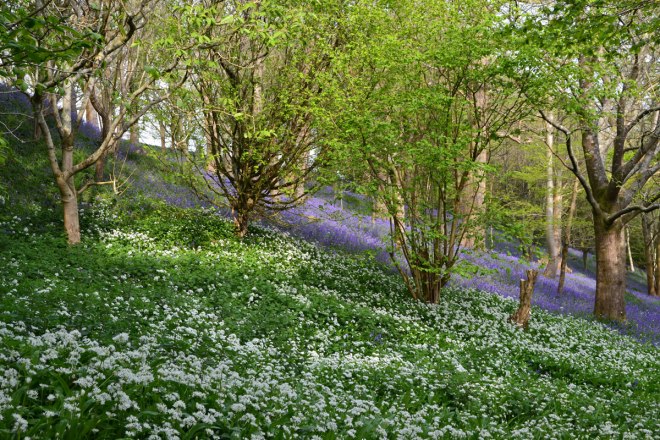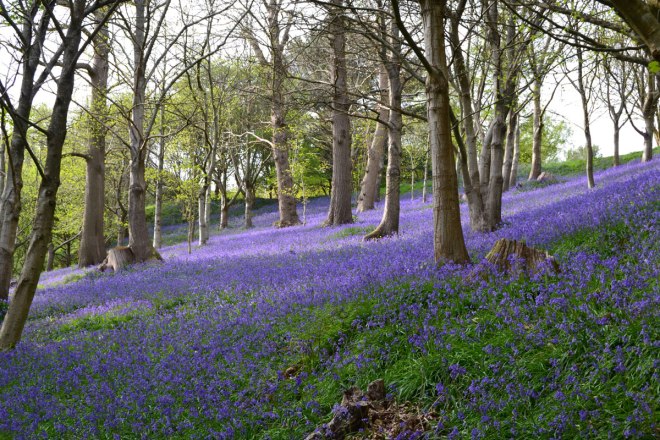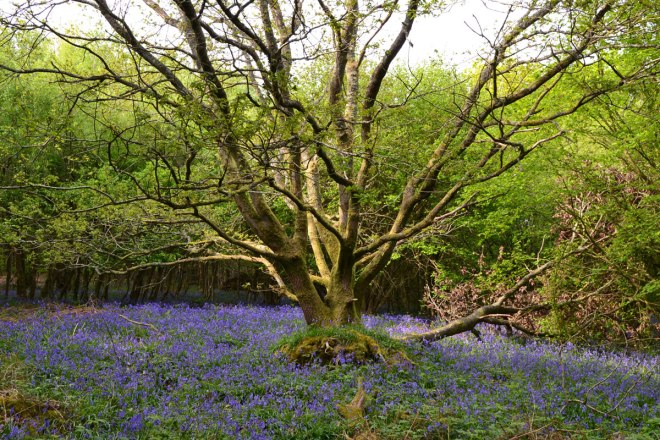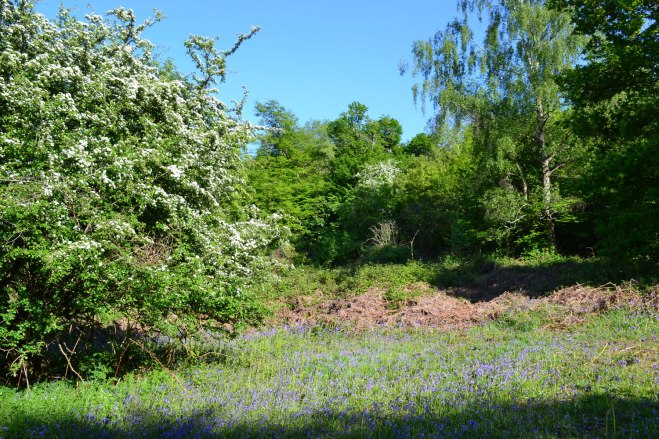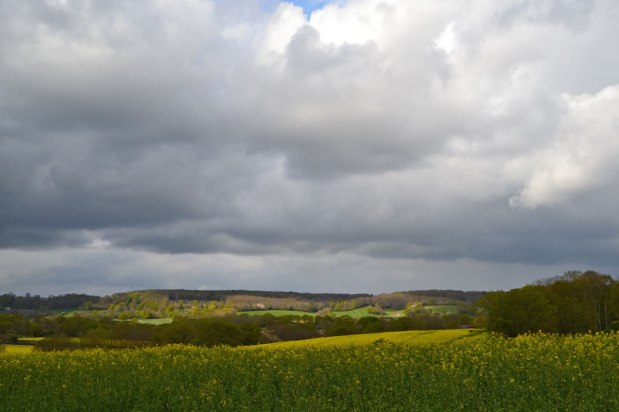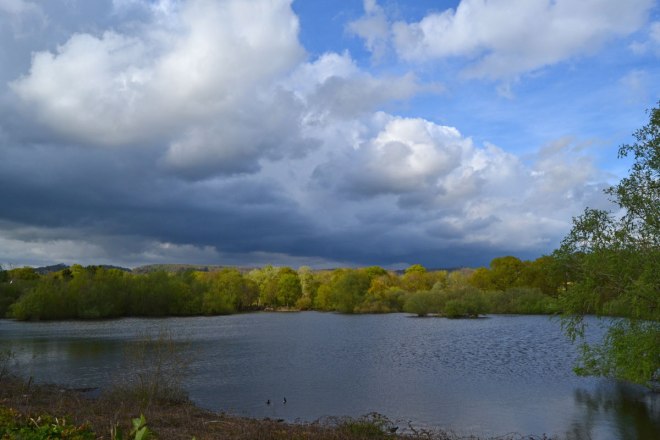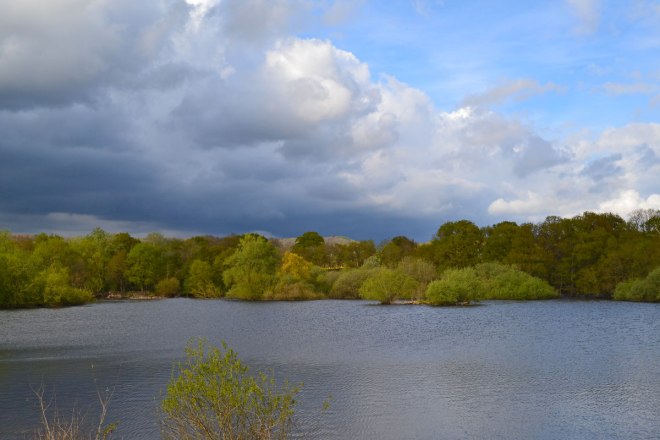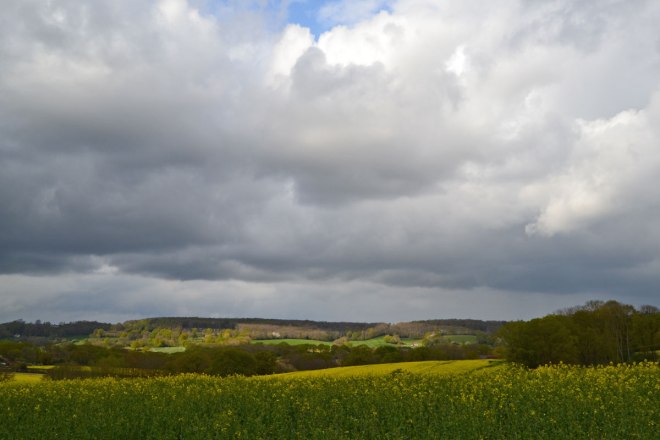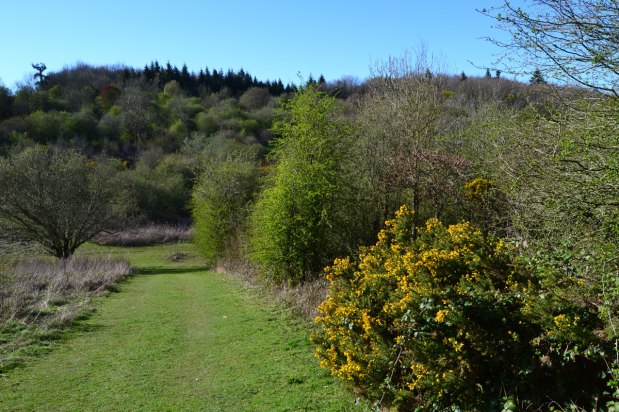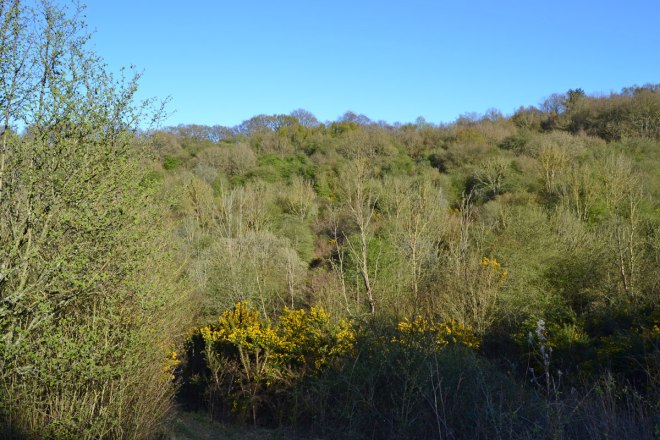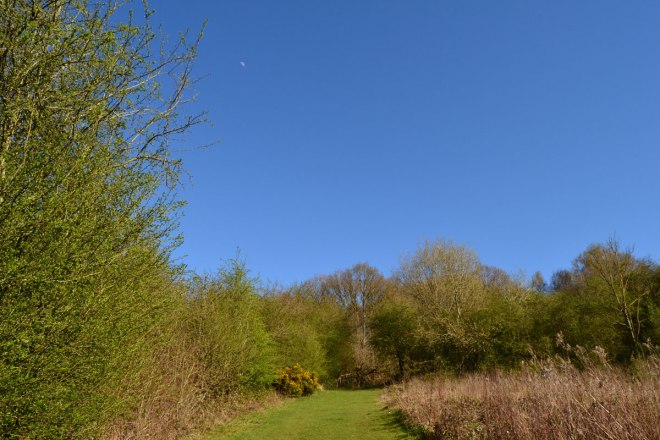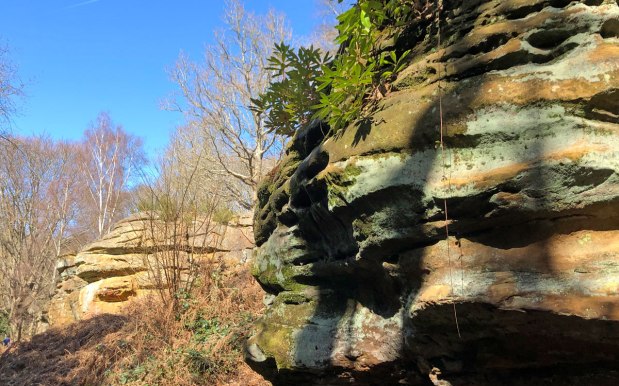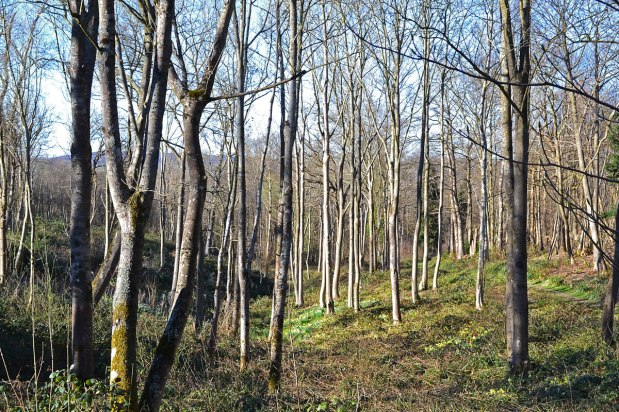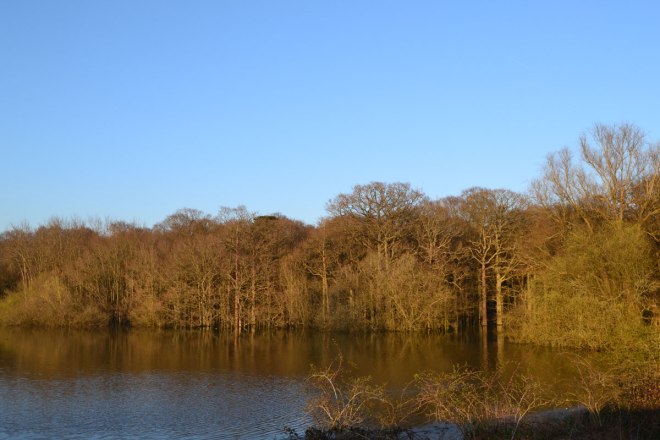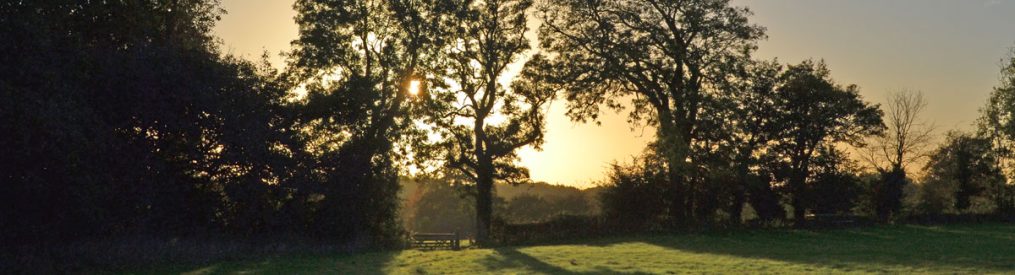
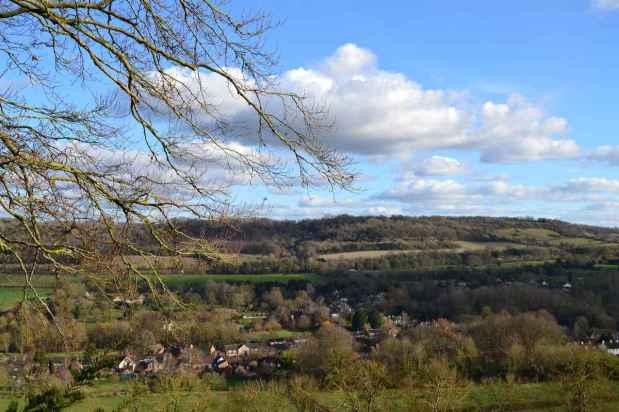
The little Bough Beech walk is one of those quiet ones: it doesn’t seem much but it creeps up on you and you realise you miss it if you haven’t done it for a while. The vast lake (described here) is a major spectacle at the beginning and end of the walk but doesn’t define the route; Bore Place, a delightfully hidden organic teaching farm and event venue, does. The walk is only two and a half miles (handy if you have a bad foot, as I do) to which you can add an hour‘s pop-in at the lovely nature reserve at the end, where there’s usually news of an interesting oiseaux or two keeping the friendly birders in the hide on their toes. Cuckoos (the star of this particular day), barn owls, kingfishers, migrating osprey are regularly seen here. On my recent walk here, as the fine pre-Easter weather started to break, interesting cloudscapes and shafts of sun reflected from the lake surface, while to the north the Greensand Ridge at Ide Hill and Goathurst Common were swept by very localised squalls. I was struck by how beautiful bluebells are when among cuckoo flowers; that was about as profound a thought I could muster while walking – which is how it should be. Back at home it was amazing to watch the simply incredible US Masters finale, though the football results did not bring me any comparable joy.
nature
Greening time and an early grass snake
To the accompanying sounds of chiffchaffs, blackcaps, wrens, tits, dunnocks and robins, I trekked the Polhill/Pluto route from Andrews Wood car park on Shackland Road. Suddenly there’s a sheen of green in the tree canopies; in fact there are canopies – not just stark branches – the colour scheme has seamlessly moved on from the gentle grey/browns of winter. Below the greening trees wood anemones and early bluebells are mixing with celandine, early cowslips, primroses and the odd cuckoo flower to add pixels of vibrant hues. I was delighted to spot a long, thin and beautifully patterned grass snake after hearing leaves rustling under a bush, but I couldn’t bring the camera to bear in time: damn autofocus! Slow worms were plentiful though, but you have to know where to look and avoid disturbing them. Buzzards took delight in the clear sky and subtle breezes. A fantastic walk.
Rockin’ all over the Weald
The sandstone outcrops in and around Tunbridge Wells on the Kent High Weald are little remarked on yet are the most climbed rock formations in the country, given their proximity to London. A great walk can be done from Tunbridge Wells station out past Wellington Rocks on the common, through Happy Valley as far as High Rocks, taking in all of these wonderful, alien-looking formations that appear strangely out of place within the smooth contours of south-east England. Perhaps come back via Rusthall Common, and its Toad Rock. A bit further away, at Groombridge are Harrison’s Rocks, perhaps the most striking of all and easily reached from Tunbridge Wells by taking the Spa Valley railway.

The sandstone here is Ardingly sandstone – a different type of rock to the greensand (glaucite) further north on the ridge south of Sevenoaks (see Ide Hill, Underriver, Oldbury and One Tree Hill walks). There are also outcrops, though much smaller, on the Hever and Chiddingstone walks. Our walk last week, in delightful weather (sadly not available this weekend) took in the Cheesewring rocks south of Rusthall Common.
The origins of these rocks, which gained their characteristic cracks during the ice ages, lie in sediment of the Wealden Lake. This covered much of what is now SE England and northern France 145 million years ago. I’ll add a walk at some point to cover these superb spots.

Meanwhile, grey clouds returned this Sunday but it was great to see the fantastic magnolias in full bloom in Scords Wood, as it melds into Emmetts Garden on the Ide Hill walk. The distant fields and even Bough Beech reservoir appeared white in the odd light. I’ve never seen that effect before. It was unsettling. But still, a lovely walk.
(Photographs: Cheeswringer, Tunbridge Wells; magnolia at Emmetts Garden. Adam McCulloch, iphone images so not the best!)
Change is afoot, it’s time to March
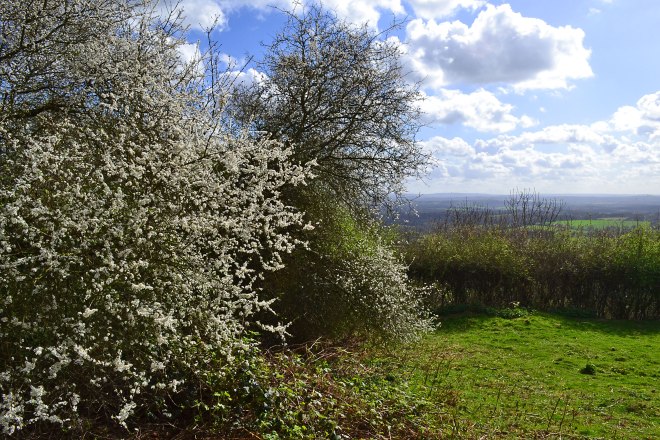
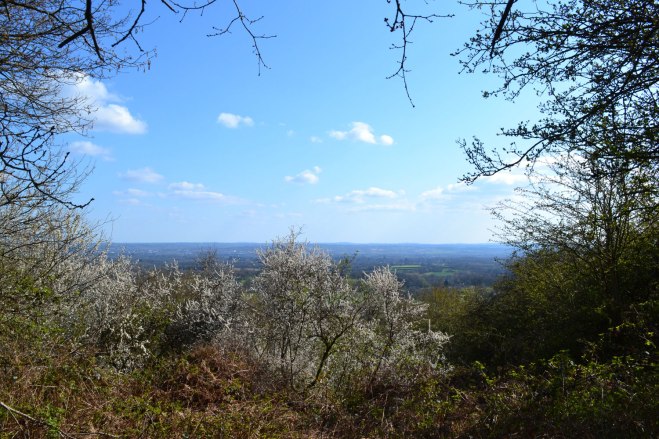
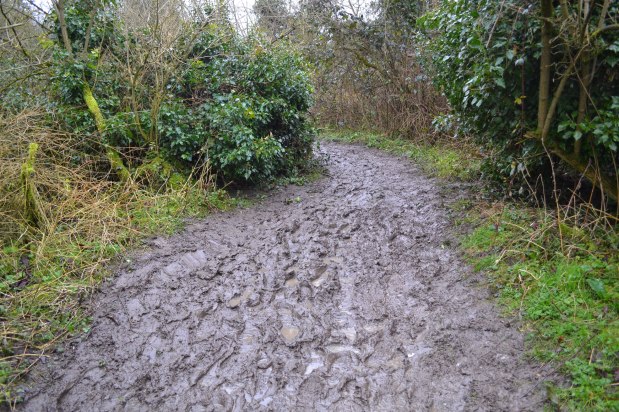
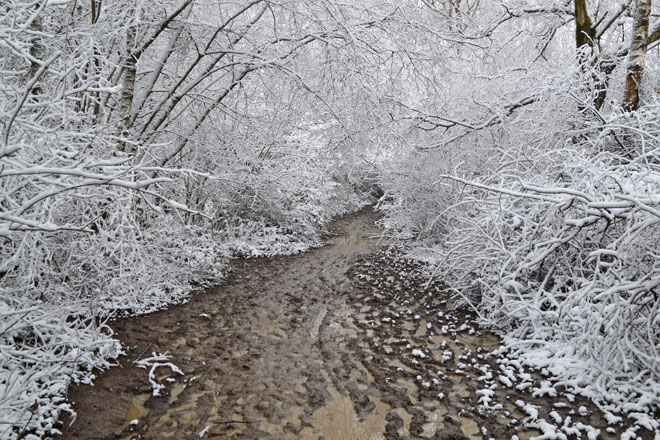
Now that there’s some prolonged sunshine, some of the humungous amounts of mud from February are beginning to dry up. ‘Some‘ being the operative word. Still, let’s welcome the bright weather, which is set to continue this weekend. Saturday could be a bumper day for Kent Walks near London but wellies are definitely still needed – because shaded mud patches will not have dried as yet, not even close. Early spring can be an odd time of year – the trees still appear brown and grey from a distance, though close-up you can see buds. Soon the blackthorn will flower – that’s when spring has sprung for me. Early March in good weather is a very particular time of year – it’s as if spring caught the natural world asleep, and it takes a little time to wake up. But already there’s more birdsong and a bumblebee or two getting busy. I particularly like the Ide Hill, One Tree Hill, Bough Beech and Hever walks at this time of year, the south-facing slope of the Greensand Ridge focuses the warmth and is protected from any cold easterly or northerly winds. You can’t help but feel a bit of optimism, despite you know, everything. The pictures below are from the Bough Beech, Petts Wood, Chevening, Ide Hill and One Tree Hill routes. I love the blackthorn. The featured picture for this post is the woods at Hever in late March. There’s a sheen of primrose and celandine on the woodland floor; I really like the photograph, I can remember every detail of that day.
Muddy and miserable
A cursory glance at this website may suggest that the north-west Kent walks are permanently sunny. Or snowy. Or bright and breezy. My choice of photographs suggest the routes exist in a world rich in colour, and one must only stride out purposefully with map in hand and trainers on foot to have a great time. Alas, it is not so. Walkers are squelching through giant puddles, inching their way around horrific mud patches and sliding back down liquid hillsides. They are arriving back at home dishevelled, slightly disorientated and in need of a good soak. As I write in mid-February, during one of the cloudiest and wettest winters I can recall, the truth is that unless your need is great, it might be better to abandon the notion of walking in the countryside for the time being. One friend terminated his walk at Westerham after a few hundred yards last week, while another KWNL reader informs me that Polhill and Meenfield woods (west of Shoreham) are impassable. Polhill is simply too steep to bear most humans’ weight in these slippery conditions, while Meenfield woods’ tracks are seas of horrific mud made worse by bulldozers and diggers being used for forestry work there (thinning some of the trees).

Has anywhere survived the mud?
If you must walk, I suggest: Knole Park in Sevenoaks, where there are solid, firm stone and tarmac paths; Lullingstone, where the chalk downs spirit away a lot of the surface water into aquifers (but avoid the busy, ridiculously muddy path alongside the Darent river); and perhaps High Elms, but don’t blame me if that proves a morass too. Avoid the Greensand Way walks, such as One Tree Hill, Hosey Common, Ide Hill and Underriver. Even the trusty old Downe walk, which once was dependable in all conditions, is in an appalling state now, partly because the ‘new’, hemmed-in paths around the children’s farm compress the footfall.
Wintry weekend in west Kent
At last, sharp sunny days with frost. Walkers in the North Downs were rewarded at the weekend by a cobalt sky, heavy frost, colourful sunsets and perhaps the remnants of snow from the previous Wednesday night – it was hard to tell where the frost stopped and the snow started. I walked at Beckenham Place Park on Saturday morning before taking the Fackenden Down walk in the afternoon. As soon as we got a bit higher in the hills, the conditions became increasingly picturesque. Magpie Bottom, a hollow that faces north, was a picture, but unfortunately my camera battery had died and we resorted to phone camera images. The last time I saw similar conditions was in January 2022 but on that occasion the temperature must have been even lower because the frost remained glued to the trees even in mid afternoon whereas on Saturday there was some kind of thaw happening where the sun was felt. A sublime, memorable walk.
Please contact me at ammcculloch49@gmail.com with comments about the walks.
Pictured below: sunset from the top of Fackenden Down; moonshine at Fackendon Down; Adam (the author) and Bonny (Photo by S. Hart); looking east into Magpie Bottom; looking along the little valley north from Dunstall Farm; Dunstall Farm; ice on Beckenham Place Park’s lake; swimmers in the lake; looking east along the lake; the lake amid frosty reedbeds
Golden light at the end of a grey day
It’s been a bit of a classic autumn so far; lots of rain but also some great sunny windows of walking opportunity. If you’re keen on getting out for a walk but prefer to stay dry it means checking your weather apps and staying agile. Lately these windows have come at the end of the day and have rewarded those able to dash off on a Kent saunter late in the day with some brilliant light. On Saturday, the Downe walk at 5pm was a winner. As well as a beautiful sky, saturated colours and a sense of perfect tranquility, there were interesting birds around: kestrel, sparrowhawk, three yellowhammers, redwing and mistle thrush. Migrations are happening. Some of these birds may have travelled from Scandinavia, from eastern Europe, Yorkshire or a few miles over the border of Surrey. We’ll never know.
Rain set in overnight and for much of the next day. I’m drawn to wooded areas for walk in bad weather and few woodlands are better than Petts Wood, maintained by the National Trust. Scots pines, chestnut groves, heather glades, oak, ash, and sycamore surround a labyrinth of paths with a railway line and a couple of arable fields and streams helping navigation in the middle of the wood. A great place.
Vibrant colour in Shoreham’s eastern valleys
Great to see so many people enjoying walks this weekend, a fair few using the KWNL routes and following the GPX from the look of the WordPress dashboard. I’ve helped a few out with directions from time to time – people are always tickled pink when they realise they’re talking to the actual bloke who wrote this site.
Today I walked the ‘mysterious eastern valleys of Shoreham‘ route. The path by the field is very overgrown. I was prepared for it so brought secateurs. Despite my snipping that path will still be daunting and slow going. I advise a diversion: check out the map on the route’s web page to see it – it involves walking down to Shoreham church from the station then taking the path heading north and eventually crossing the railway line and the A225 before heading east, steeply uphill and joining at Point 3. It’s not difficult, honest.
And it’s worth it. Right now this is a brilliant route. From the hamlet at Austin Lodge up to Romney Street the wildflowers are fantastic: wild marjoram and scabious; mauves, lilacs and purples with knapweed, devil’s bit scabious, the yellows of trefoil and ragwort, the deep pink of rosebay willow creating a sheen of vibrant colour. I walked with clouds of meadow brown and gatekeeper butterfiles with the odd brimstone and chalk hill blue thrown in. As ever in summer, the Magpie Bottom valley – between Knatt’s valley and the Darent valley – was humid, still and quiet. A little owl called, buzzards soared. I decided to extend the walk past Romney Street to Magpie Bottom and over Fackenden Down, bringing me out at Shoreham station just in time for the 5:38pm Blackfriars service. Perfecto.
Suddenly summer
The unexpected arrival of a summer that seemed so distant on the bank holiday and the even more unexpected appearance of the aurora borealis in the skies of south-east England (has this ever happened to such an extent before?), were the backdrop to full-on weekend of walking for yours truly. Family wanted a walk in the Seven Sisters country park, East Sussex. My offer of the Hever walk, great in May, was turned down. So we headed down the merry old B2026, A26 and A27 turning off towards Afriston soon after Lewes. We improvised a walk starting in the downs above the Cuckmere valley at High and Over, then steeply down to the river to the country park visitors centre. From here, we decided to walk through Westdean (beautiful!) and Friston Forest then back to the Cuckmere via New Bridge and steeply up High and Over (though an inquisitive herd of goats). About seven miles.
Pictured: view of Cuckmere river from High and Over; the Cuckmere river nears the sea; looking towards Friston Forest from High and Over
Cliffs were the next item on the agenda so we drove to Birling Gap where the happy ice-cream ensonced throng was beginning to thin and walked a mile or so along the tops of the Seven Sisters and back. This was followed by a great dinner at the gorgeous Tiger Inn in East Dean and another walk from the Seaford Head car park down to the Coastguard Cottages (think Atonement and a million photos of the cottages, the beach and the cliffs). During this walk a fox crossed our path with a rabbit in its mouth. Another rabbit bounded past in the opposite direction. By now it was pushing 9pm and crowds were arriving at the car park hoping to see another great aurora.
Thinking ahead we drove back to SE London via the Ashdown Forest, parked up in darkness at the Piglets car park and made our way to the AA Milne memorial with its great north-facing view. By now it was about 10pm. Lots of others had the same idea … good humoured groups of people lingered with their phone lights pointing at the ground round every corner. Of course there was no aurora borealis, underlining what a one-off Friday night had been. But we saw a decent starscape, a few satellites, and that was it. I was hoping for an owl and the song of a nightingale, but alas …
Sunday saw a more familiar path taken: the High Elms/Farnborough walk (pictured above). Sun-dappled paths, fantastic fresh foliage, an air of bonhomie from fellow walkers – what a difference a spell of sunshine can make. This route lacks great views but it’s far from ordinary because of its associations with Darwins and Lubbocks, and star-studded arboreal content – from sequoias to holm oak, beech to corsican pine. I fiddled with the Merlin app a few times to try to identify warblers and other migrant birds calling from thickets. But it didn’t work. I guess they were all common whitethroats and blackcaps anyway. One highlight was was the clearing in the woods a mile north of the Beeche cafe. It was full of bugle and cowslip; dark blue and yellow splashes. This season’s bluebells are already largely a memory. Here’s a very good blog about High Elms and other places covered on KWNL by Bill Welch.
The inaugural ‘Bluebells of north-west Kent’ award goes to …
The inaugural KWNL bluebell award results are in, now that the bluebell season is drawing to a close. The judge (that’s me) has visited a number of sites renowned for their bluebells at this time of year and come to his decision, without seeking the opinions of others (I prefer it that way, for clarity of thought). First, let’s be honest, it’s been a slightly underwhelming field this year compared with previous years, when this competition wasn’t held. It’s pissed down with rain largely, the sun has generally refused to appear, and it’s been so windy that lots of branches have fallen in the woods disrupting the shimmering fields of azure and making the place look untidy generally.
4th PLACE – EMMETTS/SCORDS WOOD on the IDE HILL ROUTE

Emmetts Garden/Scord Wood was the strong favourite to be the winner given their popularity and reputation so it is something of a shock to see it down in fourth in 2024. The position of the flowers on the slope and the widely space trees help makes them easy to photograph nicely, especially with late afternoon sun casting long shadows – the perfect bluebell shot. However, it was grey and cold during my visit and there were a few too many bare patches – unlucky, but rather like an Ofsted inspection on the way day the usually impeccably behaved pupils have nicked the headmaster’s car and left it upside down on the cricket pitch. Beautiful of course, but somehow not quite up to usual levels of greatness. No trophy but Champions League nonetheless.
3rd PLACE – MEENFIELD WOOD ON SHOREHAM WEST ROUTES

Meenfield Wood on the various Shoreham/Polhill western Darent Valley routes was also expected to make the top two, but just fell short. The full inspection took place on a Saturday again heavy with cloud with approaching rain from the south. The lime green of the beeches coming into leaf contrasted with the blue flowers to make for a colourful sight despite the conditions. Splotches of stitchwort added to the jollity at times. Many might argue it was a worthy contender to win; and in another year it may have.
2nd PLACE – NEW YEAR’S WOOD, CUDHAM CHALK PATHS
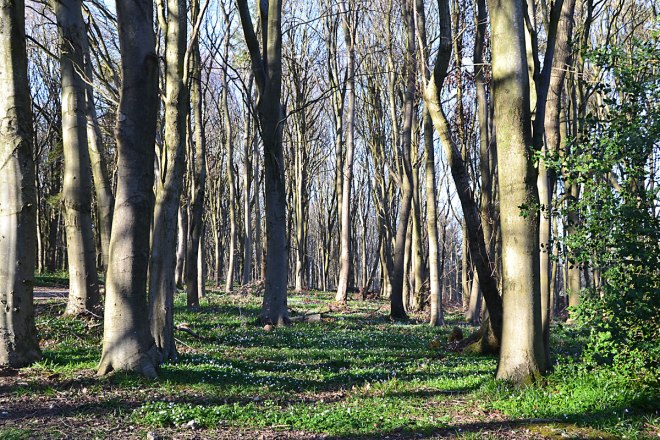
Doing much better than expected this year was New Years Wood, on the Cudham circular route. A lovely, quiet woods without many paths to interrupt the swathes of blue. More mysterious feeling even than Meenfield and it was easier to imagine the bluebells somehow continuing for miles into the distance – you couldn’t see where they ended.
1st PLACE – BLUEBERRY LANE MEADOW, KNOCKHOLT POUND

Close to the Cudham circular and Chevening walks, this magical spot (view from the gate: no entry into field) was not considered a contender until the judge happened to cycle past it on Sunday 5 May. This grassy field dotted with outstanding oaks, one of which appears damaged by lightning or storm, had never previously attracted the judge’s attention. The flowers appeared a very dense dark blue instead of rather milky blue of the previous two entrants, perhaps because of some trick of the light. There was some consideration that it should not qualify because it’s not strictly speaking on one of the walks, but this was overruled eventually, as cycle routes at KWNL also count.
Submissions from One Tree Hill, Lullingstone, Ide Hill, Hever and Oldbury were received too late to be considered unfortunately. They also breached the judge’s criteria of “not too much mud”.

I think there’s good bluebell viewing until around 13 May, but the beginnings of the end are already visible, so good luck!
See my cycle routes at Plot A Route