Walking on the path through the scabious, ragwort, marjoram, yew trees and grasses on the chalky west-facing slopes of White Hill/Fackenden Down last Saturday I spotted a wasp spider – a creature I’d never seen personally. It’s a spectacular arachnid, one that has been increasing its numbers in the south-east over the past 15 years. I guess a powerful orb weaver like this will be snaffling up drowsy late summer insects in the coming weeks. The walk itself was as beautiful as ever but quite bereft of bird life, which isn’t unusual for late August just prior to the large migrations. Only a solitary buzzard and a charm of goldfinches being of note, though we weren’t being particularly observant. Oddly, not a single swallow was noted – unlike during the walk at Cudham the following day, where a red kite was also seen. My friend Teri took the spider photos.
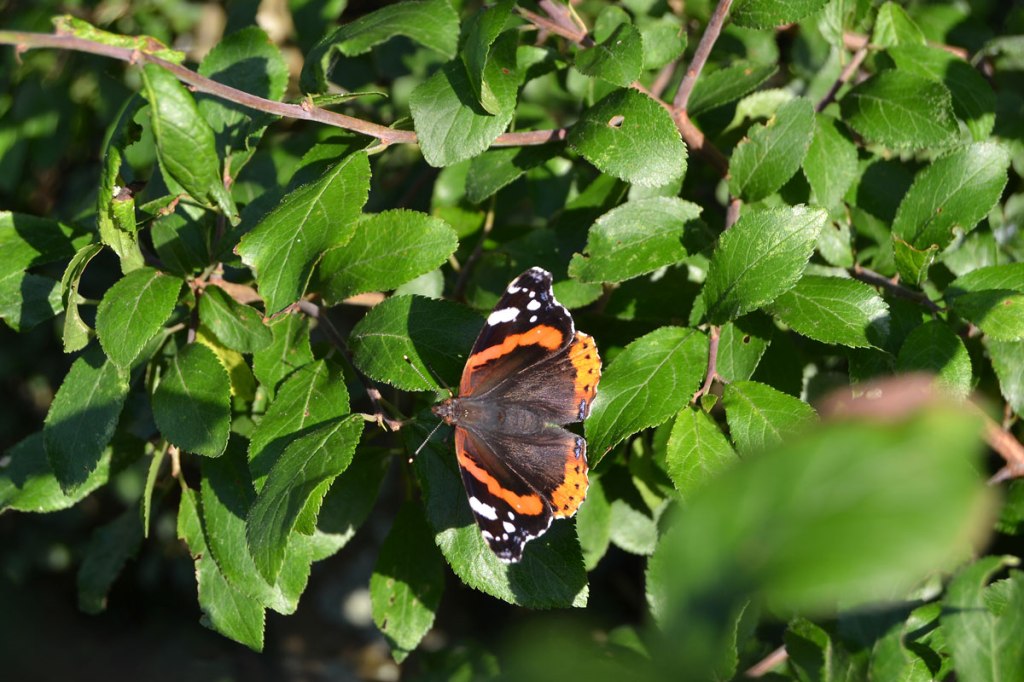
Late July, early August: it’s a slightly torporous time, and in most summers the countryside becomes gradually a bit tired and frazzled looking – rather like the Australian cricket team currently trying to play out the Ashes (now there’s a hostage to fortune). But this year, thanks to recent regular rain, there’s still a freshness about things. I particularly love the long grasses this year, so full of wildflowers – and such a contrast to last summer’s scorched earth. We’ve been lucky in 2023 in that respect, as other parts of Europe have literally burned. Nearly all the walks on this site feature beautiful grassy meadows at one point or another, the best being on the chalk North Downs at Downe, Shoreham (Eastern Valleys, Pluto, and Fackenden in particular, Knockholt and Cudham. Wild marjoram, wild carrot, ragwort, trefoil, knapweed, pyramidal orchids (still flowering) are among the common wildflowers all flourishing amid the grasses, creating a fetching spangle of purples, yellows, pinks, reds and creams among the greens. Anecdotally, butterflies have shown well this summer despite the mixed weather. At the moment it seems to me species such as comma, red admiral, marbled white and large white are the most commonly seen. In April and May, brimstones were a common sight, then peacock butterflies. I haven’t seen any silver fritillaries this year and hardly any orange tips or small tortoisehells, I’ve just been unlucky – others have seen them. Pictured below: red admiral butterfly, scarp view, knapweed in Chevening churchyard, a cleft in the North Downs scarp, a comma butterfly, the escarpment, a lonely path, all from Knockholt/Chevening short walk on a near-cloudless late July early evening.
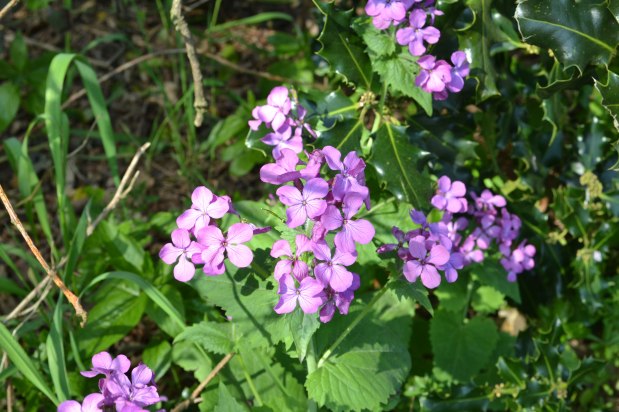
The bluebell spectacular has long ended (was it shorter than usual this year?) and the amazing flowering of hawthorns this year is now dropping off, but all of the Kent Walks Near London are great for wildflowers. Wild garlic (ransoms) is in full bloom in moist woods and orchids are now flowering on grassy slopes particularly on the chalk downs walks. I’d get the train to Eynsford or Shoreham and do the Darent Valley walks for the best orchid views. The Fackenden and Eastern Valleys walks are top of the list for me, followed by the Lullingstone, Polhill, and Cudham saunters. The glades created in the woods in High Elms country park also have excellent orchids. Downe has a few too, if the new sheep haven’t eaten them all (check out nearby Downe Banktoo). Stick a good flower identification app on your phone to help you out with identification. And don’t let your dogs run amok!!
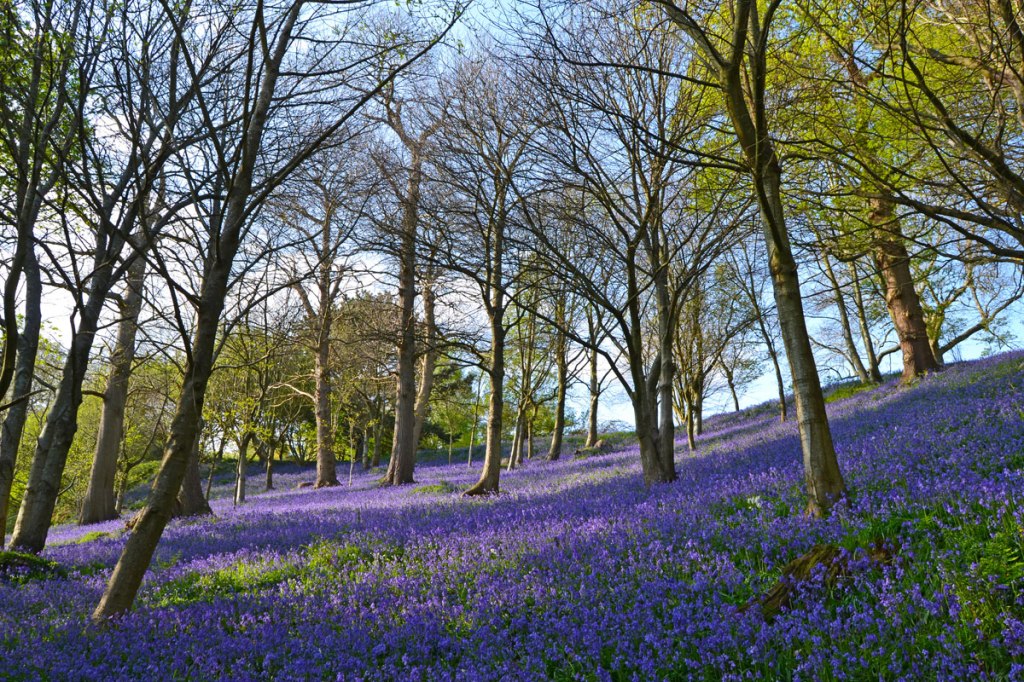
Yep, folks, they are over. The usual two and a half weeks of spectacle; now appearing dry and spindly. Wild garlic (ransoms) looks – and smells – great next to the blue remnants though, and speedwell and campion (pictured) are showing nicely on most of the walks along with all the lovely yellow and white stuff. It’s a very pleasant time of year and the next week or so is set fair: not blazing sun or anything but decent.
It seems that financial pressures brought on by the Covid lockdown and reduced footfall in winter has led to the closure of this beautiful, historic, and challenging public course and its owner Sencio’s other leisure facilities in Sevenoaks and Edenbridge. It’s very sad news not just because I’ve enjoyed the odd round at Lullingstone for many years, but because the course is a key component of the country park; the wild grasses, woods and scrub in between fairways is highly biodiverse and is home to a decent array of flora and fauna. I should know, I’ve tentatively had to search for my ball in these wild fringes often enough. Without the course you wonder what might happen to the rest of it what with the pressure for new housing. Let’s not worry about it too much for now; Sevenoaks District Council says it is confident that a new operator can be found for the course and the other Sencio facilities so let’s hope for the best. My main Lullingstone walk starts from Eynsford station but, if you’re driving, you can park just outside the golf course entrance (presumably shut now) and do a complete 5-mile orbit of the country park.
In the meantime it’d be good if people enjoying the new freedom in the park stay off the greens; I’m sure it’s fine to cross the fairways if you want but please leave the wildlife-rich rough well alone.
River Darent
Bench, Lullingstone
Lullingstone horse chestnut in flower
Skylarks nesting and wildflowers: put dogs on the lead
Skylarks provide us with the soundtrack of the countryside in southern England as they mark out their territories from around 100ft in the air. There are quite a few of them at Lullingstone, whereas birds that used to be seen in the park such as lapwings and yellowhammers have largely disappeared. I’m a bit worried that without the golf, people and their dogs will range all over the grassy slopes and will inadvertently destroy skylark nests. The birds nest in hollow scrapes in reasonably grass between 20 and 50cm high. I noticed last Sunday that quite a few dogs were bounding around in areas they wouldn’t normally be because of the golf closure. It’d be a shame to lose the skylarks and other flora and fauna that was protected by being in “islands” of grasses and meadow in between fairways.
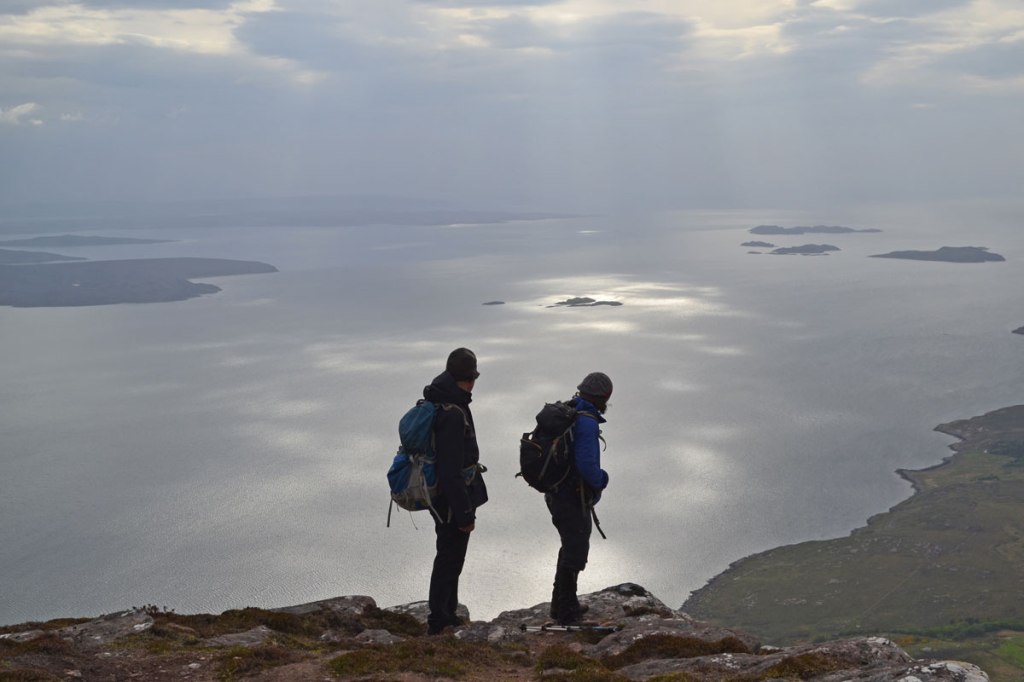
To mark the year’s passing I’ve picked one photo from each month looking back over the year so will hope to show the passage of the seasons. In some months I took few photos … which is why September’s picture is a bit “meh”. One photo is a complete cheat because it’s not from the walks here, but from north-west Scotland! I think my favourites are the final two of the year: Underriver view and Lullingstone in the snow, although the sharpness of that Cudham shot in remarkably clear July air does a lot for me.
I don’t rate myself as any kind of photographer, and I’m sure a true pro could do a lot better, but I do enjoy capturing an atmosphere or certain aesthetic. If others like them too, even better!
Happy Christmas to all who visit and use this website and best wishes for 2023.
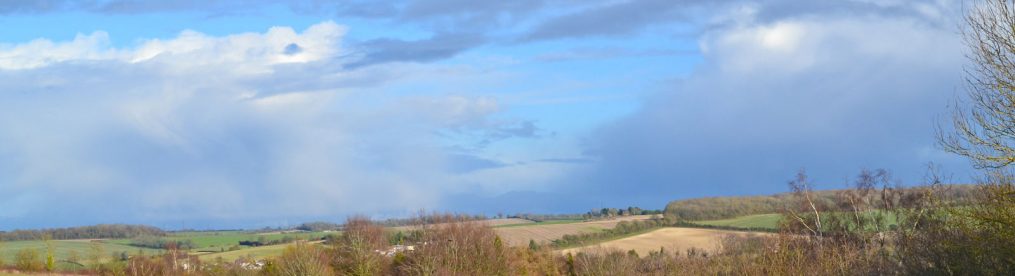
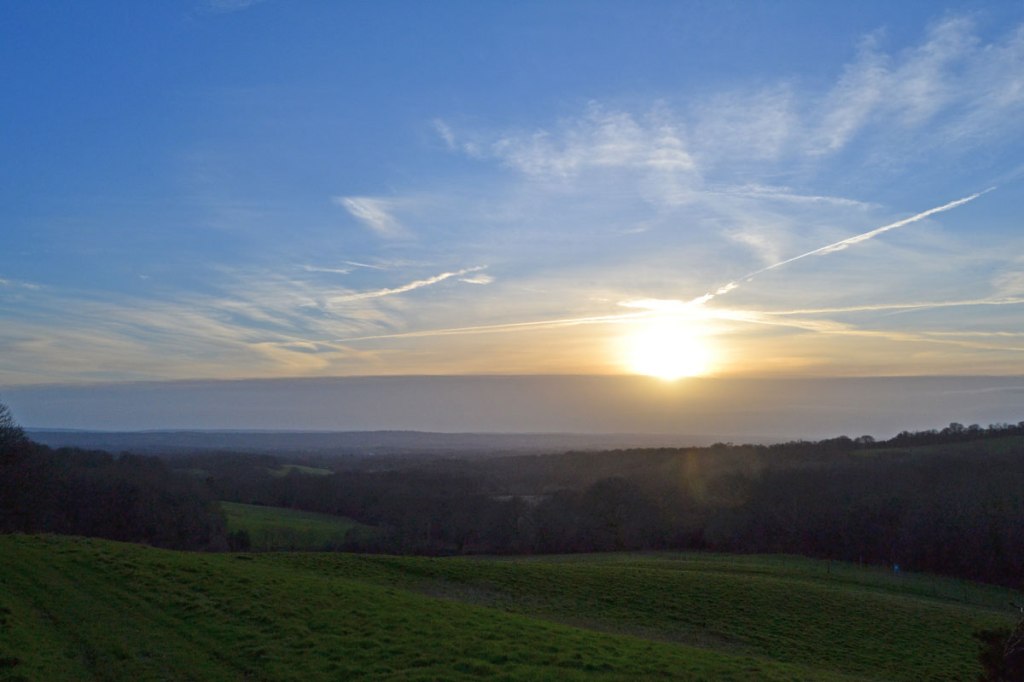
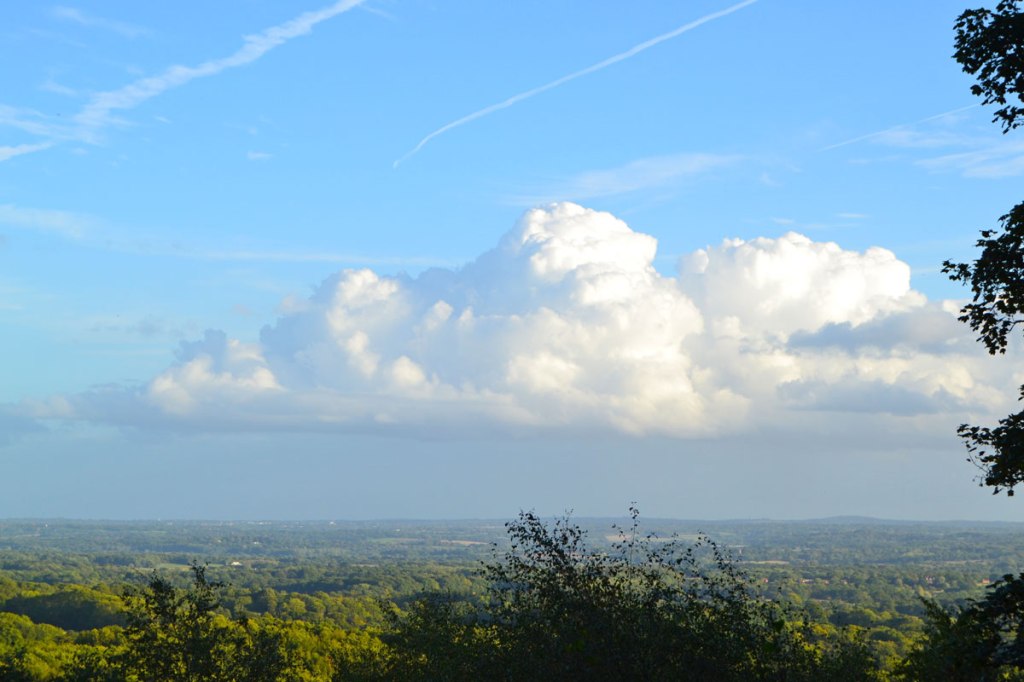
A cloud layer produces a false sunset at Ide Hill, January
Downe walk, February
Flooded woods, Bough Beech, March
Bluebells in Emmetts Garden/Scord’s Wood, April 2022
View over Summer Isles from Ben Mor Coigach, near Ullapool, May.
Pyramidal orchid in the Andrews Wood-Meenfield Wood gap, June
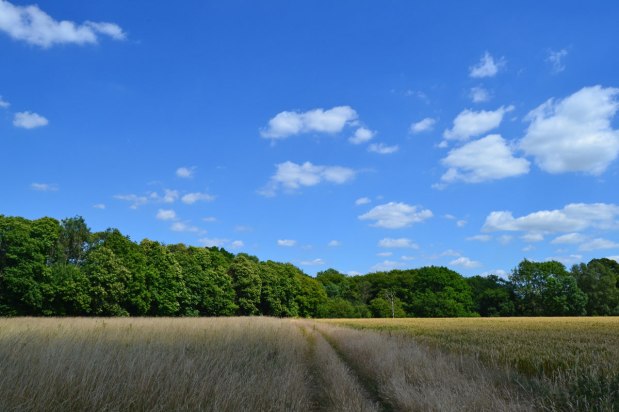
Cudham walk, July, between point 2 and 3, the field short cut
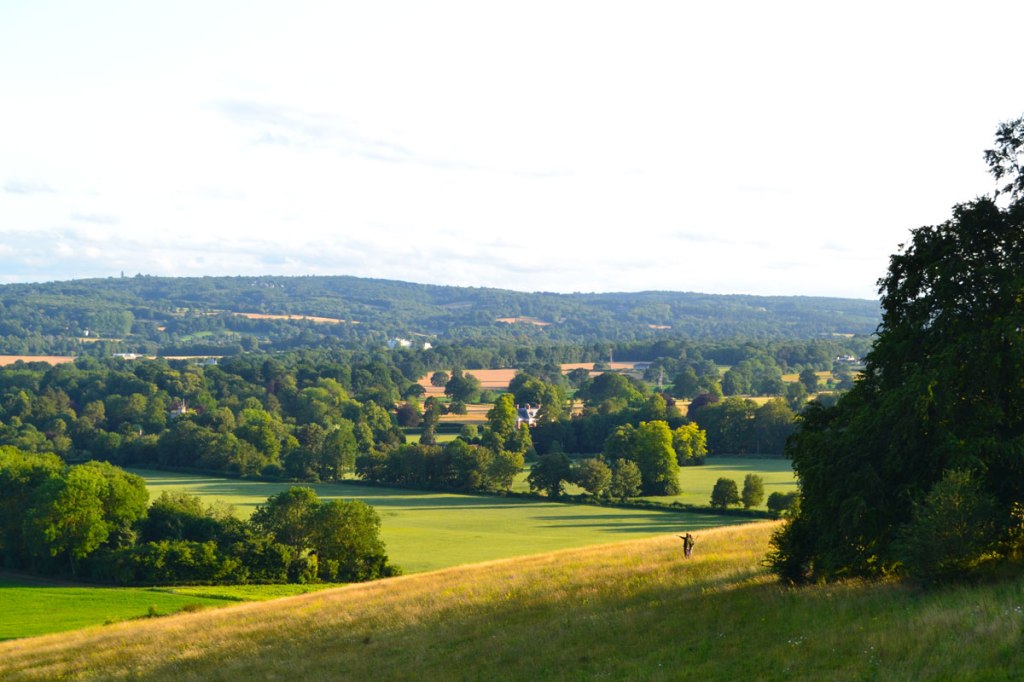
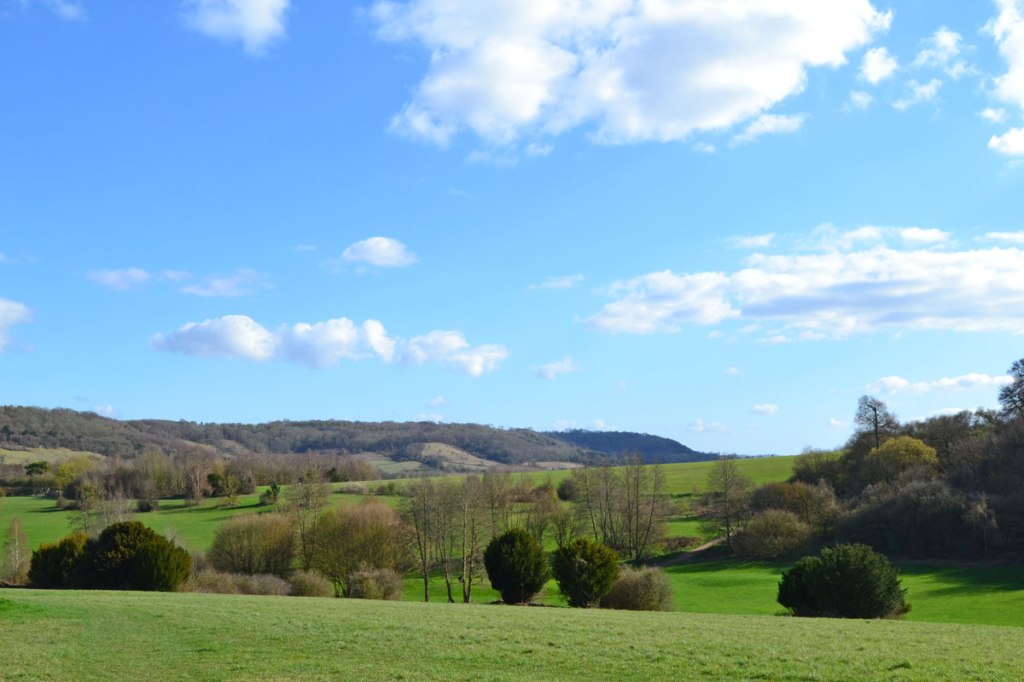
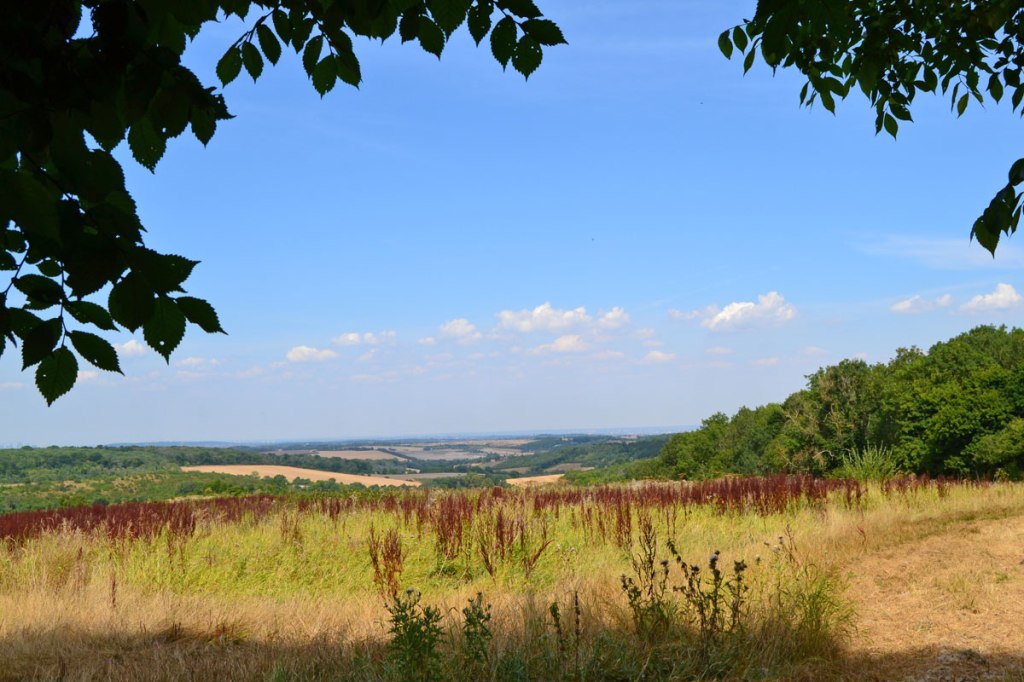
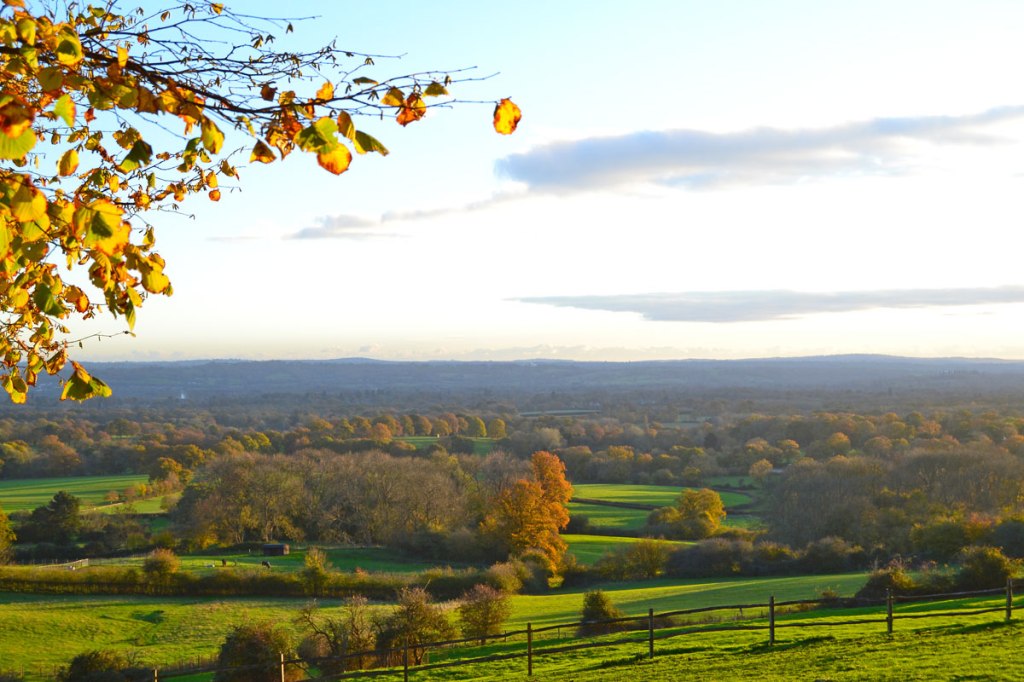
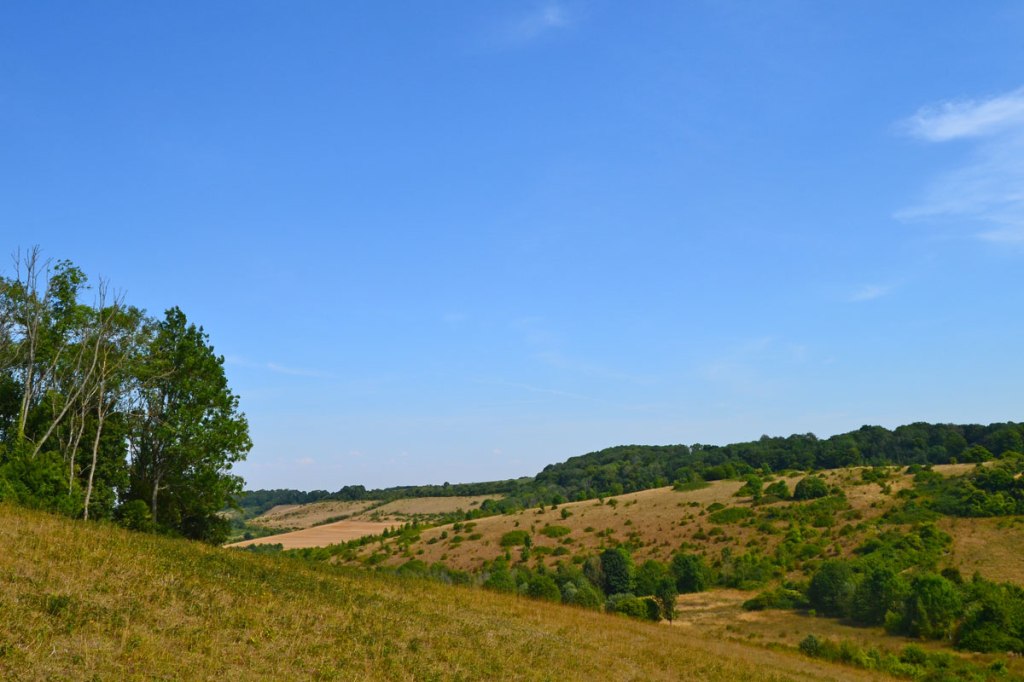
View from Romney Street, August, Fackenden Down walk
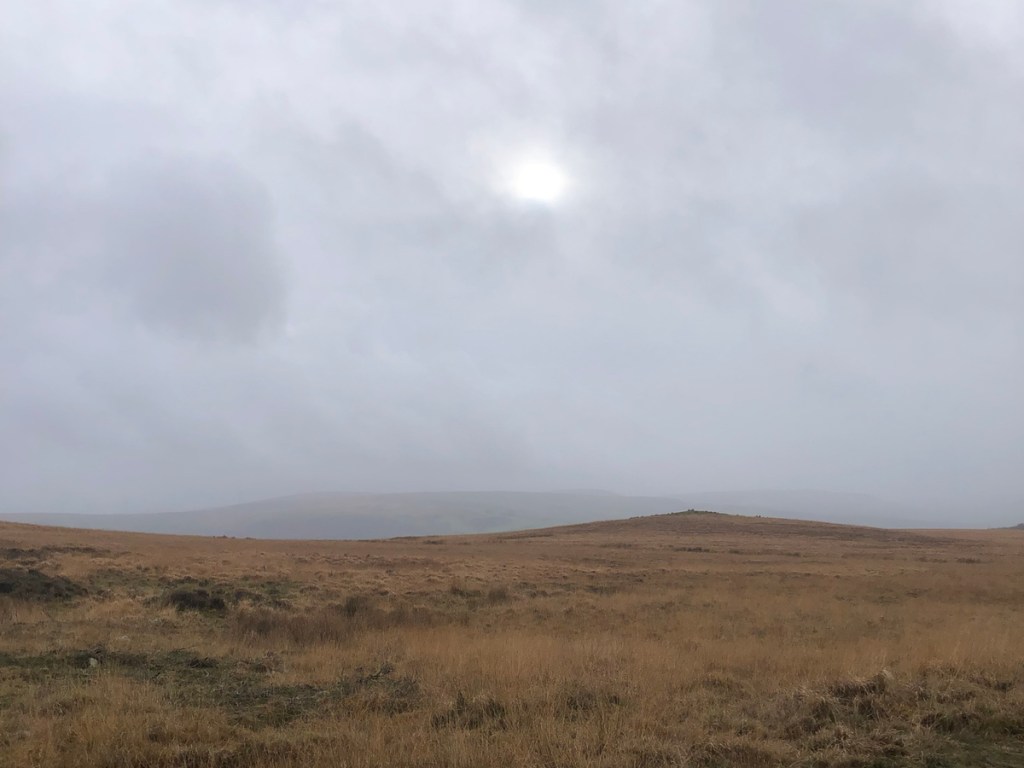
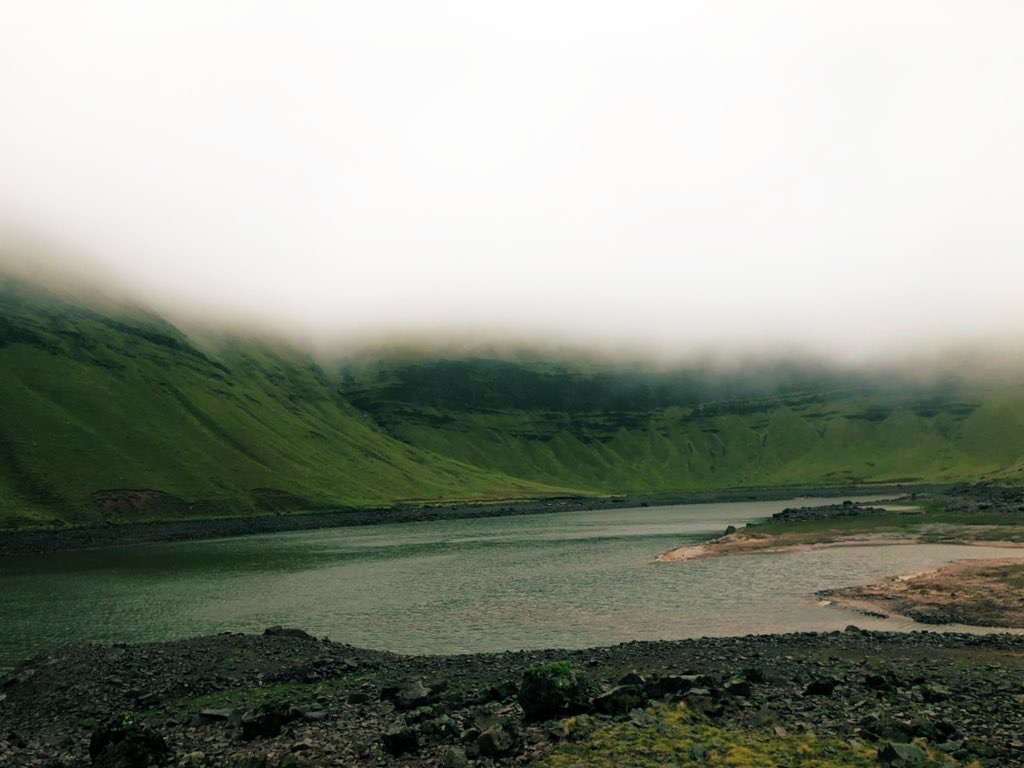
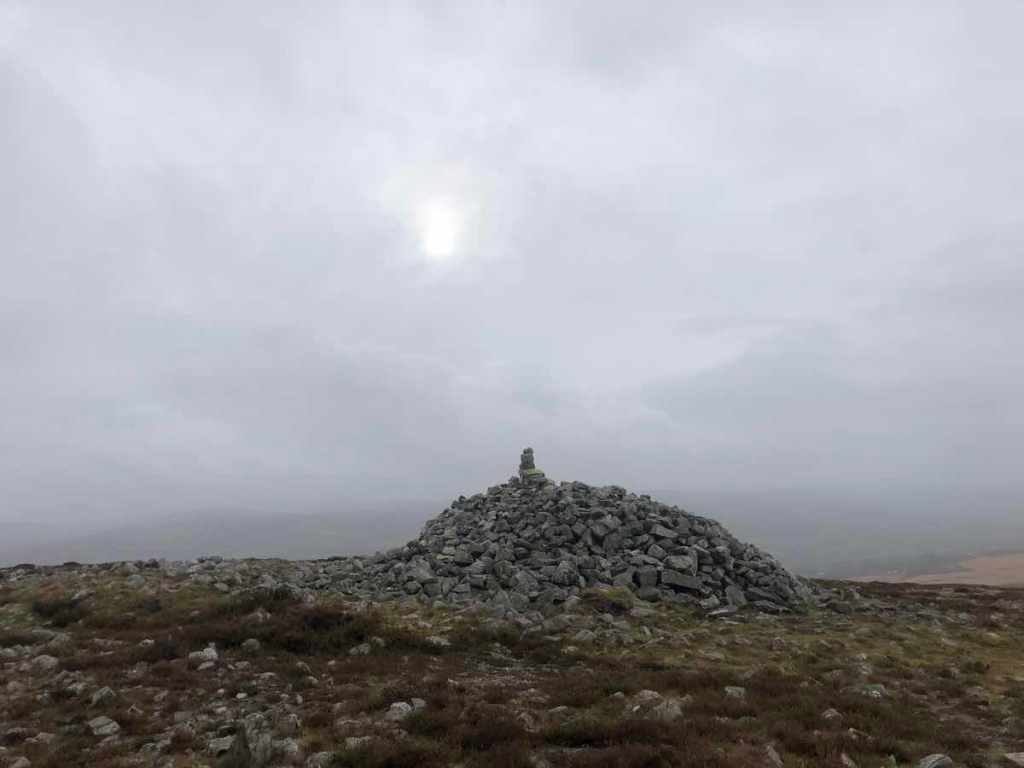
I do enjoy a trip to the Brecon Beacons. Rather than the rushed but hugely enjoyable daytrip last time I took the train to Swansea then stayed with old friends in Llandeilo for the weekend. It rained, of course it did. Then it rained some more. But a great time was had despite Wales losing at both football and rugby while I was there. As well as walking at Llyn y Fan Fach (pictured),Dinefwr Park and Tair Carn Uchaf (pictured) on the western edge of the Beacons we took in a jazz concert by Claire Teal with Jason Rebello and band at Swansea university’s Taliesin arts centre, an old haunt. Some of the scenery, particularly Llyn y Fan Fach (of Lady of the Lake myth fame) reminded me of photos I’ve seen of Icelandic landscapes. A brilliant trip, but a wet one.
The Underriver walk – short and long version – was the focus this weekend. Just south of Sevenoaks this lovely walk, part of the One Tree Hill“suite” of routes, offers great views across the Kent weald and superb woods and hedgerows. There’s a lot of interesting geology too, as you encounter greensand (sandstone) boulders, a greensand cliff, and plenty of springs as the sandstone hits the weald clay.
I was joined by birder Dave on Saturday which as usual led to an exponential increase in sightings and bird calls identified. Within a few paces of entering the first horrendously muddy field we heard and saw a flock of newly arrived fieldfares some 50 strong, a troop of long-tailed tits, goldcrests flitting in the bordering trees and overflying redwings. You can see birds like that in your local park if you’re lucky – these sightings aren’t exclusive to the countryside at all. Later on a marsh tit flew past us, which was probably the most noteworthy bird of the day and another feather in Dave’s cap as he recognised the fleeting call just as the bird, in silhouette, zoomed past us. Dave reckons the area’s bird life would perk up with a bit more arable land and fewer livestock pastures. Scrubby unkempt arable fields are a big favourite for les oiseaux it’s true.
View of the Weald all the way to Ashdown Forest, from above Kettleshill Farm, Underriver
I had been hoping for bullfinch, siskin and most of all, brambling. But it was not to be. Barely a chaffinch as it happened but quite a few goldfinches. Later on there was a kingfisher at the lovely pond on the path below St Julian’s Club and tawny owls calling at Rooks Hill, Wilmotts and Underriver itself. The truth is that there are fewer birds around these days, just as there are fewer insects. I guess it’s farming methods, climate change, all that stuff. But anyway, it was good fun just to be out there listening and watching.
We went again on Sunday. Conditions were gloomier in the afternoon than they had been on Saturday, with quite a large shower making birding more difficult. But it mattered not, the views were still great and the excellent White Rock Inn was open and offered a friendly welcome.
What a superb walk on the Polhill route recently. Superb weather and the trees in their best autumn finery. The views across the Darent valley were at their very best with every little detail sharply visible: the church tower, the oasts, the route of the river … It was a view that would have inspired Samuel Palmer, the brilliant mystical romantic artist inspired by William Blake and Turner who roamed this locale with his equally arty mates ‘The Ancients’ in the late 1820s and early 30s. He was mainly based in a rundown cottage nicknamed Rat Abbey before joining his dad at the lovely Water House – still standing of course. Repros of his beautiful art can be seen in the Samuel Palmer pub. He fell in love with and married 19-year-old Hannah Linnell when in his early thirties while in Shoreham and went on a two-year honeymoon in Italy where his art developed further. But it’s his Shoreham works that seem to attract the most attention. Strangely, his surviving son Alfred (another son had tragically died at 19) in 1909 burned loads of his pieces after his death saying that they were a humiliation because no one could understand them, or something. Odd that.
View across Darent Valley toward Fackenden Downon Shoreham circular and Polhill walks. iphone pic
It’s interesting to reflect when gazing across these lovely pastoral valley, and at Palmer’s beautiful paintings, that all was not well in the countryside in the 1830s. Mechanisation was putting farmhands out of work leading to disturbances and the destruction of agricultural equipment, incidents collectively known as the Swing Riots. In 1830 more than a thousand protesters were transported to Australia or imprisoned while 19 people in Kent were hung for their part in the fire-setting and destruction.
Incidentally, the Samuel Palmer pub, formerly Ye Olde George, received unexpected visitors on 15 September 1940 when two very shaken pilots from a shot down German bomber were taken there for a stiff drink by the Home Guard. For some reason I had thought the pub they were taken to was the now defunct Fox and Hounds in Romney St, but the very friendly Shoreham Aircraft Museum custodian, Geoff Nutkins, tells me it was almost certainly the George. Geoff himself is an excellent artist; although what the mystic Palmer would have made of his depictions of Spitfires and Hurricanes boggles the mind.
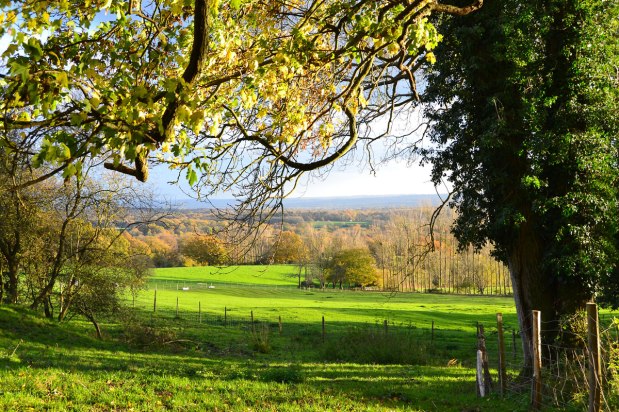
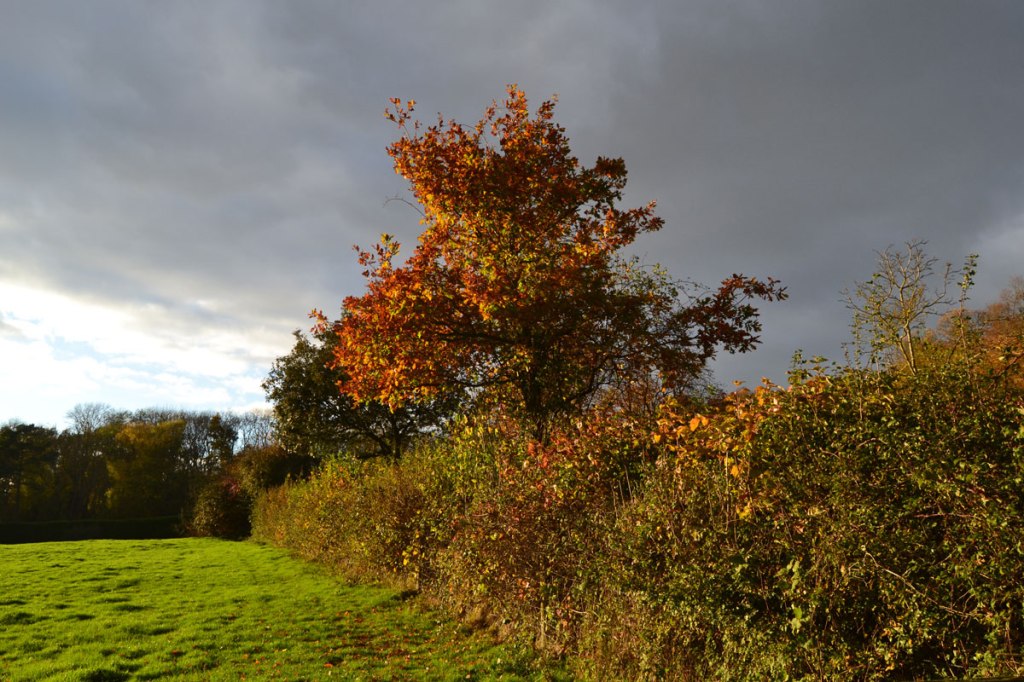
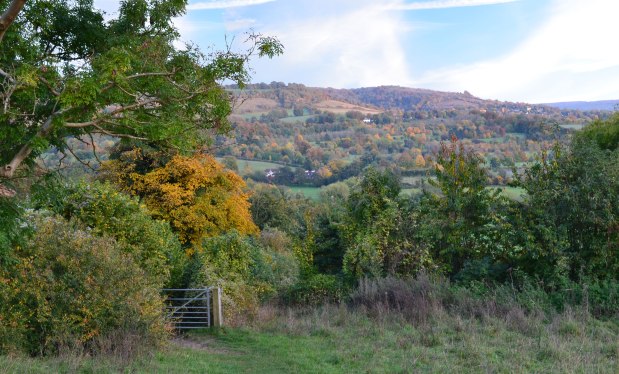
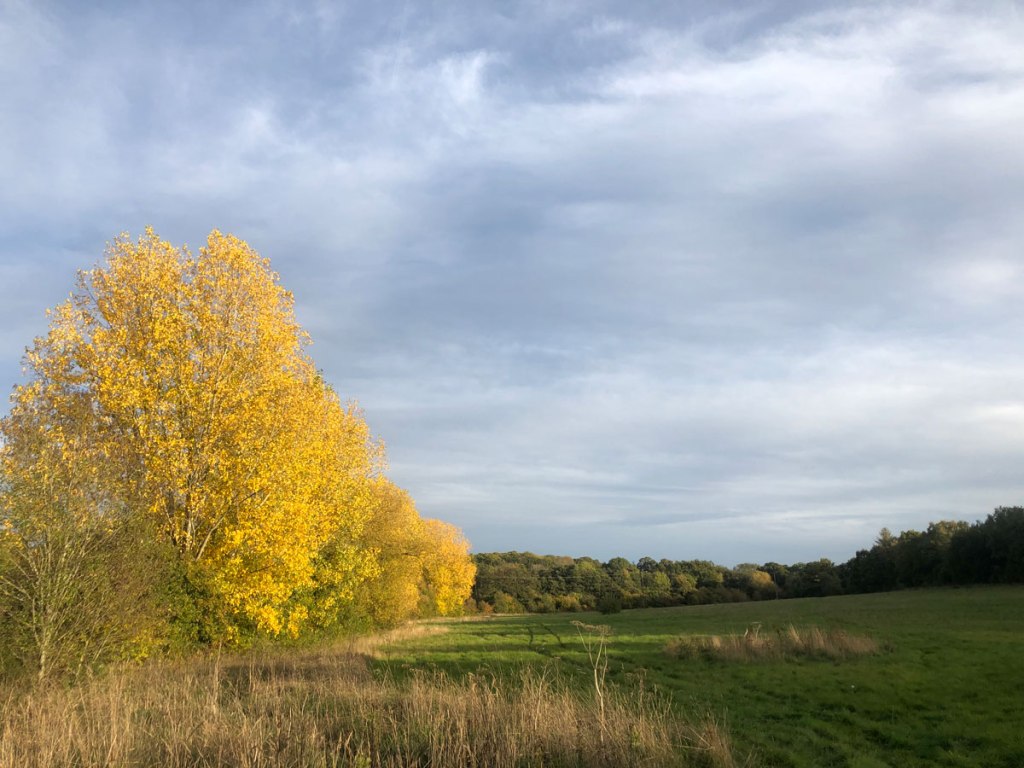
Scenery changes rapidly at this time of year as greens meld into yellows, browns, reds and golds. So many species of tree seem to go their own way, diverging increasingly in colour until they lose their leaves. Ash turns red, birch gold, chestnuts almost yellow.
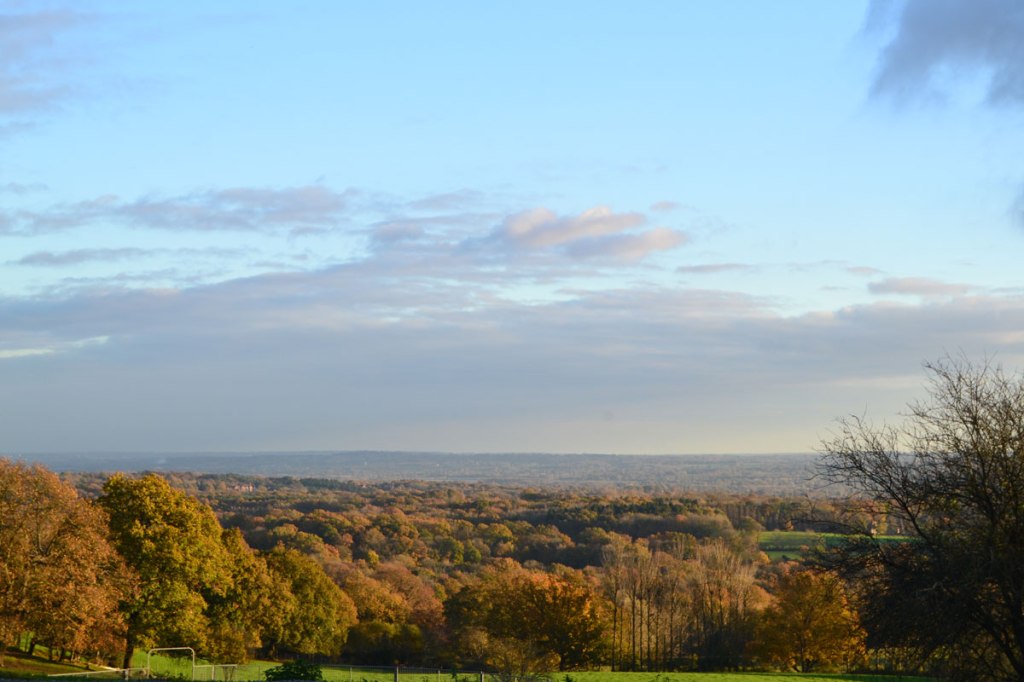
Weald view from Mariners Hill on the Hosey walk, in early autumn
Other recent walks have included Hosey Hill, Petts Wood and Cudham. Autumn colours are really becoming apparent now – it really is a great time to get out into our local countryside. Petts Wood was wonderful on Monday 17 October; what a gem that area is for a walk within suburbia.
Hawkwood Estate, Petts Wood in mid autumn. Birches along the Kyd Brook. iphone pic
The Westerham and Hosey walks are brilliant in autumn too, with huge views of the Kent Weald from Mariners Hill (near Chartwell) and a wealth of woodland, at times tangled and impenetrable and others spaced and stately.
Tower Hill, behind the infant River Darent, in early autumn 2022, on the Hosey and Westerham walks
Conditions underfoot remain pretty dry considering we’re past October’s mid-point, as rain remains an unusual event. It also continues to be very mild, thankfully, considering the energy crisis and on several walks lately I’ve felt overdressed. My next sorties will hopefully be further south, to Hever – well overdue – and then the Ashdown Forest.
As an experiment I ventured out for the 5-mile Fackenden Down walk at 11.30am on Sunday to see just how unpleasant things could get while hiking in the hottest part of the day, with temperatures well over 30C. The answer was, not very unpleasant at all. I had a hat, plenty of water, and took it fairly slowly. The walk starts in cool beech woods but then, up on that eastern ridge of the Darent valley, a hesitant but welcome breeze from the south-east just about took the edge off the muggy swelt. I can honestly say I’ve felt much hotter just sitting around in the concrete dustbowl that is now south-east London; the fairly strenuous walk was not more taxing than normal, though I took the steps slowly.
View from Romney Street
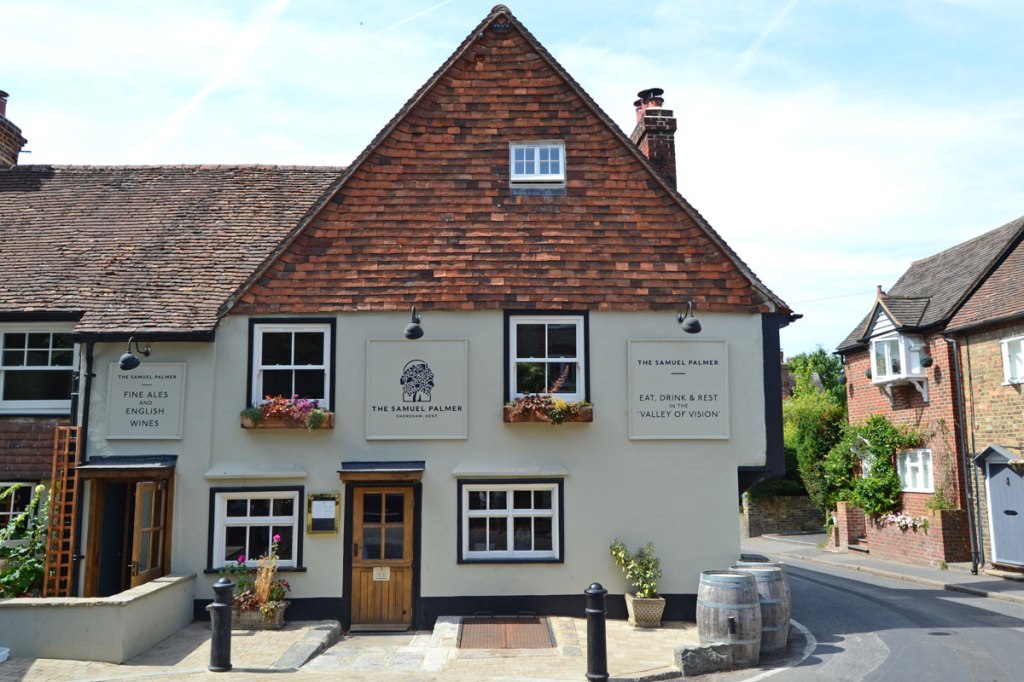
The Samuel Palmer pub
Southernmost end of Magpie Bottom
View across dry valley at Austin Spring
Parched ground near Dunstall Farm – the tree branch was dead years ago
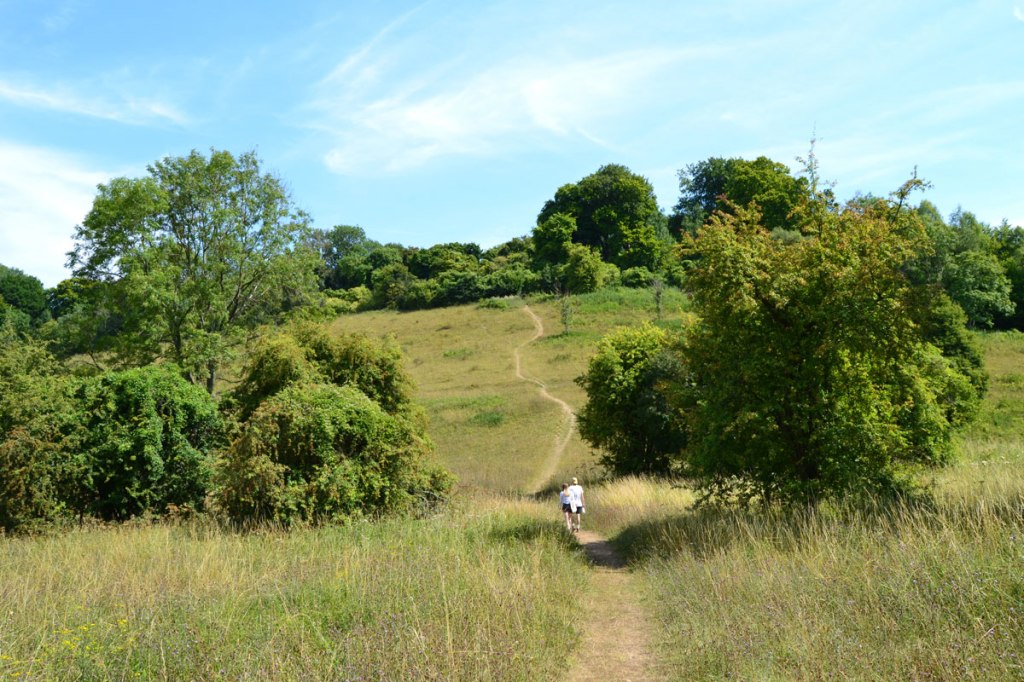
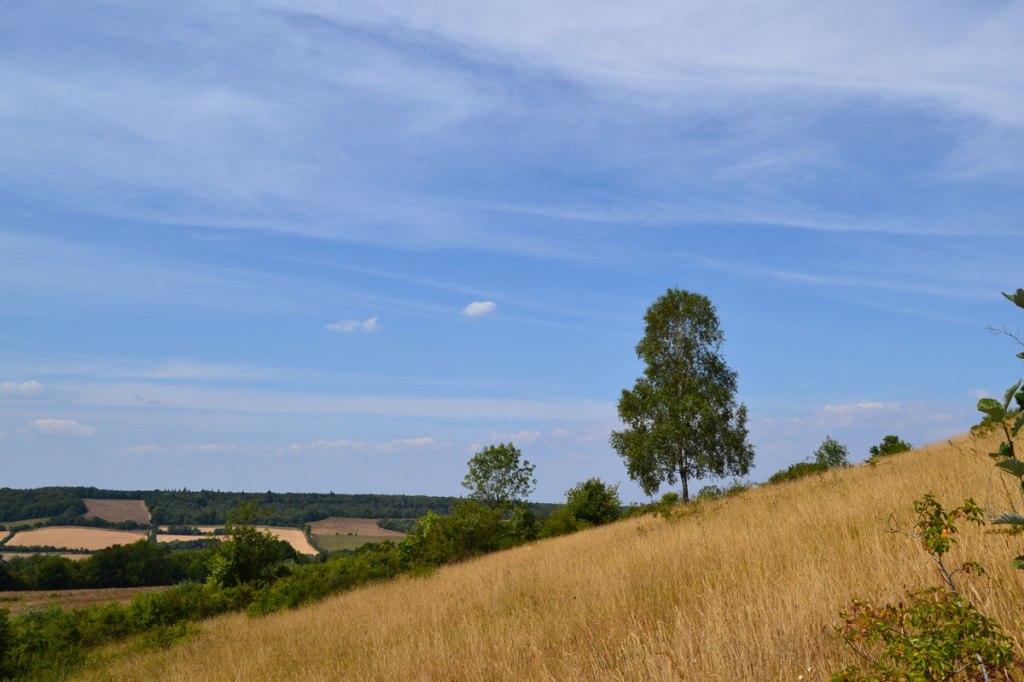
View across Fackenden Down into the Darent Valley
Meadow brown butterfly on scabious flower on side of Fackenden Down
Knapweed and wild carrot
Magpie Bottom in the August heat
The 140-steps up White Hill to start the walk (I did it in reverse) under a green canopy
Time for home. Thameslink right on time
I accompanied part of my walk with Lyle Mays‘s bluesy but harmonically rich Lincoln Reviews on my headphones – the perfect tune for a drowsy, sultry day surrounded by beautiful, still countryside. Mays was an incredible pianist who performed in the Pat Metheny Group for many decades.
The walk was also accompanied aurally by the calls of buzzards and the rustlings of lizards and small mammals dashing off into the leaf litter by the side of the path ahead of me. As usual I did the walk in reverse so descended Fackenden Down rather than climb it. The bit along the side of the hill (Points 1 to 3 on the Google map) were alive with butterflies and bees enjoying the scabious and knapweed among other wildflowers. I capped the walk off with a visit to the new Samuel Palmer pub, which has replaced Ye Olde George opposite the church. What a superb renovation job has been done there and there were loads of staff to serve the many visitors. Quite the transformation, and it was great to see so many Palmer reproductions on the walls – it’s like an art gallery. But not fancying a pint or a soft drink I popped into the church, which was serving cream teas with a friendly welcome and a cool place to sit down. That might seem strange but that’s how I rolled on Sunday.






















 Kent walks near London