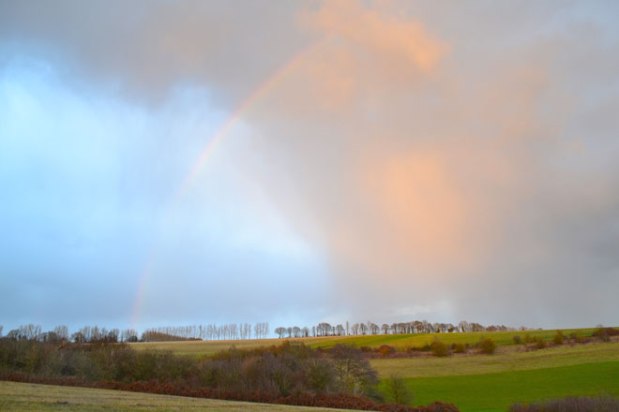
Watery winter walks

Watery winter walks

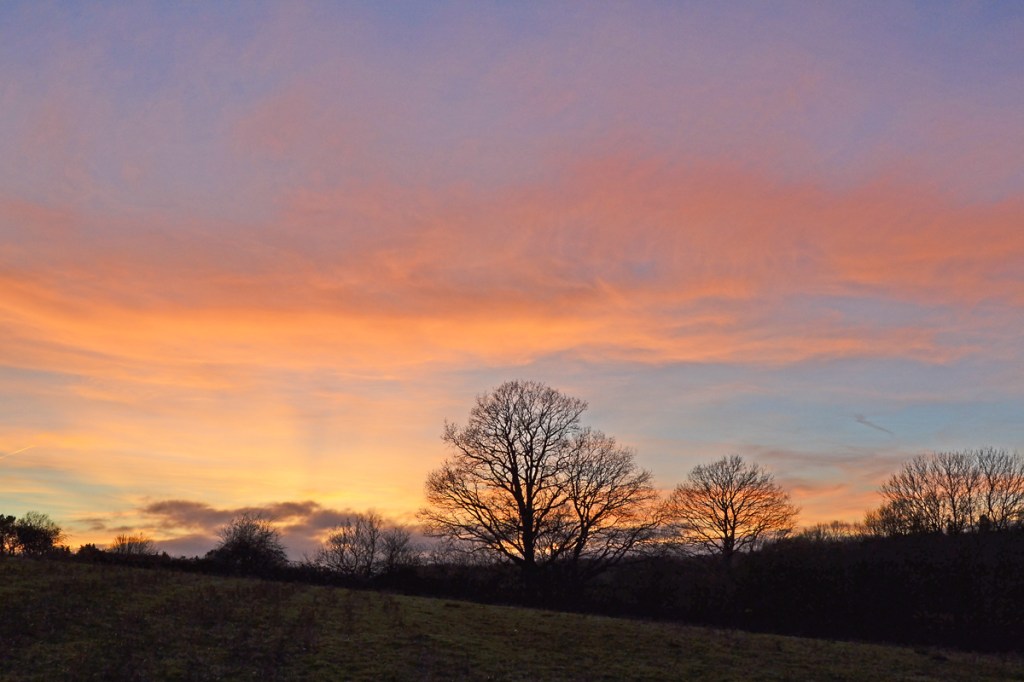
I should apologise. For the past couple of months I have been enticing people out into the local countryside with flattering photos of the atmospheric woods and hills of north-west Kent in winter. I have depicted frosty and snowy scenes, blue skies and wonderful sunsets. I have described hearty, bracing walks finished off at a village pub with a warming fire. Worse, I even encouraged people to go on strolls over the festive period. In mitigation I have mentioned the risk of mud patches and even suggested that rainy walks in murky conditions aren’t necessarily a bad thing, but there’s no getting round it: anyone following my advice of late has probably been soaked to the bone, slid over in puddles, muddied their entire wardrobe, and not received anything in the way of “bracing winter walk” vibes. On a drizzly stroll with friends in Richmond Park last week under prematurely darkening skies I actually fell headfirst into a ditch that houses a tributary of the Beverley Brook. Usually, hilarity would have ensured, but my comrades were too immersed in the perils of having to cross the stream themselves to laugh at my misfortune. Unlike me they took the flying leap option, whereas I had attempted to span the abyss with a long stride.

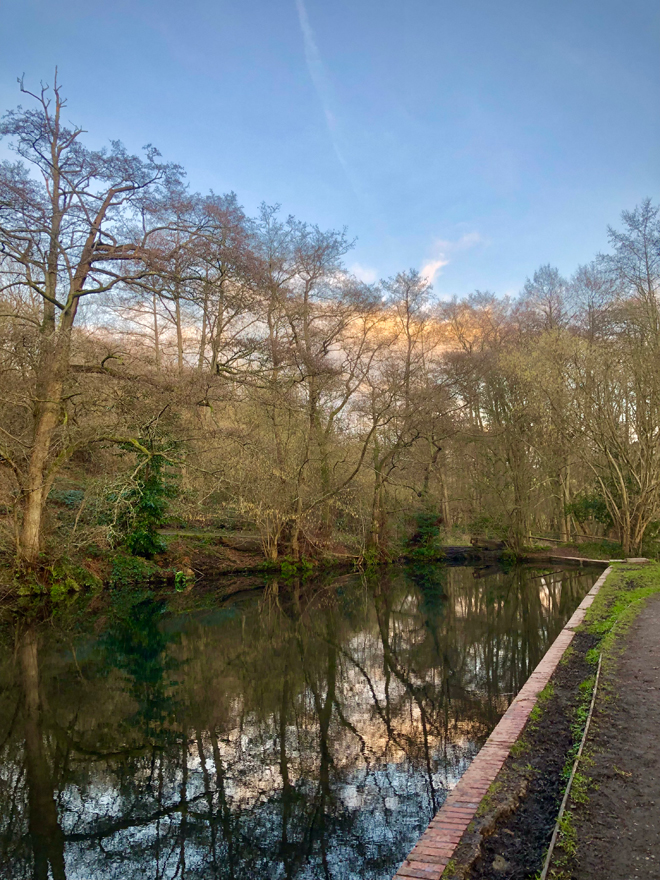
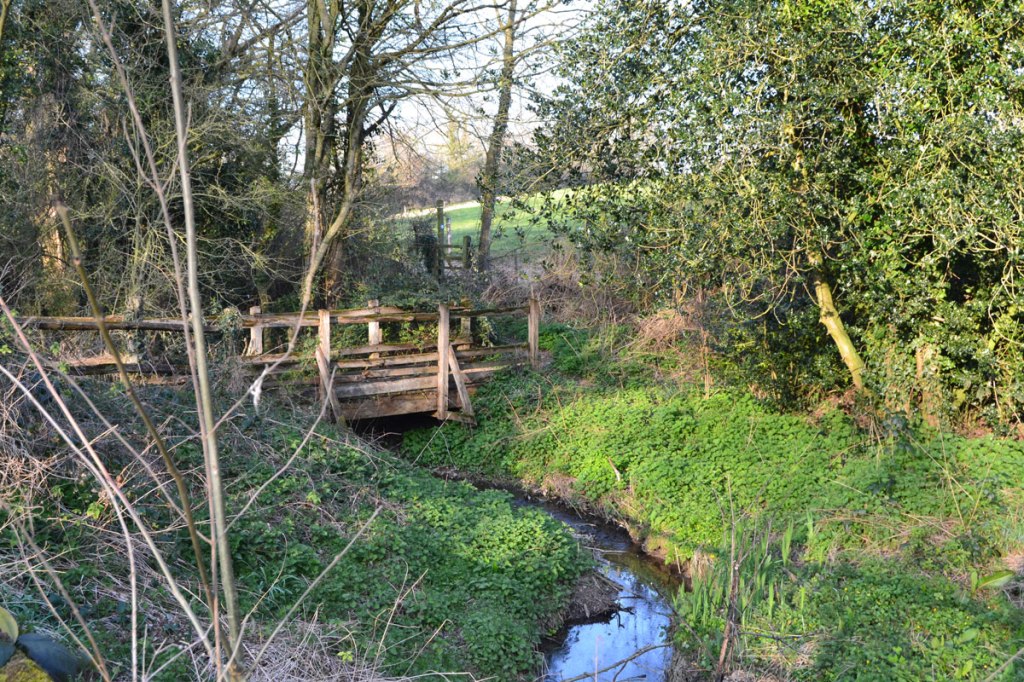
A lovely path on the Cudham walk nearing point 3 is not so lovely after weeks of rain

Anyway, conditions are terrible out there. Mild temperatures and high rainfall totals have created a dreadfully slippery environment. Playing golf at High Elms on New Year’s Day (the morning and early afternoon offered respite from the rain) we found it hard to hit the ball properly on the muddy fairways. We saw walkers, inevitably brandishing sticks with which they tried to scrape vast clods of clay mud weighing down their boots.

More heavy rain is forecast for Thursday and Friday of this week. The weekend should be drier but cloudy with lower temperatures of about 4C. Time to get going on those Christmas books I reckon …
Bluebells finis

Bluebells finis

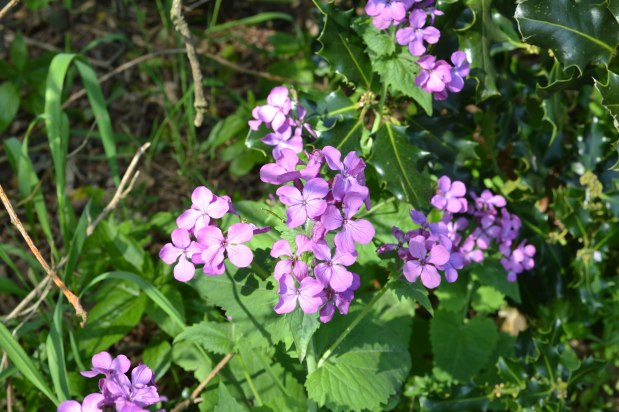
Yep, folks, they are over. The usual two and a half weeks of spectacle; now appearing dry and spindly. Wild garlic (ransoms) looks – and smells – great next to the blue remnants though, and speedwell and campion (pictured) are showing nicely on most of the walks along with all the lovely yellow and white stuff. It’s a very pleasant time of year and the next week or so is set fair: not blazing sun or anything but decent.

In the depths of springter

In the depths of springter

Of all the seasons-within-seasons, the end of winter, or springter, is one of the least enjoyable for walking I find. That doesn’t mean I don’t enjoy getting out into the countryside; it just means that when I do, I look around and think “meh” quite a bit. There’s still a lot to look out for in early March: old man’s beard (clematis vitalba), hazel and alder catkins, blossoming blackthorn, the vigorous growth of bluebell shoots, redwings and fieldfares flocking to migrate east, small birds breaking into song, the passage of gulls at high level etc, but the predominant colours are grey and brown, the air is still harsh and raw, mud clings to your boots and you slip on steep paths.

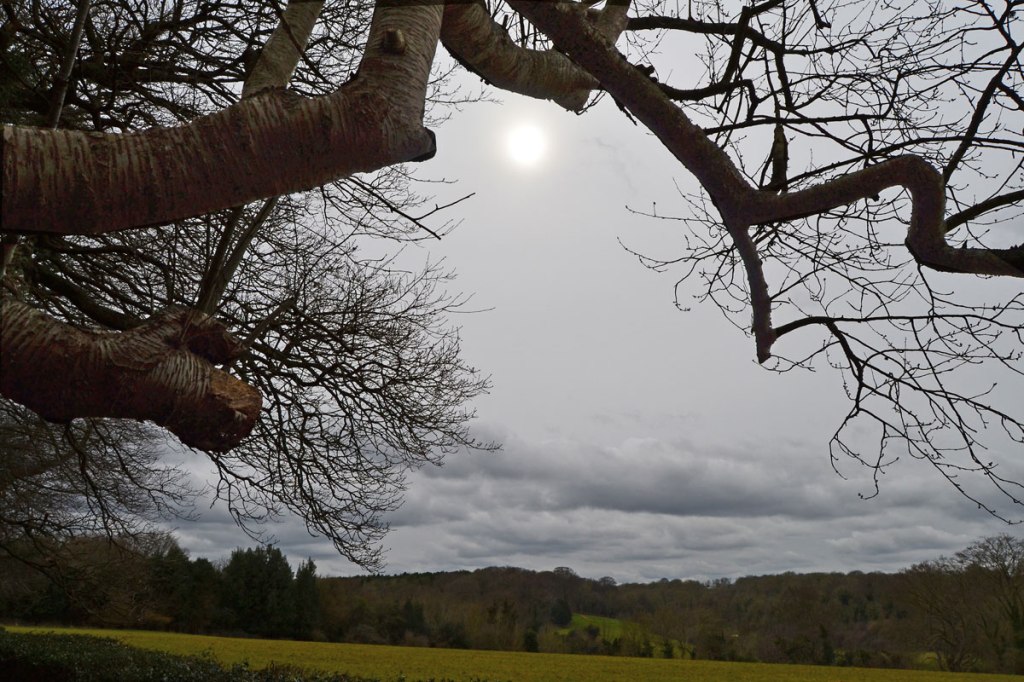
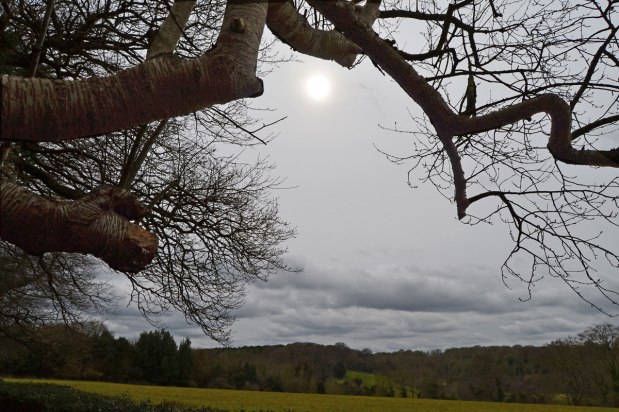
On recent walks to Hosey, Fackenden Down, Bough Beech and Downe, I found plenty to like but not much to inspire. This was partly because, apart from at Fackenden where there was an eyecatching sunset, the sky was unyielding and grey. Drama is needed in the sky at times like these, and springter often provides it as great air masses come into conflict, showering us with rain, hail, snow and sleet and producing fascinating aerial vistas. But at Hosey, all was monotone, at Bough Beech a thin Sunday drizzle dampened down any sense of vitality and at Downe, the morning brightness was consumed by a blanket of altostratus – the precursor to an approaching front – which had stealthily taken over the day as I was en route. But everyday is different if you look closely enough and the sun, a white ball behind the veil, did its best to make the stroll memorable.

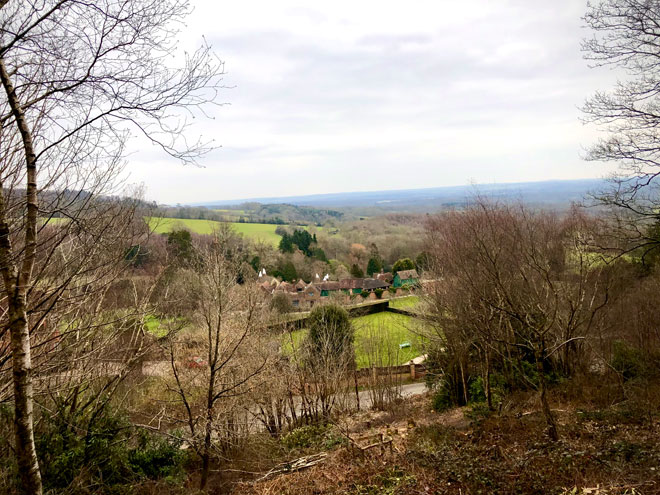
  • View over Chartwell, Hosey walk
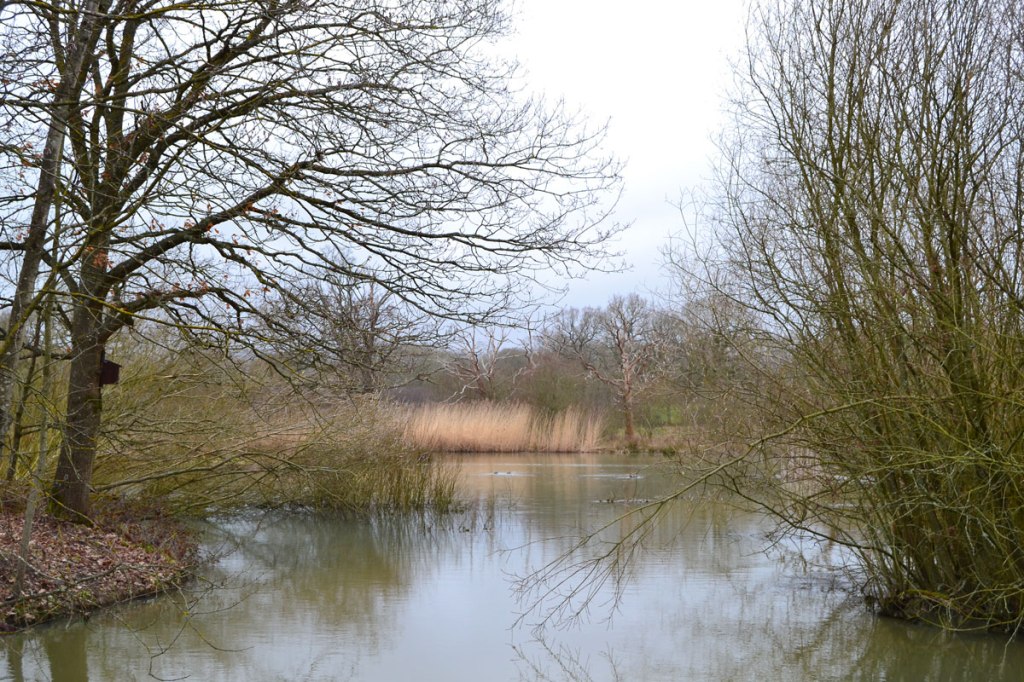
  • Bough Beech nature reserve
  • View over Bough Beech reservoir from the Bore Place chair
  • Downe walk under altostratus cloud
  • View from Fackenden Down

That terrific birder Dave accompanied me at Bough Beech, educating me as we went on the courtships of goldcrests, the behaviour of gadwall – a much underappreciated duck, he said – West Ham’s unsatisfactory season, the calls of marsh tit and treecreeper (I’d forgotten, again), and the distribution of local chaffinch populations. Although we made it to 39 species we saw no snipe, barn owl, brambling, kestrel or even buzzard as we hoped. The bird of prey fraternity was represented only by a solo red kite who lazily loitered above the low weald landscape for nearly half the walk, sometimes close, sometimes distant – an almost spectral presence so unfettered was it by the subdued, squelchy land below.

Thinking back to that red kite (which by the way would have been an extraordinarily rare sight in this part of the world until about 10 years ago) my springter moans and groans appear misplaced; these grey walks were brilliant.

Photographs by AMcCulloch

Delightful dusk on the Greensand Ridge

Delightful dusk on the Greensand Ridge

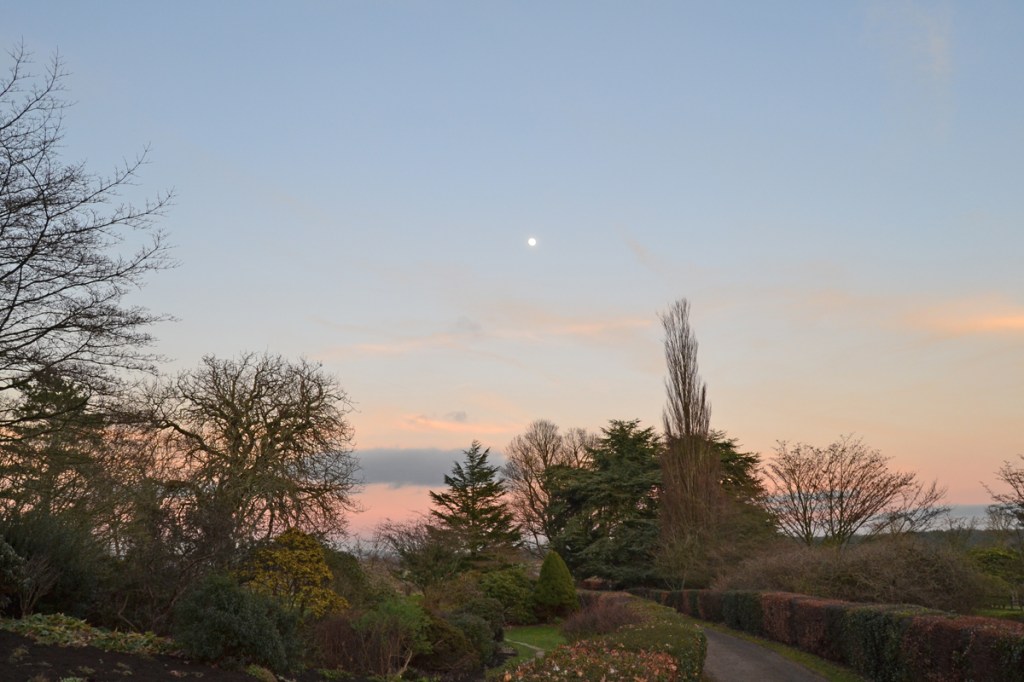
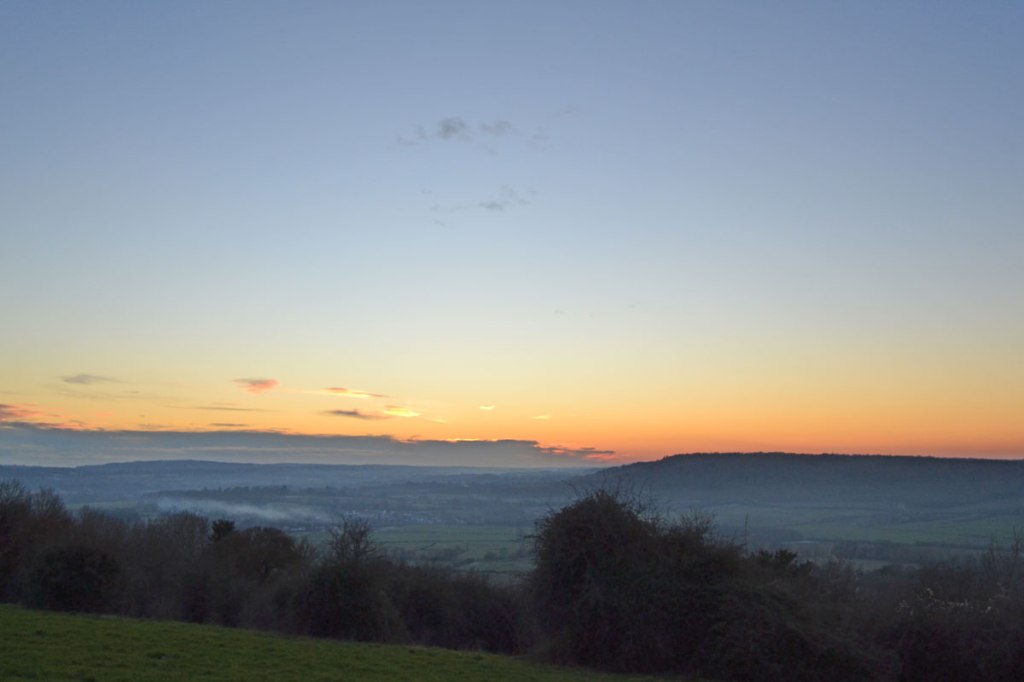
My previous post referred to getting lucky with the light on dark winter days. At Ide Hill last Friday, the cloud layers parted to reveal a magnificent dusk sky full of colour. Photos don’t really capture it, and my basic digital SLR Nikon isn’t really up to capturing the Moon properly, but I’d like to post a few just to remind myself of this wondrous early evening. It was another reminder that late afternoon can be a superb time to go out – there’s no need to postpone a winter hike just because you’ve been busy in the morning and didn’t manage to get away.

A winter’s trail

A winter’s trail

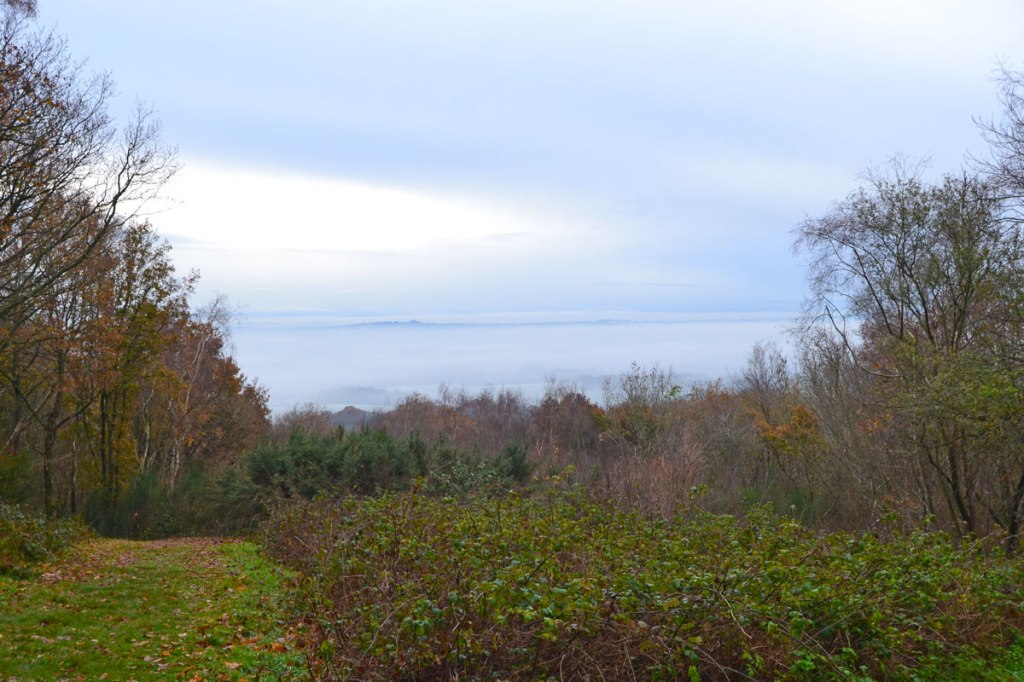
Two very cold but contrasting days at the weekend just gone. Bright sunshine and rich colour on Saturday, fog, frost and monochrome tones on Sunday after a largely clear night. We walked near Shoreham on the North Downs then, on Sunday, at Ide Hill near Sevenoaks on the Greensand Ridge. I tried to keep an eye open for birds and saw a yellowhammer flying away from along the line of hedgerows beneath Fackenden Down plus several fieldfare. At Ide Hill we saw a brambling among a mixed bunch of chaffinches and great and blue tits (there may have been a female bullfinch among them too) on the eastern edge of Emmett’s Garden and later some greenfinches popped out of a hedgerow. At Ide Hill, as we had hoped, we were ‘above the cloud’ with a layer of fog obscuring the low weald below and little pinnacles of ridges further south poking up through the murk. The best frost was seen en route around the woods and heaths of Hayes and Keston Common – very beautiful. And then came the snow …

Anyone with time free over the next couple of days should try to get out on the walks to experience the snow at places like Knole and on the hill tops at Fackenden and Polhill. It can be spectacular. (See photos from 2021.)

If you haven’t seen it, please check out my piece for The Guardian on a Darent Valley walk ending at the Samuel Palmer, one of Guardian Saturday’s pub walk series. And on 31 December the paper is running a piece I wrote about birding while walking – describing walks at Underriver and on Handa Island in NW Scotland.

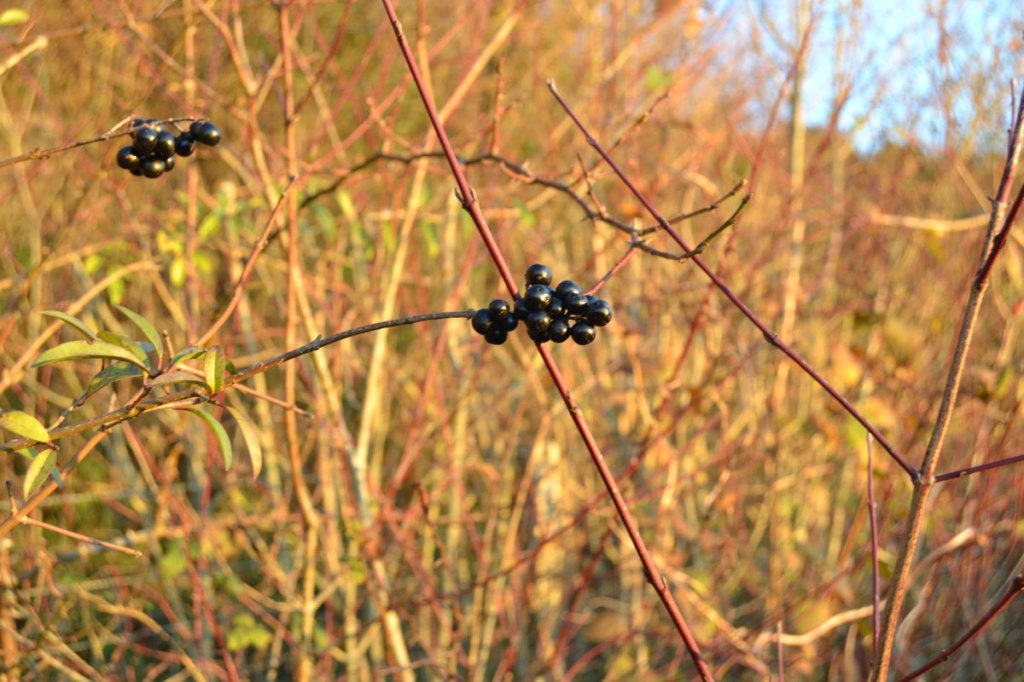
Pictured: elderberry, rosehips and views in the winter sun on Fackenden Down; fog and murk on the Low Weald from Ide Hill

Bats in the mist – dusk at Downe, Keston and Polhill

Bats in the mist – dusk at Downe, Keston and Polhill

Exceptionally mild temperatures have lured bats out into the autumnal gloaming to catch late flying insects. I love watching these animals swoop, flutter and flit around and it’s a bonus to see them so late in the year. Usually you can only pick them out against the sky but at Downe and Keston on last weekend’s strolls I was buzzed by bats so closely I sensed rather than saw them zooming past. Yesterday at Polhill one or two emerged from the mist to pass close over our heads before vanishing into the gloom.

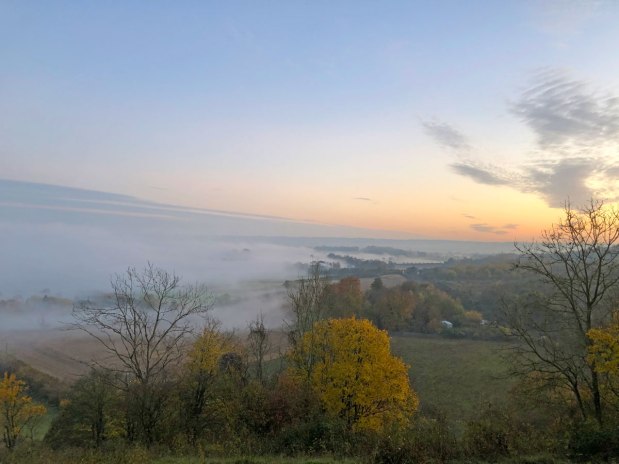
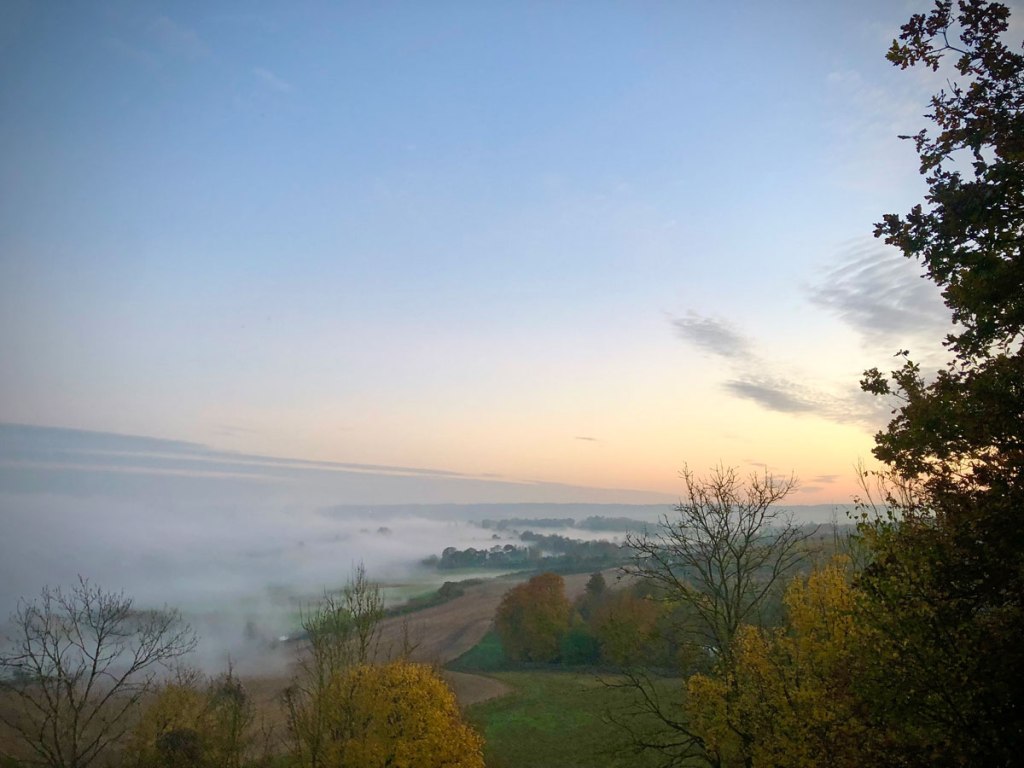
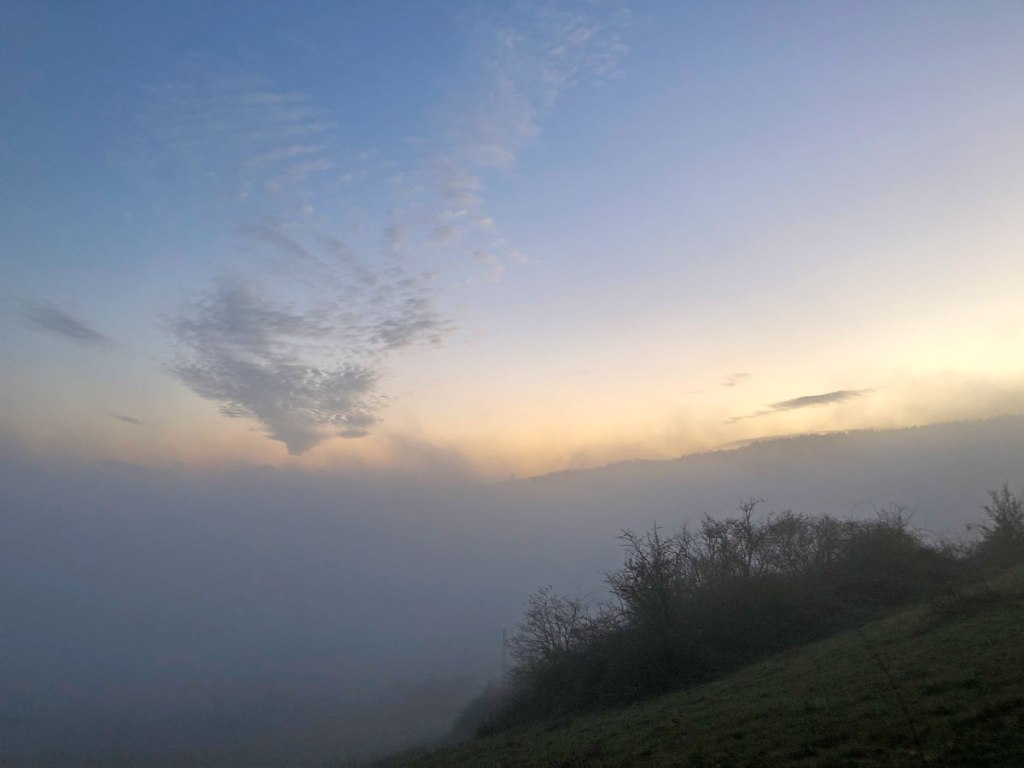
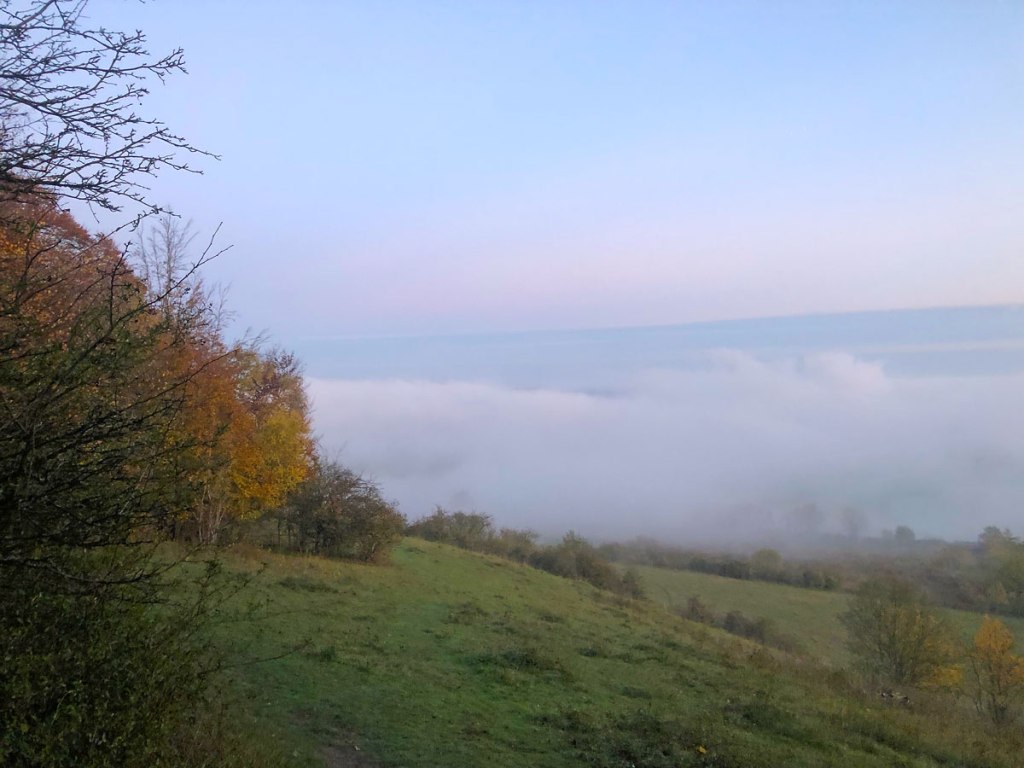
I’d thought we’d set off rather too late for a walk. Traffic was bad on the A21 slowing us further (the train is by far the best option for Shoreham walks) and low cloud had covered the sky. But by Locksbottom the skies cleared and we were bathed in a beautiful golden light. This was a false dawn: by the time we parked up by Meenfield Woods above Shoreham we were in quite dense fog. This magically cleared at Polhill, the walk’s halfway point, to give us unusual views before swirling back in as the sun set. With the mist below we had the feeling we were much higher above the valley than we were. I think this weather effect is called a temperature inversion, where warmer air passes over the relatively cold air on the valley floor, causing condensation.

By the time we finished the walk, visibility was down to about 50 metres and driving home the twisty, twiny country lanes needed total concentration if we were to avoid a close encounter with a hedgerow.

  • Mist obscures Sevenoaks
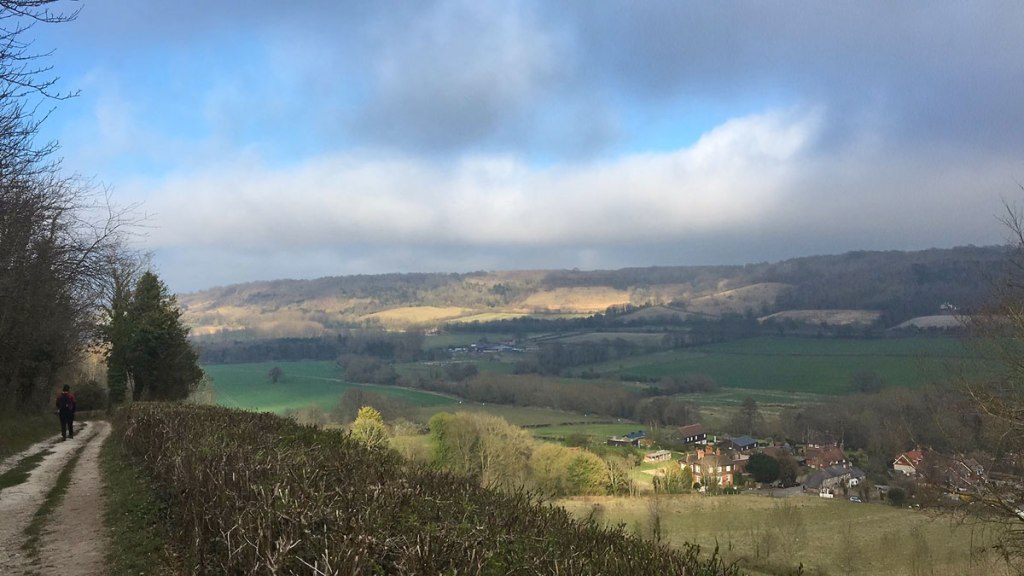
  • Mist at Polhill looking towards Otford, November 2022
  • Mist at Polhill looking towards Otford, November 2022
The difference a bit of rain makes

The difference a bit of rain makes

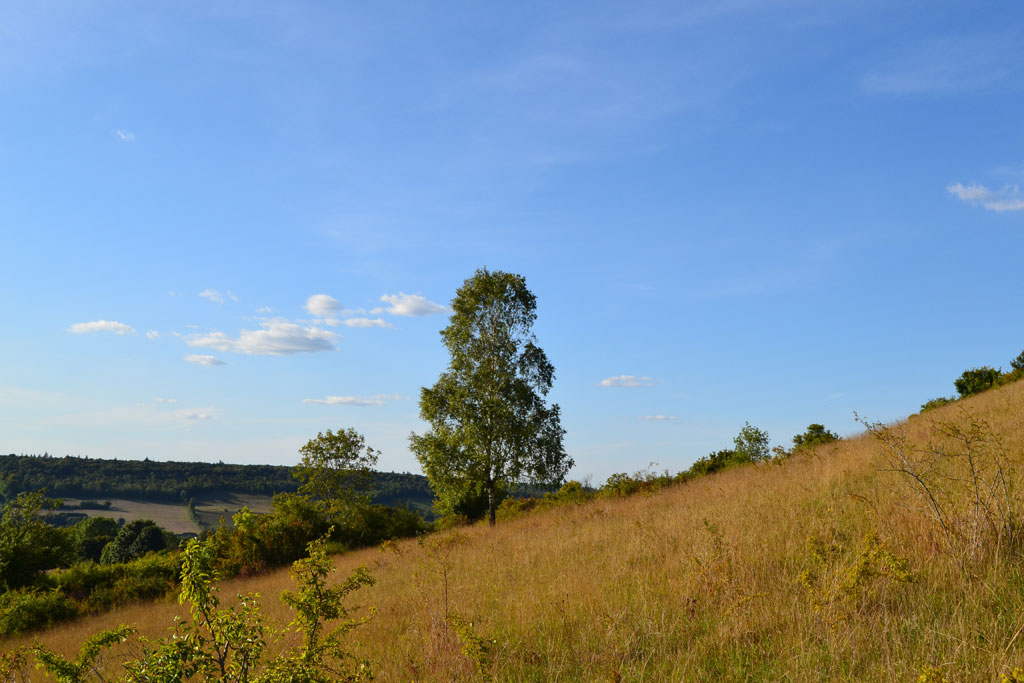
Interesting to see the effect of normal weather on the colour of the landscape. The first picture was taken on 15 August on the Fackenden Down route with the summer drought at its peak; the second picture on 17 September. It had rained during the week of 4-11 September.

Parched grass, Dunstall Farm
Parched ground near Dunstall Farm – the tree branch was dead years ago
Back to normal after the early September rains – and, below, a silver birch tree on Fackenden Down photographed on the same days
The heat is on – escape from SE London?

The heat is on – escape from SE London?

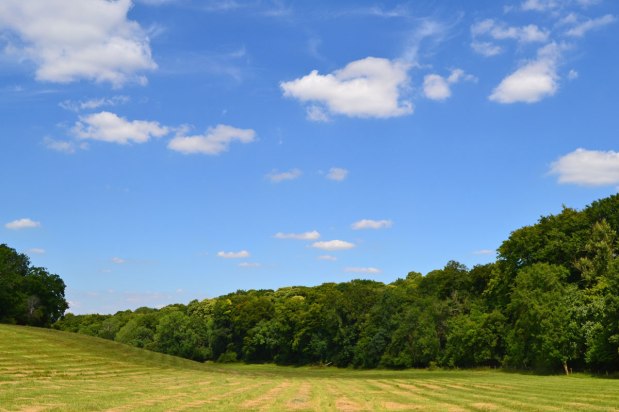
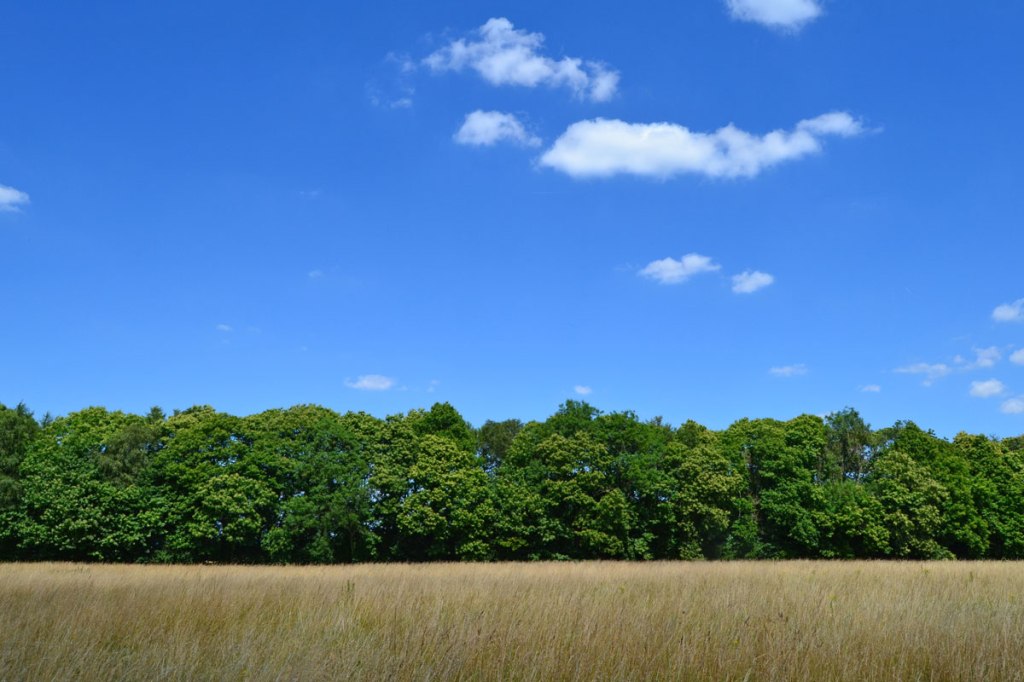
For many of us, the coming heatwave will be a bit OTT what with not being particularly near a beach and with so little access to open-air pools in London – unless you are lucky enough to live close to one. There was a time when we were much better served with lidos but – rather like the railway cuts 60 years ago – short-term profit for a few was allowed to triumph over health and environmental benefits for the many in the early 1980s. The result is that the queue for places like Brockwell Park Lido is usually pretty mega in hot weather. Crap isn’t it? But there it is. Compare with Germany where every city seems to provide fantastic open water swimming spaces. Beckenham to the rescue. The pleasant lake there offers £5.80 tickets for an hour long swim and it looks as if slots are still available this week. (Pictured below: the woods on the Cudham and Downe walks offer respite from the heat)

Anyway, I’ve noticed my old blog post on Bough Beech reservoir getting a lot of hits. This is probably because people are dreaming of having a swim. Forget it. It’s not possible there I’m afraid and strictly forbidden – it’s a nature reserve and an important facility, so it’s definitely a no-go zone. I’ve noticed people taking to local rivers; the River Pool, the Darent, the Medway, the Eden and the Cray, in certain places. I wouldn’t recommend it: there are just too many issues, including pollution, dangerous substances in the water etc, and although I know a few places where I might take a dip it would be irresponsible to recommend them to others (he said, pompously). OK, OK, OK … cycle or walk from Tonbridge Castle to Penshurst Place on the Hayden country park path; there’s a lovely spot a mile short of Penshurst for a dip in the Medway. But you won’t be alone!
Summer evening sky, early July

The beach is the best option along with dedicated sites such as Leybourne Lakes just west of Maidstone, and the previously mentioned Beckenham Place Park. But other than swimming, woodland walks are great for getting exercise while staying cooler at this time of year: Petts Wood, the Meenfield woods routes near Shoreham, the Hever walk and Hosey Common are the best for shade, along with walks within Bromley borough (but not yet on this site) at High Elms and Hayes Common towards Downe. Yesterday on the superb, understated Cudham walk, just as we began to feel the power of the sunshine we would enter the cool woods and comfort levels shot up. Take water obvs. It was on 10 July that the Battle of Britain started, so a good day to hear the distant murmur of Merlin engines as the Biggin Hill Spitfires headed out on their joyriding sorties.

Farewell winter woods

Farewell winter woods

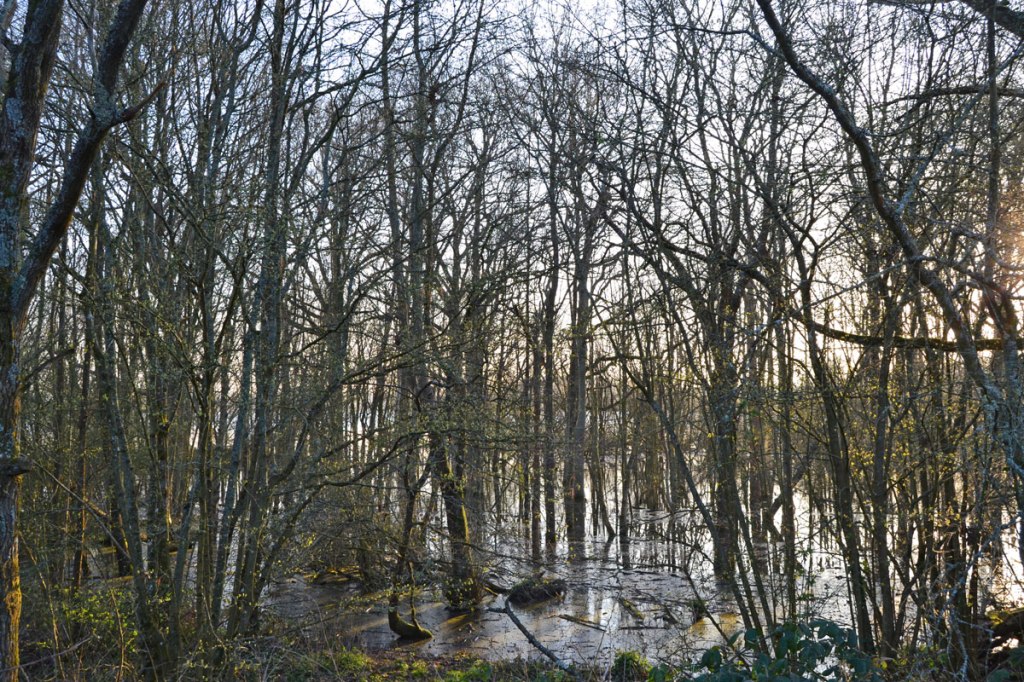
Before we start waxing lyrical about spring, wildflowers, birds and bees etc etc let’s salute the beauty of woods in late winter, particularly in March, which tends to be sunnier than February and reflects all kinds of subtle auburn nuances in the leafless trees. Around Bough Beech reservoir near Ide Hill the woods have been partially flooded by high water levels making for scenes somewhat reminiscent of the opening parts of that excellent film The Revenant. On the final Saturday in March the first bluebells, generally those in sunny spots in hedgerows, were showing, along with primroses, cuckooflower and so on but those trees around the north lake at Bough Beech in the late afternoon sun in their best end-of-winter finery stole the show. What a superb place that is to watch the sun go down. Pictured below: swamped woods at Bough Beech, silver birches in Stock Wood on the Hever walk, a stream though light woods at Bore Place, and a view back to the Greensand Ridge and Ide Hill across fallow fields from near Bough Beech on a perfectly serene late March day – winter’s last knockings. Finally, an iPhone pic of Shoreham and the Darent Valley on the Polhill/Shoreham Circular walk on Sunday 27 March… a rare day of low misty cloud and sunny patches.

Find a walk that suits you

Find a walk that suits you

To help you find suitable walks here’s a rather rough-looking interactive Google map. Just click on the lines and blobs to get more information about that walk. You can use the menu at the top of the page to print off pdfs and to look at more detailed directions. Each walk description has a GPX map attached so you can follow your progress in real time – if you have signal. Failing that please use an Ordnance Survey map to check the route (OS Explorer 147 has them all).

Best walks for travelling without a car are those in the Darent Valley – the ones starting from Shoreham, Eynsford and Otford/Kemsing stations. Knole Park can also be reached from Sevenoaks station.

The walks around Shoreham, Downe, Cudham, Otford and Knockholt are on North Downs chalk fairly close to or on the escarpment itself. They have a different character to the more wooded southerly routes around Ide Hill, Westerham, One Tree Hill and Sevenoaks, which are on the Greensand Ridge.

Further south are the Hever and Chiddingstone walks, which are in the Low Weald of Kent… a different flavour again with fewer steep slopes.

Many of the walks overlap with each other such as Westerham and Hosey Common, One Tree Hill and Underriver – leading to severe spaghettification on the map displayed here.