Sand, clay, chalk and bluebells

Sand, clay, chalk and bluebells

“When spring came, even the false spring, there were no problems except where to be happiest. The only thing that could spoil a day was people and if you could keep from making engagements, each day had no limits.

That’s a fun quote from Hemingway. I take it to mean prioritise walks above socialising, now it’s a bit warmer (I reserve the right to be wrong about that) and to get out in the woods and downs, witness the transformation from grey and brown to green, blue and yellow. I say “witness” but it happens suddenly, overnight perhaps, when you’re not looking. Suddenly the air is soft, the countryside hues have changed and spirits have lifted.

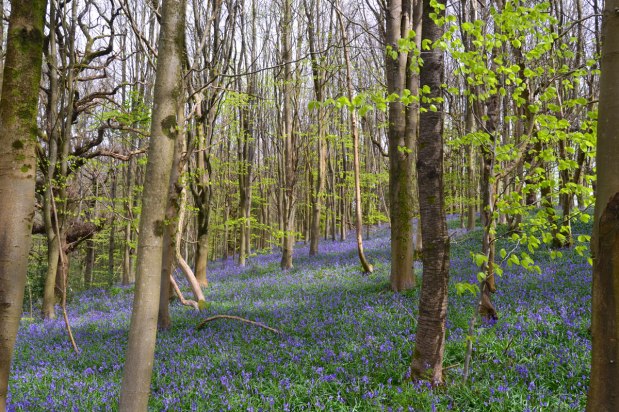
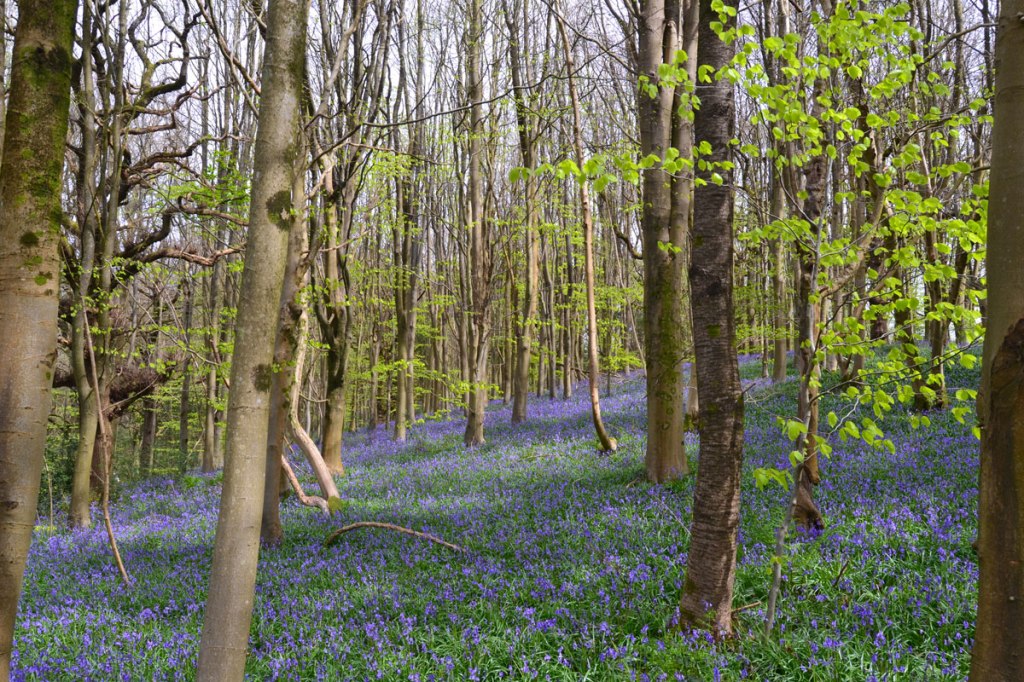
We chose the 3.5-mile Knockholt/Chevening North Downs route for late Saturday afternoon and a 4.5-mile stroll on the Greensand Ridge at Hosey for the following morning. On the Hosey route bluebells were two-thirds in bloom and were mixed beautifully with stitchwort and anemone. We heard coal tit, nuthatch, song thrush, chaffinch joining in the merry burble of song from great and blue tits, robins and wrens. A delightful pint of Westerham Brewery’s Light Ale ensued after the walk at Squerry’s Winery.

At Knockholt, along the escarpment, three red kites drifted overhead throughout the walk and a pair of buzzards hung in the air. These raptors love the updraft along the ridge and I think this walk is the most reliable route for seeing them on of all the walks here, though they can pop up on any. Please don’t think me callous but I rather hope the birds of prey feast on pheasants; there are too many of the latter human-introduced birds in these parts and they kill a large number of reptiles and amphibians.

  • Redwood
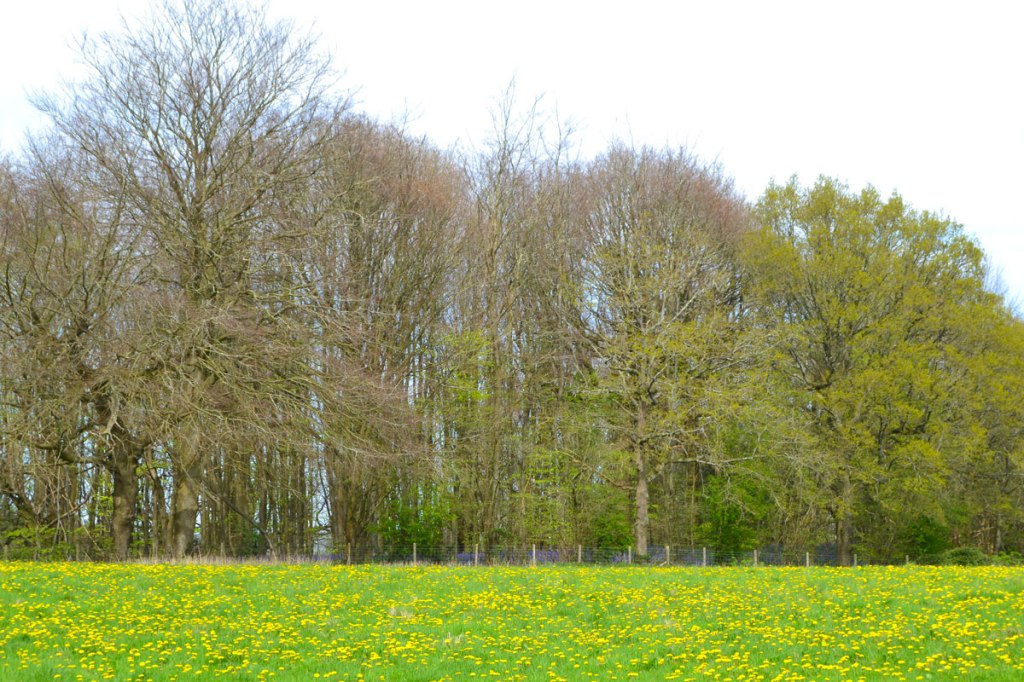
  • Dandelions
  • Bluebells
  • Chevening
  • The cleft in the Downs

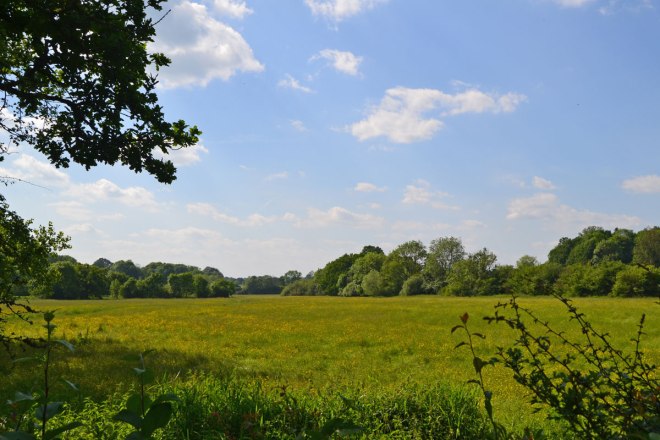
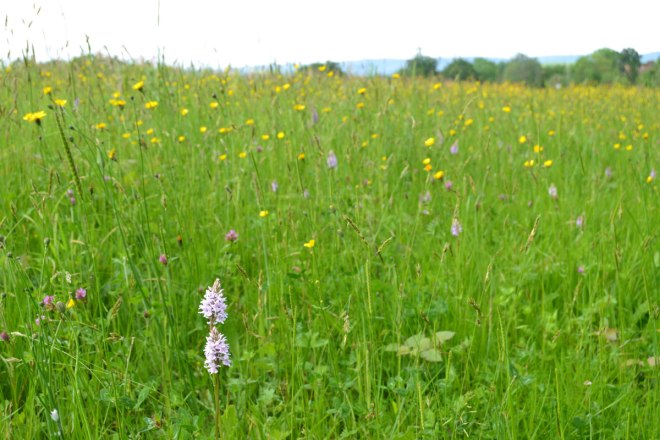
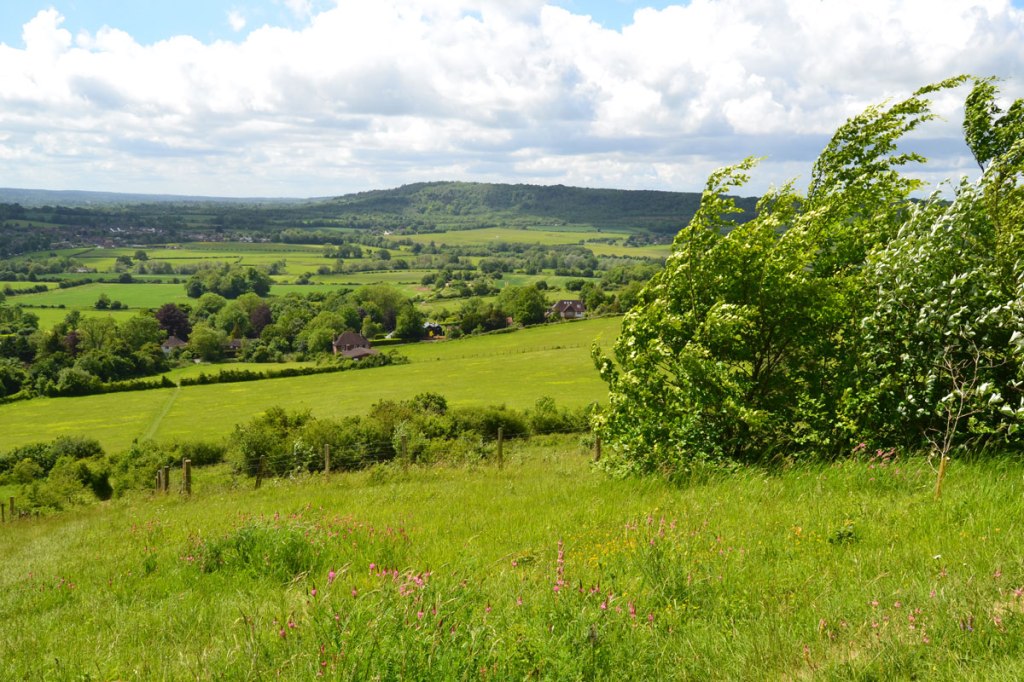
The chalk Knockholt/Chevening walk on the North Downs ridge is separated from the Hosey walk on the Greensand Ridge by the clay Vale of Holmesdale, an east to west valley that runs in parallel to the two lines of hills and which contains the M25 and M20 motorways. Holmesdale clay runs between the chalk and sandstone yet despite the starkly different geology in such a small distance the plants and tree species don’t superficially appear to differ that much – presumably the plants have adjusted to the contrasting soils over the millennia. But there are some differences – there are more likely to be orchids and expanses of grassland on the less densely wooded chalk hills; while on the greensand the woods seem a tad more extensive and are more likely to include stands of pine, which like the sandier soils. I’m no expert so I won’t go on. Bluebells like both; that’s the main thing and this week they are reaching their peak at sites like Meenfield Wood, Scords Wood, and Mariners Hill. Enjoy them, they’ll be gone within about four weeks.

Thoughts of spring

Thoughts of spring

Spirits have fallen almost as steadily as the rain as we slipped mildly and humidly from winter to spring . The Met Office have gloomily talked of precipitation records being broken, and a sense of oppressive drudgery has undeniably taken root as indoor life seems the only option. Still, I’ve been impressed by the amount of runners and cyclists still out in the lengthy downpours, clocking up the miles. Me, I’m a fair weather fitness fan. A lot of the rain has been too heavy for walks; I’m happy in drizzle but the stuff that stings your face definitely takes the pleasure away at this time of year, though can be fun in summer. But hey, spring is around the corner somewhere, the temperatures are mild, the crocuses are out in the park and the daffodils gaily wave in the breeze. I love to walk on the Greensand Ridge at this time of year, to see signs of spring seeping into the colours of the miles of countryside stretching before you as far as the Ashdown Forest. It’s muddy, sure, but there’s also optimism in the snowdrops, primroses and sudden uptick in birdlife among the skeletal trees. Toy’s Hill south of Westerham has been fertile ground for walking.

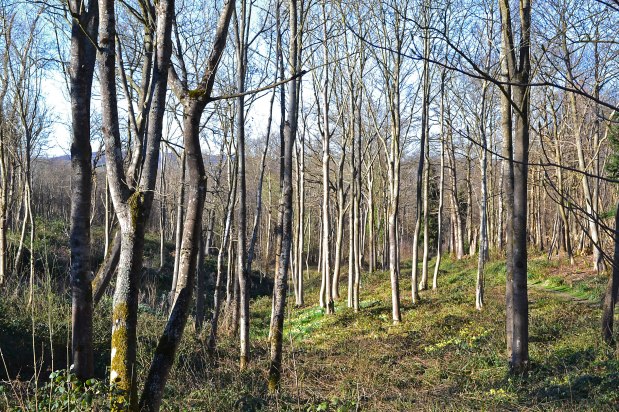
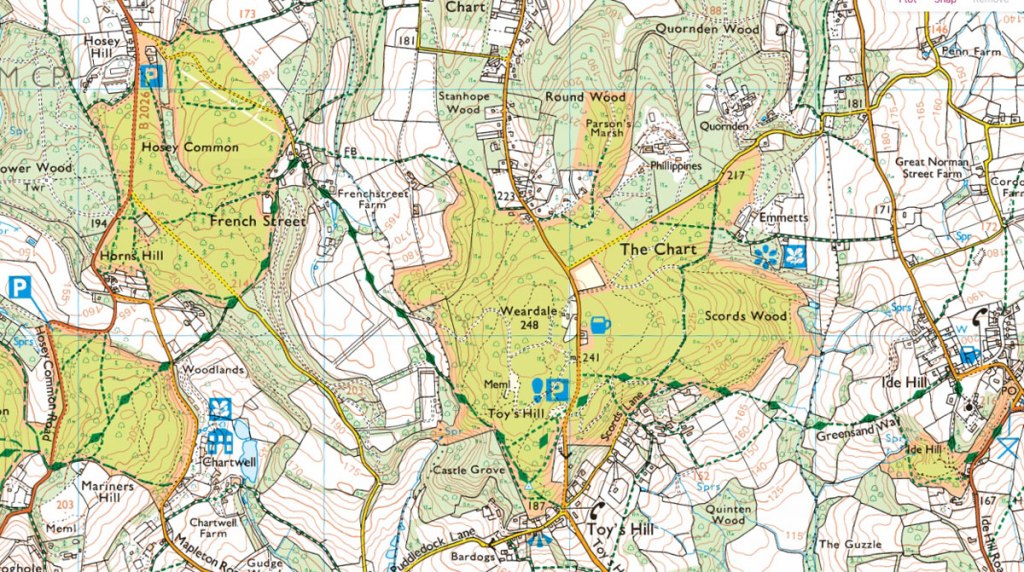
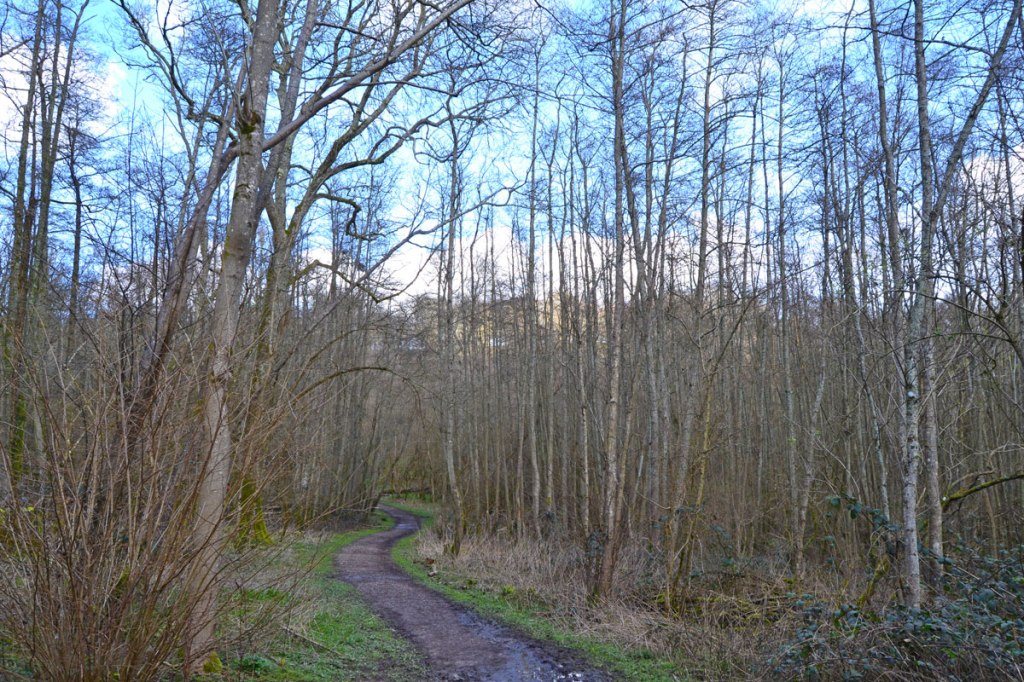
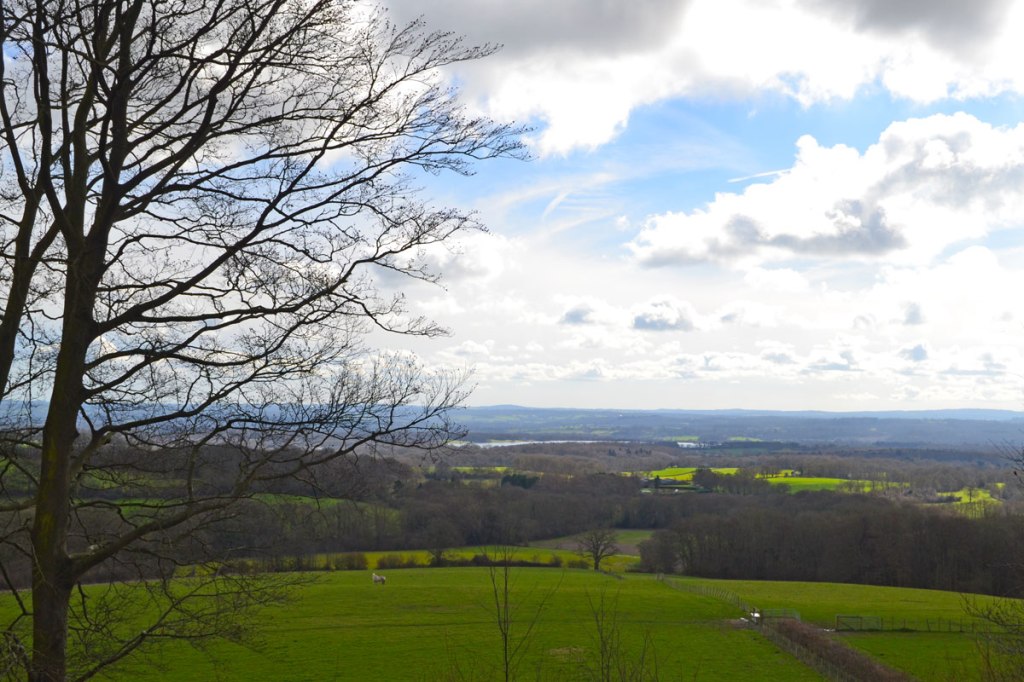
I haven’t got a Toy’s Hill walk on KWNL but there are several routes from the NT car park (the map above shows the car park, lower centre, and Toy’s Hill’s proximity to Hosey, Chartwell and Ide Hill) that are well signposted, such as the shortish Red Route, which will take you to Emmetts Garden and back. You can do my Ide Hill walk from Toy’s Hill easily enough, or even the Hosey Common route, but obviously you’ll be adding on a few miles. I really like the spot near the NT car park where the old mansion used to stand. From here you can see four counties including Leith Hill and even the South Downs on a fine day. The photos below were taken in early March; appearances change quickly at this time of year so expect less bleakness in the days ahead!

  • Toy's Hill
  • Ram Pump pond
  • Scords Wood, awaiting signs of spring
  • Scords Wood view

As for colour, look out for yellow lesser celandines, very spectacular at this time of year on the Fackenden Down walk in the woodland between the Down itself and Magpie Bottom. One of my favourite places for wildflowers in late March is on the Hever walk in the woods between Points 1 and 2, close to Hever Castle gardens (headline photograph). A yellow and white sheen seems to rise from the mossy forest carpet ushering in better days. But look if you want to keep your powder dry on the walking front, and not go out until mid-April and the blooming of the bluebells, that’s perfectly understandable.

.

Pluto promenade

Pluto promenade

The Polhill/Pluto walk was a delight this week; a chance encounter with a brown argus butterfly (pictured below by sort-of-accident while focusing on scabious flowers) on the Polhill Kent Wildlife Trust patch a highlight. The Andrew’s Wood segment of Shoreham Woods was full of great willowherb, marjoram and wild parsnip – a colourful brew. On the Darent Valley floor itself the sunflowers at Filston Farm were a treat and there were still some wild verbascum flowers in bloom at Sepham Farm. Very few birds were seen which is quite normal for this time of year although a hobby, a buzzard and a suspected corn bunting at Filston Farm were notable spots, while swallows were beginning to gather for their big goodbye. Yellowhammer were heard but not seen at the foot of Polhill.

Grass and butterflies

Grass and butterflies

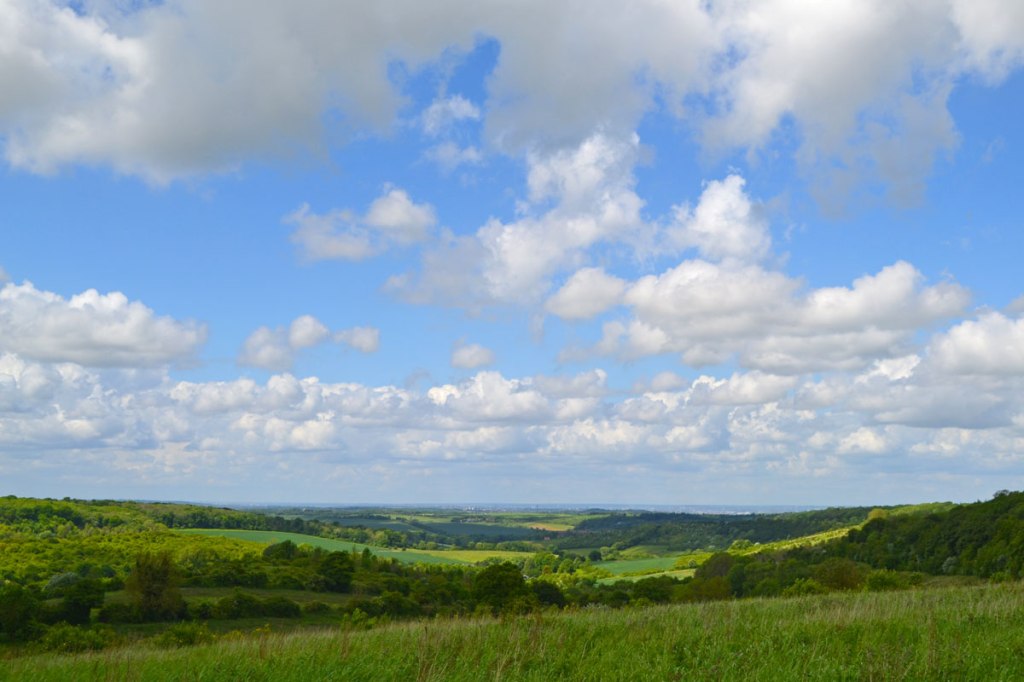
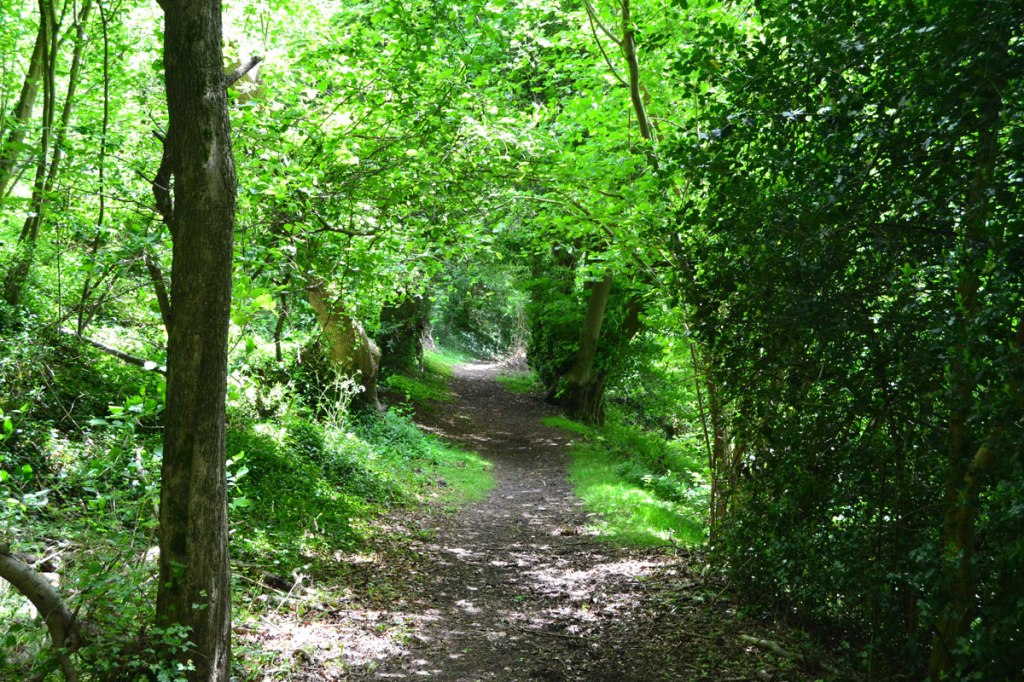
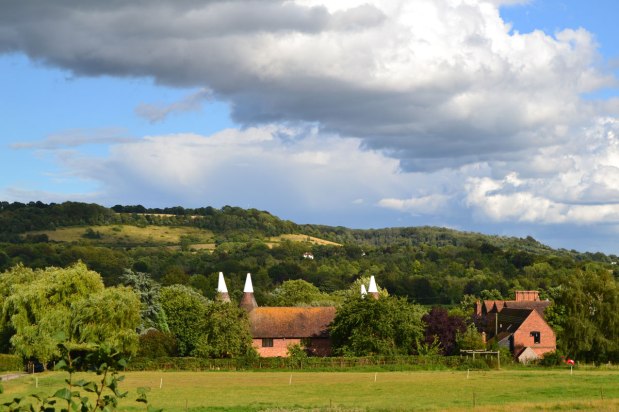
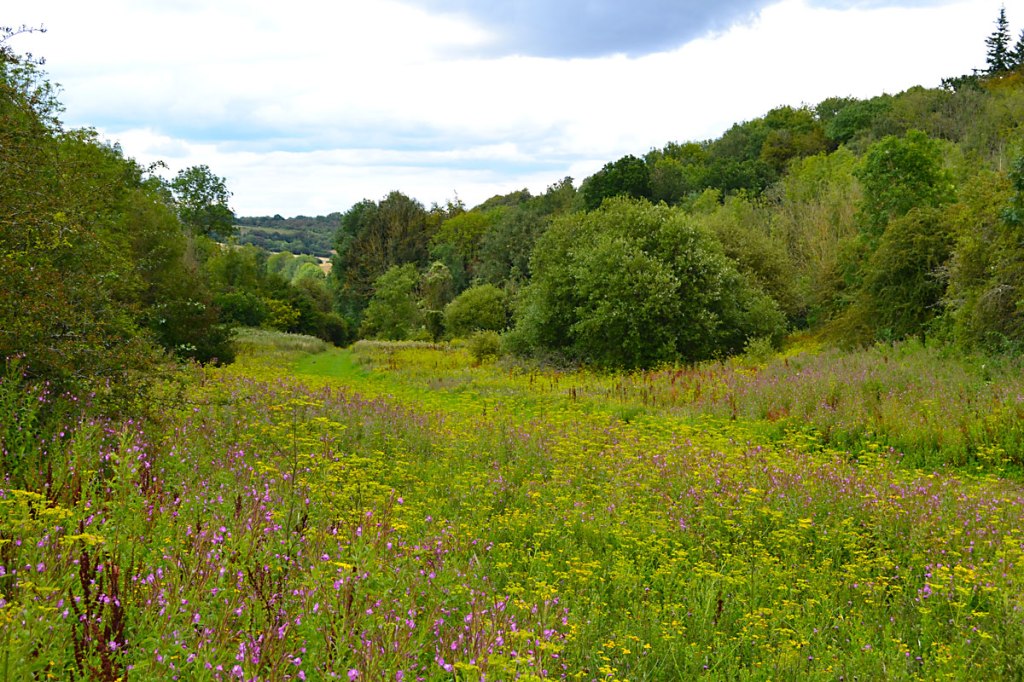
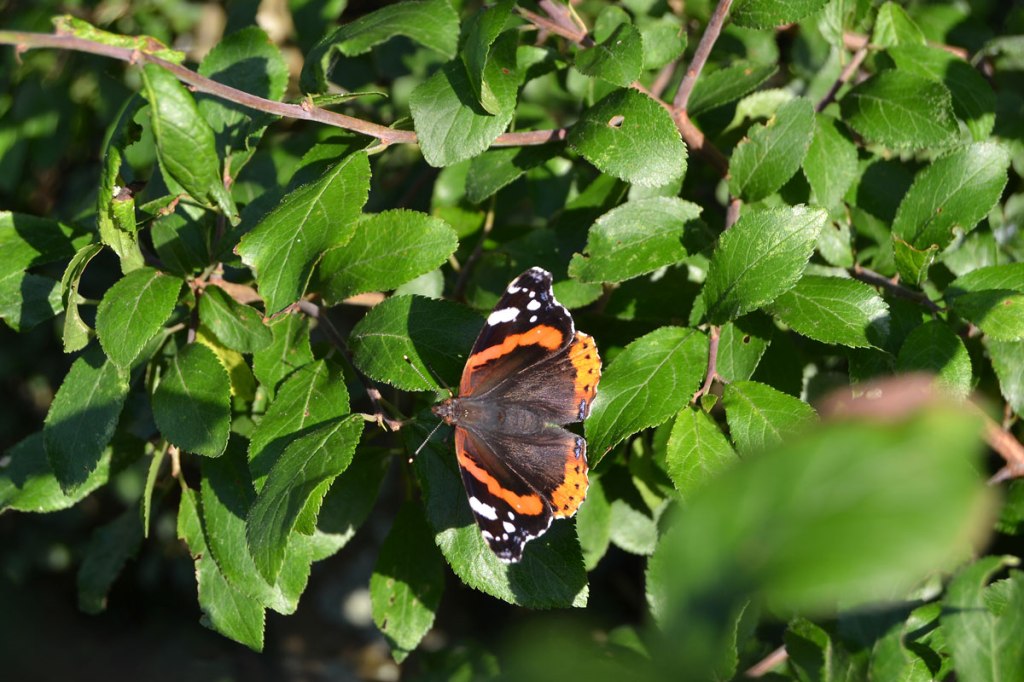
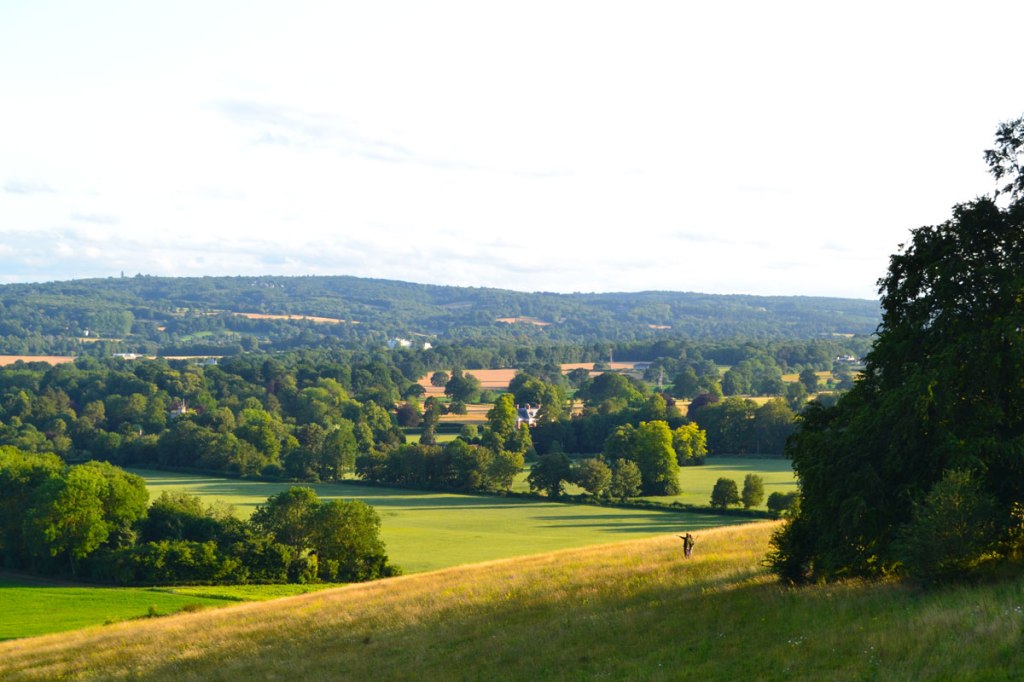
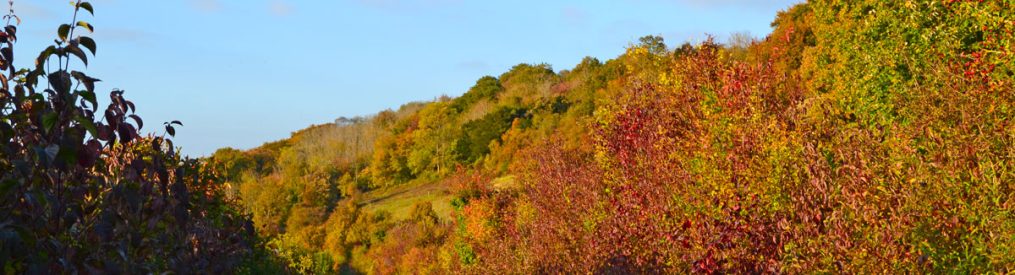
Late July, early August: it’s a slightly torporous time, and in most summers the countryside becomes gradually a bit tired and frazzled looking – rather like the Australian cricket team currently trying to play out the Ashes (now there’s a hostage to fortune). But this year, thanks to recent regular rain, there’s still a freshness about things. I particularly love the long grasses this year, so full of wildflowers – and such a contrast to last summer’s scorched earth. We’ve been lucky in 2023 in that respect, as other parts of Europe have literally burned. Nearly all the walks on this site feature beautiful grassy meadows at one point or another, the best being on the chalk North Downs at Downe, Shoreham (Eastern Valleys, Pluto, and Fackenden in particular, Knockholt and Cudham. Wild marjoram, wild carrot, ragwort, trefoil, knapweed, pyramidal orchids (still flowering) are among the common wildflowers all flourishing amid the grasses, creating a fetching spangle of purples, yellows, pinks, reds and creams among the greens. Anecdotally, butterflies have shown well this summer despite the mixed weather. At the moment it seems to me species such as comma, red admiral, marbled white and large white are the most commonly seen. In April and May, brimstones were a common sight, then peacock butterflies. I haven’t seen any silver fritillaries this year and hardly any orange tips or small tortoisehells, I’ve just been unlucky – others have seen them. Pictured below: red admiral butterfly, scarp view, knapweed in Chevening churchyard, a cleft in the North Downs scarp, a comma butterfly, the escarpment, a lonely path, all from Knockholt/Chevening short walk on a near-cloudless late July early evening.

We nipped down to Knepp

We nipped down to Knepp

I’ve long wanted to visit the Knepp Estate in West Sussex, about a 90-minute drive from Sydenham, so welcomed an opportunity to join one of my brothers in a perusal.

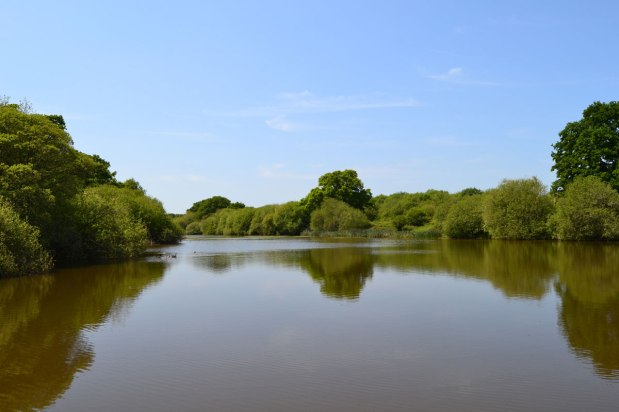
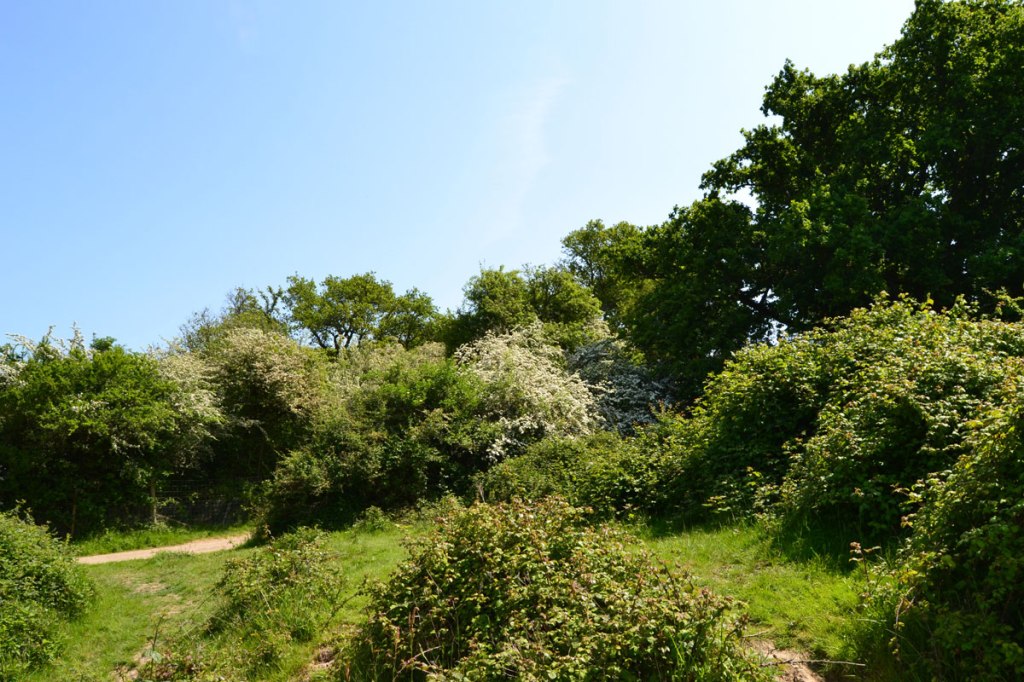
Knepp isn’t necessarily a photogenic place; there are no hills and valleys or stunning vistas. But its scrubby terrain, streams, ponds and pasture felt properly authentic and rural as if time had stood still for centuries. I was astonished by the abundance of hawthorn and blackthorn (pictured above) which underlined to me just how central these bushes and small trees are to our countryside. Soon after entering we came across several score whitethroats along with other warblers, heard a turtle dove, cuckoos, woodpeckers, yellowhammers and corn buntings. At a large pond (below) a kingfisher darted hither and thither. So the rewilding has clearly worked! We came across longhorn cattle, Tamworth pigs and red deer, each species of which contribute to keeping things in order and encouraging insects and birdlife. The pigs, an ancient species, are a substitute for wild boar. 

But there was one beef I had: the local dog walkers. Sorry guys, but letting your dogs off the lead in such a place as Knepp is absolutely not on. I know it’s within the rules technically (the signs only specify ‘keep dogs under control’) but we saw three dogs clearly not under any control. One dog briefly went after the Tamworth pig family, causing the huge sow to go into full attack mode. Luckily, the gormless owners were able to grab their hound before any harm was done (to the dog) but in doing so they’d put themselves in some danger. I was seething at their stupidity! What’s odd is that I’ve never seen dogs so poorly managed on any of the Kent walks – so how can it be that a famous rewilding estate with such rare nature can attract such behaviour? The equivalent would be seeing dogs chasing deer in Knole Park – something I’ve never seen.

Best walks for orchids

Best walks for orchids

The bluebell spectacular has long ended (was it shorter than usual this year?) and the amazing flowering of hawthorns this year is now dropping off, but all of the Kent Walks Near London are great for wildflowers. Wild garlic (ransoms) is in full bloom in moist woods and orchids are now flowering on grassy slopes particularly on the chalk downs walks. I’d get the train to Eynsford or Shoreham and do the Darent Valley walks for the best orchid views. The Fackenden and Eastern Valleys walks are top of the list for me, followed by the LullingstonePolhill, and Cudham saunters. The glades created in the woods in High Elms country park also have excellent orchids. Downe has a few too, if the new sheep haven’t eaten them all (check out nearby Downe Bank too). Stick a good flower identification app on your phone to help you out with identification. And don’t let your dogs run amok!!

Bluebells finis

Bluebells finis

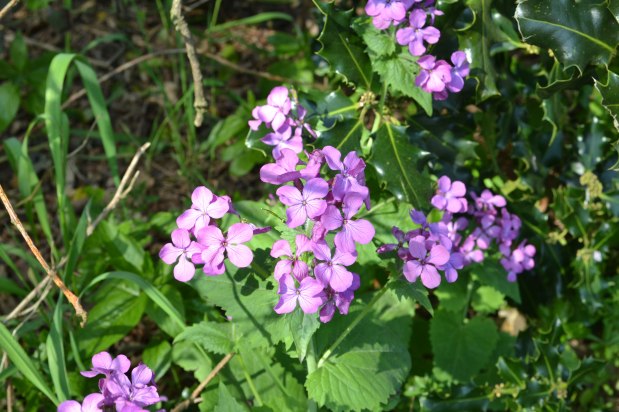
Yep, folks, they are over. The usual two and a half weeks of spectacle; now appearing dry and spindly. Wild garlic (ransoms) looks – and smells – great next to the blue remnants though, and speedwell and campion (pictured) are showing nicely on most of the walks along with all the lovely yellow and white stuff. It’s a very pleasant time of year and the next week or so is set fair: not blazing sun or anything but decent.

Woody wildflowers on display before the big blue

Woody wildflowers on display before the big blue

With a dry and potentially quite sunny week before us at long last it’s a great time for checking out emerging wildflowers on the walks. I must underline that I’m no expert and rely on apps to confirm by sightings in many cases. But below are a few species you’ll see in most of the woods encountered in woods and fringes on the KWNL routes in April.

Within a couple of weeks bluebells will be taking over in the woods – the first are already in bloom – but until then there’s plenty to enjoy: cuckoo flower, celandine, wood anemone, primrose and cowslip in particular. There are early orchids too; at Polhill, Strawberry Bank (on the Cudham walk), High Elms country park in the glades within the woods and Downe Bank (a detour on the Downe walk). I particularly enjoy the first sightings of butterflies: I’ve seen brimstone (usually the first to emerge), small tortoiseshell and peacocks so far this year. At Fackenden last week, all three species were fluttering in Magpie’s Bottom. In the woods behind adjacent to Magpie Bottom (the OS map calls it Great Wood), the celandine carpeting the ground under the beech trees was spectacular. Things change fast at this time of year though and pretty soon, all will be blue.

Summer is here; time for Pluto

Summer is here; time for Pluto

Continuing the theme of overlooked walks at Kent Walks Near London, the Polhill Pluto route yesterday proved the perfect choice on a bright, breezy summer’s day. There were plentiful orchids in the Andrews Wood-Meenfield Wood gap and fantastic ox-eye daisies, scabious and poppies in the fields below Polhill. It’s a great walk to do if you are a fan of the yellowhammer – the colourful, chirpy bunting (we’re talking about a bird by the way!) that adorns hedgerows in these parts and is particularly common for some reason between Shoreham and Otford. It’s repetitive and unworldy song is one of my favourites – it’s commonly described as sounding like ‘a little bit of bread and no cheese’ because of its rhythms but to me it’s simply the sound of summer. Listen out for it on the Darent Valley floor; around Sepham Farm it’s nearly always heard, and sometimes present in the lower parts of the Fackenden and Eastern Valleys route (such as around the Percy Pilcher memorial). The Pluto route (so called because you pass the final ‘planet’ on the Otford solar system scale model) can be combined with the Shoreham circular and even the Fackenden, Otford and Eastern Valley routes for a walk of up to 11 miles or so as all these routes intersect, or almost intersect, at various points. For some reason, I only think of this stroll as a summer walk – not entirely rationally, but it just feels right on a warm day.

A few changes around Shoreham

A few changes around Shoreham

I walked the Shoreham eastern valleys route (near Romney Street pictured) yesterday for the first time this year and much has changed! First off, the path along the field between points 2 and 3 were more overgrown than usual at this time of year… I’d actually brought secateurs with me to help matters and did some highly satisfactory bramble snipping. Next up and of more structural significance, the barn between points 4 and 5 at Austin Lodge has disappeared; apparently the land has been earmarked for a couple of houses. I’ve amended the route instructions. Later, I was disappointed to see that the steep hillside between points 6 and 7 has been munched by grazers and now there are no wildflowers. It used to be a sea of oxe-eye daisies and orchids at this time of year. What happened? Has the owner decided they don’t like rewilding after all? It’s probably complicated but I was a bit saddened by it. The next thing I saw on hitting Shoreham village was that Ye Olde George, having been refurbished for the past couple of years, has now reopened as The Samuel Palmer. Good name actually, but it stupidly hadn’t occurred to me that the Mount Vineyard people would also change the name of the pub. It looks excellent and I can’t wait to visit. I must have gone past it and not noticed it had reopened a couple of times because the refurb was complete by April 2022. But there’s also sad news; just across the bridge the King’s Arms remains shut after a damaging fire in March. I had no idea. Funny how quickly things can change.