Farnborough village and High Elms circular

Farnborough village and High Elms circular

Here’s a ‘new’, pleasant two-hour, four-mile stroll that fits in to the Downe/Cudham/Knockholt suite of walks; ie, it’s on the chalk North Downs and not too far from Bromley – in fact it’s still within Bromley borough (about 30 mins’ drive from Forest Hill, 15 mins bus from Orpington Station, 20 mins from Bromley South). It’s quite a similar walk to the High Elms Estate route described in this informative leaflet but there are differences – my route is a mile and a half longer, goes further to the west initially and stays deeper in the woods in the long stretch to the High Elms visitor centre (Beeche).

Here are full instructions for the walk.

I’ll write it up and devote a page to it this week at some point but meanwhile here’s an Ordnance Survey GPX map for the route, and, below, a Google map of it. We started from close to the church in Farnborough village (Kent) but you could also start from the High Elms visitor centre car park (free, the last time I checked). If you’re not driving, you can take the 358 bus to Farnborough village from Bromley South, Orpington, Crystal Palace, Shortlands, Kent House, Eden Park, Anerley, Clock House stations etc (it’s a long and twisting route from Crystal Palace though!). The closest railway station is Orpington, just a mile or so from Farnborough village.

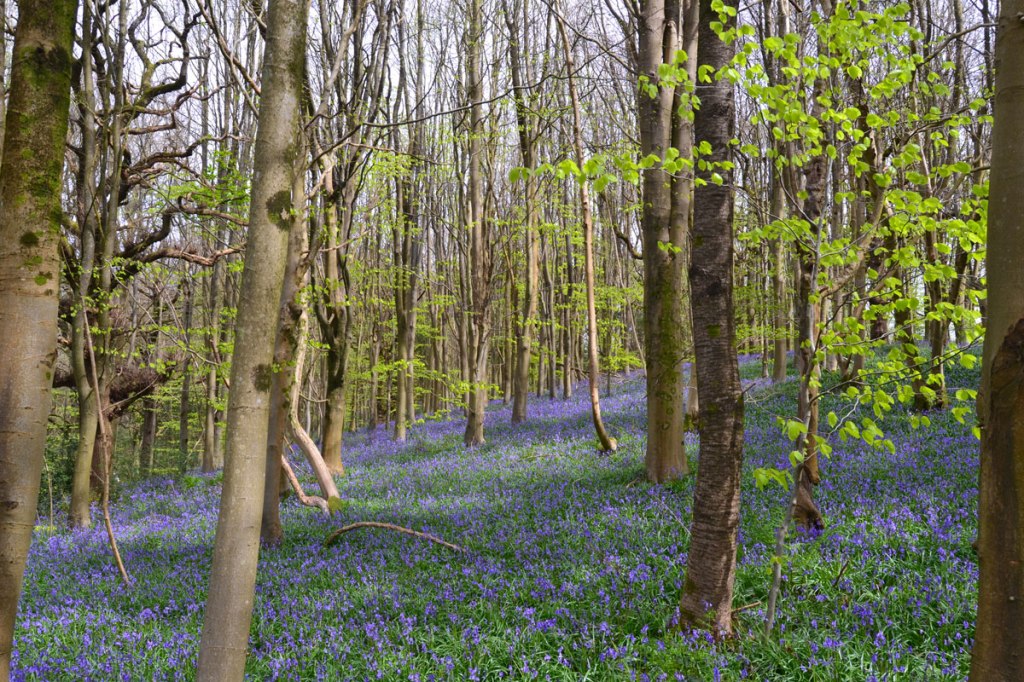
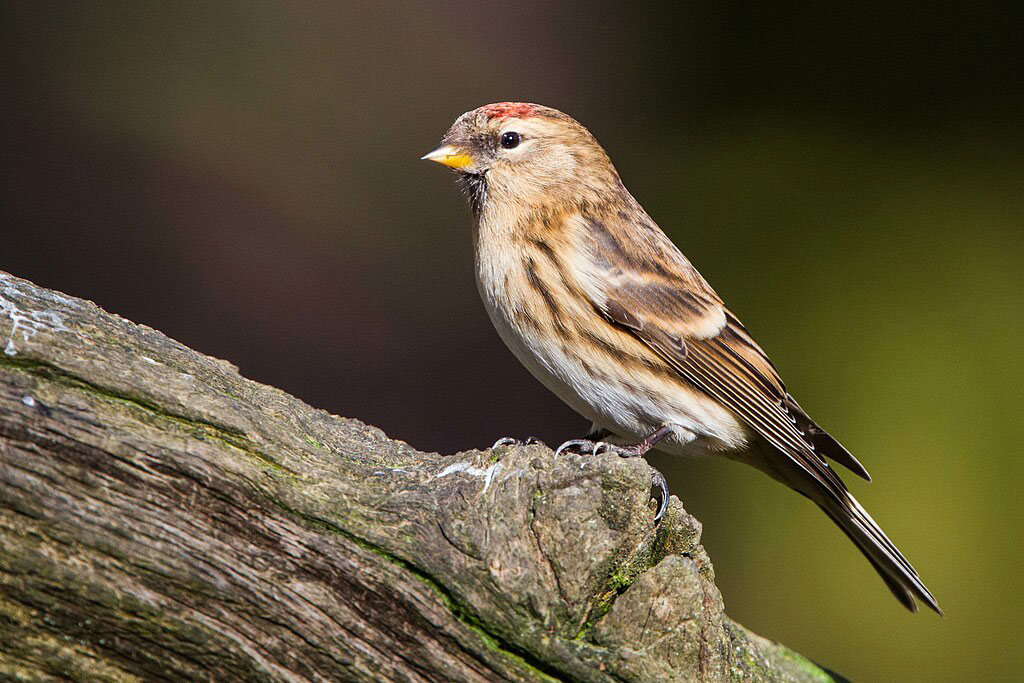
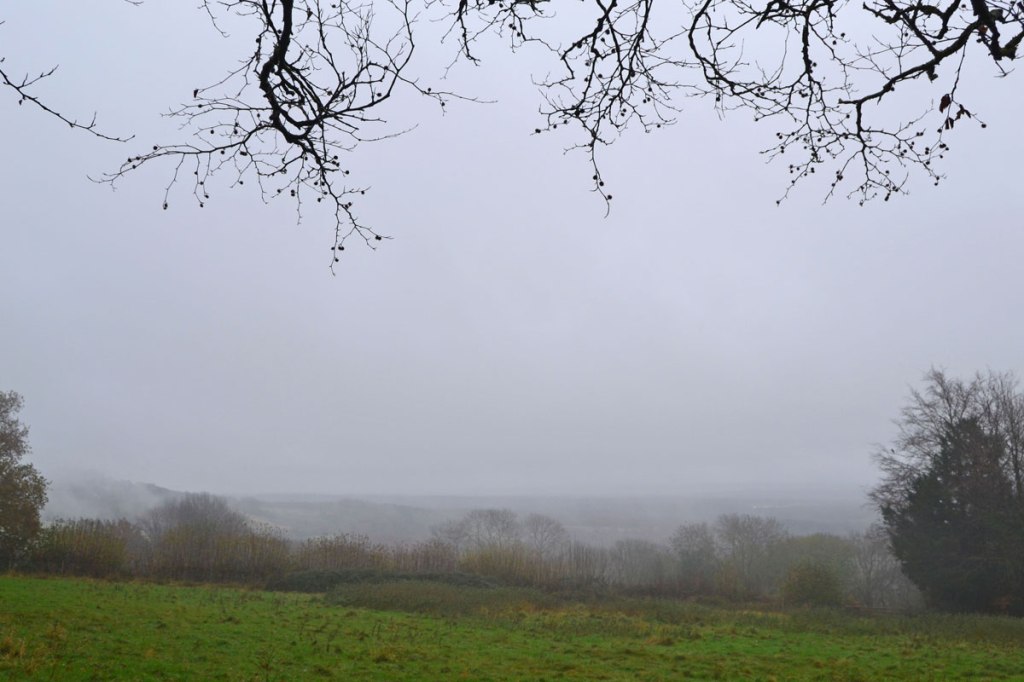
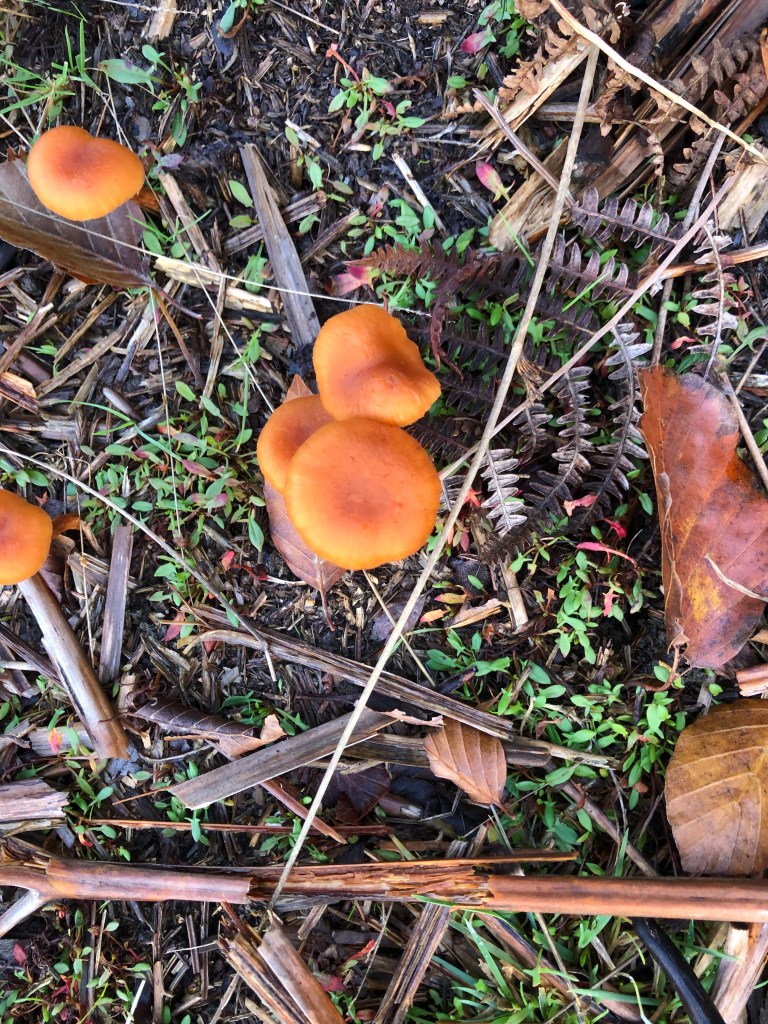
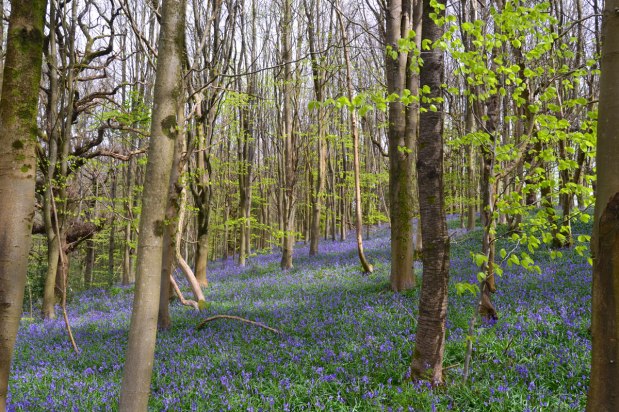
It’s not a spectacular walk with awe-inspiring vistas, unlike say the One Tree Hill, Ide Hill or Fackenden routes, but there’s some lovely woodland, views over shallow valleys, amazing conifers in the Lubbock estate next to Shire Lane at High Elms and lots of bluebells, orchids (pictured in Cuckoo Wood, lead image) and birds at various times of the year. Right now it’s a bit bleak of course but there’s still much to enjoy. The ‘home stretch’ as you reach Cuckoo Wood then get nearer the cafe and nature centre (called Beeche) at High Elms is quite busy with dog walkers, as are the initial fields after starting the walk in Tye Lane. In between though, it’s very quiet. There are no stiles so suitable for a hardy push chair (I think!). There are three roads to cross; the first – Shire Lane – is a notorious rat run where for some reason cars are often driven recklessly fast, so take care.

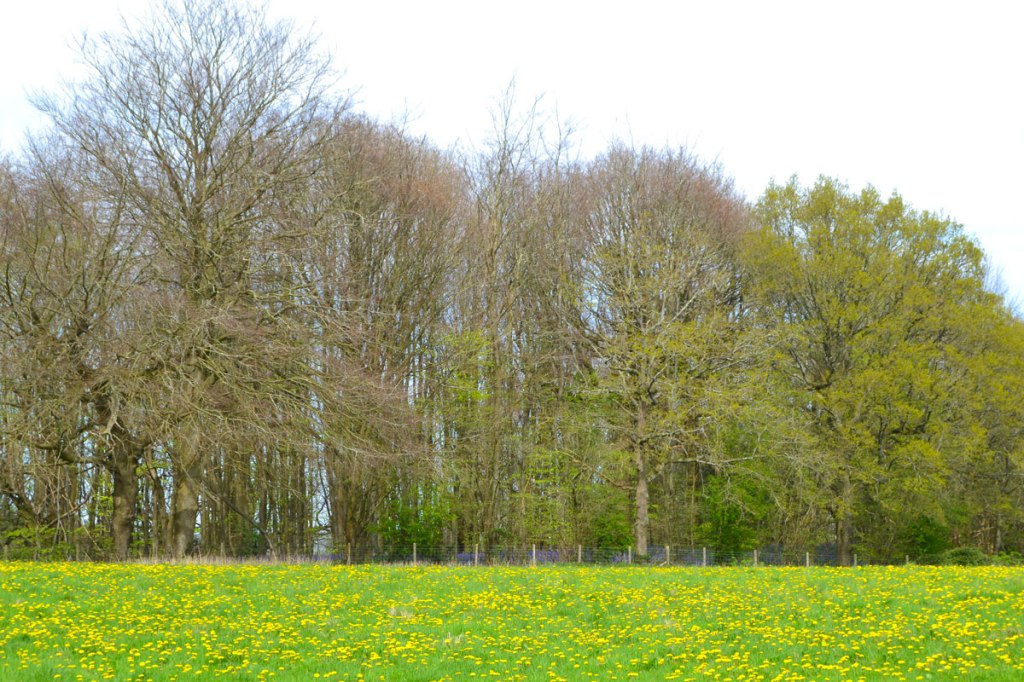
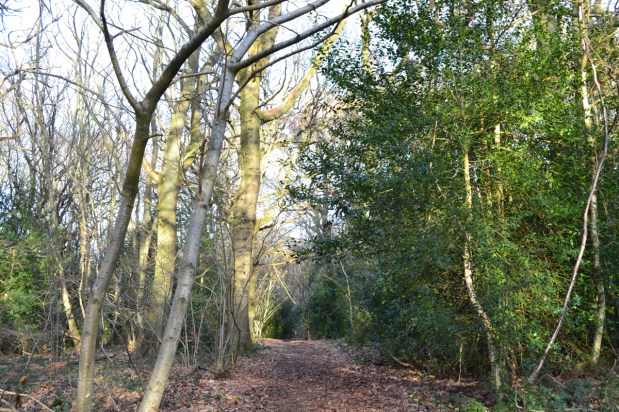
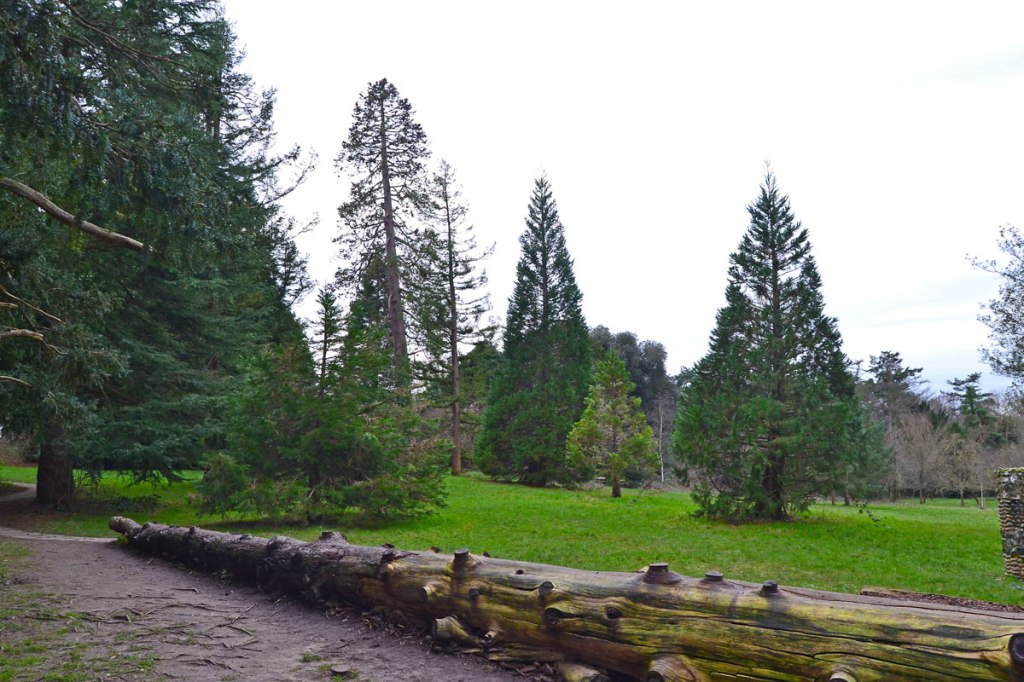
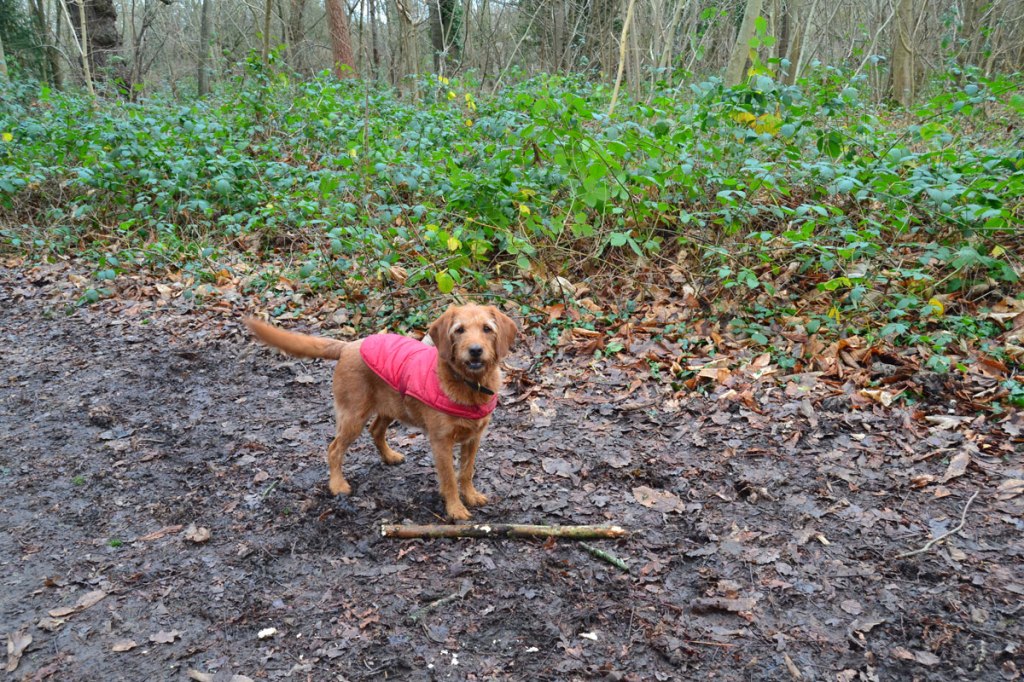
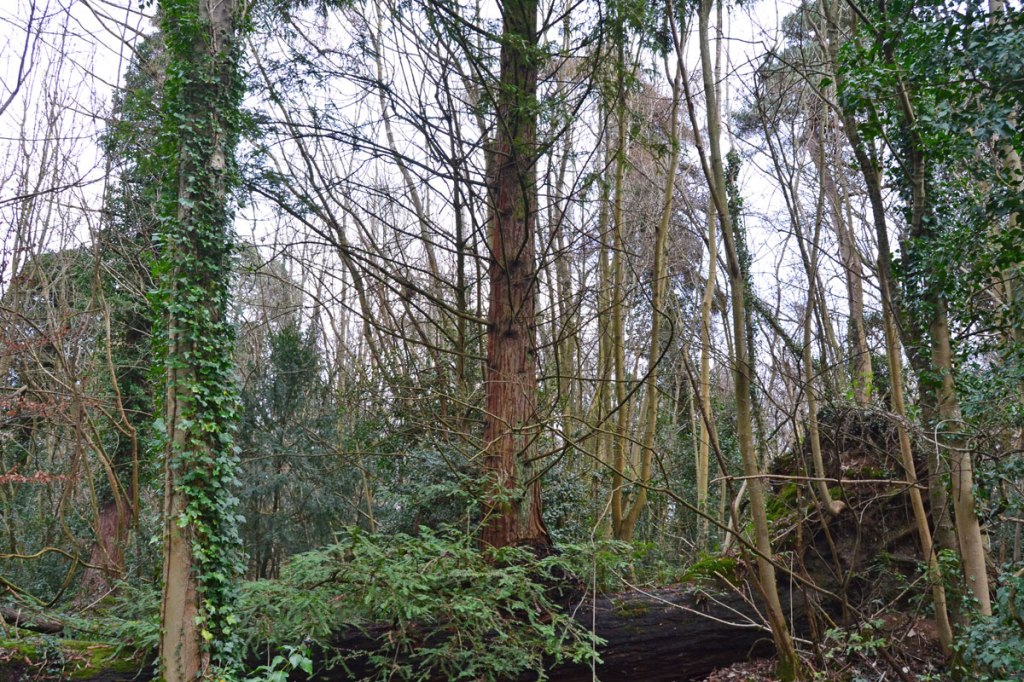
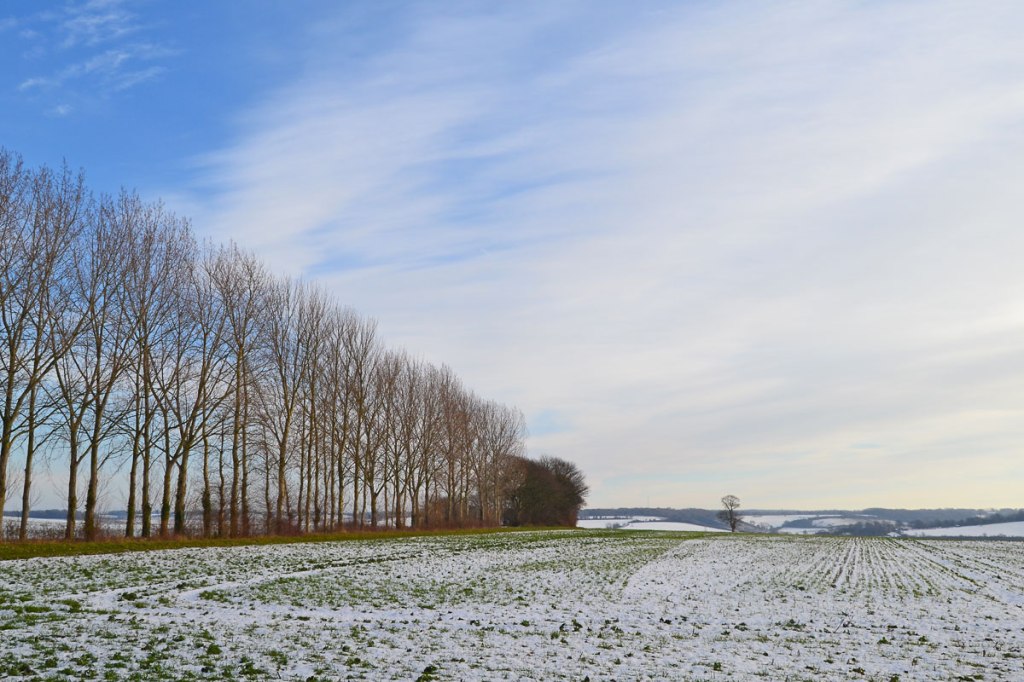
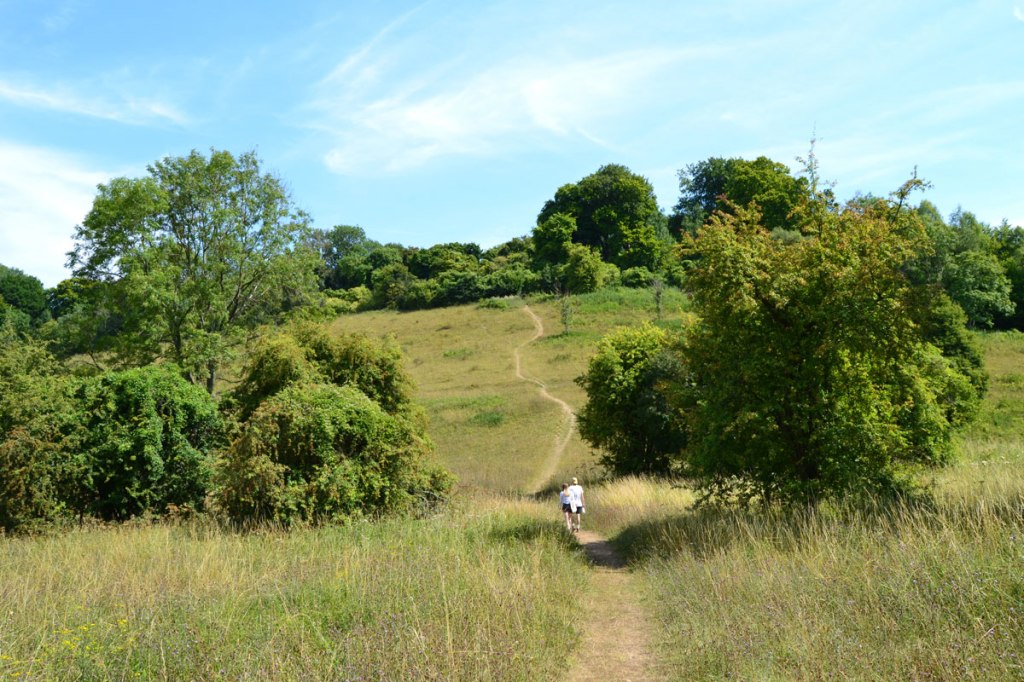
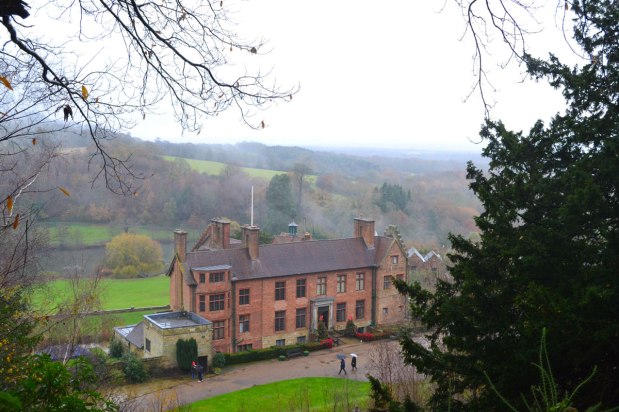
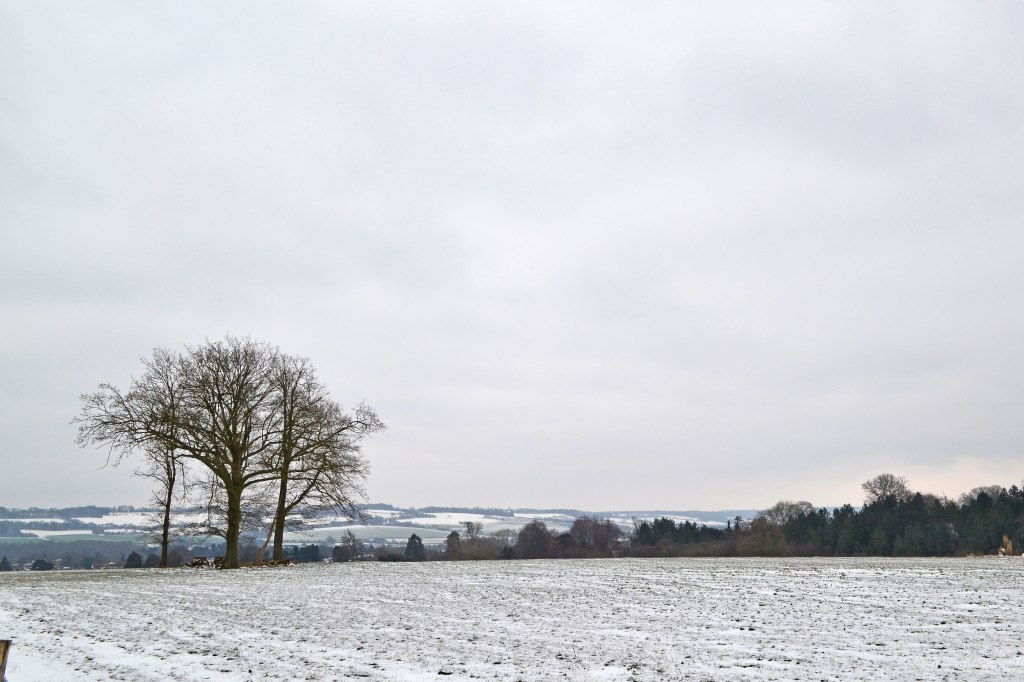
Pictured above in dull winter conditions: 1 Lubbock’s conifer plantation dating from mid-19th century; 2 the High Elms area near the cafe is popular with dog walkers; 3 A holm oak, an evergreen oak from southern Europe, offers winter cover in High Elms’s western woods; 4 New growth shoots from a fallen giant sequoia in the western woods close to the High Elms ‘nature field’; 5 Looking bleak in winter, this field close to the start of our walk is excellent for small mammals and their predators such as kestrel, owls and buzzards; 6 Church of St Giles the Abbot, Farnborough, has a nave dating from the 12th century; 7 Woodland meadow in High Elms woods – from April this patch is alive with wildflowers; 8 pine trees near the church at Farnborough

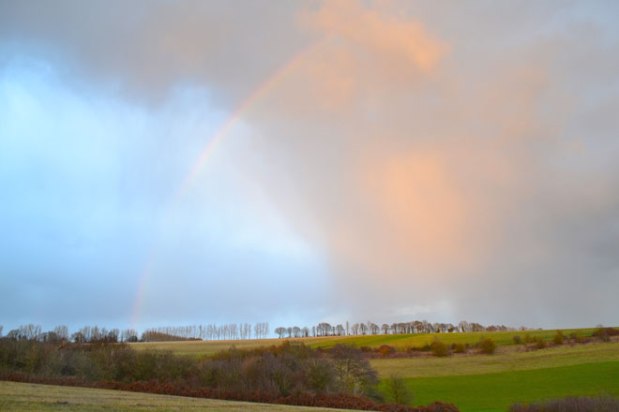
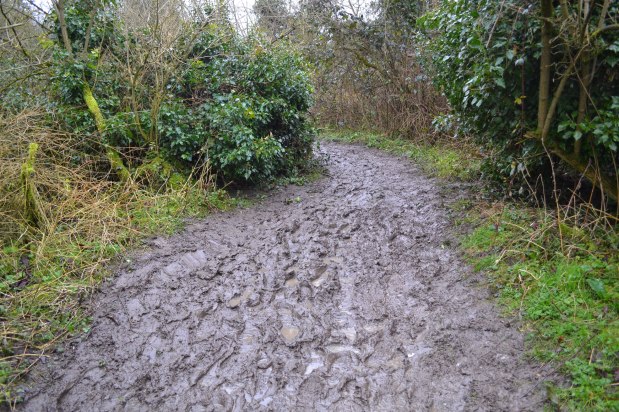
This walk was first tried on 7 January 2024 after weeks of rain. We revisited the following week in slightly better weather hence the appearance of blue sky in a couple of photos. The mud wasn’t too terrible by 14 January. The chalk beneath the thin soil has done its job well draining the water so it’s probably a safer bet for having less mud than the nearby Cudham walk.

If you have children it‘d probably be better to start and finish the walk at the High Elms car park so they can enjoy hide and seek and a picnic in the beautifully decayed old gardens of the Lubbock manor house (burned down in 1967 possibly by a discarded cigarette).

Watery winter walks

Watery winter walks

I should apologise. For the past couple of months I have been enticing people out into the local countryside with flattering photos of the atmospheric woods and hills of north-west Kent in winter. I have depicted frosty and snowy scenes, blue skies and wonderful sunsets. I have described hearty, bracing walks finished off at a village pub with a warming fire. Worse, I even encouraged people to go on strolls over the festive period. In mitigation I have mentioned the risk of mud patches and even suggested that rainy walks in murky conditions aren’t necessarily a bad thing, but there’s no getting round it: anyone following my advice of late has probably been soaked to the bone, slid over in puddles, muddied their entire wardrobe, and not received anything in the way of “bracing winter walk” vibes. On a drizzly stroll with friends in Richmond Park last week under prematurely darkening skies I actually fell headfirst into a ditch that houses a tributary of the Beverley Brook. Usually, hilarity would have ensured, but my comrades were too immersed in the perils of having to cross the stream themselves to laugh at my misfortune. Unlike me they took the flying leap option, whereas I had attempted to span the abyss with a long stride.

A lovely path on the Cudham walk nearing point 3 is not so lovely after weeks of rain

Anyway, conditions are terrible out there. Mild temperatures and high rainfall totals have created a dreadfully slippery environment. Playing golf at High Elms on New Year’s Day (the morning and early afternoon offered respite from the rain) we found it hard to hit the ball properly on the muddy fairways. We saw walkers, inevitably brandishing sticks with which they tried to scrape vast clods of clay mud weighing down their boots.

More heavy rain is forecast for Thursday and Friday of this week. The weekend should be drier but cloudy with lower temperatures of about 4C. Time to get going on those Christmas books I reckon …

Most memorable walks of the year 2023

Most memorable walks of the year 2023

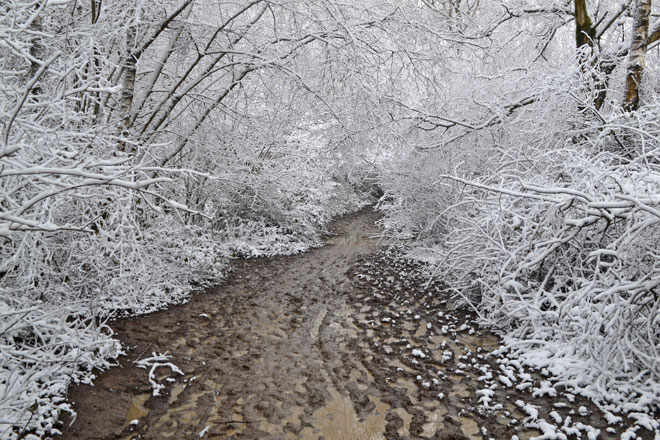
This time last year there was snow in the North Downs; not a lot but certainly enough for bleak midwinter atmosphere, providing one of 2022’s most memorable walks: a saunter around the whole of Lullingstone (pictured below).

By contrast, this year’s winter walks have so far been muddy wet trudges in the gathering gloom. I did really enjoy Hosey Common the other week (see previous blog post) in atrocious conditions, because it reminded me of Scotland, I was with an old friend and family, and quite frankly I needed to get out – so it was great. Walking in uninspiring weather and finding pleasure is a challenge, a task that one must learn to relish, especially if one runs a walks website, which one does.

So looking back over the year none of my most recent strolls will make it into my most memorable top three and I’m gambling that my Christmas walks won’t top those this selection. An “out of town“ sortie to Hastings country park was among the best but was disqualified on obvious grounds.

This leaves my favourite walks in 2023 as:

  1. Chiddingstone, 15 September: scorching late summer sunshine heavy with humidity; dragonflies and damsels over the River Eden; soaring buzzards, long grasses shimmering, a great pint in the Castle Inn with family. Blissful.
  2. Fackenden Down, 26 August: old friends visiting from abroad joined us. They were more used to the chaparral of southern climes than the moist beech woods, scabious meadows and brambly hedgerows of the North Downs. They had read my piece in the Guardian about this walk and fancied a good old saunter. Iffy weather but delightful company and a lovely sesh at the Mount Vineyard and Samuel Palmer pub afterwards.
  3. Ide Hill, 3 February: an incredible multicoloured winter evening sky and rare close-up sightings of treecreepers in mysterious Scord Wood really made it. The ram pump pond was perfectly still and there were timeless frozen views over the wintry weald to enjoy. Again, great company – an old friend joined me. We finished in darkness with a bright moon picking out the gathering mist.
  • Tudor houses, Chiddingstone
  • Kent walk
Dull, damp and delightful

Dull, damp and delightful

I love to walk the Hosey and Westerham routes in late autumn because of the views of the Low Weald woods from Mariner’s Hill and the hues of the trees on the lower slopes of Tower Hill along the infant River Darent. I missed out on those treats this year but last Sunday we took the Hosey route despite persistent rain and cloud so low it scudded into the hollows of the Greensand Ridge and draped itself over NT attractions such as Chartwell and nearby Emmett’s Garden. We did the walk in reverse, which made life a little less predictable but also disoriented us on a couple of occasions. Even the familiar can confuse when approached from a different direction (wise words indeed ha ha). Despite the rain and mud it was a lovely atmospheric stroll and further proof that, as the great walker Alfred Wainwright said, “there is no such thing as bad weather only the wrong clothing”. I can’t say I had the right clothing, given the fact that my jeans were covered in mud by halfway through and the skin on my bare hands had shrivelled, but these minor discomforts were dwarfed by the pleasure of being out in the countryside. Small birds, including three bullfinch – a rare sight – flittered in many of the hedgerows, a sign that recent frosts have softened and sweetened the berries enough to be gulped down. (Pictured below: Mariner’s Hill views in cloud and rain; water meadow of infant River Darent – a good spot for bullfinch. Above: Chartwell)

Frisson in the North Downs freeze

Frisson in the North Downs freeze

There’s a real pleasure to walking in very cold conditions and not only because you’ve bought some hot chocolate with you with a shot of rum in it. The light, the clouds, the wonder of winter and the sudden dusk all bring an edge of adventure. It’s a great time for a walk. Often the mud is hardened by frost too so you can stride without getting bogged down. We don’t often get snow in these parts but remember that if there’s a hint of the white stuff in south east London there’s a good chance there’s a lot more of it on the North Downs. So if you have children pining for snow larks, there’s always a chance that by heading to say Fackenden Down, Polhill or Knockholt you might have a bit of luck. It’s worked for me over the years. I particularly love the atmosphere of Knole in winter – the frosty hollows and rich (ish) bird life coupled with that huge medieval home that is lit so beautifully by the setting sun and from within as twilight comes on, are an essential part of my mid-winter wanders. This little cold snap will be over by tomorrow evening but there’ll be more to come.

  • Downe, Kent, England
Muddy matters

Muddy matters

In my most recent newsletter there was a glaring omission. I listed the best walks on this site for mud avoidance but forgot to mention Knole. This was particularly remiss of me because not only does it deserve a place in any list of non-muddy winter walks it should actually be top of the list.

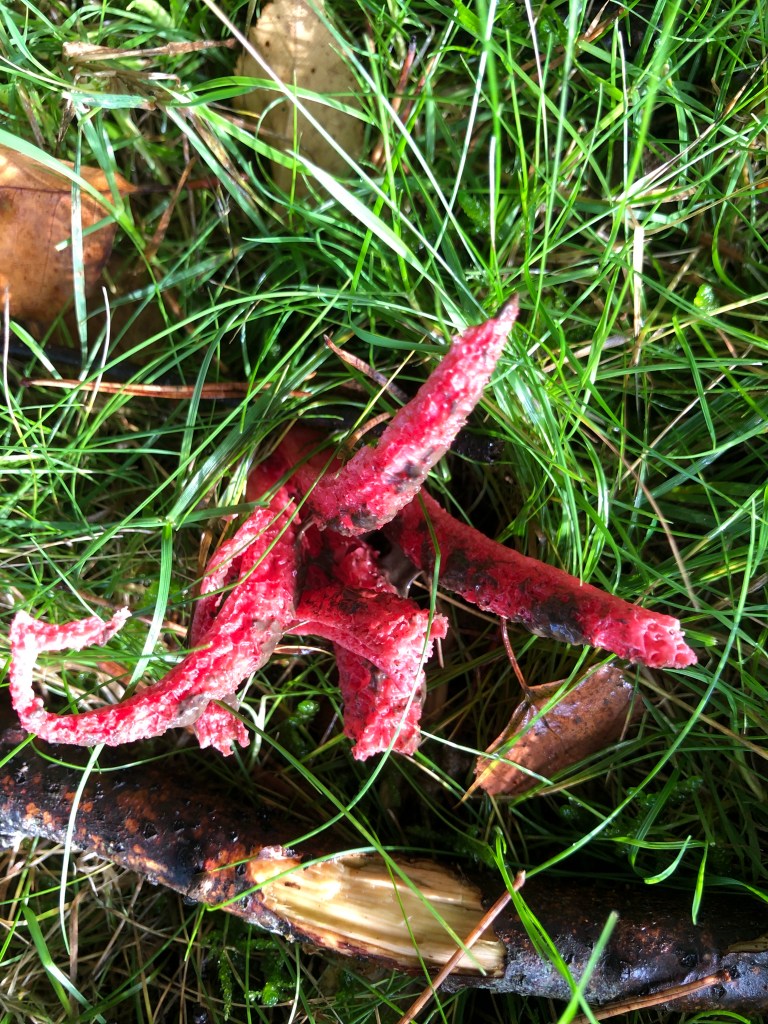
A walk there last week revealed only one properly muddy bit, in the conifer woods in the south east of the park near the beginning of the route as you cross the little stream. The park is brilliant at all times of year but I particularly love it in late autumn as small flocks of migratory birds hide in hawthorn shrubs, buzzards float high above and the deer develop enormous antlers. Fungi is also better here than on any other of the walks I think. I’m no expert, but the amethyst deceiver is among the most colourful, and there are other great species here such as saffrondrop bonnets and fairy fingers. We saw devil’s fingers on our most recent walk, very weird looking stuff.

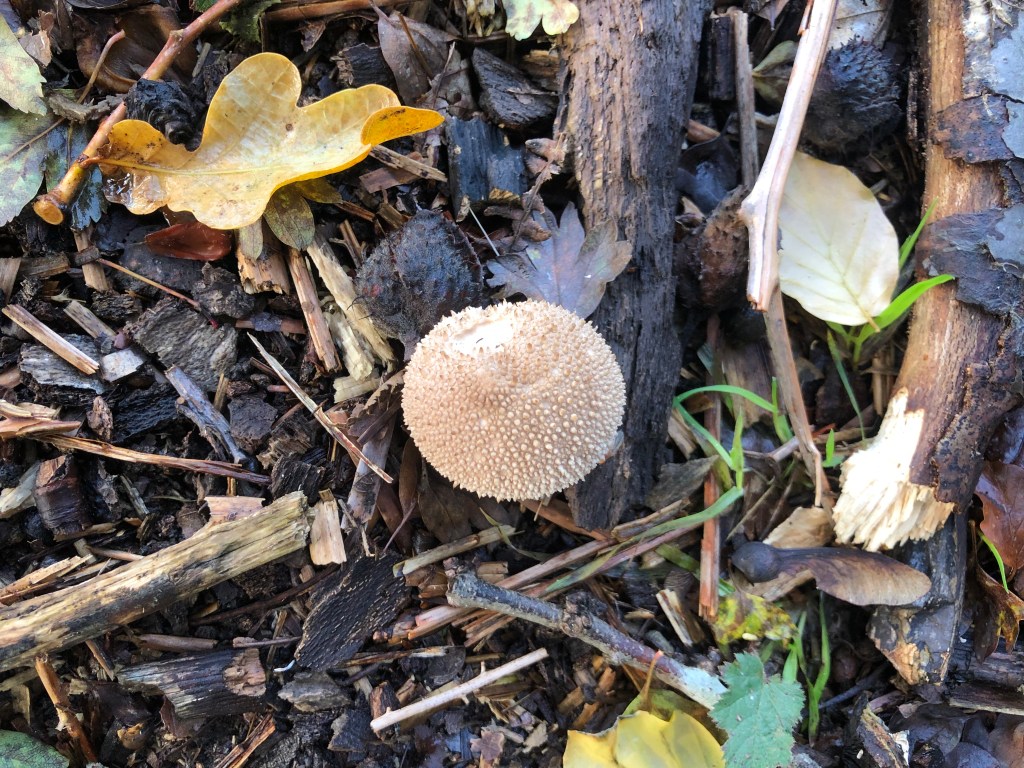
Knole in autumn, honey fungii, parasol, puffball, devils finger

Knole (click here for National Trust description) is quite a rare terrain: it sits just behind the Greensand Ridge and is mainly composed of acid grassland (click for Kent Wildlife Trust in-depth). In fact it contains about 35% of all the acid grassland in Kent, a terrain that provides habitat for lots of wildflowers and rare fauna including lizards and adders, and invertebrates such as deadwood beetles. The little hillocks in the grass are the nests of yellow meadow ants, and in turn their presence helps support a good green woodpecker population.

Knole House

Back to mud: I’d say the best routes for mud avoidance are:

1 Knole

2 Lullingstone – from the golf course entrance or from Eynsford station

3 Fackenden Down

4 Polhill and Shoreham

5 Ide Hill (now that the paths have been relaid – but can still get bad at points)

By and large the walks on the North Downs chalk are better for avoiding mud as water seeps through the thin soil into the porous walk quicker. Yet, to contradict this, Knole is sandstone and the worst spot for mud at KWNL is on the chalk Andrew’s Wood hillside on the way to Meenfield woods and Polhill/Pluto.

Mud, frost and snow at One Tree Hill, February 2021

Mostly, a pair of wellies and overtrousers will sort you out where things get really squelchy but I’ll be mostly avoiding Underriver (Ramshed Farm in particular), and the Low Weald walks at Hever and Chiddingstone for now. Where paths are hemmed in a bit and popular with walkers things also get very squelchy (like the path up into Lullingstone from the Roman Villa pictured in the leading image, for example). So ‘natural causes’ are not always responsible for mud, though I suspect the water table and a layer of clay might be responsible for Andrews Wood hillside. One Tree Hill is surprising to me – it’s not a place you’d think would get so bad. It could be footfall, or perhaps some water table-related reason is the reason. Another morass is on the popular Downe walk just before you re-emerge into the village right at the end. The popular Shoreham Circular is OK, though footfall on the path through the golf course can lead to horrendously swampy conditions!

So, worst for mud are:

One Tree Hill (at the top of the hill near the car park is horrendous if wet)

Underriver (aforementioned farm and waterlogged low weald fields)

Polhill/Pluto – Andrews Wood hillside and Polhill slope itself (too slippery in winter)

Hever – hemmed in paths create WW1-type conditions

Chiddingstone – waterlogged fields by River Eden

But you may disagree! Let me know your favourite and least favourite muddy zones at KWNL, email ammcculloch49@gmail.com

New route: Heaverham/Kemsing circular

New route: Heaverham/Kemsing circular

This route, no 28, is similar to walk 27, but is better for people walking on Sundays, when there is no train service. You can start it from the lovely Chequers Inn, Heaverham (if you buy a drink/meal); Kemsing village car park; or Mon-Sat from Kemsing station. Rather like the Chevening/Knockholt walk it’s another chalk escarpment route that drops down into the Vale of Holmesdale, and uses short stretches of the North Downs Way. The link below includes the usual Google map and the more useful OS map, plus written directions. PDF to download will follow in a few days!

Click here for full description and maps

Green October

Green October

The Underriver walk was a picture last weekend, two unseasonably warm days that probably represented the last knockings of summer. It felt like summer and looked like summer with foliage mostly green and few birds flocking apart from some buzzards and jackdaws in a high altitude spiral. It’s another walk I now do in reverse to the sequence described on this site. One of the reasons for this is to avoid the sharp uphill section in the holloway by the “dancing beeches” just past the oasthouses at point 3. Coming downhill here then enjoying the route past Romshed farm seems a bit more civilised now I’ve done it a few times. At One Tree Hill the National Trust has trimmed the hedgerows and blackthorn clumps back to enlarge the panoramic view – and very effectively so. I’ve walked past that spot since childhood, though much more often these days, and that timeless view across the Low Weald to the Ashdown Forest and as far as the Surrey Hills in the west still grabs my attention. It’s a popular spot, as you can see in the picture below.

Walks this weekend will have a different flavour. The ground will be wetter with plenty of freshly fallen leaves. The temperature will be a lot crisper than last week, perhaps by nearly 10C, but with blue skies forecast it should be a beautiful couple of days for a stroll. And a first proper taste of autumn.

Here’s something I’ve never seen before …

Here’s something I’ve never seen before …

Walking on the path through the scabious, ragwort, marjoram, yew trees and grasses on the chalky west-facing slopes of White Hill/Fackenden Down last Saturday I spotted a wasp spider – a creature I’d never seen personally. It’s a spectacular arachnid, one that has been increasing its numbers in the south-east over the past 15 years. I guess a powerful orb weaver like this will be snaffling up drowsy late summer insects in the coming weeks. The walk itself was as beautiful as ever but quite bereft of bird life, which isn’t unusual for late August just prior to the large migrations. Only a solitary buzzard and a charm of goldfinches being of note, though we weren’t being particularly observant. Oddly, not a single swallow was noted – unlike during the walk at Cudham the following day, where a red kite was also seen. My friend Teri took the spider photos.

Grass and butterflies

Grass and butterflies

Late July, early August: it’s a slightly torporous time, and in most summers the countryside becomes gradually a bit tired and frazzled looking – rather like the Australian cricket team currently trying to play out the Ashes (now there’s a hostage to fortune). But this year, thanks to recent regular rain, there’s still a freshness about things. I particularly love the long grasses this year, so full of wildflowers – and such a contrast to last summer’s scorched earth. We’ve been lucky in 2023 in that respect, as other parts of Europe have literally burned. Nearly all the walks on this site feature beautiful grassy meadows at one point or another, the best being on the chalk North Downs at Downe, Shoreham (Eastern Valleys, Pluto, and Fackenden in particular, Knockholt and Cudham. Wild marjoram, wild carrot, ragwort, trefoil, knapweed, pyramidal orchids (still flowering) are among the common wildflowers all flourishing amid the grasses, creating a fetching spangle of purples, yellows, pinks, reds and creams among the greens. Anecdotally, butterflies have shown well this summer despite the mixed weather. At the moment it seems to me species such as comma, red admiral, marbled white and large white are the most commonly seen. In April and May, brimstones were a common sight, then peacock butterflies. I haven’t seen any silver fritillaries this year and hardly any orange tips or small tortoisehells, I’ve just been unlucky – others have seen them. Pictured below: red admiral butterfly, scarp view, knapweed in Chevening churchyard, a cleft in the North Downs scarp, a comma butterfly, the escarpment, a lonely path, all from Knockholt/Chevening short walk on a near-cloudless late July early evening.