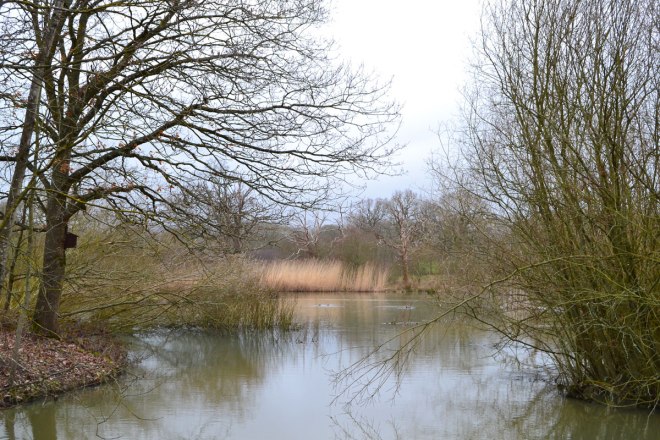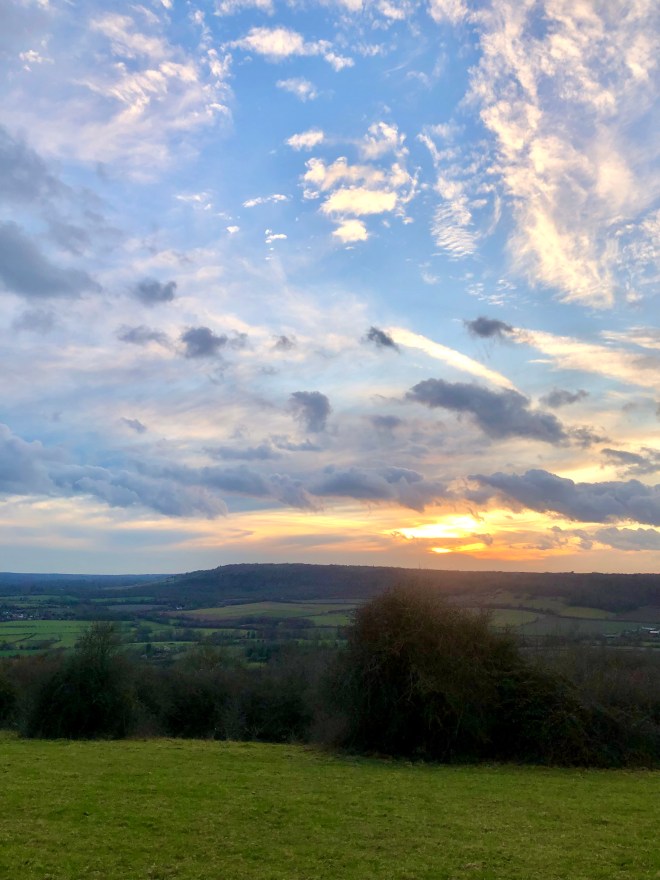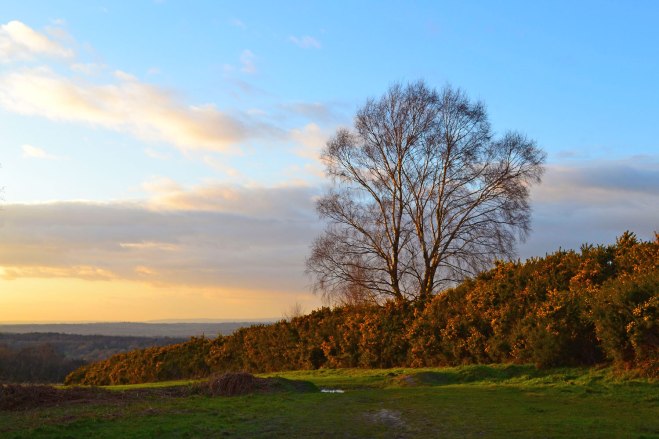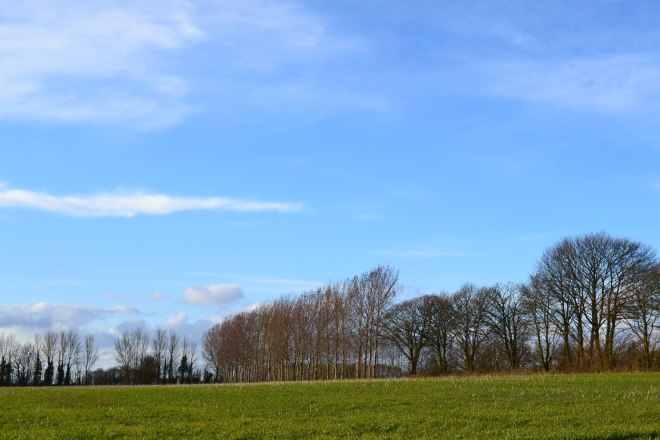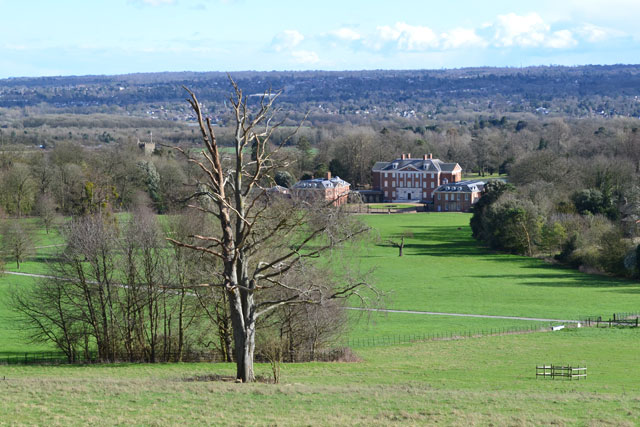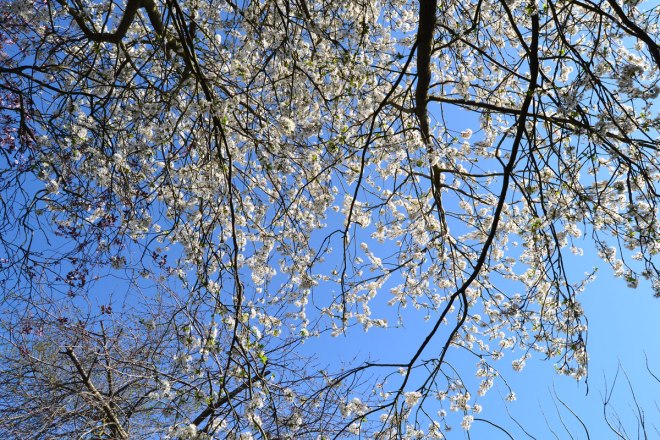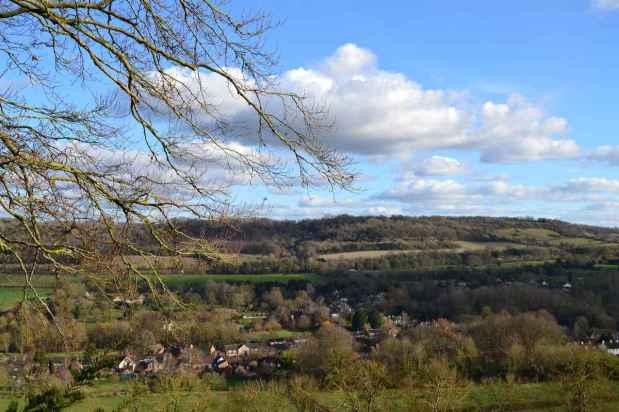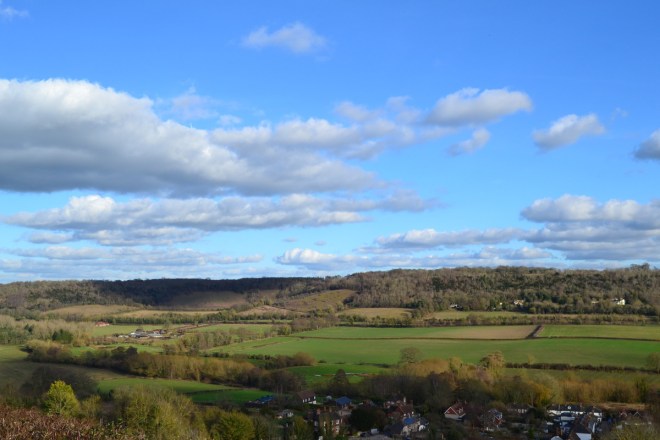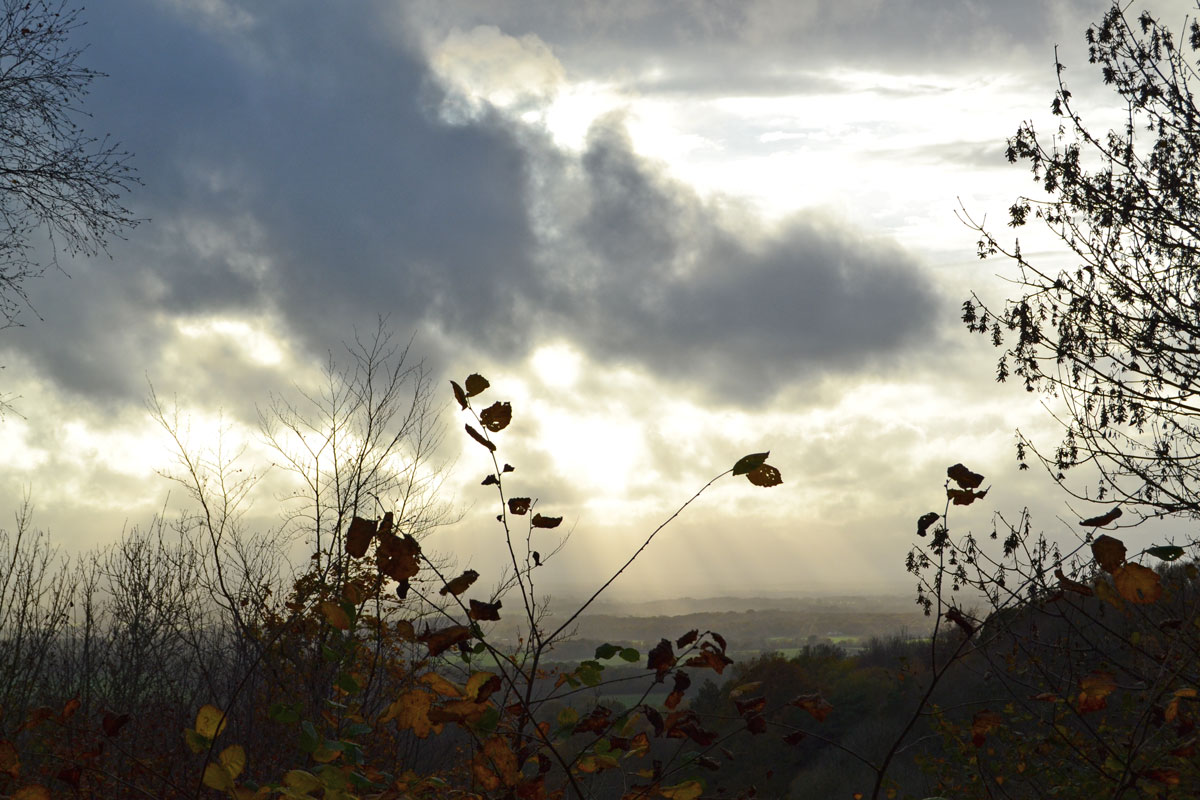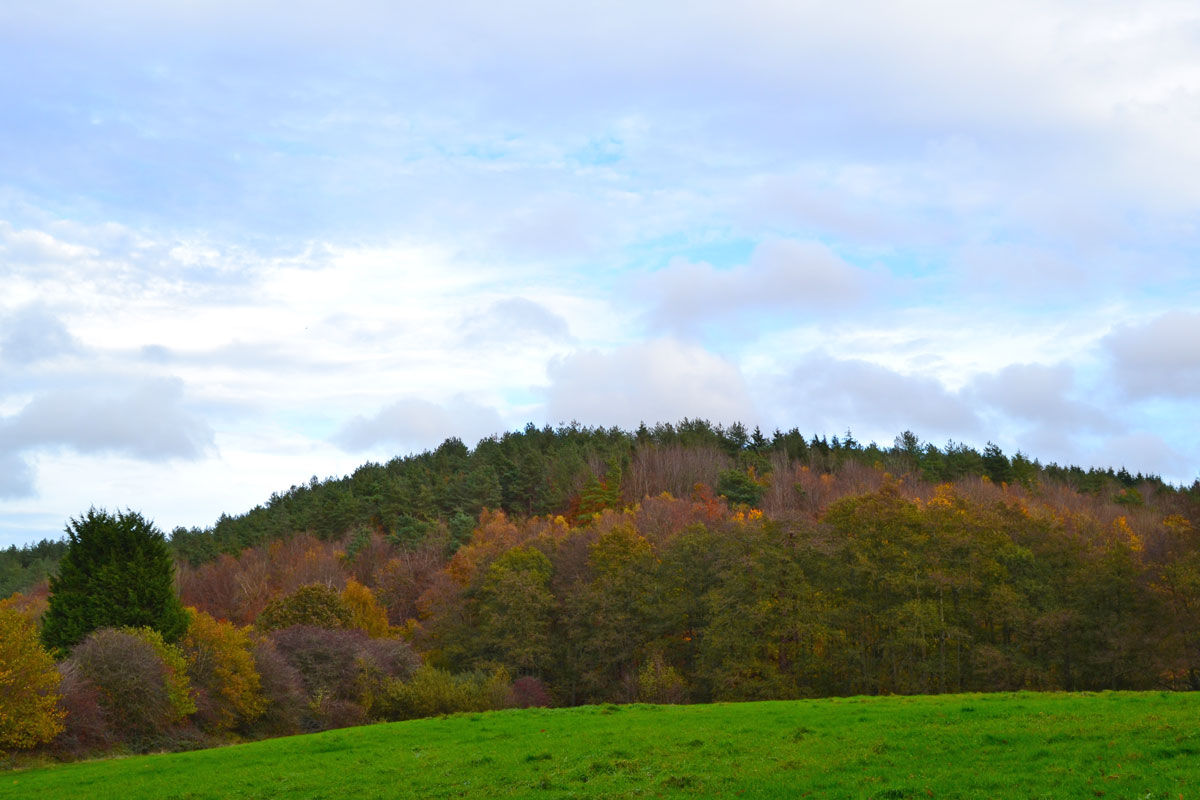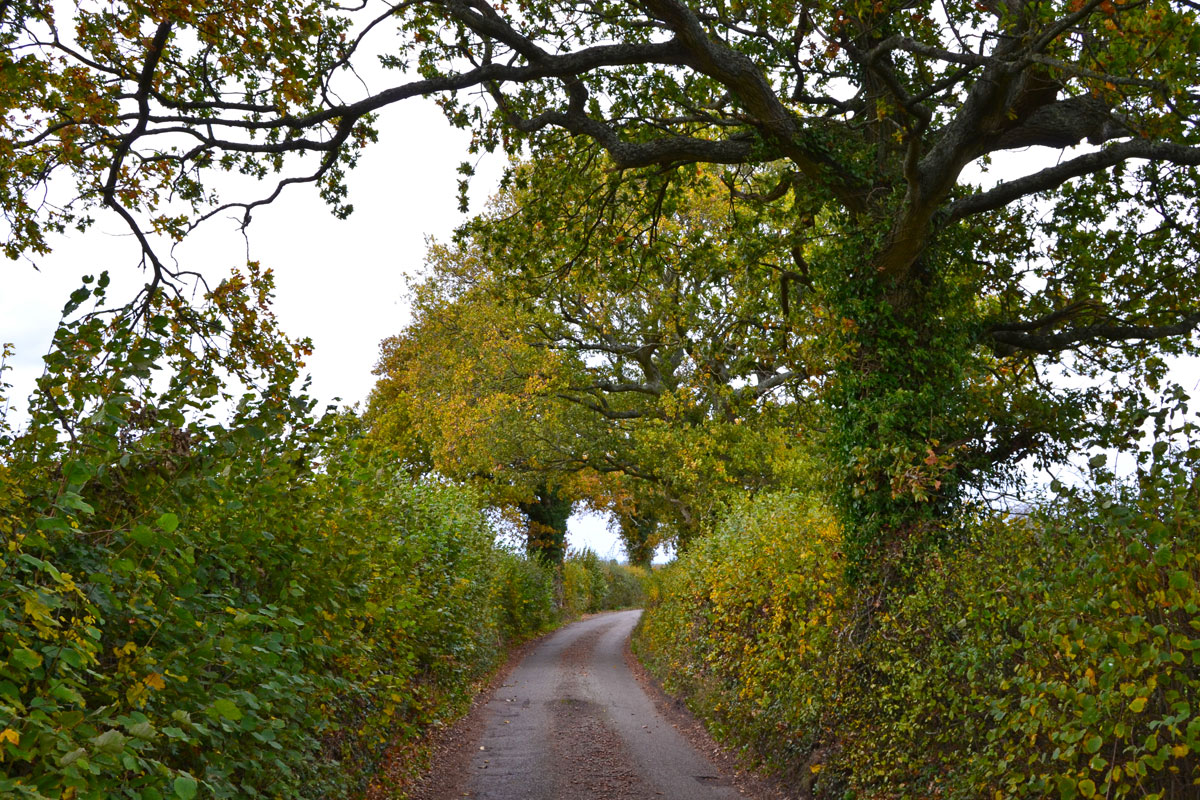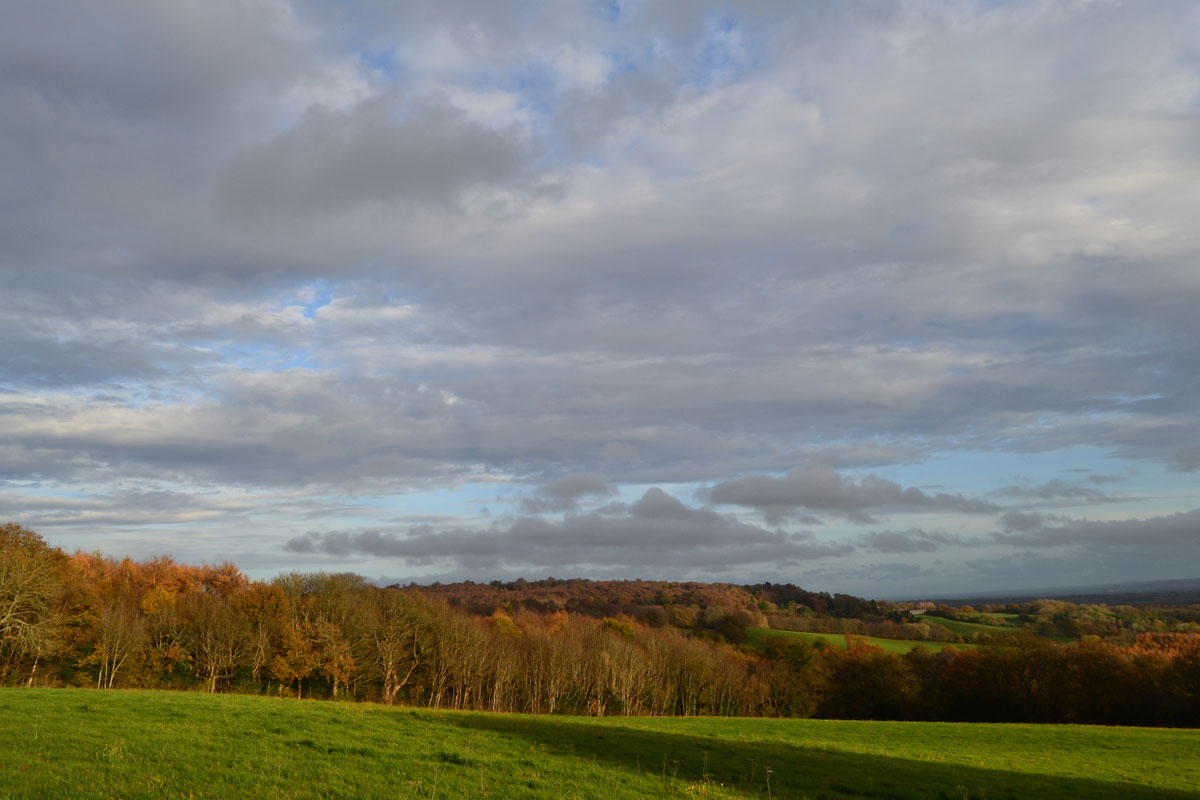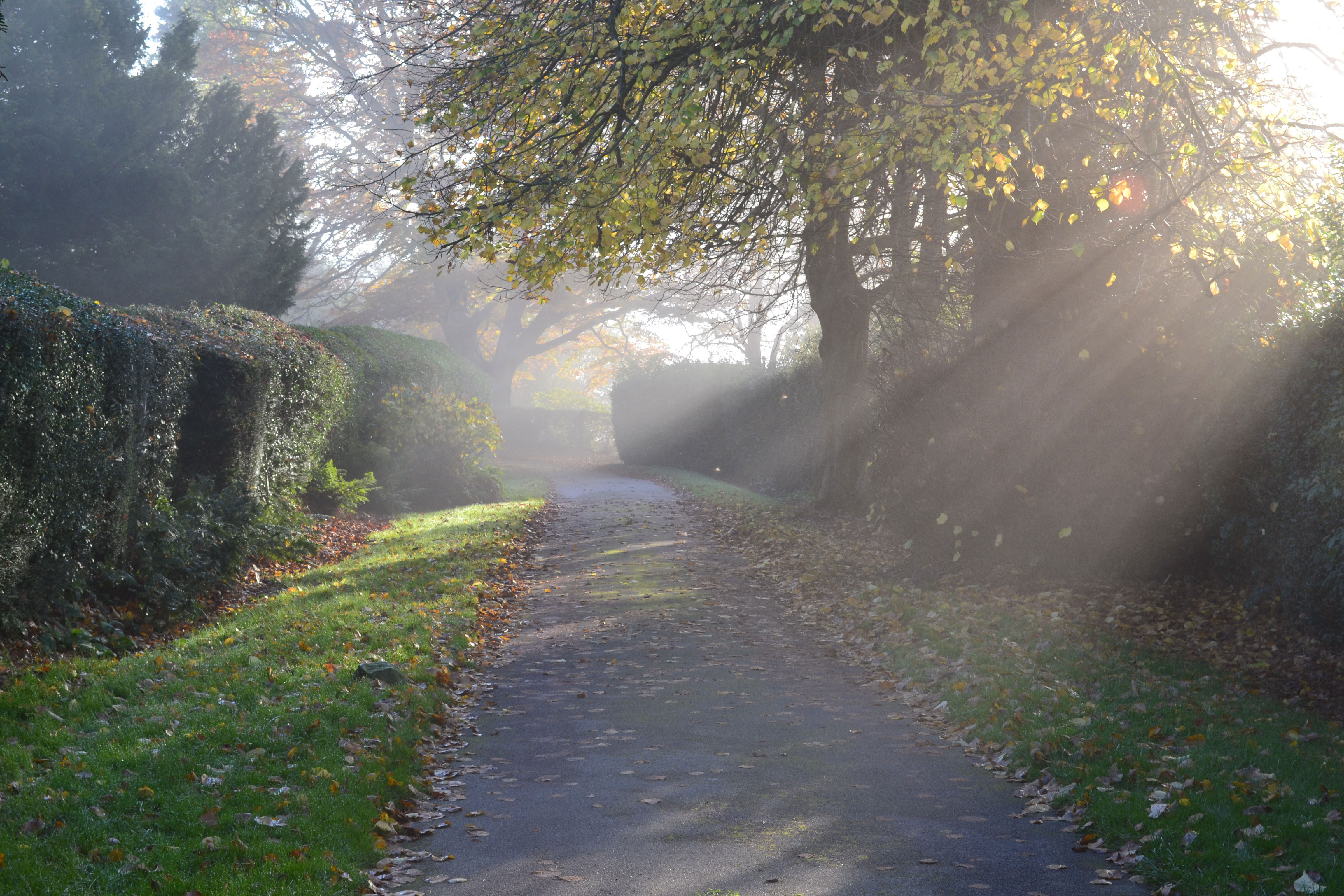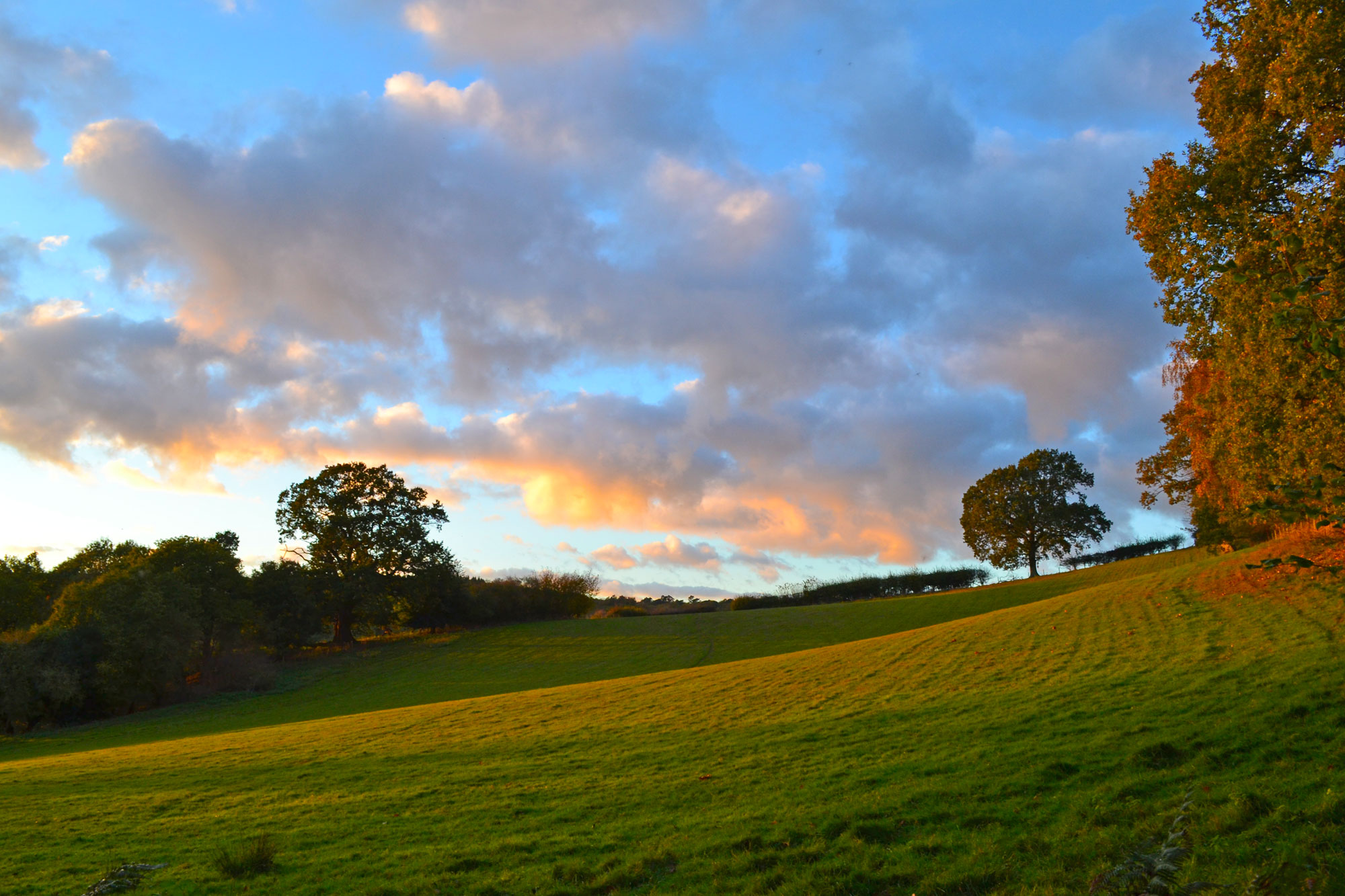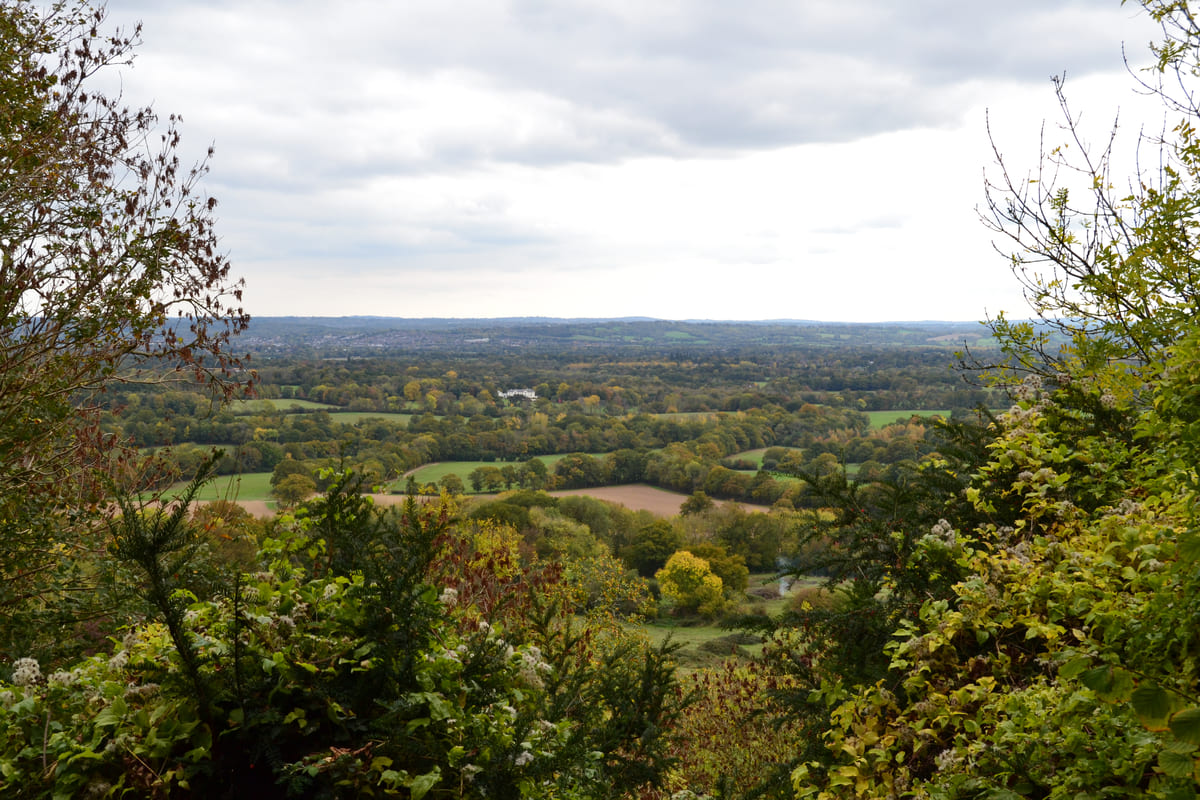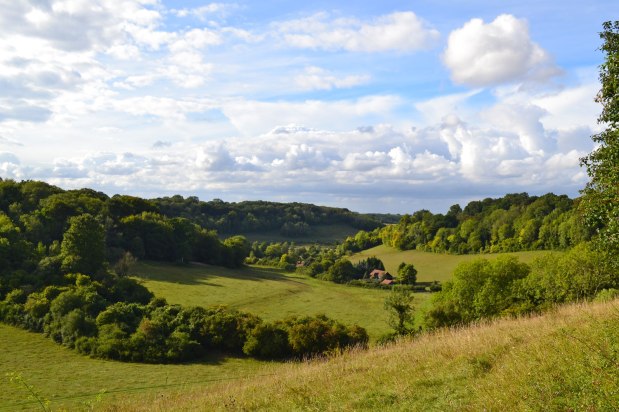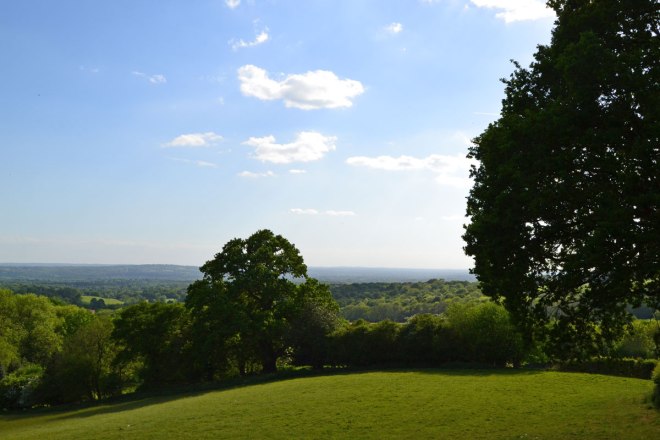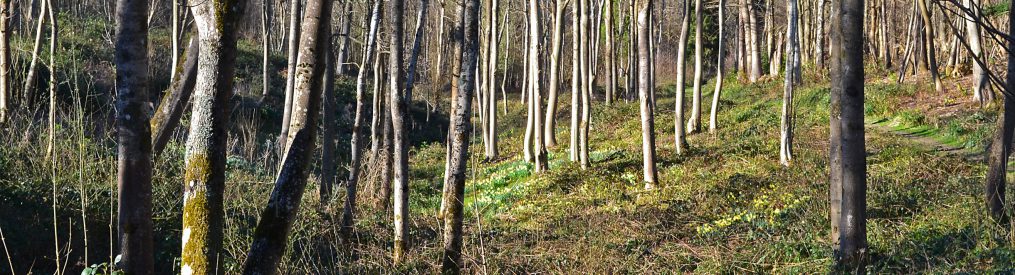
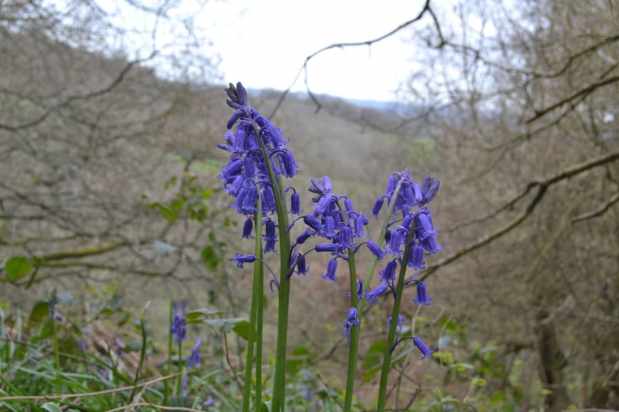
Autumn in these parts is spectacular. I know people talk in hushed tones about the colours of New England, Canada and Italy’s Apennines in the fall, but really the effect is pretty similar wherever there are trees! Once again, don’t overlook what’s on one’s doorstep in favour of an expensive and laborious trip. The November views of the Weald from Wilmot’s or Mariner’s Hill, or across the Darent Valley and the beech woods of Lullingstone are undeniably amazing. The ever-changing wide skies of Kent are a big factor in teasing out colours and optimising certain tones with the lower sun offering saturated reds, yellows and pinks. And greys, let’s not gloss over.
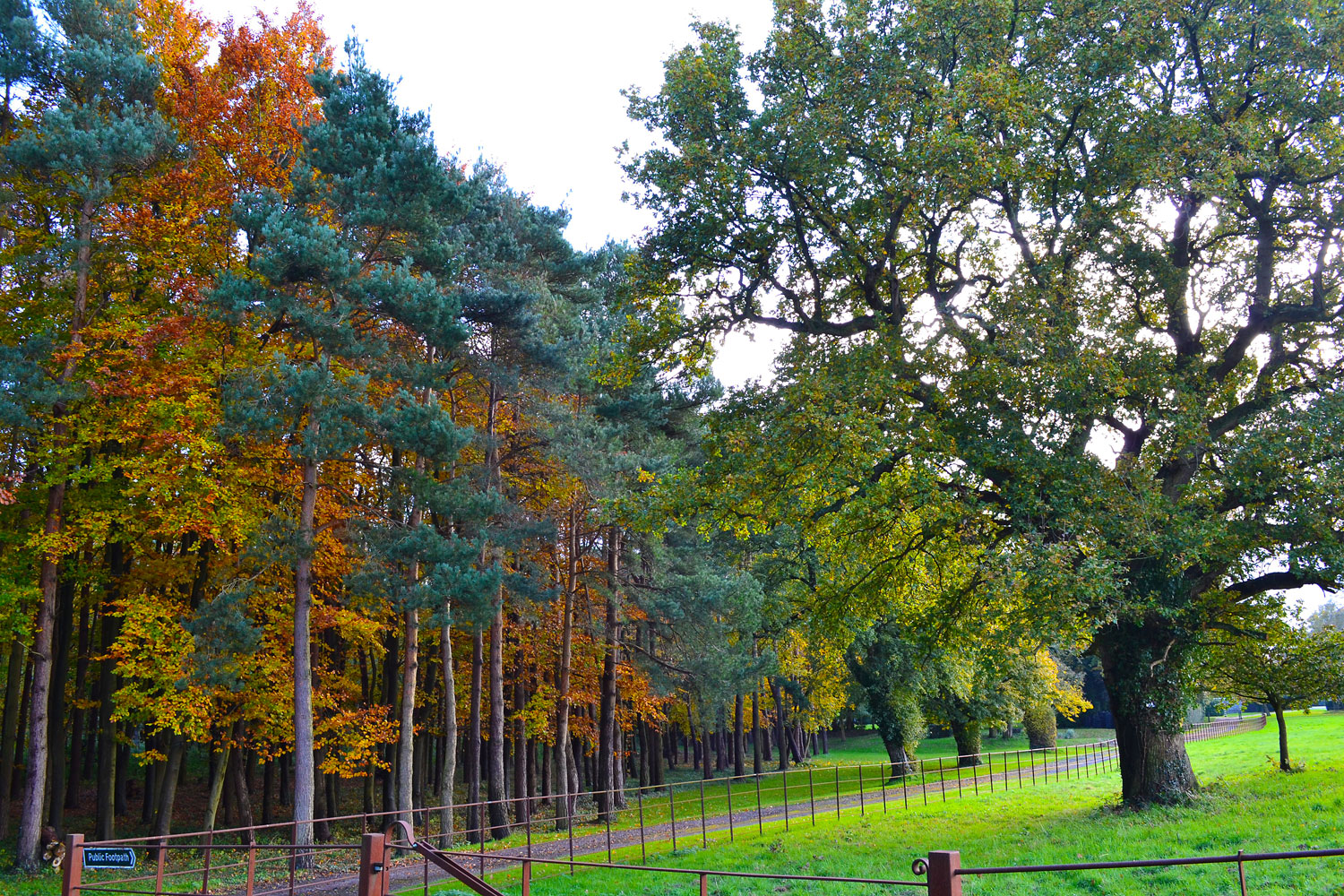
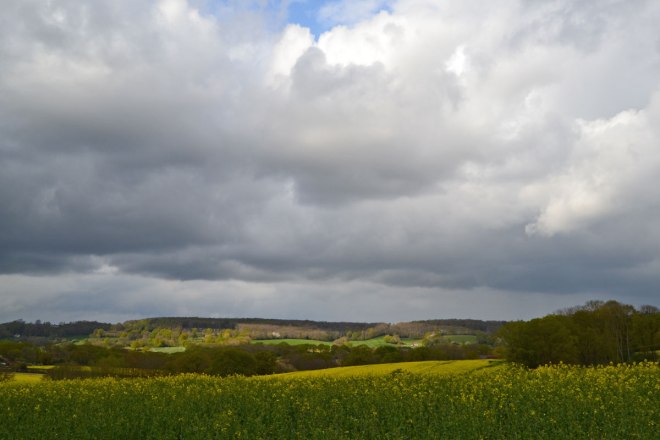
What’s surprising to me looking at the photos below is how green the countryside is in the Penshurst photo compared with those from elsewhere, yet it was taken on 1 November one week before this weekend’s Hosey walk, and a week after the trip to Shoreham represented here. Strange… could be sunshine and time of day I suppose.
I have lots of great autumn photos from over the past nine years of operating this website. But a selection from the past two weeks (mostly – the Downe and Ide Hill photos are from previous years) is enough to make the point – autumn is a terrific time for a hike on any of the routes at KWNL.
Mariners Hill view across the Weald on the Hosey walk
Sunbeams and silhouettes looking west from Mariner’s Hill on the Hosey/Westerham walks
Tower Hill, near Westerham, on the Hosey/Westerham walks
A view across the Darent Valley looking east from between Eynsford and Shoreham.
Infant Darent River from the Hosey path
Near Penshurst on the Chiddingstone walk
Mariners Hill
Country lane near Romney Street
View from Shoreham station bridge
Mariners Hill view again
Wilmot’s Hill, One Tree Hill figure of 8 walk, at dusk
Downe walk
A deer in Downe, autumn
Fackenden Down view
Start of Ide Hill walk. Autumn
Classic autumnal Kent view from Emmett’s Garden looking across Bough Beach to Chiddingstone and the Weald
Ide Hill field, dusk, autumn
Wilmot’s Hill, late October 2025. One Tree Hill – Ightham walks
Kent Walks Near London can offer several lovely, lonely little valleys with their own microclimates, special flora, shelter and that precious sense of seclusion. Here are four of the best on the walks here.
1 The Darent… but not as you know it
Tower Hill, Westerham viewed from the ‘secret‘ valley of the infant Darent stream
On the Hosey and Westerham walks I love the little south-north valley that winds its way from the sandstone ridge at Mariner’s Hill down to Westerham. It’s actually the valley of the River Darent just after it rises from a spring just behind the Greensand Ridge. I was delighted to realise this was where the Darent started, the stream is more associated with the chalk of the proper Darent Valley of Samuel Palmer fame – Shoreham, Otford and so on – not this obscure place near Chartwell.
Harebells in the shadow of Tower Hill, Hosey walk
The river is bounded by beech and conifer (with Tower Hill a dark bump just to the east) and initially runs through a delightful meadow of wild grasses, unseen from the path. It suddenly broadens into large shallow pools as it heads to Westerham before turning east and making its way to its ‘proper’ valley. Autumn colours here are wonderful.
2 Magpie Bottom – great name, great valley
Magpie Bottom viewed from Austin Spring on the Fackenden walk
This stunning little rift in the landscape features on the Fackenden Down, Otford/Romney Street/Shoreham and the Eastern Valleys walk in different guises. It is so secluded that only walkers know of it. And the few residents of the curious hamlet I think called Upper Austin Lodge on the OS map.
Magpie Bottom is a classic steep-sided chalk dry valley (similar to but more dramatic than the ones on the Downe, Polhill and Cudham walks) running north to south from behind the escarpment. These are caused by glacial meltwater long departed. The valley’s head at Great Wood and Eastdown just behind the chalk escarpment of the North Downs to Rose Cottage farm is a series of wonderful spots unreachable by car, but really it’s gorgeous all the way down past Romney Street, Round Hill, Upper Austin Lodge and Eynsford where it meets the Darent Valley. Possibly my favourite place on all the walks, and all the better for no longer having a golf course in it!
3 A verdant vale on the way to Ightham Mote
Broadhoath woods in the hidden valley behind Wilmots Hill, near Ightham Mote
My final Kent canyon (it’s not a canyon) features on the longer version of the Oldbury/Ightham Moat route and is mentioned as a route alternative on the One Tree Hill figure of eight walk (see the blue line on the Google map at the KWNL page). So on the One Tree Hill routes it’s a diversion, a short cut that you’ll have to check your maps to include. But on the longer Oldbury walk it’s part of the deal. What shall we call it? It’s round the back of Ightham Mote and passes through a wood called Broadhoath behind Wilmot Hill (which has some of the greatest views in Kent). It has a lively little stream that rises just behind the Greensand Ridge, a terrific pond with viewing platform and interesting flora as it descends west to east to Ightham Mote itself, passing a shed built to house early 20th century hop pickers (you’d think hop pickers were in fact horses judging by the design of the housing – the landowners obviously weren’t too bothered by other people’s comfort levels). Like the other little valleys it’s good for birds: marsh tit and bullfinch have been seen here. It’s another totally secret dip, accessible only to walkers, that’s like an entry to another realm; a world away, but its paths are only 55 minutes from Sydenham.
It’s a great time of year for walking, as the visitor figures at Kent Walks Near London are showing. Wildflowers, birdsong, the sound of the breeze in the foliage, dry conditions and warmth are all balm for the soul – and how needed in these perplexing times.
It’s been great to bump into walkers using the website lately; generally all have been on the correct route and enjoying themselves! Only one couple were off piste, and this was because they had been following Bromley council’s signs for the Cudham circular rather than read the pdf they were holding of the Cudham Chalk Paths walk.
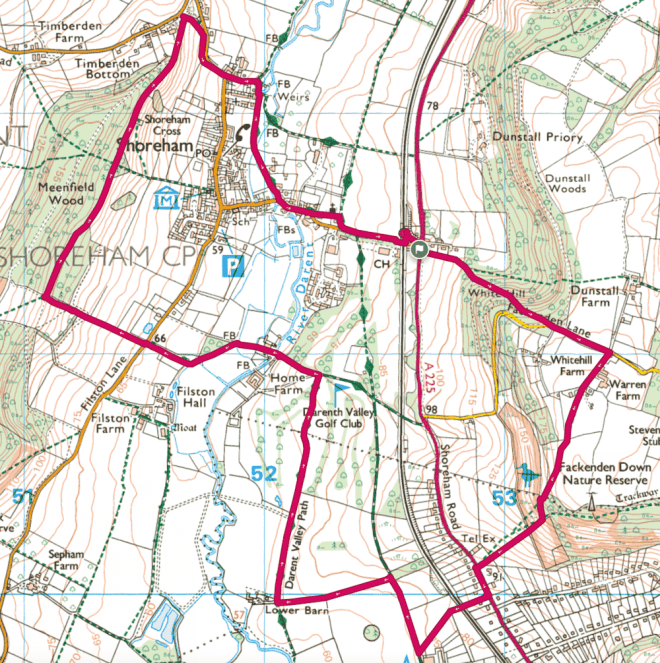
It’s been mentioned to me lately that it is still quite easy to take the wrong path at times. I really recommend using the GPX on the smartphone with takes you to my routes at Ordnance Survey or AllTrails. Here’s my Fackenden Down route at Ordnance Survey maps (actually done in reverse, but it doesn’t matter as the dot will show you where you are against the route whichever way round you’re doing the walk). If it all sounds a bit technical and you don’t want to be marching around peering at your phone, don’t worry – just take your time and read the instructions ahead so you’re not stopping every time there’s a side path and wondering if you should go down it. And if it does go wrong, enjoy that too… the countryside will still be lovely and all will come right in the end. It’s Kent, not the Amazon.
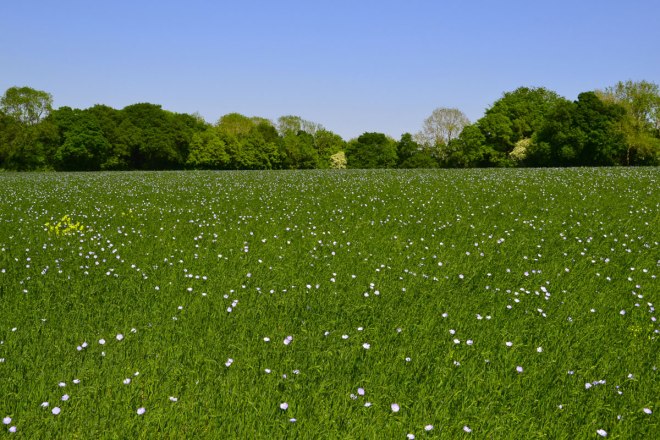
Flax (linum) in a field in May, on the Fackenden Down route (walk 19), May 2025
A lot of KWNL users print off the PDF and go from there, but be warned: the PDFs are space-limited so I have to abbreviate at times. I think it’s best to use a combination of GPX map, the website on your phone and the pdf or just use a paper OS map just to check out the route in advance. Perhaps one day I’ll invent a special talking SatNav for KWNL so I can say ‘turn right, climb over the stile’ in real time. Actually, no; who wants that?
Contact me with route complications/updates
I really would appreciate people telling me when I need to update information, however. I can’t cover all the walks all the time so when things change – as they did on the Downe and Cudham walks in the past couple of years – it’d be great to get a heads up! Also, please send in bird/wildlife or plant observations… all welcome.
My best email is ammcculloch49@gmail.com for comms. I don’t bother with Facebook or Instagram much anymore (maybe I should try harder with the latter) – there’s just too much of all that and I consider social media to be run by awful people determined to do bad things generally. I deleted Twitter and I’m now on Bluesky if that’s any good to anyone (amackentwalks.bsky.social) but please excuse any tangential rantings you come across – I have other interests apart from walking (saxophone, Tottenham Hotspur etc) so it all ends up in one place.
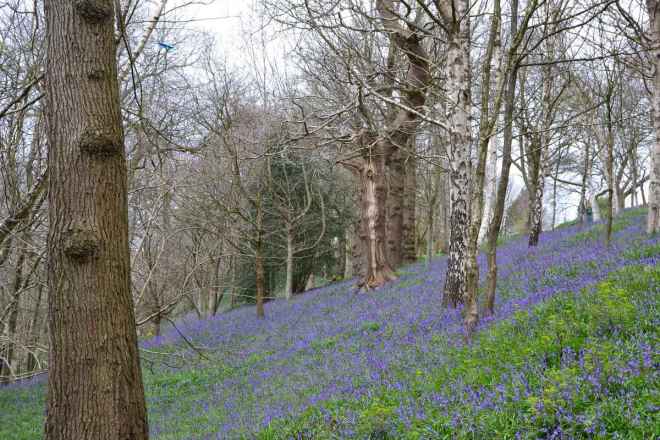
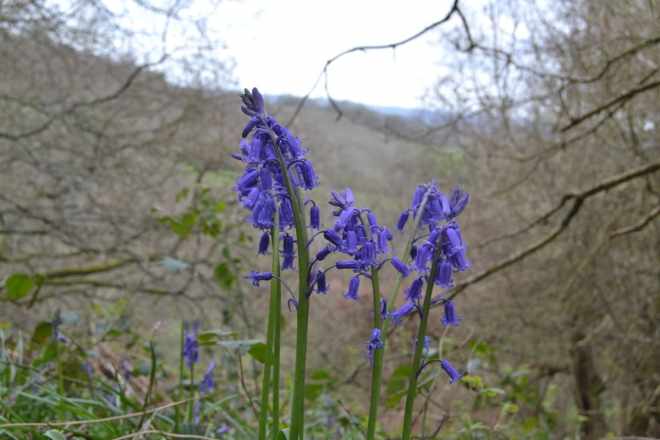
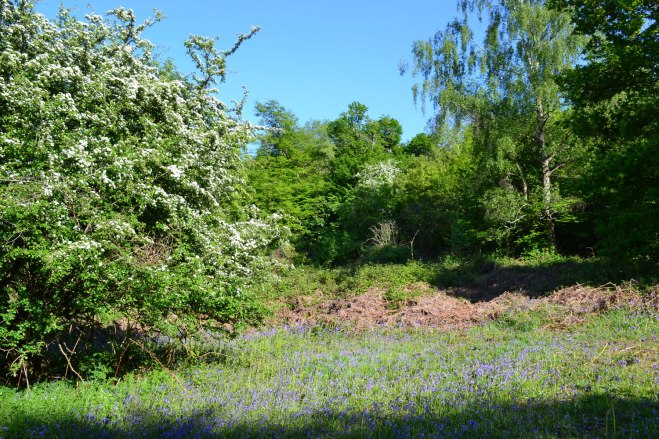
The season is now over. It was as beautiful as ever at its peak, but this year the dry weather and maybe the cold wind, were not conducive to the bloom’s longevity. Last weekend at Ide Hill and Emmetts Garden the bluebells were gorgeous but already well on the wane. In fact at Ide Hill, brambles have taken over some of the areas where once bluebells thrived. Some of my favourites this year were at the top of Wilmot’s Hill near Ightham Mote; but what has struck me in recent weeks is how pretty bluebells are when mingled with other flowers – notably cuckoo flowers, red campion and stitchwort – at the foot of hedgerows. The Bough Beech walk has some of my favourite examples, Underriver too. Oh yes, and below Polhill Bank on the path to Sepham Farm, where you are likely to be serenaded by yellowhammers (that’s a bird by the way, not a construction tool).
New Year’s Wood, Cudham
Emmett Gardens
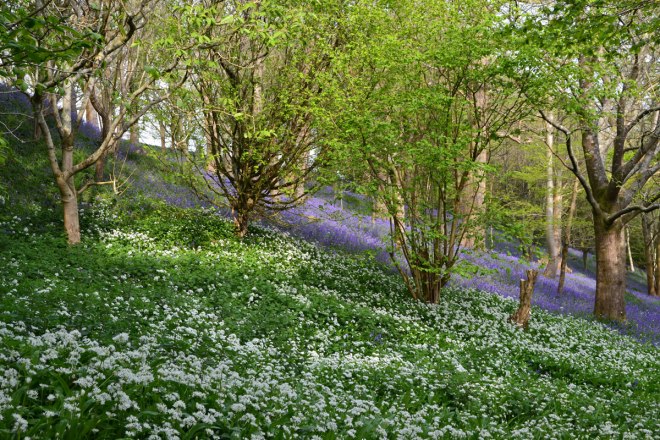
Wild garlic and bluebells, Emmett
Emmett Gardens
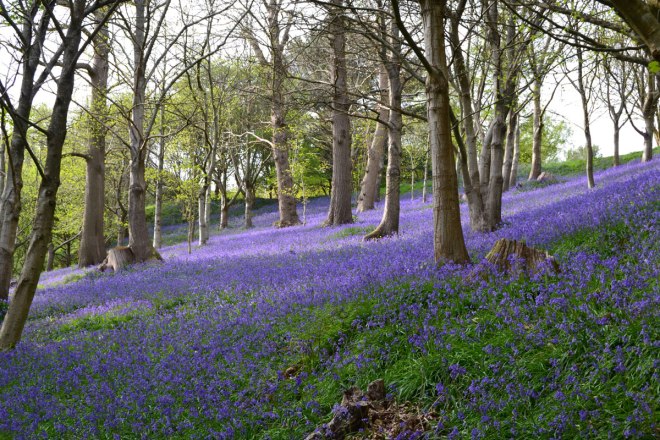
Scord Wood, near Ide Hill
Ide Hill 2025
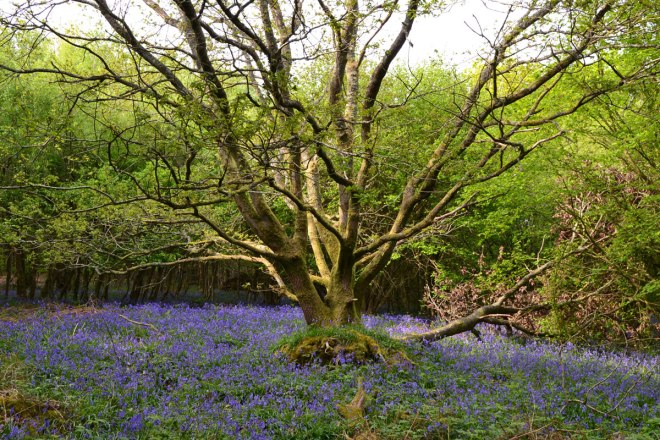
Wilmott Hill bluebells
Cuckoo flowers and bluebells near Bore Place, Bough Beech
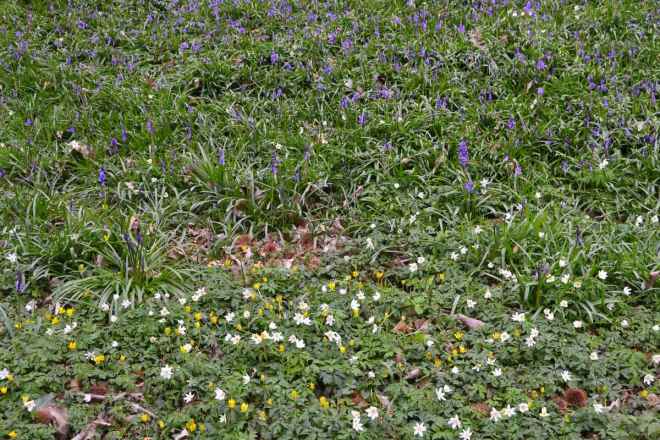
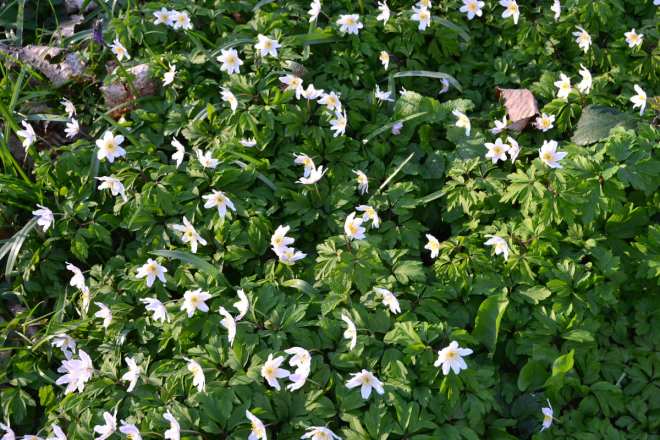
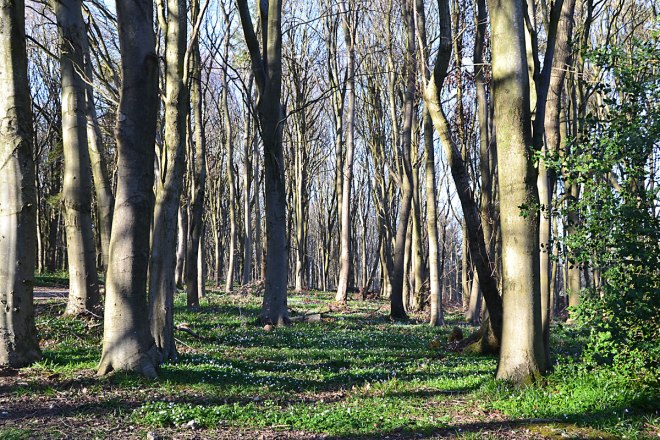
Wood anemones and early bluebells, Andrew’s Wood, near Shoreham
Lullingstone
So, to the winner and runners-up of the annual Kent Walks Near London bluebell competition:
Last year’s winner, the Blueberry Lane meadow, at Knockholt was obviously utterly stunning but the rules state that the same location can’t win the following year. I actually visited New Year’s Wood very early in the bluebell season, before they’d quite found their colour, but the seas of young flowers in the late afternoon sunlight were truly beguiling in that quiet, mysterious wood.
Please contact me with any omissions in my not particularly extensive bluebell research. The season only lasts a couple of weeks so it’s not always possible to get around all the walks to view them – I didn’t go to High Elms, Oldbury, Petts Wood, Meenfield Wood (recently scarred by timber work) or Lullingstone over the past month so no idea how good they were.
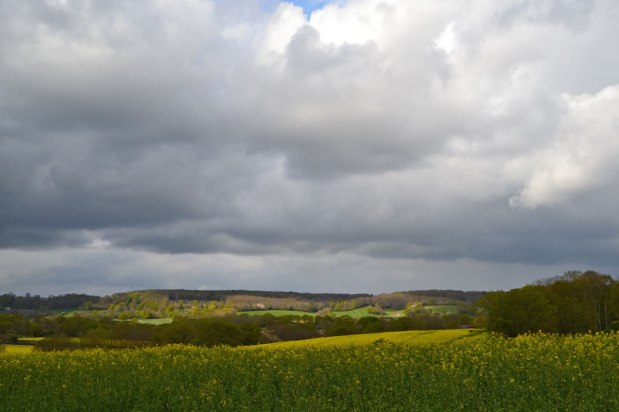
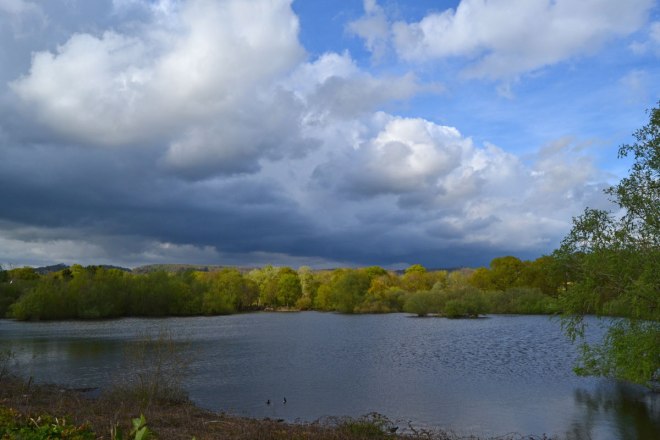
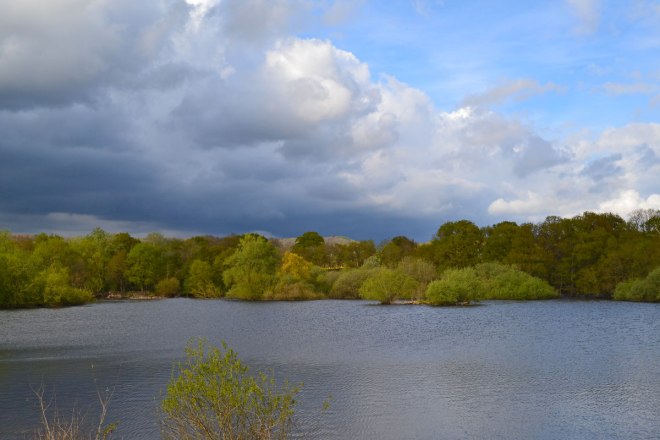
The little Bough Beech walk is one of those quiet ones: it doesn’t seem much but it creeps up on you and you realise you miss it if you haven’t done it for a while. The vast lake (described here) is a major spectacle at the beginning and end of the walk but doesn’t define the route; Bore Place, a delightfully hidden organic teaching farm and event venue, does. The walk is only two and a half miles (handy if you have a bad foot, as I do) to which you can add an hour‘s pop-in at the lovely nature reserve at the end, where there’s usually news of an interesting oiseaux or two keeping the friendly birders in the hide on their toes. Cuckoos (the star of this particular day), barn owls, kingfishers, migrating osprey are regularly seen here. On my recent walk here, as the fine pre-Easter weather started to break, interesting cloudscapes and shafts of sun reflected from the lake surface, while to the north the Greensand Ridge at Ide Hill and Goathurst Common were swept by very localised squalls. I was struck by how beautiful bluebells are when among cuckoo flowers; that was about as profound a thought I could muster while walking – which is how it should be. Back at home it was amazing to watch the simply incredible US Masters finale, though the football results did not bring me any comparable joy.
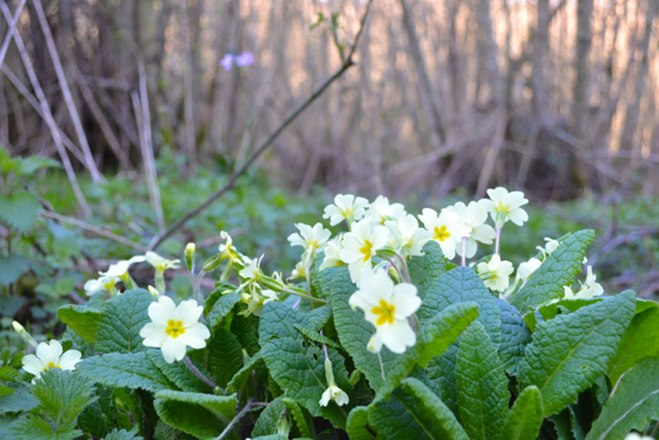
To the accompanying sounds of chiffchaffs, blackcaps, wrens, tits, dunnocks and robins, I trekked the Polhill/Pluto route from Andrews Wood car park on Shackland Road. Suddenly there’s a sheen of green in the tree canopies; in fact there are canopies – not just stark branches – the colour scheme has seamlessly moved on from the gentle grey/browns of winter. Below the greening trees wood anemones and early bluebells are mixing with celandine, early cowslips, primroses and the odd cuckoo flower to add pixels of vibrant hues. I was delighted to spot a long, thin and beautifully patterned grass snake after hearing leaves rustling under a bush, but I couldn’t bring the camera to bear in time: damn autofocus! Slow worms were plentiful though, but you have to know where to look and avoid disturbing them. Buzzards took delight in the clear sky and subtle breezes. A fantastic walk.
View across the mouth of the Darent Valley from Polhill in early April
The greening of Meenfield Wood
Wood anemones and bluebells, Andrew’s Wood
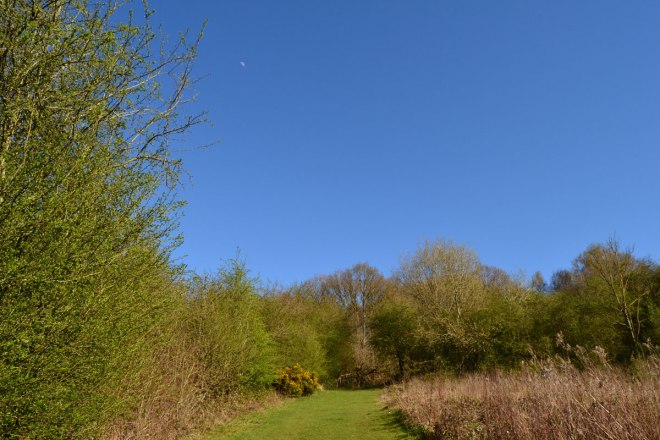
Just blue sky and fresh foliage, Meenfield Wood
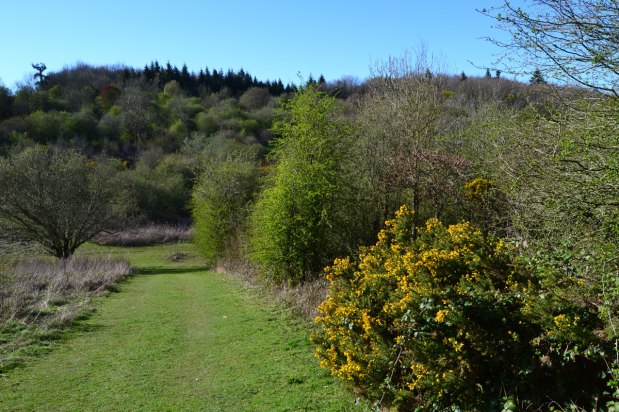
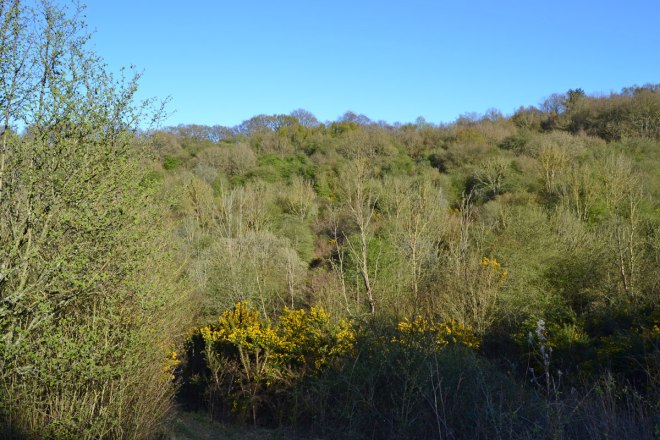
Gorse and early foliage across the valley from Meenfield Wood to Andrew’s Wood
The sandstone outcrops in and around Tunbridge Wells on the Kent High Weald are little remarked on yet are the most climbed rock formations in the country, given their proximity to London. A great walk can be done from Tunbridge Wells station out past Wellington Rocks on the common, through Happy Valley as far as High Rocks, taking in all of these wonderful, alien-looking formations that appear strangely out of place within the smooth contours of south-east England. Perhaps come back via Rusthall Common, and its Toad Rock. A bit further away, at Groombridge are Harrison’s Rocks, perhaps the most striking of all and easily reached from Tunbridge Wells by taking the Spa Valley railway.
The sandstone here is Ardingly sandstone – a different type of rock to the greensand (glaucite) further north on the ridge south of Sevenoaks (see Ide Hill, Underriver, Oldbury and One Tree Hill walks). There are also outcrops, though much smaller, on the Hever and Chiddingstone walks. Our walk last week, in delightful weather (sadly not available this weekend) took in the Cheesewring rocks south of Rusthall Common.
The origins of these rocks, which gained their characteristic cracks during the ice ages, lie in sediment of the Wealden Lake. This covered much of what is now SE England and northern France 145 million years ago. I’ll add a walk at some point to cover these superb spots.
Meanwhile, grey clouds returned this Sunday but it was great to see the fantastic magnolias in full bloom in Scords Wood, as it melds into Emmetts Garden on the Ide Hill walk. The distant fields and even Bough Beech reservoir appeared white in the odd light. I’ve never seen that effect before. It was unsettling. But still, a lovely walk.
(Photographs: Cheeswringer, Tunbridge Wells; magnolia at Emmetts Garden. Adam McCulloch, iphone images so not the best!)
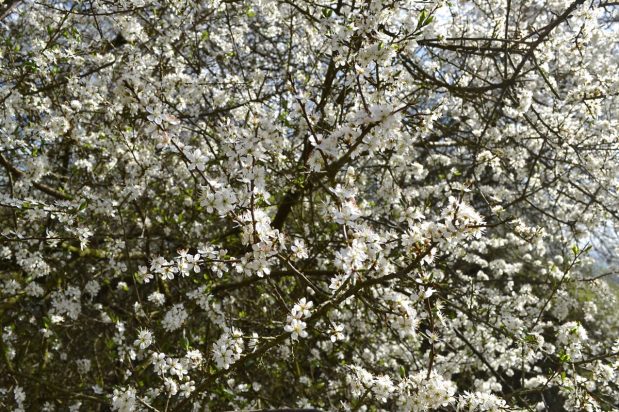
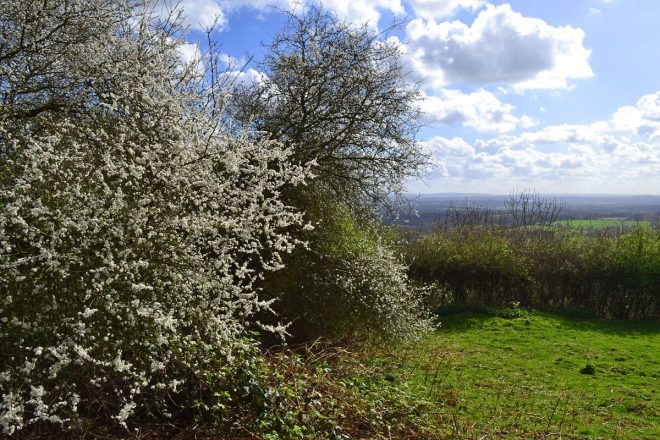
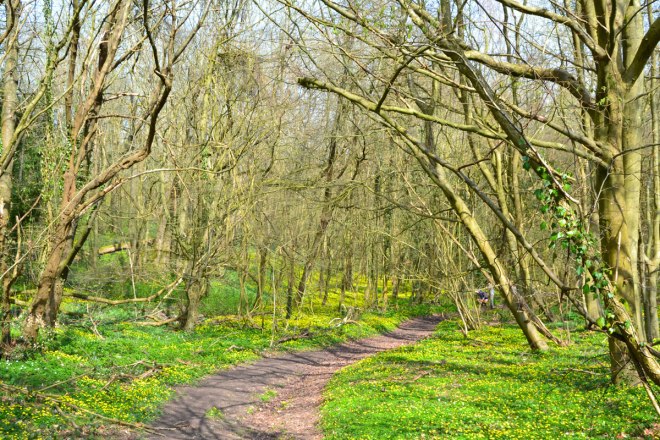
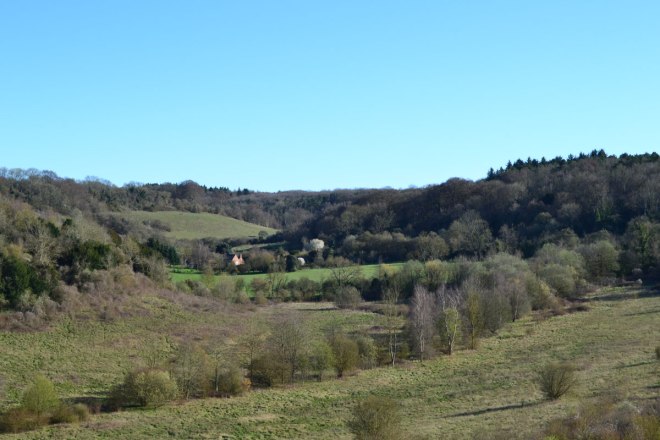
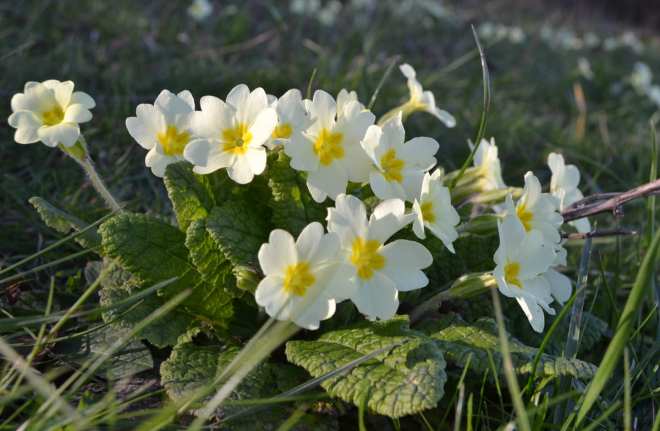
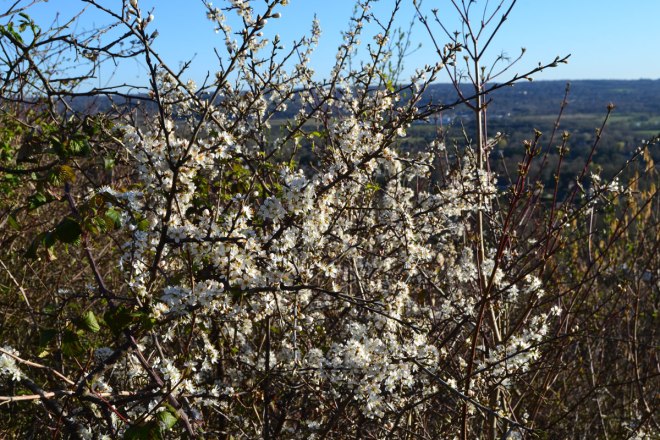
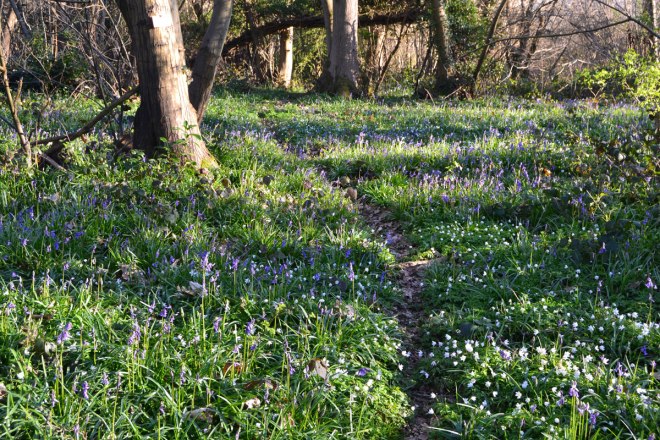
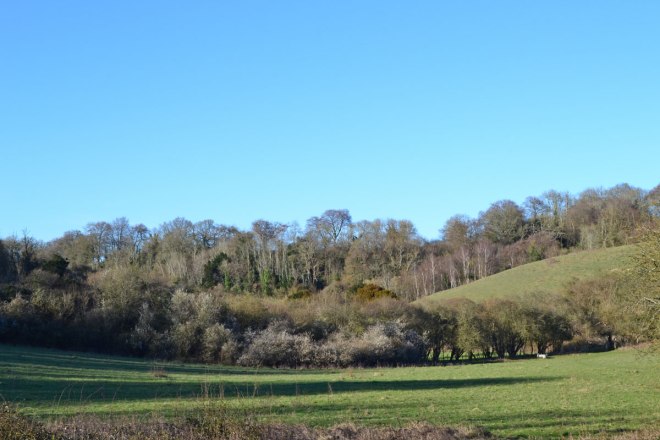
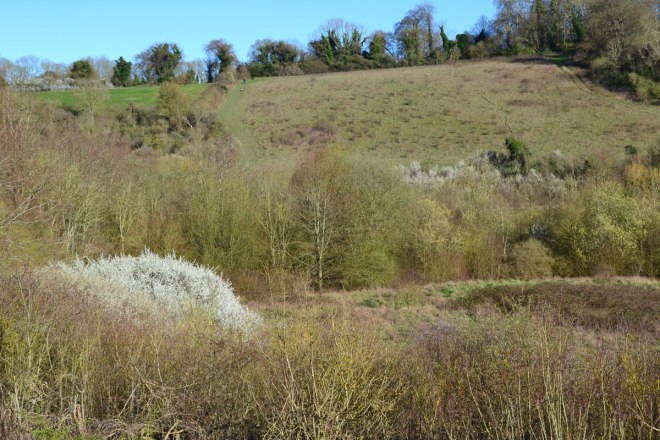
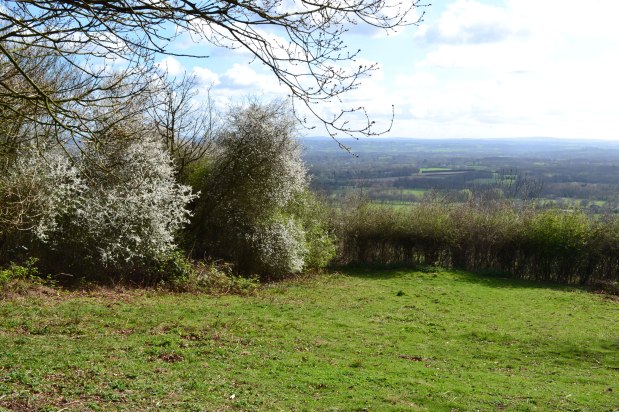
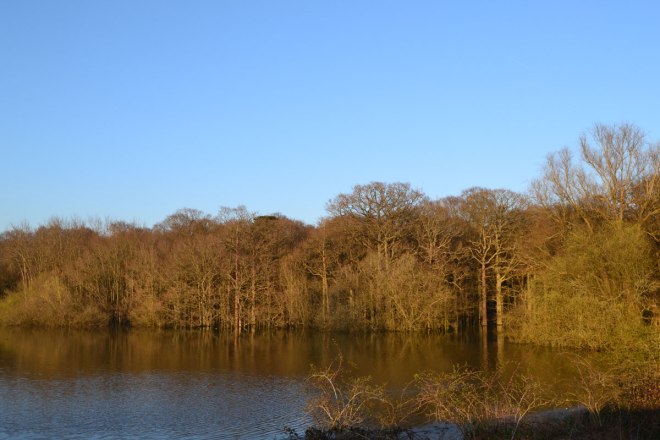
Now that there’s some prolonged sunshine, some of the humungous amounts of mud from February are beginning to dry up. ‘Some‘ being the operative word. Still, let’s welcome the bright weather, which is set to continue this weekend. Saturday could be a bumper day for Kent Walks near London but wellies are definitely still needed – because shaded mud patches will not have dried as yet, not even close. Early spring can be an odd time of year – the trees still appear brown and grey from a distance, though close-up you can see buds. Soon the blackthorn will flower – that’s when spring has sprung for me. Early March in good weather is a very particular time of year – it’s as if spring caught the natural world asleep, and it takes a little time to wake up. But already there’s more birdsong and a bumblebee or two getting busy. I particularly like the Ide Hill, One Tree Hill, Bough Beech and Hever walks at this time of year, the south-facing slope of the Greensand Ridge focuses the warmth and is protected from any cold easterly or northerly winds. You can’t help but feel a bit of optimism, despite you know, everything. The pictures below are from the Bough Beech, Petts Wood, Chevening, Ide Hill and One Tree Hill routes. I love the blackthorn. The featured picture for this post is the woods at Hever in late March. There’s a sheen of primrose and celandine on the woodland floor; I really like the photograph, I can remember every detail of that day.
Flooded woods, Bough Beech, March
March view over Brasted and Sundridge
Blackthorn blossom on One Tree Hill, Sevenoaks, Kent
A cursory glance at this website may suggest that the north-west Kent walks are permanently sunny. Or snowy. Or bright and breezy. My choice of photographs suggest the routes exist in a world rich in colour, and one must only stride out purposefully with map in hand and trainers on foot to have a great time. Alas, it is not so. Walkers are squelching through giant puddles, inching their way around horrific mud patches and sliding back down liquid hillsides. They are arriving back at home dishevelled, slightly disorientated and in need of a good soak. As I write in mid-February, during one of the cloudiest and wettest winters I can recall, the truth is that unless your need is great, it might be better to abandon the notion of walking in the countryside for the time being. One friend terminated his walk at Westerham after a few hundred yards last week, while another KWNL reader informs me that Polhill and Meenfield woods (west of Shoreham) are impassable. Polhill is simply too steep to bear most humans’ weight in these slippery conditions, while Meenfield woods’ tracks are seas of horrific mud made worse by bulldozers and diggers being used for forestry work there (thinning some of the trees).
Path turned to mud, amid snow and frost at One Tree Hill, February 2021. I’ve never seen anything like this scene before or after
Has anywhere survived the mud?
If you must walk, I suggest: Knole Park in Sevenoaks, where there are solid, firm stone and tarmac paths; Lullingstone, where the chalk downs spirit away a lot of the surface water into aquifers (but avoid the busy, ridiculously muddy path alongside the Darent river); and perhaps High Elms, but don’t blame me if that proves a morass too. Avoid the Greensand Way walks, such as One Tree Hill, Hosey Common, Ide Hill and Underriver. Even the trusty old Downe walk, which once was dependable in all conditions, is in an appalling state now, partly because the ‘new’, hemmed-in paths around the children’s farm compress the footfall.
At last, sharp sunny days with frost. Walkers in the North Downs were rewarded at the weekend by a cobalt sky, heavy frost, colourful sunsets and perhaps the remnants of snow from the previous Wednesday night – it was hard to tell where the frost stopped and the snow started. I walked at Beckenham Place Park on Saturday morning before taking the Fackenden Down walk in the afternoon. As soon as we got a bit higher in the hills, the conditions became increasingly picturesque. Magpie Bottom, a hollow that faces north, was a picture, but unfortunately my camera battery had died and we resorted to phone camera images. The last time I saw similar conditions was in January 2022 but on that occasion the temperature must have been even lower because the frost remained glued to the trees even in mid afternoon whereas on Saturday there was some kind of thaw happening where the sun was felt. A sublime, memorable walk.
Please contact me at ammcculloch49@gmail.com with comments about the walks.
Pictured below: sunset from the top of Fackenden Down; moonshine at Fackendon Down; Adam (the author) and Bonny (Photo by S. Hart); looking east into Magpie Bottom; looking along the little valley north from Dunstall Farm; Dunstall Farm; ice on Beckenham Place Park’s lake; swimmers in the lake; looking east along the lake; the lake amid frosty reedbeds