Golden light at the end of a grey day

Golden light at the end of a grey day

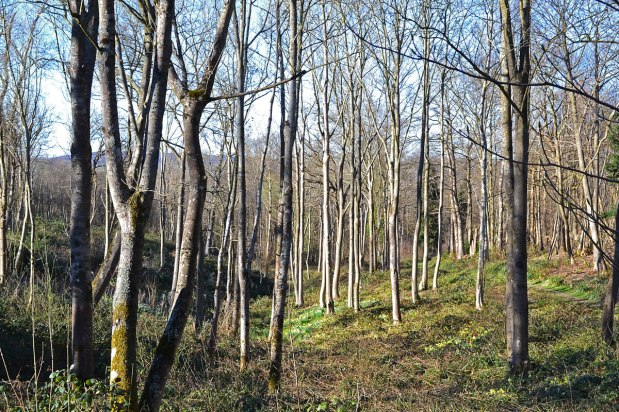
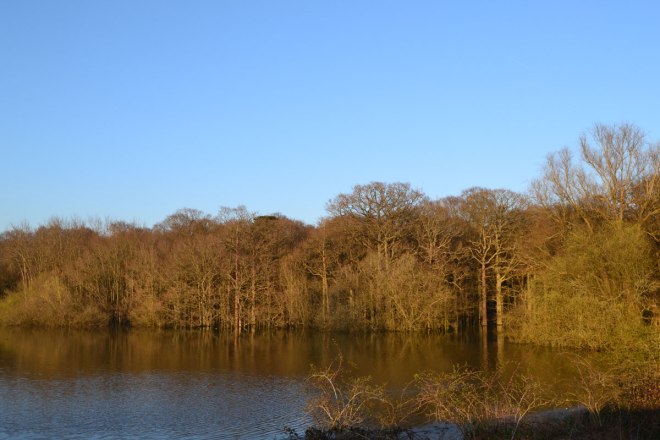
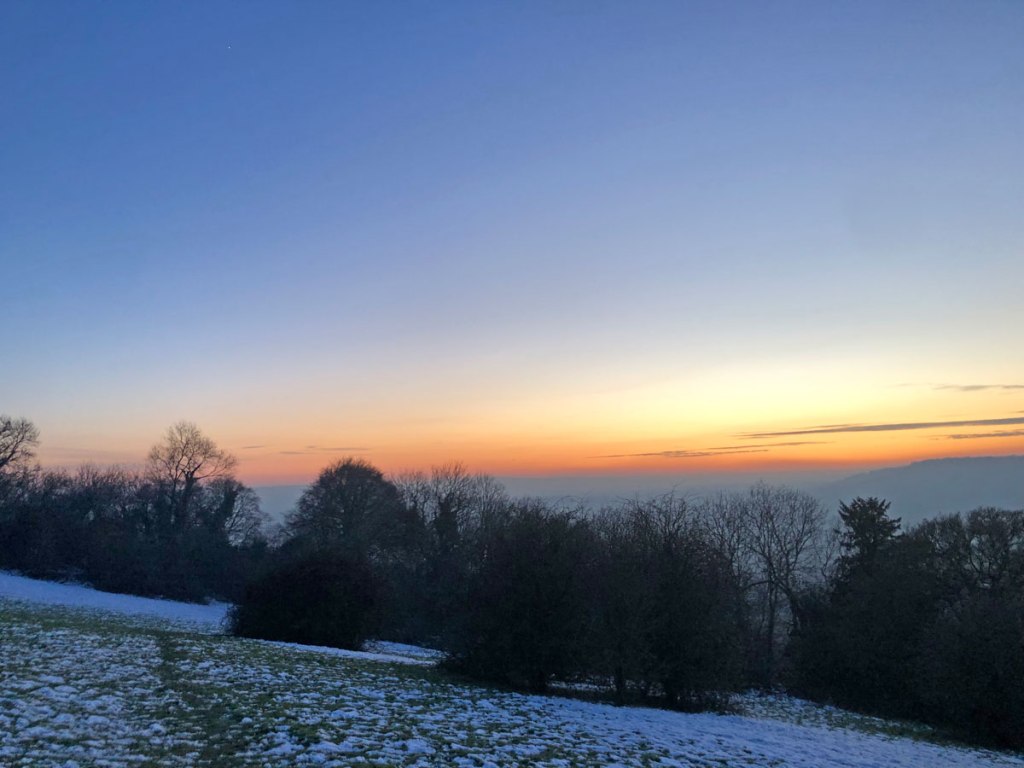
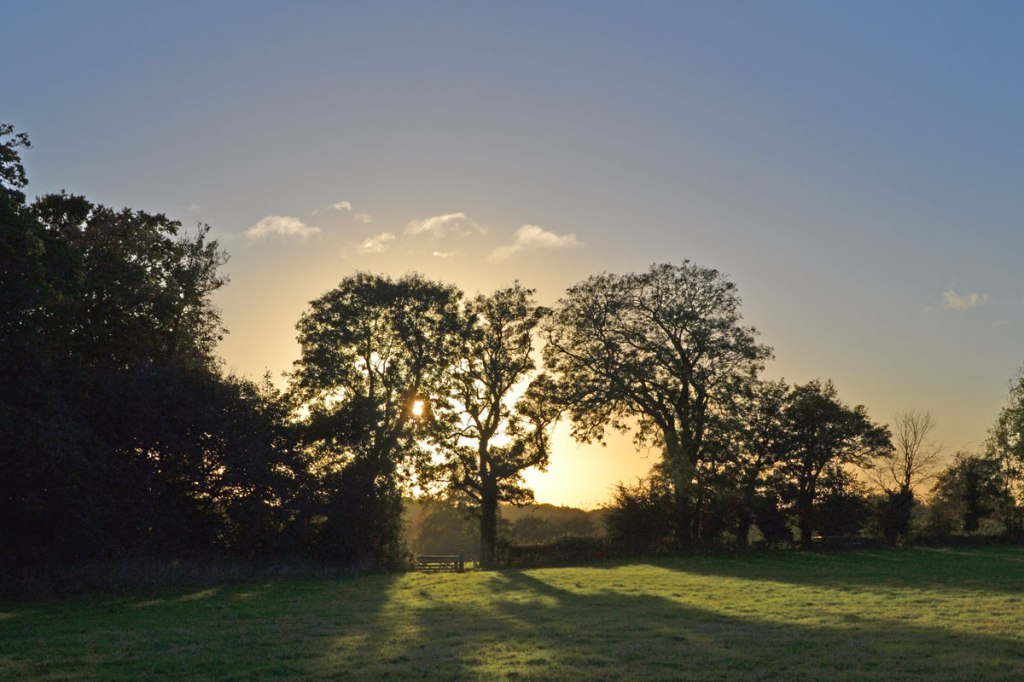
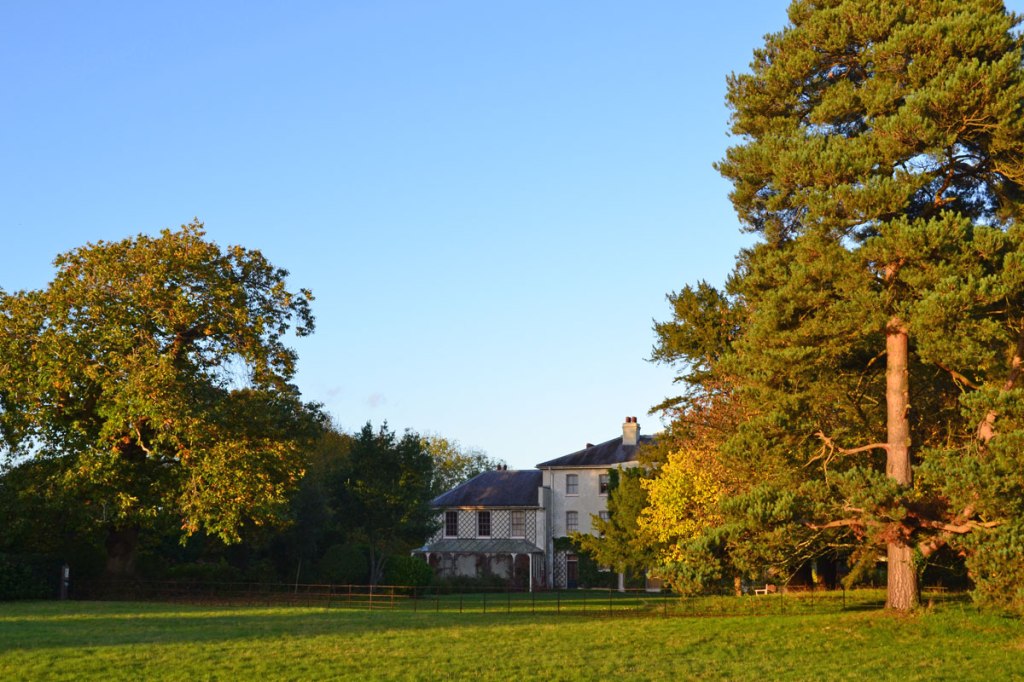
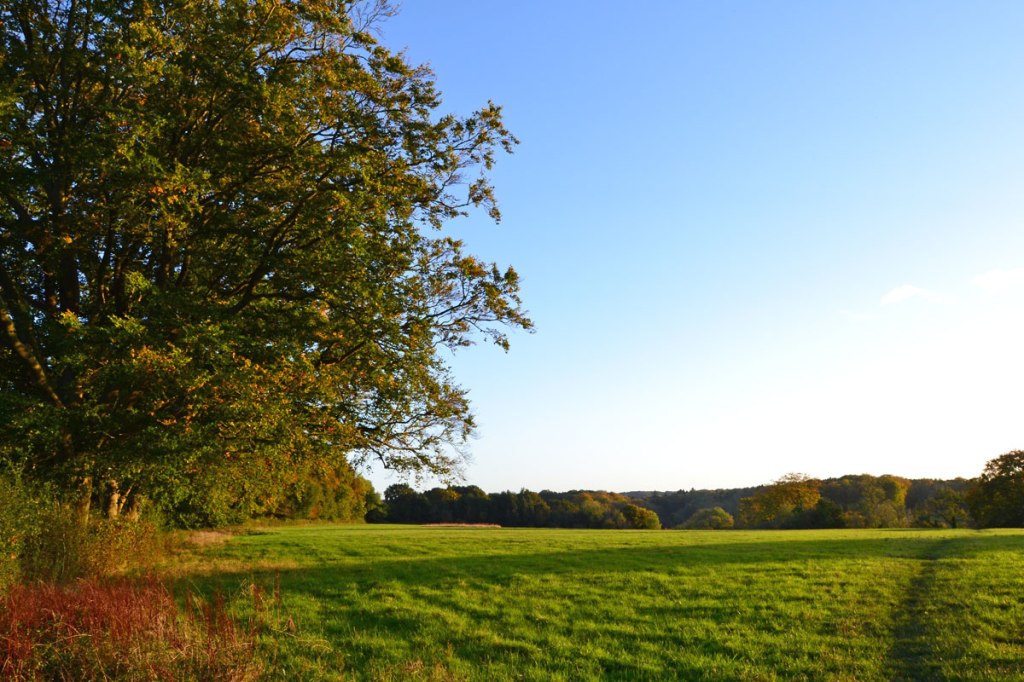
It’s been a bit of a classic autumn so far; lots of rain but also some great sunny windows of walking opportunity. If you’re keen on getting out for a walk but prefer to stay dry it means checking your weather apps and staying agile. Lately these windows have come at the end of the day and have rewarded those able to dash off on a Kent saunter late in the day with some brilliant light. On Saturday, the Downe walk at 5pm was a winner. As well as a beautiful sky, saturated colours and a sense of perfect tranquility, there were interesting birds around: kestrel, sparrowhawk, three yellowhammers, redwing and mistle thrush. Migrations are happening. Some of these birds may have travelled from Scandinavia, from eastern Europe, Yorkshire or a few miles over the border of Surrey. We’ll never know.

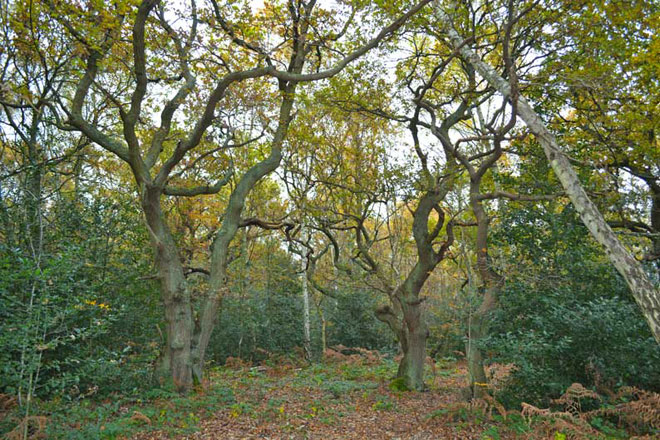
Rain set in overnight and for much of the next day. I’m drawn to wooded areas for walk in bad weather and few woodlands are better than Petts Wood, maintained by the National Trust. Scots pines, chestnut groves, heather glades, oak, ash, and sycamore surround a labyrinth of paths with a railway line and a couple of arable fields and streams helping navigation in the middle of the wood. A great place.

Vibrant colour in Shoreham’s eastern valleys

Vibrant colour in Shoreham’s eastern valleys

Great to see so many people enjoying walks this weekend, a fair few using the KWNL routes and following the GPX from the look of the WordPress dashboard. I’ve helped a few out with directions from time to time – people are always tickled pink when they realise they’re talking to the actual bloke who wrote this site.

Today I walked the ‘mysterious eastern valleys of Shoreham‘ route. The path by the field is very overgrown. I was prepared for it so brought secateurs. Despite my snipping that path will still be daunting and slow going. I advise a diversion: check out the map on the route’s web page to see it – it involves walking down to Shoreham church from the station then taking the path heading north and eventually crossing the railway line and the A225 before heading east, steeply uphill and joining at Point 3. It’s not difficult, honest.

And it’s worth it. Right now this is a brilliant route. From the hamlet at Austin Lodge up to Romney Street the wildflowers are fantastic: wild marjoram and scabious; mauves, lilacs and purples with knapweed, devil’s bit scabious, the yellows of trefoil and ragwort, the deep pink of rosebay willow creating a sheen of vibrant colour. I walked with clouds of meadow brown and gatekeeper butterfiles with the odd brimstone and chalk hill blue thrown in. As ever in summer, the Magpie Bottom valley – between Knatt’s valley and the Darent valley – was humid, still and quiet. A little owl called, buzzards soared. I decided to extend the walk past Romney Street to Magpie Bottom and over Fackenden Down, bringing me out at Shoreham station just in time for the 5:38pm Blackfriars service. Perfecto.

Suddenly summer

Suddenly summer

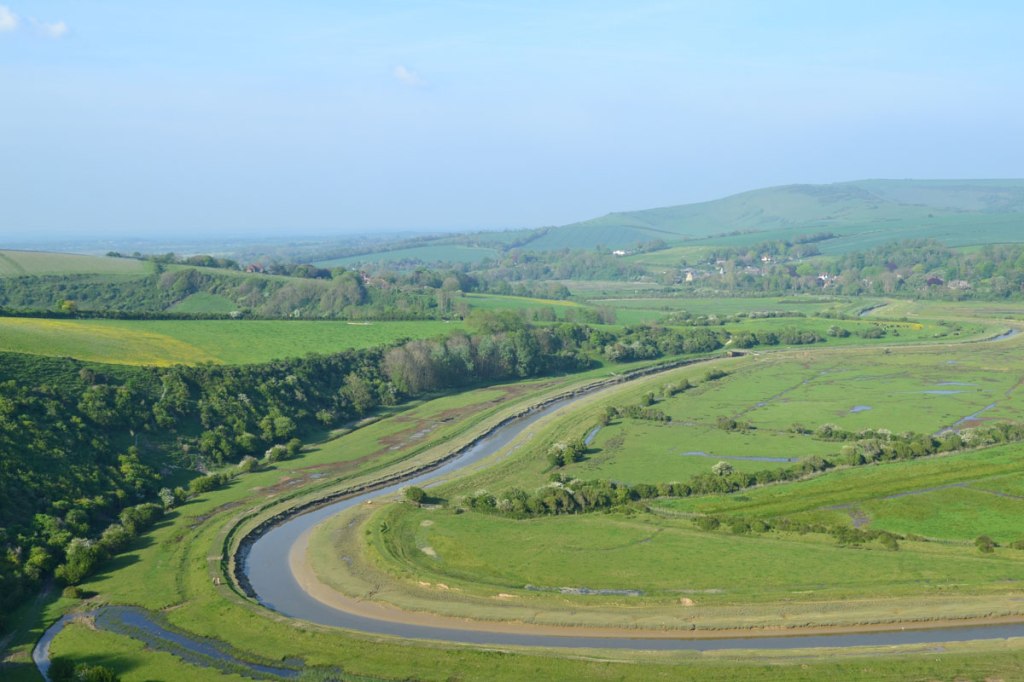
The unexpected arrival of a summer that seemed so distant on the bank holiday and the even more unexpected appearance of the aurora borealis in the skies of south-east England (has this ever happened to such an extent before?), were the backdrop to full-on weekend of walking for yours truly. Family wanted a walk in the Seven Sisters country park, East Sussex. My offer of the Hever walk, great in May, was turned down. So we headed down the merry old B2026, A26 and A27 turning off towards Afriston soon after Lewes. We improvised a walk starting in the downs above the Cuckmere valley at High and Over, then steeply down to the river to the country park visitors centre. From here, we decided to walk through Westdean (beautiful!) and Friston Forest then back to the Cuckmere via New Bridge and steeply up High and Over (though an inquisitive herd of goats). About seven miles.

Pictured: view of Cuckmere river from High and Over; the Cuckmere river nears the sea; looking towards Friston Forest from High and Over

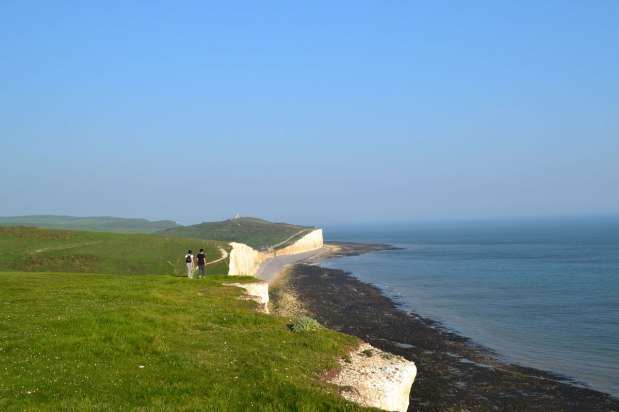
Cliffs were the next item on the agenda so we drove to Birling Gap where the happy ice-cream ensonced throng was beginning to thin and walked a mile or so along the tops of the Seven Sisters and back. This was followed by a great dinner at the gorgeous Tiger Inn in East Dean and another walk from the Seaford Head car park down to the Coastguard Cottages (think Atonement and a million photos of the cottages, the beach and the cliffs). During this walk a fox crossed our path with a rabbit in its mouth. Another rabbit bounded past in the opposite direction. By now it was pushing 9pm and crowds were arriving at the car park hoping to see another great aurora.

Thinking ahead we drove back to SE London via the Ashdown Forest, parked up in darkness at the Piglets car park and made our way to the AA Milne memorial with its great north-facing view. By now it was about 10pm. Lots of others had the same idea … good humoured groups of people lingered with their phone lights pointing at the ground round every corner. Of course there was no aurora borealis, underlining what a one-off Friday night had been. But we saw a decent starscape, a few satellites, and that was it. I was hoping for an owl and the song of a nightingale, but alas …

Sunday saw a more familiar path taken: the High Elms/Farnborough walk (pictured above). Sun-dappled paths, fantastic fresh foliage, an air of bonhomie from fellow walkers – what a difference a spell of sunshine can make. This route lacks great views but it’s far from ordinary because of its associations with Darwins and Lubbocks, and star-studded arboreal content – from sequoias to holm oak, beech to corsican pine. I fiddled with the Merlin app a few times to try to identify warblers and other migrant birds calling from thickets. But it didn’t work. I guess they were all common whitethroats and blackcaps anyway. One highlight was was the clearing in the woods a mile north of the Beeche cafe. It was full of bugle and cowslip; dark blue and yellow splashes. This season’s bluebells are already largely a memory. Here’s a very good blog about High Elms and other places covered on KWNL by Bill Welch.

The inaugural ‘Bluebells of north-west Kent’ award goes to …

The inaugural ‘Bluebells of north-west Kent’ award goes to …

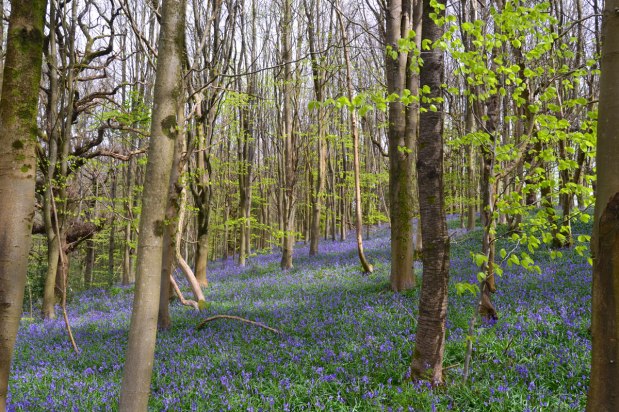
The inaugural KWNL bluebell award results are in, now that the bluebell season is drawing to a close. The judge (that’s me) has visited a number of sites renowned for their bluebells at this time of year and come to his decision, without seeking the opinions of others (I prefer it that way, for clarity of thought). First, let’s be honest, it’s been a slightly underwhelming field this year compared with previous years, when this competition wasn’t held. It’s pissed down with rain largely, the sun has generally refused to appear, and it’s been so windy that lots of branches have fallen in the woods disrupting the shimmering fields of azure and making the place look untidy generally.

4th PLACE – EMMETTS/SCORDS WOOD on the IDE HILL ROUTE

Emmetts Garden/Scord Wood was the strong favourite to be the winner given their popularity and reputation so it is something of a shock to see it down in fourth in 2024. The position of the flowers on the slope and the widely space trees help makes them easy to photograph nicely, especially with late afternoon sun casting long shadows – the perfect bluebell shot. However, it was grey and cold during my visit and there were a few too many bare patches – unlucky, but rather like an Ofsted inspection on the way day the usually impeccably behaved pupils have nicked the headmaster’s car and left it upside down on the cricket pitch. Beautiful of course, but somehow not quite up to usual levels of greatness. No trophy but Champions League nonetheless.

3rd PLACE – MEENFIELD WOOD ON SHOREHAM WEST ROUTES

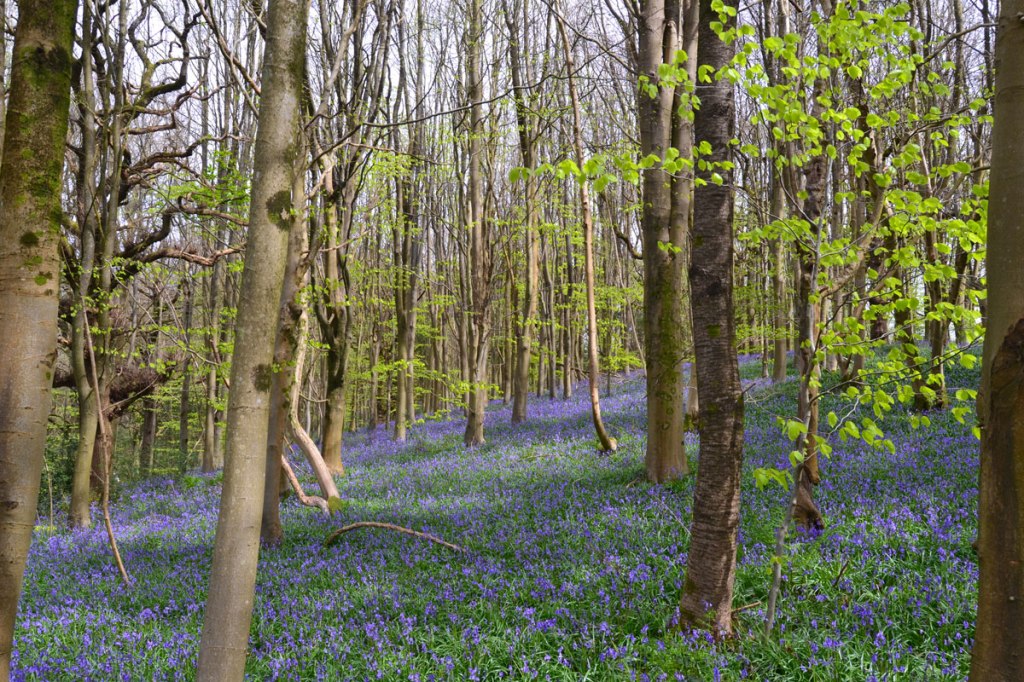
Meenfield Wood on the various Shoreham/Polhill western Darent Valley routes was also expected to make the top two, but just fell short. The full inspection took place on a Saturday again heavy with cloud with approaching rain from the south. The lime green of the beeches coming into leaf contrasted with the blue flowers to make for a colourful sight despite the conditions. Splotches of stitchwort added to the jollity at times. Many might argue it was a worthy contender to win; and in another year it may have.

2nd PLACE – NEW YEAR’S WOOD, CUDHAM CHALK PATHS


Doing much better than expected this year was New Years Wood, on the Cudham circular route. A lovely, quiet woods without many paths to interrupt the swathes of blue. More mysterious feeling even than Meenfield and it was easier to imagine the bluebells somehow continuing for miles into the distance – you couldn’t see where they ended.

1st PLACE – BLUEBERRY LANE MEADOW, KNOCKHOLT POUND

Close to the Cudham circular and Chevening walks, this magical spot (view from the gate: no entry into field) was not considered a contender until the judge happened to cycle past it on Sunday 5 May. This grassy field dotted with outstanding oaks, one of which appears damaged by lightning or storm, had never previously attracted the judge’s attention. The flowers appeared a very dense dark blue instead of rather milky blue of the previous two entrants, perhaps because of some trick of the light. There was some consideration that it should not qualify because it’s not strictly speaking on one of the walks, but this was overruled eventually, as cycle routes at KWNL also count.

Submissions from One Tree Hill, Lullingstone, Ide Hill, Hever and Oldbury were received too late to be considered unfortunately. They also breached the judge’s criteria of “not too much mud”.

I think there’s good bluebell viewing until around 13 May, but the beginnings of the end are already visible, so good luck!
See my cycle routes at Plot A Route

How to identify birds by their songs and calls

How to identify birds by their songs and calls

There are plenty of smartphone apps for this purpose but without knowing what you’re likely to see or hear software such as Merlin or Birdnet can mislead if used in isolation. I’m not an expert but birder and fellow Kent walker Dave most definitely is. I’ve never seen him use an app. He just stands in the middle of the path for ages building up an aural picture from the space around us. “Chaffinches somewhere in that oak 30 metres to the right; greenfinch behind us, maybe 200 metres, nuthatch flying to those conifers… look, there it is, mistle thrush down low …” I find it quite annoying to be honest. But it’s a remarkable display of skill, patience and knowledge built up over years.

What doing the odd walk with Dave has taught me is that it’s best to learn a few calls of birds you are likely to see/hear and then, once you are familiar with them, start adding other likely species. Some, robin, blue and great tits, blackbird, you can learn from the garden or park. Cuckoo is obvious and one you can hear this month and in June on the Ide Hill, Chiddingstone and Hever walks in particular. Greenfinch is very distinctive too and dead easy to pick up once you know its chatter and “wheeze” – similar but different enough to more common goldfinch. You hear it more in parks and gardens though than on the KWNL walks.

Wren – one of our smallest, but loudest birds. Photo: Wikimedia Commons

It took me ages to realise that wrens were incredibly loud and identifiable; I’ve got that one down now, along with song thrush, greenfinch, chaffinch, long tailed tits, chiff chaff, blackcap, coal tit, goldcrest, and most recently, nuthatch. I’ve no idea what dunnocks sound like, so I better give that a listen, and treecreeper too. Bullfinch is a toughie because you really have to listen out for their weird “rusty gate”-like whistle and toots. Yellowhammer is easy. To see one of these I recommend the hedgerows on the Polhill route, once down on the valley floor; Fackenden Down hedges; the Eastern Valley walk and the Chevening walk. A great one to listen for now is common whitethroat. These have arrived from Africa now and are filling our hedgerows with song; they sound a bit like their cousins the blackcap but less rich and burbling. There are loads of other, less common, summer visitors to tick off, which all may be encountered on a walk at KWNL – willow warbler has a lovely song, nightingale obviously, garden warbler… Cetti’s warbler is startlingly loud and a bird that sings disconcertingly close to you but from deep inside a thorny dense bush, so you can’t see it.

So, I’d say use a combination of memory and app to recognise birdsong. Use the RSPB site and British Birdsongs to learn two or three bird species at a time, then use one of the smartphone apps to record and analyse what you hear – having listened out for the birds you’ve tried to memorise. It doesn’t seem easy at first but pretty soon you’ll start recognising the patterns. After all, it’s just music in another form and the difference between a chiffchaff and a wren will soon be as obvious as between Dua Lipa and, say, Raye. Or Chaka Khan and Whitney Houston. Or Teena Marie and Cindy Lauper. Or George Benson and Philip Bailey; Luther Vandross and Maurice White. I could go on, and would quite like to.

Sand, clay, chalk and bluebells

Sand, clay, chalk and bluebells

“When spring came, even the false spring, there were no problems except where to be happiest. The only thing that could spoil a day was people and if you could keep from making engagements, each day had no limits.

That’s a fun quote from Hemingway. I take it to mean prioritise walks above socialising, now it’s a bit warmer (I reserve the right to be wrong about that) and to get out in the woods and downs, witness the transformation from grey and brown to green, blue and yellow. I say “witness” but it happens suddenly, overnight perhaps, when you’re not looking. Suddenly the air is soft, the countryside hues have changed and spirits have lifted.

We chose the 3.5-mile Knockholt/Chevening North Downs route for late Saturday afternoon and a 4.5-mile stroll on the Greensand Ridge at Hosey for the following morning. On the Hosey route bluebells were two-thirds in bloom and were mixed beautifully with stitchwort and anemone. We heard coal tit, nuthatch, song thrush, chaffinch joining in the merry burble of song from great and blue tits, robins and wrens. A delightful pint of Westerham Brewery’s Light Ale ensued after the walk at Squerry’s Winery.

At Knockholt, along the escarpment, three red kites drifted overhead throughout the walk and a pair of buzzards hung in the air. These raptors love the updraft along the ridge and I think this walk is the most reliable route for seeing them on of all the walks here, though they can pop up on any. Please don’t think me callous but I rather hope the birds of prey feast on pheasants; there are too many of the latter human-introduced birds in these parts and they kill a large number of reptiles and amphibians.

  • Redwood
  • Dandelions
  • Bluebells
  • Chevening
  • The cleft in the Downs

The chalk Knockholt/Chevening walk on the North Downs ridge is separated from the Hosey walk on the Greensand Ridge by the clay Vale of Holmesdale, an east to west valley that runs in parallel to the two lines of hills and which contains the M25 and M20 motorways. Holmesdale clay runs between the chalk and sandstone yet despite the starkly different geology in such a small distance the plants and tree species don’t superficially appear to differ that much – presumably the plants have adjusted to the contrasting soils over the millennia. But there are some differences – there are more likely to be orchids and expanses of grassland on the less densely wooded chalk hills; while on the greensand the woods seem a tad more extensive and are more likely to include stands of pine, which like the sandier soils. I’m no expert so I won’t go on. Bluebells like both; that’s the main thing and this week they are reaching their peak at sites like Meenfield Wood, Scords Wood, and Mariners Hill. Enjoy them, they’ll be gone within about four weeks.

Thoughts of spring

Thoughts of spring

Spirits have fallen almost as steadily as the rain as we slipped mildly and humidly from winter to spring . The Met Office have gloomily talked of precipitation records being broken, and a sense of oppressive drudgery has undeniably taken root as indoor life seems the only option. Still, I’ve been impressed by the amount of runners and cyclists still out in the lengthy downpours, clocking up the miles. Me, I’m a fair weather fitness fan. A lot of the rain has been too heavy for walks; I’m happy in drizzle but the stuff that stings your face definitely takes the pleasure away at this time of year, though can be fun in summer. But hey, spring is around the corner somewhere, the temperatures are mild, the crocuses are out in the park and the daffodils gaily wave in the breeze. I love to walk on the Greensand Ridge at this time of year, to see signs of spring seeping into the colours of the miles of countryside stretching before you as far as the Ashdown Forest. It’s muddy, sure, but there’s also optimism in the snowdrops, primroses and sudden uptick in birdlife among the skeletal trees. Toy’s Hill south of Westerham has been fertile ground for walking.

I haven’t got a Toy’s Hill walk on KWNL but there are several routes from the NT car park (the map above shows the car park, lower centre, and Toy’s Hill’s proximity to Hosey, Chartwell and Ide Hill) that are well signposted, such as the shortish Red Route, which will take you to Emmetts Garden and back. You can do my Ide Hill walk from Toy’s Hill easily enough, or even the Hosey Common route, but obviously you’ll be adding on a few miles. I really like the spot near the NT car park where the old mansion used to stand. From here you can see four counties including Leith Hill and even the South Downs on a fine day. The photos below were taken in early March; appearances change quickly at this time of year so expect less bleakness in the days ahead!

  • Toy's Hill
  • Ram Pump pond
  • Scords Wood, awaiting signs of spring
  • Scords Wood view

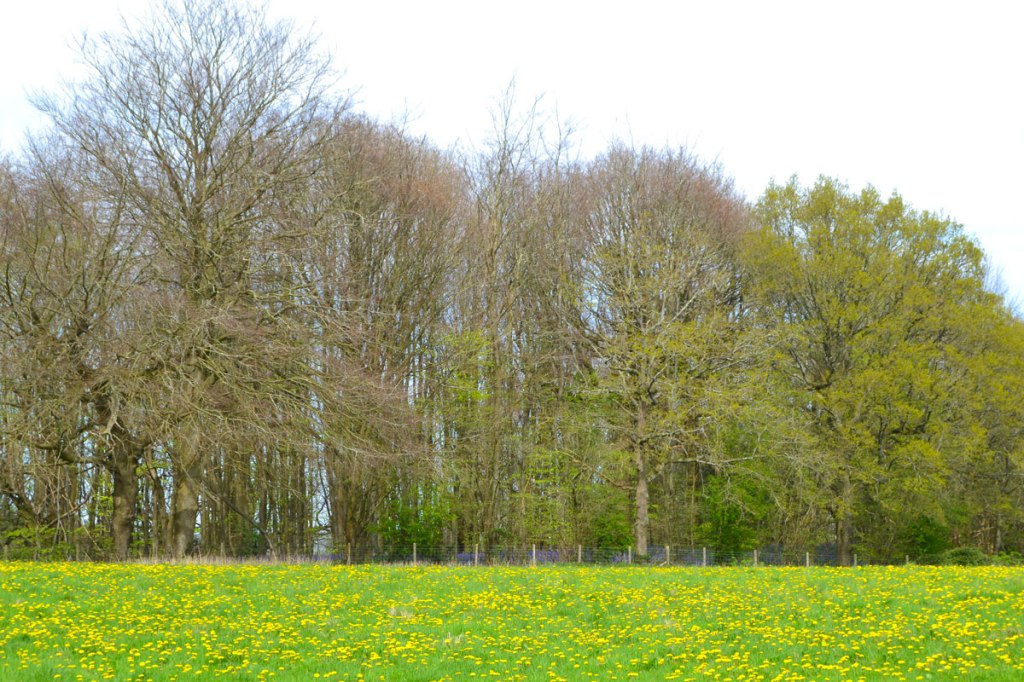
As for colour, look out for yellow lesser celandines, very spectacular at this time of year on the Fackenden Down walk in the woodland between the Down itself and Magpie Bottom. One of my favourite places for wildflowers in late March is on the Hever walk in the woods between Points 1 and 2, close to Hever Castle gardens (headline photograph). A yellow and white sheen seems to rise from the mossy forest carpet ushering in better days. But look if you want to keep your powder dry on the walking front, and not go out until mid-April and the blooming of the bluebells, that’s perfectly understandable.

.

A Christmas trudge – then some fudge

A Christmas trudge – then some fudge

We chose Lullingstone for our Christmas morning walk. Well, I didn’t actually. It was the family choice, and a surprise one because I was, for once in my life, all for staying in and wrongly assumed my partner would be. I’m glad we did though: staying in all day and not walking anywhere is hardly ever the right choice, even with a turkey to roast and fudge to finish.

There’s no denying that in the mild, grey, mizzly, boring weather the Darent Valley landscape seemed to have lost a bit of its lustre. It felt as if we’d taken it by surprise – it’s usually ready for us and induces an inward gasp of delight as we get our first view of it. On Christmas Day it looked a bit bleak, a bit ‘meh’. It seemed to be saying, “oh it’s just them again – I can’t be bothered frankly.”

Fieldfare profusion

But on closer examination there was a lot to enjoy: huge groups of fieldfare (a winter thrush visitor from north-east Europe); a few chaffinch (relatively scarce nowadays in these parts) in brilliant winter plumage; loads of berries – haws, rosehips, elderberry in the main – and long-tailed tits flitting through open woodland. The profusion of berries was the attraction for the fieldfares. My regular Lullingstone kestrel did not appear, nor did the almost tame goldcrest I’ve encountered previously in Upper Beechen Wood. (Fieldfare photo: hedera.baltica/Wikimedia Commons)

Oh, that tree!

I’m often astonished at myself for not noticing things – I’ve been known to sit on sofas at home without realising they are brand new, turn on TVs that someone has just delivered and installed, and fail to remark on a room‘s entire renovation. I exaggerate, but it amazes me that I’ve walked past the extraordinary old oak at Lullingstone pictured below at least 200 times without really clocking it; a memory of it must have been lodged in my brain somewhere since childhood, but in the subliminal part. In a similar vein there’s an elegant art deco building opposite Brixton station that’s very familiar to me but it was only last week, on returning from the Ritzy, that I actually looked at it and saw it for what it was. I’ll never ignore it again, and the same goes for this incredible oak.

To be fair, there are several of these oaks at Lullingstone, mostly up towards the golf clubhouse in the west of the park (unlike this one). With some I’m not quite sure if they’re dead or alive. There’s one that you could actually hide inside. This one, which is maybe 300 years old, has a kind of elephant’s face embedded, is indicated on the map below. I’m going to try to keep eyes and brain a bit more joined up from now on. Probably means less daydreaming – let’s see!

Click on the link for a ‘live’, gpx version of this 4-mile Lullingstone route at OS Maps.

Festive walks in Kent

Festive walks in Kent

The true purpose of this website is to inform newcomers to south-east London from other parts of the UK, or from abroad, that great walks are to be had by just taking a train or driving for half an hour or so into Kent, where there are loads of paths to explore. So to all those who think “why’s he going on about Knole/Darent Valley/One Tree Hill/Hosey Common again – can’t he just go to Namibia or Baja California or somewhere interesting” – shut it!

Christmas and New Years’ strolls

The relatives have come around. After a couple of days milling about in the house you all fancy going for a decent walk and getting some fresh air. No one has proper hiking footwear. The answer: Knole (Sevenoaks) Why? Because many of the paths have hard surfaces and you can walk for 4 miles without leaving this wonderful park if you pick your route carefully. There are secluded dry valleys to explore, an igloo-like 18th century ice house to find, some lovely woodland and a massive medieval/Tudor house – the largest in the UK in fact. You can’t take dogs because huge deer herds roam around the place. But you can take buggies, even wheelchairs. On a winter’s afternoon, with the last rays of the sun setting the house aflame it’s a magical place. And if there’s any snow it’s ludicrously brilliant. Among the photos below are reminders of some of the coldest walks I’ve ever experienced!

  • Knole, winter sundown
  • Pond at Knole in snow; March 2018
  • Knole Park

My 3.5-mile route leaves the hard path (the Chestnut Walk) immediately to take in the south-eastern open woods, part of Fawke Common, comprising fantastic oaks and beeches (you don’t have to park in the NT pay car park; you can leave the car in St Julian’s Rd and enter free, to the south of Knole, but this road can get a bit busy). Things then get a little darker as a fir plantation takes over and you dip down amid the high pitched calls of goldcrests to cross a little stream then emerge into the open by an ancient pond. Follow the route as it twists high and low before rejoining the hard path (the Duchess Walk) and heading to the house and around it before turning east back towards your arrival point. Know that you have been walking on acid grassland; a rare terrain type distinct from any of the other walks on this site. Fungi and lichen thrive here, not least because of the rotting wood from the arboreal victims of the 1987 ‘hurricane’. Birdwatching isn’t too bad either with buzzards, kites, sparrowhawks and tawny owls in attendance among the more common long-tailed tits, goldcrests, goldfinches, song thrush, wrens, robins and redwings. You don’t have to do my route – you can still do a fine walk by sticking to the hard paths (Chestnut, Broad and Duchess Walks), or you can extend my route by taking in the long south-west valley. Best just to wander and get a bit lost.

Lullingstone and the southern end of the Darent Valley around Shoreham in winter

Also recommended for a winter stroll – and closer to SE London than Knole – is the Shoreham circular, which may offer the added attraction of the smell of woodsmoke and a welcoming pub. Lullingstone is also highly atmospheric: I particularly recommend walking from the public golf club entrance, not the country park entrance – it’ll be less busy for one thing (note that the car park at the golf entrance is closed on New Year’s Day usually but you can usually park in the approach road). Closer to SE London, Beckenham Place Park and Petts Wood offer a couple of hours escape into the ‘Kent’ (London) wilderness. I haven’t checked the trains to Shoreham or Sevenoaks for these walks over this holiday period, so do find out whether they’re running – I don’t wish to encourage you all out only to have you waiting interminably for a replacement rail bus service, might still be fun though!

Frisson in the North Downs freeze

Frisson in the North Downs freeze

There’s a real pleasure to walking in very cold conditions and not only because you’ve bought some hot chocolate with you with a shot of rum in it. The light, the clouds, the wonder of winter and the sudden dusk all bring an edge of adventure. It’s a great time for a walk. Often the mud is hardened by frost too so you can stride without getting bogged down. We don’t often get snow in these parts but remember that if there’s a hint of the white stuff in south east London there’s a good chance there’s a lot more of it on the North Downs. So if you have children pining for snow larks, there’s always a chance that by heading to say Fackenden Down, Polhill or Knockholt you might have a bit of luck. It’s worked for me over the years. I particularly love the atmosphere of Knole in winter – the frosty hollows and rich (ish) bird life coupled with that huge medieval home that is lit so beautifully by the setting sun and from within as twilight comes on, are an essential part of my mid-winter wanders. This little cold snap will be over by tomorrow evening but there’ll be more to come.

  • Downe, Kent, England