Into the hot valleys of the North Downs

Into the hot valleys of the North Downs

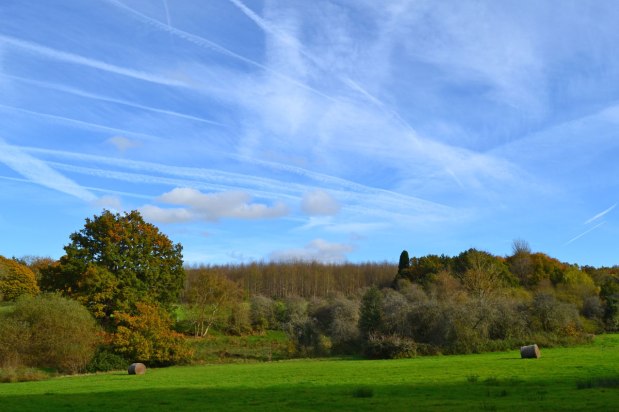
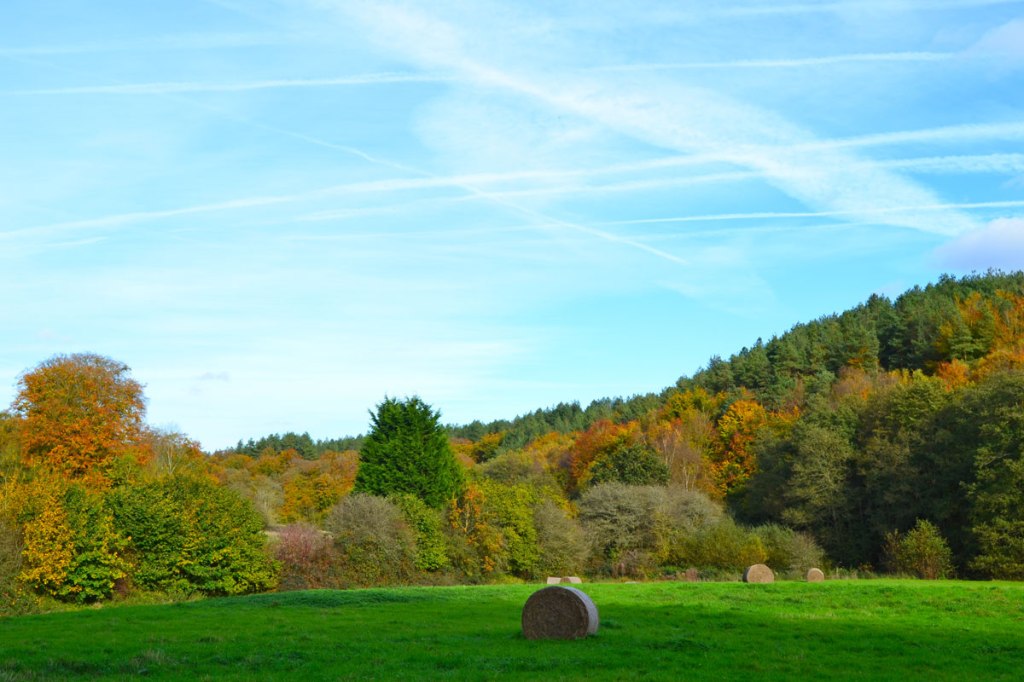
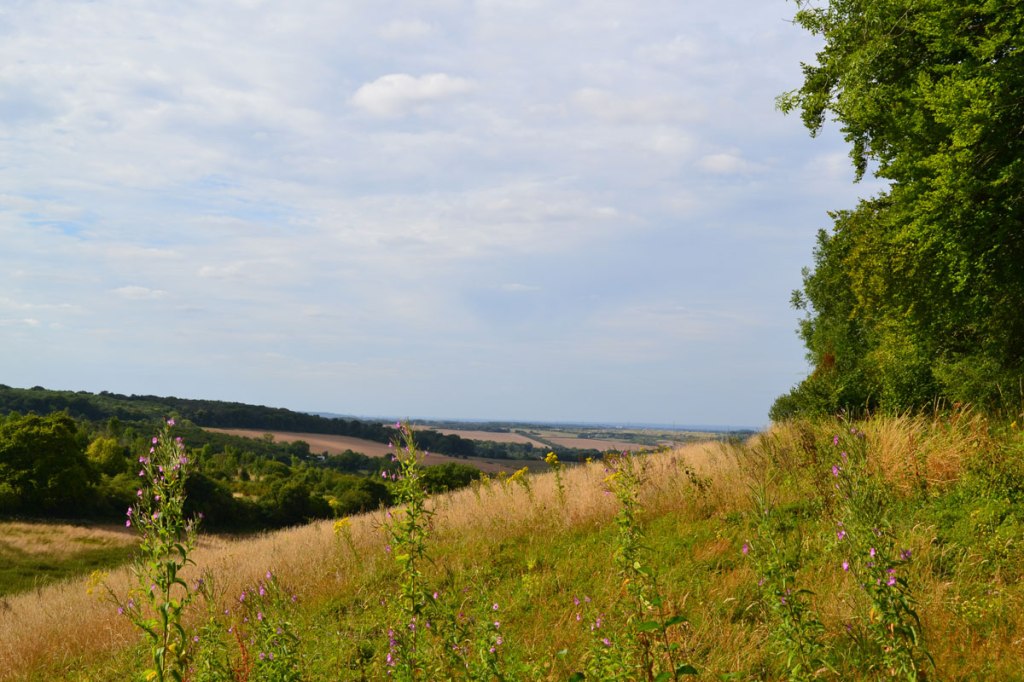
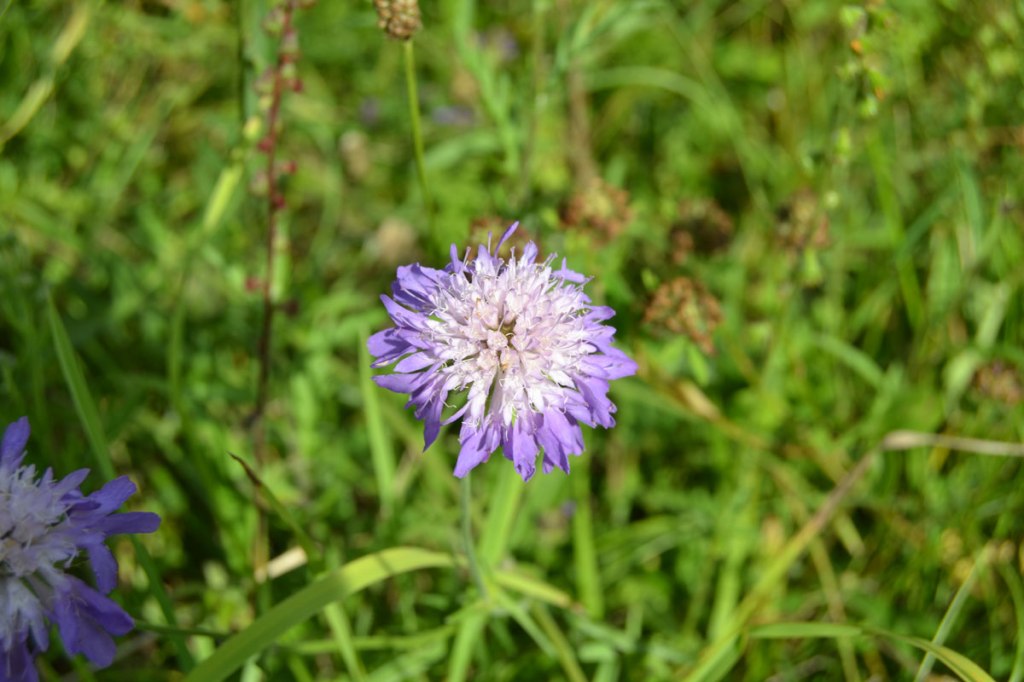
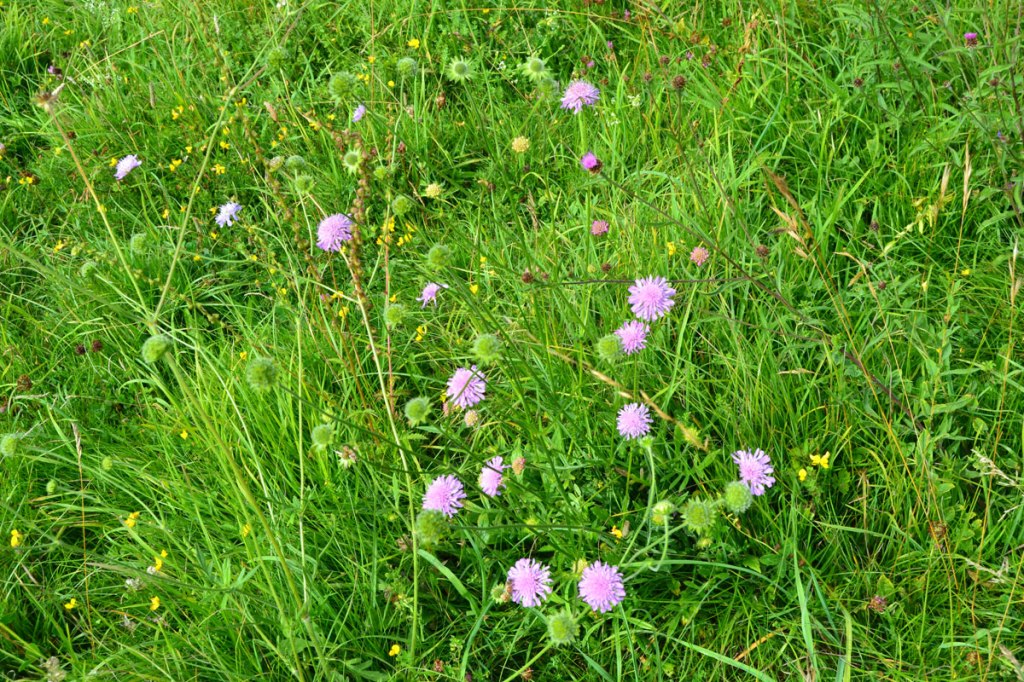
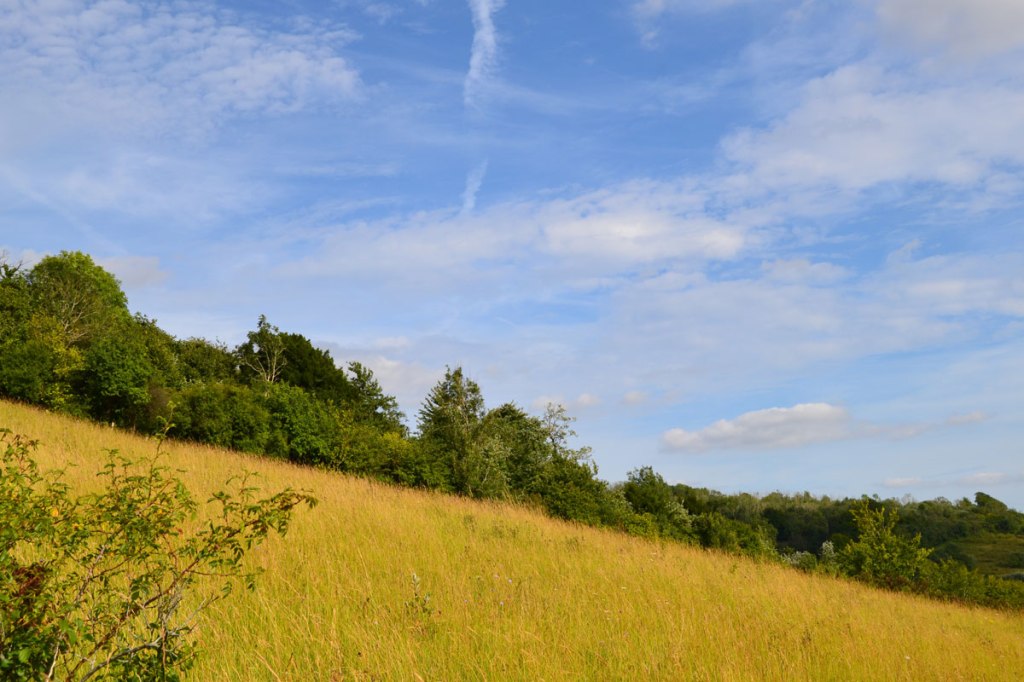
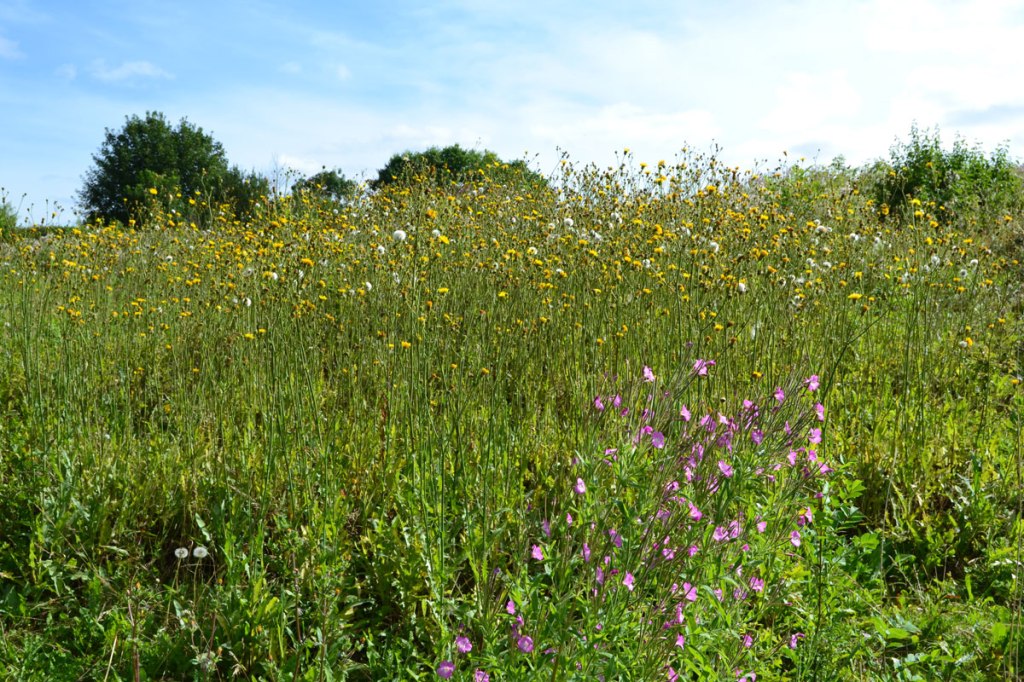
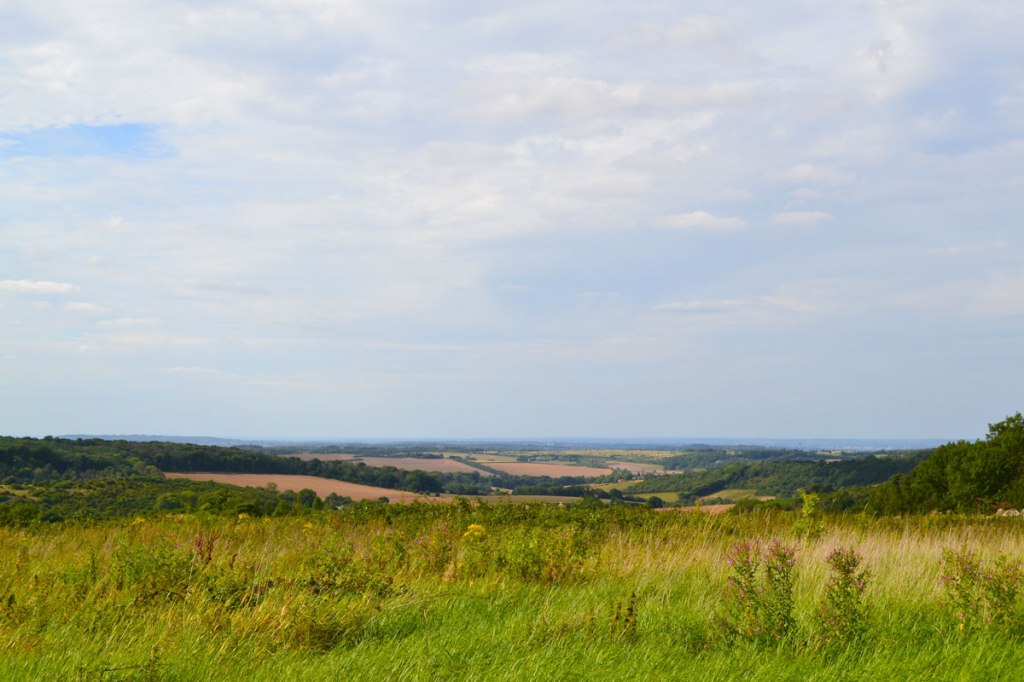
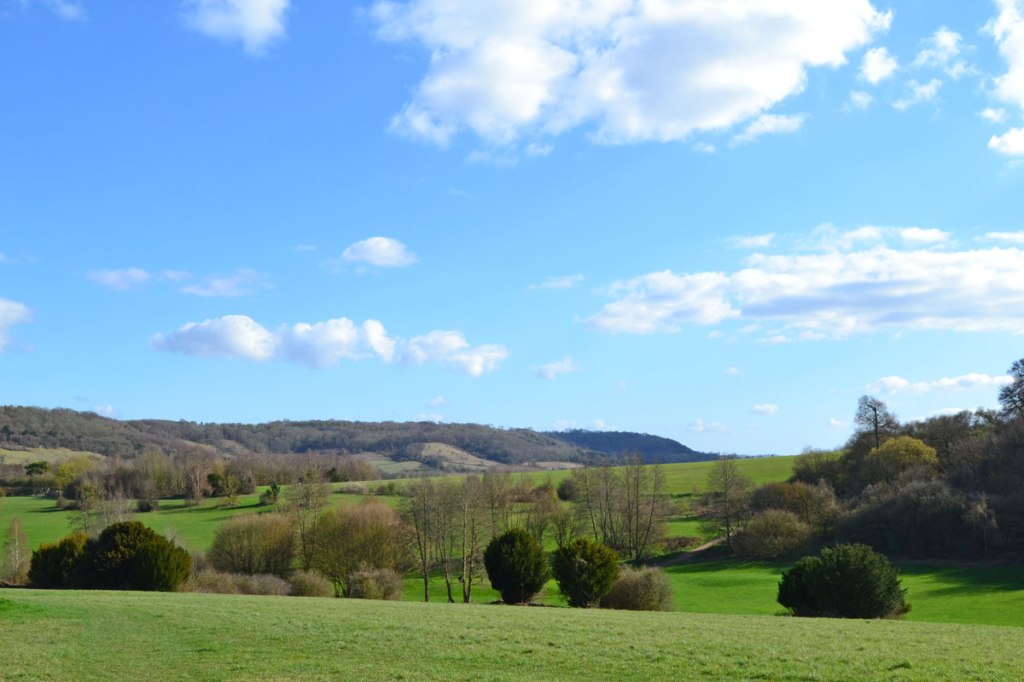
Sunny weekends have been in short supply this year. Hopefully we are overdue some. It’s a great time for butterflies and wildflowers like scabious, particularly in the chalky North Downs walks. I also love the displays of rosebaywillow herb… so colourful alongside ragwort. And there’s the wild marjoram and thyme to enjoy. It’s a great time of year, though look carefully and you’ll notice the grass is yellowing, the trees looking a little tired in places as August continues. I love a hot walk, and nothing beats the Mysterious eastern valleys and Fackenden Down walks for trapped heat and big-time humidity. These walks can be combined for a 7-mile epic, as can all the Shoreham, Otford and Eynsford routes. And they are only a 40-minute train journey away from Peckham Rye/Crofton Park/Catford etc. I’ll be setting off shortly …

Muddy matters

Muddy matters

In my most recent newsletter there was a glaring omission. I listed the best walks on this site for mud avoidance but forgot to mention Knole. This was particularly remiss of me because not only does it deserve a place in any list of non-muddy winter walks it should actually be top of the list.

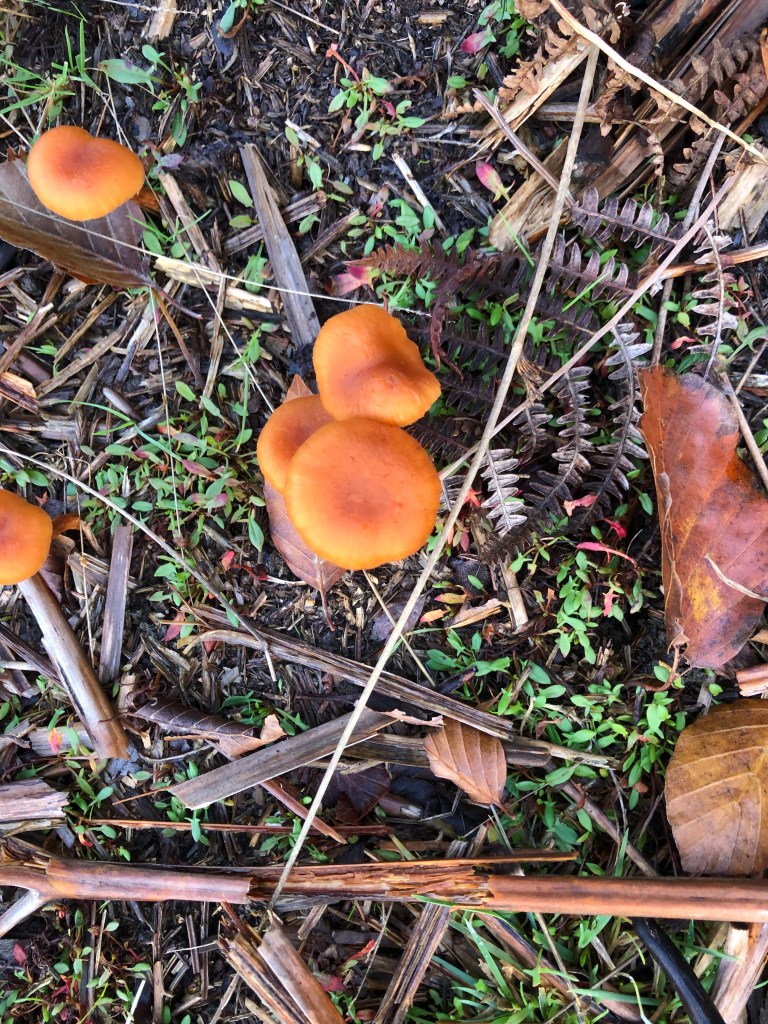
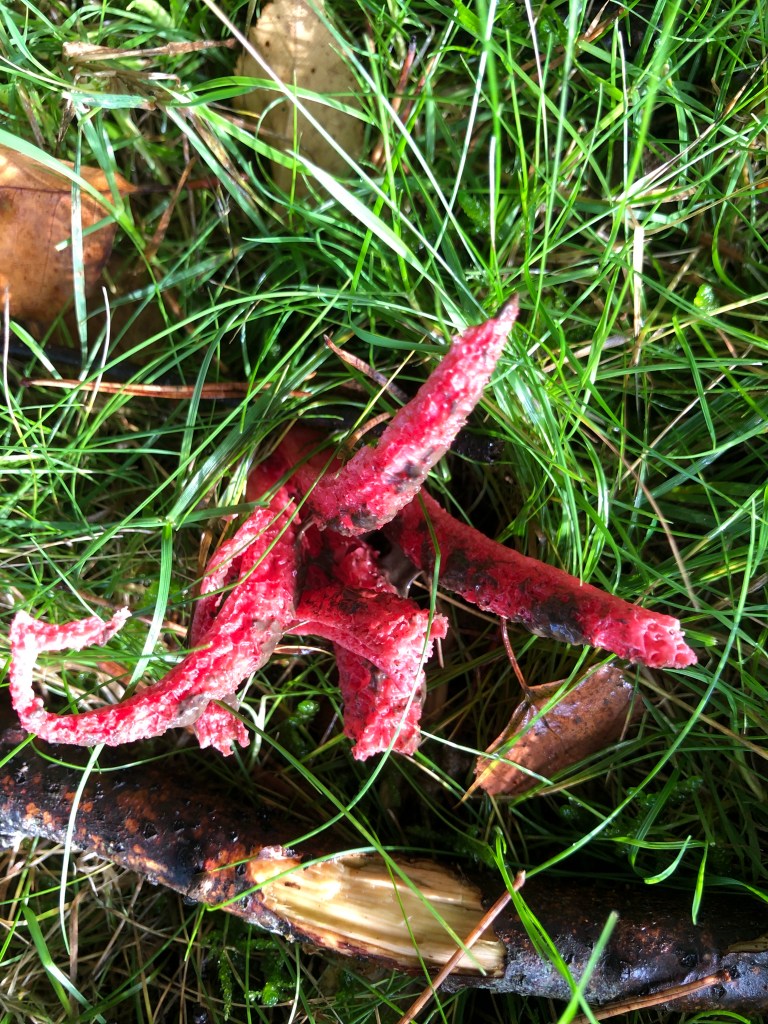
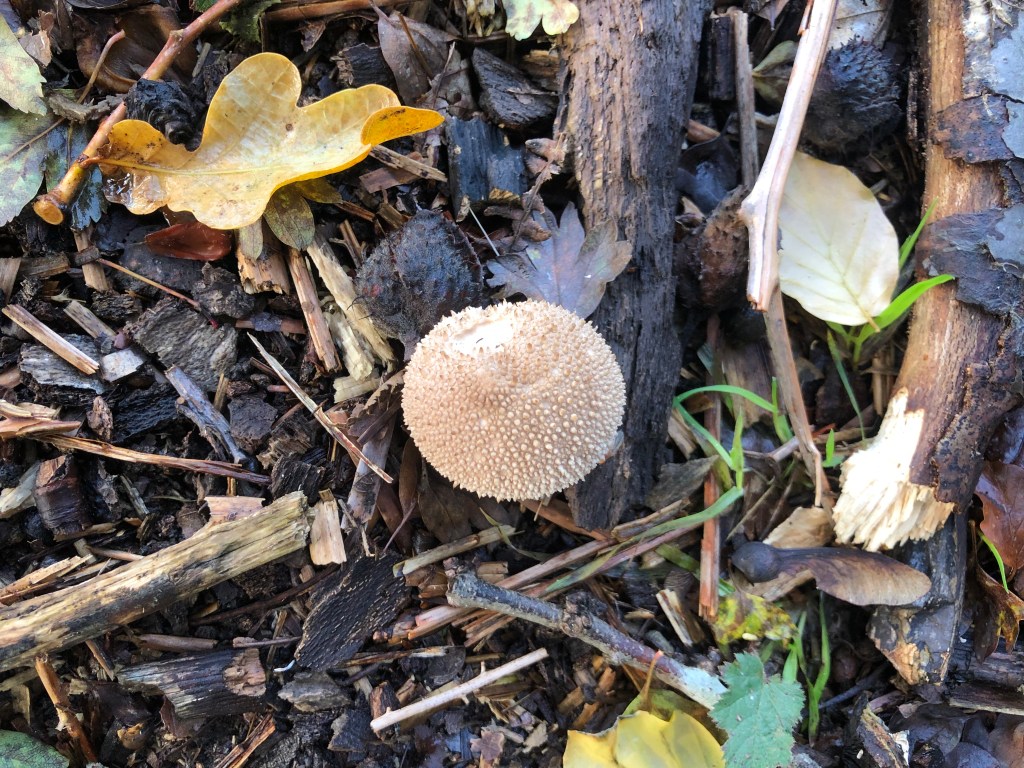
A walk there last week revealed only one properly muddy bit, in the conifer woods in the south east of the park near the beginning of the route as you cross the little stream. The park is brilliant at all times of year but I particularly love it in late autumn as small flocks of migratory birds hide in hawthorn shrubs, buzzards float high above and the deer develop enormous antlers. Fungi is also better here than on any other of the walks I think. I’m no expert, but the amethyst deceiver is among the most colourful, and there are other great species here such as saffrondrop bonnets and fairy fingers. We saw devil’s fingers on our most recent walk, very weird looking stuff.

Knole in autumn, honey fungii, parasol, puffball, devils finger

Knole (click here for National Trust description) is quite a rare terrain: it sits just behind the Greensand Ridge and is mainly composed of acid grassland (click for Kent Wildlife Trust in-depth). In fact it contains about 35% of all the acid grassland in Kent, a terrain that provides habitat for lots of wildflowers and rare fauna including lizards and adders, and invertebrates such as deadwood beetles. The little hillocks in the grass are the nests of yellow meadow ants, and in turn their presence helps support a good green woodpecker population.

Knole House

Back to mud: I’d say the best routes for mud avoidance are:

1 Knole

2 Lullingstone – from the golf course entrance or from Eynsford station

3 Fackenden Down

4 Polhill and Shoreham

5 Ide Hill (now that the paths have been relaid – but can still get bad at points)

By and large the walks on the North Downs chalk are better for avoiding mud as water seeps through the thin soil into the porous walk quicker. Yet, to contradict this, Knole is sandstone and the worst spot for mud at KWNL is on the chalk Andrew’s Wood hillside on the way to Meenfield woods and Polhill/Pluto.

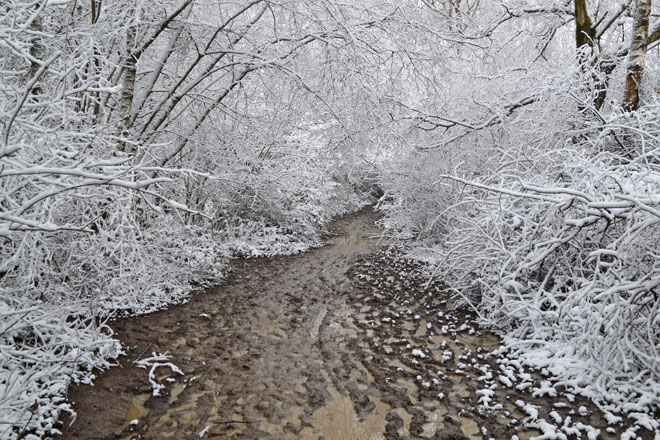
Mud, frost and snow at One Tree Hill, February 2021

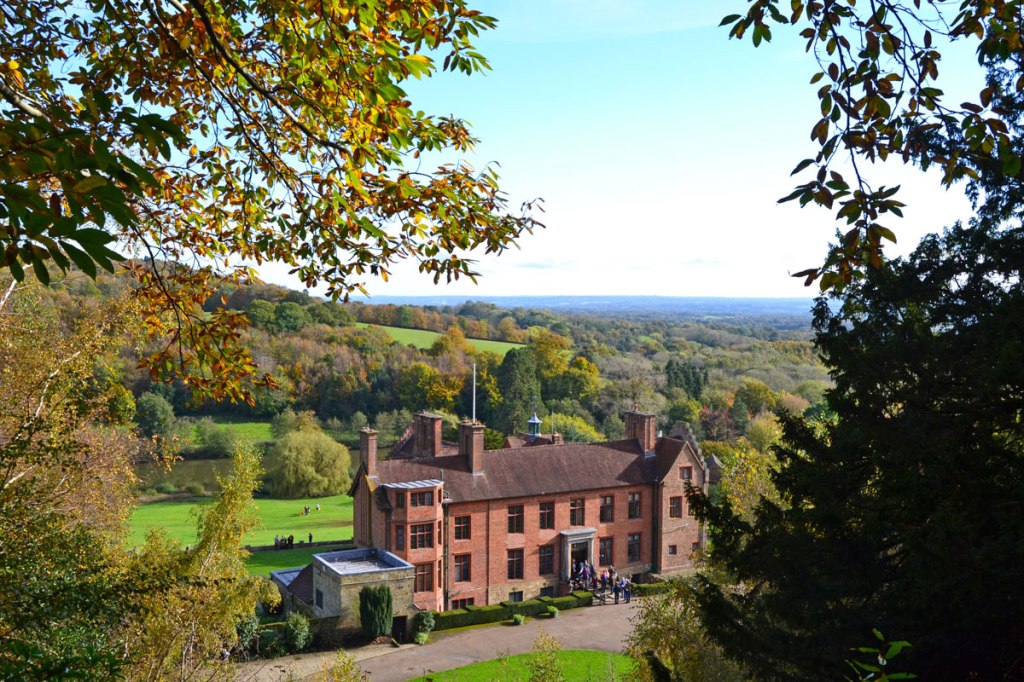
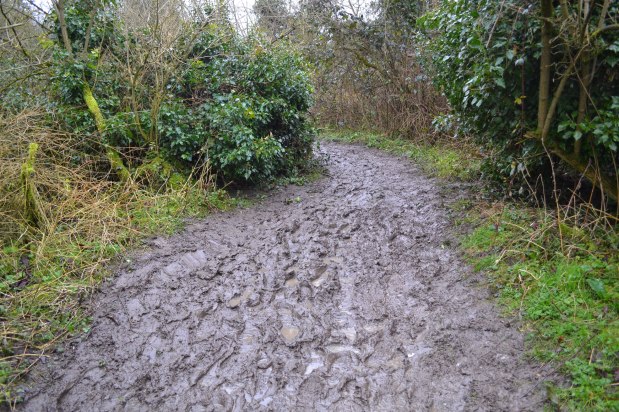
Mostly, a pair of wellies and overtrousers will sort you out where things get really squelchy but I’ll be mostly avoiding Underriver (Ramshed Farm in particular), and the Low Weald walks at Hever and Chiddingstone for now. Where paths are hemmed in a bit and popular with walkers things also get very squelchy (like the path up into Lullingstone from the Roman Villa pictured in the leading image, for example). So ‘natural causes’ are not always responsible for mud, though I suspect the water table and a layer of clay might be responsible for Andrews Wood hillside. One Tree Hill is surprising to me – it’s not a place you’d think would get so bad. It could be footfall, or perhaps some water table-related reason is the reason. Another morass is on the popular Downe walk just before you re-emerge into the village right at the end. The popular Shoreham Circular is OK, though footfall on the path through the golf course can lead to horrendously swampy conditions!

So, worst for mud are:

One Tree Hill (at the top of the hill near the car park is horrendous if wet)

Underriver (aforementioned farm and waterlogged low weald fields)

Polhill/Pluto – Andrews Wood hillside and Polhill slope itself (too slippery in winter)

Hever – hemmed in paths create WW1-type conditions

Chiddingstone – waterlogged fields by River Eden

But you may disagree! Let me know your favourite and least favourite muddy zones at KWNL, email ammcculloch49@gmail.com

New route: Heaverham/Kemsing circular

New route: Heaverham/Kemsing circular

This route, no 28, is similar to walk 27, but is better for people walking on Sundays, when there is no train service. You can start it from the lovely Chequers Inn, Heaverham (if you buy a drink/meal); Kemsing village car park; or Mon-Sat from Kemsing station. Rather like the Chevening/Knockholt walk it’s another chalk escarpment route that drops down into the Vale of Holmesdale, and uses short stretches of the North Downs Way. The link below includes the usual Google map and the more useful OS map, plus written directions. PDF to download will follow in a few days!

Click here for full description and maps

Green October

Green October

The Underriver walk was a picture last weekend, two unseasonably warm days that probably represented the last knockings of summer. It felt like summer and looked like summer with foliage mostly green and few birds flocking apart from some buzzards and jackdaws in a high altitude spiral. It’s another walk I now do in reverse to the sequence described on this site. One of the reasons for this is to avoid the sharp uphill section in the holloway by the “dancing beeches” just past the oasthouses at point 3. Coming downhill here then enjoying the route past Romshed farm seems a bit more civilised now I’ve done it a few times. At One Tree Hill the National Trust has trimmed the hedgerows and blackthorn clumps back to enlarge the panoramic view – and very effectively so. I’ve walked past that spot since childhood, though much more often these days, and that timeless view across the Low Weald to the Ashdown Forest and as far as the Surrey Hills in the west still grabs my attention. It’s a popular spot, as you can see in the picture below.

Walks this weekend will have a different flavour. The ground will be wetter with plenty of freshly fallen leaves. The temperature will be a lot crisper than last week, perhaps by nearly 10C, but with blue skies forecast it should be a beautiful couple of days for a stroll. And a first proper taste of autumn.

Lullingstone golf course closes

Lullingstone golf course closes

It seems that financial pressures brought on by the Covid lockdown and reduced footfall in winter has led to the closure of this beautiful, historic, and challenging public course and its owner Sencio’s other leisure facilities in Sevenoaks and Edenbridge. It’s very sad news not just because I’ve enjoyed the odd round at Lullingstone for many years, but because the course is a key component of the country park; the wild grasses, woods and scrub in between fairways is highly biodiverse and is home to a decent array of flora and fauna. I should know, I’ve tentatively had to search for my ball in these wild fringes often enough. Without the course you wonder what might happen to the rest of it what with the pressure for new housing. Let’s not worry about it too much for now; Sevenoaks District Council says it is confident that a new operator can be found for the course and the other Sencio facilities so let’s hope for the best. My main Lullingstone walk starts from Eynsford station but, if you’re driving, you can park just outside the golf course entrance (presumably shut now) and do a complete 5-mile orbit of the country park.

In the meantime it’d be good if people enjoying the new freedom in the park stay off the greens; I’m sure it’s fine to cross the fairways if you want but please leave the wildlife-rich rough well alone.

Skylarks nesting and wildflowers: put dogs on the lead

Skylarks provide us with the soundtrack of the countryside in southern England as they mark out their territories from around 100ft in the air. There are quite a few of them at Lullingstone, whereas birds that used to be seen in the park such as lapwings and yellowhammers have largely disappeared. I’m a bit worried that without the golf, people and their dogs will range all over the grassy slopes and will inadvertently destroy skylark nests. The birds nest in hollow scrapes in reasonably grass between 20 and 50cm high. I noticed last Sunday that quite a few dogs were bounding around in areas they wouldn’t normally be because of the golf closure. It’d be a shame to lose the skylarks and other flora and fauna that was protected by being in “islands” of grasses and meadow in between fairways.

Birding on the Greensand Ridge at Underriver

Birding on the Greensand Ridge at Underriver

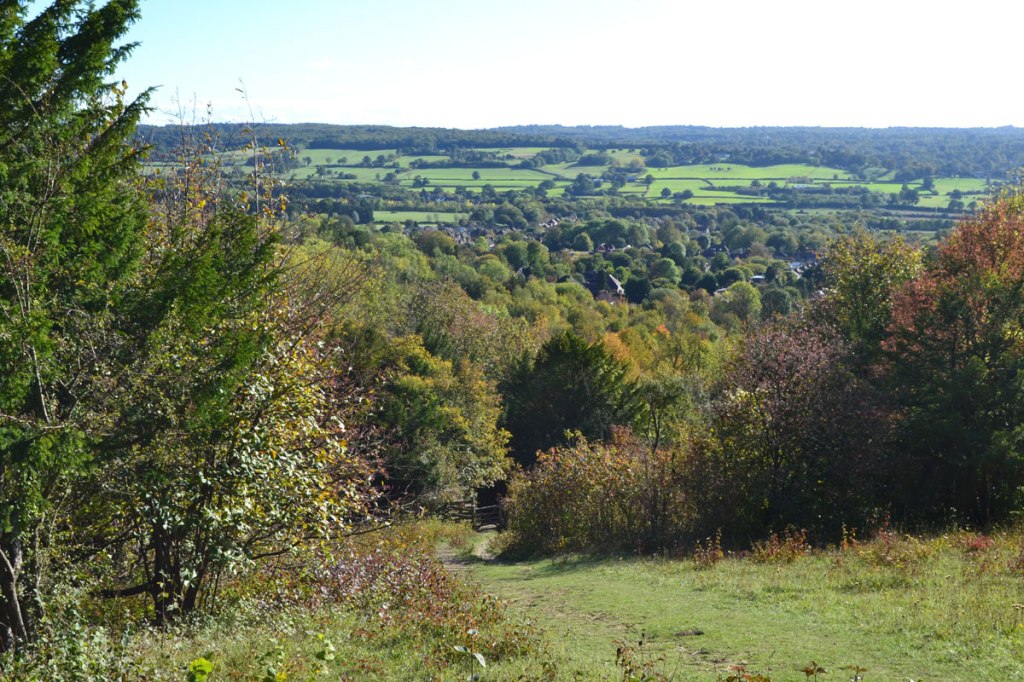
The Underriver walk – short and long version – was the focus this weekend. Just south of Sevenoaks this lovely walk, part of the One Tree Hill “suite” of routes, offers great views across the Kent weald and superb woods and hedgerows. There’s a lot of interesting geology too, as you encounter greensand (sandstone) boulders, a greensand cliff, and plenty of springs as the sandstone hits the weald clay.

I was joined by birder Dave on Saturday which as usual led to an exponential increase in sightings and bird calls identified. Within a few paces of entering the first horrendously muddy field we heard and saw a flock of newly arrived fieldfares some 50 strong, a troop of long-tailed tits, goldcrests flitting in the bordering trees and overflying redwings. You can see birds like that in your local park if you’re lucky – these sightings aren’t exclusive to the countryside at all. Later on a marsh tit flew past us, which was probably the most noteworthy bird of the day and another feather in Dave’s cap as he recognised the fleeting call just as the bird, in silhouette, zoomed past us. Dave reckons the area’s bird life would perk up with a bit more arable land and fewer livestock pastures. Scrubby unkempt arable fields are a big favourite for les oiseaux it’s true.
I had been hoping for bullfinch, siskin and most of all, brambling. But it was not to be. Barely a chaffinch as it happened but quite a few goldfinches. Later on there was a kingfisher at the lovely pond on the path below St Julian’s Club and tawny owls calling at Rooks Hill, Wilmotts and Underriver itself. The truth is that there are fewer birds around these days, just as there are fewer insects. I guess it’s farming methods, climate change, all that stuff. But anyway, it was good fun just to be out there listening and watching.

We went again on Sunday. Conditions were gloomier in the afternoon than they had been on Saturday, with quite a large shower making birding more difficult. But it mattered not, the views were still great and the excellent White Rock Inn was open and offered a friendly welcome.

The autumnal art of the Darent Valley

The autumnal art of the Darent Valley

What a superb walk on the Polhill route recently. Superb weather and the trees in their best autumn finery. The views across the Darent valley were at their very best with every little detail sharply visible: the church tower, the oasts, the route of the river … It was a view that would have inspired Samuel Palmer, the brilliant mystical romantic artist inspired by William Blake and Turner who roamed this locale with his equally arty mates ‘The Ancients’ in the late 1820s and early 30s. He was mainly based in a rundown cottage nicknamed Rat Abbey before joining his dad at the lovely Water House – still standing of course. Repros of his beautiful art can be seen in the Samuel Palmer pub. He fell in love with and married 19-year-old Hannah Linnell when in his early thirties while in Shoreham and went on a two-year honeymoon in Italy where his art developed further. But it’s his Shoreham works that seem to attract the most attention. Strangely, his surviving son Alfred (another son had tragically died at 19) in 1909 burned loads of his pieces after his death saying that they were a humiliation because no one could understand them, or something. Odd that.

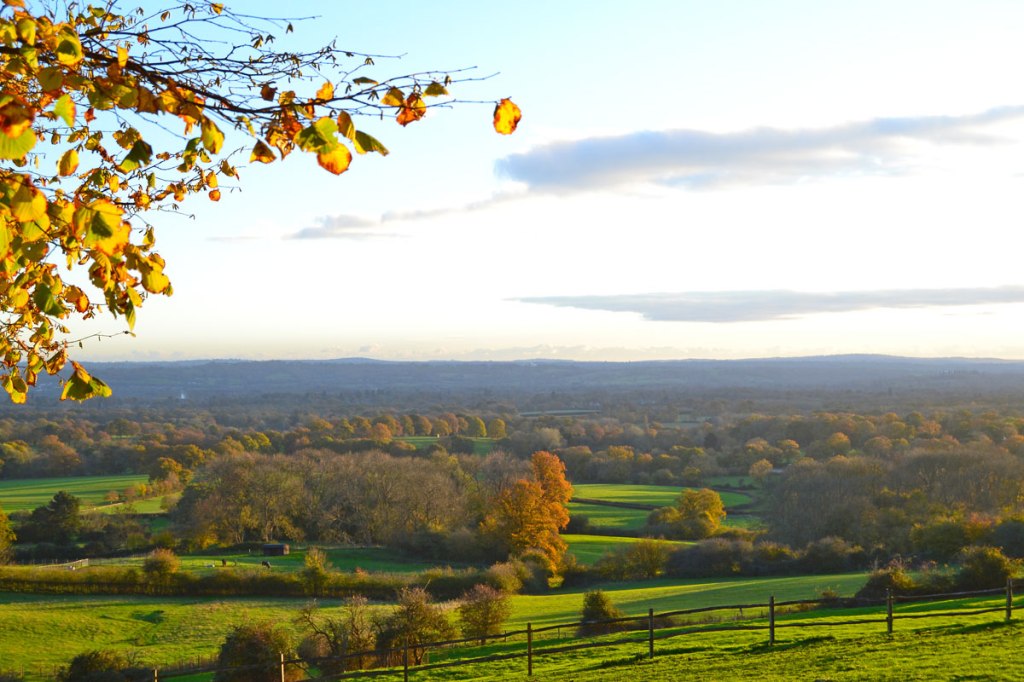
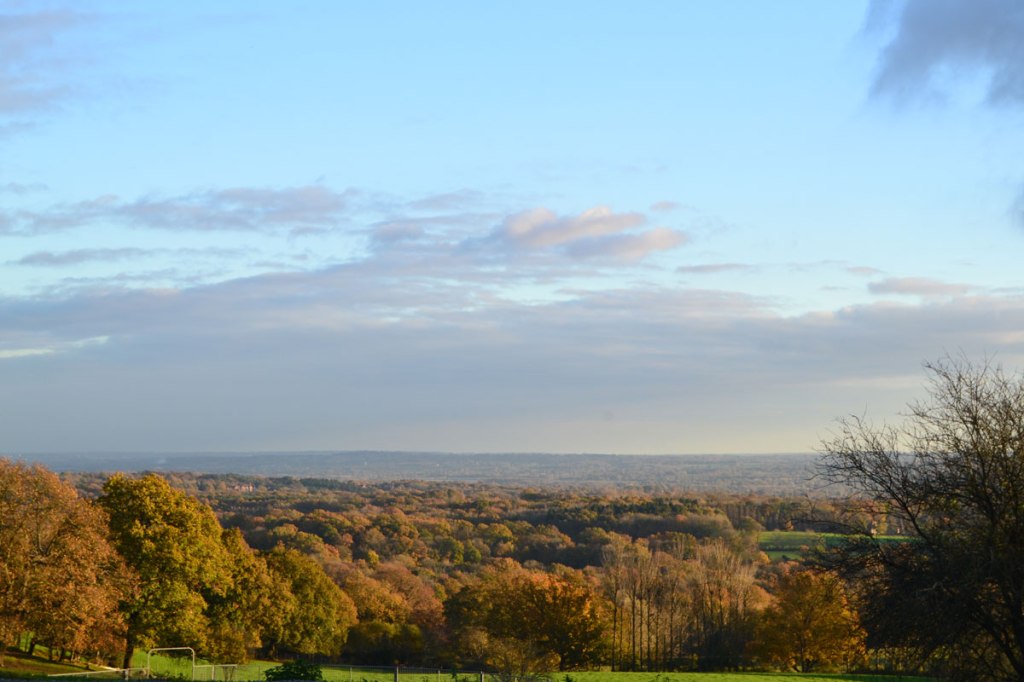
Darent Valley view from above Shoreham
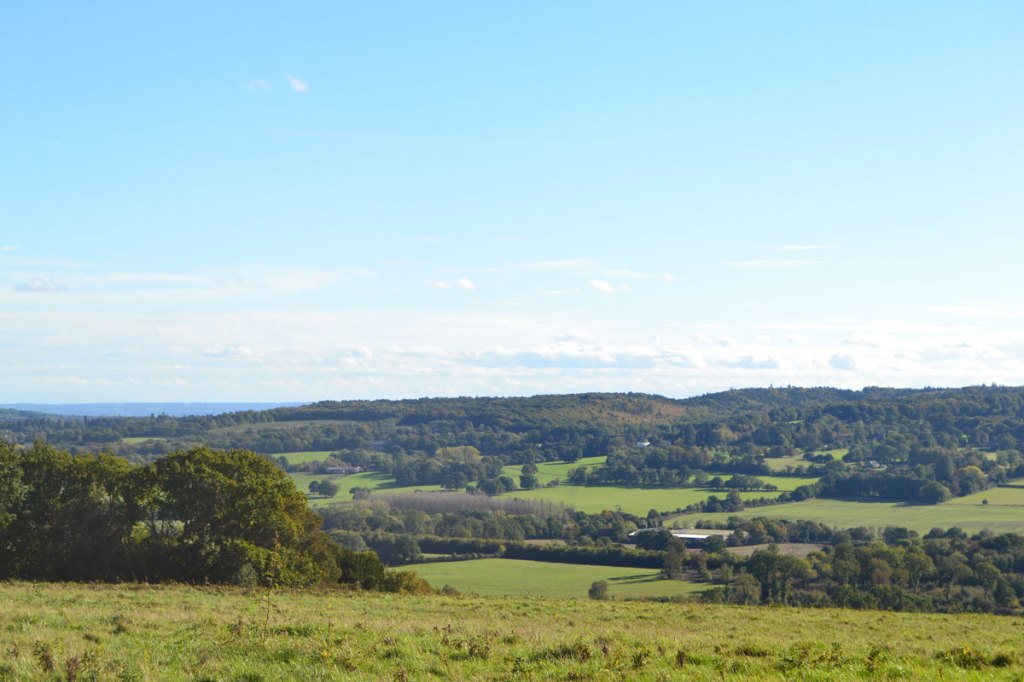
View across Darent Valley toward Fackenden Down on Shoreham circular and Polhill walks. iphone pic

It’s interesting to reflect when gazing across these lovely pastoral valley, and at Palmer’s beautiful paintings, that all was not well in the countryside in the 1830s. Mechanisation was putting farmhands out of work leading to disturbances and the destruction of agricultural equipment, incidents collectively known as the Swing Riots. In 1830 more than a thousand protesters were transported to Australia or imprisoned while 19 people in Kent were hung for their part in the fire-setting and destruction.

Incidentally, the Samuel Palmer pub, formerly Ye Olde George, received unexpected visitors on 15 September 1940 when two very shaken pilots from a shot down German bomber were taken there for a stiff drink by the Home Guard. For some reason I had thought the pub they were taken to was the now defunct Fox and Hounds in Romney St, but the very friendly Shoreham Aircraft Museum custodian, Geoff Nutkins, tells me it was almost certainly the George. Geoff himself is an excellent artist; although what the mystic Palmer would have made of his depictions of Spitfires and Hurricanes boggles the mind.

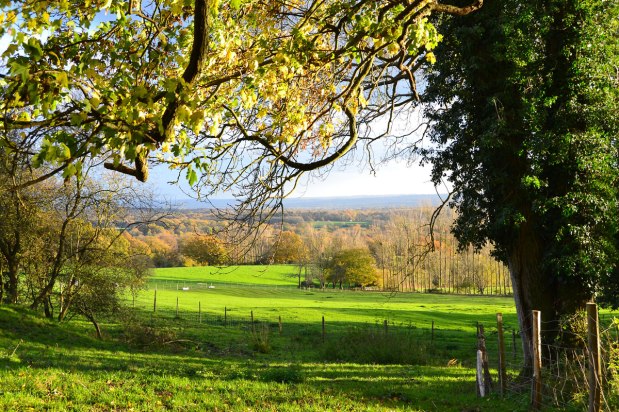
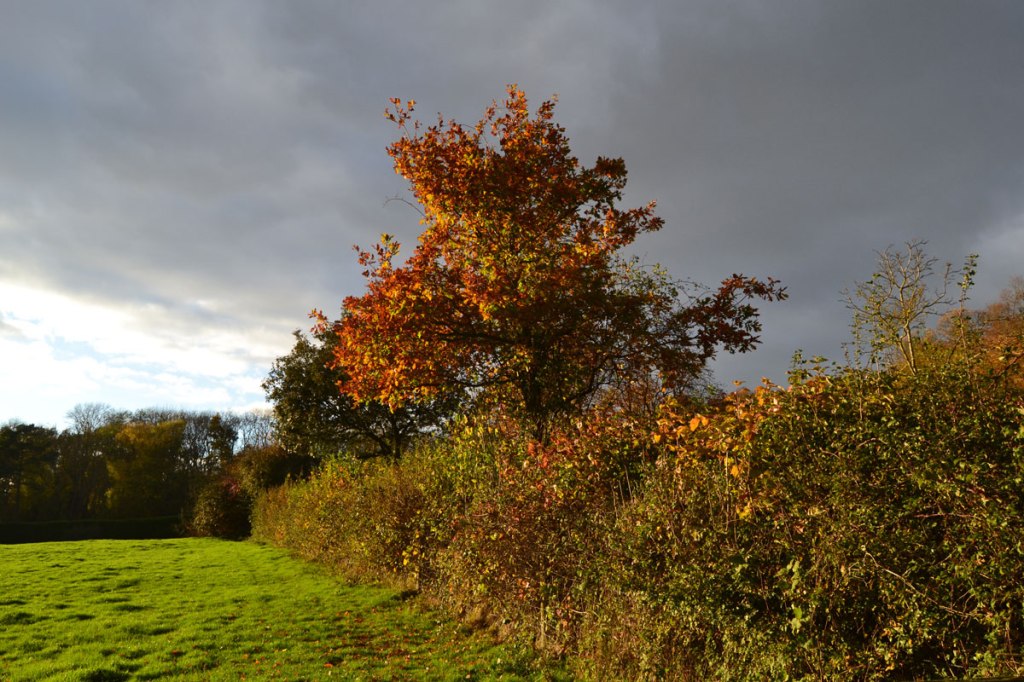
Scenery changes rapidly at this time of year as greens meld into yellows, browns, reds and golds. So many species of tree seem to go their own way, diverging increasingly in colour until they lose their leaves. Ash turns red, birch gold, chestnuts almost yellow.

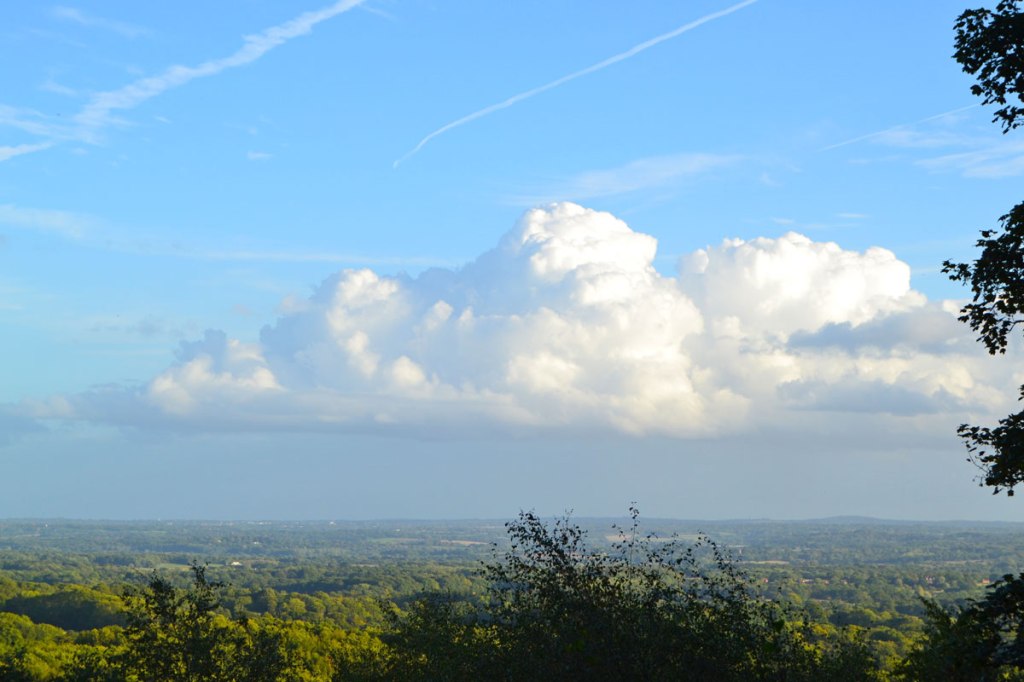
View from Mariners Hill near Chartwell
Weald view from Mariners Hill on the Hosey walk, in early autumn

Other recent walks have included Hosey Hill, Petts Wood and Cudham. Autumn colours are really becoming apparent now – it really is a great time to get out into our local countryside. Petts Wood was wonderful on Monday 17 October; what a gem that area is for a walk within suburbia.

Petts Wood walk early autumn
Hawkwood Estate, Petts Wood in mid autumn. Birches along the Kyd Brook. iphone pic

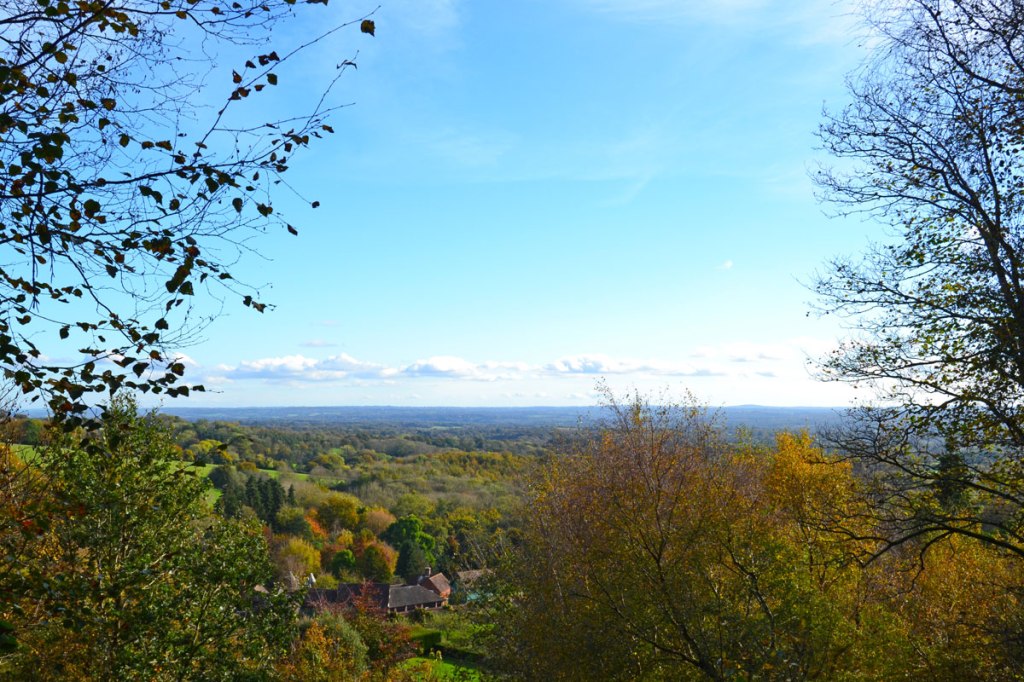
The Westerham and Hosey walks are brilliant in autumn too, with huge views of the Kent Weald from Mariners Hill (near Chartwell) and a wealth of woodland, at times tangled and impenetrable and others spaced and stately.

Near Westerham early autumn
Tower Hill, behind the infant River Darent, in early autumn 2022, on the Hosey and Westerham walks

Conditions underfoot remain pretty dry considering we’re past October’s mid-point, as rain remains an unusual event. It also continues to be very mild, thankfully, considering the energy crisis and on several walks lately I’ve felt overdressed. My next sorties will hopefully be further south, to Hever – well overdue – and then the Ashdown Forest.

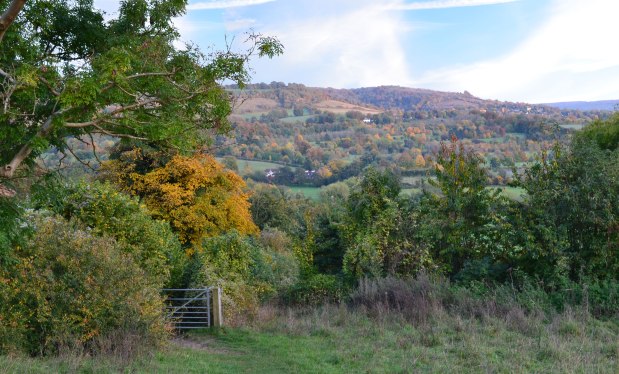
Gate in late afternoon in autumn
Gate in early autumn on Hosey walk
Ide and seek on the greensand

Ide and seek on the greensand

With Saturday a washout it was a real pleasure on Sunday to find time for the Ide Hill route (a three-hour round trip from SE London). For some reason I often take this Greensand Ridge walk while my chosen football team is playing so it’s rarely the relaxing stroll it ought to be. Fortunately, after initial tension, the goals came in a rush so by the halfway point all was well and I could enjoy the subdued January colours, stillness of the woods and occasional bird calls. A huge buzzard glided away from us soon after leaving Scord’s wood leaving a cacophony of jackdaw and carrion crow calls its wake. There were few other birds evident though, a few robins, wrens and a dunnock the only compensation for the finches I was hoping for. The tiny cricket pitch at point 5 seemed even more titchy with no one on it. We caught the sun as it slipped out of the blue sky into a solid-looking bank of cloud draped across the western horizon as far as the eye could see. This gave us a strangely false sunset, and an early dusk at odds with the sky overhead. But those weald views – fantastic as ever. A pint in the cosy Cock Inn was a perfect way to conclude proceedings. Oh, happy new year by the way.

Winter dusk in the Kent downs

Winter dusk in the Kent downs

I followed my own advice and stuck to Knole and Lullingstone over the Christmas break, with the family. Christmas Day was a real beaut as were the past two days. When it’s clear, it’s fine to walk until 5pm, after sunset; you’ll be rewarded with vibrant sky colours, maybe drifting mist and even the silent flight of an owl. The next few days look fairly dull but the walks on here have great atmosphere in all conditions. Here are some pictures of Knole and Lullingstone from the past few days.
This slideshow requires JavaScript.