Quiet North Downs, busy South Downs; all good

Quiet North Downs, busy South Downs; all good

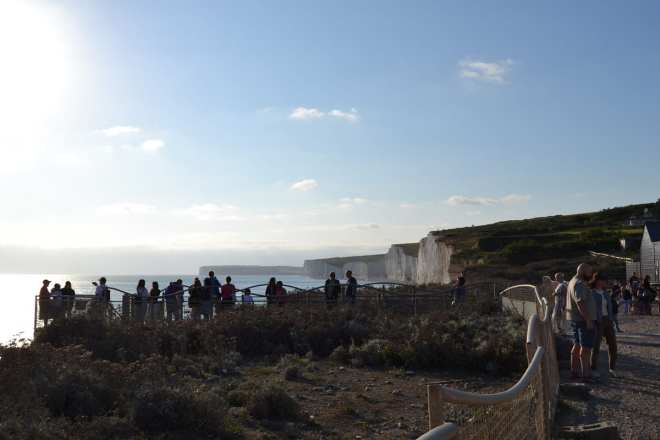
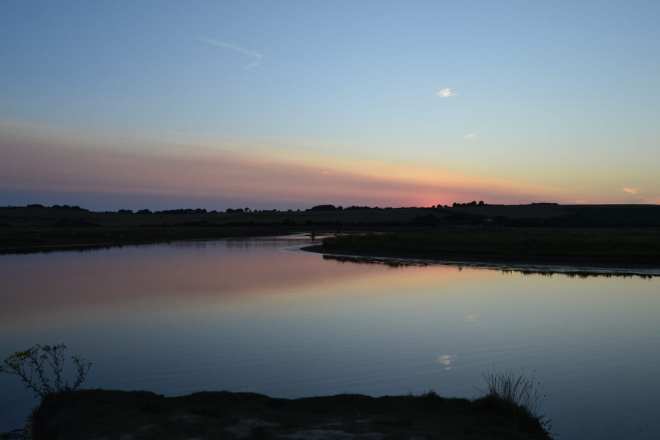
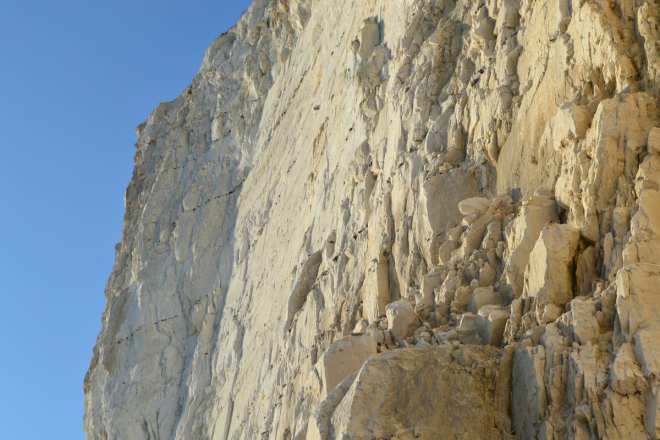
A walk around Birling Gap in East Sussex amid the famous Seven Sisters chalk cliffs was just the tonic for a dreamy August last afternoon. It’s a brilliant trip that we do fairly regularly. We started on the beach at Eastbourne with a picnic while enjoying the August airshow, before hitting Beachy Head and the Gap. After a pint at the superb Tiger Inn in ancient East Dean, we topped off the adventure with a 45-minute sunset stroll along the lower Cuckmere river from the Seven Sisters visitor centre to the sea. It was blissful but busy with tourists and folk down from London … which is just fine with me; it’s great to see everyone out enjoying the beautiful countryside, and the joy people were feeling in the sea air was kind of infectious. It felt a bit like going to the cinema – the pleasure of a shared experience of wonderful scenes is a great thing. Sussex by the Sea is a special place.

  • North Downs view
  • An egret at dusk in the Cuckmere river

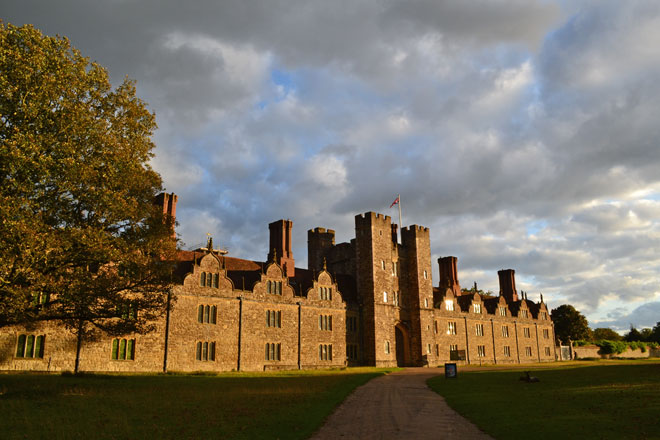
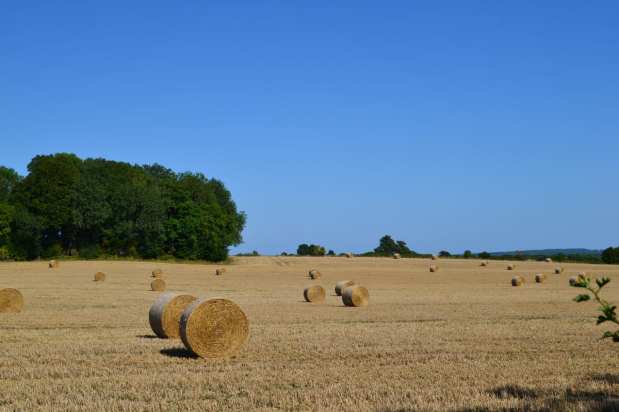
The following day it was back to the North Downs for the Knockholt / Chevening route; the first time this year I reckon. As mentioned in my previous post I was tipped off by a helpful KWNL’er that there was a useful diversion at the Point 5 which means you don’t have to walk on Sundridge Road anymore. And so there was. It was great. Very sleepy, dry, Augusty, quiet. And so few people! I missed the crowds at Birling Gap. Well, I didn’t reeeeeally; I love solitude too. Without the waves, gleaming chalk, and sea breeze, the western North Downs don’t have quite the easy allure of their southern counterparts; but for quiet, great views, glimpses of the medieval past and atmosphere they are wonderful. But so few south-east Londoners seem to quite know what’s on the doorstep – which is the point of this website I suppose.

Summer ended at Camber; look forward to October

Summer ended at Camber; look forward to October

October, along with June, July and January (all the J’s) is a ‘classic’ walking month. We all know about the turning leaves so I won’t bother describing the colour changes that occur! What I like best are the migrating, busy birds, the every changing cloudscapes, the sudden showers, the unpredictable temperature changes (‘wow it’s warm’, ‘wow it’s like Iceland!’) and, best of all, the light. It’s a real shame when the clocks go back at the end of the month because it denies us hikers of another hour of daylight. Why we continue with this bizarre clock policy defeats me; I guess it’s as British as the mythical replacement rail bus or surprise roadworks. It is what it is … sigh. Rant over.

  • Knole
  • view over Weald

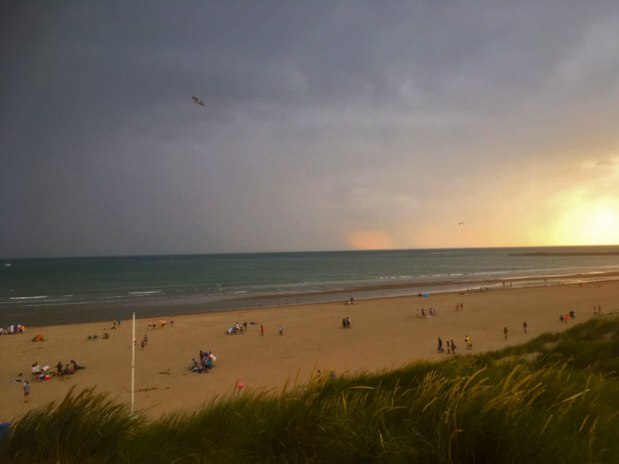
Now, Camber Sands – that’s where we went last week to fully mark the end of summer. A fish flatbread with chilli jam, salad and sour cream at Dungeness’s brilliant Snack Shack* set us up for a late afternoon swim in the luckily non-sewagey waters at Camber. We followed this with a drink at the delightful Ypres Castle Arms in Rye, a tucked-away pub with a great beer garden and view of the salt marsh and Channel. As dusk began a little thunderstorm was flickering away somewhere near France but gradually crept closer. On the way home the ‘little’ storm suddenly became very large and caught up with us: spectacular fork lightning and bursts of torrential rain and hail propelled us past Northiam, Bodiam, Hawkhurst and even Tunbridge Wells – where of course the A21 was shut, necessitating an abysmally long diversion. But then the closure of major roads mid-evening, like mythical rail replacement buses and the clocks going back is something us Brits seem to just have to tolerate.
* I recommend the Snack Shack but go before 2pm if poss, it gets very busy and perhaps has become a bit too popular. An alternative is the superb Britannia Pub just up the road.

Hasten to Hastings

Hasten to Hastings

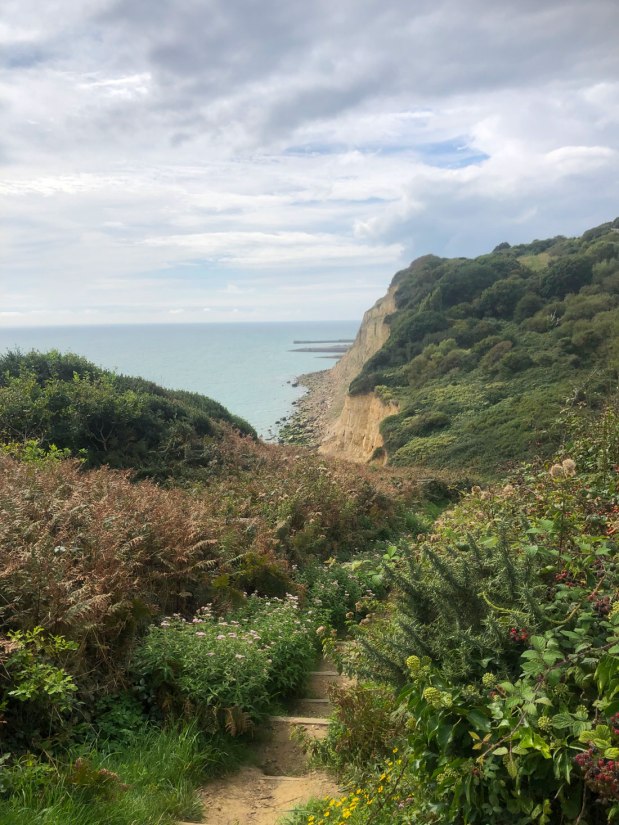
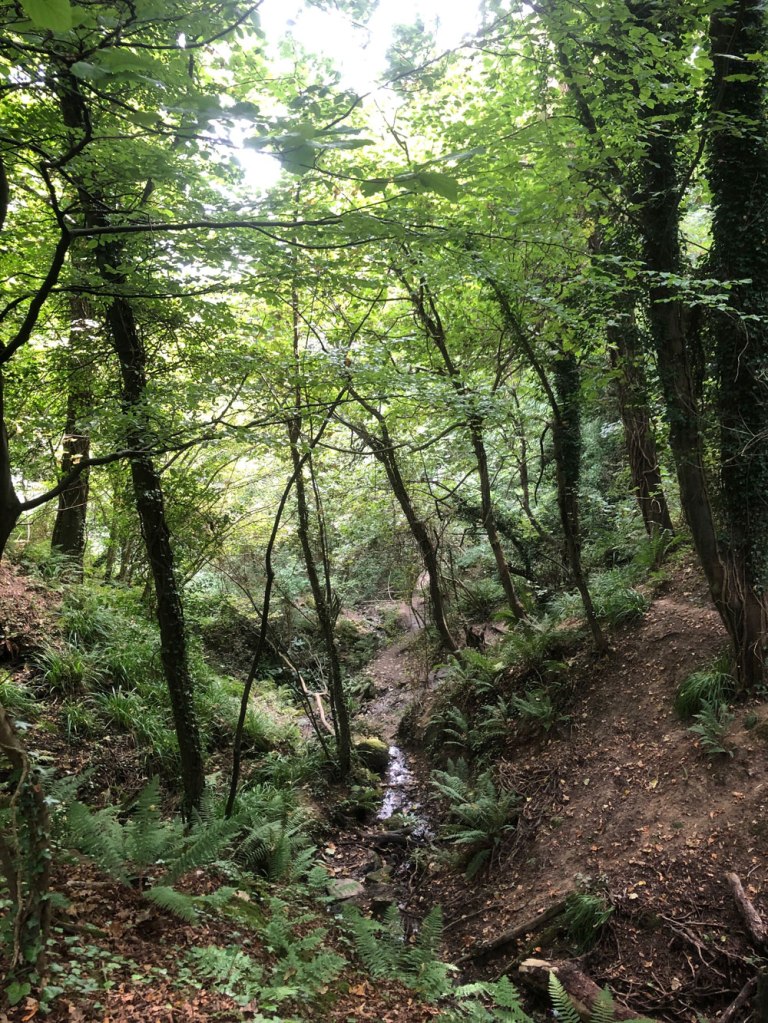
It has been known for me to make an occasional foray outside Kent to far flung parts. East Sussex is one such place. This week I ticked off a bucket list item (having once seen a TV programme extolling the nature around Fairlight Cove) by doing a long walk in Hastings country park. It’s a superb sandstone landscape of cliffs and steep ravines through which flow vigorous little streams. These ravines are called glens – Ecclestone Glen and Fairlight Glen are the most impressive – and have lots of sessile oaks (like the short, twisty oaks of Welsh valleys) and exotic-looking ferns. The glens are heat and humidity traps, so have a kind of tropical feel.

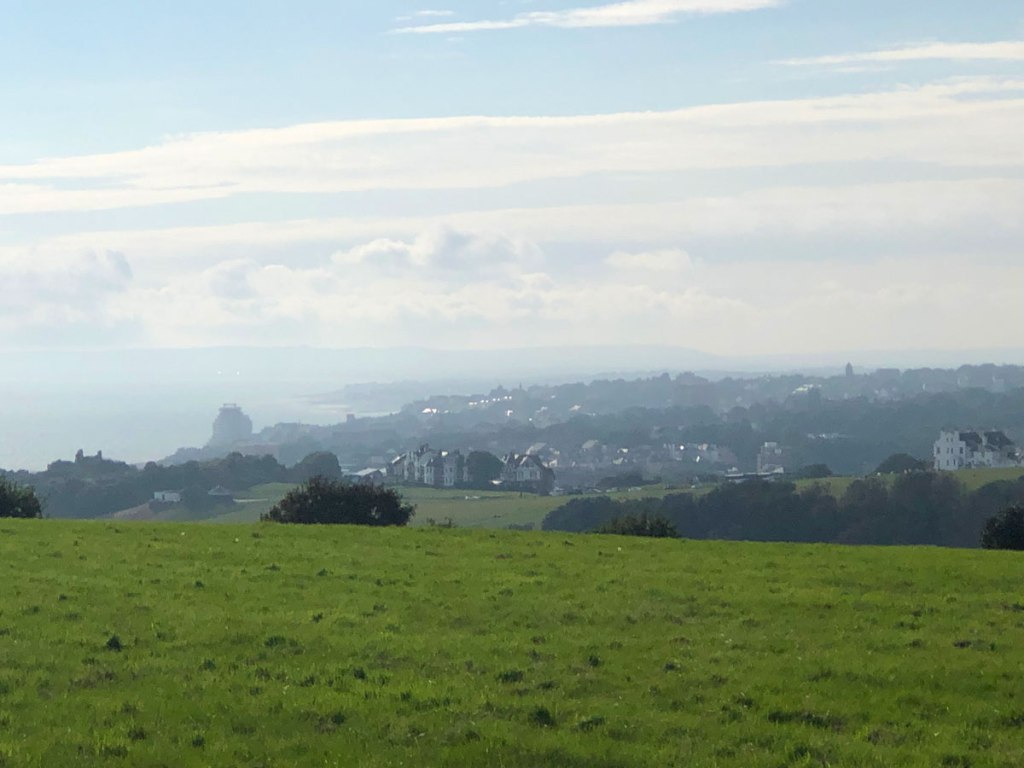
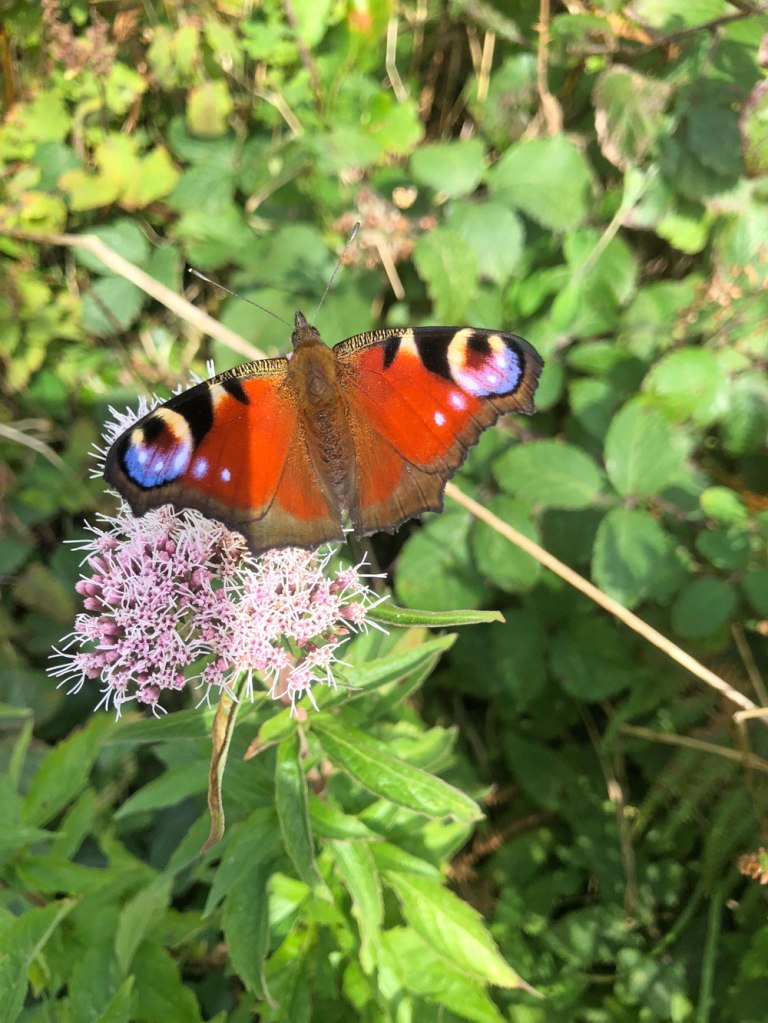
Clockwise: view of Hastings from East Hill; view of Winchelsea Beach and Camber from Firehills; a glen reaches the sea; the clifftop path; newly emerged peacock butterfly feasting on hemp-agrimony; Fairlight Glen

The trees are small because the steep slopes and sandy soil will not support any great weight. The crumbly slopes and thick scrub (superb blackberries) reminded me very much of the undercliff between Axmouth and Lyme Regis in east Devon/west Dorset. My walk started at East Hill next to Hastings Old Town and finished at Firehills, where I enjoyed a superb view over Pett Levels, Winchelsea Beach, Camber Sands to Dungeness. Later I visited beautiful Winchelsea village for the first time, swam by Hastings harbour arm and enjoyed a superb gig by Corrie Dick’s Sun Swells band hosted by Jazz Hastings at the wonderful Sea Angling Association venue overlooking the English Channel. My kind of day trip. Further explorations to exotic locations included a trip to Canterbury to see old friends and an enjoyable walk in the chalk downs at Bekesbourne.

Click here to see an OS Maps rendering of my Hastings route (with GPX navigation). You can see from the map that it would be possible to extend the walk all the way to Rye and beyond very easily; there are buses to take you back to Hastings or take the Rye train to either Hastings or Ashford to connect with a London service.

A late winter walk in the Ashdown Forest

A late winter walk in the Ashdown Forest

A rare day off afforded me (us, actually) to venture somewhere during an afternoon when it didn’t rain continuously. We settled on the Ashdown Forest, an hour’s drive from my corner of south-east London, in East Sussex between Tunbridge Wells and East Grinstead. A perusal of the visitor centre’s maps online led us to choose Walk 11, Chelwood Gate, in the south-west of the Forest.

The area has got the lot: interesting geology, flora and fauna, views, history and literature, being the landscape for Winnie the Pooh’s capers with many recognisable spots. These include Eeyore’s Gloomy Place, Galleons Lap, the Heffalump trap, for example, all of which can be identified.

The walk was beautifully laid out in printable format, with lots of informative text. But it was very difficult to follow; a “narrow path” beside a ditch was actually a wide path that went through a huge puddle – that sort of thing, but we made it around thanks to careful map analysis. In fact, with a compass, a sense of direction and an Ordnance Survey sheet you can pretty much make it up as you go; there are many paths to choose from and the Forest’s inner Pale is open for exploration in a similar way to Knole Park, for example.

What was immediately apparent was just how much rain has fallen this winter; everywhere there were overflowing ponds, gushing streams, seas of mud. You’d think it was Scotland at times. But in fact the Forest, being easily the highest point of the Weald between the North and South Downs does attract far more rainfall than the lower surrounding areas and really does pep up the local rivers, eventually flowing into the Eden and Medway. The high heath and the Pale melds into wooded valley mires where the pines give way to alder and birch, and planks serve as bridges over vigorous streams, alongside some very old looking stone bridges.

This slideshow requires JavaScript.


I love how the Forest has its own vocabulary: there are ghylls, hatches, laps … And the names of the car parks are evocative too: Friends, King’s Standing, Roman Road, Goat, and of course Piglets and Pooh.

After we finished with Chelwood Gate (where medieval hero John of Gaunt used to enter for hunting and a home to Howard Macmillan, who once entertained JFK here) we drove a few miles east past Nutley and up onto the highest part of the Forest, to Gills Lap (Galleons Lap in Winnie the Pooh). Up there the views extend over bright yellow gorse for mile after mile in all directions. We walked down to the memorial to AA Milne and EH Shepherd. I felt quite moved, those stories have a real character and a sense of an innocent time that has been lost.

Our final port of call was the 15th-century Anchor Inn in the small village of Hartfield, a cosy labyrinth of a pub that serves two of the finest ales in all England: Harvey’s and Larkins. As we arrived at dusk a barn owl glided across the road in front of us. Then it was back to the smoke to plonk in front of the telly to watch Chelsea beat Liverpool … who would have credited that?

Getting there on public transport: Train to East Grinstead from East Croydon then the 261 or 270 bus seems to be the best option. At East Grinstead the brilliant Bluebell Railway takes day trippers by steam train down to Sheffield Park, south of the Forest. At the moment a landslip caused by rain means trains can’t reach East Grinstead, but there is a bus service from Lingfield. Boring though… so best wait ’til services are restored, hopefully in spring.
Getting there by car: Drive via Keston, Biggin Hill, Westerham, Edenbridge, Cowden and Hartfield on the rather pleasant B2026.

Walking is brain food and so is Camber Sands

Walking is brain food and so is Camber Sands

A new article on walking has popped up at The Guardian‘s website. It’s a Superpower: How Walking Makes us Healthier, Happier and Brainier by Amy Fleming is in the form of a chat with neuroscientist Shane O’Mara while strolling around Dublin. O’Mara makes a great case for walking’s mental benefits; even why strolls are superior to going to the gym or running. I particularly like this quote: “My notion – and we need to test this – is that the activation that occurs across the whole of the brain during problem-solving becomes much greater almost as an accident of walking demanding lots of neural resources.” I have to say I often feel my own brain is emptying during a walk rather than becoming more powerful – perhaps that’s what he means!

O’Mara seems to walk around cities mostly – Dublin, Oxford etc – and there’s no mention of nitrogen dioxide and low level ozone and their possible negative effective on our health. I reckon he needs to hit the countryside, where he’ll find the mental benefits even more striking … I recommend the Fackenden Down walk in late summer sunshine, the ultimate brain nutrition.

Camber canter

Meanwhile, we chose another daytrip to south-east Kent and East Sussex on the hottest day of the year last Thursday. Once again we took in the RSPB reserve at Dungeness, the Britannia pub nearby, Camber Sands and glorious Rye, all of an afternoon. We hit the dunes at Camber at about 3.30pm amid blazing 35C sunshine and air as thick and moist as treacle. Visibility on the southern horizon was curiously murky, however. I noticed gleaming white pinnacles of cloud and the ragged whispy fringe of a cumulus nimbus, towering above northern France I guessed. By 5pm the whole southern sky was black, yet miraculously the coast was still bathed in scorching sun. Lightning flickered horizontally over the English Channel and a regular deep rumbling marked the end of the heatwave. I lay back in the sea enjoying the unusual scene, paddling softly, and got a tremendous sting off a jellyfish.

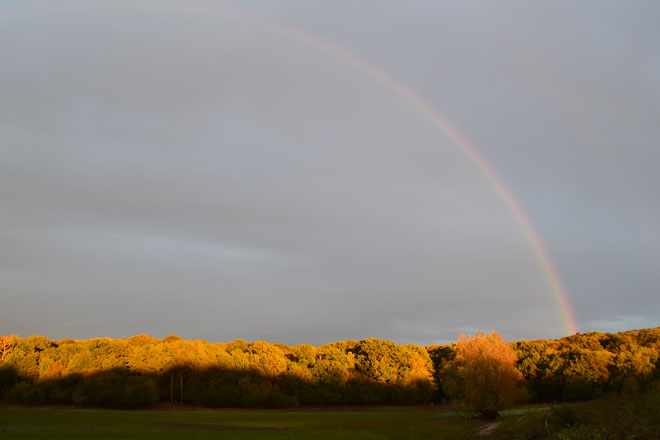
At 6.30 we set off for Rye pursued by hail, huge raindrops and a wonderfully warm wind. Walking through the beautiful town the sky went orange, a huge rainbow spanned the Romney Marsh to the east and lightning continued to sear through the heavens. Quite a day.

More Dungeness dallying

More Dungeness dallying

This slideshow requires JavaScript.

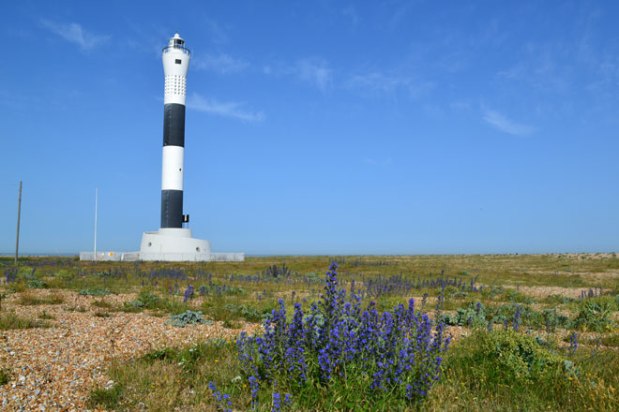
I usually visit Dungeness in winter for some reason. But on Saturday I chose the hottest day of the year to drop by the surreal headland jutting out into the English Channel. The place was awash with deep blue viper’s-bugloss flowers; very atmospheric and spectacular. The two-mile walk around the RSPB reserve was exceptional and we saw a bittern – a first for me – reed buntings, snipes and sedge warblers.

After a quick pint at the Britannia pub and a stroll in the shingle looking out for seals and porpoises, which everyone else sees but I don’t, we headed for the bedlam of Camber Sands. Miraculously a space became available in one of the car parks as we arrived (it was 6pm but as many people were arriving as leaving) and we got our cooling dip in. The water was particularly brown, however, perhaps because the tide was on the way in and picking up a lot of sediment. One hopes so. There was still time for a walk at Rye and a pizza before the drive up the A21 back to south-east London. Great day out but to squeeze all that in a car is needed really. You could take a train to Ashford then the connecting train to Rye, and a bus, I guess. You’d have to set off a lot earlier than we did though.


Rye Harbour

Odd huts, unusual plants, shingle, birds, marsh and just sheer weirdness pop all along the Kent coast into East Sussex. Dungeness feels like the source for all this, but little Dungenesses pop up from Reculver near Herne Bay right round to Rye Harbour. The latter I visited on the ‘hottest day of the year’, last week (July 26, 2018).

This slideshow requires JavaScript.

Ashdown Forest – great even on rainy days

Ashdown Forest – great even on rainy days

Just a one-hour drive from south-east London or train journey from London to Tunbridge Wells, Crowborough (nearest station), Uckfield or East Grinstead then bus/taxi/cycle. More info on public transport options here

Further afield than the walks on this site, but not inaccessible from London by train/bus/taxi/bike, is the extraordinary Ashdown Forest (map here) in East Sussex. ‘Forest’ is a misnomer; the word did not originally mean just woodland, it referred to areas where deer were kept for hunting – often in a mixed habitat.

The Ashdown Forest lies on the high weald of sandstone between the chalk of the North and South Downs. It’s a great place for walking – you can wander anywhere, there are few fences and loads of paths. There is scots pine, heather, gorse, rare birds like the dartford warbler, lizards and snakes, many varieties of butterfly, moth and dragonflies. There’s also a lot of history – the area was a favourite hunting ground for Henry VIII (useful for nipping into Hever Castle on the way back too or, if Anne wasn’t in, Bolebrooke Castle), and there was a medieval iron industry in the forest too. On a misty, drizzly, murky day like Monday this week it really resembles parts of Scotland (you wouldn’t be able to see any mountains on such a day anyway).

The pictures here were taken around Gills Lap – a place immortalised by AA Milne in Winnie the Pooh – and Wren’s Warren Valley (Eeyore’s gloomy place in Milne’s stories).

Where to go: Parking is easy in the Ashdown Forest. There are many little car parks from which paths meander off. My favourites are King Standing, Gills Lap, (both off the B2026 from Hartfield and great for high level walks between the clumps of pines), Hollies (off the Nutley Rd near Duddeswell), Lintons (ideal for the Tabell Ghyl walk), and Broadstone (close to the excellent visitors’ centre).

• Mapped walks in the Ashdown Forest from the Ashdown Forest Centre
• Guided walks
• Map of walking routes and carparks
Forest Row bike hire

Near the Ashdown Forest is a flat off-road cycle route called the Forest Way running 6 miles from Groombridge to Forest Row (bikes for hire in Forest Row). Groombridge (home of the superb manor house, gardens and woodland, Groombridge Place) is on a steam train line – the Spa Valley Railway – between Tunbridge Wells and Eridge, on the edge of the Forest.

This slideshow requires JavaScript.