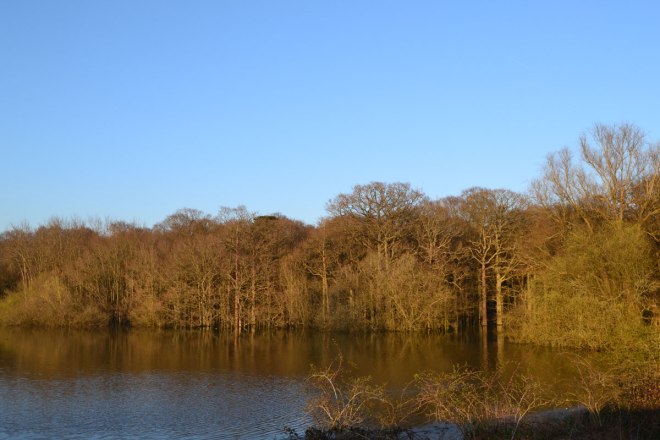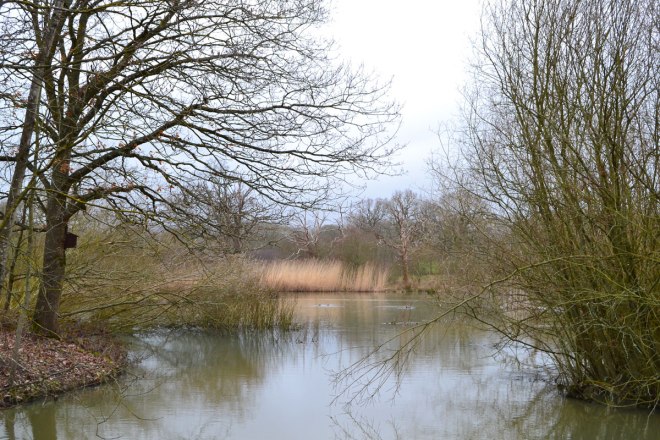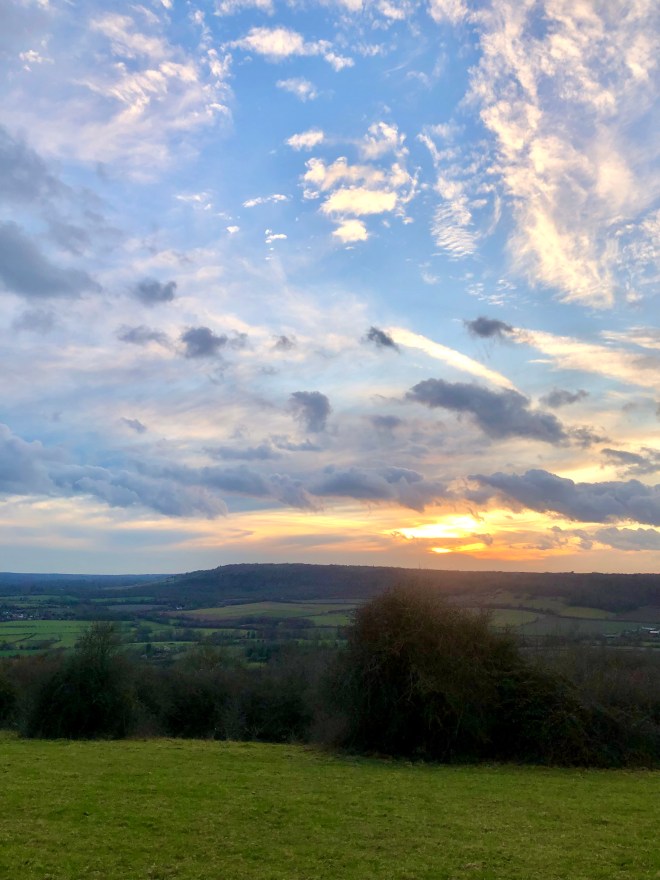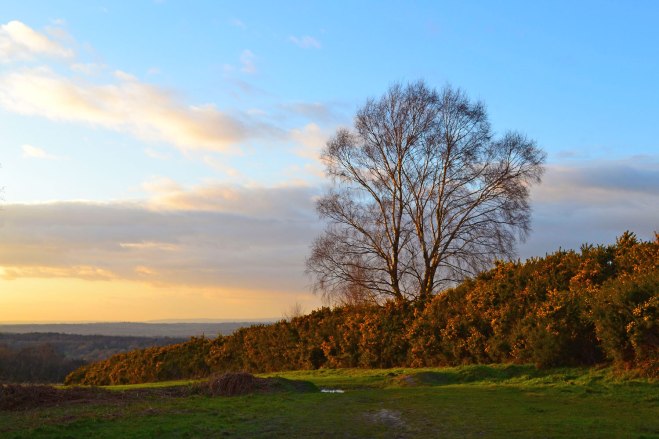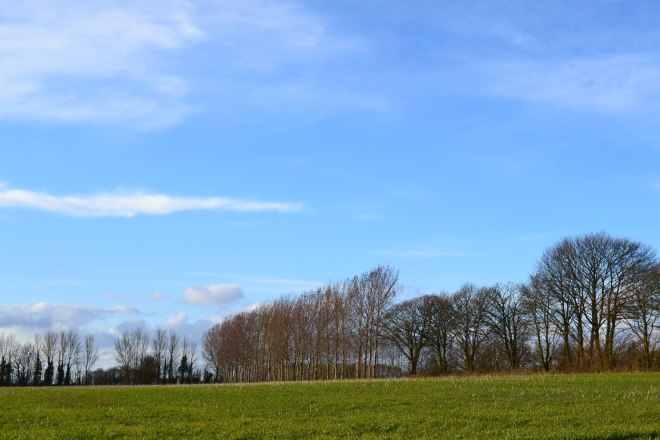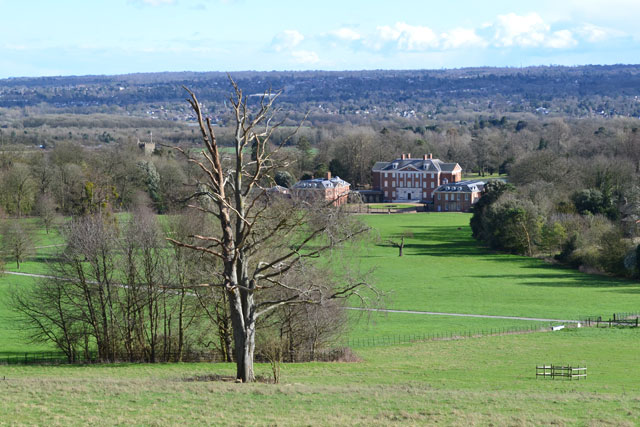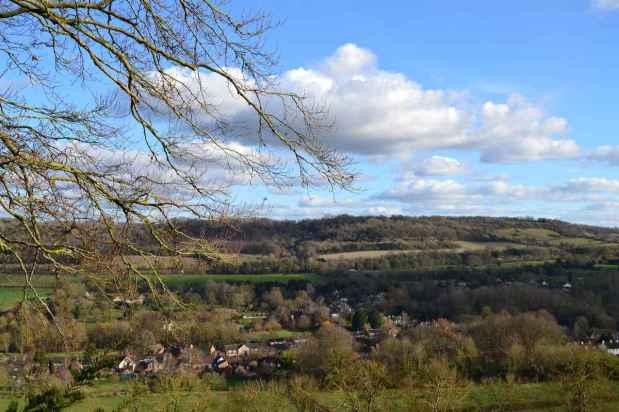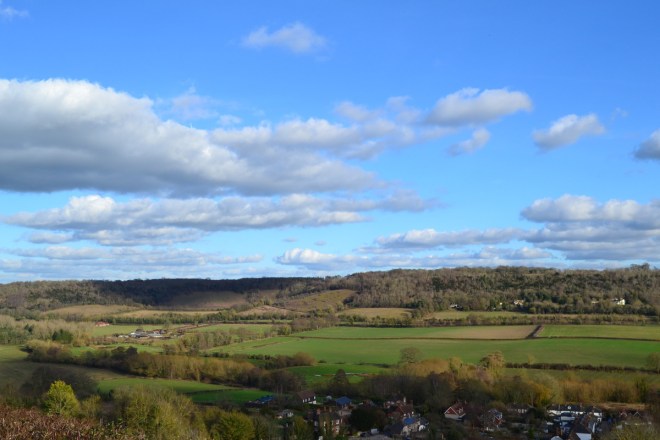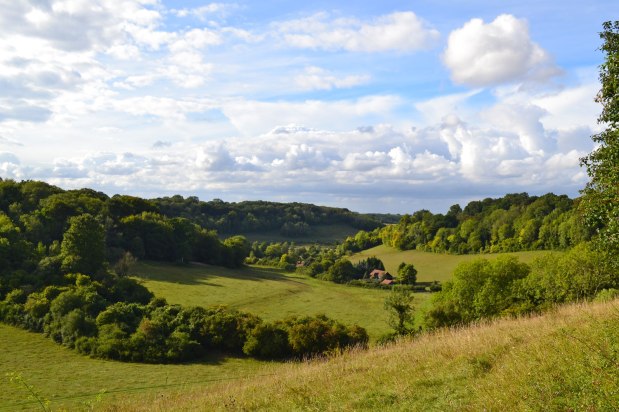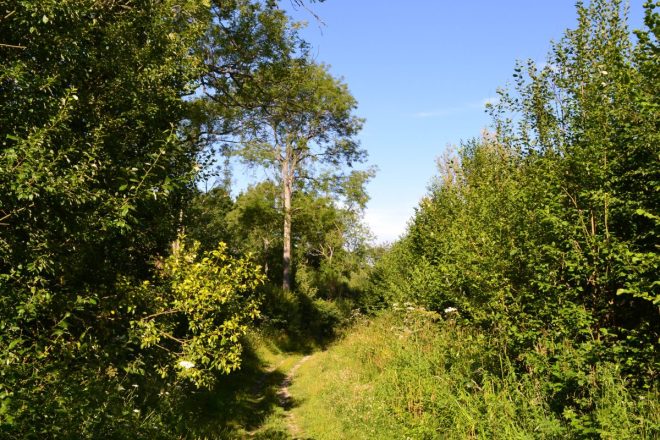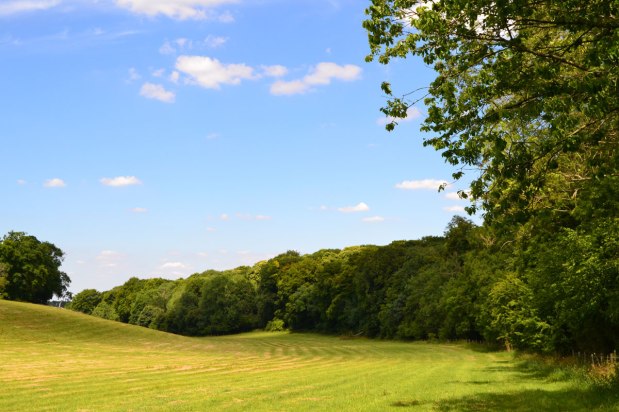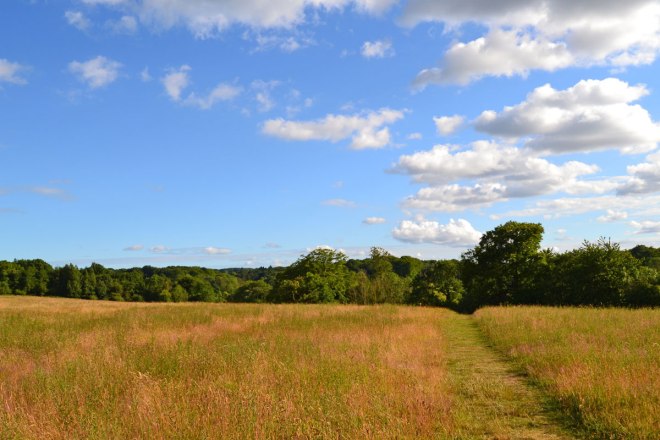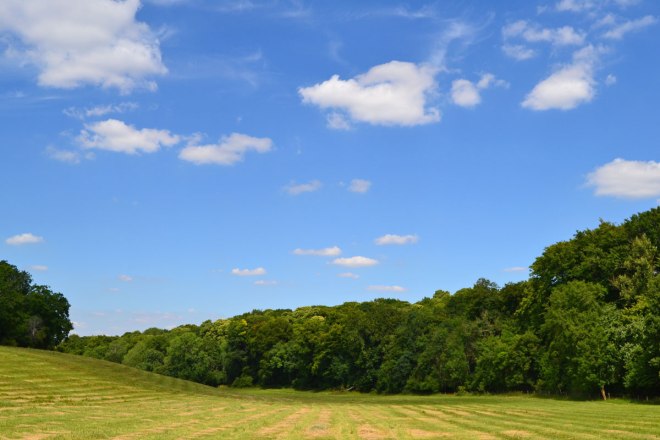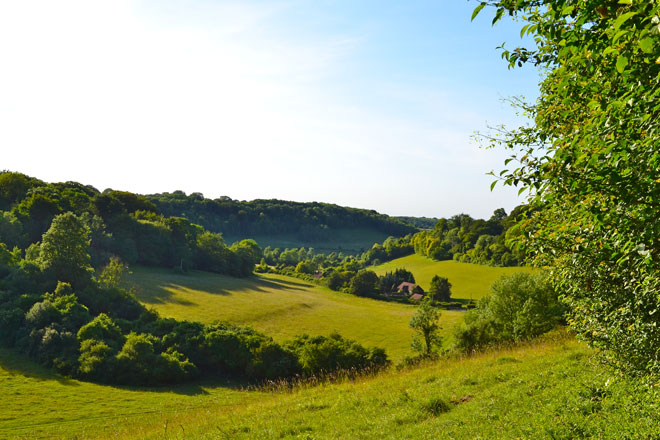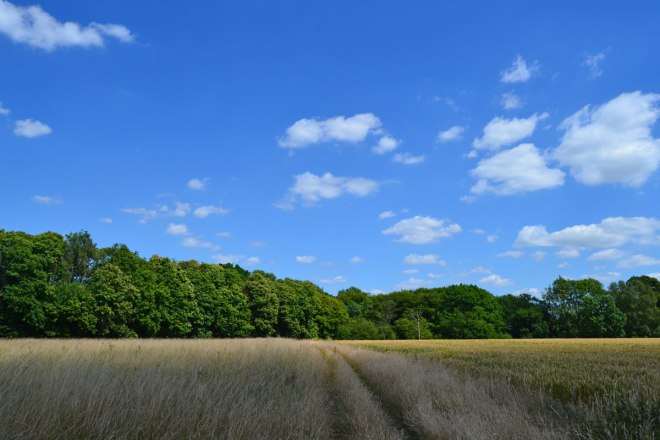
High pressure is dominating the weather and the near-drought continues. There is no mud on any of the walks, which once would have been unheard of for mid-October. For the past week it’s felt as if summer’s lease has no intention of expiring anytime soon. Amid mild temperatures and cerulean skies we enjoy the spectacles of the season as the greens of September become more mottled and varied as they meld into the yellows, oranges and reds of November. Rosehips, elderberry and sloes decorate the hedgerows and fungi mystically appear in woodland and grassy fringes. I’m not one for foraging; I much prefer to look and leave well alone (apart from blackberries).
Birdlife still seems somnambulant: I’ve been hoping for migrations but in this still weather nothing much seems to stir. A week ago, in the wake of Storm Amy, hundreds of house martins passed overhead heading east with the wind, as a full moon rose in a purple sky. But this was in Lower Sydenham not on the Kent walks. My only notable sightings have been a kingfisher on River Eden on the Chiddingstone walk; red kites over Lullingstone and Downe; grey plover and lapwings on the ever-expanding shoreline at Bough Beech reservoir (I’ve never seen the water so low); and buzzards at Polhill.
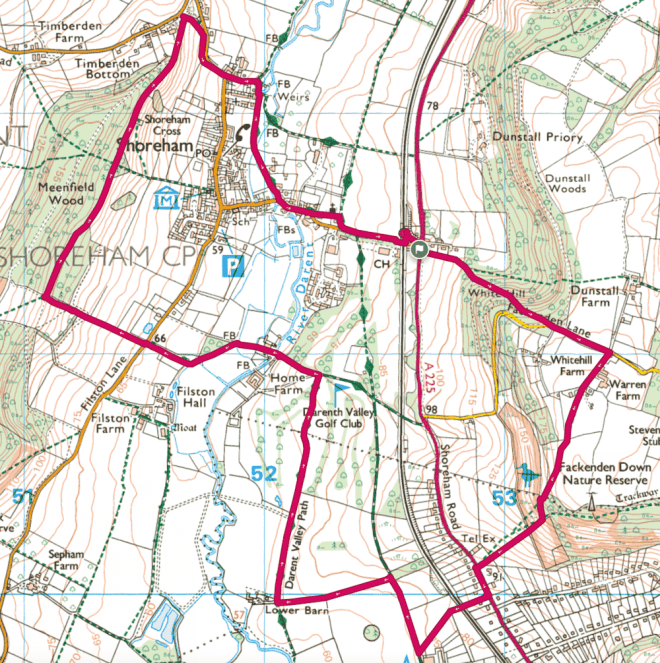
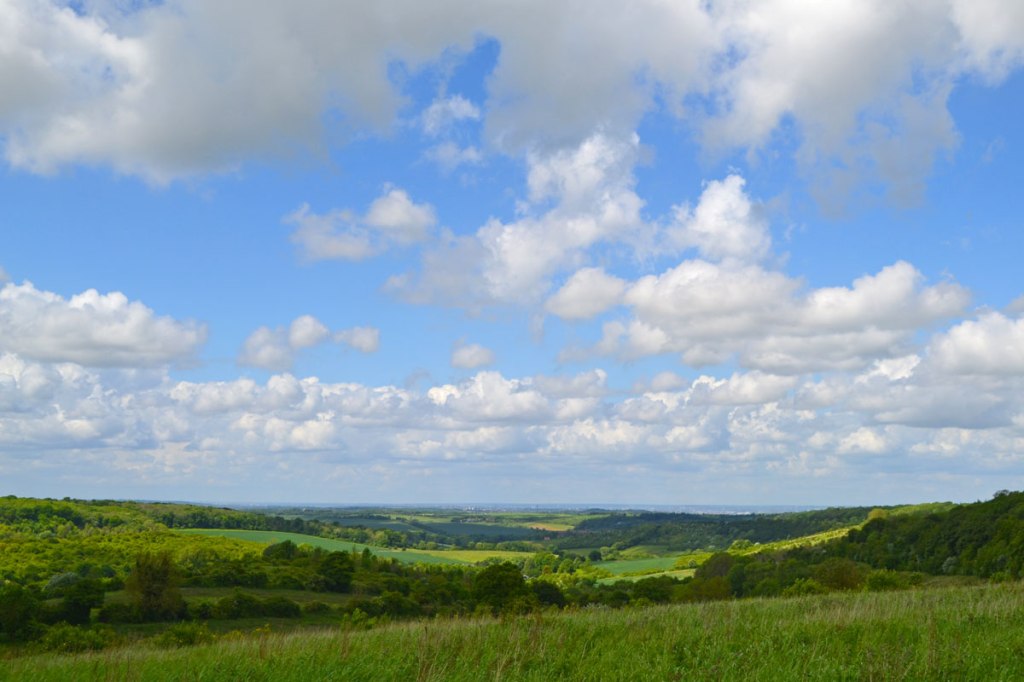
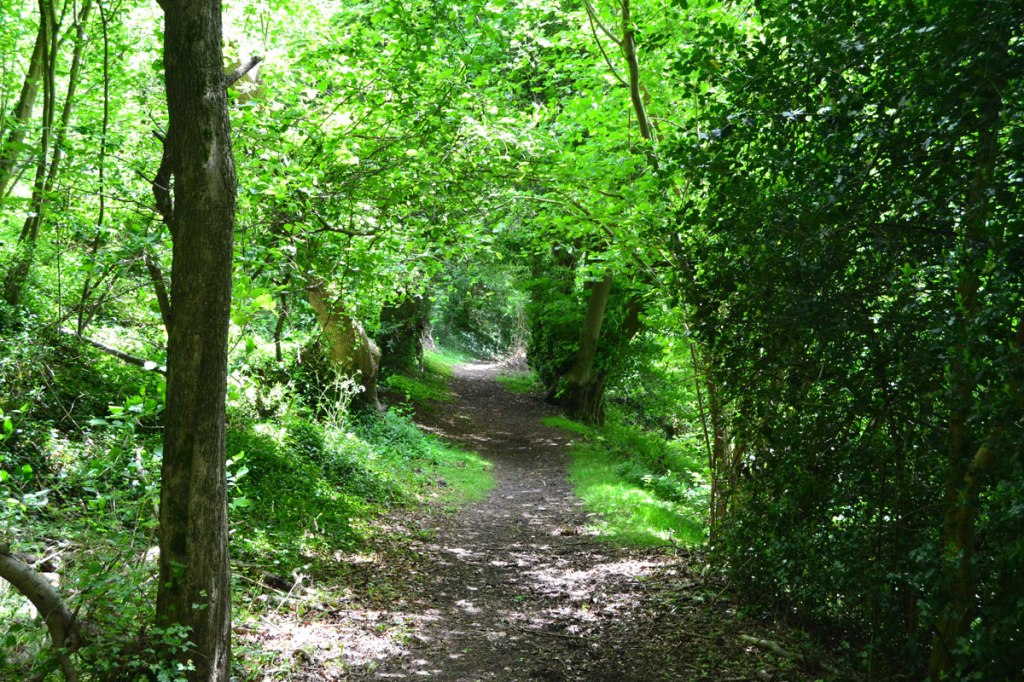
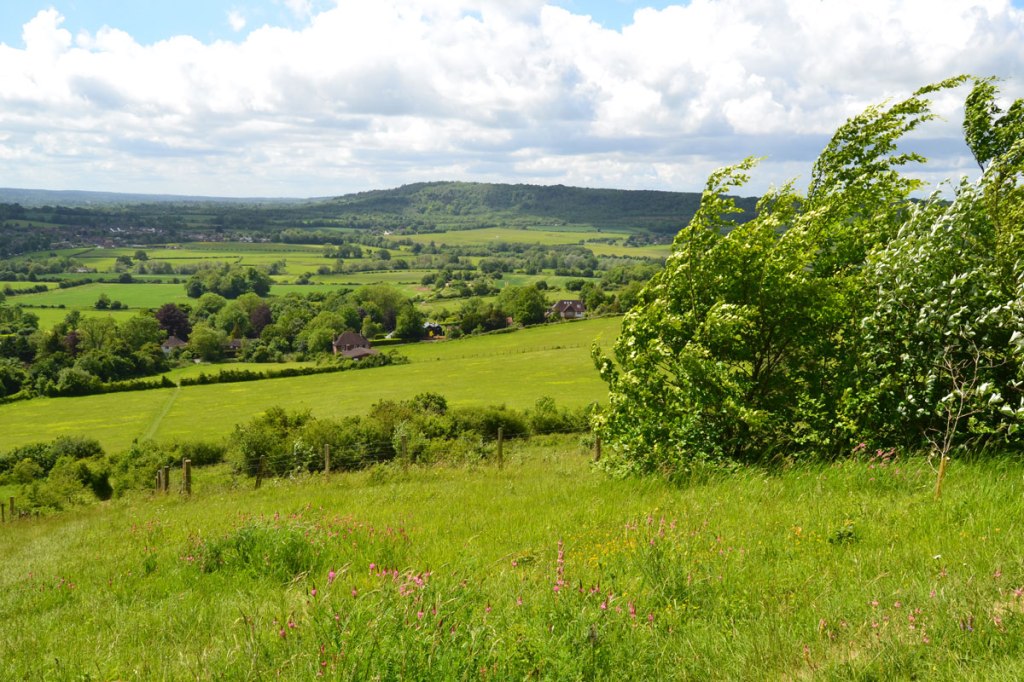
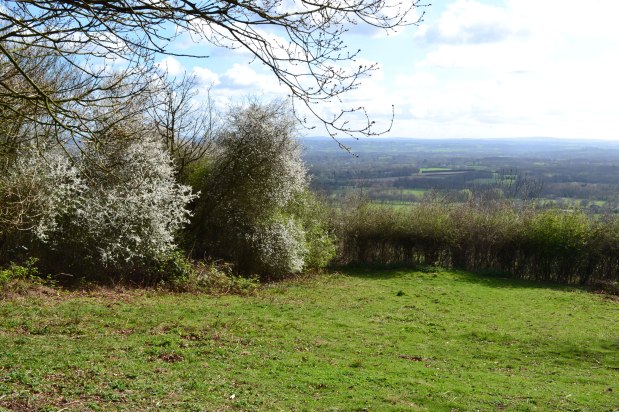
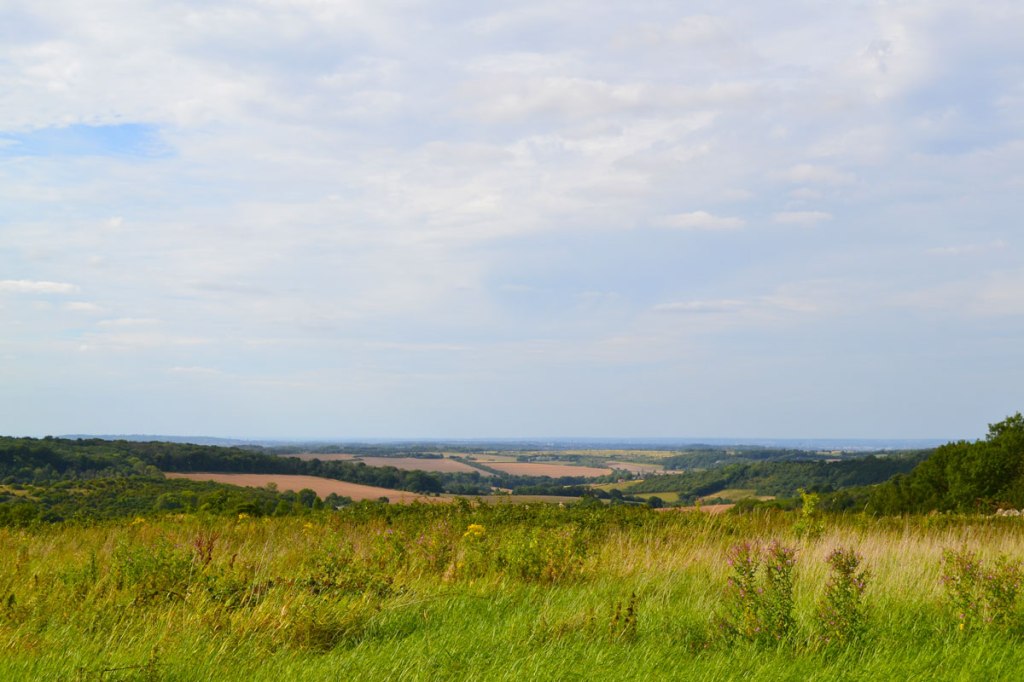
My walk at Fackenden Down today (pictured) was serene, colourful and wonderfully warm. But this isn’t autumn, surely. Lovely though it was, I would quite like to feel a fresher breeze, walk with the threat of a squall, squish through a puddle and ponder whether to wear wellies or trainers. That time will come I guess, I’ll enjoy summer’s lease while it lasts.
Kent Walks Near London can offer several lovely, lonely little valleys with their own microclimates, special flora, shelter and that precious sense of seclusion. Here are four of the best on the walks here.
1 The Darent… but not as you know it
Tower Hill, Westerham viewed from the ‘secret‘ valley of the infant Darent stream
On the Hosey and Westerham walks I love the little south-north valley that winds its way from the sandstone ridge at Mariner’s Hill down to Westerham. It’s actually the valley of the River Darent just after it rises from a spring just behind the Greensand Ridge. I was delighted to realise this was where the Darent started, the stream is more associated with the chalk of the proper Darent Valley of Samuel Palmer fame – Shoreham, Otford and so on – not this obscure place near Chartwell.
Harebells in the shadow of Tower Hill, Hosey walk
The river is bounded by beech and conifer (with Tower Hill a dark bump just to the east) and initially runs through a delightful meadow of wild grasses, unseen from the path. It suddenly broadens into large shallow pools as it heads to Westerham before turning east and making its way to its ‘proper’ valley. Autumn colours here are wonderful.
2 Magpie Bottom – great name, great valley
Magpie Bottom viewed from Austin Spring on the Fackenden walk
This stunning little rift in the landscape features on the Fackenden Down, Otford/Romney Street/Shoreham and the Eastern Valleys walk in different guises. It is so secluded that only walkers know of it. And the few residents of the curious hamlet I think called Upper Austin Lodge on the OS map.
Magpie Bottom is a classic steep-sided chalk dry valley (similar to but more dramatic than the ones on the Downe, Polhill and Cudham walks) running north to south from behind the escarpment. These are caused by glacial meltwater long departed. The valley’s head at Great Wood and Eastdown just behind the chalk escarpment of the North Downs to Rose Cottage farm is a series of wonderful spots unreachable by car, but really it’s gorgeous all the way down past Romney Street, Round Hill, Upper Austin Lodge and Eynsford where it meets the Darent Valley. Possibly my favourite place on all the walks, and all the better for no longer having a golf course in it!
3 A verdant vale on the way to Ightham Mote
Broadhoath woods in the hidden valley behind Wilmots Hill, near Ightham Mote
My final Kent canyon (it’s not a canyon) features on the longer version of the Oldbury/Ightham Moat route and is mentioned as a route alternative on the One Tree Hill figure of eight walk (see the blue line on the Google map at the KWNL page). So on the One Tree Hill routes it’s a diversion, a short cut that you’ll have to check your maps to include. But on the longer Oldbury walk it’s part of the deal. What shall we call it? It’s round the back of Ightham Mote and passes through a wood called Broadhoath behind Wilmot Hill (which has some of the greatest views in Kent). It has a lively little stream that rises just behind the Greensand Ridge, a terrific pond with viewing platform and interesting flora as it descends west to east to Ightham Mote itself, passing a shed built to house early 20th century hop pickers (you’d think hop pickers were in fact horses judging by the design of the housing – the landowners obviously weren’t too bothered by other people’s comfort levels). Like the other little valleys it’s good for birds: marsh tit and bullfinch have been seen here. It’s another totally secret dip, accessible only to walkers, that’s like an entry to another realm; a world away, but its paths are only 55 minutes from Sydenham.
When the temperature hits 30C a lot of us prefer to sit in the shade, sip a drink, maybe head to the park cafe, try to keep cool. But Kent Walkers Near London are rather like mad dogs and Englishmen – they go out in the midday sun and hit the trails of the North Downs and Greensand Ridge and anything in between. My cut off is closer to 35C when it comes to walking – I once did a few miles in Joshua Tree national park in the Mojave desert (not a Kent walk near London) at about 38C. It was great! No problemo. Just bring water and don’t get too lost and you’ll be fine! In fact doing the Kent walks are a better way of keeping cool than hanging in SE London – there’s usually a breeze on the downs and trees for shade. Plus they’ll be butterflies and wildflowers to enjoy. And unlike Joshua Tree there’s a decent pub never much more than a mile away. In terms of distance, as long as you’re feeling good there’s no problem with doing a walk up to 6 miles in high temperatures. One little tip though: if you do the Eastern Valleys route (quite taxing on a hot day as the valley kind of magnifies the heat) take secateurs as one of the paths gets overgrown a bit at this time of year and you don’t want want those pristine bare legs to be ripped to shreds! Enough. Enjoy!!
Magpie Bottom in the August heat
Eastern Valleys walk
Cudham: looking back at Point 7, high summer
Magpie Bottom, early summer.
Lullingstone horse chestnut in flower
View from Polhill, July.
Cudham walk, July, between point 2 and 3, the field short cut
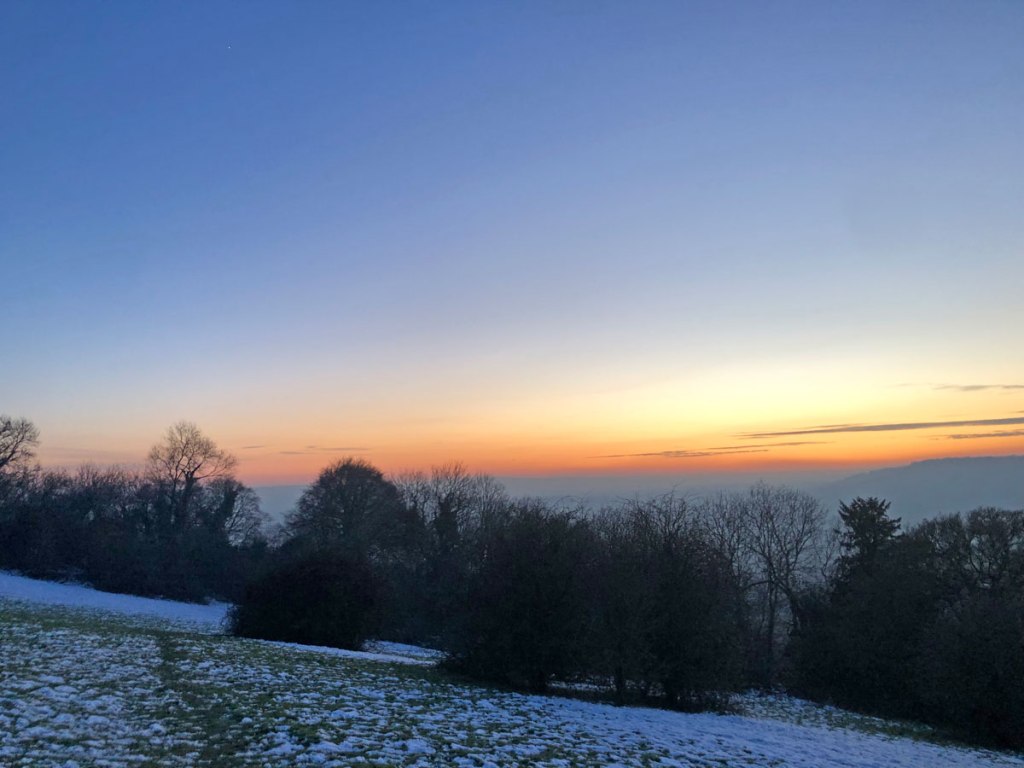
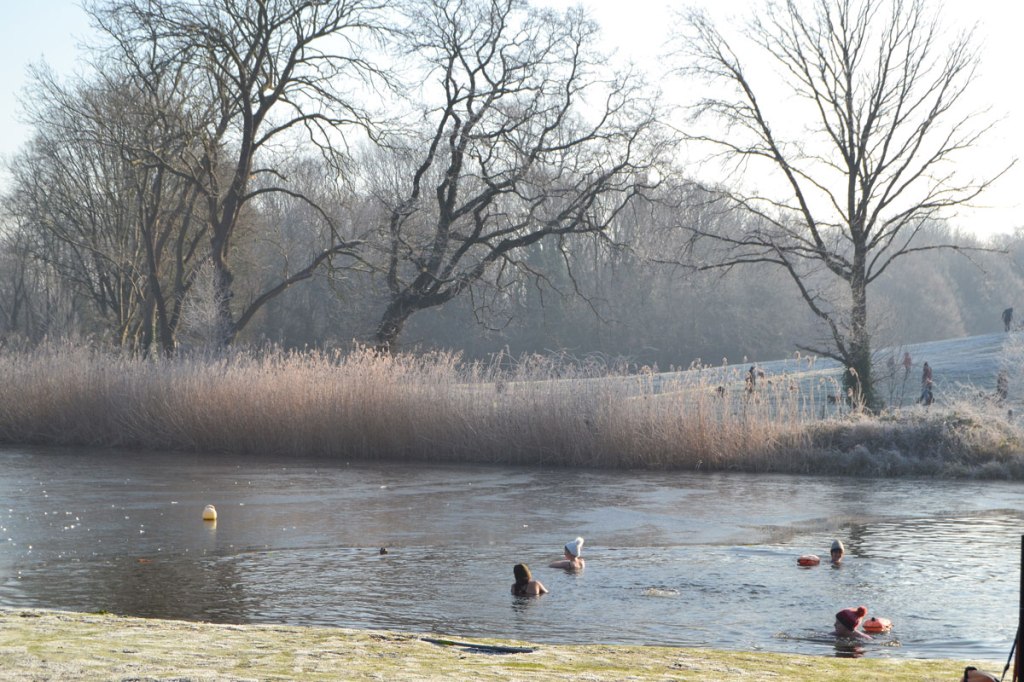
At last, sharp sunny days with frost. Walkers in the North Downs were rewarded at the weekend by a cobalt sky, heavy frost, colourful sunsets and perhaps the remnants of snow from the previous Wednesday night – it was hard to tell where the frost stopped and the snow started. I walked at Beckenham Place Park on Saturday morning before taking the Fackenden Down walk in the afternoon. As soon as we got a bit higher in the hills, the conditions became increasingly picturesque. Magpie Bottom, a hollow that faces north, was a picture, but unfortunately my camera battery had died and we resorted to phone camera images. The last time I saw similar conditions was in January 2022 but on that occasion the temperature must have been even lower because the frost remained glued to the trees even in mid afternoon whereas on Saturday there was some kind of thaw happening where the sun was felt. A sublime, memorable walk.
Please contact me at ammcculloch49@gmail.com with comments about the walks.
Pictured below: sunset from the top of Fackenden Down; moonshine at Fackendon Down; Adam (the author) and Bonny (Photo by S. Hart); looking east into Magpie Bottom; looking along the little valley north from Dunstall Farm; Dunstall Farm; ice on Beckenham Place Park’s lake; swimmers in the lake; looking east along the lake; the lake amid frosty reedbeds
Great to see so many people enjoying walks this weekend, a fair few using the KWNL routes and following the GPX from the look of the WordPress dashboard. I’ve helped a few out with directions from time to time – people are always tickled pink when they realise they’re talking to the actual bloke who wrote this site.
Today I walked the ‘mysterious eastern valleys of Shoreham‘ route. The path by the field is very overgrown. I was prepared for it so brought secateurs. Despite my snipping that path will still be daunting and slow going. I advise a diversion: check out the map on the route’s web page to see it – it involves walking down to Shoreham church from the station then taking the path heading north and eventually crossing the railway line and the A225 before heading east, steeply uphill and joining at Point 3. It’s not difficult, honest.
And it’s worth it. Right now this is a brilliant route. From the hamlet at Austin Lodge up to Romney Street the wildflowers are fantastic: wild marjoram and scabious; mauves, lilacs and purples with knapweed, devil’s bit scabious, the yellows of trefoil and ragwort, the deep pink of rosebay willow creating a sheen of vibrant colour. I walked with clouds of meadow brown and gatekeeper butterfiles with the odd brimstone and chalk hill blue thrown in. As ever in summer, the Magpie Bottom valley – between Knatt’s valley and the Darent valley – was humid, still and quiet. A little owl called, buzzards soared. I decided to extend the walk past Romney Street to Magpie Bottom and over Fackenden Down, bringing me out at Shoreham station just in time for the 5:38pm Blackfriars service. Perfecto.
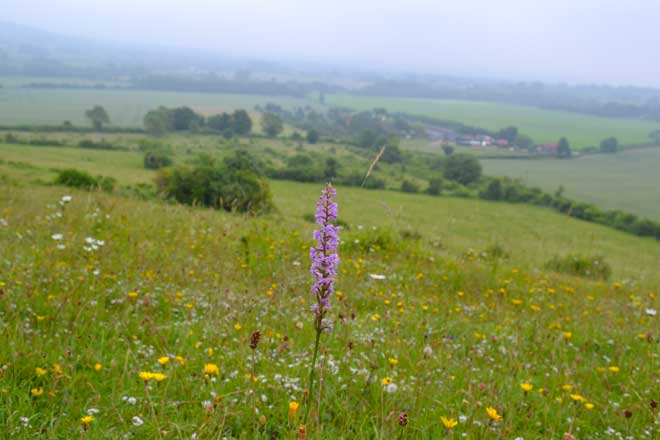
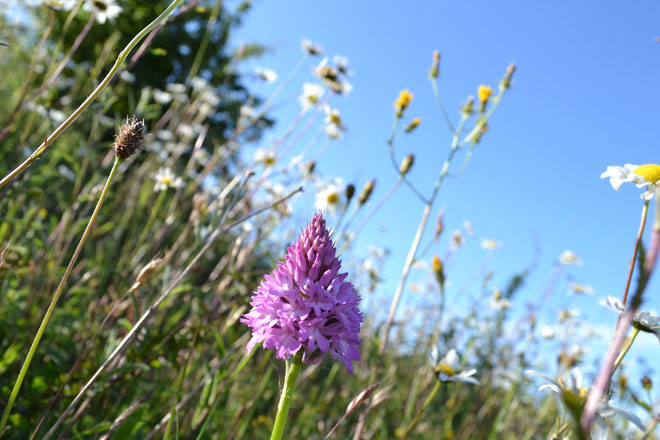
Us south-east Londoners are blessed with proximity to great places to see orchids at this time of year. The chalk hills from Downe to Heaverham, along the North Downs escarpment are full of them, splashing vivid purple, pink and cream among the whites and yellows of ox-eye daisies, trefoil and buttercups. They are beautiful flowers and vital in the lifecycles of loads of insects.
They can be found on all the walks from May to July, but here are the best routes that feature them:
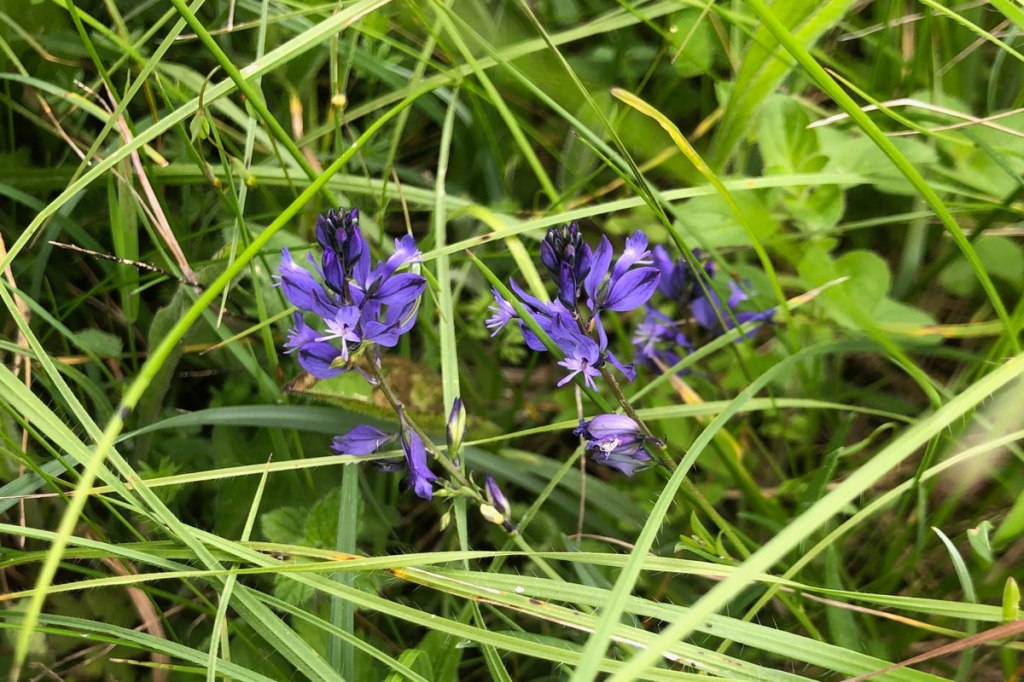
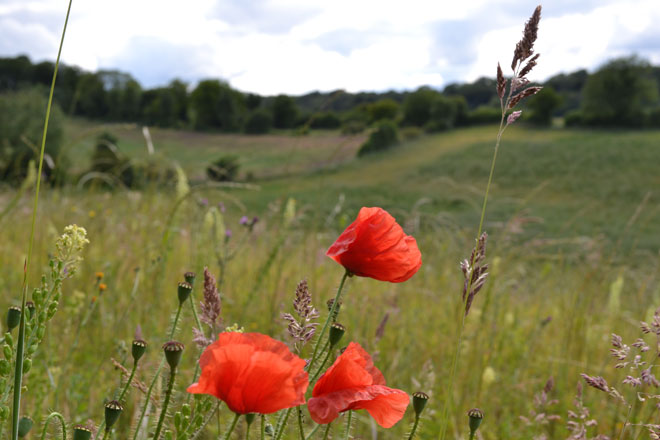
There are so many other great wildflowers to enjoy at this time. Sainfroin, for example, poppy, bugle, ox-eye daisy, and the lovely milkwort. Some are pictured below.
The Fackenden Down walk in late May on a breezy sunny day cannot be bettered. This is the walk on this site with most rewilding going on and plenty of Kent Wildlife Trust-maintained land. The results are a good variety of wildflowers, including several orchid species and sainfoin, lots of butterflies, burnet moths and birds such as buzzards (very common), whitethroat (from May to September) and yellowhammer (if you’re lucky). Some ancient species of livestock such as highland cattle are often used to graze the grasses in small numbers. My route is brilliant, if I do say so myself, and easily accessible by train. There’s a great pub at the end of the walk too – the Samuel Palmer.
I love Magpie Bottom in particular, a sheltered secret feeling valley alive with flowers and great variety of tree foliage colours. Then there the views from Fackenden Down itself, the wild “garden“ along the foot of White Hill and the Down, the view of London and Essex from the high point at Romney Street … it’s terrific, and a good workout with a few steep sections. It comes in at around 12,500 steps.
The Kent Wildlife Trust is in need of volunteers to monitor its livestock. Also it’s looking for urgent donations to enable it to purchase more land at Polhill, across the valley from Fackenden, where it monitors and maintains similarly superb chalk hillside. I’ve diverted the donations to this site to the appeal, but please make sure you chip in.
Walking on the path through the scabious, ragwort, marjoram, yew trees and grasses on the chalky west-facing slopes of White Hill/Fackenden Down last Saturday I spotted a wasp spider – a creature I’d never seen personally. It’s a spectacular arachnid, one that has been increasing its numbers in the south-east over the past 15 years. I guess a powerful orb weaver like this will be snaffling up drowsy late summer insects in the coming weeks. The walk itself was as beautiful as ever but quite bereft of bird life, which isn’t unusual for late August just prior to the large migrations. Only a solitary buzzard and a charm of goldfinches being of note, though we weren’t being particularly observant. Oddly, not a single swallow was noted – unlike during the walk at Cudham the following day, where a red kite was also seen. My friend Teri took the spider photos.
The Polhill/Pluto walk was a delight this week; a chance encounter with a brown argus butterfly (pictured below by sort-of-accident while focusing on scabious flowers) on the Polhill Kent Wildlife Trust patch a highlight. The Andrew’s Wood segment of Shoreham Woods was full of great willowherb, marjoram and wild parsnip – a colourful brew. On the Darent Valley floor itself the sunflowers at Filston Farm were a treat and there were still some wild verbascum flowers in bloom at Sepham Farm. Very few birds were seen which is quite normal for this time of year although a hobby, a buzzard and a suspected corn bunting at Filston Farm were notable spots, while swallows were beginning to gather for their big goodbye. Yellowhammer were heard but not seen at the foot of Polhill.
The longer days give us the opportunity to walk as the shadows lengthen and temperature dips – although in the warm spell that recently ended it hardly felt as though the evenings were cooler than the afternoons. Recently, a very tranquil saunter on the path between Shoreham and Eynsford – a route we’ve neglected a bit of late (pictured) – proved a real tonic, made even more fun by keeping with the tennis and cricket on the phone. Amid a limpid sky a solo Spitfire growled over a timeless pastoral scene of river, hedgerows and fields. As we neared the hops and spectacular lavender of Castle Farm we turned round and headed back to Shoreham where a pint of Larkins awaited us at the Samuel Palmer. We felt lucky. And so close to south-east London and even more relaxing when you use the train, direct between SE London and Shoreham in just 30 mins.