Bluebells in north-west Kent: where’s best?

Bluebells in north-west Kent: where’s best?

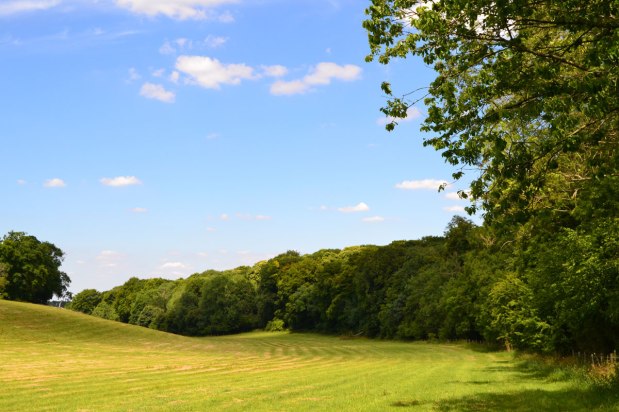
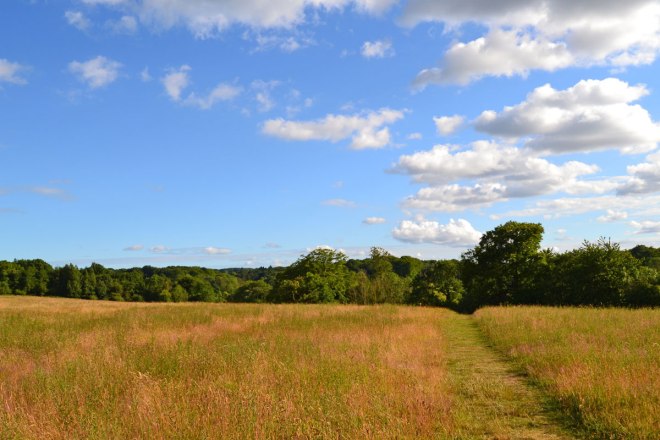
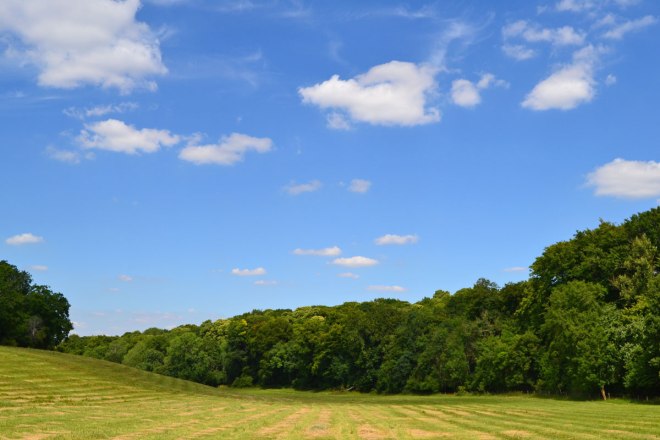
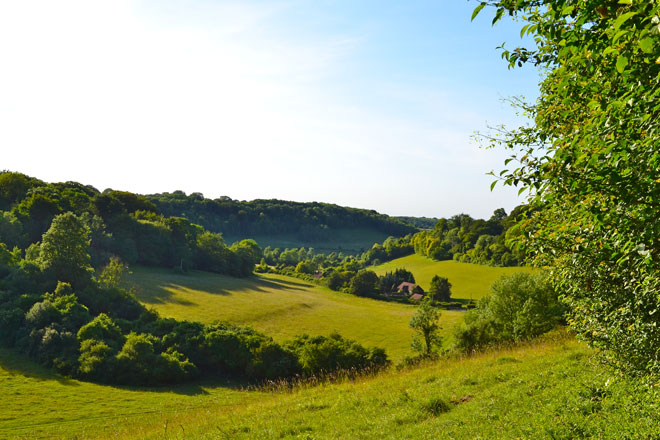
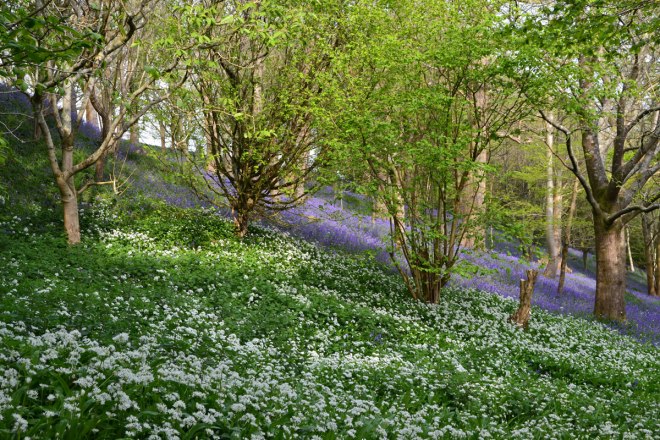
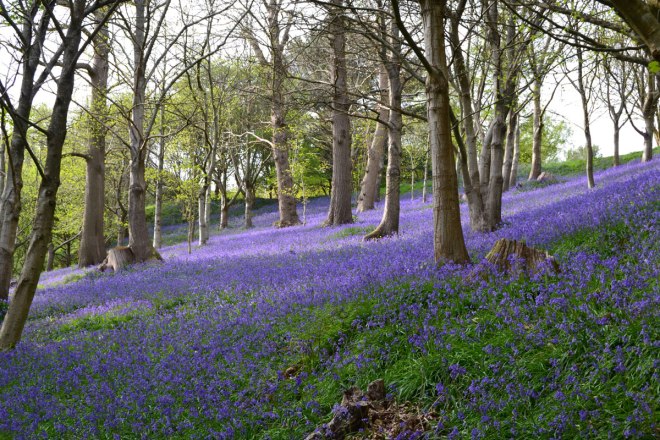
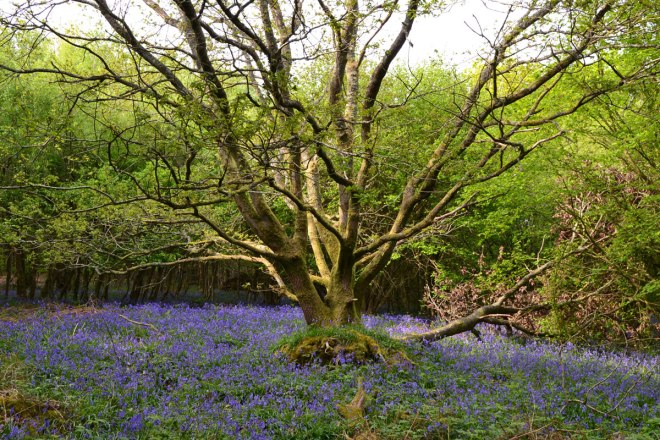
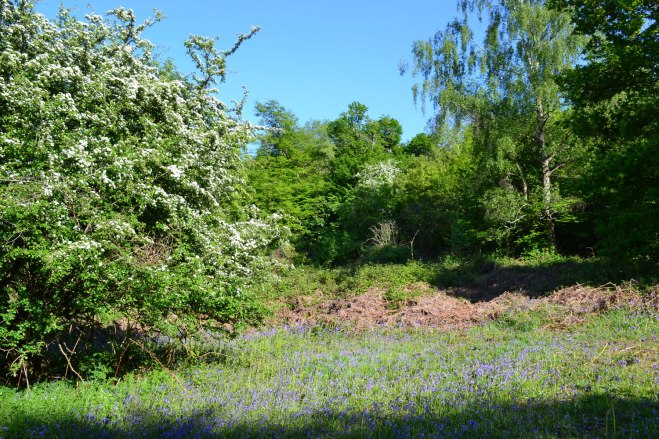
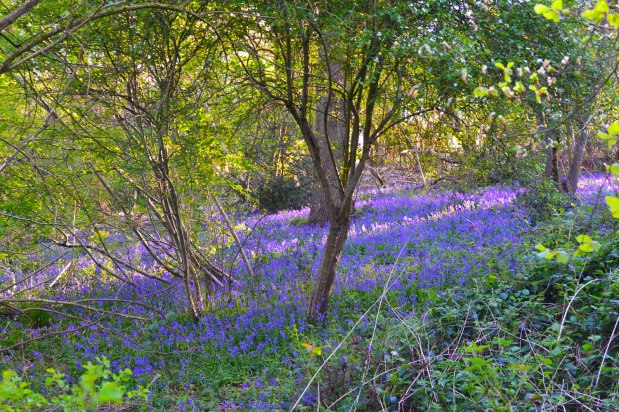
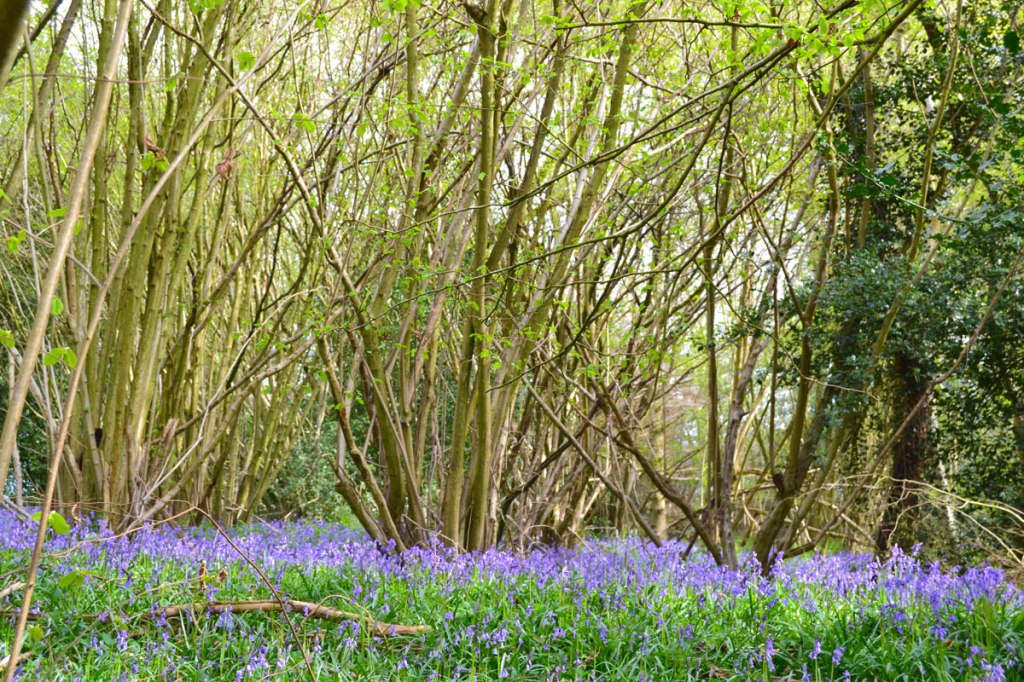
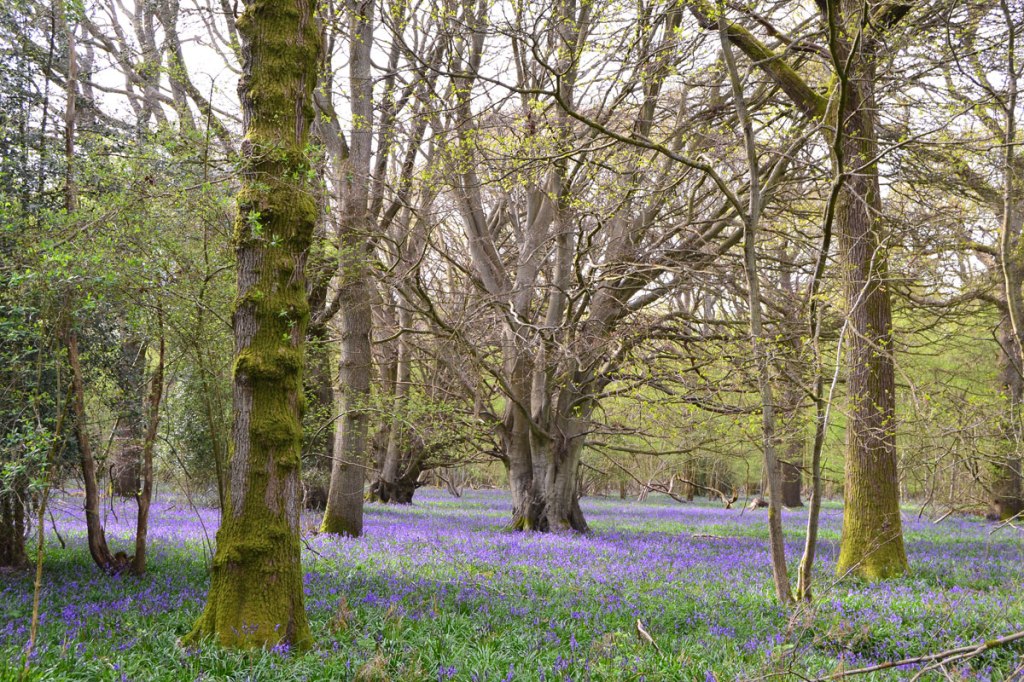
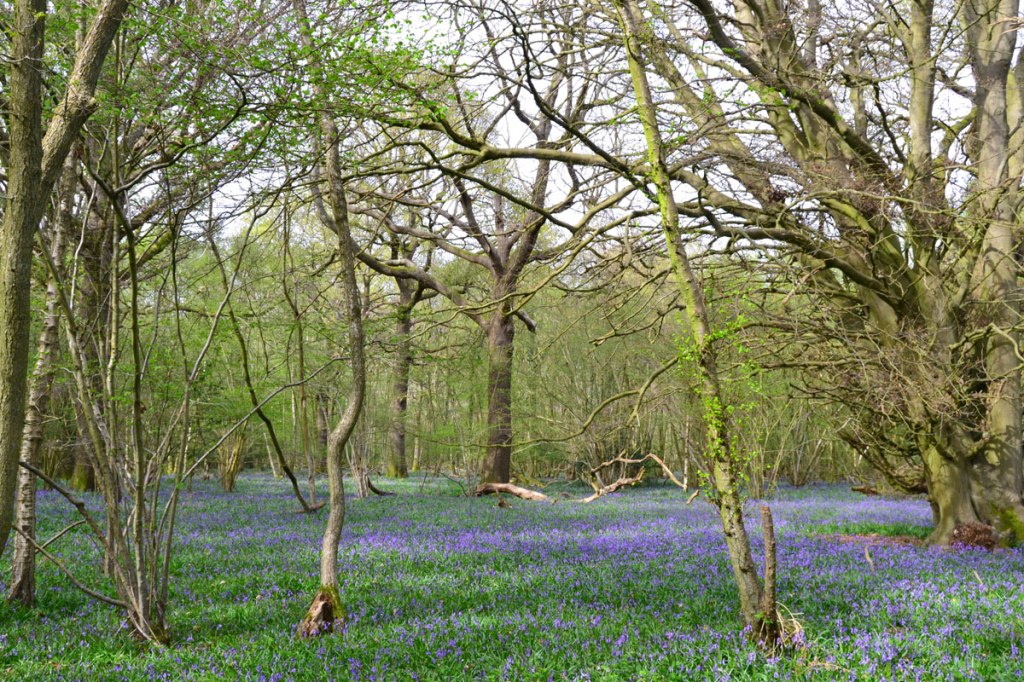
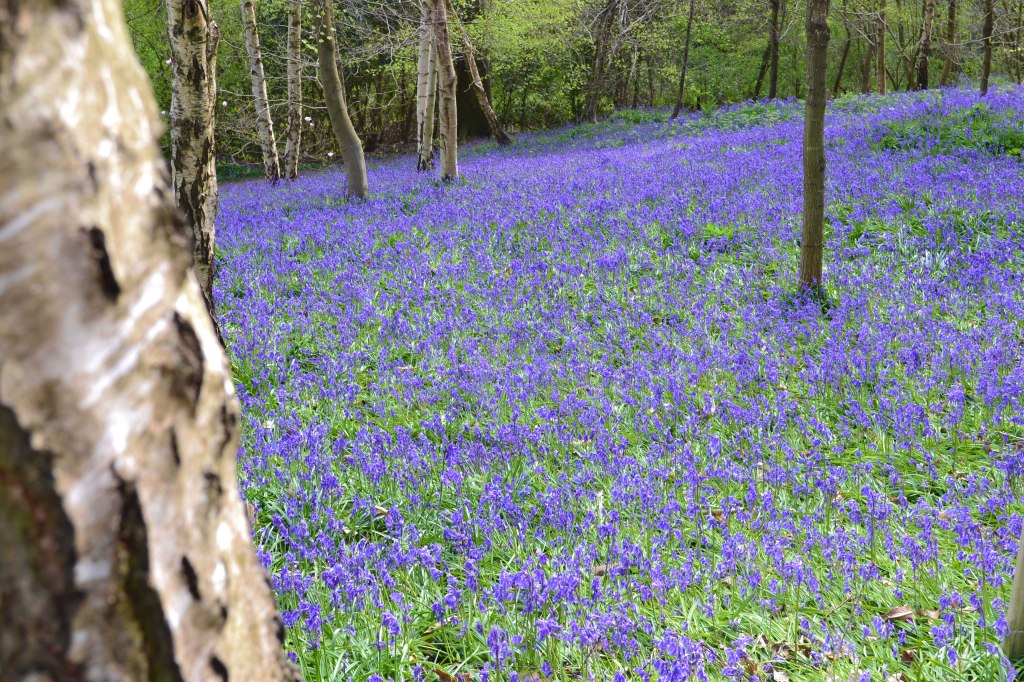
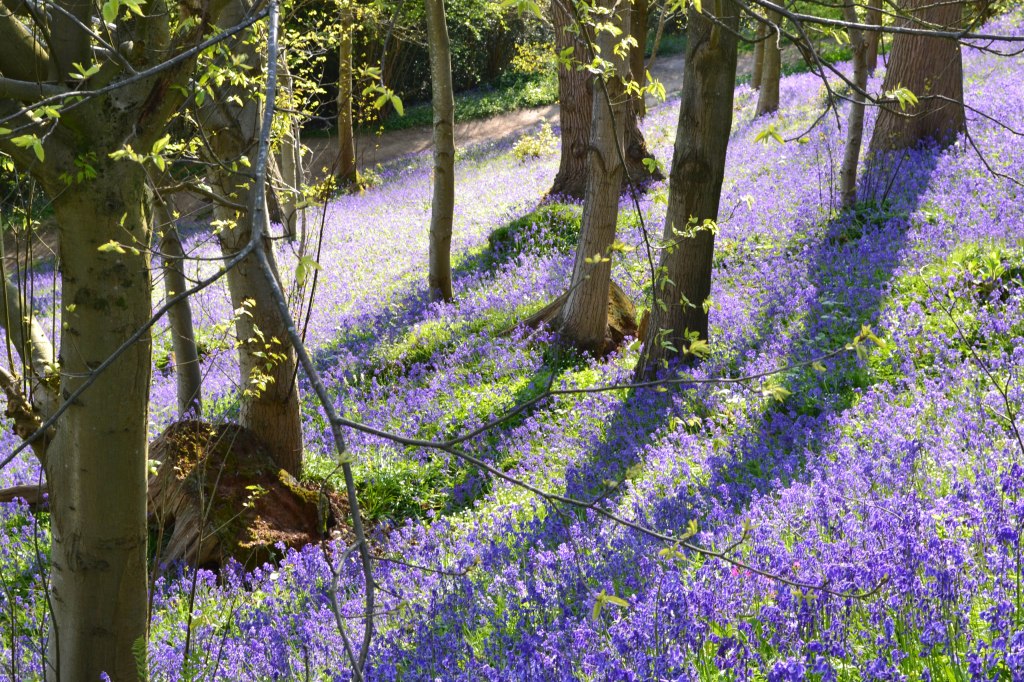
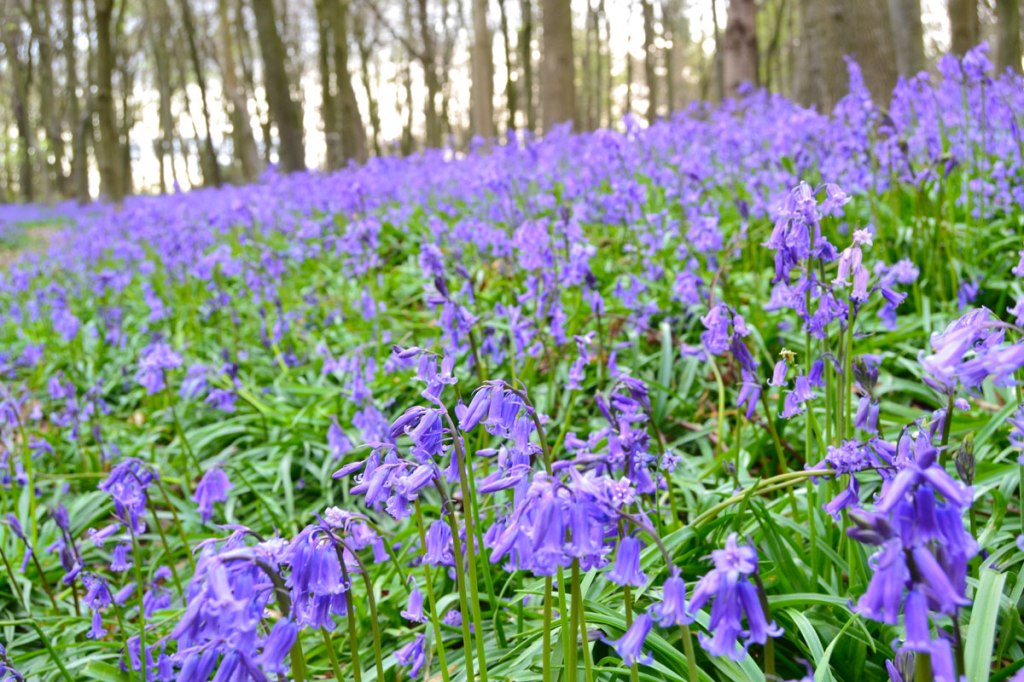
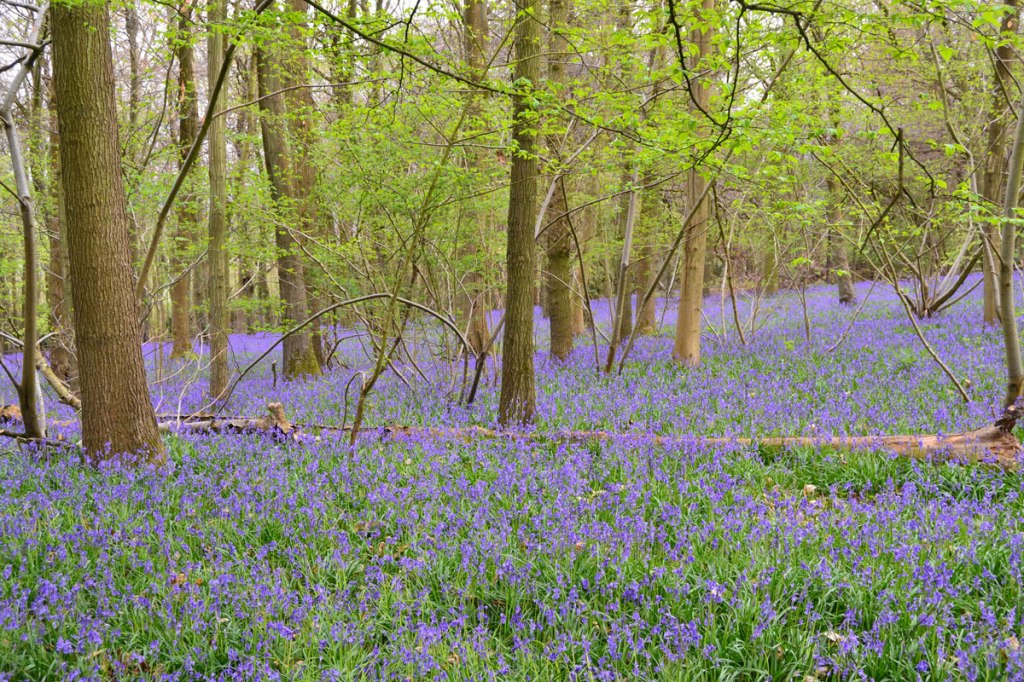
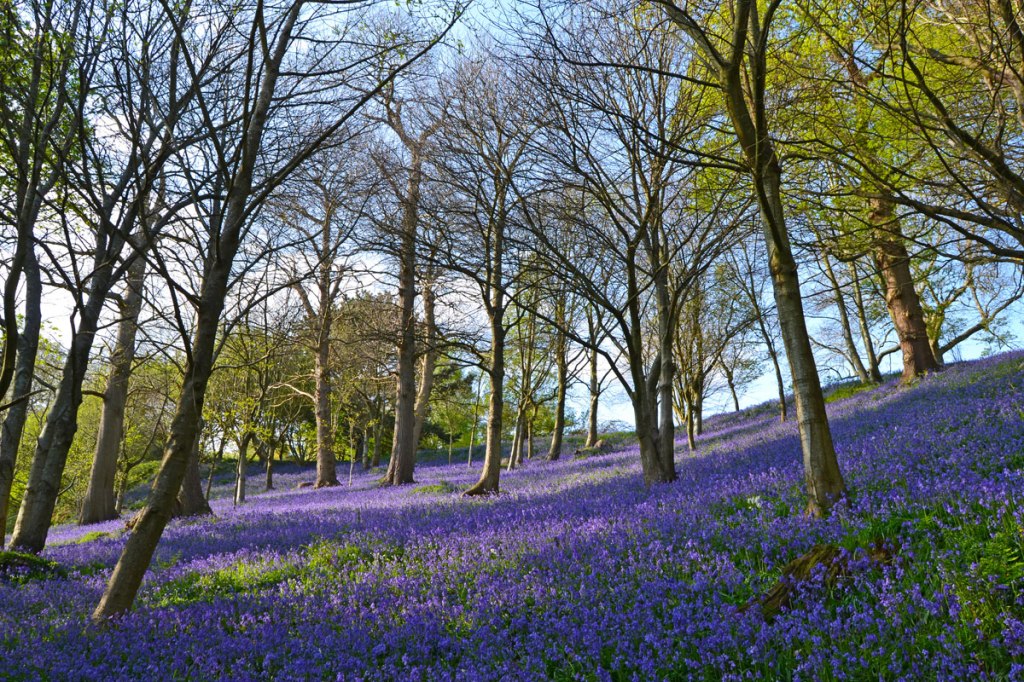
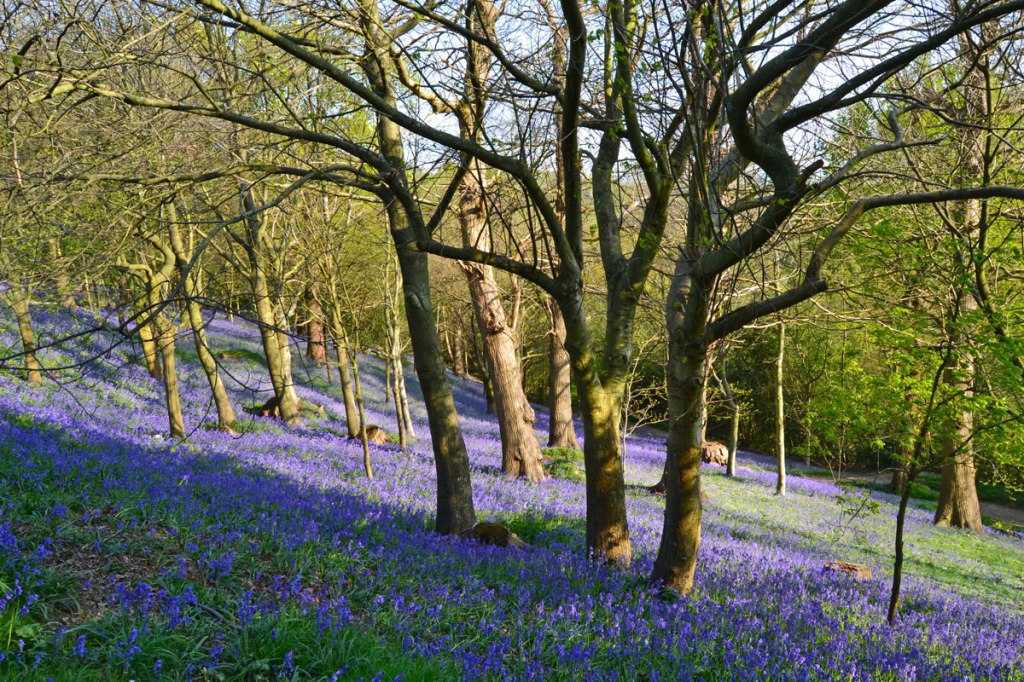
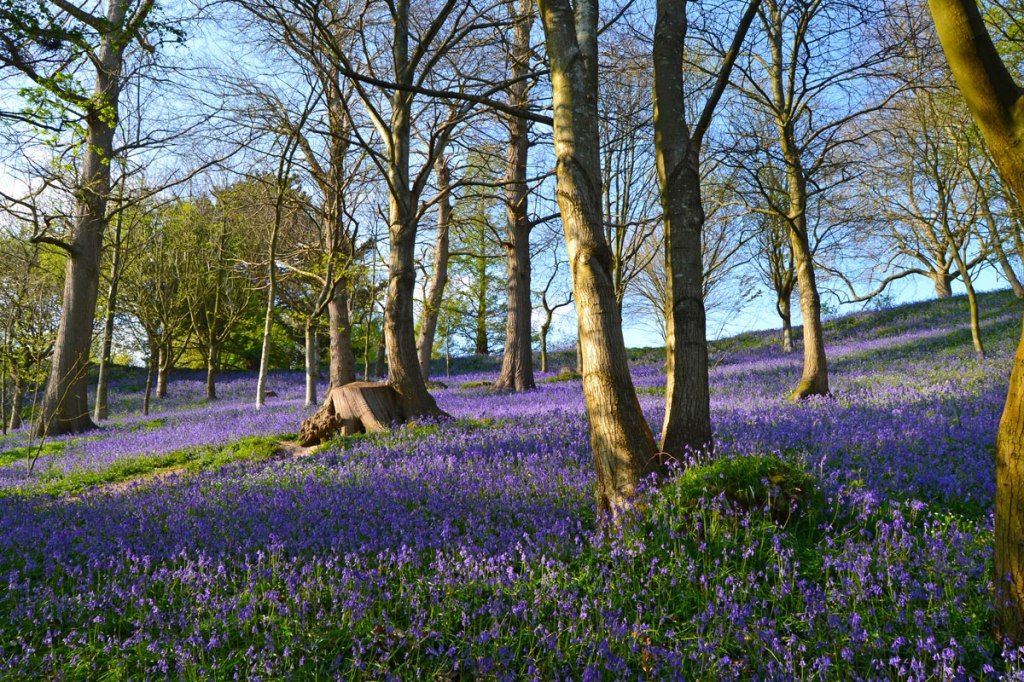
It’s fair to say the cobalt carpet has finally spread its magic in many of the woods covered in the KWNL area. Bluebells are now almost fully out on the North Downs chalk hills walks such as the Cudham stroll (in New Year’s Wood particularly), and the various Shoreham circular and Polhill routes. Alas, the timber work going on in Meenfield Wood above Shoreham (west side of valley) may hinder your enjoyment of bluebells there. Further south the Greensand Ridge walks at Underriver, One Tree Hill, Ide Hill (perhaps the best bluebells – so you won’t be alone), Oldbury and Hosey Common are awash with blue. Closest to south-east London, Beckenham Place Park, High Elms and Petts Wood-Hawkwood Estate (in the lower, damper parts) has several swathes too. The Downe walk mk1 doesn’t have a lot of bluebell action en route but a quick diversion down to Downe Bank (the west side of the Cudham valley) from point 3 or at the start of the walk should see you in the magical blue realm. Following the Downe Mk2 walk will be kind of blue too, particularly at Downe Bank and Blackbush and Twenty Acre Shaw woods. The Chiddingstone and Hever routes don’t have many bluebells I can confirm, not that this detracts from these superb strolls. (Pictured below: from 2022 and 2021 bluebells at New Year Wood on Cudham walk; Meenfield wood, Shoreham circular/Polhill routes; Ide Hill route)

  • New Year's Wood: early bluebells
  • New Year's Wood bluebells 2022
  • Bluebells on the Ide Hill walk, April 25, 2015
  • Bluebells, Emmetts/Scords wood, 2017
  • bluebells Meenfield wood
  • bluebells

Anyway, here are some bluebell factoids gleaned from an excellent article with far more detail called Bloomageddon: seven clever ways bluebells win the woodland turf war at The Conversation website.

  • They are uniquely adapted to suited the multispecies ancient woodlands of the UK
  • Low temperatures trigger their growth (but might delay their blooming if in April). Bluebell seeds germinate when the temperature drops below 10°C.
  • Bluebells predominantly convert sunlight into fructose allowing them to photosynthesise at low temperatures.
  • They are supreme competitors with other plants, allowing them to carpet woodland floors. But they get help in the form of mycorrhiza, a symbiotic fungi.
  • Almost half the world’s bluebells are found in the UK, they’re relatively rare in the rest of the world.

But please be careful never to tread on any; it takes bluebells years to recover from damage. Digging them up – surely no one visiting this site would consider such a thing – is illegal, and please don’t let dogs trample them either – keep them on the lead.

Circular walk sign confusion alert

Circular walk sign confusion alert

It’s great to bump into walkers using my instructions; I can usually spot the pdfs a mile off! But it’s not so great when those walkers are lost … while cycling on Sunday I bumped into two intrepid hikers on Sunday in Downe. Unfortunately, they were trying to follow the Cudham Chalk Paths walk but had gone rather off piste. They had thought that the green and yellow signs for the much longer Cudham Circular walk, as advertised by Bromley Council and Long Distance Walks Association, were route markers for the more modest walk at KWNL. I was able to explain the error and direct them (hopefully) back towards Cudham but the thought that people were using existing signs to follow my walks was terrifying. Please don’t do that! There are no KWNL walks that have specific signposts; the routes are only here on this website.
Wintry weekend in west Kent

Wintry weekend in west Kent

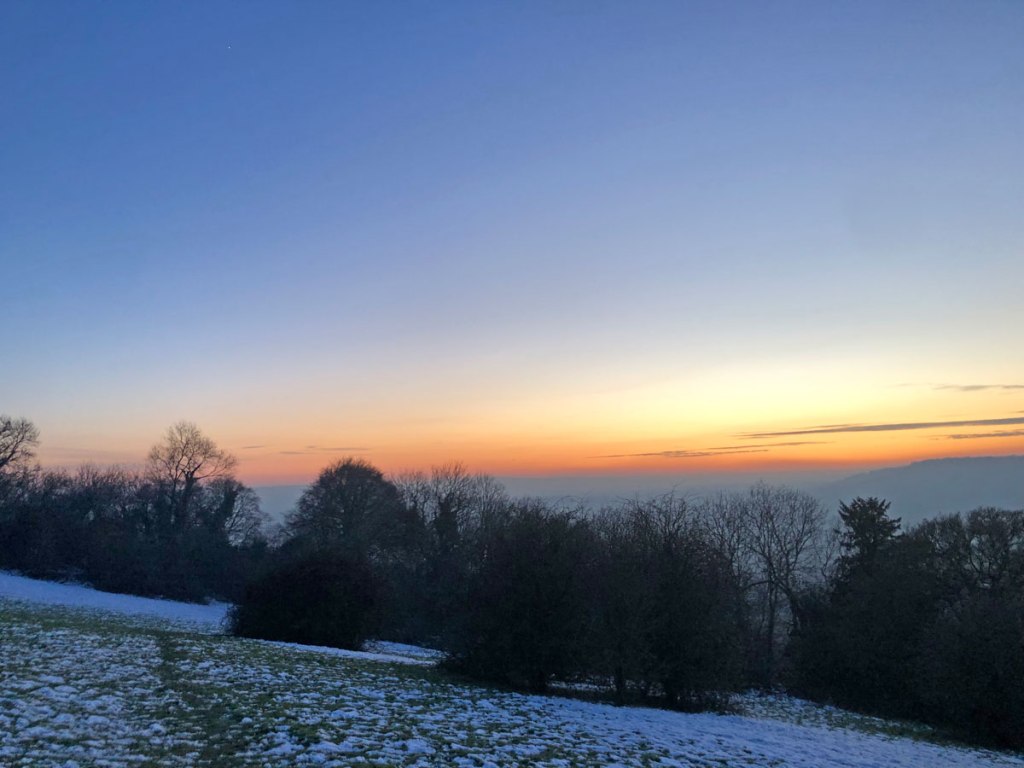
At last, sharp sunny days with frost. Walkers in the North Downs were rewarded at the weekend by a cobalt sky, heavy frost, colourful sunsets and perhaps the remnants of snow from the previous Wednesday night – it was hard to tell where the frost stopped and the snow started. I walked at Beckenham Place Park on Saturday morning before taking the Fackenden Down walk in the afternoon. As soon as we got a bit higher in the hills, the conditions became increasingly picturesque. Magpie Bottom, a hollow that faces north, was a picture, but unfortunately my camera battery had died and we resorted to phone camera images. The last time I saw similar conditions was in January 2022 but on that occasion the temperature must have been even lower because the frost remained glued to the trees even in mid afternoon whereas on Saturday there was some kind of thaw happening where the sun was felt. A sublime, memorable walk.

Please contact me at ammcculloch49@gmail.com with comments about the walks.

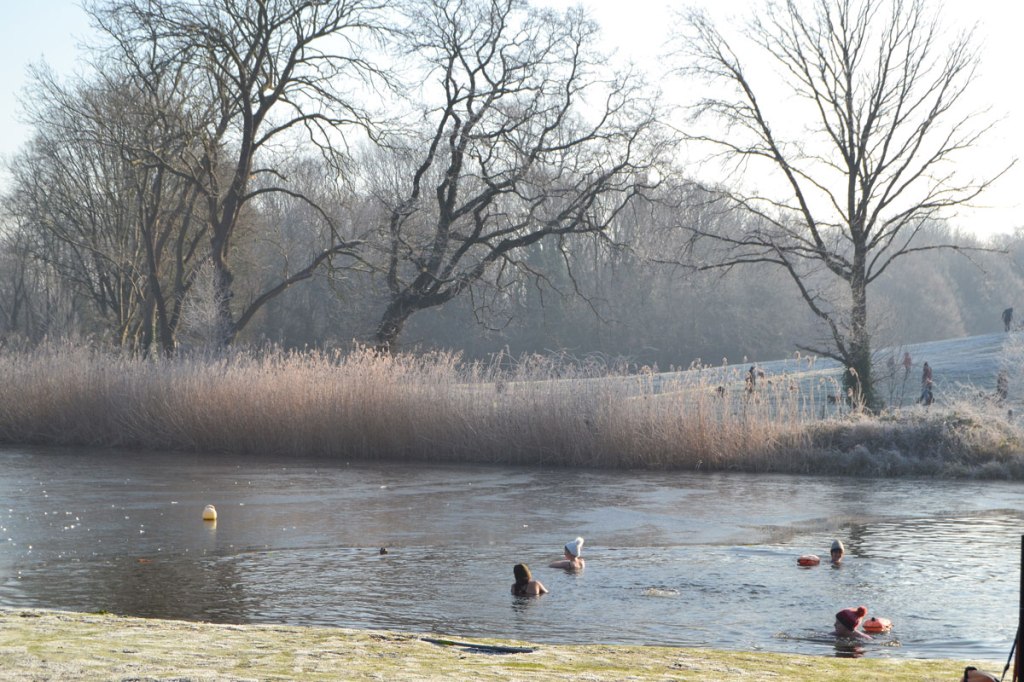
Pictured below: sunset from the top of Fackenden Down; moonshine at Fackendon Down; Adam (the author) and Bonny (Photo by S. Hart); looking east into Magpie Bottom; looking along the little valley north from Dunstall Farm; Dunstall Farm; ice on Beckenham Place Park’s lake; swimmers in the lake; looking east along the lake; the lake amid frosty reedbeds

Weald of wonder near Westerham

Weald of wonder near Westerham

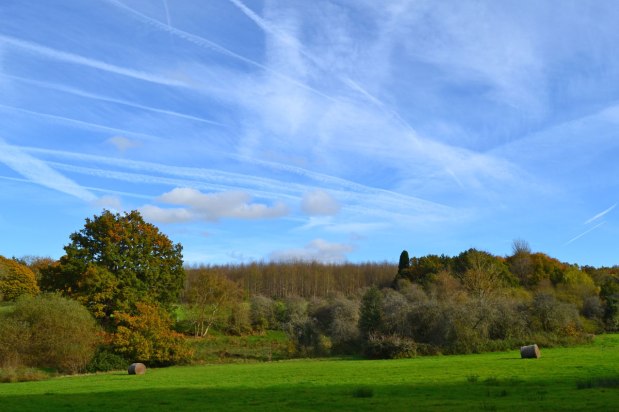
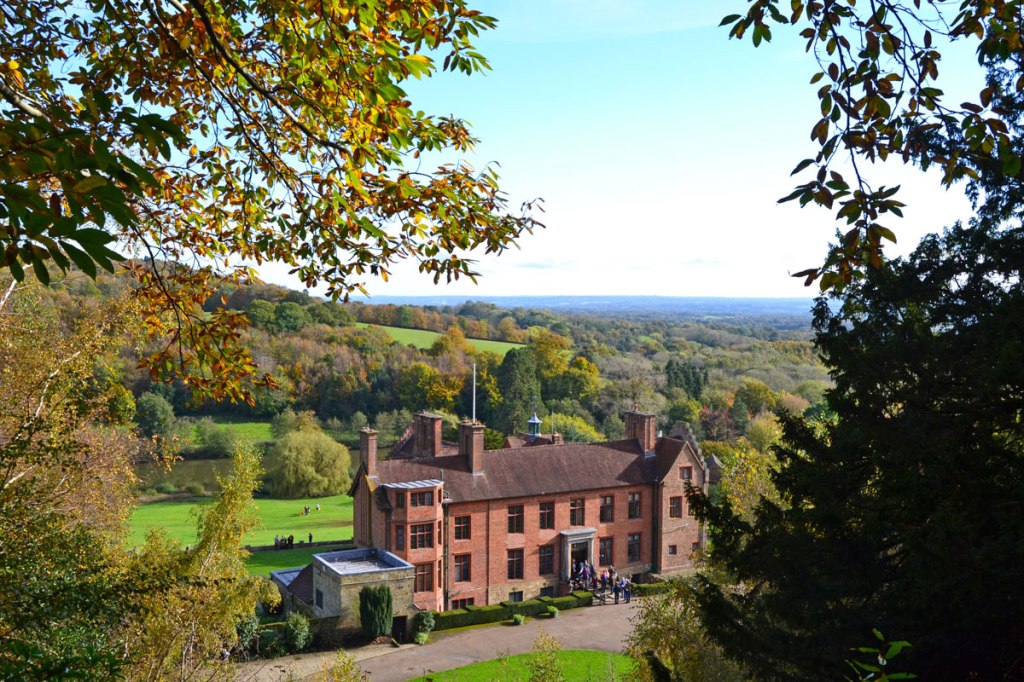
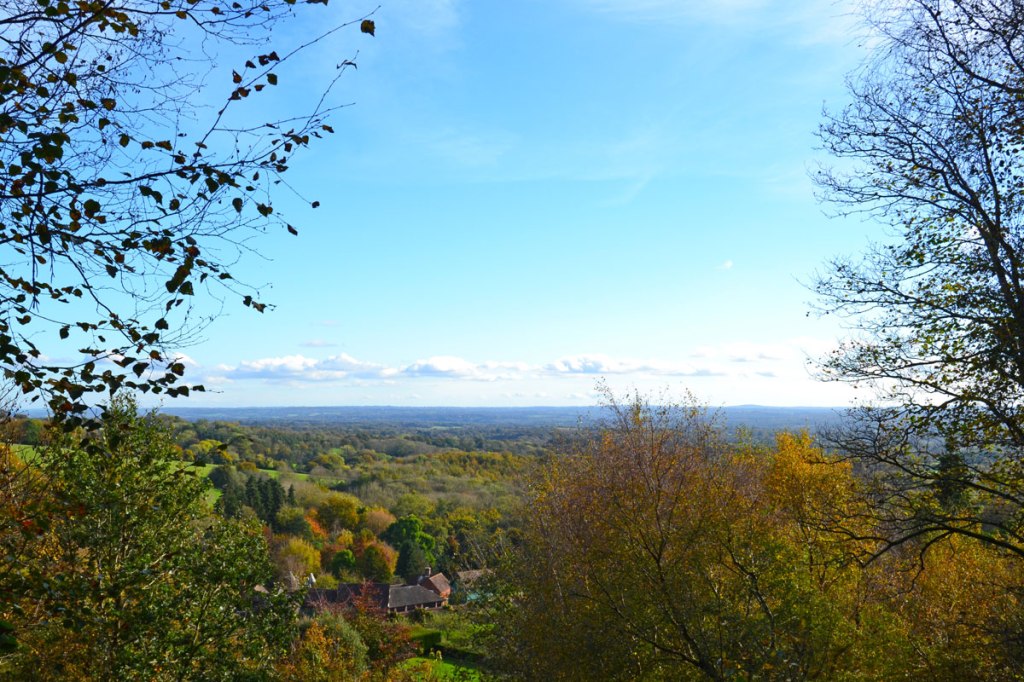
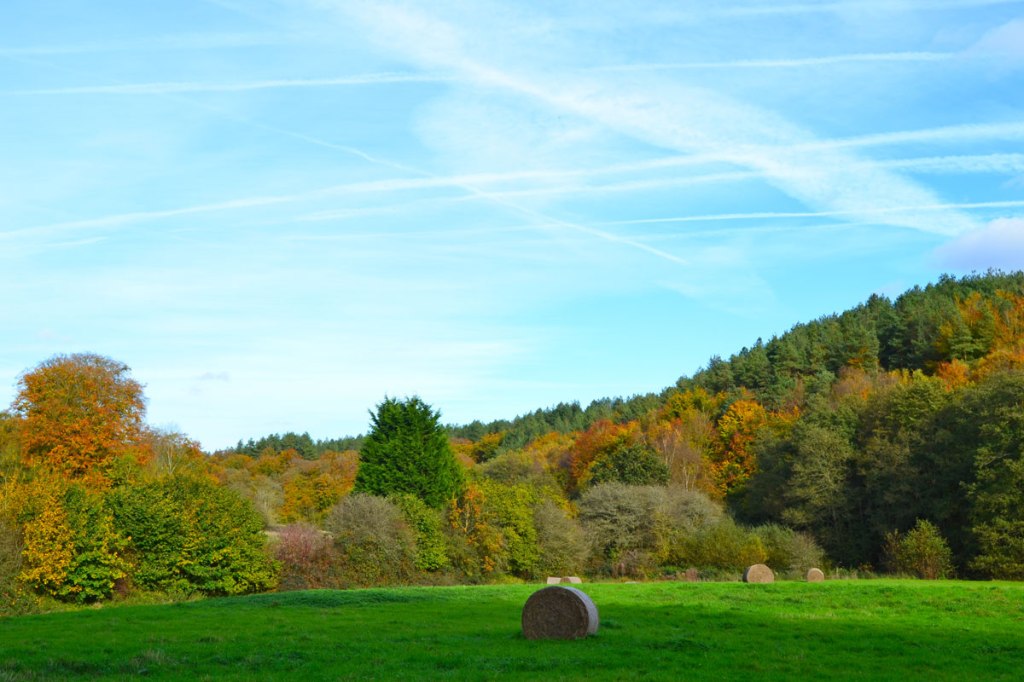
An El Classico of an autumn day. And about time too. We decided that the Hosey walk on the Greensand ridge route at Westerham was the one for us, given the foliage, and views of the Weald from Mariner’s Hill. This time last year the Heaverham circular walk at Kemsing provided something very similar but the warmth of that late October 2023 day seemed freakish at the time. Today was more normal, just a lovely day – neither warm nor cool. The leaf colours, especially in the little valley of the infant River Darent, were superb as hopefully the photos below show, and the vista across the roof of Churchill’s Chartwell gaff as magnificent as ever. I was expecting to see redwings recently arrived from the Netherlands and generally more birds flocking together. But nothing much happened on that front, although mistle thrush were heard and a large buzzard lifted off close to us in one meadow. A pint at the Westerham Brewery place on the way back was an outstanding finale. However, the effect wore off as my football team lost.

Golden light at the end of a grey day

Golden light at the end of a grey day

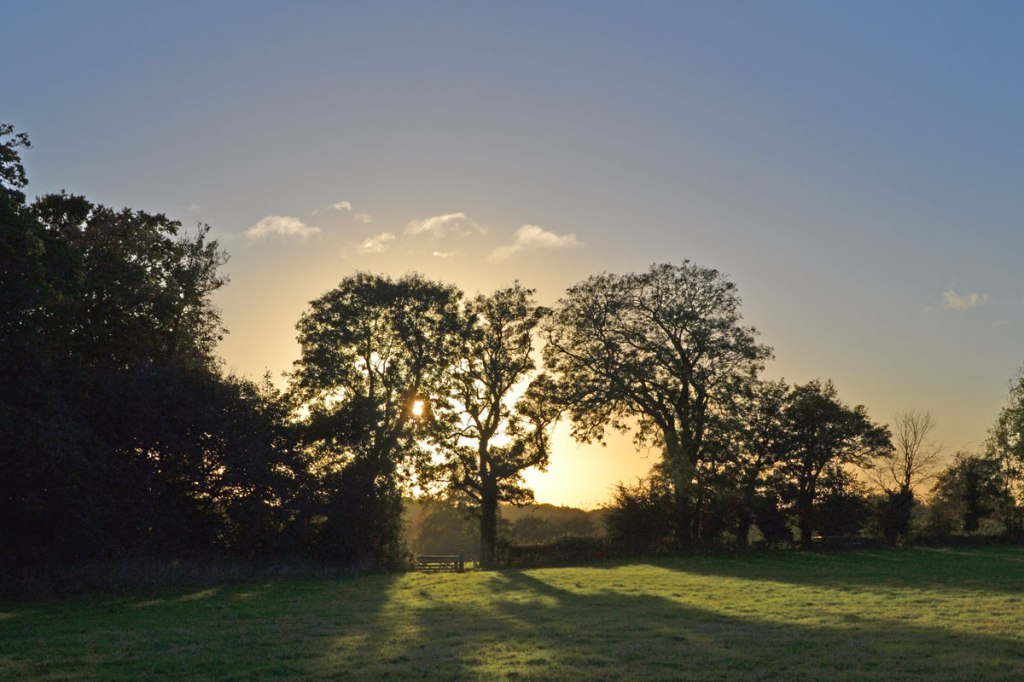
It’s been a bit of a classic autumn so far; lots of rain but also some great sunny windows of walking opportunity. If you’re keen on getting out for a walk but prefer to stay dry it means checking your weather apps and staying agile. Lately these windows have come at the end of the day and have rewarded those able to dash off on a Kent saunter late in the day with some brilliant light. On Saturday, the Downe walk at 5pm was a winner. As well as a beautiful sky, saturated colours and a sense of perfect tranquility, there were interesting birds around: kestrel, sparrowhawk, three yellowhammers, redwing and mistle thrush. Migrations are happening. Some of these birds may have travelled from Scandinavia, from eastern Europe, Yorkshire or a few miles over the border of Surrey. We’ll never know.

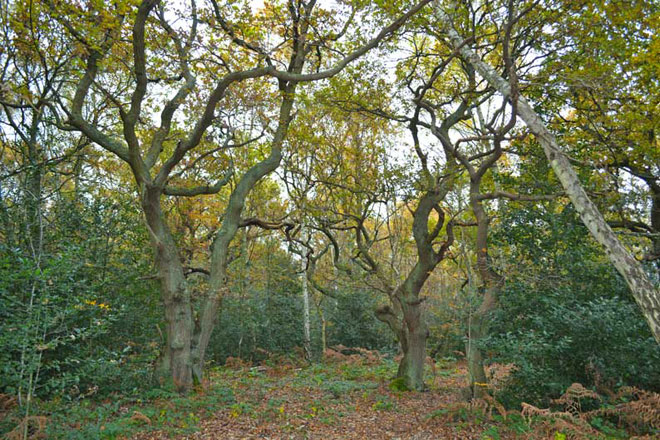
Rain set in overnight and for much of the next day. I’m drawn to wooded areas for walk in bad weather and few woodlands are better than Petts Wood, maintained by the National Trust. Scots pines, chestnut groves, heather glades, oak, ash, and sycamore surround a labyrinth of paths with a railway line and a couple of arable fields and streams helping navigation in the middle of the wood. A great place.

Where’s best for orchids in Kent (but near London)?

Where’s best for orchids in Kent (but near London)?

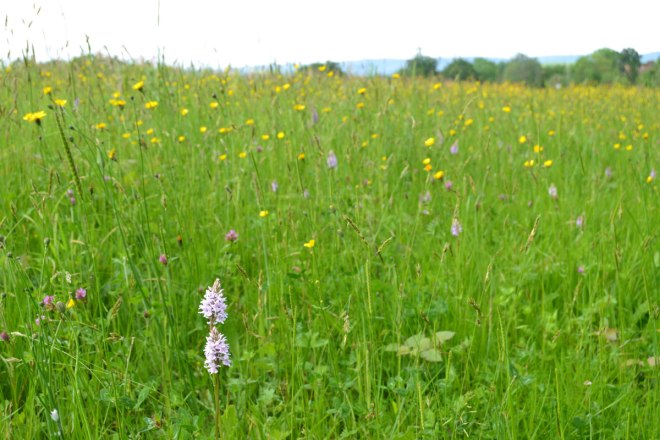
Us south-east Londoners are blessed with proximity to great places to see orchids at this time of year. The chalk hills from Downe to Heaverham, along the North Downs escarpment are full of them, splashing vivid purple, pink and cream among the whites and yellows of ox-eye daisies, trefoil and buttercups. They are beautiful flowers and vital in the lifecycles of loads of insects.

They can be found on all the walks from May to July, but here are the best routes that feature them:

1 Fackenden Down
2 Eastern Valleys walk – the hillside that runs into Magpie Bottom from the south
3 Lullingstone
4 Downe (extend the walk to Downe Bank). Also should be a few on the Cudham walk.
5 High Elms (mostly in the woodland glades near the visitor’s centre)
6 Polhill

I also hear the water meadows just north of Keston ponds are a good spot. Perhaps southern marsh orchids there. I’d better go…

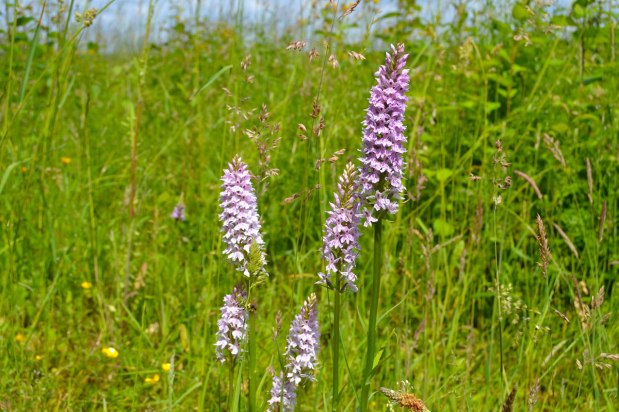
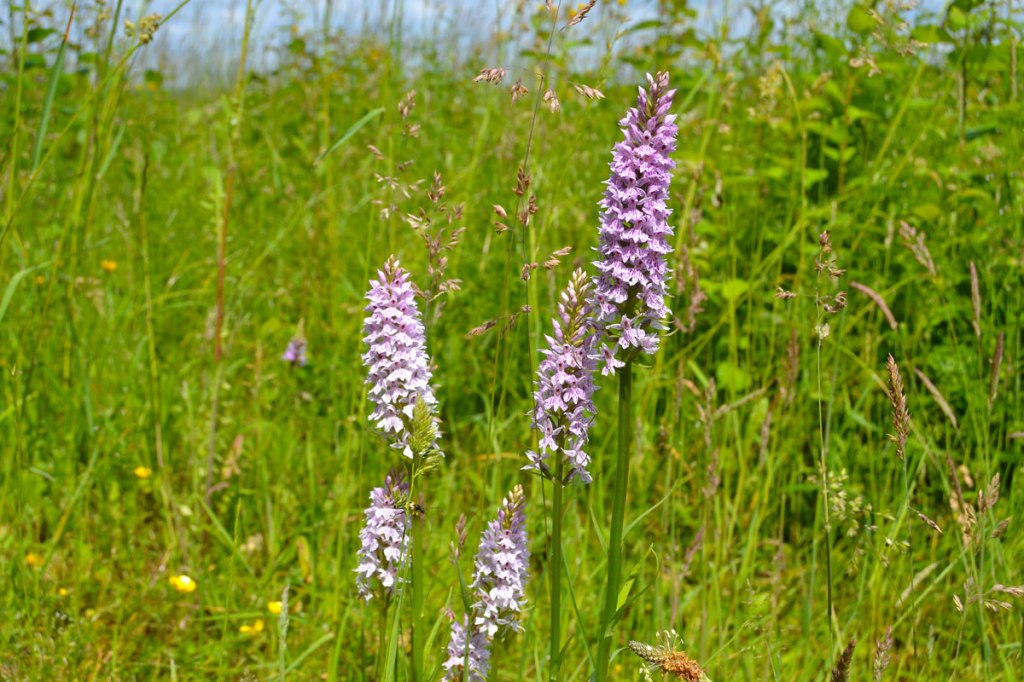
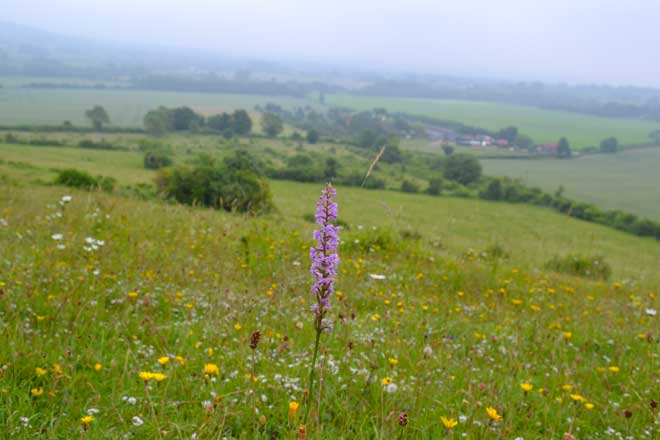
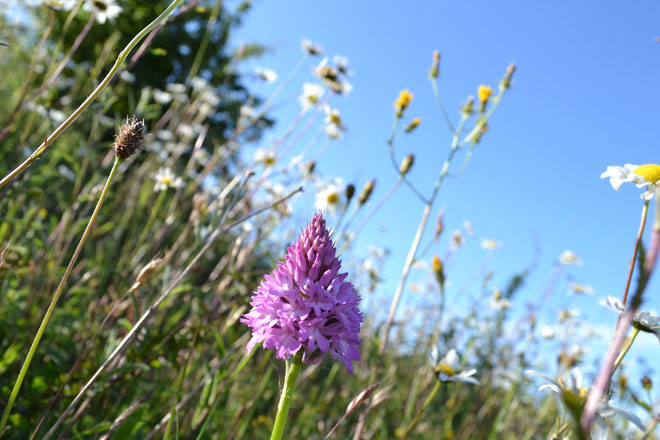
Various orchids pictured below include southern marsh, bee, fragrant, common spotted and pyramidal orchids at Hever, White Hill (Fackenden Down), Magpie Bottom, Polhill, Pilot Wood, and Downe.

  • Pyramidal orchid

I’m sure you can see loads too on the Knockholt/Chevening route, all the Otford/Shoreham routes and Kemsing or Otford to Heaverham trail too – I just haven’t been on those recently to check. On the Greensand and the Weald they can also be seen in certain meadows and along hedges on the Bough Beech, Hever and Chiddingstone routes. But not quite as many as on the the chalk of the North Downs.

  • Pyramidal orchid, Downe

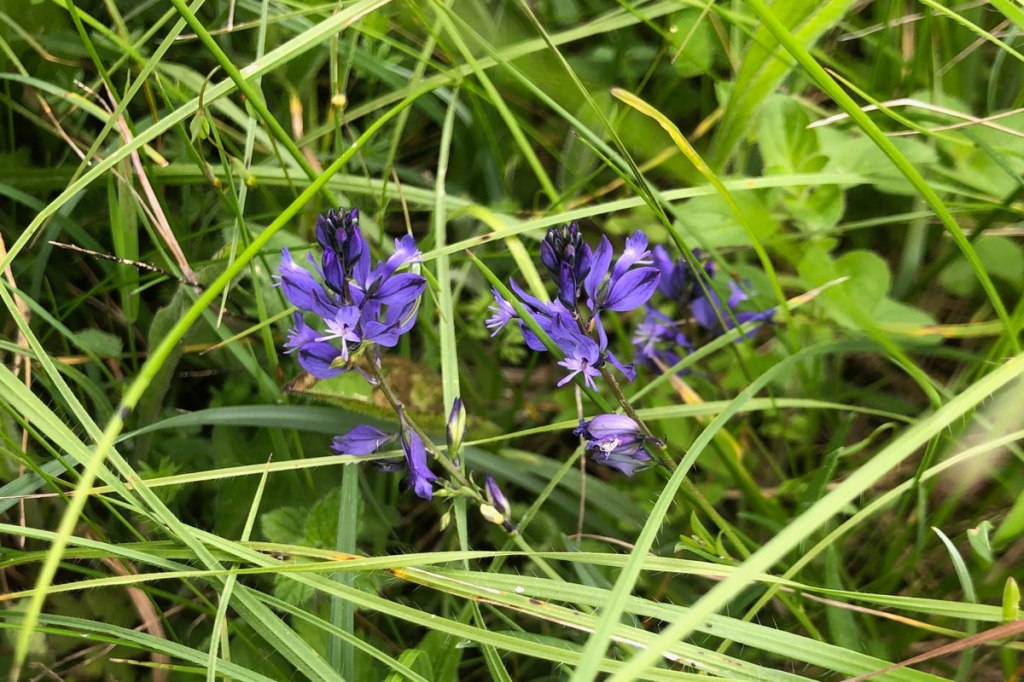
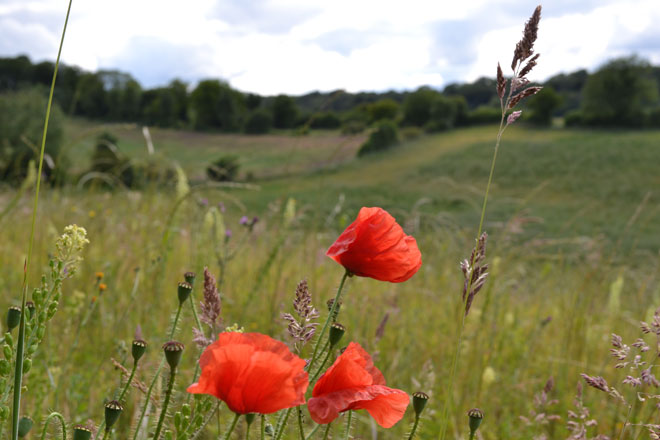
There are so many other great wildflowers to enjoy at this time. Sainfroin, for example, poppy, bugle, ox-eye daisy, and the lovely milkwort. Some are pictured below.

It’s wet on the Weald

It’s wet on the Weald

My wellies came in useful on the Hever walk on Saturday. I’ve never worn them in early summer before. But my hunch was right… there are still a few quagmires out there. Watching a young couple ahead of me try to negotiate the mud in lightweight trainers made me wince. There’s not really the same problem on the North Downs chalk walks, where the drainage is much better thanks to the geology. Except where there’s clay (Andrew’s Wood hillside I’m looking at you).

  • Bough Beech

In June it’s generally a good idea to stick a pair of secateurs or tough old scissors in your rucksack if you’re doing a Kent walk. It seems odd I know. One or two of the less well used paths become entangled in brambles, nettles etc this month and next. This is particularly the case this year because rain has kept hikers away and some of the paths have been left unused. The Eastern Valleys walk east of Shoreham definitely requires a bit of snipping as you walk along the fields on the Darent Valley rim. The diversion to the Percy Pilcher memorial viewpoint is in need of a trim at the best of times. And at Chiddingstone, near the start, the path leading into the swampy woods is nearly impassable. If you prefer, you can divert to walk along the field edge – it joins the main path as you enter the woods. The same thing happens later as you near the River Eden on the return leg. There are parts of the Hever walk, in Stock Wood and Newtye Hurst Wood where you might need to divert off the main path and it‘s easier to do a little judicious snipping than try to battle your way through. Especially if you’re wearing shorts!

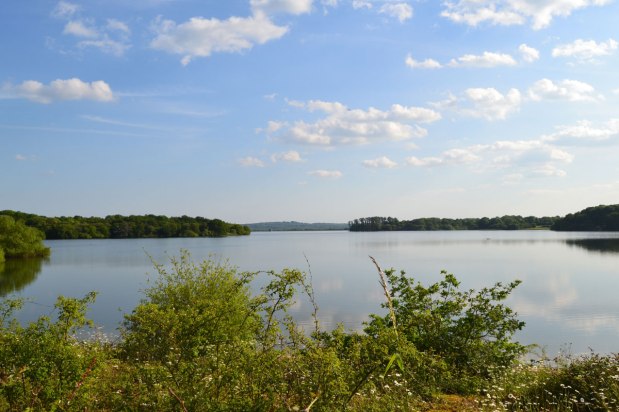
Overall the Weald of Kent is obviously wetter than normal for the time of year. Bough Beech reservoir is brimful for once and the mires and ponds in the woods of Hever and Chiddingstone are well topped up.

It’s time for Fackenden Down

It’s time for Fackenden Down

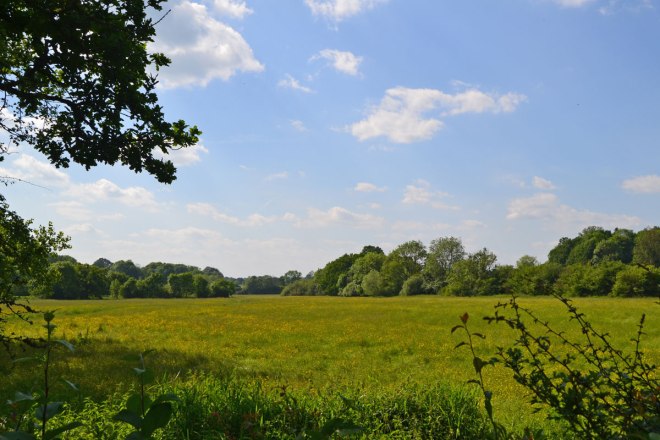
The Fackenden Down walk in late May on a breezy sunny day cannot be bettered. This is the walk on this site with most rewilding going on and plenty of Kent Wildlife Trust-maintained land. The results are a good variety of wildflowers, including several orchid species and sainfoin, lots of butterflies, burnet moths and birds such as buzzards (very common), whitethroat (from May to September) and yellowhammer (if you’re lucky). Some ancient species of livestock such as highland cattle are often used to graze the grasses in small numbers. My route is brilliant, if I do say so myself, and easily accessible by train. There’s a great pub at the end of the walk too – the Samuel Palmer.

I love Magpie Bottom in particular, a sheltered secret feeling valley alive with flowers and great variety of tree foliage colours. Then there the views from Fackenden Down itself, the wild “garden“ along the foot of White Hill and the Down, the view of London and Essex from the high point at Romney Street … it’s terrific, and a good workout with a few steep sections. It comes in at around 12,500 steps.

The Kent Wildlife Trust is in need of volunteers to monitor its livestock. Also it’s looking for urgent donations to enable it to purchase more land at Polhill, across the valley from Fackenden, where it monitors and maintains similarly superb chalk hillside. I’ve diverted the donations to this site to the appeal, but please make sure you chip in.

Thoughts of spring

Thoughts of spring

Spirits have fallen almost as steadily as the rain as we slipped mildly and humidly from winter to spring . The Met Office have gloomily talked of precipitation records being broken, and a sense of oppressive drudgery has undeniably taken root as indoor life seems the only option. Still, I’ve been impressed by the amount of runners and cyclists still out in the lengthy downpours, clocking up the miles. Me, I’m a fair weather fitness fan. A lot of the rain has been too heavy for walks; I’m happy in drizzle but the stuff that stings your face definitely takes the pleasure away at this time of year, though can be fun in summer. But hey, spring is around the corner somewhere, the temperatures are mild, the crocuses are out in the park and the daffodils gaily wave in the breeze. I love to walk on the Greensand Ridge at this time of year, to see signs of spring seeping into the colours of the miles of countryside stretching before you as far as the Ashdown Forest. It’s muddy, sure, but there’s also optimism in the snowdrops, primroses and sudden uptick in birdlife among the skeletal trees. Toy’s Hill south of Westerham has been fertile ground for walking.

I haven’t got a Toy’s Hill walk on KWNL but there are several routes from the NT car park (the map above shows the car park, lower centre, and Toy’s Hill’s proximity to Hosey, Chartwell and Ide Hill) that are well signposted, such as the shortish Red Route, which will take you to Emmetts Garden and back. You can do my Ide Hill walk from Toy’s Hill easily enough, or even the Hosey Common route, but obviously you’ll be adding on a few miles. I really like the spot near the NT car park where the old mansion used to stand. From here you can see four counties including Leith Hill and even the South Downs on a fine day. The photos below were taken in early March; appearances change quickly at this time of year so expect less bleakness in the days ahead!

  • Toy's Hill
  • Ram Pump pond
  • Scords Wood, awaiting signs of spring
  • Scords Wood view

As for colour, look out for yellow lesser celandines, very spectacular at this time of year on the Fackenden Down walk in the woodland between the Down itself and Magpie Bottom. One of my favourite places for wildflowers in late March is on the Hever walk in the woods between Points 1 and 2, close to Hever Castle gardens (headline photograph). A yellow and white sheen seems to rise from the mossy forest carpet ushering in better days. But look if you want to keep your powder dry on the walking front, and not go out until mid-April and the blooming of the bluebells, that’s perfectly understandable.

.

A Christmas trudge – then some fudge

A Christmas trudge – then some fudge

We chose Lullingstone for our Christmas morning walk. Well, I didn’t actually. It was the family choice, and a surprise one because I was, for once in my life, all for staying in and wrongly assumed my partner would be. I’m glad we did though: staying in all day and not walking anywhere is hardly ever the right choice, even with a turkey to roast and fudge to finish.

There’s no denying that in the mild, grey, mizzly, boring weather the Darent Valley landscape seemed to have lost a bit of its lustre. It felt as if we’d taken it by surprise – it’s usually ready for us and induces an inward gasp of delight as we get our first view of it. On Christmas Day it looked a bit bleak, a bit ‘meh’. It seemed to be saying, “oh it’s just them again – I can’t be bothered frankly.”

Fieldfare profusion

But on closer examination there was a lot to enjoy: huge groups of fieldfare (a winter thrush visitor from north-east Europe); a few chaffinch (relatively scarce nowadays in these parts) in brilliant winter plumage; loads of berries – haws, rosehips, elderberry in the main – and long-tailed tits flitting through open woodland. The profusion of berries was the attraction for the fieldfares. My regular Lullingstone kestrel did not appear, nor did the almost tame goldcrest I’ve encountered previously in Upper Beechen Wood. (Fieldfare photo: hedera.baltica/Wikimedia Commons)

Oh, that tree!

I’m often astonished at myself for not noticing things – I’ve been known to sit on sofas at home without realising they are brand new, turn on TVs that someone has just delivered and installed, and fail to remark on a room‘s entire renovation. I exaggerate, but it amazes me that I’ve walked past the extraordinary old oak at Lullingstone pictured below at least 200 times without really clocking it; a memory of it must have been lodged in my brain somewhere since childhood, but in the subliminal part. In a similar vein there’s an elegant art deco building opposite Brixton station that’s very familiar to me but it was only last week, on returning from the Ritzy, that I actually looked at it and saw it for what it was. I’ll never ignore it again, and the same goes for this incredible oak.

To be fair, there are several of these oaks at Lullingstone, mostly up towards the golf clubhouse in the west of the park (unlike this one). With some I’m not quite sure if they’re dead or alive. There’s one that you could actually hide inside. This one, which is maybe 300 years old, has a kind of elephant’s face embedded, is indicated on the map below. I’m going to try to keep eyes and brain a bit more joined up from now on. Probably means less daydreaming – let’s see!

Click on the link for a ‘live’, gpx version of this 4-mile Lullingstone route at OS Maps.