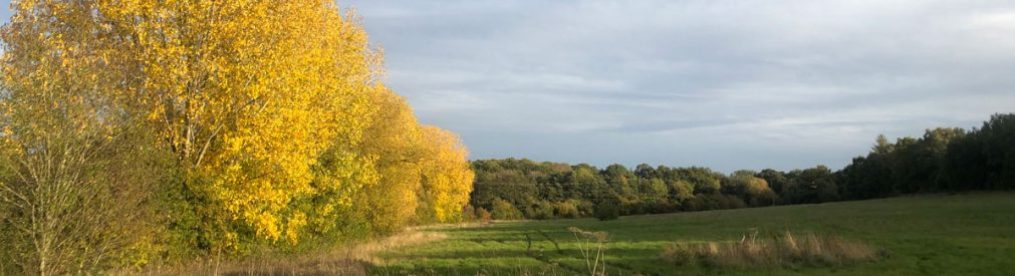
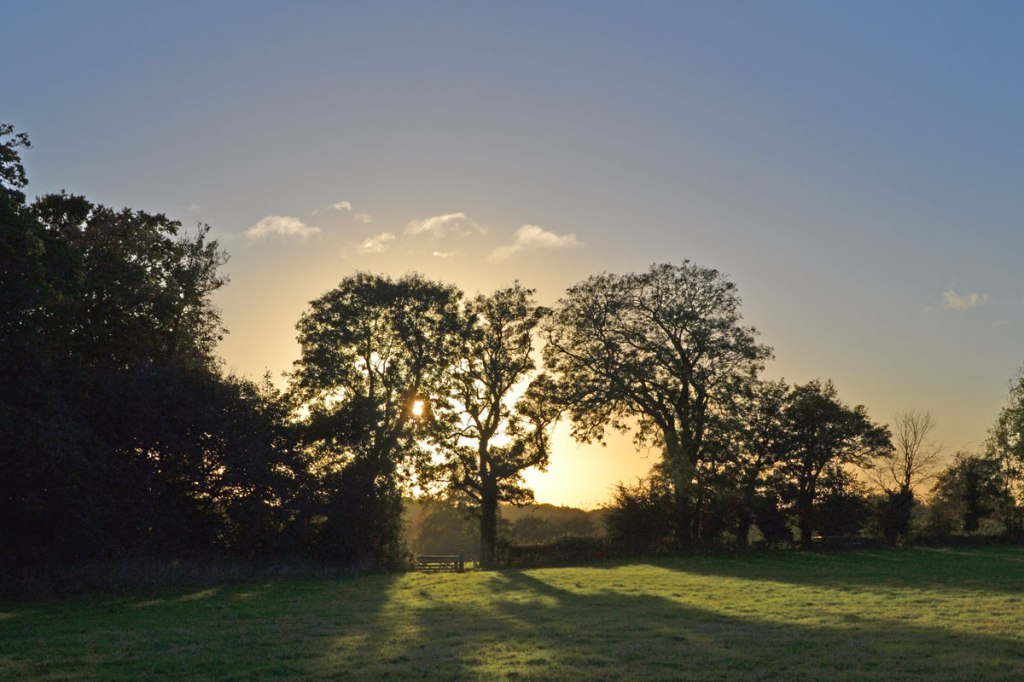
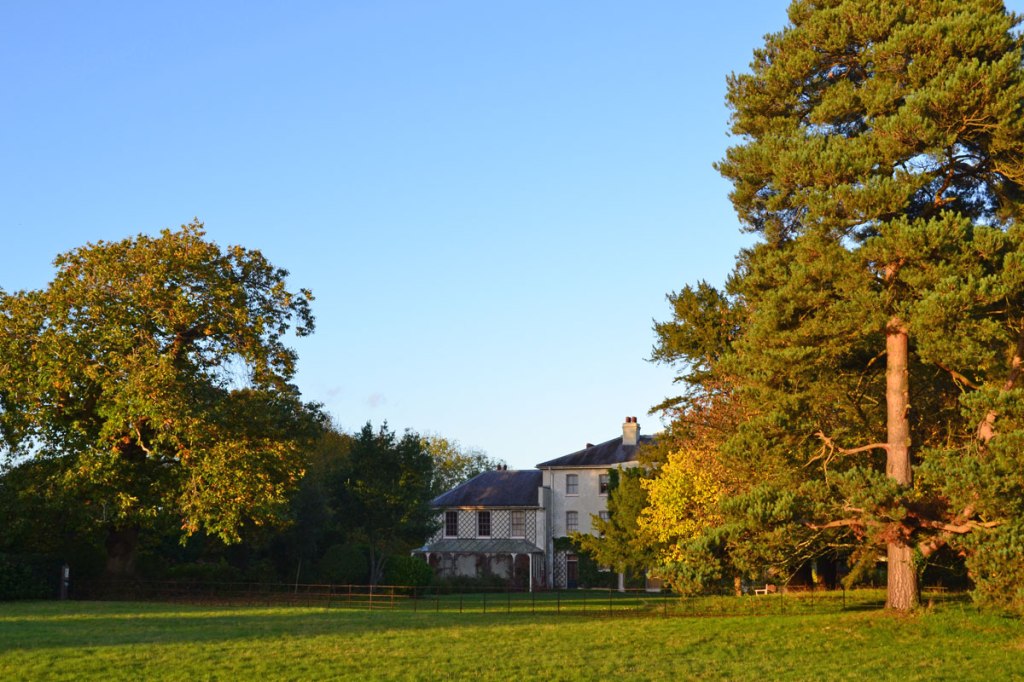
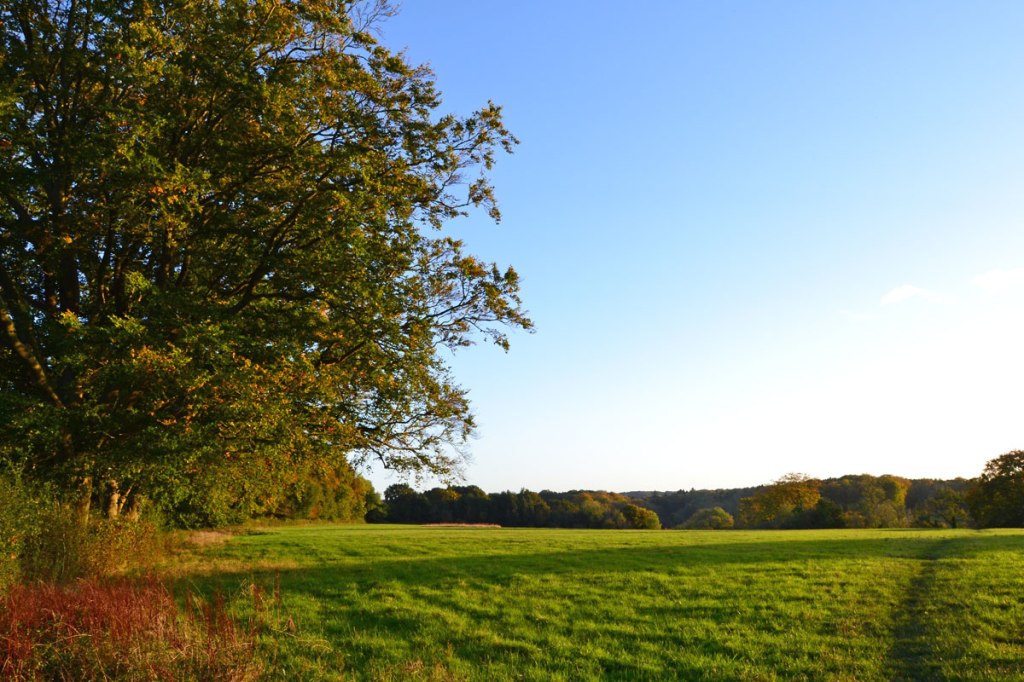
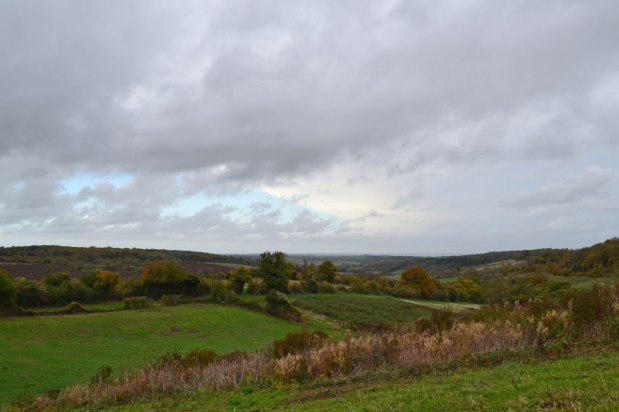
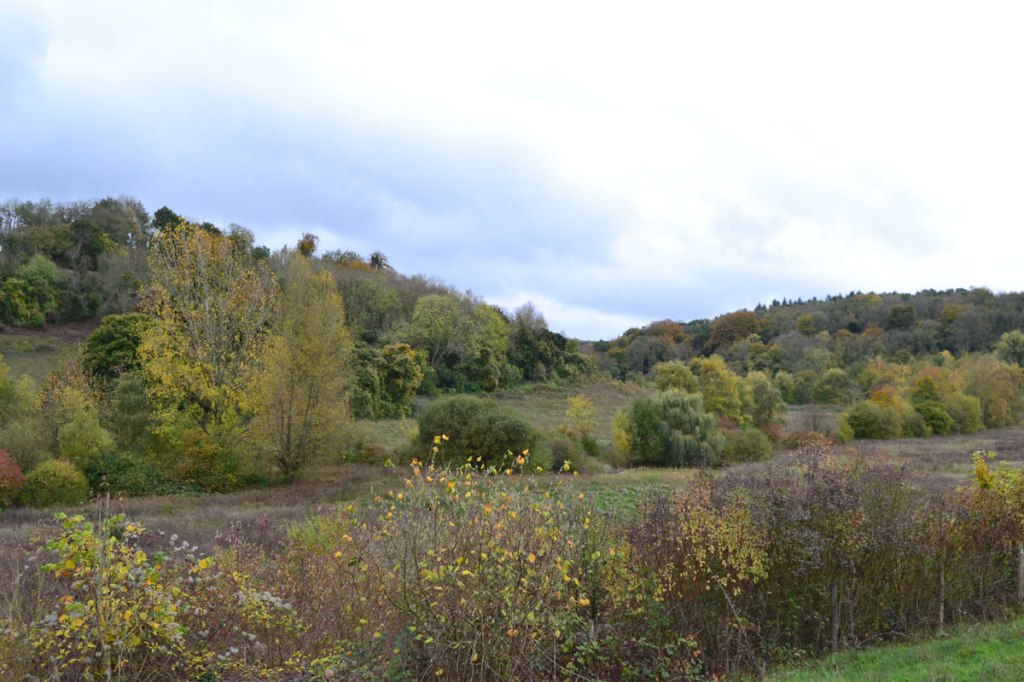
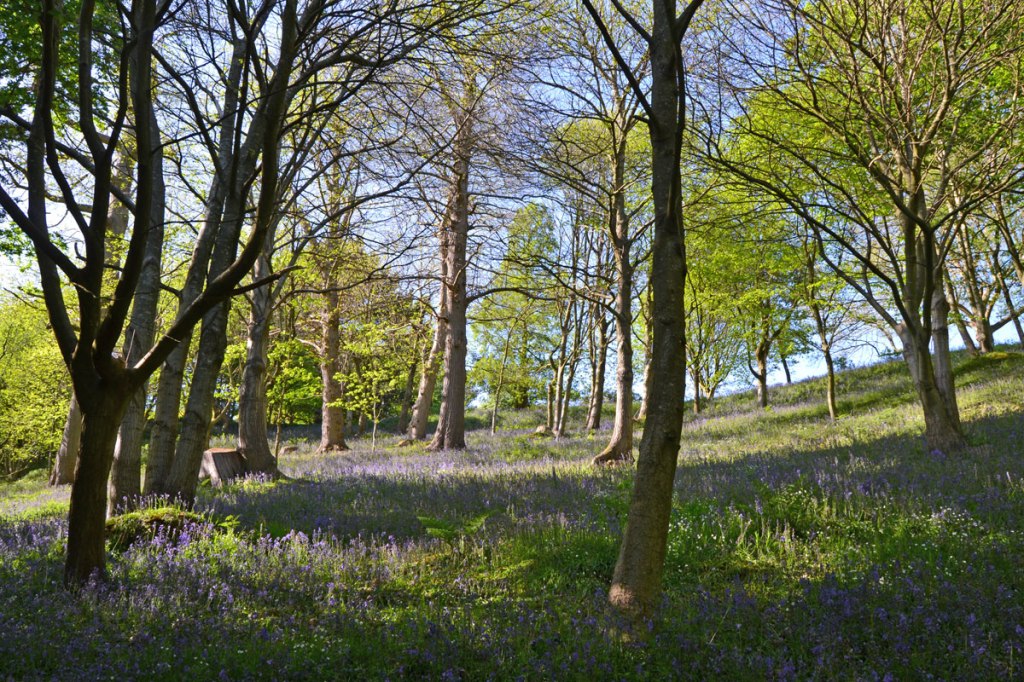
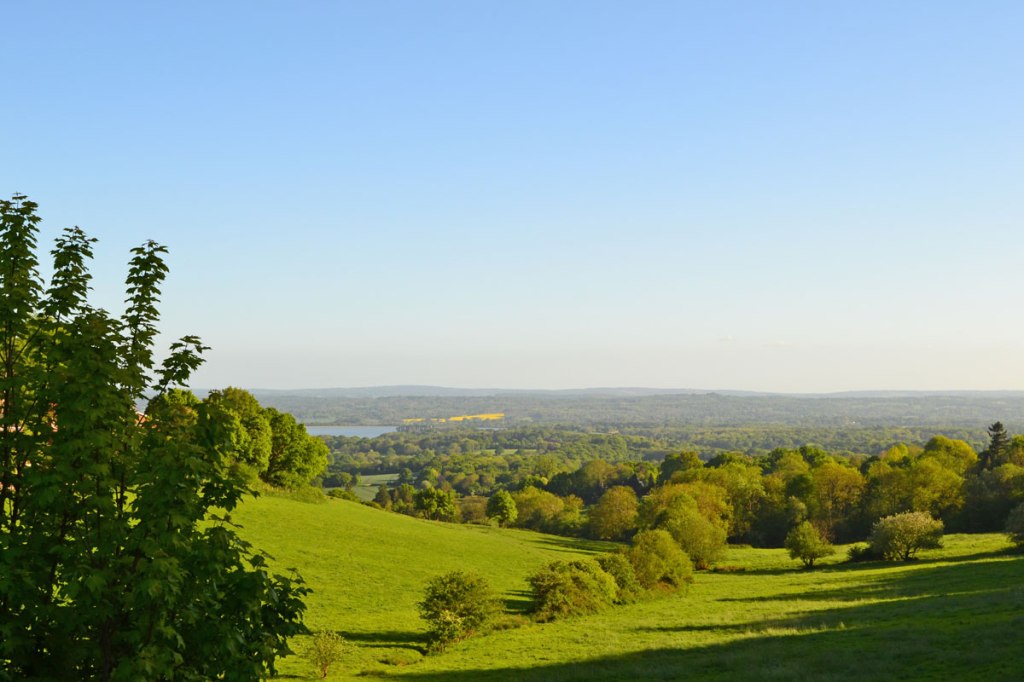
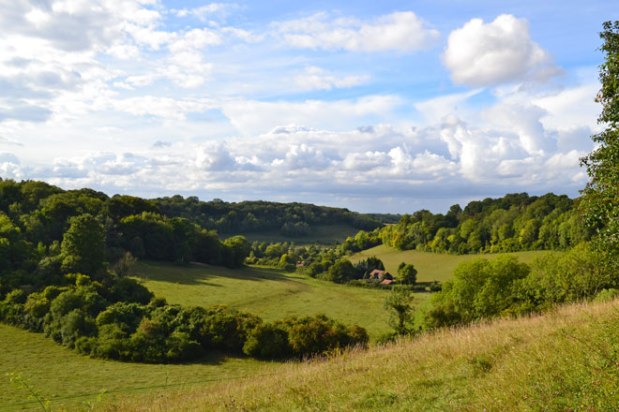
It’s been a bit of a classic autumn so far; lots of rain but also some great sunny windows of walking opportunity. If you’re keen on getting out for a walk but prefer to stay dry it means checking your weather apps and staying agile. Lately these windows have come at the end of the day and have rewarded those able to dash off on a Kent saunter late in the day with some brilliant light. On Saturday, the Downe walk at 5pm was a winner. As well as a beautiful sky, saturated colours and a sense of perfect tranquility, there were interesting birds around: kestrel, sparrowhawk, three yellowhammers, redwing and mistle thrush. Migrations are happening. Some of these birds may have travelled from Scandinavia, from eastern Europe, Yorkshire or a few miles over the border of Surrey. We’ll never know.
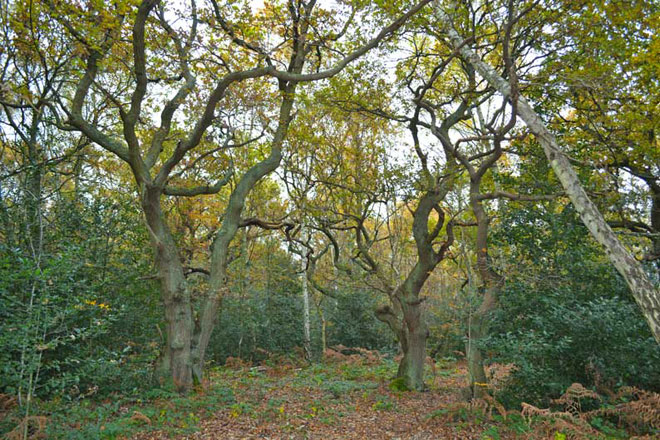
Rain set in overnight and for much of the next day. I’m drawn to wooded areas for walk in bad weather and few woodlands are better than Petts Wood, maintained by the National Trust. Scots pines, chestnut groves, heather glades, oak, ash, and sycamore surround a labyrinth of paths with a railway line and a couple of arable fields and streams helping navigation in the middle of the wood. A great place.
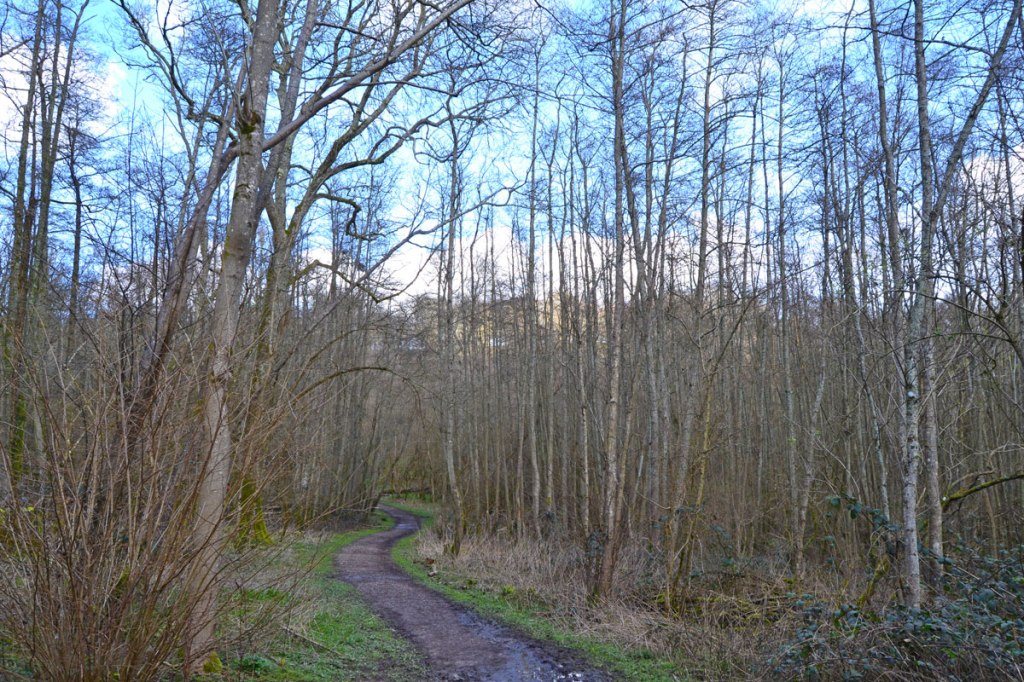
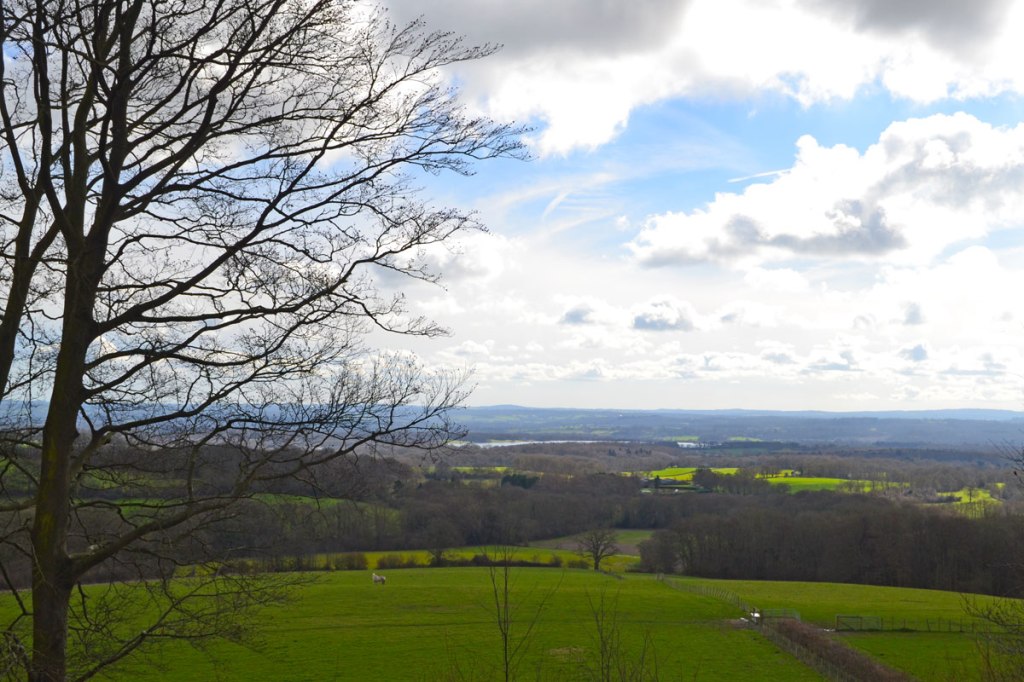
Spirits have fallen almost as steadily as the rain as we slipped mildly and humidly from winter to spring . The Met Office have gloomily talked of precipitation records being broken, and a sense of oppressive drudgery has undeniably taken root as indoor life seems the only option. Still, I’ve been impressed by the amount of runners and cyclists still out in the lengthy downpours, clocking up the miles. Me, I’m a fair weather fitness fan. A lot of the rain has been too heavy for walks; I’m happy in drizzle but the stuff that stings your face definitely takes the pleasure away at this time of year, though can be fun in summer. But hey, spring is around the corner somewhere, the temperatures are mild, the crocuses are out in the park and the daffodils gaily wave in the breeze. I love to walk on the Greensand Ridge at this time of year, to see signs of spring seeping into the colours of the miles of countryside stretching before you as far as the Ashdown Forest. It’s muddy, sure, but there’s also optimism in the snowdrops, primroses and sudden uptick in birdlife among the skeletal trees. Toy’s Hill south of Westerham has been fertile ground for walking.
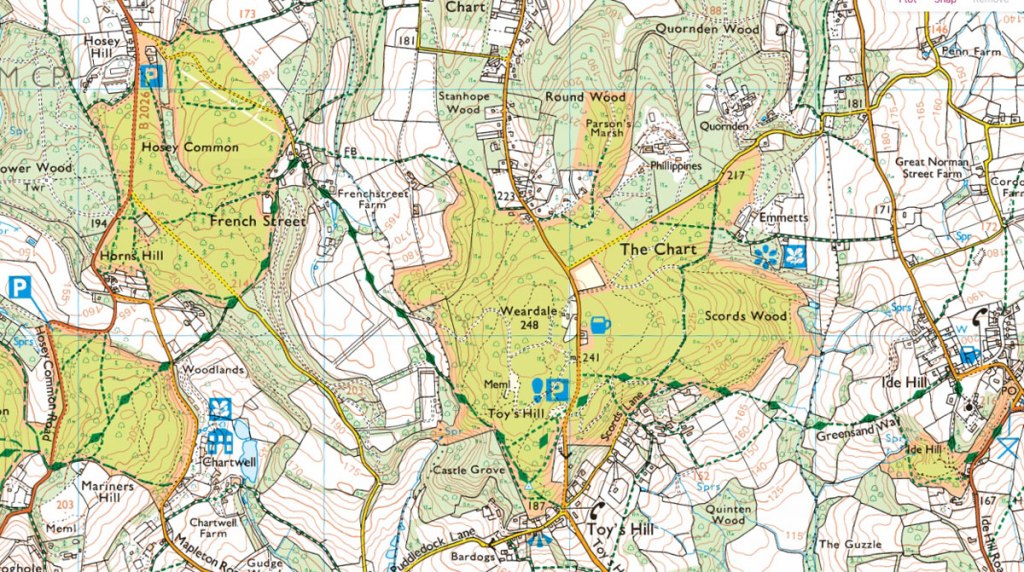
I haven’t got a Toy’s Hill walk on KWNL but there are several routes from the NT car park (the map above shows the car park, lower centre, and Toy’s Hill’s proximity to Hosey, Chartwell and Ide Hill) that are well signposted, such as the shortish Red Route, which will take you to Emmetts Garden and back. You can do my Ide Hill walk from Toy’s Hill easily enough, or even the Hosey Common route, but obviously you’ll be adding on a few miles. I really like the spot near the NT car park where the old mansion used to stand. From here you can see four counties including Leith Hill and even the South Downs on a fine day. The photos below were taken in early March; appearances change quickly at this time of year so expect less bleakness in the days ahead!
Four counties view from site of the demolished Weardale Manor, Toy’s Hill
Ram Pump pond below Emmetts Garden in Scords Wood, on the Toy’s Hill red route and the Ide Hill walk
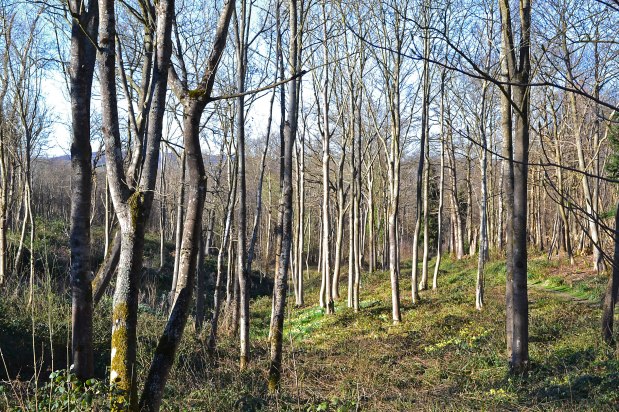
Scords Wood, awaiting signs of spring
This is the view south, to Bough Beech and Hever, from the point at which the Ide Hill walk joins the NT Toy’s Hill red route in Scords Wood
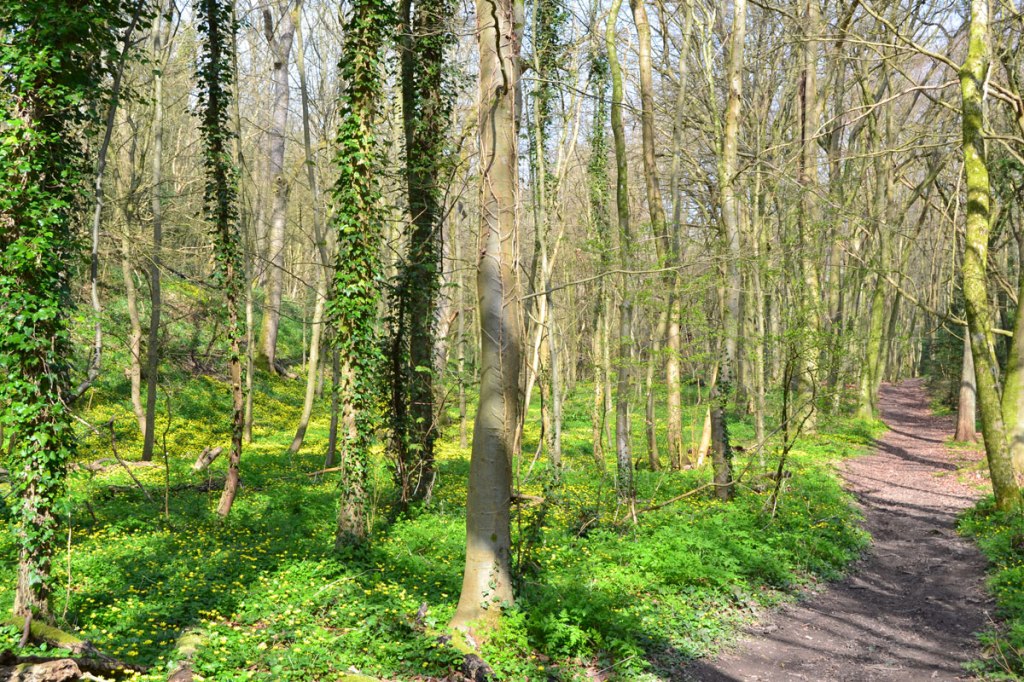
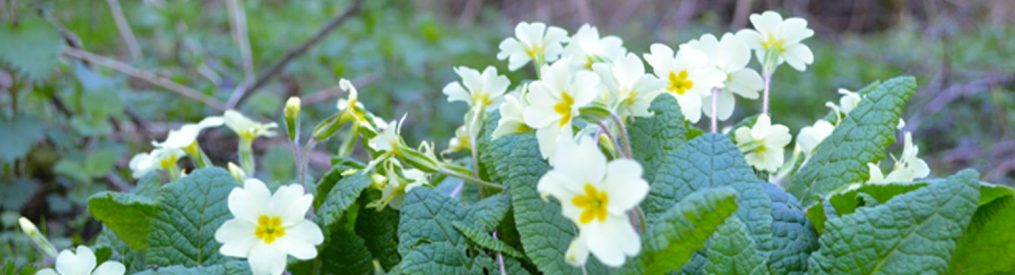
As for colour, look out for yellow lesser celandines, very spectacular at this time of year on the Fackenden Down walk in the woodland between the Down itself and Magpie Bottom. One of my favourite places for wildflowers in late March is on the Hever walk in the woods between Points 1 and 2, close to Hever Castle gardens (headline photograph). A yellow and white sheen seems to rise from the mossy forest carpet ushering in better days. But look if you want to keep your powder dry on the walking front, and not go out until mid-April and the blooming of the bluebells, that’s perfectly understandable.
This route, no 28, is similar to walk 27, but is better for people walking on Sundays, when there is no train service. You can start it from the lovely Chequers Inn, Heaverham (if you buy a drink/meal); Kemsing village car park; or Mon-Sat from Kemsing station. Rather like the Chevening/Knockholt walk it’s another chalk escarpment route that drops down into the Vale of Holmesdale, and uses short stretches of the North Downs Way. The link below includes the usual Google map and the more useful OS map, plus written directions. PDF to download will follow in a few days!
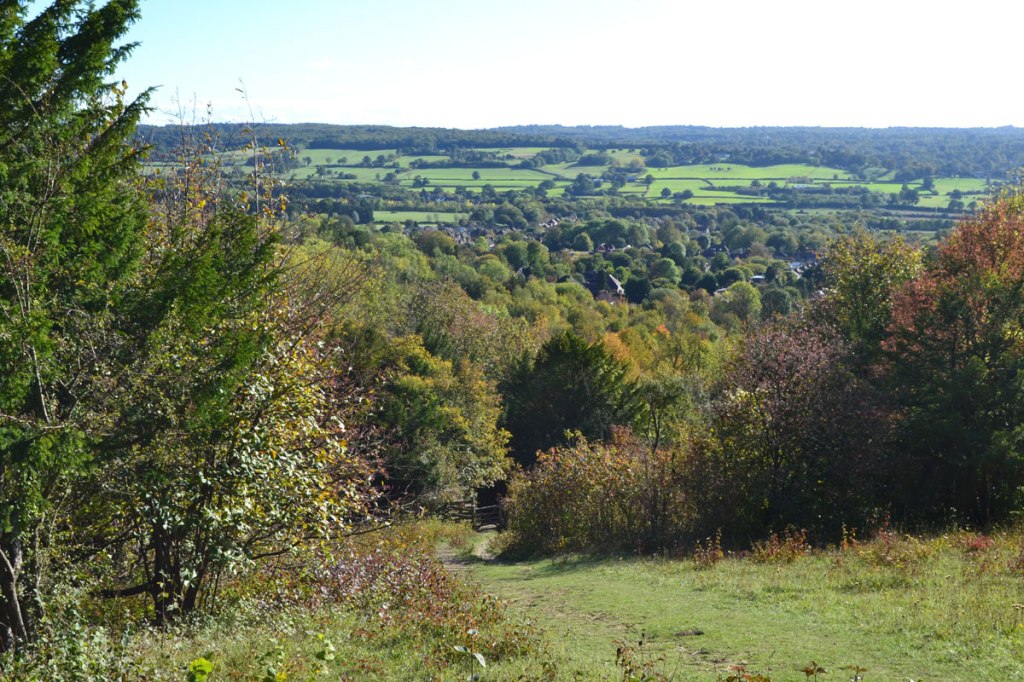
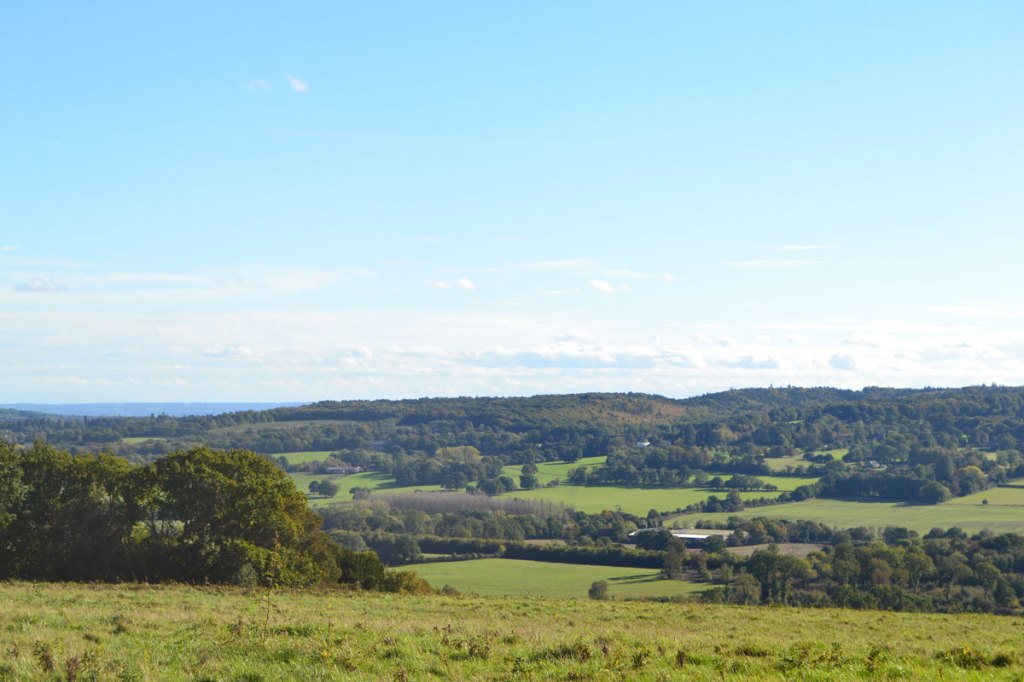
The Underriver walk was a picture last weekend, two unseasonably warm days that probably represented the last knockings of summer. It felt like summer and looked like summer with foliage mostly green and few birds flocking apart from some buzzards and jackdaws in a high altitude spiral. It’s another walk I now do in reverse to the sequence described on this site. One of the reasons for this is to avoid the sharp uphill section in the holloway by the “dancing beeches” just past the oasthouses at point 3. Coming downhill here then enjoying the route past Romshed farm seems a bit more civilised now I’ve done it a few times. At One Tree Hill the National Trust has trimmed the hedgerows and blackthorn clumps back to enlarge the panoramic view – and very effectively so. I’ve walked past that spot since childhood, though much more often these days, and that timeless view across the Low Weald to the Ashdown Forest and as far as the Surrey Hills in the west still grabs my attention. It’s a popular spot, as you can see in the picture below.
Walks this weekend will have a different flavour. The ground will be wetter with plenty of freshly fallen leaves. The temperature will be a lot crisper than last week, perhaps by nearly 10C, but with blue skies forecast it should be a beautiful couple of days for a stroll. And a first proper taste of autumn.
The longer days give us the opportunity to walk as the shadows lengthen and temperature dips – although in the warm spell that recently ended it hardly felt as though the evenings were cooler than the afternoons. Recently, a very tranquil saunter on the path between Shoreham and Eynsford – a route we’ve neglected a bit of late (pictured) – proved a real tonic, made even more fun by keeping with the tennis and cricket on the phone. Amid a limpid sky a solo Spitfire growled over a timeless pastoral scene of river, hedgerows and fields. As we neared the hops and spectacular lavender of Castle Farm we turned round and headed back to Shoreham where a pint of Larkins awaited us at the Samuel Palmer. We felt lucky. And so close to south-east London and even more relaxing when you use the train, direct between SE London and Shoreham in just 30 mins.
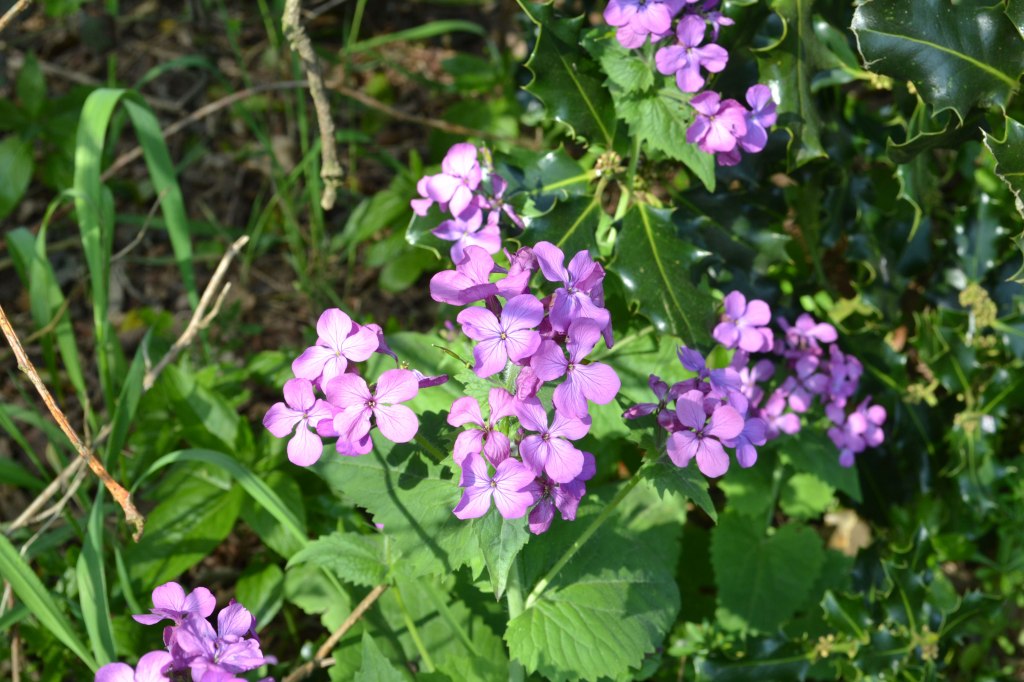
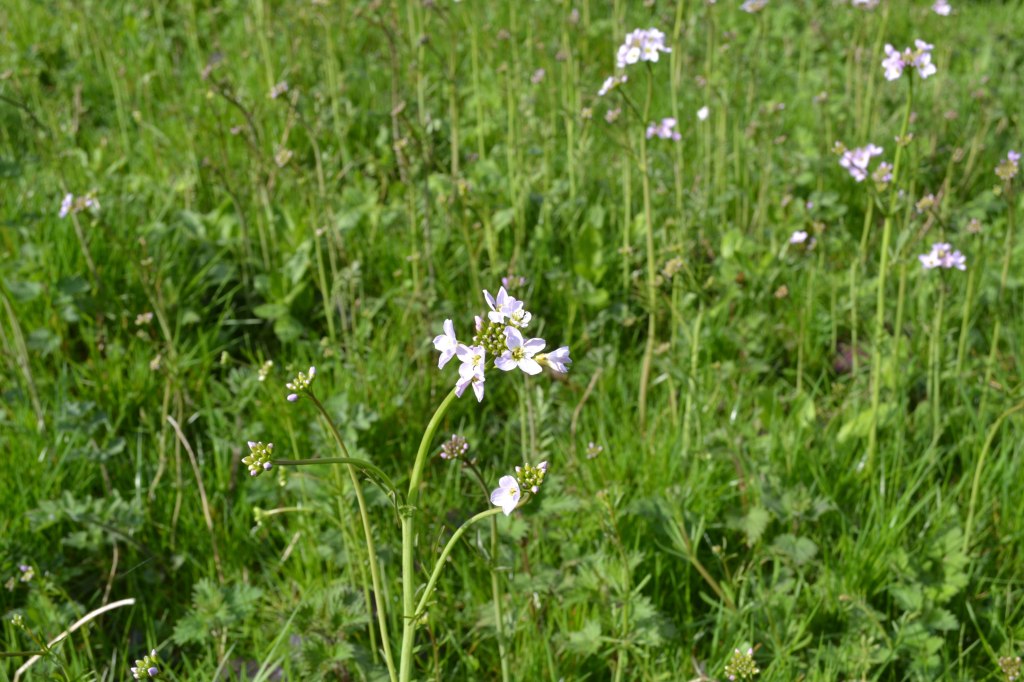
With a dry and potentially quite sunny week before us at long last it’s a great time for checking out emerging wildflowers on the walks. I must underline that I’m no expert and rely on apps to confirm by sightings in many cases. But below are a few species you’ll see in most of the woods encountered in woods and fringes on the KWNL routes in April.
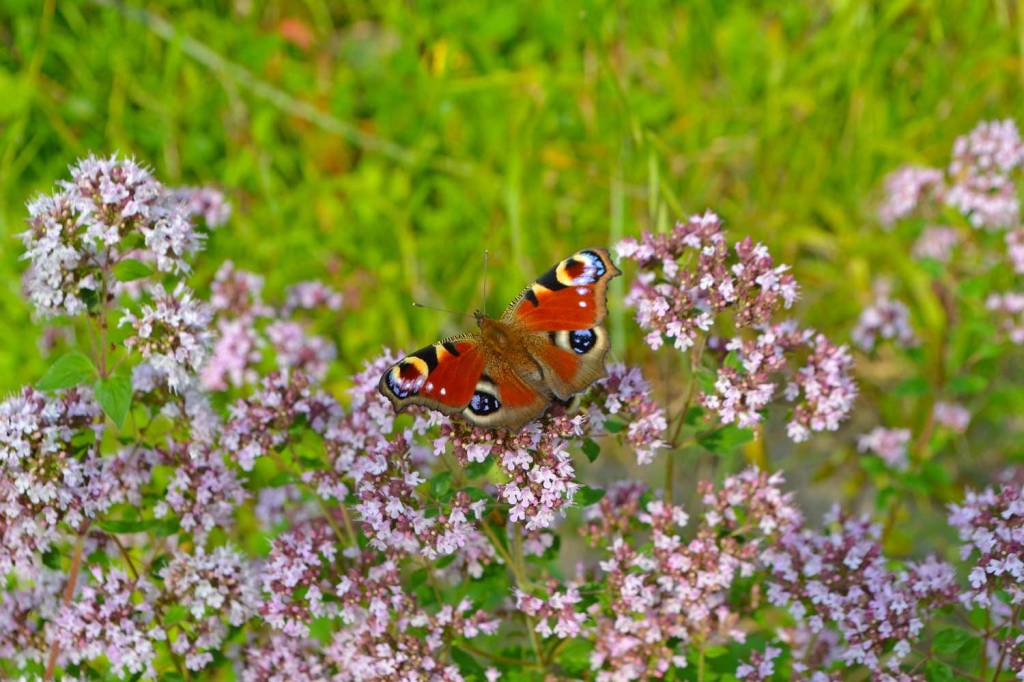
Peacock butterfly pictured later in the year on marjoramCelandine, Great Wood, Magpie Bottom
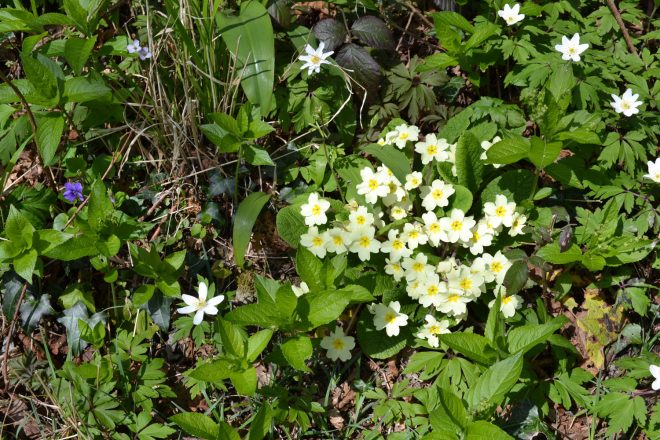
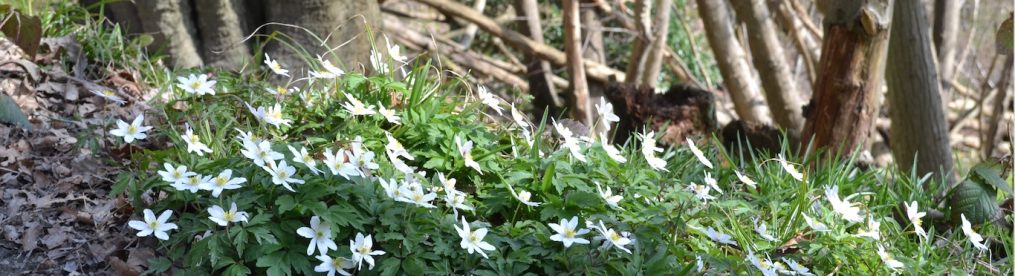
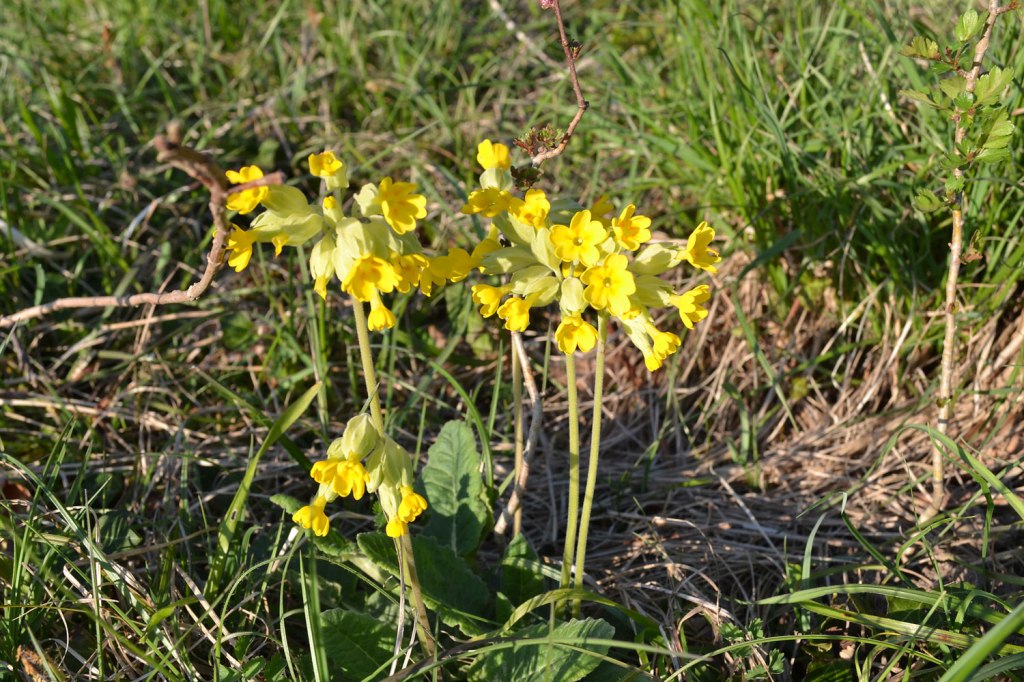
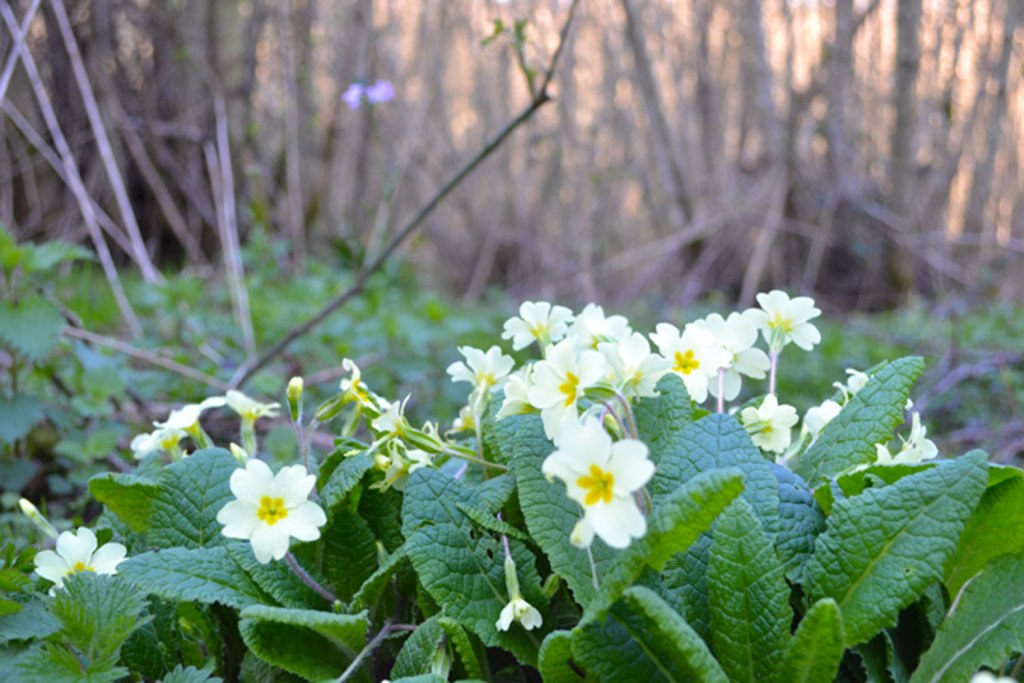
Within a couple of weeks bluebells will be taking over in the woods – the first are already in bloom – but until then there’s plenty to enjoy: cuckoo flower, celandine, wood anemone, primrose and cowslip in particular. There are early orchids too; at Polhill, Strawberry Bank (on the Cudham walk), High Elms country park in the glades within the woods and Downe Bank (a detour on the Downe walk). I particularly enjoy the first sightings of butterflies: I’ve seen brimstone (usually the first to emerge), small tortoiseshell and peacocks so far this year. At Fackenden last week, all three species were fluttering in Magpie’s Bottom. In the woods behind adjacent to Magpie Bottom (the OS map calls it Great Wood), the celandine carpeting the ground under the beech trees was spectacular. Things change fast at this time of year though and pretty soon, all will be blue.
Early wildflowers at One Tree HillWood anemoneBugleCowslips, Fackenden Down walkPrimrosePrimrose, Scord’s woodDaffs at Ightham MoteRed campion, Dunstall woods, ShorehamBrimstone butterflyCuckoo flower
I’m intrigued about how many of us look outside on a day like today – drab, cold, raining – and just think that curling up with a book or making a great meal or something would be a far better use of time than a walk. Who can blame those who decide such days are for doing stuff indoors? But judging by the views on this website there is a hardcore who come what may will not only brave the elements, they will relish them. I’m in this camp – although I do have a good book to read. Anyway, lovely autumn colour awaits those who make it out, all the more inspiring against the grey backdrop. Waterproof trousers and good boots will be handy though. Photos are from the Fackenden Down route last weekend on which the weather was actually fine as it turned out. Scroll through the photo gallery below right for autumn colour from all the walks.
The bluebells have faded a little earlier than usual this year. It seemed to me on the Ide Hill walk today that the south-facing slopes may be drier than normal for spring, which has affected bluebells’ longevity while those in more sheltered parts of the woods were still full of colour. There’s certainly been a marked lack of rain this year – last month just 18mm fell in north-west Kent, about one-third of the usual April total.
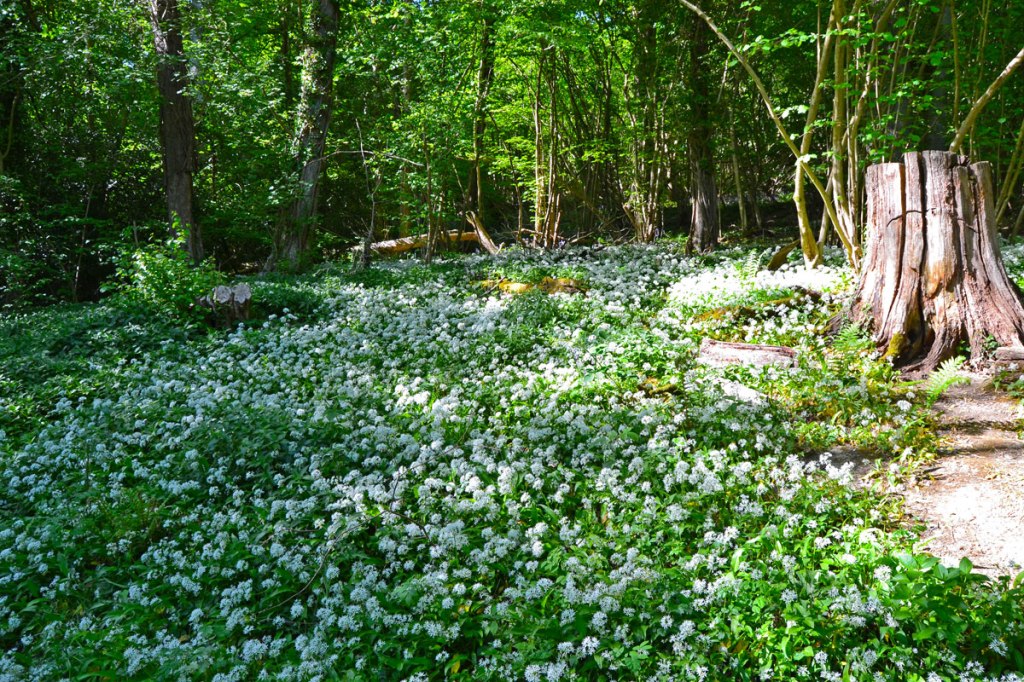
In Meenfield woods, on the Shoreham and Polhill walks, the bluebells, while fading, were still hanging on last weekend – perhaps those woods have retained a little more moisture. I’m no expert. Anyway, instead of bluebells, look out now for wild garlic (or ransoms) growing in profusion in woods on Kent Walks near London. Their brilliant white/cream flowers (pictured above at Rook’s Hill on the One Tree Hill walk) are a sight for sore eyes where there are damp woods and subterranean water close to the surface. The Ide Hill walk is quite unusual for KWNL in having plenty of gorse (near the walk’s start) which is looking brilliant in the spring sunshine, too.
As for birds, things still seem a little quiet with few swallows, martins and swifts making it to the region so far, but I was delighted to see my first whitethroat of the year in one of the many superb country lane hedgerows between Shoreham and Well Hill, a great bird to watch for when on a country cycle. (Pictured in slideshow: whitethroat, Darent Valley view, faded bluebells, Ide Hill view, Scord’s wood, wild garlic in Scord’s wood, azalea in Emmett’s and faded bluebells of Meenfield Wood).
To help you find suitable walks here’s a rather rough-looking interactive Google map. Just click on the lines and blobs to get more information about that walk. You can use the menu at the top of the page to print off pdfs and to look at more detailed directions. Each walk description has a GPX map attached so you can follow your progress in real time – if you have signal. Failing that please use an Ordnance Survey map to check the route (OS Explorer 147 has them all).
Best walks for travelling without a car are those in the Darent Valley – the ones starting from Shoreham, Eynsford and Otford/Kemsing stations. Knole Park can also be reached from Sevenoaks station.
In a largely cloudy wet summer in these parts the sightings of butterflies are all the more precious. As an ‘ectotherm’ these insects need warmth to fly for any duration. So on cooler days they need to open their wings to sunlight and heat their bodies to about 29C before take off. Slopes with wildflowers on them facing the sun are particularly great places to see them.
Populations of these absurdly beautiful creatures are falling the world over because of climate swings and pesticide use – another reminder that apart from robins, goldfinches, magpies, deer and rats, etc, it’s quite hard to write about many facets of the natural world without doom and gloom encroaching, but that’s the reality. Take the small tortoiseshell butterfly: its numbers have declined because its larvae need to feed on wet leaves (mainly of nettle), so the increasing tendency toward drought has really hit its population over the past 40 years or so. The large tortoiseshell meanwhile has nearly completely vanished. Having said that, other species, such as silver washed fritillary, are said to be expanding if anything.
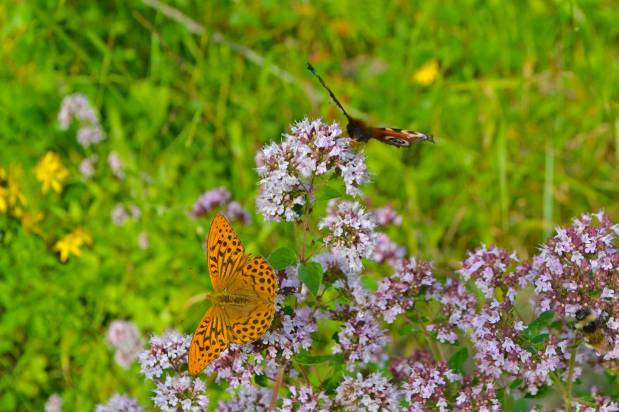
From top left clockwise: peacock in Downe feeding on marjoram; female silver washed fritillary; gatekeeper in Polhill; red admiral in Catford; marbled white in Downe; comma near Shoreham; male silver washed fritillary in Downe; chalk hill blue – photo by Steve Hart –Fackenden Down
However, Kent walks near London are graced at the moment by a variety of lovely species: on the chalk North Downs you’ll see silver washed fritillaries, the small but smart brown argus (actually classed as a blue), dark green fritillaries (if you’re very lucky), gatekeepers, marbled whites and meadow browns, plus many of the common names such as the incredible migratory painted lady, red admiral, brimstone, tortoiseshell large and small and a host of others. Chalk hill blue, the common blue and the adonis blue (very rare) are particular favourites. It might just be me but I tend to see more orange tips, peacocks, commas, brimstones and large whites on the Greensand Ridge walks around Sevenoaks, but I’m not being scientific here – they are widespread.
To see wonderful butterflies you might not have leave your garden or park as we all know – now the prolific south-east London buddleia is in flower, the migratory red admirals are often seen a-flutter in the suburban streets. Small species, like skippers, I don’t know much about. But I often see gem-like butterflies on the walks – I’d need to be with an expert to identify them.
It’s hard to photograph butterflies because they are rather skittish unless in the mood for a bit of showing off, or just super drunk on nectar (is that possible?) but I have managed to take a few shots over the past couple of years, which I’ve compiled in this montage above (the chalk hill blue centre right was taken by a friend though).
Not a butterfly but the very smart looking cinnabar moth, pictured at Romney Street while on the eastern valleys stroll