Microclimates and wild meadows

Microclimates and wild meadows

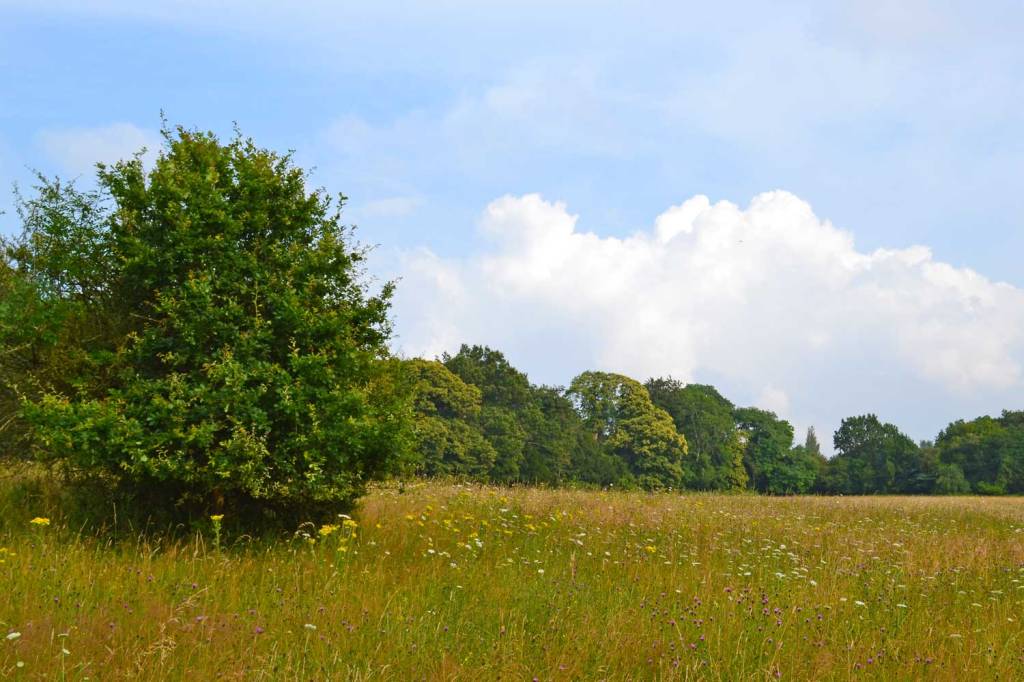
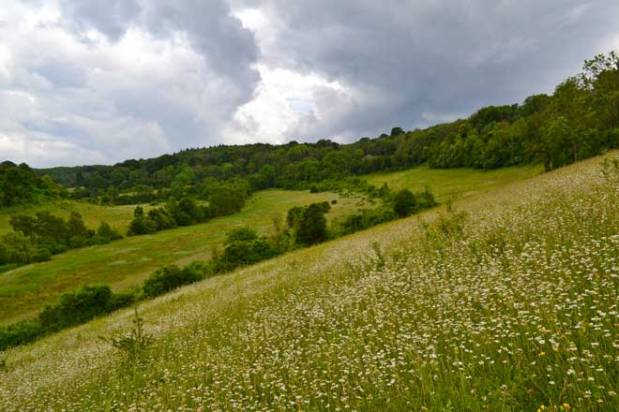
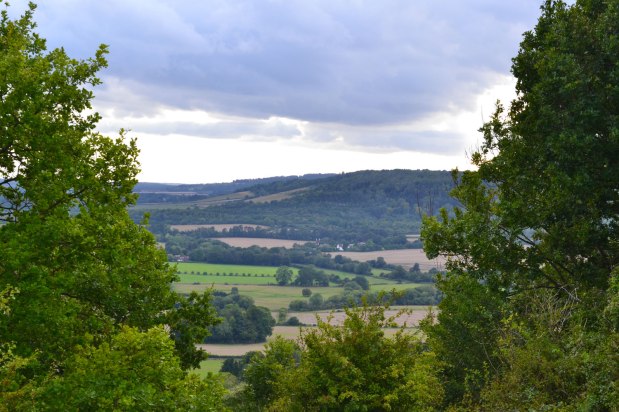
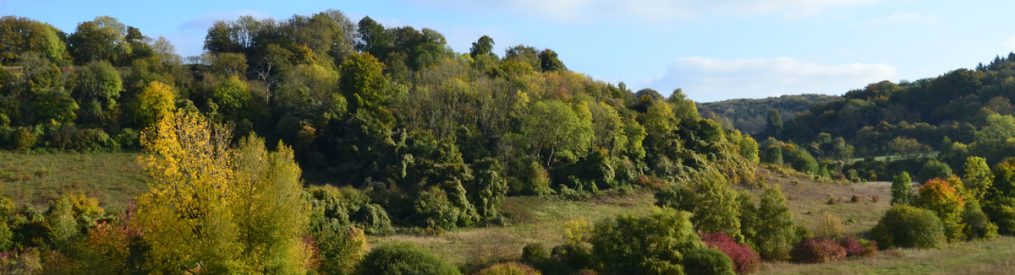
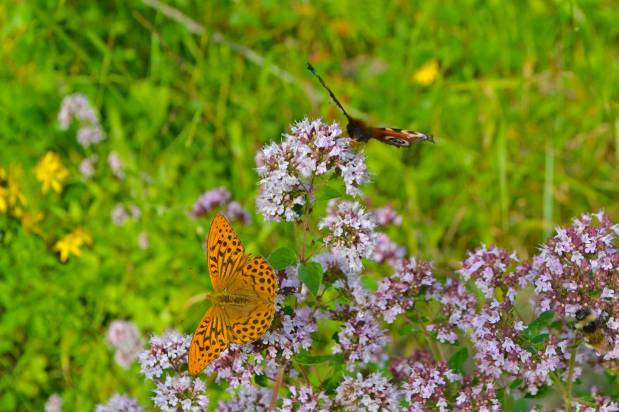
The Darent Valley and its surrounding valleys near Otford, Romney Street and Austin Lodge to the east and Andrew’s Wood to the west seem to me to trap heat and moisture. Even on dull summer days the area feels more humid and sticky than the London suburbs for example. I love it. The area feels ‘different’ and somewhat mystical. It’s certainly very verdant and with rewilding projects, such as at Magpie Bottom, several SSSIs and Kent Wildlife Trust reserves, it’s worth having to change your shirt for. Just take a flask of water. Even on a mostly dull day like last Sunday, you might get a fleeting pool of sunshine to enjoy and the sight of cloud shadows racing across the rippling wildflower rich meadows towards you. (Dogowners are advised to keep their animals on the the lead though…. there’s apparently a threat of adder strikes on dogs in the area and occasionally livestock. Cases of dog theft have occurred too.)

Orchids in the mist

Orchids in the mist

Two walks around Shoreham at the weekend in subtly different conditions. On Saturday we went looking for orchids on the eastern valleys route. It was a mostly cloudy day but with good visibility. Towering cumulus held the promise of a storm in the evening – well, one did materialise even yielding a funnel cloud in a near-tornado touchdown in east London – and the humidity was something else, even in these chalk upland valleys which trap heat and moisture.

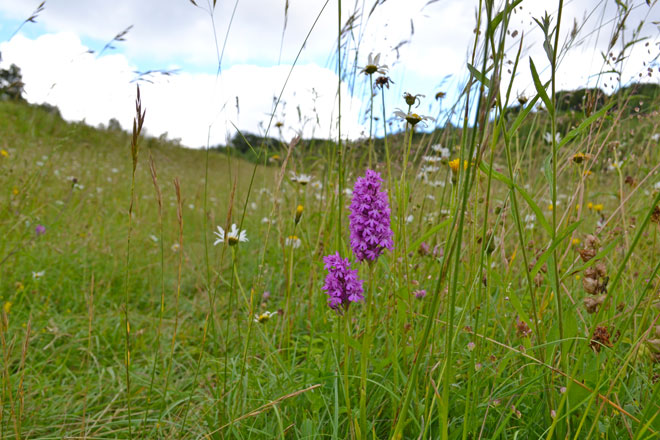
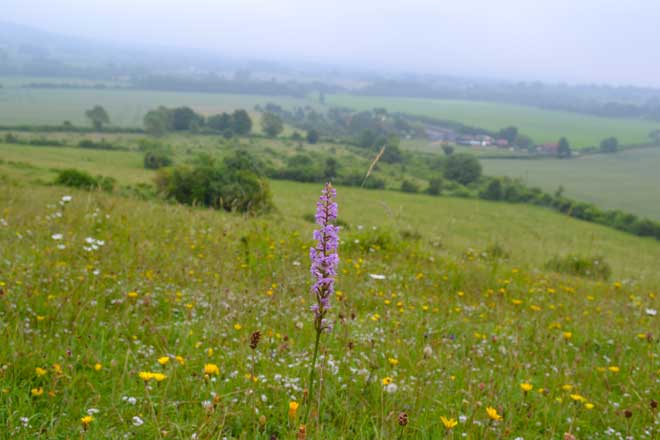
For Sunday, the cloud was almost at ground level, quite unusual for June I thought, again threatening heavy rain, which eventually arrived after dark. We kept our walk brief, venturing to Polhill from Andrew’s Wood but not heading down to ‘Pluto’ on the valley floor, instead hiking the hillside above Filston Lane, moving slowly, looking for flowers and birds (no luck there!). The chalk slopes were festooned with natural colour, the delicate pink of fragrant orchids, raspberry ripple of common spotted and rich pink/mauve of pyramidal orchids. Trefoil, ox-eye daisies, poppies, scabious, lucerne, foxgloves and others I don’t know the names of completed the scene.

Pyramidal orchid on Polhill Bank, managed by the Kent Wildlife Trust

There are bee orchids and more on these walks but I managed to miss them. Marbled white butterflies, commas and common blues were in abundance, plus a beautiful cinnabar moth, despite the lack of sun. It felt so rare to stroll on the flowering hillside in such dull conditions. Down at Headcorn, near Maidstone, the airshow had been cancelled through lack of visibility and nothing flew from Biggin Hill apart from one executive jet which made a beeline for the sunshine above the murk. Still no airliners.

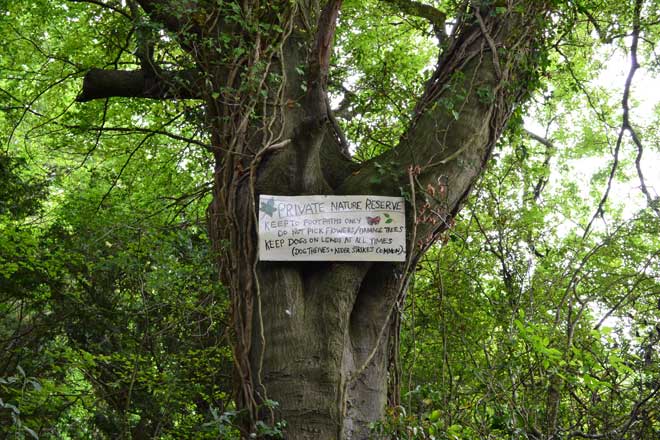
I was taken by the private nature reserve sign on the footpath into the hillside from Shoreham station… “keep dogs on the lead, adder strikes common” grabbed the attention.

Well here’s hoping the weather clears up a bit. I’m no expert but the orchids already looked to be on the wane just about, but there’s plenty more in the way of wildflowers yet to come on these thin chalk soils. Marjoram, thyme, wild carrot, more scabious, rosebay willow etc are all yet to explode into colour.

I should mention that Polhill is looked after very well by the Kent Wildlife Trust as is some of the land close to the Eastern Valley route, notably Fackenden Down. Apparently both sites support common lizards and adders (hence the warning sign), dark green fritillary butterflies, willow warblers and man orchids. I never see any of these species but it’s great to know they are present.

I liked the gloomy atmosphere. For a bit. But this is going on for far too long now. Still, there’s the football to enjoy.

Top picture is the hillside opposite Romney Street, east of Shoreham. Below (in order of appearance): White Hill nature reserve sign; Magpie Bottom seen from Austin Spring; fragrant orchid White Hill; common spotted orchid White Hill; cinnabar moth near Austin Lodge hamlet; common spotted orchid Romney Street; fragrant orchid Polhill. All photographs by AMcC

Sweet meadows

Sweet meadows

The word ‘meadow’ is synonymous with summer and June and July are the very best months to enjoy them. There are so many brilliant summer meadows on these walks now alive with oxeye daisies, orchids, vetch, poppies, buttercups, and lush grasses rippling in the breeze. They are alive with butterflies and other insects while swallows swoop above them forming brief gaggles before separating to make single passes. High above, buzzards are often seen soaring while spectacular red kites – now much common in Kent than at any time in the modern era – float into view closer to the ground. Of course there are issues, swallow and martin numbers are much lower than back in the day and there ought to be more butterflies and bees. Still, meadows are hubs for wildlife and we are lucky the North Downs, Weald and Greensand Ridge areas possess so many.

Meadow bordering Scord wood on the Ide Hill walk, June 2021. Sheep have munched this one a fair bit, and that in the lead photo, but there are still plenty of wildflowers and bees
Bluebells on Kent walks: where is the cobalt carpet?

Bluebells on Kent walks: where is the cobalt carpet?

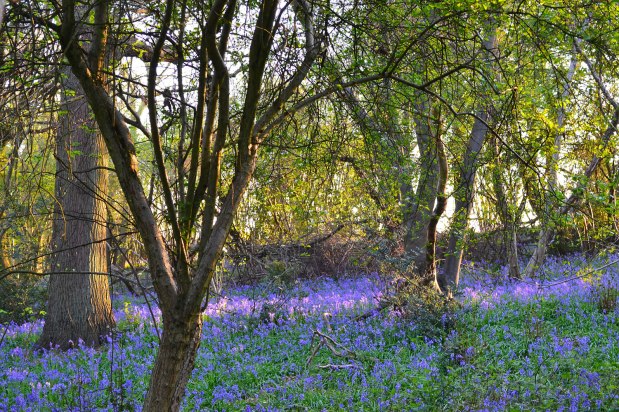
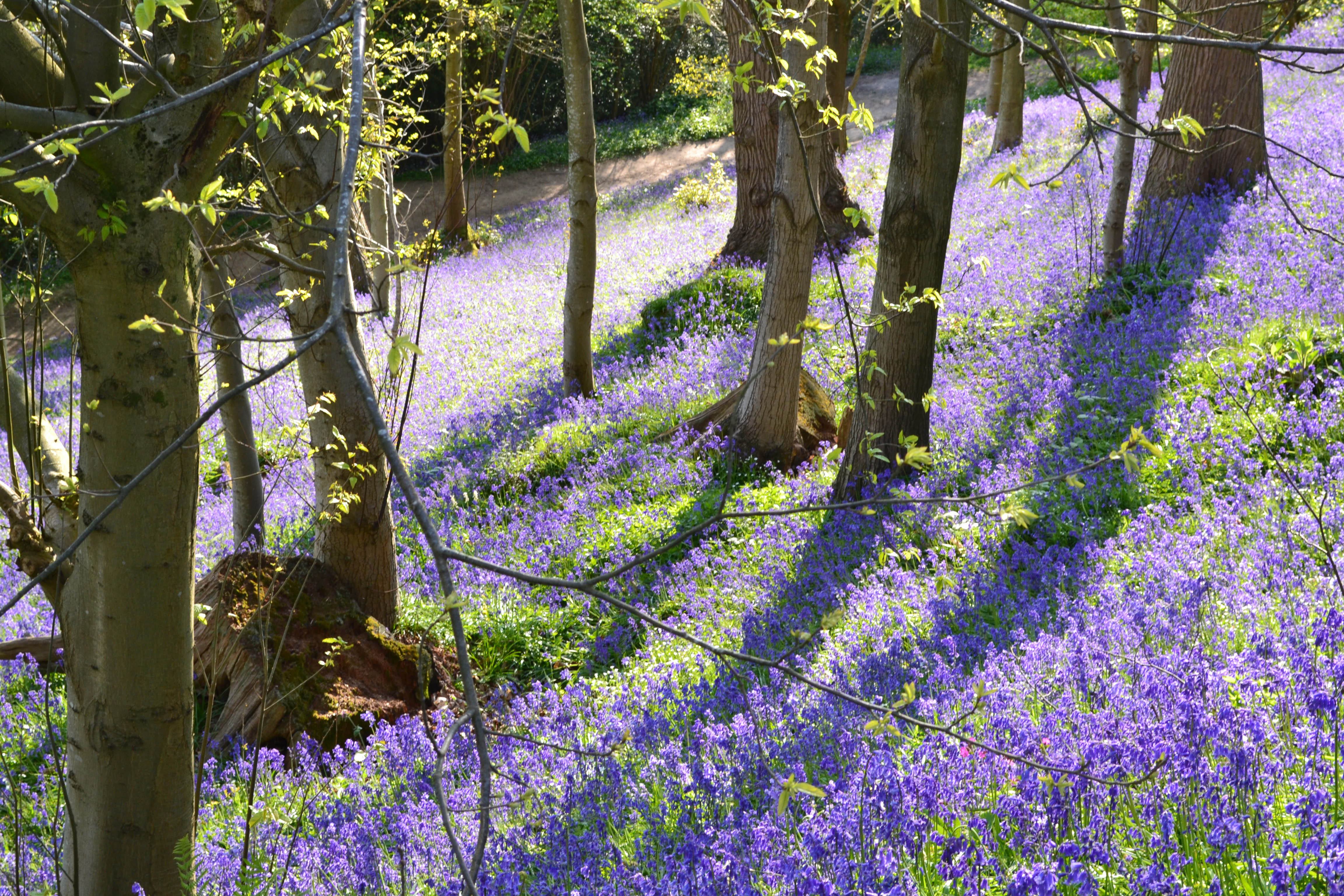
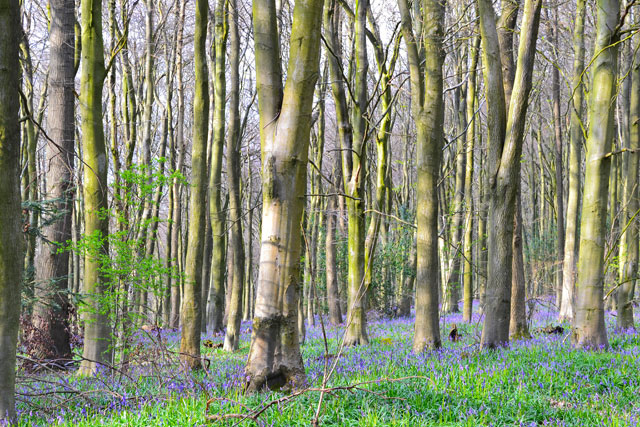
OK, for those going out this weekend expecting swathes of bluebells, you may be disappointed. They are late this year – particularly at One Tree Hill and Ide Hill, but not far off full bloom in Meenfield Wood. Probably a few too many cold nights of late has set them back. Next weekend will definitely be better. But there are other flowers to enjoy. Cuckooflower clumps are great at this time of year and, like red campion, wood anenomes and celandine, get better the more you notice them. Primroses form eyecatching patches too, and soon cowslips will adorn the grassy slopes of the North Downs (with orchids and marjoram/oregano to follow). These all brightened up my walk from One Tree Hill to Ightham Mote then back up the hidden valley with the little stream yesterday (pictured below). Below are some recommendations of good places to see bluebells.

This slideshow requires JavaScript.

If you’re staying local, Beckenham Place Park has some good patches (or will have), although get ready to exercise emergency social distancing manoeuvres as oblivious joggers jag around, their ears full of choons. Oxleas Woods off Shooters Hill is another good local spot and I daresay Sydenham Hill Woods too. After that I think we’re talking Petts Wood and the adjoining Hawkwood and Little Heath Wood and Selsdon Wood south-west of Croydon. Of course, there are brilliant bluebells at Downe, Meenfield Wood, Ide Hill, One Tree Hill, Hosey Common and in woods east of Shoreham on this website’s walks, and the cobalt carpet reigns supreme in woods near Westerham and around Hever and Edenbridge.

2017-04-29 17.12.16

Bluebells, Scords wood, Ide Hill walk, April 2017

Anyway, here are some bluebell factoids gleaned from an excellent article with far more detail called Bloomageddon: seven clever ways bluebells win the woodland turf war at The Conversation website.

  • They are uniquely adapted to suited the multispecies ancient woodlands of the UK
  • Low temperatures trigger their growth (but might delay their blooming if in April). Bluebell seeds germinate when the temperature drops below 10°C.
  • Bluebells predominantly convert sunlight into fructose allowing them to photosynthesise at low temperatures.
  • They are supreme competitors with other plants, allowing them to carpet woodland floors. But they get help in the form of mycorrhiza, a symbiotic fungi.
  • Almost half the world’s bluebells are found in the UK, they’re relatively rare in the rest of the world.

But please be careful never to tread on any; it takes bluebells years to recover from foot damage. Digging them up – surely no one visiting this site would consider such a thing – is illegal, and please don’t let dogs trample them either – keep them on the lead.

Meenfield Wood bluebells

Meenfield Wood bluebells, near Shoreham, Kent

Summer’s lease

Summer’s lease

And summer’s lease hath all too short a date…

Any weather that isn’t warm and sunny feels like a major disappointment at the moment with autumn round the corner, Covid-19 issues and some fairly other horrendous news going on around the world. We need the compensation of mood-lifting sunlight. But even in these cold, cloudy conditions walks work wonders with wellbeing. Last week, with a few days off work I tried a new route starting from Underriver – in pouring rain as it turned out – that joins on with the One Tree Hill routes. It proved excellent and featured some really interesting farms with lovely old buildings as well as the familiar Greensand Ridge views. I’ll write it up soon but if you do Walk 6 in full (with the western extension past Romshed Farm) you’ll have done it anyway. But maybe I’ll work it into a shorter route too, so time won’t be such a pressure.

This slideshow requires JavaScript.

The next day proved equally splashy, so failing to find anyone who wanted to join me I set off down the A2 in teeming rain to the Hoo peninsula. I’ve done the walk there, starting at Cliffe, several times but this was probably the most spectacular occasion yet, with huge storm clouds to the north and south and slivers of sunlight illuminating the bleak marsh. I heard cetti’s warbler, saw a whitethroat, lapwings, avocet and various unidentified waders. A marsh harrier glided across the track at one point; very thrilling if you like that kind of thing. My luck ran out on the final mile, however, as the heavens opened. It’s an hour’s drive from Sydenham but Cliffe is a good place to visit, particularly for bird watching, picking blackberries, elderberries and sloe and gazing over the Thames estuary. You can park at the RSPB reserve or in the car park by the main village church and just wander the marsh paths and tracks. There is a train service to Higham (three miles away) or to Strood – a Thameslink service that can be picked up at London Bridge, Deptford, Greenwich, Maze Hill and Charlton. There are local buses (the 133) from Higham/Strood but a taxi might work better.

Over the weekend I returned for the second time in a week to one of my favourites: Fackenden Down, this time in good company – I love a social walk even more than a solitary one! I never tire of this route, one that always delivers in terms of views, rustic atmosphere and so on. It’s still pretty colourful too with ripening berries, scabious and trefoil flowers aplenty on Fackenden Down itself and many chalkhill blue butterflies lingering in the sheltered spots. Very few birds around, however, just a solitary buzzard and a kestrel with a few lingering swallows speeding over the meadows.

Party time for buzzards

Party time for buzzards

Yesterday I was lucky enough to emerge from the trees at the top of Fackenden Down just as eight – yes, eight – buzzards soared in the updraft together overhead, calling out and engaging in mock battles. I’ve never seen anything like it. Nearby Magpie Bottom was also a picture with mauve scabious flowers and purple knapweed giving the pollinators a real treat. On a small sandy lump, made by burrowing insects I guess, I spied a tiny, dark lizard which shot off as I reached for the camera inevitably.

Fackenden Down, near Shoreham and Otford stations, is a Kent Wildlife Trust reserve of rare and superb value. The trust is trying to encourage reptiles, butterflies and more varieties of wildflower to return to the spectacular site but needs money so please donate to them if you can.

This slideshow requires JavaScript.

Greenwich in the murk

Greenwich in the murk

What a strange period of weather. And how odd that the many thunderstorms that have battered parts of London and the rest of the UK have managed to miss SE London. As Thursday became murkier and murkier and the hail downpours rumbled away to the south and west, I set off on my bike to Greenwich to capture on camera the curious evening light turning orange over the Thames. I failed. But the cycle was great, along the rivers (the Pool and the Ravensbourne), which had been swollen by the storms.

I hit the Thames next to the Oystercatcher restaurant then cycle past the Cutty Sark, stuck my head in at the Navy College and pedalled up to the fantastic Flamsteed House and through the Greenwich Park Flower Garden, returning over Blackheath then through Hither Green and Ladywell. My pictures failed to capture the light but I still like them… On returning I caught the Atletico Madrid v Leipzig Champions League match – a great victory for the German side, as indeed was tonight’s amazing game between Barcelona and Bayern Munich. And what’s the relevance of that you may well ask.

This slideshow requires JavaScript.

Meadow mystery magic and a forgotten aviator

Meadow mystery magic and a forgotten aviator

I’d only ever done Walk 14 (Shoreham’s ‘mysterious’ eastern valleys) in winter and autumn prior to today. It then had a lonely, almost eerie quality. I’d assumed it would be busier but my friend and I were alone as we traversed fantastic woodland and wildflower meadows, and yes, it still had that timeless feeling of loneliness. Dark green fritillary butterflies and commas were seen as were bee orchids, fragrant orchids and fields of poppies and thistle.

After the hamlet at Austin Lodge we made it up the hill to the Percy Pilcher memorial; a beautiful spot overlooking a typical North Downs dry valley. Pilcher was a 19th-century glider designer and pilot who tested many of his designs right here, a couple of miles south of Eynsford. He was poised to become the first man in the world to achieve powered heavier than air flight but crashed and died in the south Midlands flying his Hawk glider before he could get his powered machine – a revolutionary triplane – in the air. Pilcher would have beaten the Wright Brothers by four years had he succeeded. A more impressive monument to the great man was put up at Stanford Hall, Leicestershire, scene of his last crash, but the one near Eynsford (pictured below) felt perfect in the hush of this breezy, warm day.

One day in 1897 Pilcher let his cousin Dorothy Rose Pilcher take the controls of his Hawk glider – probably the first time a woman had flown a heavier-than-air-aircraft. She flew down the hill and collided with a man operating a cinematograph camera. I reckon it was his fault but no one was hurt thankfully.

This slideshow requires JavaScript.

A great thing about this walk is that it starts right by Shoreham (Kent) station (obviously an even better thing once the pandemic is over, whatever that means). Please don’t try to get to the Pilcher memorial by car; there’s no parking at Austin Lodge and the whole essence of this remarkable place is its tranquility. You can park the car by Shoreham station (please avoid driving through the village which can get snarled up and spoilt by traffic) for free if you feel the train service is unsafe for Covid-19 reasons.

Learn more about Percy Pilcher.

Thanks and best wishes to all readers… let’s get walking again

Thanks and best wishes to all readers… let’s get walking again

First of all, I wish all the best to Kent Walks near London readers as we all try to get through this period unscathed in terms of our health, your livelihoods and sense of wellbeing. To those who have had or still have Covid-19, many sympathies – it sounds horrendous in many cases. The countryside is slowly opening up, but we should all be mindful of social distancing and try to make way for each other on narrow paths. Let’s avoid overcrowding in good weather and take wipes for handling gates and stiles if possible.

Second thing, thanks to all those who have donated to this website… entirely voluntary so a heartfelt thanks from me. It’s only a small amount of course but it will help me produce more walks, better mapping and information and some will be going to charities too. There are adverts on the site too, you’ll see, but a niche page like this is never going to pull in the big bucks from the AdWords model so it’s little more than a token gesture towards commerciality. Maybe display ads from dedicated sources – outdoor retailers, pubs, or as you are about to read, apps – may be the way forward.

Oh, and please check out the Kent Wildlife Trust website. KWT manages some of the woods and sites on here (as does the Woodland Trust), helping maintain the paths and creating brilliant areas for flora and fauna. It deserves our full support (and donations right now).

’appy days with wildflower apps

Out and about for the first time in a while at the weekend made me reflect that May, June and July are probably the best times of year for trying to work out what kinds of wildflowers you hopefully aren’t trampling over.

Many wildflowers aren’t that spectacular compared with cultivated garden plants and we sort of take them for granted. But notice how, unlike some of our garden species, they don’t seem to suffer from the dry conditions so much.

Until recently I only knew obvious ones: cow parsley, buttercup, ox-eye daisy, buttercup, pyramidal orchid, etc. I was a blooming ignoramus you might say. But I started adding to my list by asking friends, looking at my dear departed mama’s old, faded book of illustrations (complete with samples turning to dust) and looking at websites. I half remembered things my mum told me as a kid, so pretty soon I could identify scabious, red campion and the like. And the more you keep an eye out and record, the more interesting the whole caboodle becomes. You start to appreciate the shy little flowers of the woods, meadows and margins, their colour and what they give to various creatures.

Common spotted orchid and trefoil, White Hill, Shoreham, on the Fackenden Down walk (in June 2019)

But by downloading the Picture This app on my phone (there are other similar tools too in the App Store, such as the excellent iNaturalist which I’ve also used) I’ve revolutionised my learning. The app compares your photos with its database pictures in seconds to tell you what you’re looking at. This has helped me identify stitchwort, bugle, white helleborine, yellow pimpernel, archangel, ground ivy, vetch, sainfoin, trefoil and milkwort, among others. It does tree leaves too. I’ve been quite oblivious to all this stuff for a long time, so please forgive my excitement.

Soon, an abundance of orchids will appear in places like Polhill Bank, Fackenden Down, Lullingstone, Magpie Bottom (see Walks on the menu above) and I can’t wait to get stuck into working out what’s what. The walks on this site are excellent for flora with chalky soils predominating on the North Downs; sandy soils on the Greensand Ridge and Weald routes.

I suppose flowery stuff is not the most useful information you’ll pick up in life but I find being able to identify wildflowers really does pique my interest and triggers curiosity about other things too… insects, birds and how our ancestors used these plants. It also makes up for the fact I am a pretty useless gardener.


This slideshow requires JavaScript.

Lockdown loosening as spring unfurls

Lockdown loosening as spring unfurls

So from Wednesday it’s once again OK to drive into the countryside for a walk, but we are being urged to avoid using public transport to keep it safe for key workers. For the many without cars the walks will remain inaccessible but in the greater scheme of things, against the tragic current backdrop of lives and livelihoods lost, it’s not such a huge disaster. But it should be remembered that days spent out in the woods, fields and paths are hugely beneficial for mental health, I’d suggest in ways that the local park just can’t match. We also have to hope that the roads – and air – don’t become increasingly clogged as people jump in their vehicles for all purposes. Social distancing will need to be maintained, of course, and also take care around touching gates and fence posts – it would be a good idea to take wipes or hand sanitiser with you.

Speedwell.

Learning birdsong and wildflowers

This spring’s bluebells will mostly be over but there will be plenty of other spring delights to witness. Cowslips, vetch, bugle, stitchwort, speedwell and buttercups are all flowering and soon orchids will push their way through grassy fringes and meadows along with ox-eye daisies. Warblers have arrived from Africa and are burbling, chiff-chaffing, and whistling away unseen in the woods and hedges. Precious few swallows, martins and swifts are around so far, I hear – a worry perhaps. I’m always astounded at the volume generated by tiny wrens at this time of year, so definitely worth listening out for them. A great bird to see is the spotted flycatcher. They have been seen on many walks on this site, most recently in Knole Park, not by me, but by experts. They disappear back to tropical Africa in August having only arrived this month so seeing one is a relatively big deal.

A really good website for learning birdsongs is this oneDon’t be fazed by the huge number of species to learn. Just learn the ones most relevant – for example, wood warblers aren’t present (much) in Kent woodlands but willow warblers are more numerous. Try to learn the basics – say, robin, blackbird, wren, great tit, goldfinch and chaffinch – and soon you’ll be adding others. Don’t be too frustrated if you can’t see the bird you can hear: it’s often incredibly difficult with the trees in full leaf, and many of us find it hard to exactly pinpoint where the bird song is coming from, not only in terms of direction but in terms of distance. Kent walks near London birdwatching correspondent Dave, of course, is a master of not only identifying song but working out where the sound is emanating from him – remarkable talent built on experience gleaned when a nipper no doubt.

This slideshow requires JavaScript.