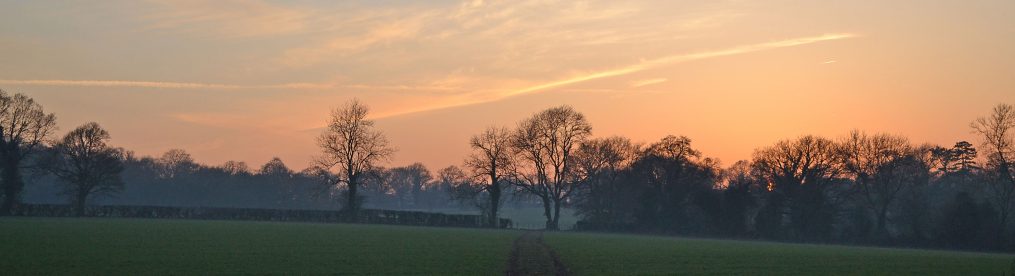
The autumnal art of the Darent Valley

The autumnal art of the Darent Valley

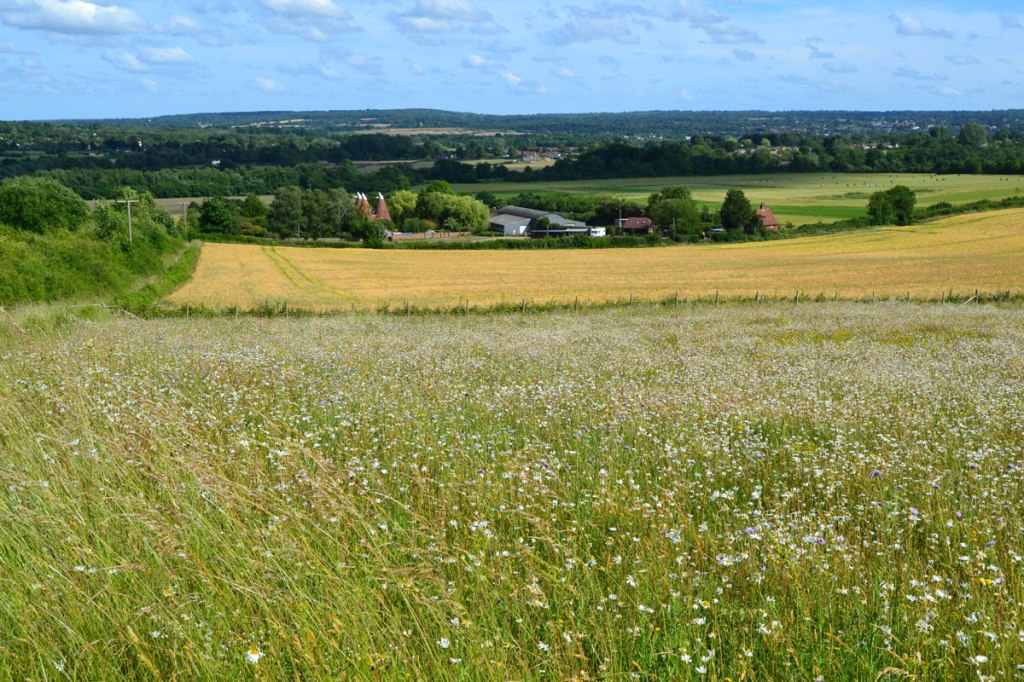
What a superb walk on the Polhill route recently. Superb weather and the trees in their best autumn finery. The views across the Darent valley were at their very best with every little detail sharply visible: the church tower, the oasts, the route of the river … It was a view that would have inspired Samuel Palmer, the brilliant mystical romantic artist inspired by William Blake and Turner who roamed this locale with his equally arty mates ‘The Ancients’ in the late 1820s and early 30s. He was mainly based in a rundown cottage nicknamed Rat Abbey before joining his dad at the lovely Water House – still standing of course. Repros of his beautiful art can be seen in the Samuel Palmer pub. He fell in love with and married 19-year-old Hannah Linnell when in his early thirties while in Shoreham and went on a two-year honeymoon in Italy where his art developed further. But it’s his Shoreham works that seem to attract the most attention. Strangely, his surviving son Alfred (another son had tragically died at 19) in 1909 burned loads of his pieces after his death saying that they were a humiliation because no one could understand them, or something. Odd that.

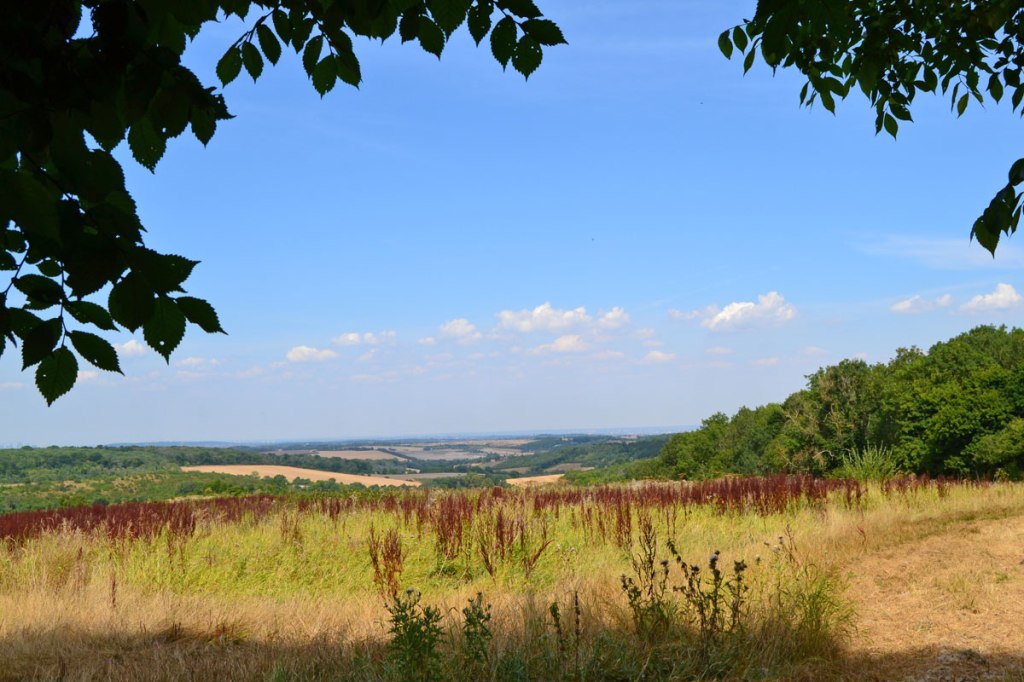
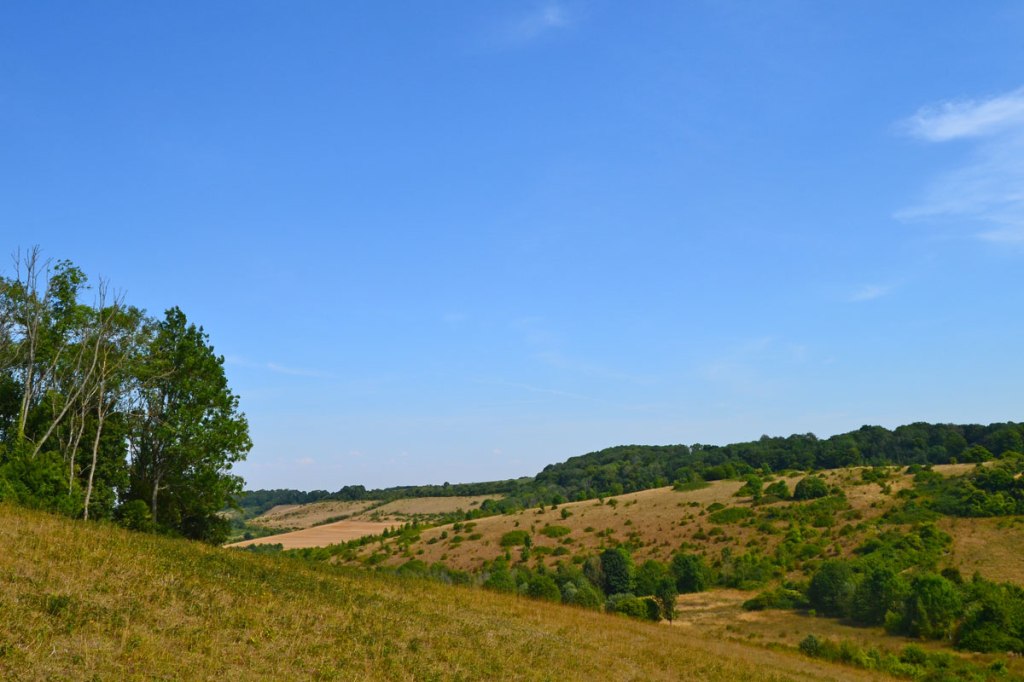
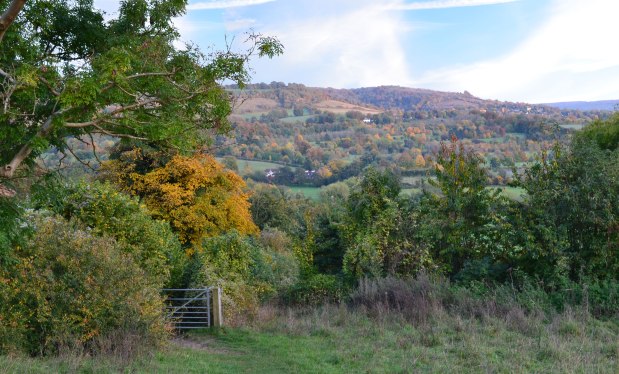
Darent Valley view from above Shoreham
View across Darent Valley toward Fackenden Down on Shoreham circular and Polhill walks. iphone pic

It’s interesting to reflect when gazing across these lovely pastoral valley, and at Palmer’s beautiful paintings, that all was not well in the countryside in the 1830s. Mechanisation was putting farmhands out of work leading to disturbances and the destruction of agricultural equipment, incidents collectively known as the Swing Riots. In 1830 more than a thousand protesters were transported to Australia or imprisoned while 19 people in Kent were hung for their part in the fire-setting and destruction.

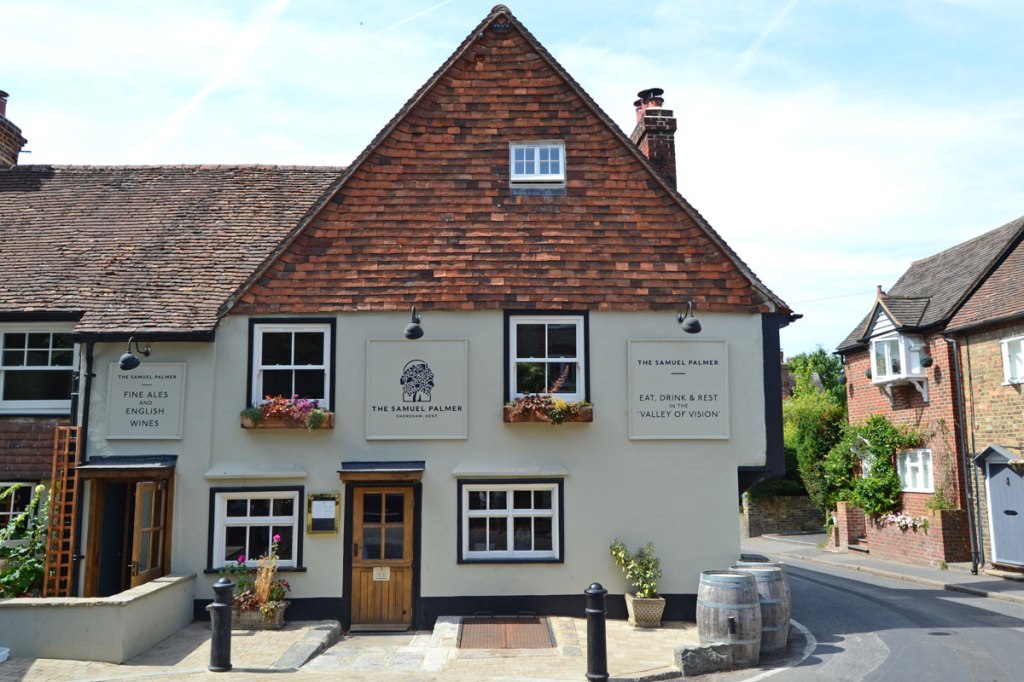
Incidentally, the Samuel Palmer pub, formerly Ye Olde George, received unexpected visitors on 15 September 1940 when two very shaken pilots from a shot down German bomber were taken there for a stiff drink by the Home Guard. For some reason I had thought the pub they were taken to was the now defunct Fox and Hounds in Romney St, but the very friendly Shoreham Aircraft Museum custodian, Geoff Nutkins, tells me it was almost certainly the George. Geoff himself is an excellent artist; although what the mystic Palmer would have made of his depictions of Spitfires and Hurricanes boggles the mind.

Scenery changes rapidly at this time of year as greens meld into yellows, browns, reds and golds. So many species of tree seem to go their own way, diverging increasingly in colour until they lose their leaves. Ash turns red, birch gold, chestnuts almost yellow.
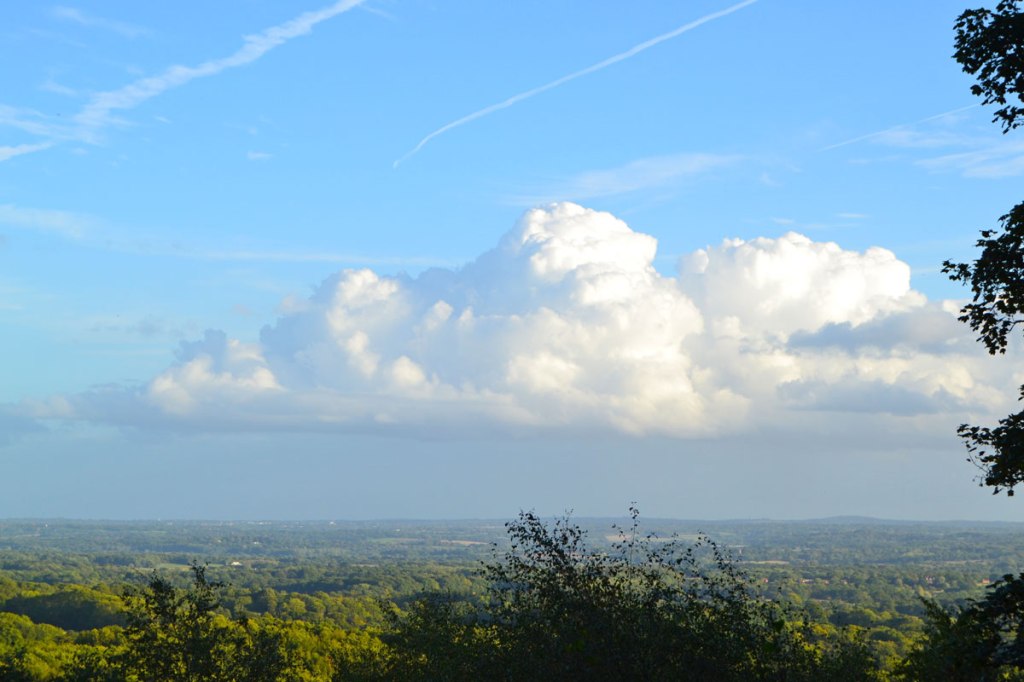
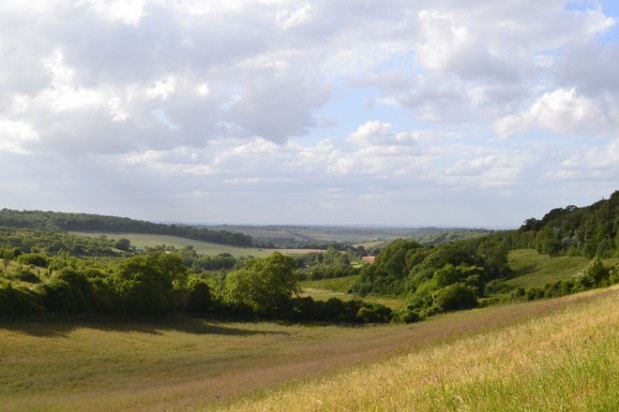
View from Mariners Hill near Chartwell
Weald view from Mariners Hill on the Hosey walk, in early autumn

Other recent walks have included Hosey Hill, Petts Wood and Cudham. Autumn colours are really becoming apparent now – it really is a great time to get out into our local countryside. Petts Wood was wonderful on Monday 17 October; what a gem that area is for a walk within suburbia.
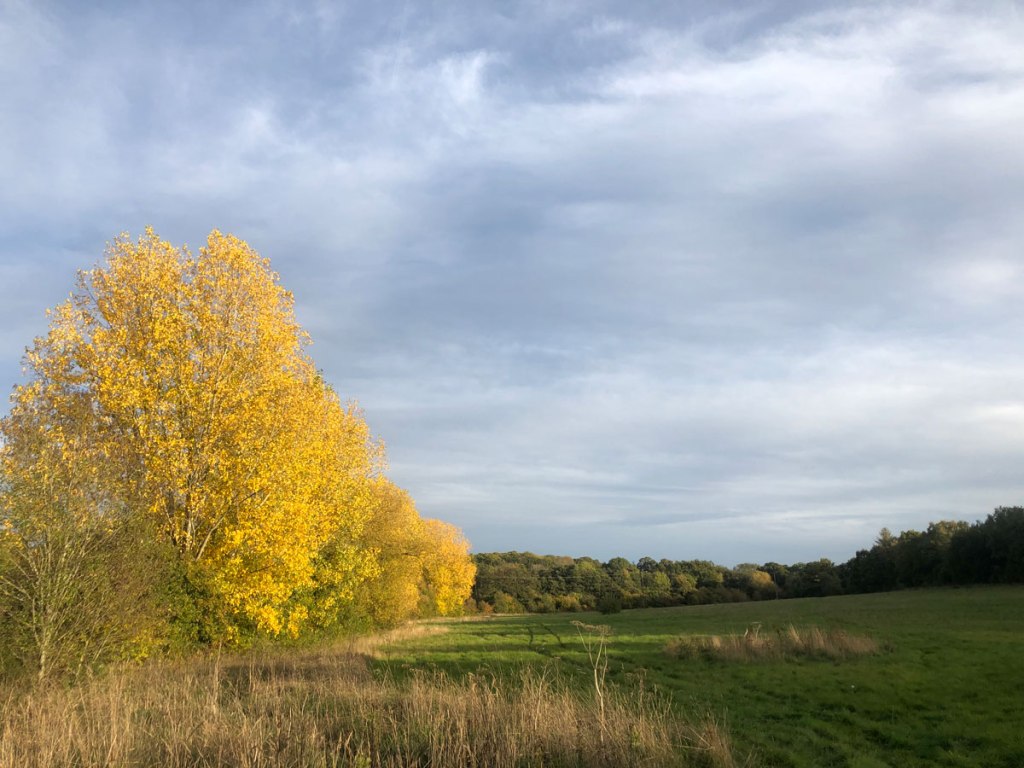
Petts Wood walk early autumn
Hawkwood Estate, Petts Wood in mid autumn. Birches along the Kyd Brook. iphone pic

The Westerham and Hosey walks are brilliant in autumn too, with huge views of the Kent Weald from Mariners Hill (near Chartwell) and a wealth of woodland, at times tangled and impenetrable and others spaced and stately.

Near Westerham early autumn
Tower Hill, behind the infant River Darent, in early autumn 2022, on the Hosey and Westerham walks

Conditions underfoot remain pretty dry considering we’re past October’s mid-point, as rain remains an unusual event. It also continues to be very mild, thankfully, considering the energy crisis and on several walks lately I’ve felt overdressed. My next sorties will hopefully be further south, to Hever – well overdue – and then the Ashdown Forest.

Gate in late afternoon in autumn
Gate in early autumn on Hosey walk
The difference a bit of rain makes

The difference a bit of rain makes

Interesting to see the effect of normal weather on the colour of the landscape. The first picture was taken on 15 August on the Fackenden Down route with the summer drought at its peak; the second picture on 17 September. It had rained during the week of 4-11 September.

Parched grass, Dunstall Farm
Parched ground near Dunstall Farm – the tree branch was dead years ago
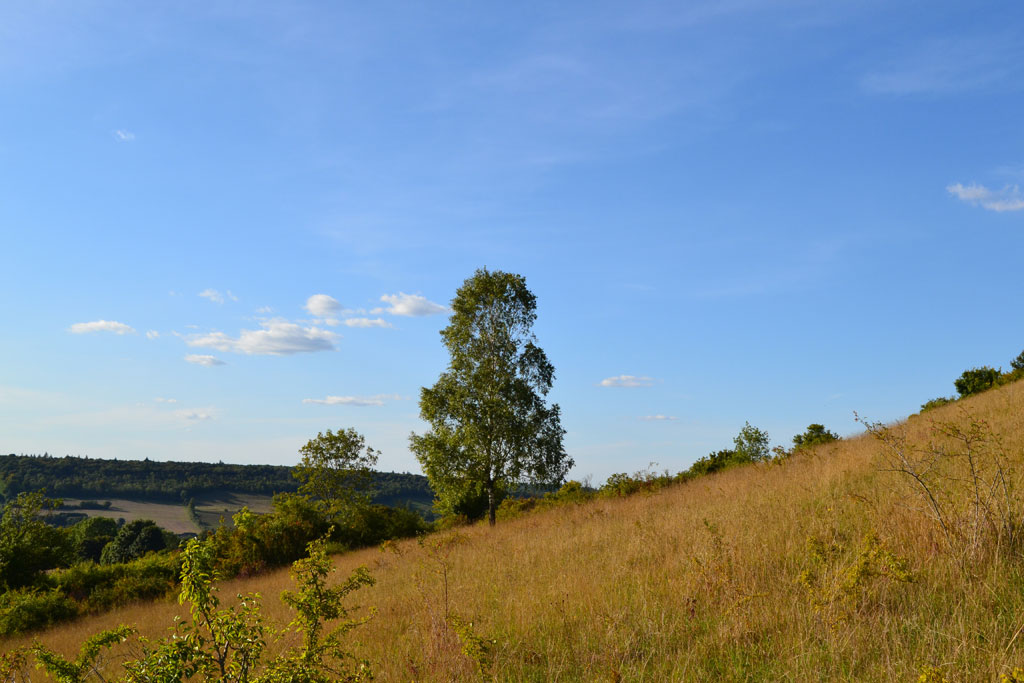
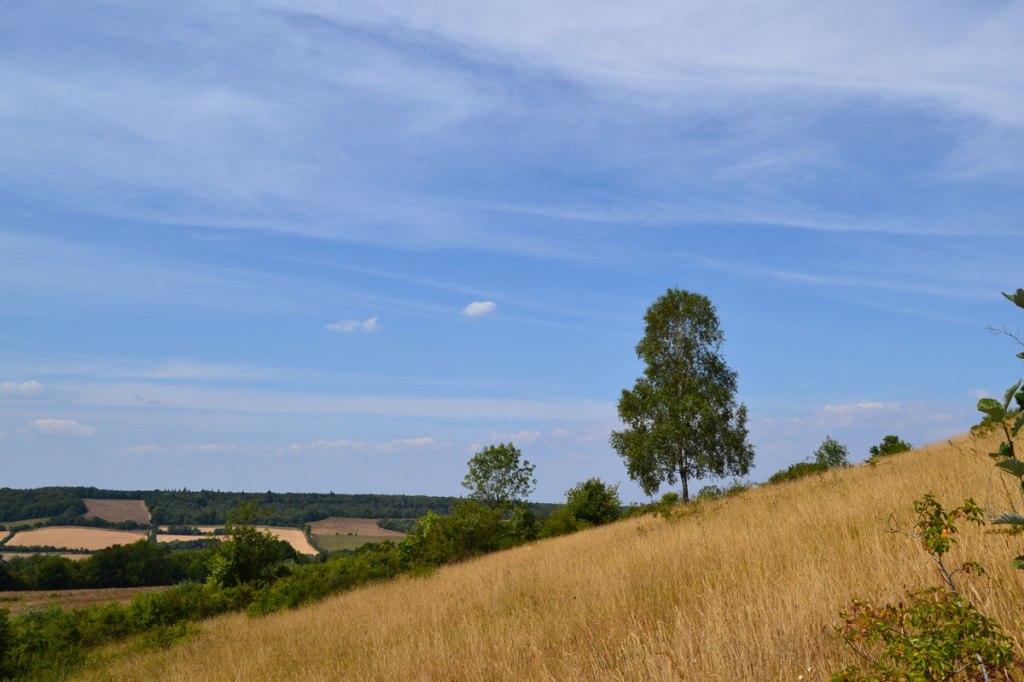
Back to normal after the early September rains – and, below, a silver birch tree on Fackenden Down photographed on the same days
A sultry sortie to Fackenden Down

A sultry sortie to Fackenden Down

As an experiment I ventured out for the 5-mile Fackenden Down walk at 11.30am on Sunday to see just how unpleasant things could get while hiking in the hottest part of the day, with temperatures well over 30C. The answer was, not very unpleasant at all. I had a hat, plenty of water, and took it fairly slowly. The walk starts in cool beech woods but then, up on that eastern ridge of the Darent valley, a hesitant but welcome breeze from the south-east just about took the edge off the muggy swelt. I can honestly say I’ve felt much hotter just sitting around in the concrete dustbowl that is now south-east London; the fairly strenuous walk was not more taxing than normal, though I took the steps slowly.
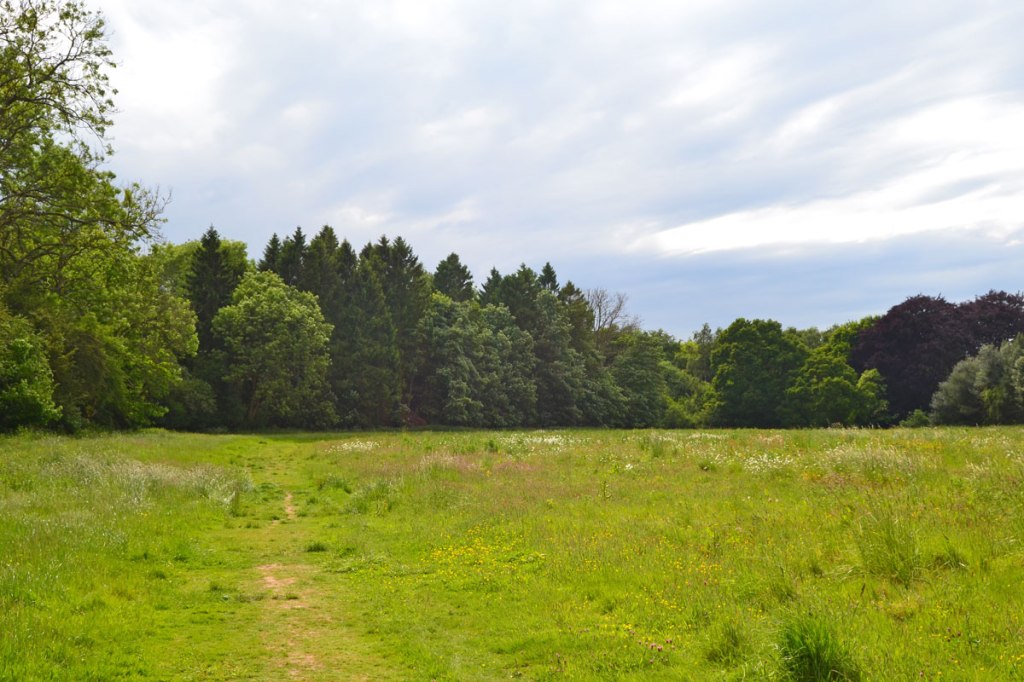
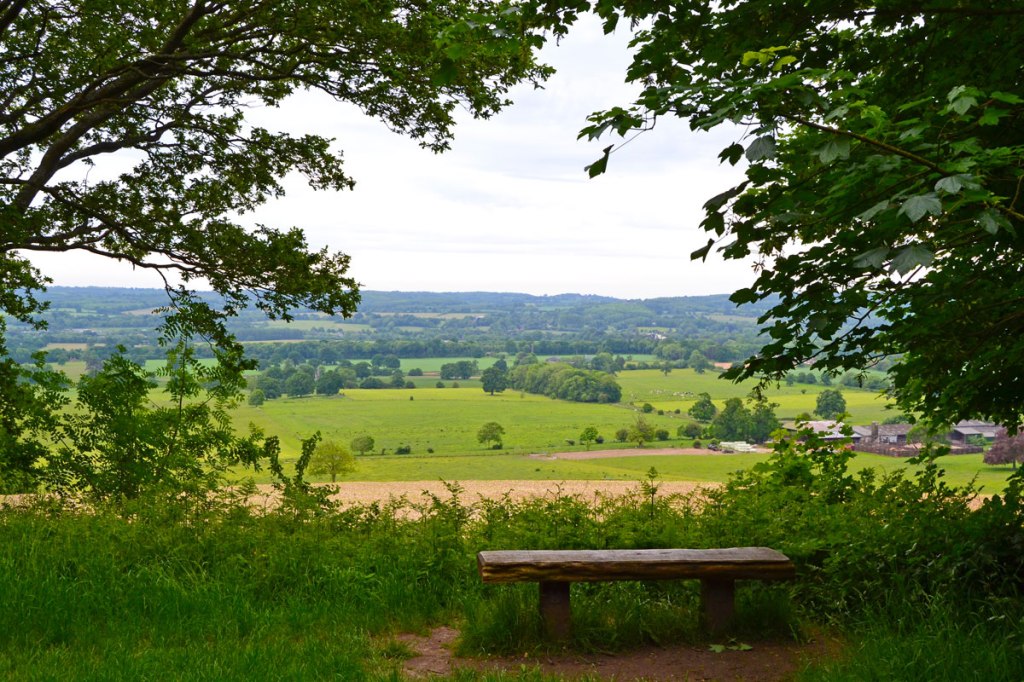
  • View from Romney Street
  • Samuel Palmer pub
  • Kent walk
  • View across dry valley at Austin Spring
  • Parched grass, Dunstall Farm
  • View across the slope of Fackenden Down into the Darent Valley
  • Meadow Brown butterfly on scabious
  • Knapweed and wild carrot
  • Magpie Bottom in the August heat
  • steps in the woods
  • Thameslink train at Shoreham station

I accompanied part of my walk with Lyle Mays‘s bluesy but harmonically rich Lincoln Reviews on my headphones – the perfect tune for a drowsy, sultry day surrounded by beautiful, still countryside. Mays was an incredible pianist who performed in the Pat Metheny Group for many decades.

The walk was also accompanied aurally by the calls of buzzards and the rustlings of lizards and small mammals dashing off into the leaf litter by the side of the path ahead of me. As usual I did the walk in reverse so descended Fackenden Down rather than climb it. The bit along the side of the hill (Points 1 to 3 on the Google map) were alive with butterflies and bees enjoying the scabious and knapweed among other wildflowers. I capped the walk off with a visit to the new Samuel Palmer pub, which has replaced Ye Olde George opposite the church. What a superb renovation job has been done there and there were loads of staff to serve the many visitors. Quite the transformation, and it was great to see so many Palmer reproductions on the walls – it’s like an art gallery. But not fancying a pint or a soft drink I popped into the church, which was serving cream teas with a friendly welcome and a cool place to sit down. That might seem strange but that’s how I rolled on Sunday.

Basking case

Basking case

Most of the time the wildlife on these walks is pretty elusive, the small birds skulk in the undergrowth, lizards and amphibians dart away as you approach. Badgers are asleep. But every now and then something odd happens. They forget about us and say ‘I want to bask in the sunshine, I can’t  be bothered with all this hiding’. Clearly, this grass snake spotted by the legend that is Birder Dave (and photo courtesy of Dave) near the River Medway at Tonbridge, wasn’t too bothered about the prospect of a bird of prey swooping down or a fox pouncing. But then it was rather big and may have learned not to worry so much – Kent’s very own anaconda. 

Grass snakes often hang out close to water; they are good swimmers and have a liking for amphibians among other things. I’ve only seen them once; at Lullingstone where there were at least two similarly long ones slithering in and out of grass cuttings. Adders are all also present on the walks but are even more rarely seen. Lizards are a wee bit less elusive – I’ve seen them on the Knole, Ightham Mote and Fackenden walks.

The sand paths of Oldbury

The sand paths of Oldbury

What a wonderful walk today. The Oldbury-Ightham-Stone Street jaunt is a bit of an epic by KWNL standards at 6 miles, but every metre is worthwhile. I started badly, however, by telling a group of mountain bike riders they were wrongly cycling on a footpath. I was sure I was right but it turned out I was wrong. It was a bridlepath and they were fully entitled to ride on it. It wasn’t an unpleasant exchange and it was quite funny that I had to admit I was wrong after being shown the map. I ended up saying “Well I haven’t seen any horses, have you?” but I was trying not to laugh. I’m a country lane cyclist myself; I can’t understand cycling down paths and bumping over roots and being brushed by nettles. And I can’t understand cyclists steaming or wobbling down main roads with queues of nervous car drivers behind them. For me, the whole point is a bit of peace and quiet. But that’s me. Live and let live I say; each to their own.

I hadn’t done this walk since Covid. My friend Steve introduced me to it in July 2020. The lavender has been largely harvested but as a result, on that section of the walk I didn’t pass a soul. Interestingly the springs of the Greensand Ridge seemed to be unaffected by the dry and hot weather, so ponds were looking healthy-ish, and the little streams near Ightham tinkled beautifully.

One of the oddities of the walk is that despite being on the Greensand Ridge you don’t get the same extensive Weald of Kent views that you do further west, at One Tree Hill and around Ide Hill. There are just too many trees in the way! But I did get great views of the Spitfires from Biggin Hill on their joyride flights; they seem to use this area to break away from the accompanying photo plane.

Pond at Point 1-2

Oldbury woods cover an iron age fort. It’s easy to see how this would have been a fortification in the centuries leading up to the Roman invasion but surely the Britons must have chopped down loads of trees to give themselves a field of view.

There is a similar feature at Keston, just south of the ponds. Navigation is not so straightforward at two points: between Stone Street hamlet and St Lawrence’s Church, and on Oldbury Hill itself, so check the GPX. Despite going slightly wrong twice (but quickly getting back on track thanks to the OS GPX) I was back home for the very enjoyable England v Germany football final – an excellent end to the afternoon. It’s a great walk, I really recommend it.

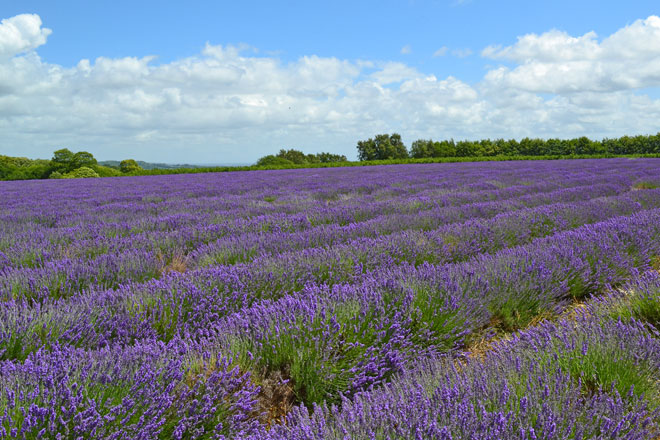
Mitchell and Peach lavender, point 3-4 pictured in early July 2020 – it’s harvested by August (earlier, if it’s been hot)

Record heat and some home truths

With temperatures peaking at 40C and no immediate prospect of rain it’s a good time to ask all Kent walkers to be particularly mindful of fire risk when out and about. I would also like to add that long walks in our nearby countryside is a great substitute for travel further afield; travel which we now know is immensely harmful to our environment. You can feel refreshed, in the same way you do by a short break, by immersing yourself in the valleys, meadows and woods of the North Downs and Greensand Ridge for an afternoon. Let’s hope the damage done by this arid summer is not profound on our verdant landscape, but in the long-term we must accept the rising temperatures will be.

Cycling home from London this week, in what felt like the inside of a convection oven, I could see the smoke of fires off to the east; in valuable wildlife habitats such as Dartford Heath and in east London – an apocalyptic scene. There are not even thunderstorms in the offing to bring relief. Things have to change; we must make better environmental decisions. But don’t expect our politicians to lead us – certainly not those in power at the moment – and don’t expect our media to treat it seriously enough. It’ll have to be us, the people, who act.

The heat is on – escape from SE London?

The heat is on – escape from SE London?

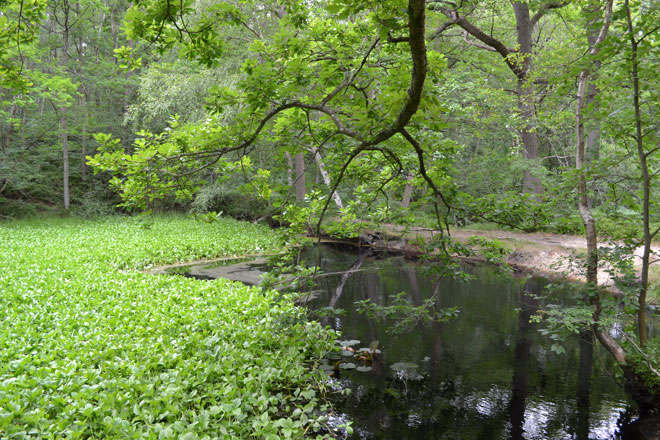
For many of us, the coming heatwave will be a bit OTT what with not being particularly near a beach and with so little access to open-air pools in London – unless you are lucky enough to live close to one. There was a time when we were much better served with lidos but – rather like the railway cuts 60 years ago – short-term profit for a few was allowed to triumph over health and environmental benefits for the many in the early 1980s. The result is that the queue for places like Brockwell Park Lido is usually pretty mega in hot weather. Crap isn’t it? But there it is. Compare with Germany where every city seems to provide fantastic open water swimming spaces. Beckenham to the rescue. The pleasant lake there offers £5.80 tickets for an hour long swim and it looks as if slots are still available this week. (Pictured below: the woods on the Cudham and Downe walks offer respite from the heat)

Anyway, I’ve noticed my old blog post on Bough Beech reservoir getting a lot of hits. This is probably because people are dreaming of having a swim. Forget it. It’s not possible there I’m afraid and strictly forbidden – it’s a nature reserve and an important facility, so it’s definitely a no-go zone. I’ve noticed people taking to local rivers; the River Pool, the Darent, the Medway, the Eden and the Cray, in certain places. I wouldn’t recommend it: there are just too many issues, including pollution, dangerous substances in the water etc, and although I know a few places where I might take a dip it would be irresponsible to recommend them to others (he said, pompously). OK, OK, OK … cycle or walk from Tonbridge Castle to Penshurst Place on the Hayden country park path; there’s a lovely spot a mile short of Penshurst for a dip in the Medway. But you won’t be alone!

Summer evening sky, early July

The beach is the best option along with dedicated sites such as Leybourne Lakes just west of Maidstone, and the previously mentioned Beckenham Place Park. But other than swimming, woodland walks are great for getting exercise while staying cooler at this time of year: Petts Wood, the Meenfield woods routes near Shoreham, the Hever walk and Hosey Common are the best for shade, along with walks within Bromley borough (but not yet on this site) at High Elms and Hayes Common towards Downe. Yesterday on the superb, understated Cudham walk, just as we began to feel the power of the sunshine we would enter the cool woods and comfort levels shot up. Take water obvs. It was on 10 July that the Battle of Britain started, so a good day to hear the distant murmur of Merlin engines as the Biggin Hill Spitfires headed out on their joyriding sorties.

Summer is here; time for Pluto

Summer is here; time for Pluto

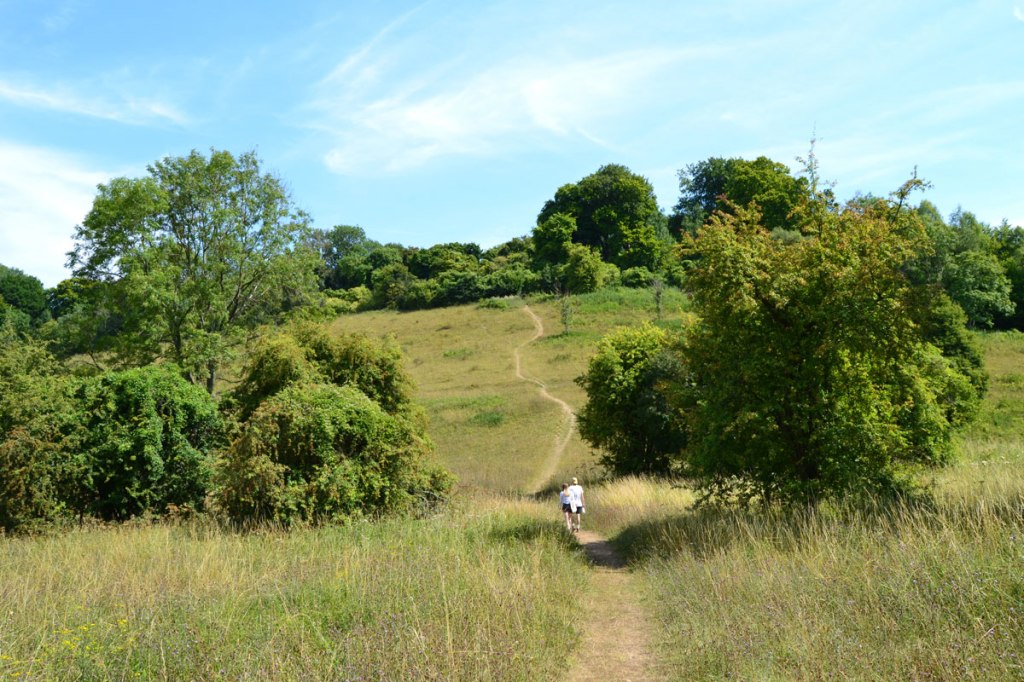
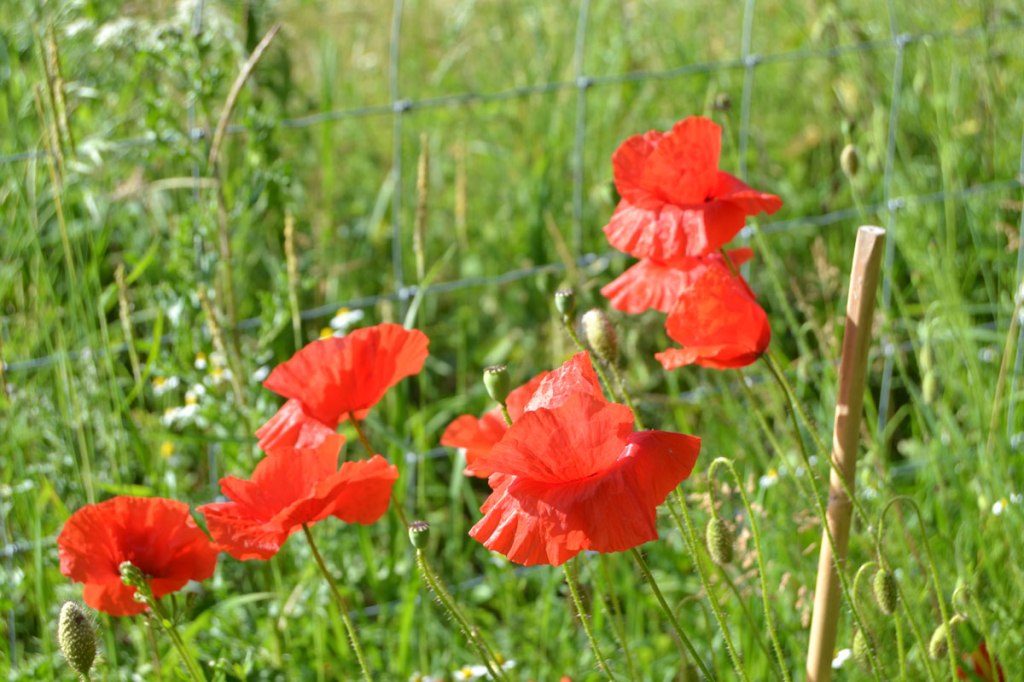
Continuing the theme of overlooked walks at Kent Walks Near London, the Polhill Pluto route yesterday proved the perfect choice on a bright, breezy summer’s day. There were plentiful orchids in the Andrews Wood-Meenfield Wood gap and fantastic ox-eye daisies, scabious and poppies in the fields below Polhill. It’s a great walk to do if you are a fan of the yellowhammer – the colourful, chirpy bunting (we’re talking about a bird by the way!) that adorns hedgerows in these parts and is particularly common for some reason between Shoreham and Otford. It’s repetitive and unworldy song is one of my favourites – it’s commonly described as sounding like ‘a little bit of bread and no cheese’ because of its rhythms but to me it’s simply the sound of summer. Listen out for it on the Darent Valley floor; around Sepham Farm it’s nearly always heard, and sometimes present in the lower parts of the Fackenden and Eastern Valleys route (such as around the Percy Pilcher memorial). The Pluto route (so called because you pass the final ‘planet’ on the Otford solar system scale model) can be combined with the Shoreham circular and even the Fackenden, Otford and Eastern Valley routes for a walk of up to 11 miles or so as all these routes intersect, or almost intersect, at various points. For some reason, I only think of this stroll as a summer walk – not entirely rationally, but it just feels right on a warm day.

A few changes around Shoreham

A few changes around Shoreham

I walked the Shoreham eastern valleys route (near Romney Street pictured) yesterday for the first time this year and much has changed! First off, the path along the field between points 2 and 3 were more overgrown than usual at this time of year… I’d actually brought secateurs with me to help matters and did some highly satisfactory bramble snipping. Next up and of more structural significance, the barn between points 4 and 5 at Austin Lodge has disappeared; apparently the land has been earmarked for a couple of houses. I’ve amended the route instructions. Later, I was disappointed to see that the steep hillside between points 6 and 7 has been munched by grazers and now there are no wildflowers. It used to be a sea of oxe-eye daisies and orchids at this time of year. What happened? Has the owner decided they don’t like rewilding after all? It’s probably complicated but I was a bit saddened by it. The next thing I saw on hitting Shoreham village was that Ye Olde George, having been refurbished for the past couple of years, has now reopened as The Samuel Palmer. Good name actually, but it stupidly hadn’t occurred to me that the Mount Vineyard people would also change the name of the pub. It looks excellent and I can’t wait to visit. I must have gone past it and not noticed it had reopened a couple of times because the refurb was complete by April 2022. But there’s also sad news; just across the bridge the King’s Arms remains shut after a damaging fire in March. I had no idea. Funny how quickly things can change.

Give Chevening a chance

Give Chevening a chance

Of all the walks on this site the one I’ve done the least is probably the Knockholt/Chevening circuit. I’ve not always been wildly effusive about it, even describing the early stages as dull. I was completely wrong it turns out. I strolled the route today and found it superb. The fields on the right of the North Downs Way in the early stages have been left fallow and look to be in a pretty advanced stage of rewilding – the flora is high enough to hide the odd lynx! As I hit Sundridge Hill the instantly recognisable and repetitive song of the yellowhammer burst from the hedgerows like some sort of alien morse code. A huge buzzard (what are they feeding them around here?) eyed me up from above. The views over Chevening House towards Ide Hill were delightful as I cleared the scarp face woodland. Chevening hamlet was as spooky as ever and the following climb back to Knockholt took in a broad vista of the Vale of Holmesdale under a moody sky with plenty of butterflies and wildflowers to admire. A red kite skidded and yawed above in the thermals and I startled a pair of greater spotted woodpeckers which suddenly took off from a fallen tree trunk a couple of metres ahead of me. I think my previous aversion to this walk was to do with the “private” signs around Chevening House, its association with some deeply unpleasant national figures, and the slightly creepy feel of the hamlet – it’s just so quiet, but it’s me, it’s not them – the road noise between points 4 and 5, and having to walk on the road for 100 metres by the farm at point 5. The truth is, there are great views, loads of wildflowers, wonderful trees and nothing much not to like.

As quite often happens in these parts the camera doesn’t capture the walk; slopes are flattened out so the scenery looks blander than it really is.