Things have got a bit overgrown on some of the more neglected paths. Despite the lack of rain, brambles have been getting busy and are giving their full attention to any bare legs they come across. Nettles too. The brilliant Eastern Valleys of Shoreham walk is the worse offender here… along the field edge coming up to point 3 in particular. That path is little used and things have got a little wild (there could well be an alternative route on a path within the woods, not along the field but I’m a little hazy on the details, it’s hot and I’ve been watching Glasto). I say secateurs, but a sickle or shears wouldn’t go amiss – whatever your implement, it’ll help keep things civilised. Obvs, don’t go crazy, just a little snip here and there to clear your path, we don’t want anything apart from brambles, the odd nettle and dogwood being snipped. Even on my brief Bough Beech stroll today I was assailed by prickles while on the pavement walking back towards the nature reserve (the kingfisher was showing well if you must know). Still, I survived; I always seem to, whatever terrible hazards the Kent walks near London throw at me.
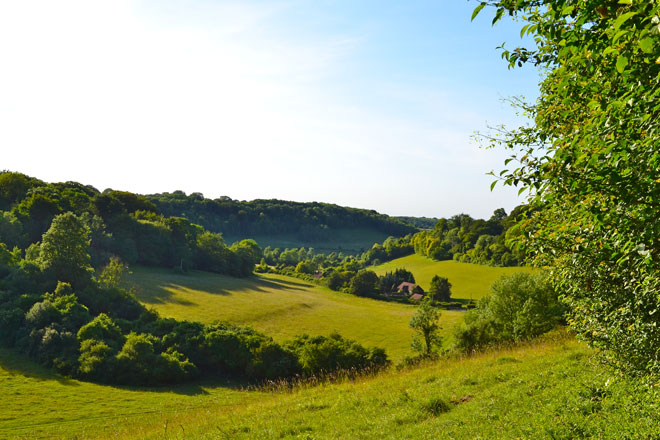
When the temperature hits 30C a lot of us prefer to sit in the shade, sip a drink, maybe head to the park cafe, try to keep cool. But Kent Walkers Near London are rather like mad dogs and Englishmen – they go out in the midday sun and hit the trails of the North Downs and Greensand Ridge and anything in between. My cut off is closer to 35C when it comes to walking – I once did a few miles in Joshua Tree national park in the Mojave desert (not a Kent walk near London) at about 38C. It was great! No problemo. Just bring water and don’t get too lost and you’ll be fine! In fact doing the Kent walks are a better way of keeping cool than hanging in SE London – there’s usually a breeze on the downs and trees for shade. Plus they’ll be butterflies and wildflowers to enjoy. And unlike Joshua Tree there’s a decent pub never much more than a mile away. In terms of distance, as long as you’re feeling good there’s no problem with doing a walk up to 6 miles in high temperatures. One little tip though: if you do the Eastern Valleys route (quite taxing on a hot day as the valley kind of magnifies the heat) take secateurs as one of the paths gets overgrown a bit at this time of year and you don’t want want those pristine bare legs to be ripped to shreds! Enough. Enjoy!!
Magpie Bottom in the August heat
Eastern Valleys walk
Cudham: looking back at Point 7, high summer
Magpie Bottom, early summer.
Lullingstone horse chestnut in flower
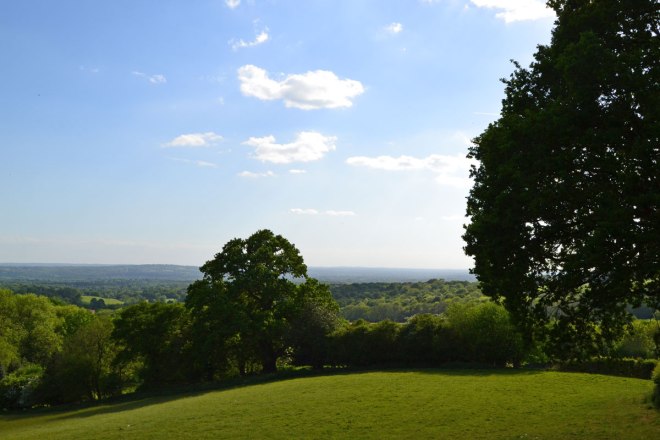
View from Polhill, July.
Cudham walk, July, between point 2 and 3, the field short cut
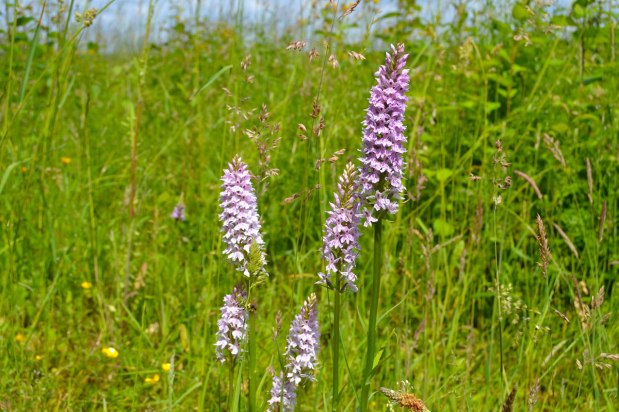
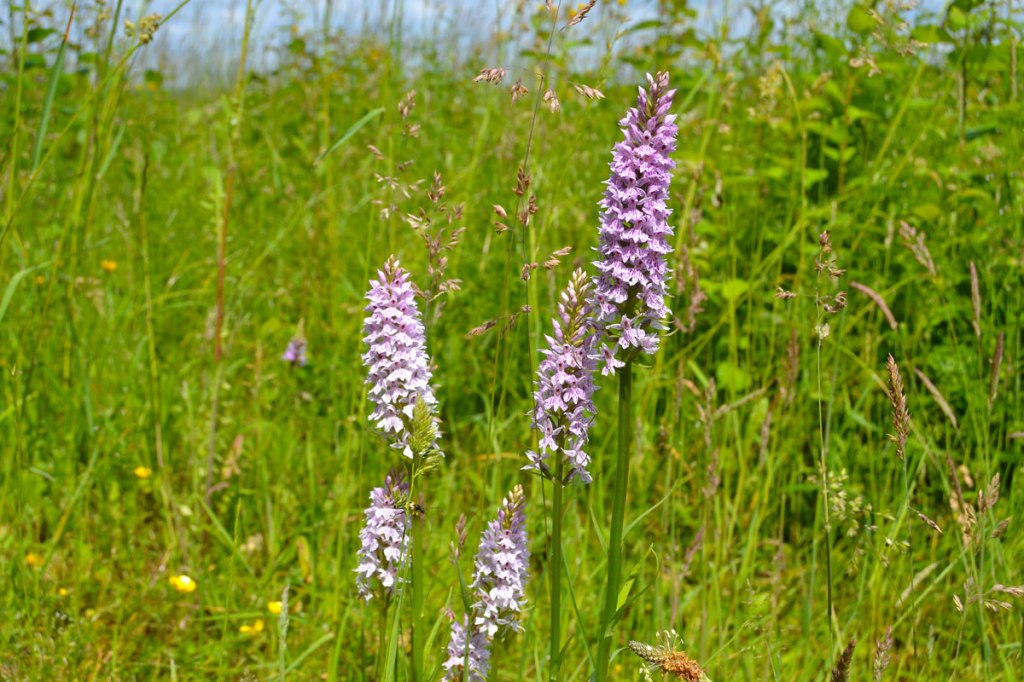
Orchids are in full flower across almost all the Kent Walks Near London. They particularly like the chalky North Downs routes, such as Heaverham, Chevening, Fackenden Down, Polhill, Lullingstone, Eastern Valleys etc (see list of walks above) but I’ve found great clusters at Hever and meadow fringes at Oldbury too, on the sandstone/clay of the weald and Holmesdale Vale. We unexpectedly came across the pictured common spotted orchids (the UK’s most often seen variety) on the Oldbury walk this week. This is one of the routes I’ve walked the least often; in fact I can count the times I’ve hiked the long and short versions on the fingers of one hand. I don’t know why, they are both brilliant strolls. The shorter version is mainly through woods and is one of the quietest walks on this website (apart from the bit near the A25). It takes in an enormous Iron Age fort, meadows facing the North Downs escarpment and a sandy trail past beautiful old fish ponds in rich woodland. I really recommend it – it’s got a special atmosphere, some might say even a bit spooky.
It’s a great time of year for walking, as the visitor figures at Kent Walks Near London are showing. Wildflowers, birdsong, the sound of the breeze in the foliage, dry conditions and warmth are all balm for the soul – and how needed in these perplexing times.
It’s been great to bump into walkers using the website lately; generally all have been on the correct route and enjoying themselves! Only one couple were off piste, and this was because they had been following Bromley council’s signs for the Cudham circular rather than read the pdf they were holding of the Cudham Chalk Paths walk.
It’s been mentioned to me lately that it is still quite easy to take the wrong path at times. I really recommend using the GPX on the smartphone with takes you to my routes at Ordnance Survey or AllTrails. Here’s my Fackenden Down route at Ordnance Survey maps (actually done in reverse, but it doesn’t matter as the dot will show you where you are against the route whichever way round you’re doing the walk). If it all sounds a bit technical and you don’t want to be marching around peering at your phone, don’t worry – just take your time and read the instructions ahead so you’re not stopping every time there’s a side path and wondering if you should go down it. And if it does go wrong, enjoy that too… the countryside will still be lovely and all will come right in the end. It’s Kent, not the Amazon.
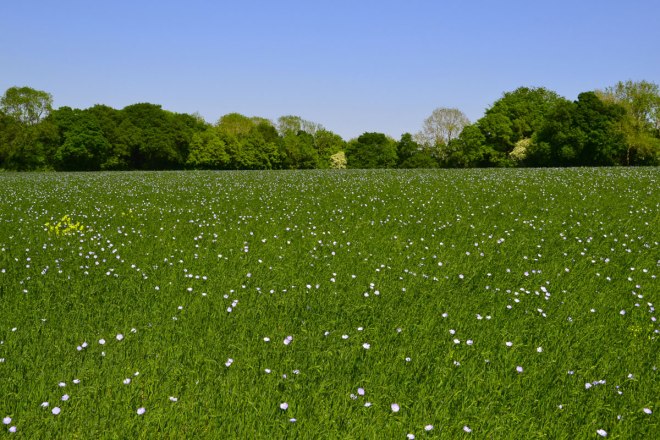
Flax (linum) in a field in May, on the Fackenden Down route (walk 19), May 2025
A lot of KWNL users print off the PDF and go from there, but be warned: the PDFs are space-limited so I have to abbreviate at times. I think it’s best to use a combination of GPX map, the website on your phone and the pdf or just use a paper OS map just to check out the route in advance. Perhaps one day I’ll invent a special talking SatNav for KWNL so I can say ‘turn right, climb over the stile’ in real time. Actually, no; who wants that?
Contact me with route complications/updates
I really would appreciate people telling me when I need to update information, however. I can’t cover all the walks all the time so when things change – as they did on the Downe and Cudham walks in the past couple of years – it’d be great to get a heads up! Also, please send in bird/wildlife or plant observations… all welcome.
My best email is ammcculloch49@gmail.com for comms. I don’t bother with Facebook or Instagram much anymore (maybe I should try harder with the latter) – there’s just too much of all that and I consider social media to be run by awful people determined to do bad things generally. I deleted Twitter and I’m now on Bluesky if that’s any good to anyone (amackentwalks.bsky.social) but please excuse any tangential rantings you come across – I have other interests apart from walking (saxophone, Tottenham Hotspur etc) so it all ends up in one place.
The season is now over. It was as beautiful as ever at its peak, but this year the dry weather and maybe the cold wind, were not conducive to the bloom’s longevity. Last weekend at Ide Hill and Emmetts Garden the bluebells were gorgeous but already well on the wane. In fact at Ide Hill, brambles have taken over some of the areas where once bluebells thrived. Some of my favourites this year were at the top of Wilmot’s Hill near Ightham Mote; but what has struck me in recent weeks is how pretty bluebells are when mingled with other flowers – notably cuckoo flowers, red campion and stitchwort – at the foot of hedgerows. The Bough Beech walk has some of my favourite examples, Underriver too. Oh yes, and below Polhill Bank on the path to Sepham Farm, where you are likely to be serenaded by yellowhammers (that’s a bird by the way, not a construction tool).
New Year’s Wood, Cudham
New Year’s Wood, Cudham
Emmett Gardens
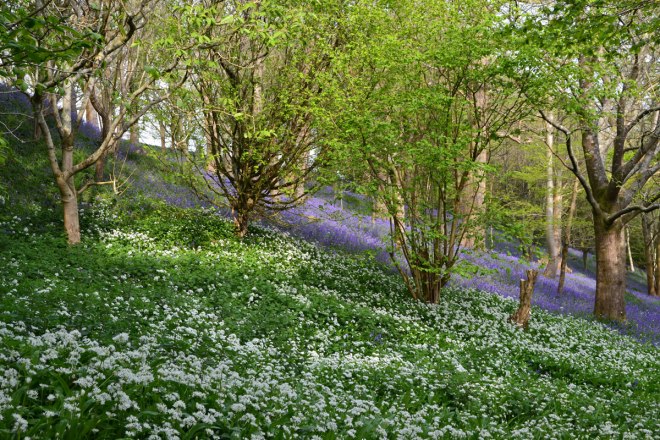
Wild garlic and bluebells, Emmett
Emmett Gardens
Scord Wood, near Ide Hill
Ide Hill 2025
Wilmott Hill bluebells
Cuckoo flowers and bluebells near Bore Place, Bough Beech
Wood anemones and early bluebells, Andrew’s Wood, near Shoreham
Lullingstone
So, to the winner and runners-up of the annual Kent Walks Near London bluebell competition:
Last year’s winner, the Blueberry Lane meadow, at Knockholt was obviously utterly stunning but the rules state that the same location can’t win the following year. I actually visited New Year’s Wood very early in the bluebell season, before they’d quite found their colour, but the seas of young flowers in the late afternoon sunlight were truly beguiling in that quiet, mysterious wood.
Please contact me with any omissions in my not particularly extensive bluebell research. The season only lasts a couple of weeks so it’s not always possible to get around all the walks to view them – I didn’t go to High Elms, Oldbury, Petts Wood, Meenfield Wood (recently scarred by timber work) or Lullingstone over the past month so no idea how good they were.
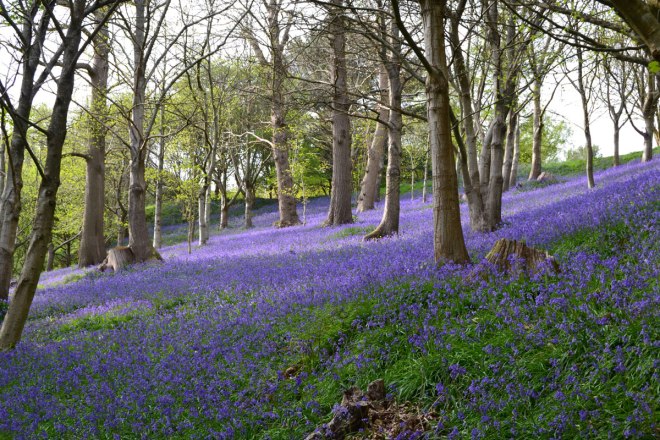
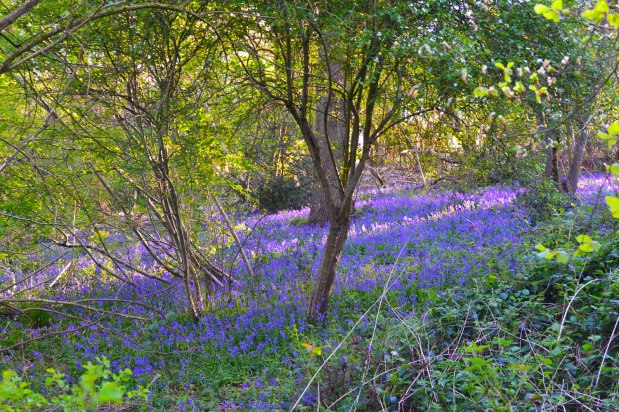
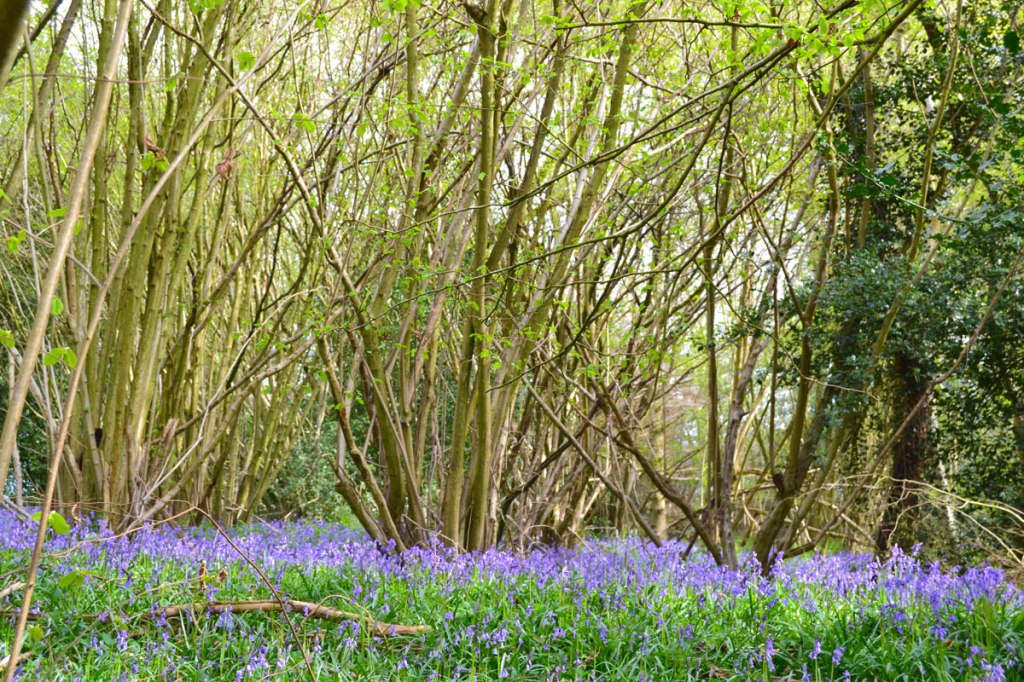
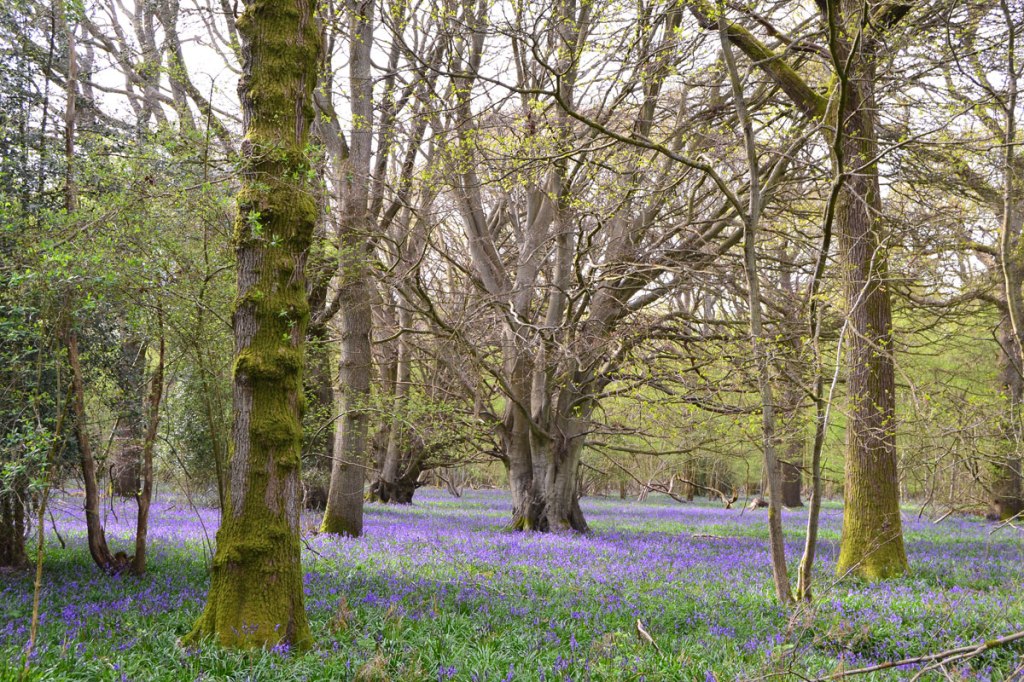
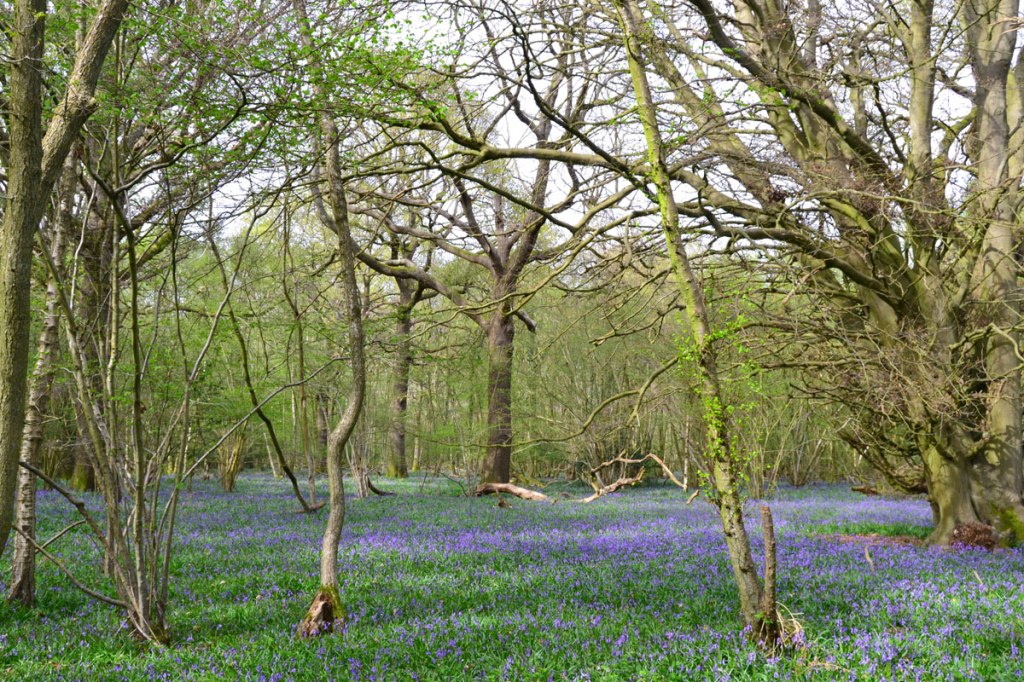
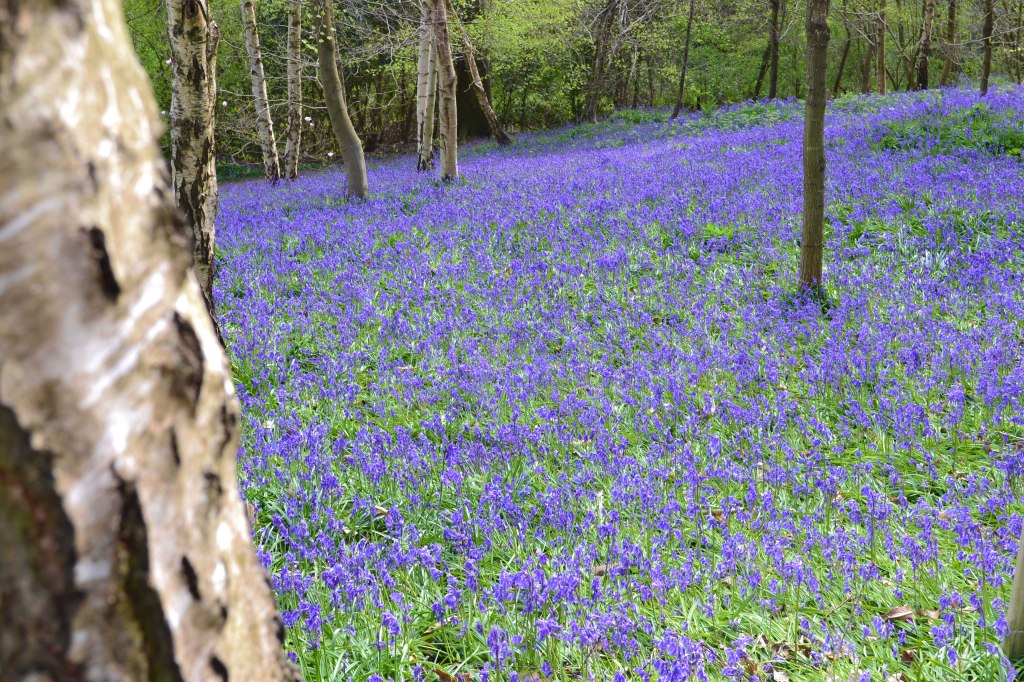
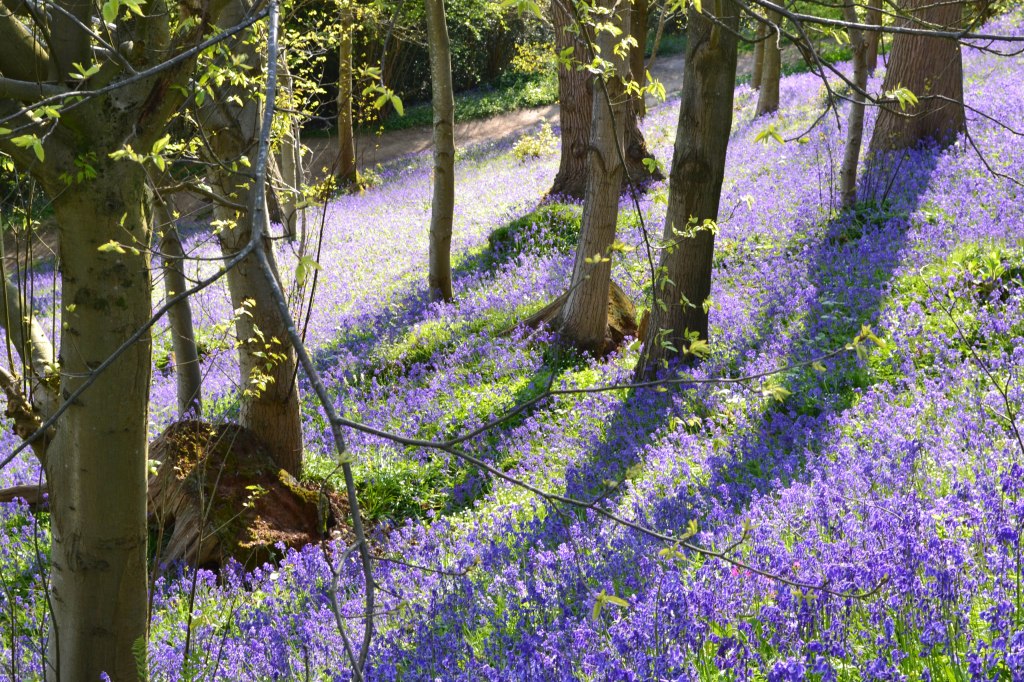
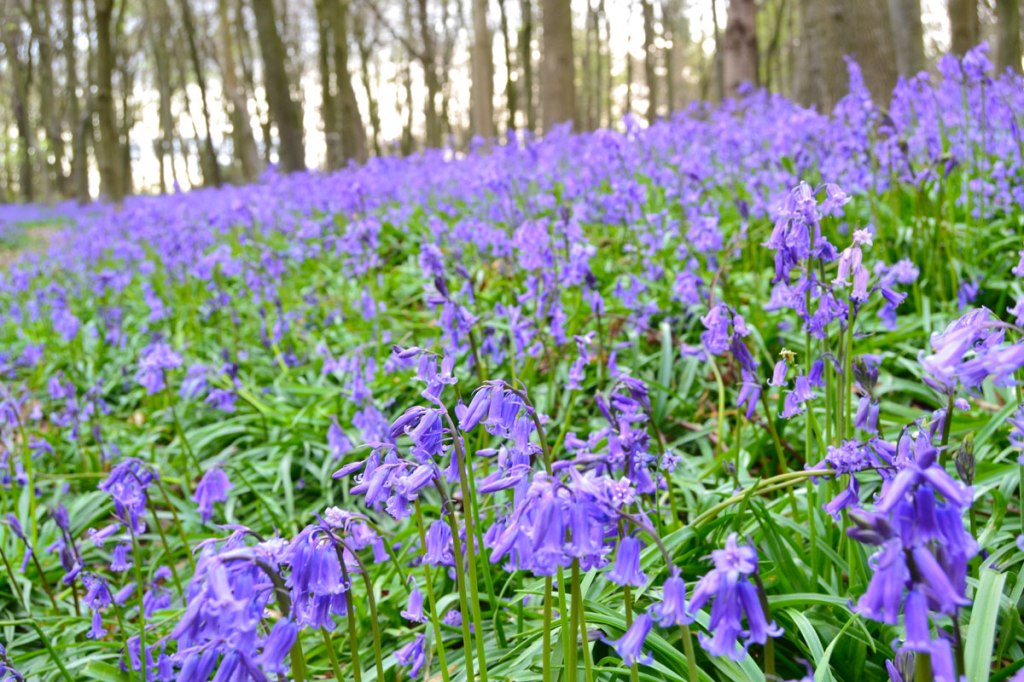
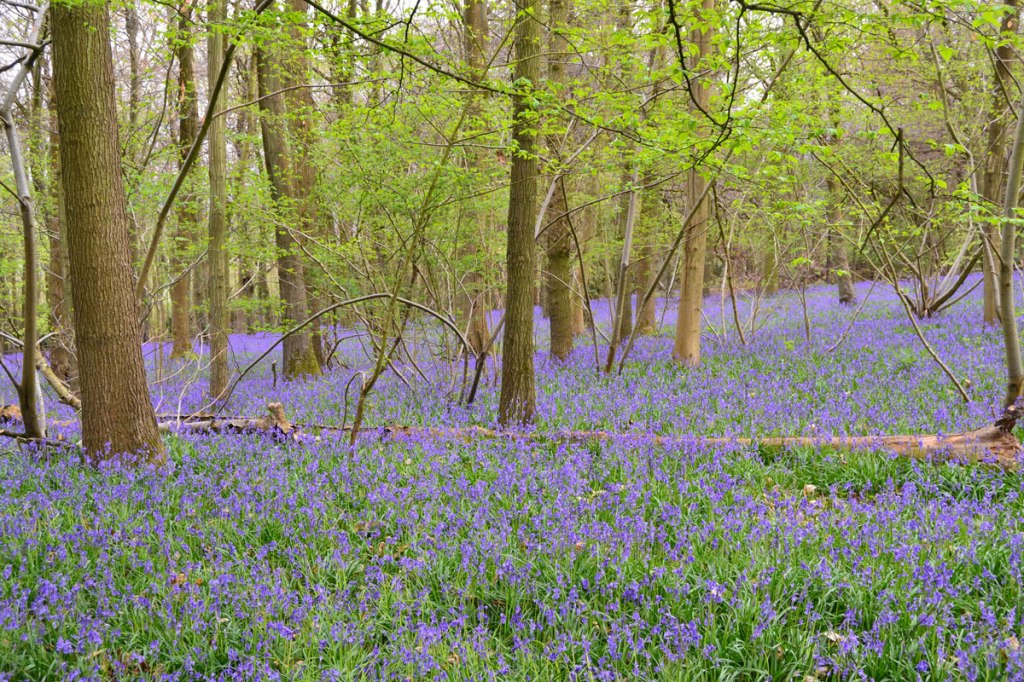
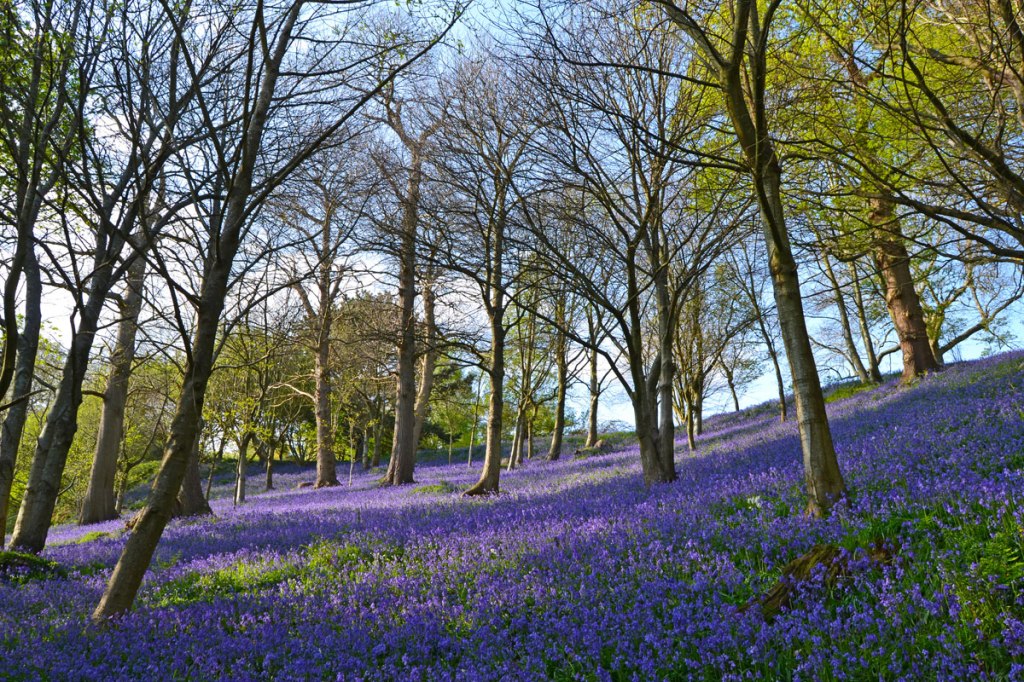
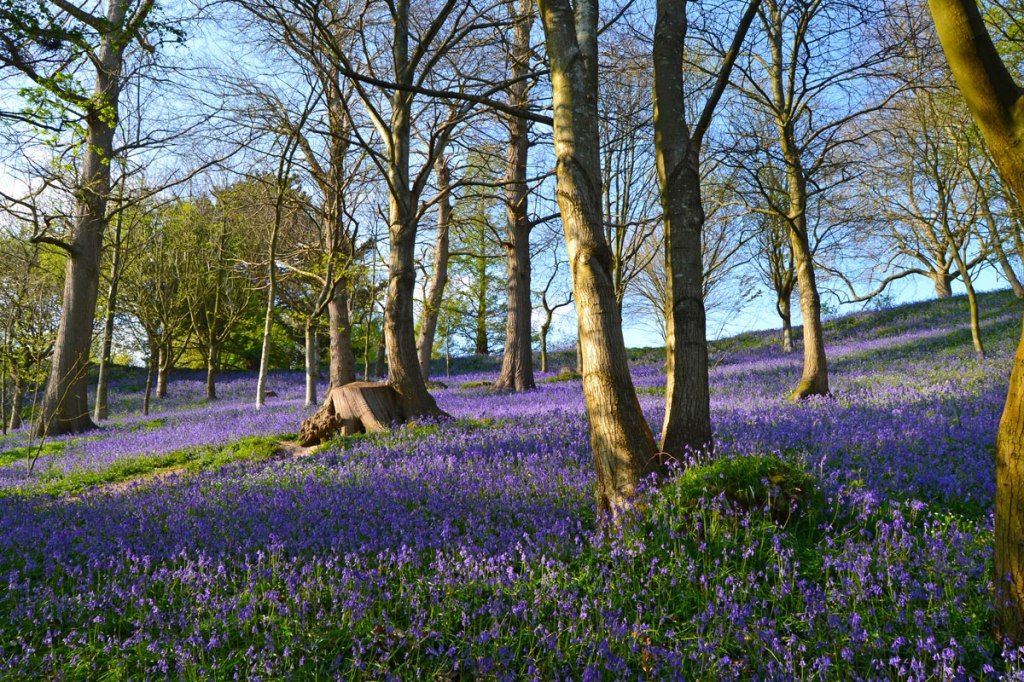
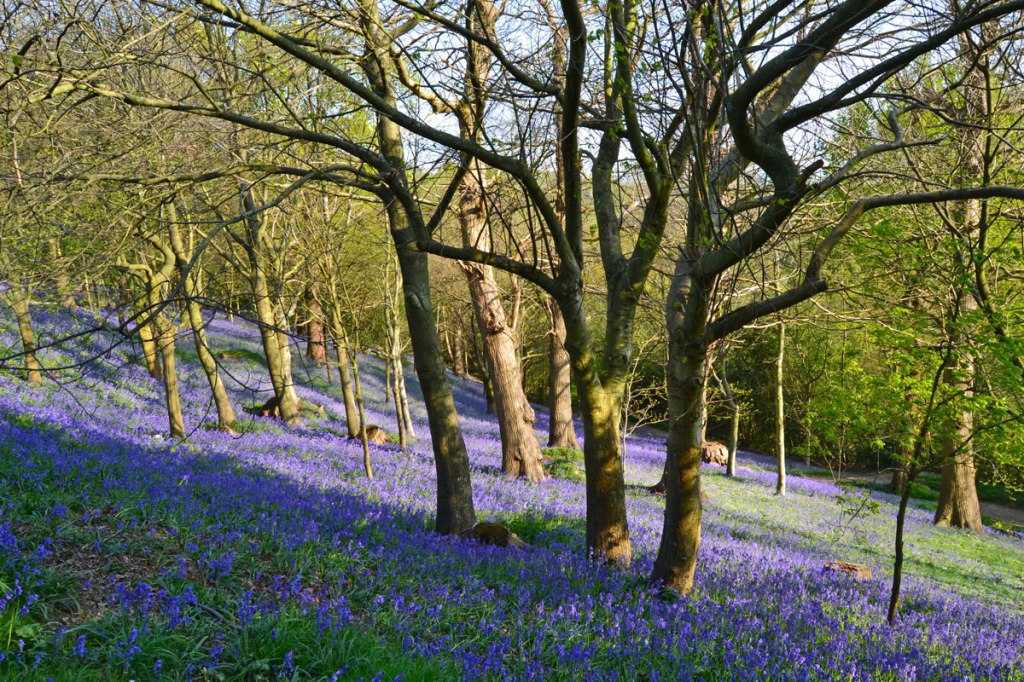
It’s fair to say the cobalt carpet has finally spread its magic in many of the woods covered in the KWNL area. Bluebells are now almost fully out on the North Downs chalk hills walks such as the Cudhamstroll (in New Year’s Wood particularly), and the various Shoreham circular and Polhill routes. Alas, the timber work going on in Meenfield Wood above Shoreham (west side of valley) may hinder your enjoyment of bluebells there. Further south the Greensand Ridge walks at Underriver, One Tree Hill, Ide Hill (perhaps the best bluebells – so you won’t be alone), Oldbury and Hosey Common are awash with blue. Closest to south-east London, Beckenham Place Park, High Elmsand Petts Wood-Hawkwood Estate(in the lower, damper parts) has several swathes too. The Downe walk mk1 doesn’t have a lot of bluebell action en route but a quick diversion down to Downe Bank (the west side of the Cudham valley) from point 3 or at the start of the walk should see you in the magical blue realm. Following the Downe Mk2 walk will be kind of blue too, particularly at Downe Bank and Blackbush and Twenty Acre Shaw woods. The Chiddingstone and Hever routes don’t have many bluebells I can confirm, not that this detracts from these superb strolls. (Pictured below: from 2022 and 2021 bluebells at New Year Wood on Cudham walk; Meenfield wood, Shoreham circular/Polhill routes; Ide Hill route)
New Year’s Wood, Knockholt/Cudham: early bluebells
They are uniquely adapted to suited the multispecies ancient woodlands of the UK
Low temperatures trigger their growth (but might delay their blooming if in April). Bluebell seeds germinate when the temperature drops below 10°C.
Bluebells predominantly convert sunlight into fructose allowing them to photosynthesise at low temperatures.
They are supreme competitors with other plants, allowing them to carpet woodland floors. But they get help in the form of mycorrhiza, a symbiotic fungi.
Almost half the world’s bluebells are found in the UK, they’re relatively rare in the rest of the world.
But please be careful never to tread on any; it takes bluebells years to recover from damage. Digging them up – surely no one visiting this site would consider such a thing – is illegal, and please don’t let dogs trample them either – keep them on the lead.
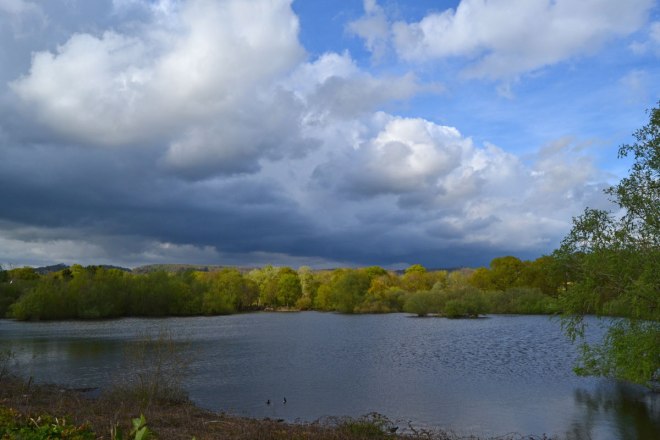
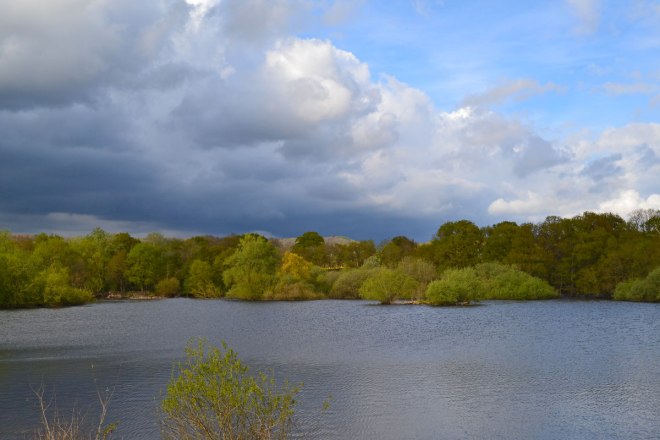
The little Bough Beech walk is one of those quiet ones: it doesn’t seem much but it creeps up on you and you realise you miss it if you haven’t done it for a while. The vast lake (described here) is a major spectacle at the beginning and end of the walk but doesn’t define the route; Bore Place, a delightfully hidden organic teaching farm and event venue, does. The walk is only two and a half miles (handy if you have a bad foot, as I do) to which you can add an hour‘s pop-in at the lovely nature reserve at the end, where there’s usually news of an interesting oiseaux or two keeping the friendly birders in the hide on their toes. Cuckoos (the star of this particular day), barn owls, kingfishers, migrating osprey are regularly seen here. On my recent walk here, as the fine pre-Easter weather started to break, interesting cloudscapes and shafts of sun reflected from the lake surface, while to the north the Greensand Ridge at Ide Hill and Goathurst Common were swept by very localised squalls. I was struck by how beautiful bluebells are when among cuckoo flowers; that was about as profound a thought I could muster while walking – which is how it should be. Back at home it was amazing to watch the simply incredible US Masters finale, though the football results did not bring me any comparable joy.
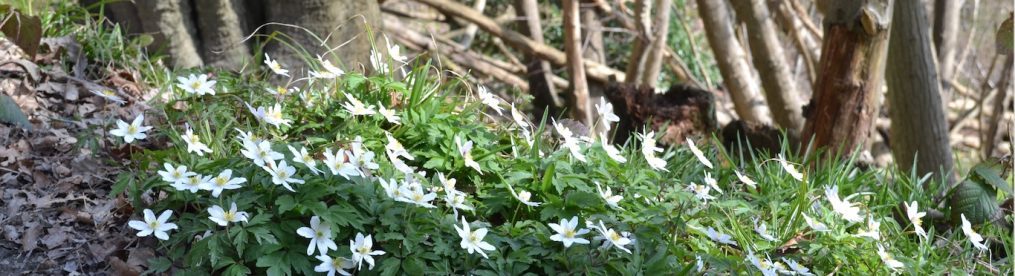
To the accompanying sounds of chiffchaffs, blackcaps, wrens, tits, dunnocks and robins, I trekked the Polhill/Pluto route from Andrews Wood car park on Shackland Road. Suddenly there’s a sheen of green in the tree canopies; in fact there are canopies – not just stark branches – the colour scheme has seamlessly moved on from the gentle grey/browns of winter. Below the greening trees wood anemones and early bluebells are mixing with celandine, early cowslips, primroses and the odd cuckoo flower to add pixels of vibrant hues. I was delighted to spot a long, thin and beautifully patterned grass snake after hearing leaves rustling under a bush, but I couldn’t bring the camera to bear in time: damn autofocus! Slow worms were plentiful though, but you have to know where to look and avoid disturbing them. Buzzards took delight in the clear sky and subtle breezes. A fantastic walk.
View across the mouth of the Darent Valley from Polhill in early April
The greening of Meenfield Wood
Wood anemones and bluebells, Andrew’s Wood
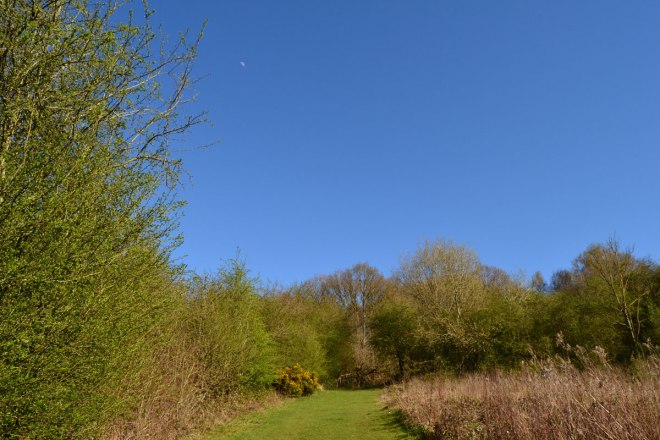
Just blue sky and fresh foliage, Meenfield Wood
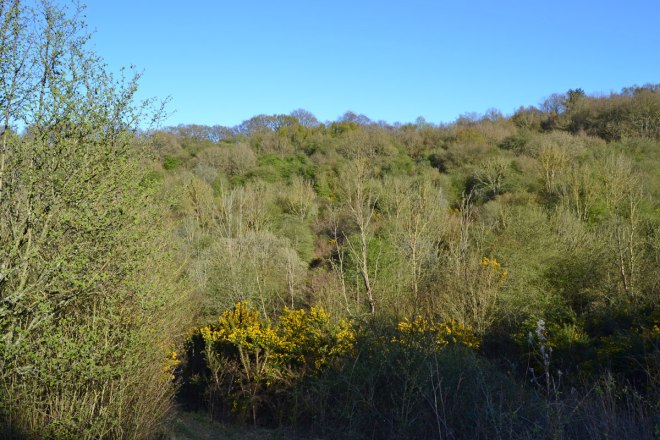
Gorse and early foliage across the valley from Meenfield Wood to Andrew’s Wood
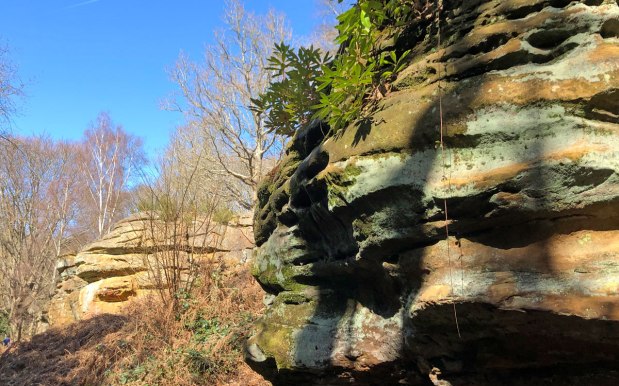
The sandstone outcrops in and around Tunbridge Wells on the Kent High Weald are little remarked on yet are the most climbed rock formations in the country, given their proximity to London. A great walk can be done from Tunbridge Wells station out past Wellington Rocks on the common, through Happy Valley as far as High Rocks, taking in all of these wonderful, alien-looking formations that appear strangely out of place within the smooth contours of south-east England. Perhaps come back via Rusthall Common, and its Toad Rock. A bit further away, at Groombridge are Harrison’s Rocks, perhaps the most striking of all and easily reached from Tunbridge Wells by taking the Spa Valley railway.
The sandstone here is Ardingly sandstone – a different type of rock to the greensand (glaucite) further north on the ridge south of Sevenoaks (see Ide Hill, Underriver, Oldbury and One Tree Hill walks). There are also outcrops, though much smaller, on the Hever and Chiddingstone walks. Our walk last week, in delightful weather (sadly not available this weekend) took in the Cheesewring rocks south of Rusthall Common.
The origins of these rocks, which gained their characteristic cracks during the ice ages, lie in sediment of the Wealden Lake. This covered much of what is now SE England and northern France 145 million years ago. I’ll add a walk at some point to cover these superb spots.
Meanwhile, grey clouds returned this Sunday but it was great to see the fantastic magnolias in full bloom in Scords Wood, as it melds into Emmetts Garden on the Ide Hill walk. The distant fields and even Bough Beech reservoir appeared white in the odd light. I’ve never seen that effect before. It was unsettling. But still, a lovely walk.
(Photographs: Cheeswringer, Tunbridge Wells; magnolia at Emmetts Garden. Adam McCulloch, iphone images so not the best!)
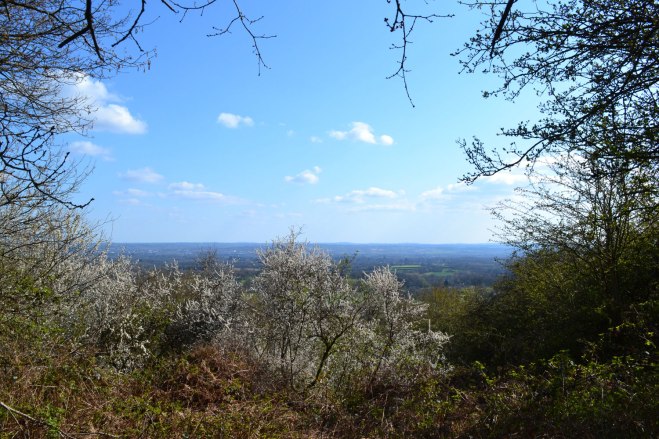
Now that there’s some prolonged sunshine, some of the humungous amounts of mud from February are beginning to dry up. ‘Some‘ being the operative word. Still, let’s welcome the bright weather, which is set to continue this weekend. Saturday could be a bumper day for Kent Walks near London but wellies are definitely still needed – because shaded mud patches will not have dried as yet, not even close. Early spring can be an odd time of year – the trees still appear brown and grey from a distance, though close-up you can see buds. Soon the blackthorn will flower – that’s when spring has sprung for me. Early March in good weather is a very particular time of year – it’s as if spring caught the natural world asleep, and it takes a little time to wake up. But already there’s more birdsong and a bumblebee or two getting busy. I particularly like the Ide Hill, One Tree Hill, Bough Beech and Hever walks at this time of year, the south-facing slope of the Greensand Ridge focuses the warmth and is protected from any cold easterly or northerly winds. You can’t help but feel a bit of optimism, despite you know, everything. The pictures below are from the Bough Beech, Petts Wood, Chevening, Ide Hill and One Tree Hill routes. I love the blackthorn. The featured picture for this post is the woods at Hever in late March. There’s a sheen of primrose and celandine on the woodland floor; I really like the photograph, I can remember every detail of that day.
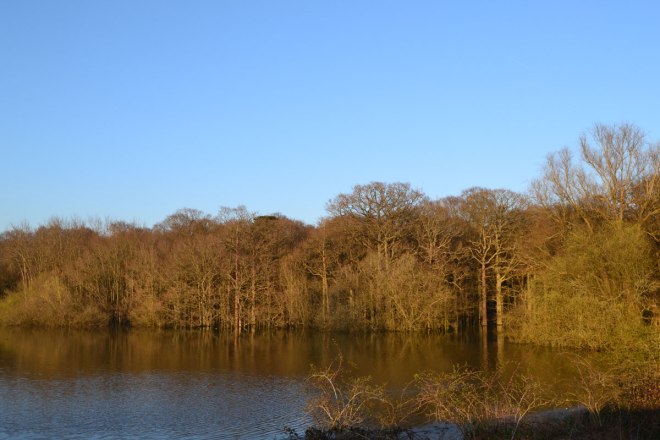
Flooded woods, Bough Beech, March
March view over Brasted and Sundridge
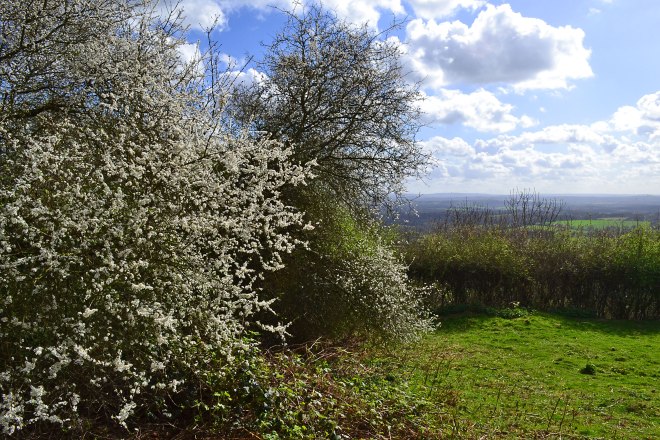
Blackthorn blossom on One Tree Hill, Sevenoaks, Kent























 Kent walks near London