Summer ended at Camber; look forward to October

Summer ended at Camber; look forward to October

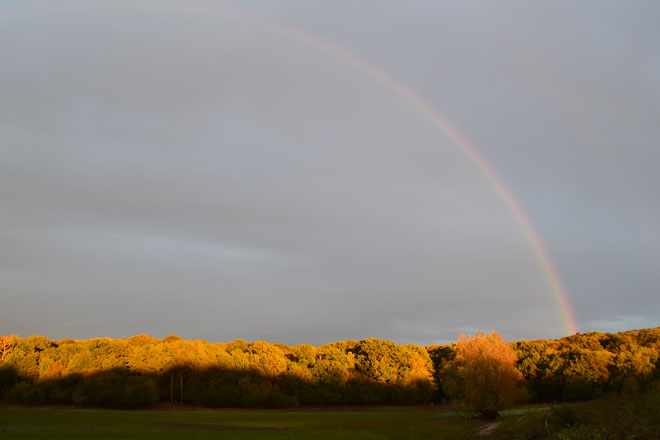
October, along with June, July and January (all the J’s) is a ‘classic’ walking month. We all know about the turning leaves so I won’t bother describing the colour changes that occur! What I like best are the migrating, busy birds, the every changing cloudscapes, the sudden showers, the unpredictable temperature changes (‘wow it’s warm’, ‘wow it’s like Iceland!’) and, best of all, the light. It’s a real shame when the clocks go back at the end of the month because it denies us hikers of another hour of daylight. Why we continue with this bizarre clock policy defeats me; I guess it’s as British as the mythical replacement rail bus or surprise roadworks. It is what it is … sigh. Rant over.

  • Knole
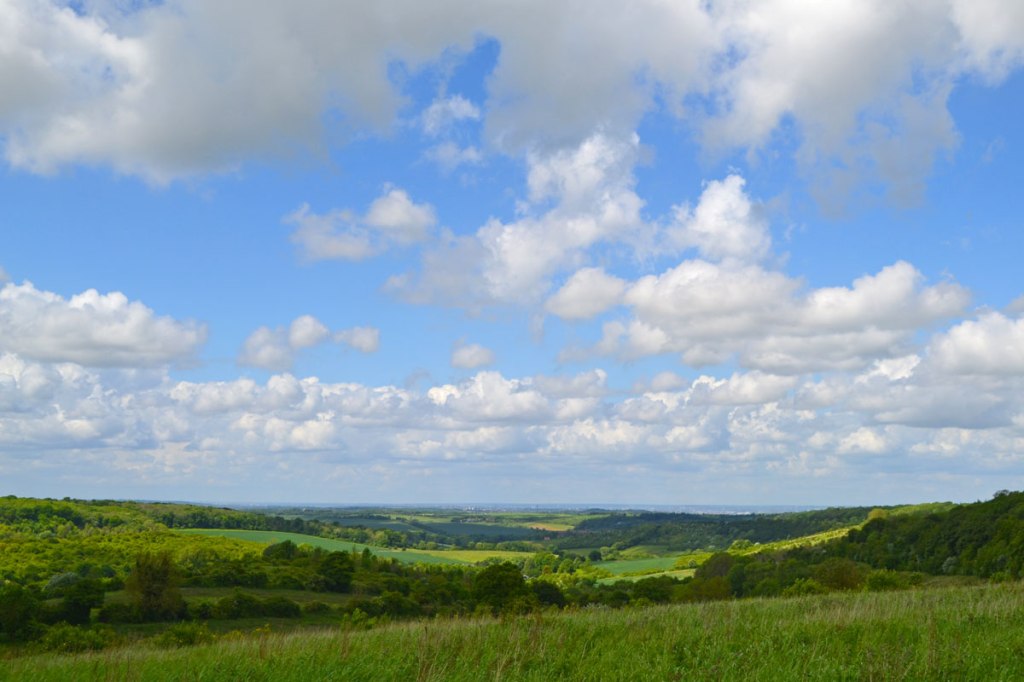
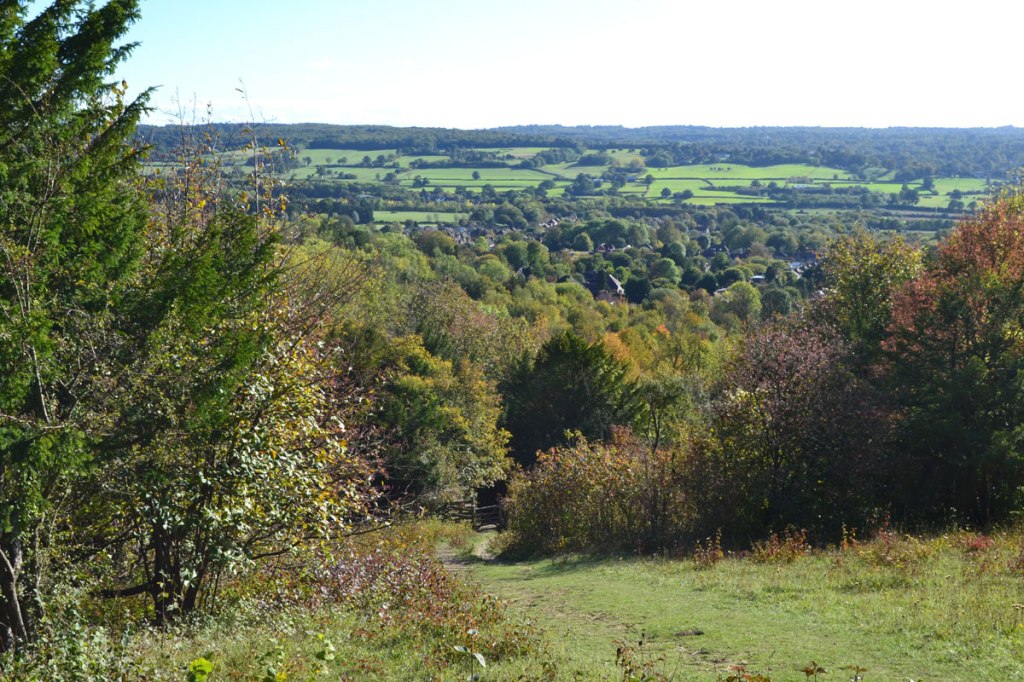
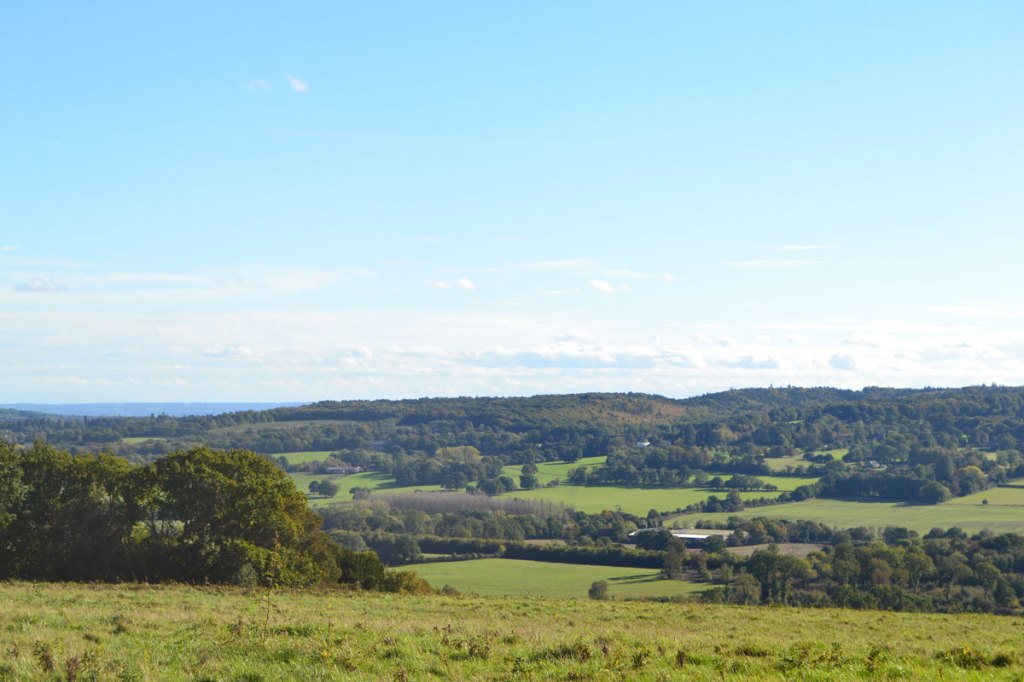
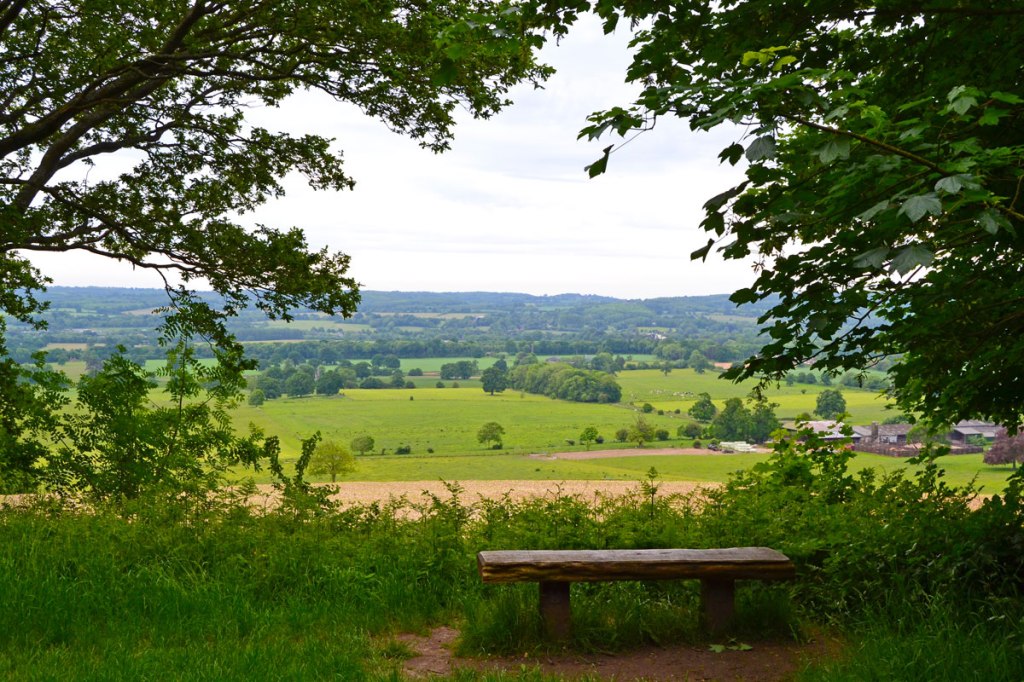
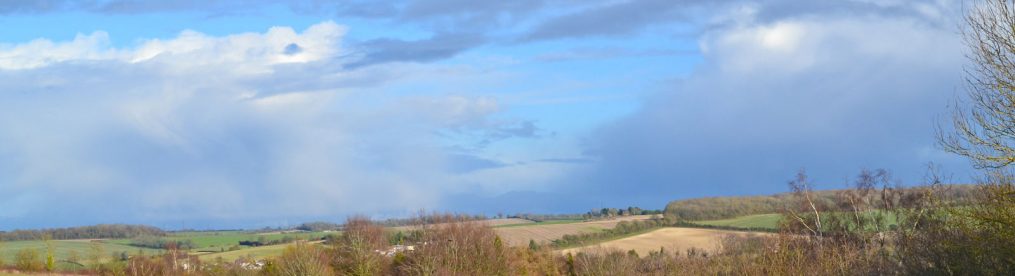
  • view over Weald

Now, Camber Sands – that’s where we went last week to fully mark the end of summer. A fish flatbread with chilli jam, salad and sour cream at Dungeness’s brilliant Snack Shack* set us up for a late afternoon swim in the luckily non-sewagey waters at Camber. We followed this with a drink at the delightful Ypres Castle Arms in Rye, a tucked-away pub with a great beer garden and view of the salt marsh and Channel. As dusk began a little thunderstorm was flickering away somewhere near France but gradually crept closer. On the way home the ‘little’ storm suddenly became very large and caught up with us: spectacular fork lightning and bursts of torrential rain and hail propelled us past Northiam, Bodiam, Hawkhurst and even Tunbridge Wells – where of course the A21 was shut, necessitating an abysmally long diversion. But then the closure of major roads mid-evening, like mythical rail replacement buses and the clocks going back is something us Brits seem to just have to tolerate.
* I recommend the Snack Shack but go before 2pm if poss, it gets very busy and perhaps has become a bit too popular. An alternative is the superb Britannia Pub just up the road.

Bough Beech wildlife and ice-cream

A lovely summer’s day coincided with a planned outing to Bough Beech for the shortish walk and a stroll around the former Kent Wildlife Trust nature reserve with its fine bird hide overlooking a lush and large pond. Birder Dave was in attendance and was ably assisted by the Merlin app, although Birder Dave is the more accurate judge of bird calls and songs. We heard spotted flycatcher, saw three marsh tits, a hobby, kingfishers, grass snakes, heard raven (could it be that noisy individual who ‘lives’ in the Douglas fir by Chartwell?), saw green sandpiper, flocks of lapwings (once a common site in all parts of Kent, but now no longer) and the usuals. Better still was the fine company and the encounters with friendly birders who were very familiar with the site and knowledgeable. The Bough Beech is the only walk at KWNL where you can buy an ice cream half way through. And a top quality one too. At Bore Place farm there’s a sort of little barn round the back with freezers full of top notch organic lollies and tubs. You pay with via a card reader or QR code thingy – it took me a while to work out how to pay because I couldn’t be arsed to find my glasses so kept misreading ‘charge’ as ‘change’. Duh.

It’s time for Fackenden Down

It’s time for Fackenden Down

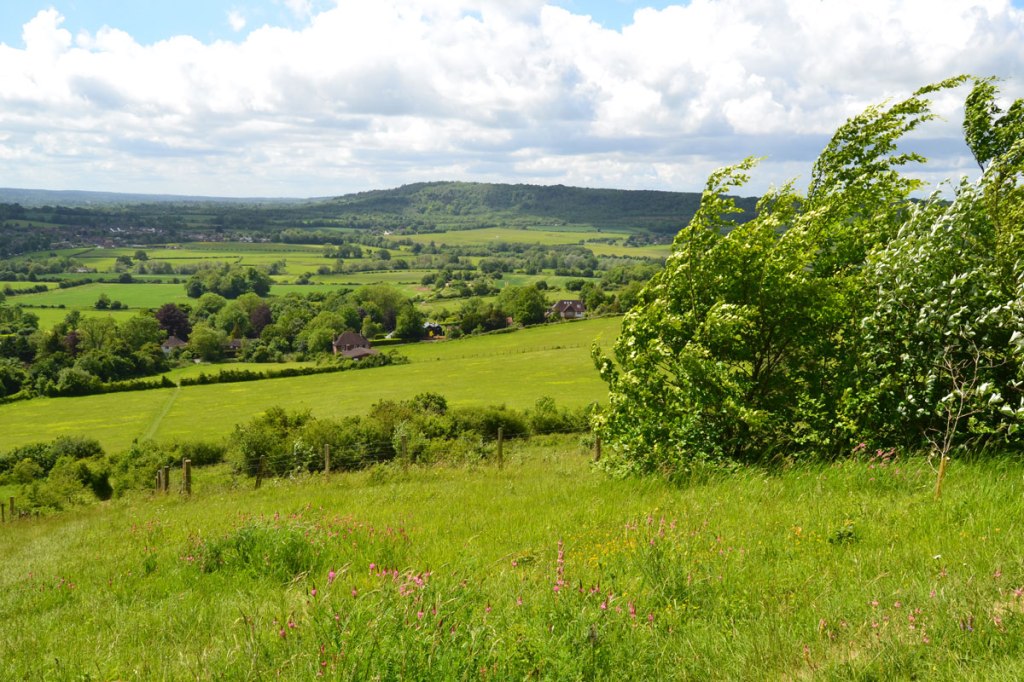
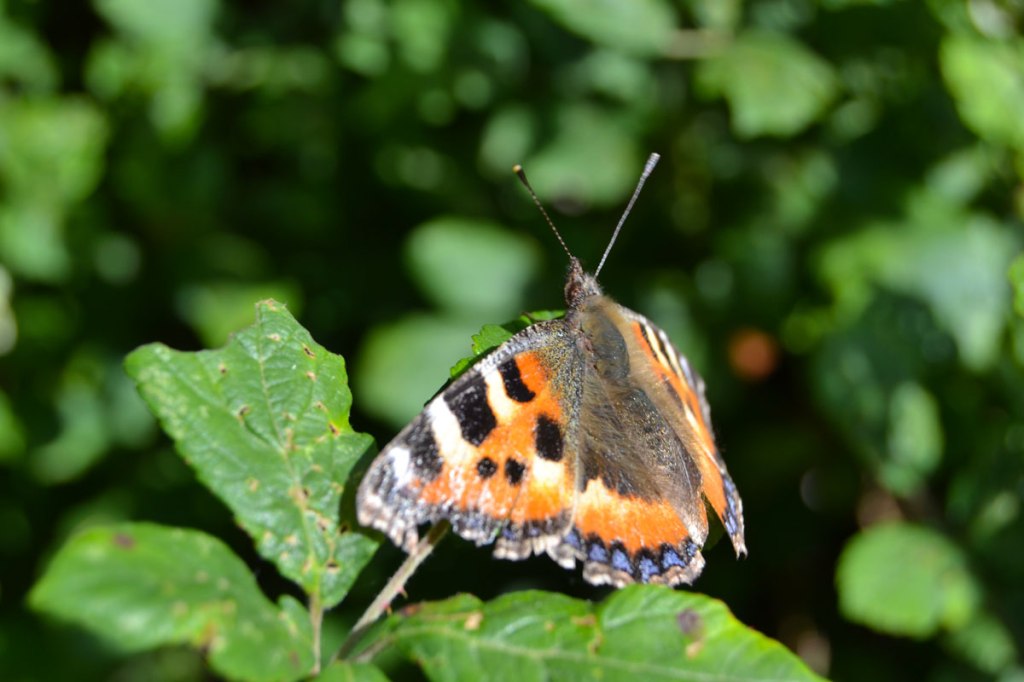
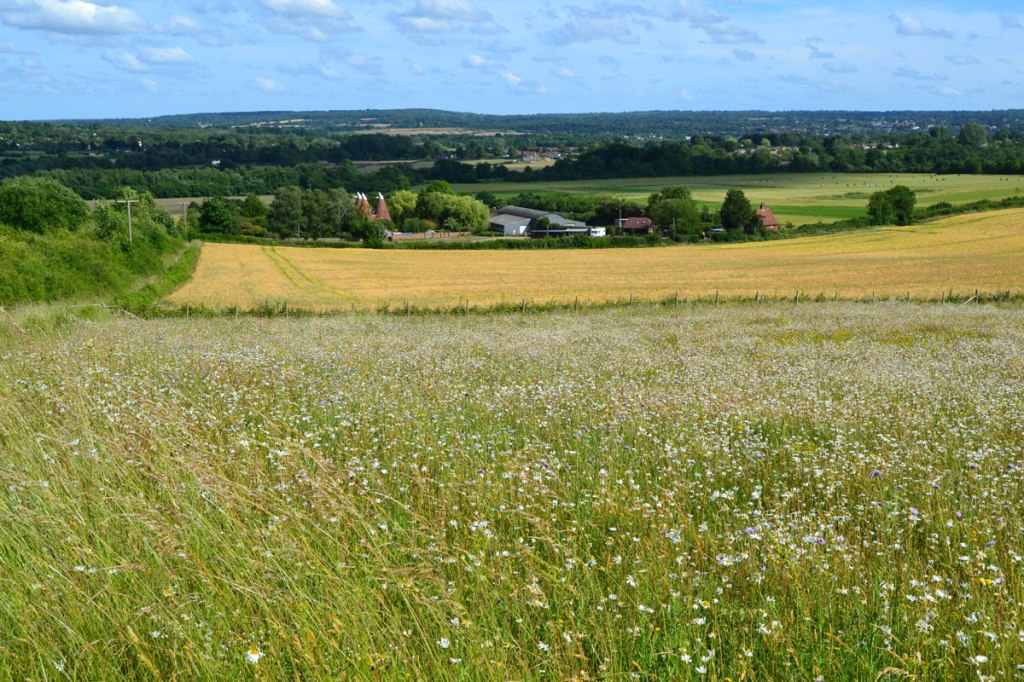
The Fackenden Down walk in late May on a breezy sunny day cannot be bettered. This is the walk on this site with most rewilding going on and plenty of Kent Wildlife Trust-maintained land. The results are a good variety of wildflowers, including several orchid species and sainfoin, lots of butterflies, burnet moths and birds such as buzzards (very common), whitethroat (from May to September) and yellowhammer (if you’re lucky). Some ancient species of livestock such as highland cattle are often used to graze the grasses in small numbers. My route is brilliant, if I do say so myself, and easily accessible by train. There’s a great pub at the end of the walk too – the Samuel Palmer.

I love Magpie Bottom in particular, a sheltered secret feeling valley alive with flowers and great variety of tree foliage colours. Then there the views from Fackenden Down itself, the wild “garden“ along the foot of White Hill and the Down, the view of London and Essex from the high point at Romney Street … it’s terrific, and a good workout with a few steep sections. It comes in at around 12,500 steps.

The Kent Wildlife Trust is in need of volunteers to monitor its livestock. Also it’s looking for urgent donations to enable it to purchase more land at Polhill, across the valley from Fackenden, where it monitors and maintains similarly superb chalk hillside. I’ve diverted the donations to this site to the appeal, but please make sure you chip in.

Most memorable walks of the year 2023

Most memorable walks of the year 2023

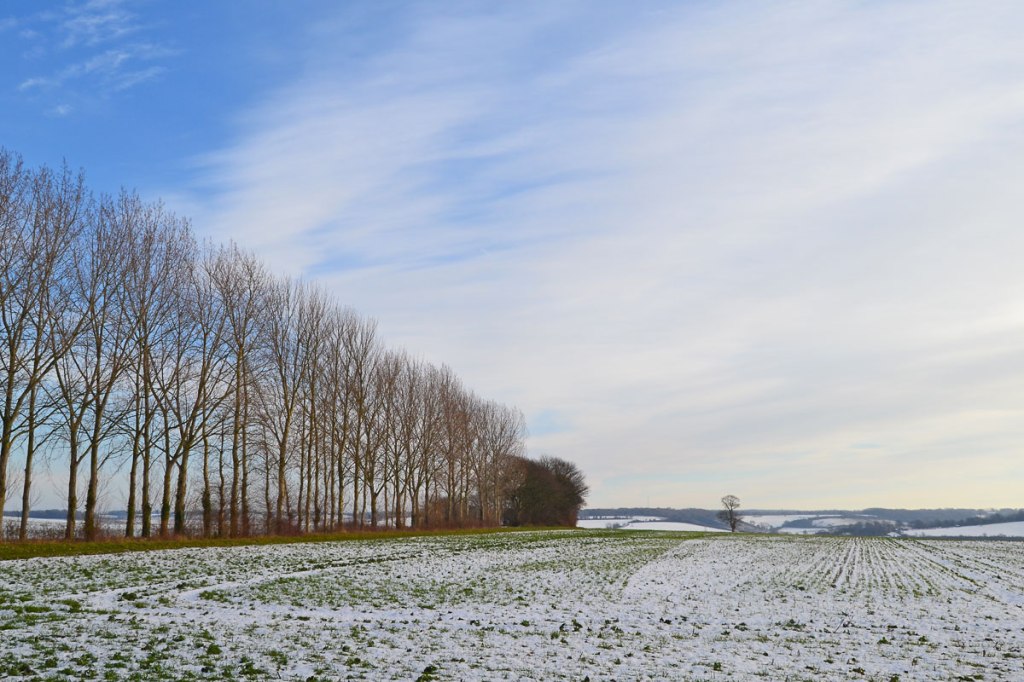
This time last year there was snow in the North Downs; not a lot but certainly enough for bleak midwinter atmosphere, providing one of 2022’s most memorable walks: a saunter around the whole of Lullingstone (pictured below).

By contrast, this year’s winter walks have so far been muddy wet trudges in the gathering gloom. I did really enjoy Hosey Common the other week (see previous blog post) in atrocious conditions, because it reminded me of Scotland, I was with an old friend and family, and quite frankly I needed to get out – so it was great. Walking in uninspiring weather and finding pleasure is a challenge, a task that one must learn to relish, especially if one runs a walks website, which one does.

So looking back over the year none of my most recent strolls will make it into my most memorable top three and I’m gambling that my Christmas walks won’t top those this selection. An “out of town“ sortie to Hastings country park was among the best but was disqualified on obvious grounds.

This leaves my favourite walks in 2023 as:

  1. Chiddingstone, 15 September: scorching late summer sunshine heavy with humidity; dragonflies and damsels over the River Eden; soaring buzzards, long grasses shimmering, a great pint in the Castle Inn with family. Blissful.
  2. Fackenden Down, 26 August: old friends visiting from abroad joined us. They were more used to the chaparral of southern climes than the moist beech woods, scabious meadows and brambly hedgerows of the North Downs. They had read my piece in the Guardian about this walk and fancied a good old saunter. Iffy weather but delightful company and a lovely sesh at the Mount Vineyard and Samuel Palmer pub afterwards.
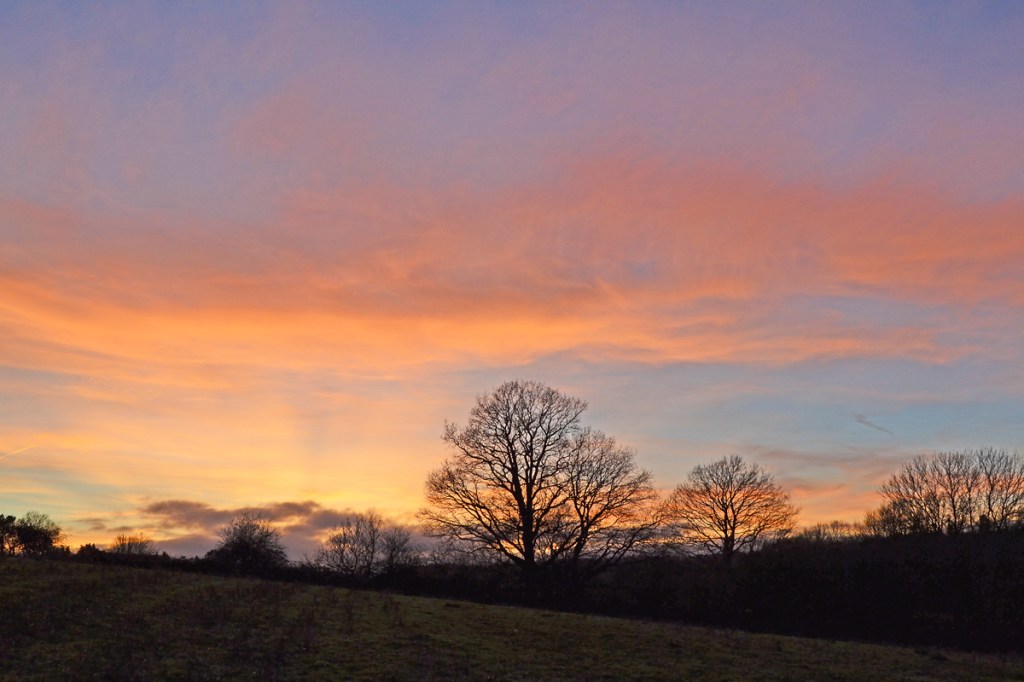
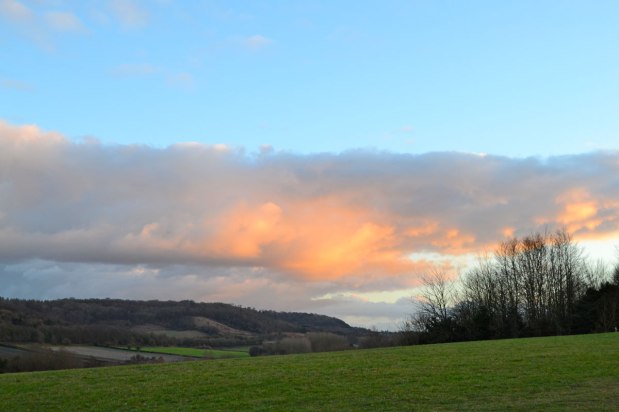
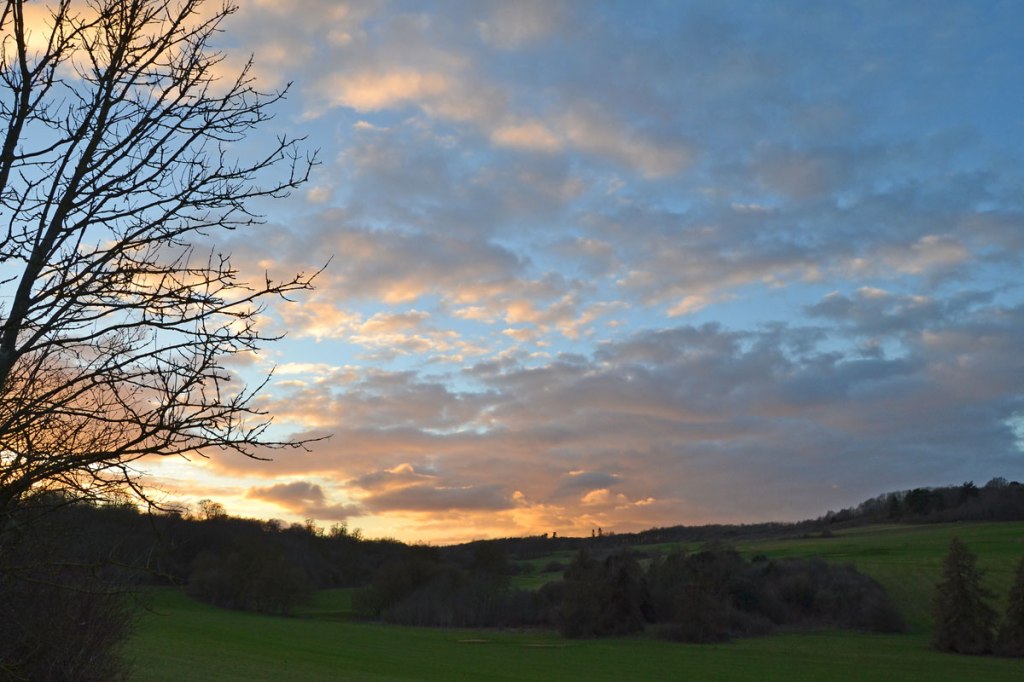
  3. Ide Hill, 3 February: an incredible multicoloured winter evening sky and rare close-up sightings of treecreepers in mysterious Scord Wood really made it. The ram pump pond was perfectly still and there were timeless frozen views over the wintry weald to enjoy. Again, great company – an old friend joined me. We finished in darkness with a bright moon picking out the gathering mist.
  • Tudor houses, Chiddingstone
  • Kent walk
New route: Heaverham/Kemsing circular

New route: Heaverham/Kemsing circular

This route, no 28, is similar to walk 27, but is better for people walking on Sundays, when there is no train service. You can start it from the lovely Chequers Inn, Heaverham (if you buy a drink/meal); Kemsing village car park; or Mon-Sat from Kemsing station. Rather like the Chevening/Knockholt walk it’s another chalk escarpment route that drops down into the Vale of Holmesdale, and uses short stretches of the North Downs Way. The link below includes the usual Google map and the more useful OS map, plus written directions. PDF to download will follow in a few days!

Click here for full description and maps

A walk with Jupiter

A walk with Jupiter

It’s proved an unexpectedly dry month, which has meant less mud when walking at this time of year than in any February I can remember (I don’t take measurements to be fair). There have been some gloomy weekends but some bright ones too leading to loose talk of spring having sprung. It hasn’t. Appreciating the longer daylight hours, we headed off in late afternoon for a circuit of Lullingstone yesterday, taking in the superb Beechen woods, the views down the Darent Valley and the blackthorn/hawthorn-dotted grassy high chalk hillsides on the return (we’d started the walk from the golf club car park, not the visitor’s centre). The cloud-shrouded sunset was magnificent with glimpses of Jupiter and Venus in the twilight. Very few birds around apart from a few fieldfare feeding late on the eighth hole fairway in the gloom. The last golfers had gone and with few people around it was all very tranquil, leaving a lovely imprint on the memory that will last me through the week.

See a GPX map of the 4.5 mile version of the walk (2.5 hours)
See GPX map of 3.3 mile version of the walk (1.5 hours)

Summer is here; time for Pluto

Summer is here; time for Pluto

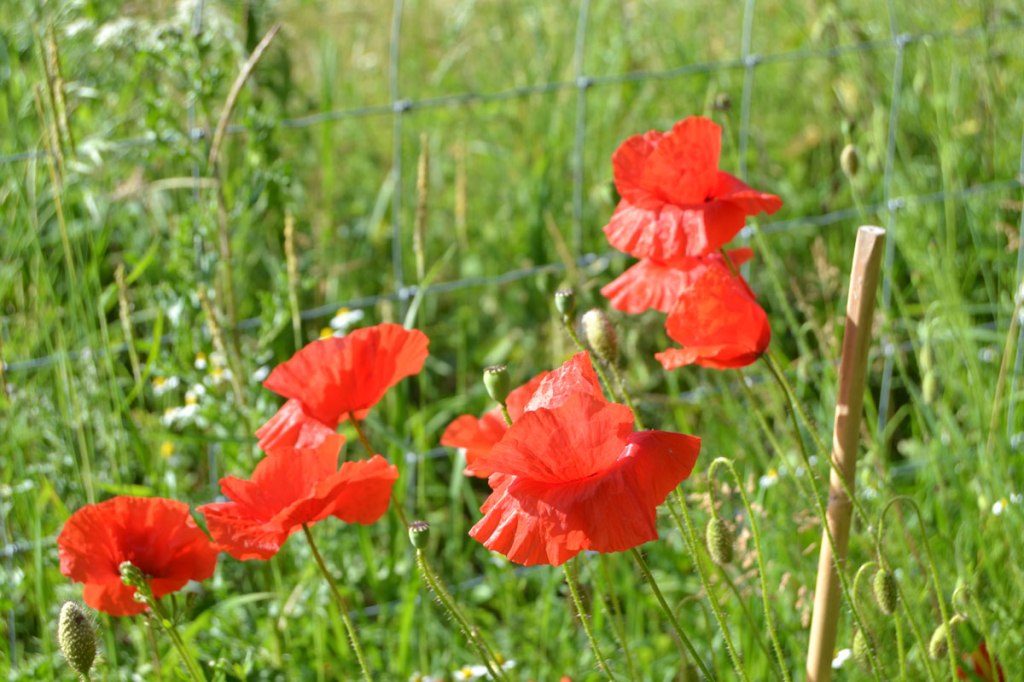
Continuing the theme of overlooked walks at Kent Walks Near London, the Polhill Pluto route yesterday proved the perfect choice on a bright, breezy summer’s day. There were plentiful orchids in the Andrews Wood-Meenfield Wood gap and fantastic ox-eye daisies, scabious and poppies in the fields below Polhill. It’s a great walk to do if you are a fan of the yellowhammer – the colourful, chirpy bunting (we’re talking about a bird by the way!) that adorns hedgerows in these parts and is particularly common for some reason between Shoreham and Otford. It’s repetitive and unworldy song is one of my favourites – it’s commonly described as sounding like ‘a little bit of bread and no cheese’ because of its rhythms but to me it’s simply the sound of summer. Listen out for it on the Darent Valley floor; around Sepham Farm it’s nearly always heard, and sometimes present in the lower parts of the Fackenden and Eastern Valleys route (such as around the Percy Pilcher memorial). The Pluto route (so called because you pass the final ‘planet’ on the Otford solar system scale model) can be combined with the Shoreham circular and even the Fackenden, Otford and Eastern Valley routes for a walk of up to 11 miles or so as all these routes intersect, or almost intersect, at various points. For some reason, I only think of this stroll as a summer walk – not entirely rationally, but it just feels right on a warm day.

Give Chevening a chance

Give Chevening a chance

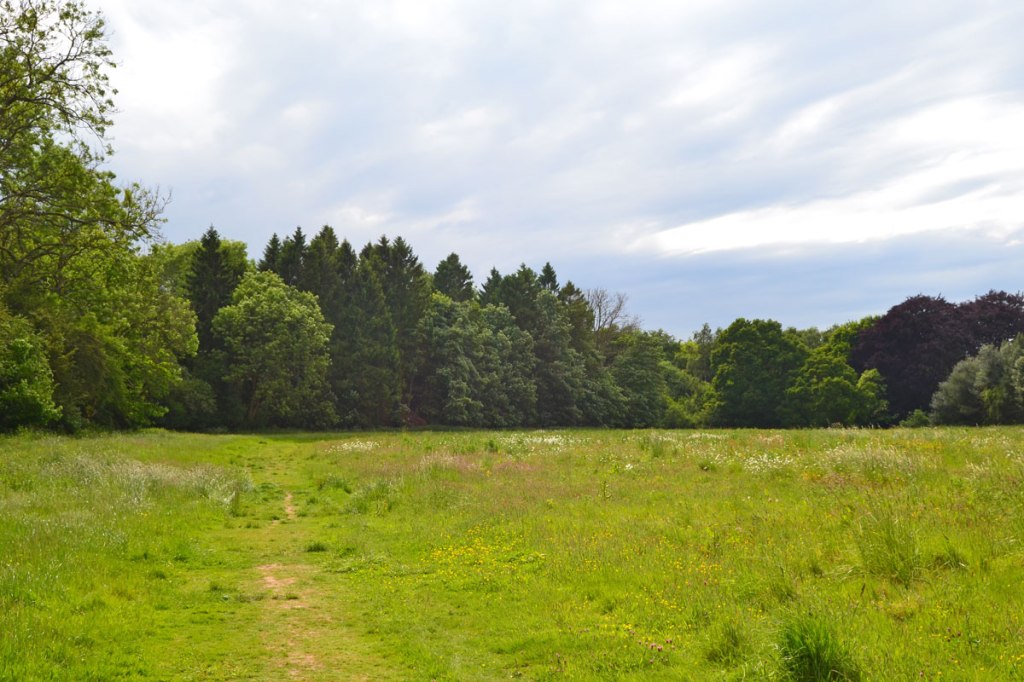
Of all the walks on this site the one I’ve done the least is probably the Knockholt/Chevening circuit. I’ve not always been wildly effusive about it, even describing the early stages as dull. I was completely wrong it turns out. I strolled the route today and found it superb. The fields on the right of the North Downs Way in the early stages have been left fallow and look to be in a pretty advanced stage of rewilding – the flora is high enough to hide the odd lynx! As I hit Sundridge Hill the instantly recognisable and repetitive song of the yellowhammer burst from the hedgerows like some sort of alien morse code. A huge buzzard (what are they feeding them around here?) eyed me up from above. The views over Chevening House towards Ide Hill were delightful as I cleared the scarp face woodland. Chevening hamlet was as spooky as ever and the following climb back to Knockholt took in a broad vista of the Vale of Holmesdale under a moody sky with plenty of butterflies and wildflowers to admire. A red kite skidded and yawed above in the thermals and I startled a pair of greater spotted woodpeckers which suddenly took off from a fallen tree trunk a couple of metres ahead of me. I think my previous aversion to this walk was to do with the “private” signs around Chevening House, its association with some deeply unpleasant national figures, and the slightly creepy feel of the hamlet – it’s just so quiet, but it’s me, it’s not them – the road noise between points 4 and 5, and having to walk on the road for 100 metres by the farm at point 5. The truth is, there are great views, loads of wildflowers, wonderful trees and nothing much not to like.

As quite often happens in these parts the camera doesn’t capture the walk; slopes are flattened out so the scenery looks blander than it really is.

‘What is this place?’

‘What is this place?’

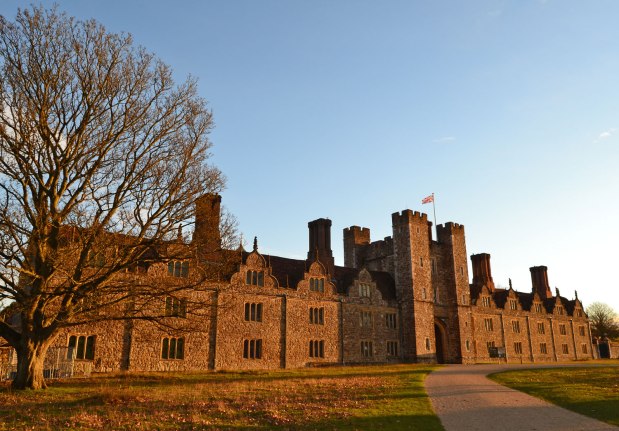
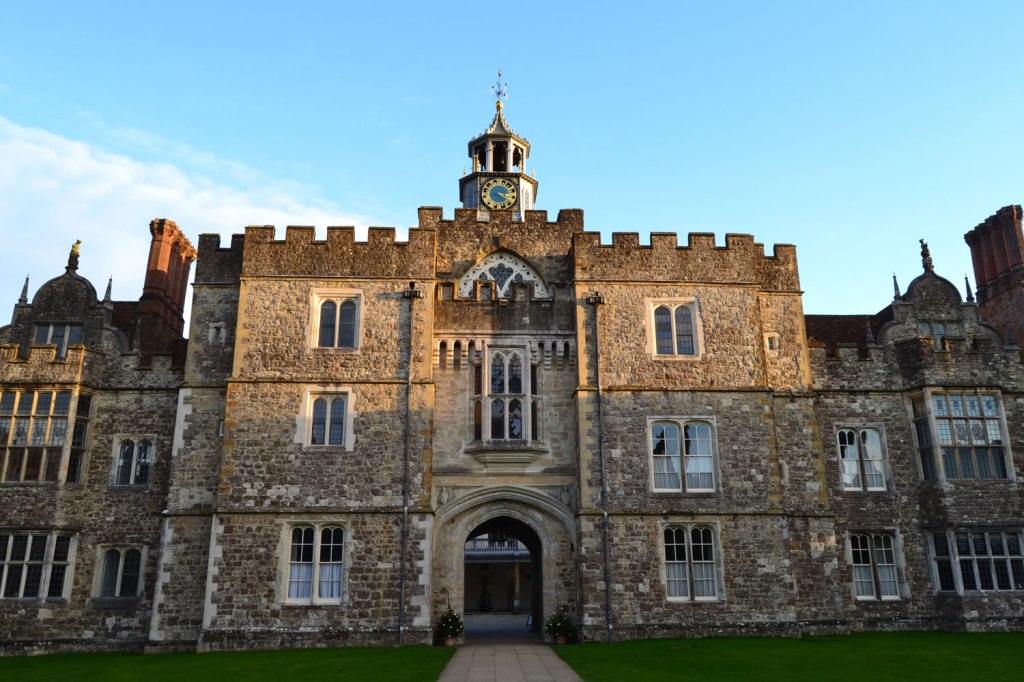
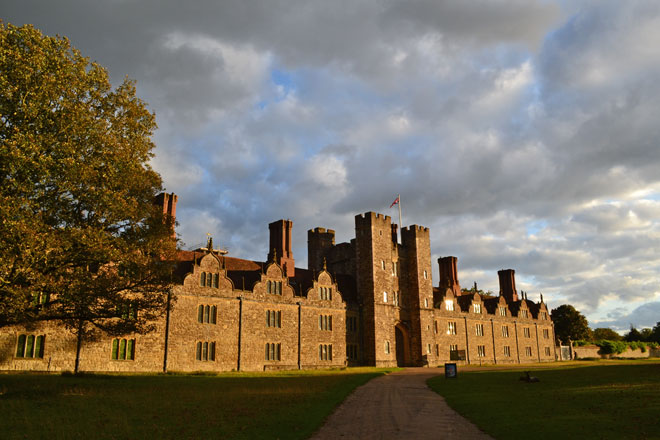
A spectacular winter’s day on Sunday. A pale blue polar sky, completely still, with saturated colours in the unfettered low sun. Knole was spectacular, the west-facing Tudor mansion ablaze in the late afternoon.

Despite the various woes affecting travel and holidays there were still visitors from abroad there, which was good to see – a reminder of better times.

“What is this place called?” I heard one man with an Italian accent ask an National Trust volunteer while gazing around the outer courtyard.

It seemed an odd question given that visiting Knole would involve taking a unique route leading to … well, Knole.

“Knole House,” the volunteer intoned with slow, exaggerated clarity, clearly pleased to be asked.

“So, who lived here?” he enquired, gazing at the enormous structure in wonder, perhaps hoping to hear “King Henry the Eighth” or “Queen Elizabeth the First”.

“The Sackville-Wests,” came the reply, delivered in an awed tone deemed suitable for heralding (minor) aristocracy.

“Ah”, said the man, nodding as if he were an old acquaintance of Vita’s, but betraying a false reverence that screamed: “Never heard of ’em”.

I too felt slightly disappointed at the answer, despite knowing what it would be.

Trains, buses, walks around Keston and Whitstable

Trains, buses, walks around Keston and Whitstable

I’m trying to add more train/bus walks to the KWNL site; the traffic in SE London is a factor, as is the need to reduce car use and pollution. Then there’s the fact that lots of keen strollers don’t have cars anyway. I’ve got two new routes up my sleeve using public transport to access, but I haven’t quite got them finalised yet. One is Herne Bay to Whitstable (5 miles) which hardly needs a map… you just follow the coast path. Both stations are on the Ramsgate line from Bromley South. It’s quite expensive (£26 return) of course being a British train but definitely worth it. But I want to see if I can continue the walk to Faversham (doubling the length), which is also on the same line, using decent paths. I know you can but I haven’t done it yet. Also it means stretching the ‘Near London’ remit of this website somewhat, though the fastish train makes the trip fairly short in relation to distance and you arrive without feeling worn out by having to drive.

Closer to home would be a walk from Hayes station, the terminus of the London Bridge line via Catford Bridge, to Keston Ponds and then Downe (about 6 miles). From Hayes station you traverse Hayes Common, an attractive area of woods and heath to reach Keston. Behind the village is another woods from where you reach Keston Ponds. Looking at the OS map there is a ribbon of ponds from Keston and Hayes to Bromley Common. These are fed by springs and the Ravensbourne river, which rises at Keston Common.

Keston Common heathland

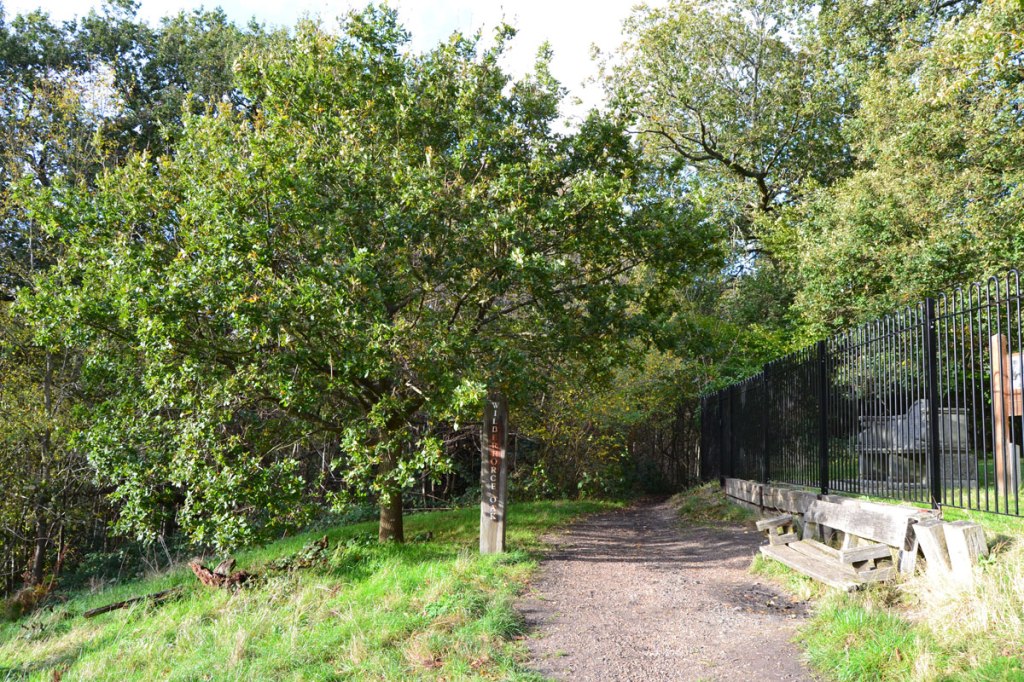
Beyond the two main ponds is an important area of heath then, after crossing the A233 you head through woodland to the Wilberforce Oak, where in May 1787 William Wilberforce talked with prime minister William Pitt the Younger (who lived at adjacent Holwood House, the Chequers of its time), about abolishing the slave trade. The spot is marked with a stone bench plonked there in 1862 and now behind the Holwood perimeter fence and a sign. There’s a dead oak still standing but that isn’t the Wilberforce oak. There are also bits of old oak lying about… maybe some of that is from the original. But there’s a nice healthy young oak anyway, planted about 30 years ago. There are also echoes of Roman and prehistoric settlements around this spot.

From here it’s pretty easy to walk all the way to Downe; cross the somewhat hairy Shire Lane, walk past the Holwood Farm Shop then take the footpath on the right which joins up with the Downe circular walk to bring you into the village from where you can get the 146 bus back to Hayes/Bromley South/Bromley North. One further appalling fact about the slave trade that only recently came to light: the descendants of slave owners in the UK were paid compensation for the loss of their ‘property’ from 1835 to, wait for it, 2015. Hard to believe isn’t it?