A very summery type of autumn

A very summery type of autumn

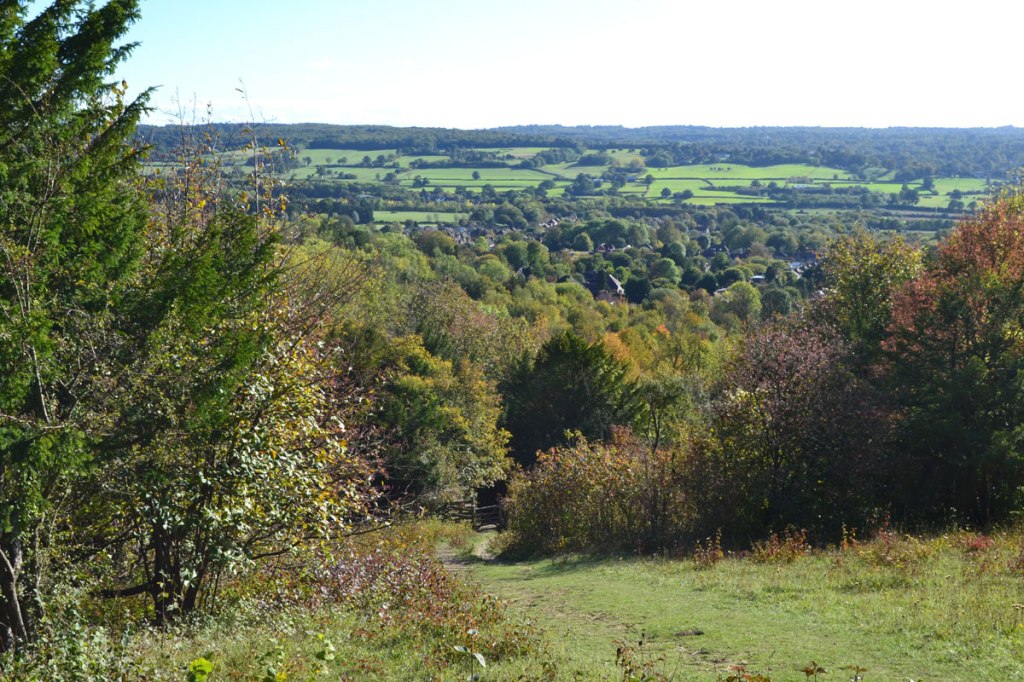
High pressure is dominating the weather and the near-drought continues. There is no mud on any of the walks, which once would have been unheard of for mid-October. For the past week it’s felt as if summer’s lease has no intention of expiring anytime soon. Amid mild temperatures and cerulean skies we enjoy the spectacles of the season as the greens of September become more mottled and varied as they meld into the yellows, oranges and reds of November. Rosehips, elderberry and sloes decorate the hedgerows and fungi mystically appear in woodland and grassy fringes. I’m not one for foraging; I much prefer to look and leave well alone (apart from blackberries).

Birdlife still seems somnambulant: I’ve been hoping for migrations but in this still weather nothing much seems to stir. A week ago, in the wake of Storm Amy, hundreds of house martins passed overhead heading east with the wind, as a full moon rose in a purple sky. But this was in Lower Sydenham not on the Kent walks. My only notable sightings have been a kingfisher on River Eden on the Chiddingstone walk; red kites over Lullingstone and Downe; grey plover and lapwings on the ever-expanding shoreline at Bough Beech reservoir (I’ve never seen the water so low); and buzzards at Polhill.

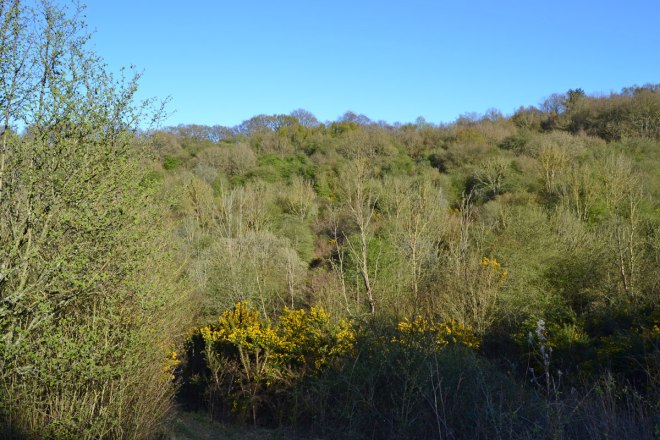
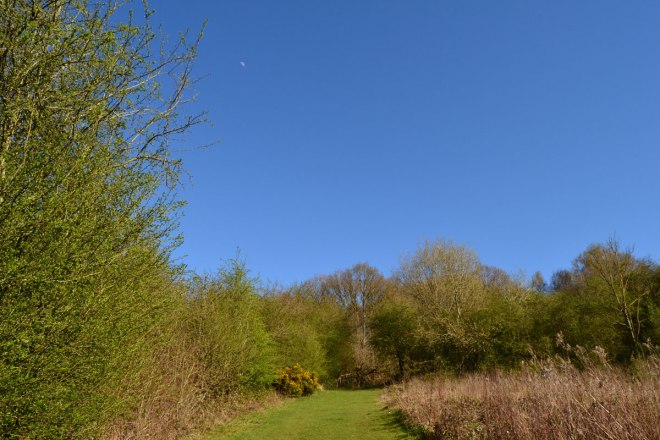
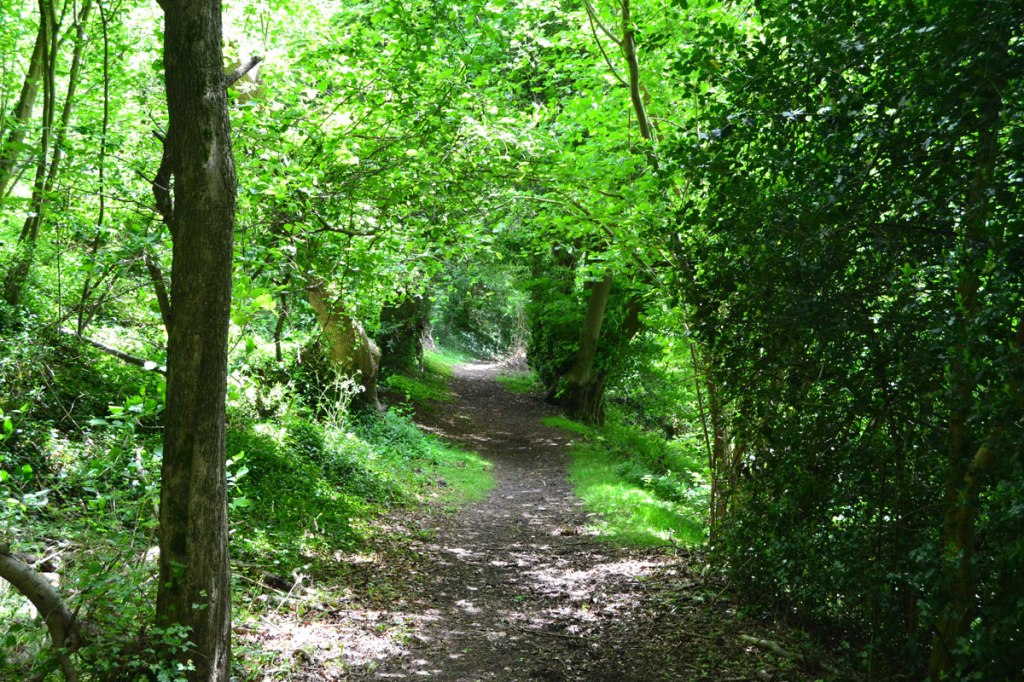
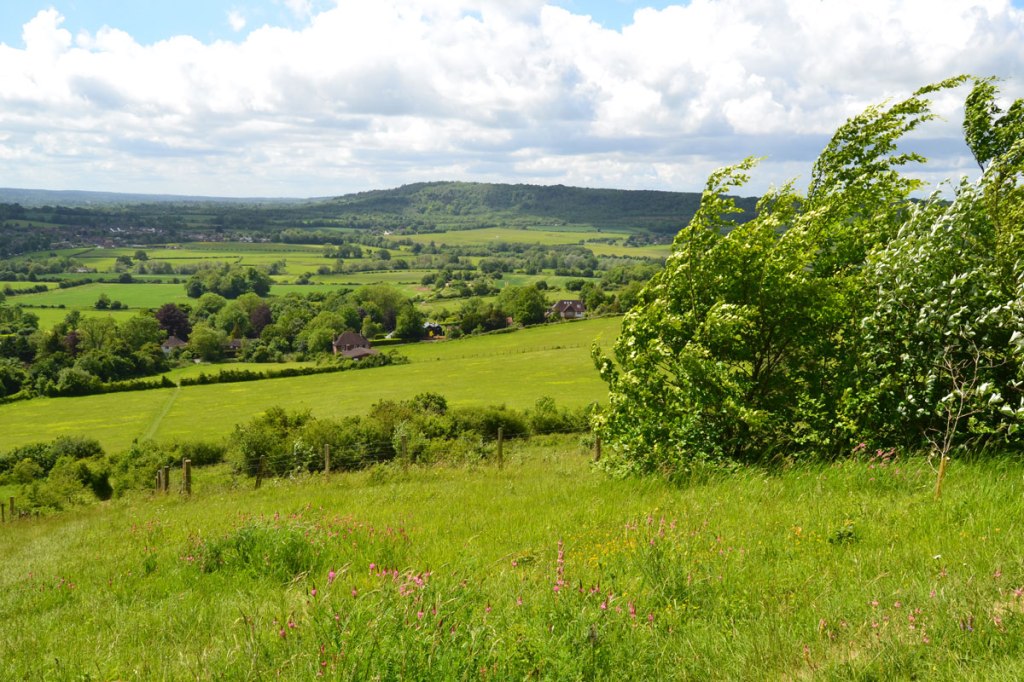
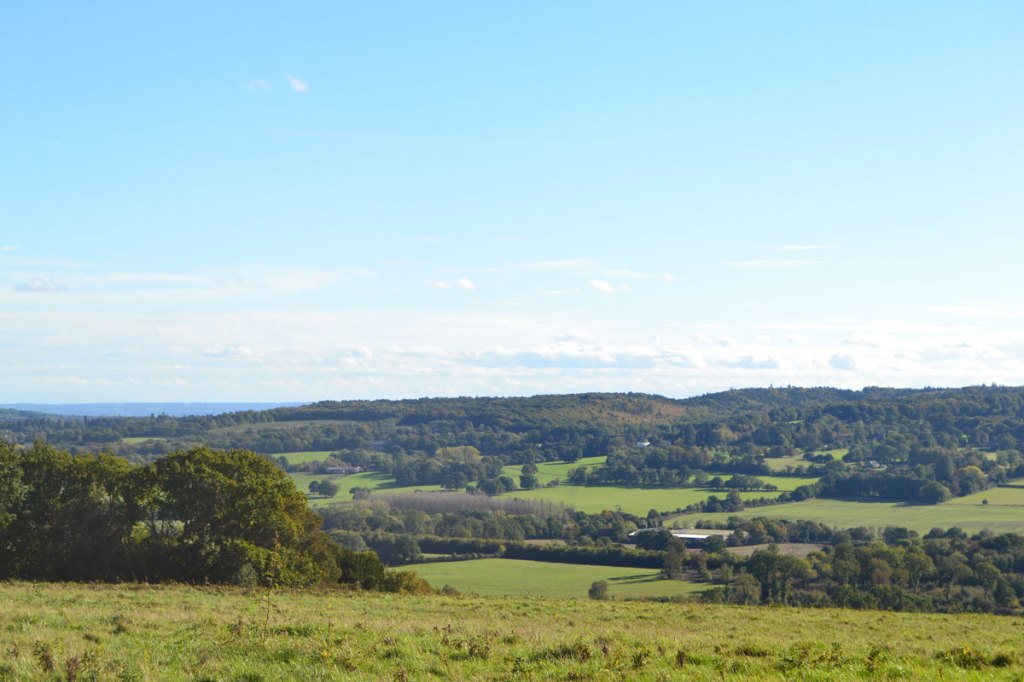
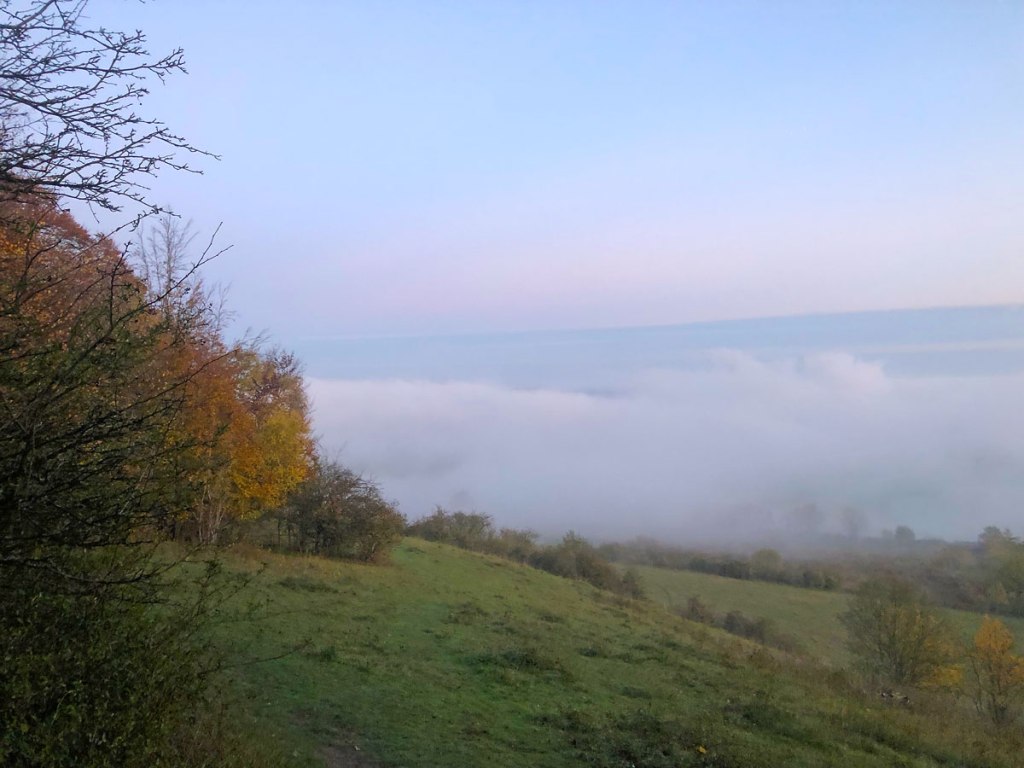
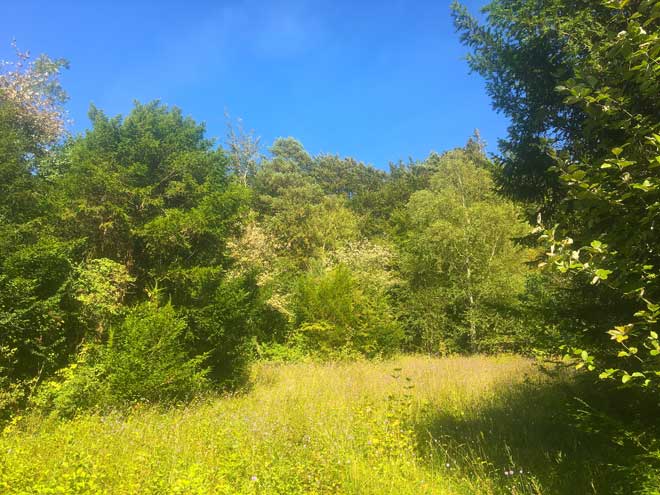
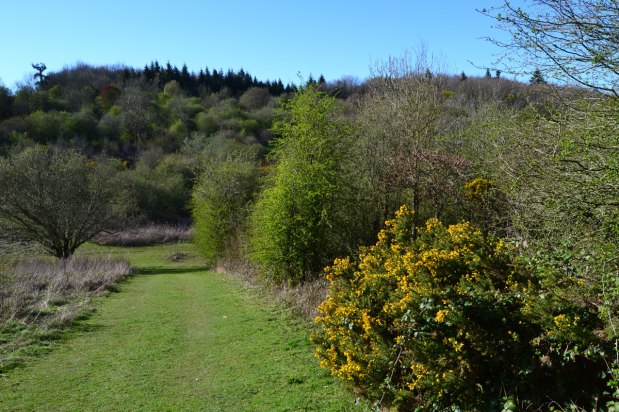
My walk at Fackenden Down today (pictured) was serene, colourful and wonderfully warm. But this isn’t autumn, surely. Lovely though it was, I would quite like to feel a fresher breeze, walk with the threat of a squall, squish through a puddle and ponder whether to wear wellies or trainers. That time will come I guess, I’ll enjoy summer’s lease while it lasts.
Greening time and an early grass snake

Greening time and an early grass snake

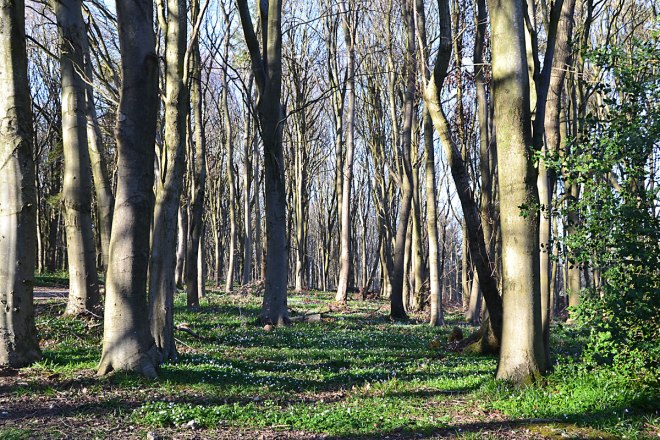
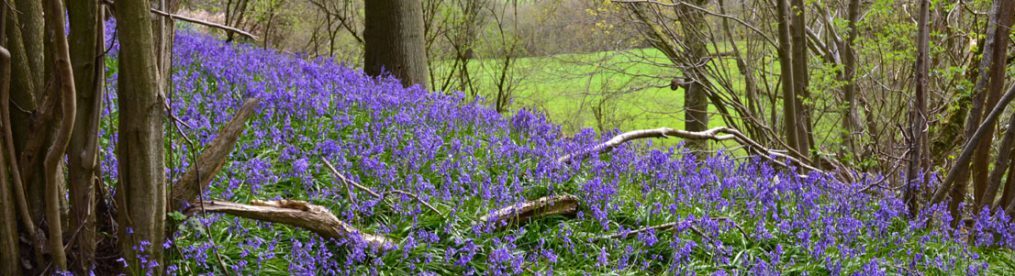
To the accompanying sounds of chiffchaffs, blackcaps, wrens, tits, dunnocks and robins, I trekked the Polhill/Pluto route from Andrews Wood car park on Shackland Road. Suddenly there’s a sheen of green in the tree canopies; in fact there are canopies – not just stark branches – the colour scheme has seamlessly moved on from the gentle grey/browns of winter. Below the greening trees wood anemones and early bluebells are mixing with celandine, early cowslips, primroses and the odd cuckoo flower to add pixels of vibrant hues. I was delighted to spot a long, thin and beautifully patterned grass snake after hearing leaves rustling under a bush, but I couldn’t bring the camera to bear in time: damn autofocus! Slow worms were plentiful though, but you have to know where to look and avoid disturbing them. Buzzards took delight in the clear sky and subtle breezes. A fantastic walk.

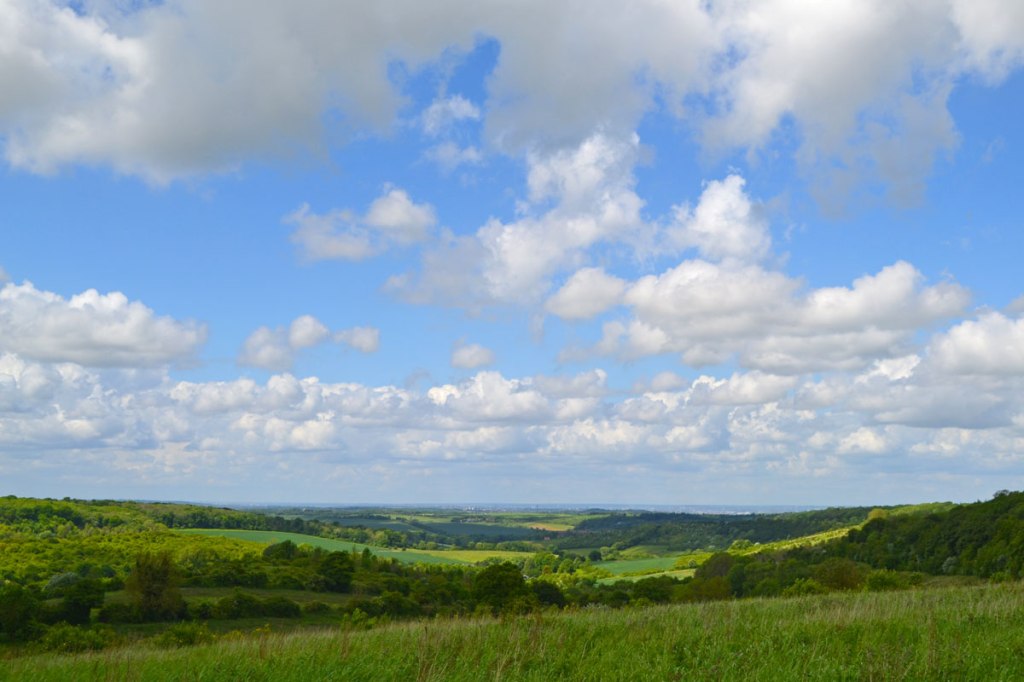
  • View across the mouth of the Darent Valley from Polhill in early April
A reptilian reveal

A reptilian reveal

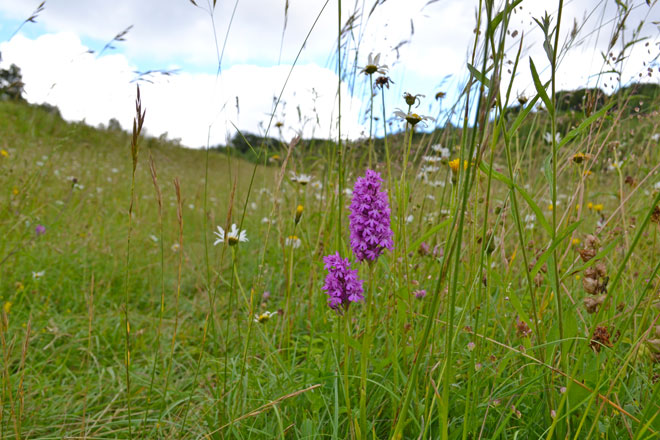
It was great to hear that Kent Wildlife Trust made it to their £196k target to buy an extra 26 acres to extend their Polhill Bank reserve, which features on a couple of KWNL routes – Pluto and Meenfield Woods. I headed out there earlier today, sacrificing the first set of the French Open tennis final. I had a subsidiary mission – to buy a shrub. I was actually planning to go to Coolings for this purpose, near Knockholt, but the traffic was so horrendous on the pertinent routes past Bromley and Hayes that I diverted to Polhill Nursery so I could return to SE London via the Orpington bypass road, up through Chislehurst. I had a good look at Polhill Bank. The first pyramidal orchids were showing, along with loads of milkwort, speedwell and all the June usuals. My expertise does not extend to plants beyond the common species. There were few birds around: I heard a cuckoo briefly, which is something, a whitethroat and eventually a yellowhammer. Buzzards soared, a swift swooped around; there were no swallows or martins disappointingly. However, for the first time I saw a lizard at this reserve. I’ve long wanted to see one here because KWT’s website proclaims their presence on these sunny slopes. So I was delighted. I really had to look and just caught it in the corner of my eye in a gap between vegetation. I stayed on the path and was determined not to disturb it in any way as it was sunning itself on a piece of wood. As a result my photos are rubbish. But that is less important to me than the fact I documented it and didn’t tread on anything I shouldn’t have – and left it in peace.

  • Common lizard at Polhill
  • Pond and view

It’s time for Fackenden Down

It’s time for Fackenden Down

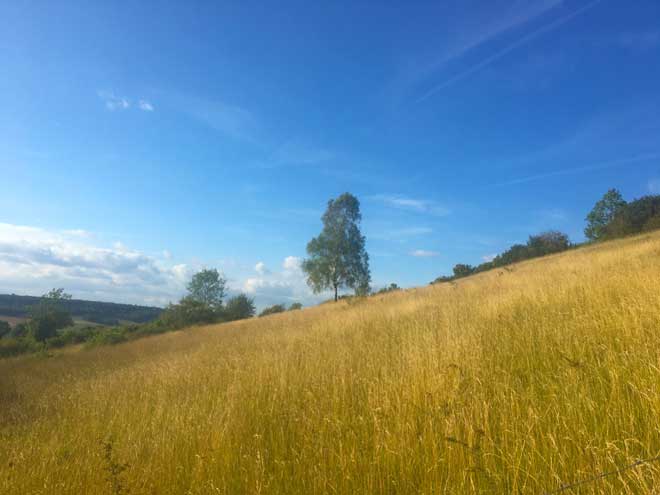
The Fackenden Down walk in late May on a breezy sunny day cannot be bettered. This is the walk on this site with most rewilding going on and plenty of Kent Wildlife Trust-maintained land. The results are a good variety of wildflowers, including several orchid species and sainfoin, lots of butterflies, burnet moths and birds such as buzzards (very common), whitethroat (from May to September) and yellowhammer (if you’re lucky). Some ancient species of livestock such as highland cattle are often used to graze the grasses in small numbers. My route is brilliant, if I do say so myself, and easily accessible by train. There’s a great pub at the end of the walk too – the Samuel Palmer.

I love Magpie Bottom in particular, a sheltered secret feeling valley alive with flowers and great variety of tree foliage colours. Then there the views from Fackenden Down itself, the wild “garden“ along the foot of White Hill and the Down, the view of London and Essex from the high point at Romney Street … it’s terrific, and a good workout with a few steep sections. It comes in at around 12,500 steps.

The Kent Wildlife Trust is in need of volunteers to monitor its livestock. Also it’s looking for urgent donations to enable it to purchase more land at Polhill, across the valley from Fackenden, where it monitors and maintains similarly superb chalk hillside. I’ve diverted the donations to this site to the appeal, but please make sure you chip in.

A bird walk at Knole

A bird walk at Knole

Mysterious birder Dave has emerged once again from his Kent weald lair! This was great news on this gusty, mild, cloudy day with a walk at Knole planned. Dave’s presence would ensure that I would observe or hear (rarely both) species I wouldn’t usually encounter when walking alone. Arriving at Knole late thanks to an unforeseen ambush cunningly laid by temporary traffic lights on the A21, I spotted Dave already staking out the territory in Knole’s south eastern corner. “There’s nothing here,” he said, greeting me with breezy optimism. But it wasn’t entirely true. By standing still amid the beeches and oaks in the open woodland of that area of the park it seemed the birds started to come to us. First a troop of chaffinches (but not as far as we could tell the hoped for brambling), then coal tit, song thrush, nuthatch, greater spotted woodpecker and goldcrest. As we entered the south eastern conifer plantation we heard siskin (pictured header) – or rather Dave did.

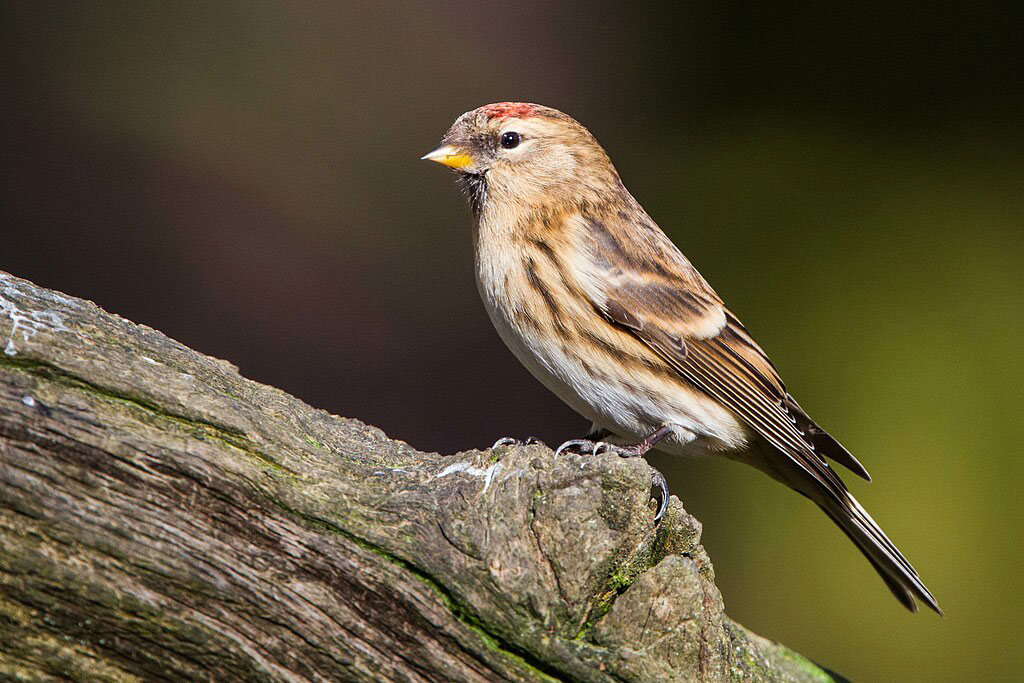
Lesser Redpoll wikimedia commons
Lesser redpoll. Photo by Ron Knight/Wikimedia Commons

Later a lesser redpoll (pictured above) flew over, a very delicate little finch type thing. Two greenfinches – not at all common these days – were spotted at the top of a tree, while more predictably, a buzzard wheeled above. Mistle thrush was then heard and a flock of redwings streamed across the field on the Godden Green side of the wall on the eastern fringe, where there’s a lovely view of Fackenden to Kemsing downs and of the Darent Valley opening. Finally, a fetching pair of stonechat, a male and a female, alighted in grass just ahead of us as we started to walk up to the house. As we got close they hopped into the bracken tops, disturbing a roosting wren.

It’s definitely worth walking with Dave – you become aware of far more birds than you would normally see. I had to bite my lip though when checking the football scores – West Ham were playing at Man Utd and it wasn’t going well … sorry Dave.

New route: Heaverham/Kemsing circular

New route: Heaverham/Kemsing circular

This route, no 28, is similar to walk 27, but is better for people walking on Sundays, when there is no train service. You can start it from the lovely Chequers Inn, Heaverham (if you buy a drink/meal); Kemsing village car park; or Mon-Sat from Kemsing station. Rather like the Chevening/Knockholt walk it’s another chalk escarpment route that drops down into the Vale of Holmesdale, and uses short stretches of the North Downs Way. The link below includes the usual Google map and the more useful OS map, plus written directions. PDF to download will follow in a few days!

Click here for full description and maps

Bats in the mist – dusk at Downe, Keston and Polhill

Bats in the mist – dusk at Downe, Keston and Polhill

Exceptionally mild temperatures have lured bats out into the autumnal gloaming to catch late flying insects. I love watching these animals swoop, flutter and flit around and it’s a bonus to see them so late in the year. Usually you can only pick them out against the sky but at Downe and Keston on last weekend’s strolls I was buzzed by bats so closely I sensed rather than saw them zooming past. Yesterday at Polhill one or two emerged from the mist to pass close over our heads before vanishing into the gloom.

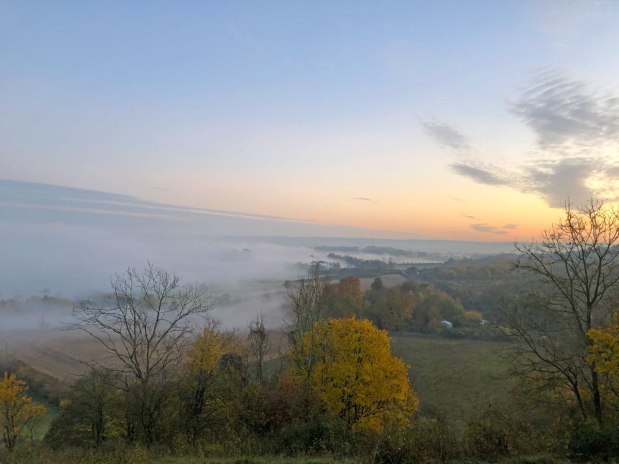
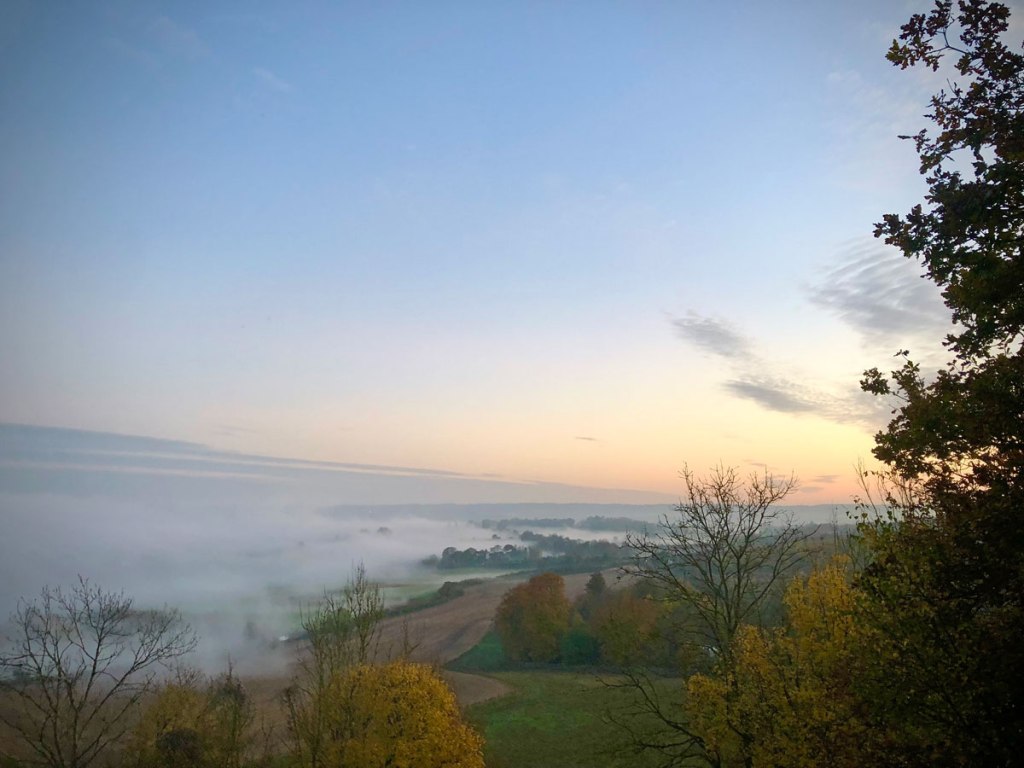
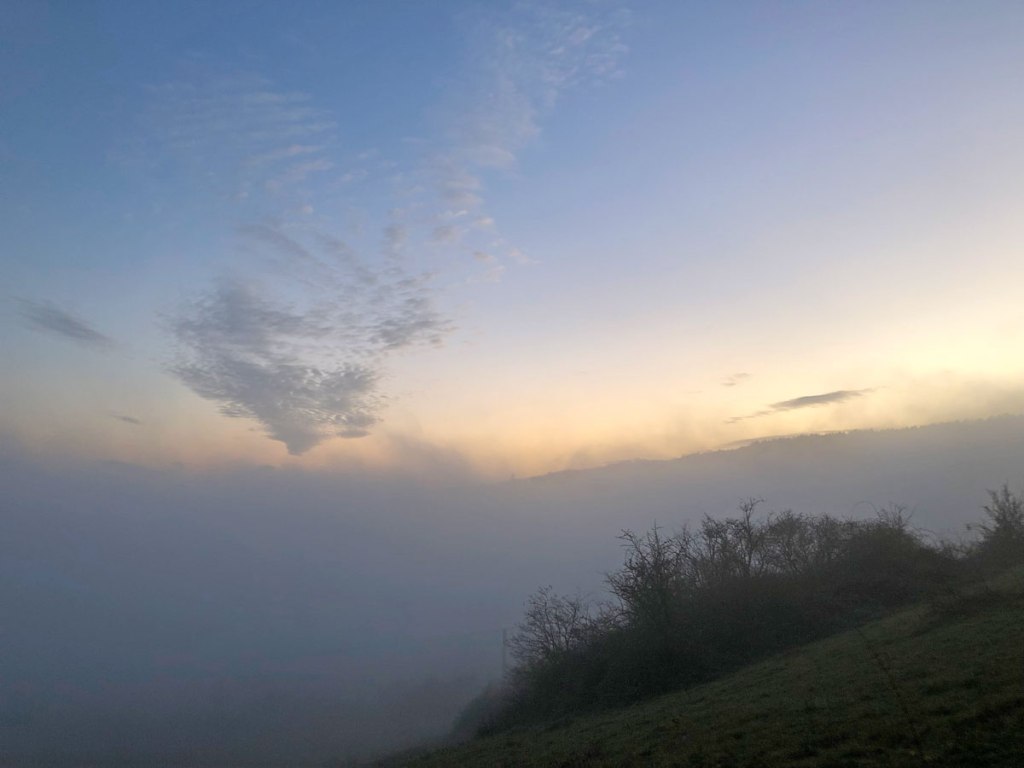
I’d thought we’d set off rather too late for a walk. Traffic was bad on the A21 slowing us further (the train is by far the best option for Shoreham walks) and low cloud had covered the sky. But by Locksbottom the skies cleared and we were bathed in a beautiful golden light. This was a false dawn: by the time we parked up by Meenfield Woods above Shoreham we were in quite dense fog. This magically cleared at Polhill, the walk’s halfway point, to give us unusual views before swirling back in as the sun set. With the mist below we had the feeling we were much higher above the valley than we were. I think this weather effect is called a temperature inversion, where warmer air passes over the relatively cold air on the valley floor, causing condensation.

By the time we finished the walk, visibility was down to about 50 metres and driving home the twisty, twiny country lanes needed total concentration if we were to avoid a close encounter with a hedgerow.

  • Mist obscures Sevenoaks
  • Mist at Polhill looking towards Otford, November 2022
  • Mist at Polhill looking towards Otford, November 2022
Summer is here; time for Pluto

Summer is here; time for Pluto

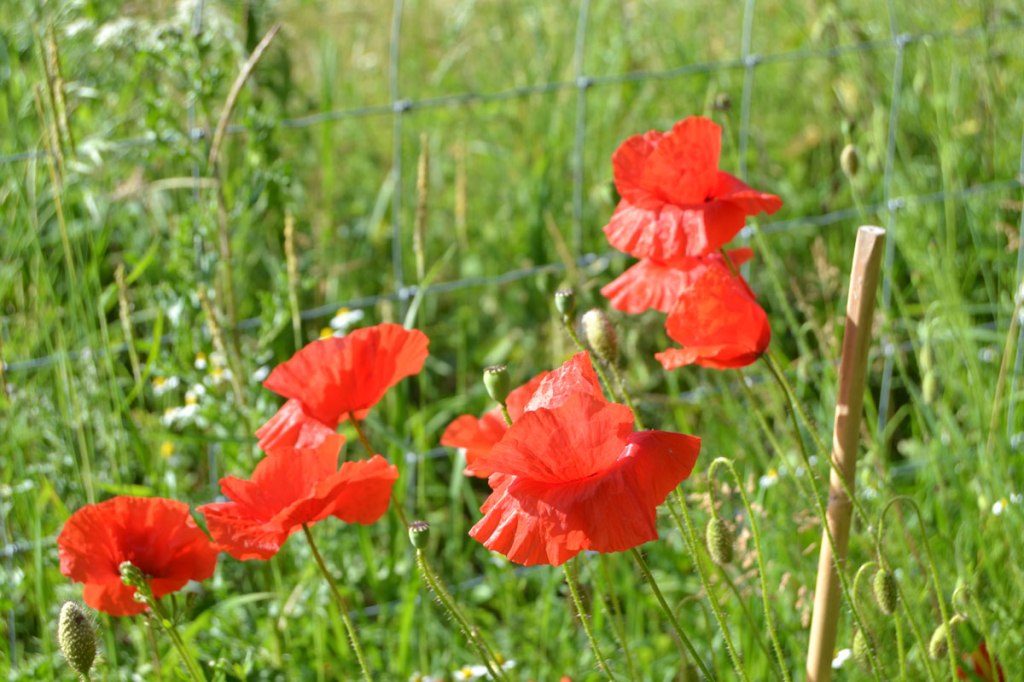
Continuing the theme of overlooked walks at Kent Walks Near London, the Polhill Pluto route yesterday proved the perfect choice on a bright, breezy summer’s day. There were plentiful orchids in the Andrews Wood-Meenfield Wood gap and fantastic ox-eye daisies, scabious and poppies in the fields below Polhill. It’s a great walk to do if you are a fan of the yellowhammer – the colourful, chirpy bunting (we’re talking about a bird by the way!) that adorns hedgerows in these parts and is particularly common for some reason between Shoreham and Otford. It’s repetitive and unworldy song is one of my favourites – it’s commonly described as sounding like ‘a little bit of bread and no cheese’ because of its rhythms but to me it’s simply the sound of summer. Listen out for it on the Darent Valley floor; around Sepham Farm it’s nearly always heard, and sometimes present in the lower parts of the Fackenden and Eastern Valleys route (such as around the Percy Pilcher memorial). The Pluto route (so called because you pass the final ‘planet’ on the Otford solar system scale model) can be combined with the Shoreham circular and even the Fackenden, Otford and Eastern Valley routes for a walk of up to 11 miles or so as all these routes intersect, or almost intersect, at various points. For some reason, I only think of this stroll as a summer walk – not entirely rationally, but it just feels right on a warm day.

Splashes of colour into autumn

Splashes of colour into autumn

Devil’s-bit scabious (Succisa pratensis) is a flower from the honeysuckle family and it looks so cool right now. Maybe not for much longer but it’s currently fairly prominent on the chalky walks such as Fackenden, Polhill, Chevening and Kemsing. Where the grassy hilly slopes are looked after by naturalists, the Kent Wildlife Trust for example, the flower supplants regular scabious – another superb flower and particularly sweet smelling – by mid September. The marjoram is no longer flowering much, and thyme has died down somewhat too so for pollinators the devil’s-bit, which looks a bit like knapweed at first sight, is the main show in town. It is certainly being enjoyed by butterflies and bees on the wonderful ‘wild garden’ path – which in June is great for orchids – leading to Fackenden Down this week. But the star of the walk – apart from the landscape and sky – was a superb green common lizard in a sunny spot near the top of the down. Few birds were in evidence but chiffchaffs called from the hedgerows, a buzzard soared in the distance and being I’m optimistic I’d say I may have seen a pair of late-migrating turtle doves heading south. Apparently devil’s-bit scabious got its name from its ability to treat scabies, a property that the devil didn’t like much (the devil wants us all to be itchy you see). Slightly weird but there you go.

The accompanying photos were taken on my iphone and hence are poor quality – they certainly don’t do the blue-purple sparks of devil’s-bit any justice; my camera is once again defunct at the moment. (Close up of flower photo by Anne Burgess/Geograph creative commons.)

Microclimates and wild meadows

Microclimates and wild meadows

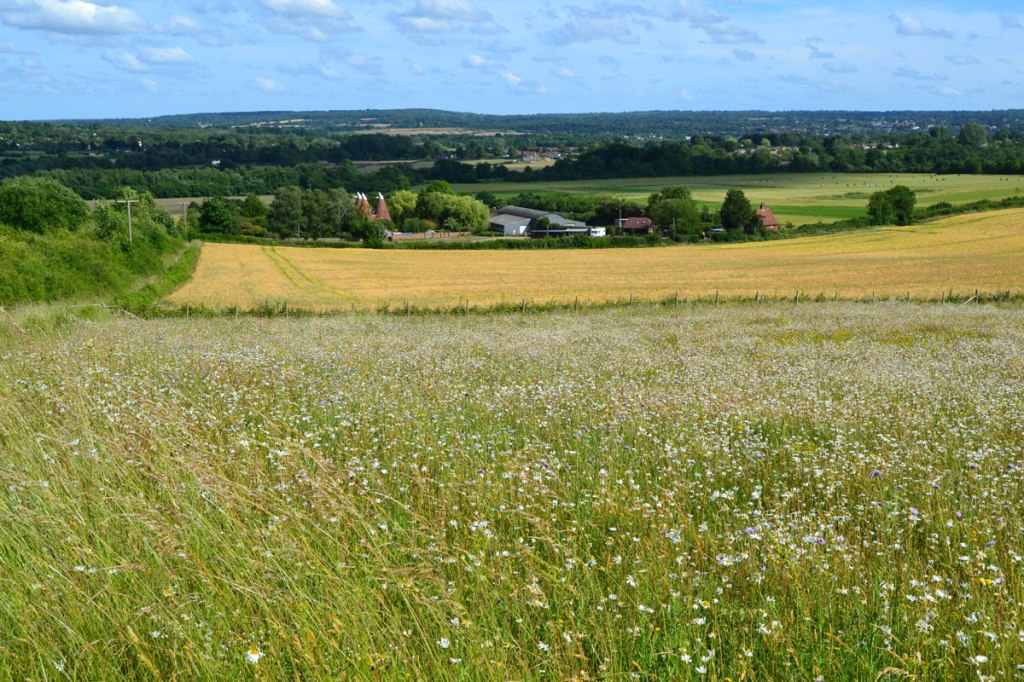
The Darent Valley and its surrounding valleys near Otford, Romney Street and Austin Lodge to the east and Andrew’s Wood to the west seem to me to trap heat and moisture. Even on dull summer days the area feels more humid and sticky than the London suburbs for example. I love it. The area feels ‘different’ and somewhat mystical. It’s certainly very verdant and with rewilding projects, such as at Magpie Bottom, several SSSIs and Kent Wildlife Trust reserves, it’s worth having to change your shirt for. Just take a flask of water. Even on a mostly dull day like last Sunday, you might get a fleeting pool of sunshine to enjoy and the sight of cloud shadows racing across the rippling wildflower rich meadows towards you. (Dogowners are advised to keep their animals on the the lead though…. there’s apparently a threat of adder strikes on dogs in the area and occasionally livestock. Cases of dog theft have occurred too.)