Cudham walk advice

Cudham walk advice

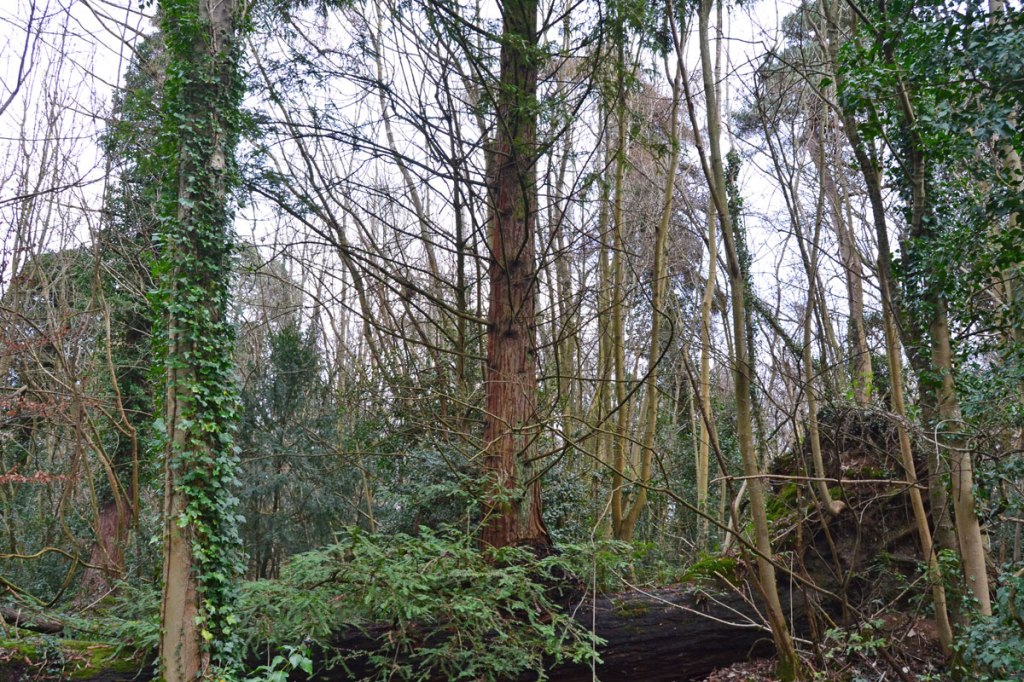
Thought it worth mentioning. The heavy rains this winter (until recently) have damaged the chalk path between points 2 and 3 and displaced a lot of stones on the Cudham route. There’s now a mini ravine for some of the path and a lot of bits of rock. Only a minor inconvenience really but worth knowing. I don’t see how it gets ‘fixed’ in the short term and will probably get worse as we’re not out of the woods yet (pun intended).

Erosion on Cudham chalk path

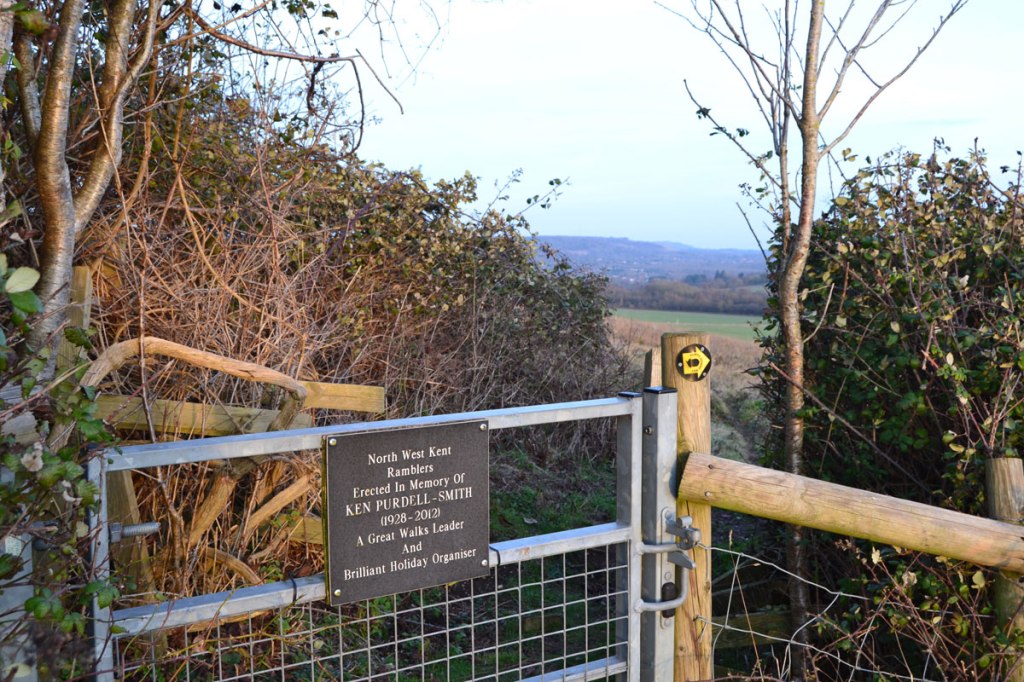
Even more worth knowing is that soon after Point 4, the stile leading into the wood adjoining Newyears Wood, where a lot of chopping goes on, has gone missing. Now you have to climb over the low wooden fence to use the public footpath there. The yellow waymarker sign for the public footpath remains in position. No sign has been erected saying that this stretch of path is temporarily out of bounds has so I say you are totally entitled to carry on using the path. I hate it when landowners don’t take care of path access – it’s just disrespectful and careless.

Cudham short version (3.3 miles)

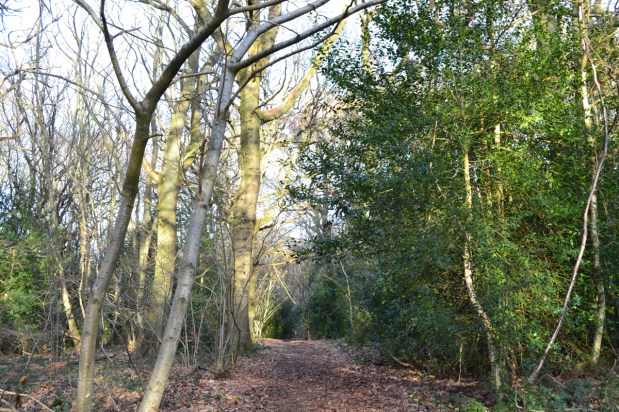
There is a short cut version to avoid this hopefully temporary missing stile bore. It takes just a mile off the route but misses out on the nicest bit of woodland at Birches Croft, on the edge of New Years Wood.

Still, the stile issue is not as serious a problem as the idiots who have literally cut down the traffic lights on the Hayes to Keston road at the junction of the A232 – yes, it looks to me as though an angle grinder has been used to cleanly chop all four traffic lights at this now dangerous crossing point. I guess it’ll be quickly remedied.

Farnborough village and High Elms circular

Farnborough village and High Elms circular

Here’s a ‘new’, pleasant two-hour, four-mile stroll that fits in to the Downe/Cudham/Knockholt suite of walks; ie, it’s on the chalk North Downs and not too far from Bromley – in fact it’s still within Bromley borough (about 30 mins’ drive from Forest Hill, 15 mins bus from Orpington Station, 20 mins from Bromley South). It’s quite a similar walk to the High Elms Estate route described in this informative leaflet but there are differences – my route is a mile and a half longer, goes further to the west initially and stays deeper in the woods in the long stretch to the High Elms visitor centre (Beeche).

Here are full instructions for the walk.

I’ll write it up and devote a page to it this week at some point but meanwhile here’s an Ordnance Survey GPX map for the route, and, below, a Google map of it. We started from close to the church in Farnborough village (Kent) but you could also start from the High Elms visitor centre car park (free, the last time I checked). If you’re not driving, you can take the 358 bus to Farnborough village from Bromley South, Orpington, Crystal Palace, Shortlands, Kent House, Eden Park, Anerley, Clock House stations etc (it’s a long and twisting route from Crystal Palace though!). The closest railway station is Orpington, just a mile or so from Farnborough village.

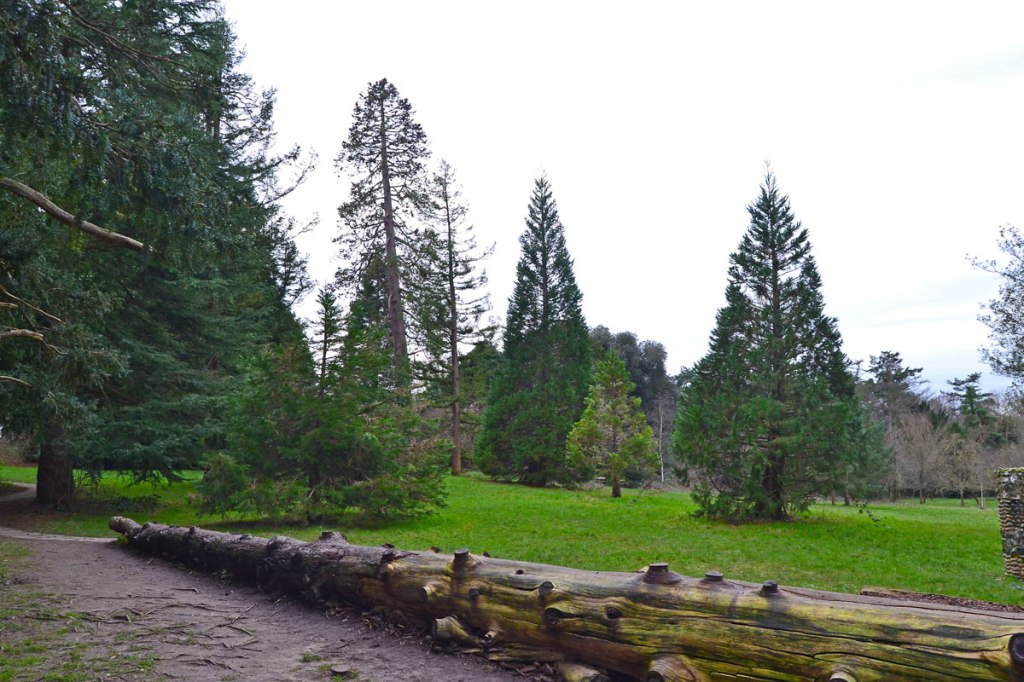
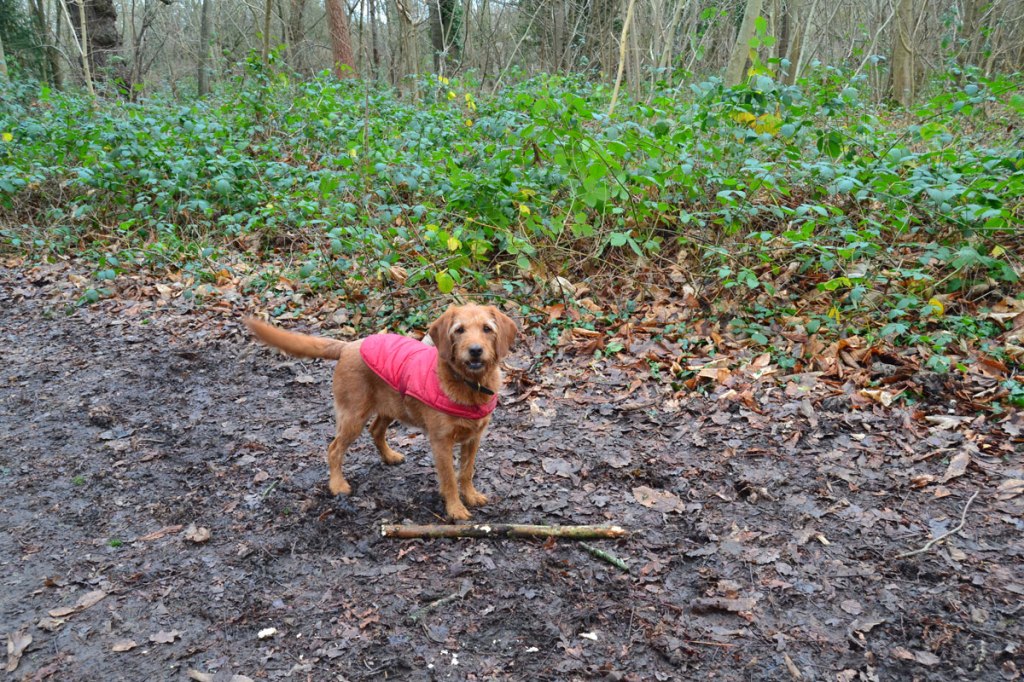
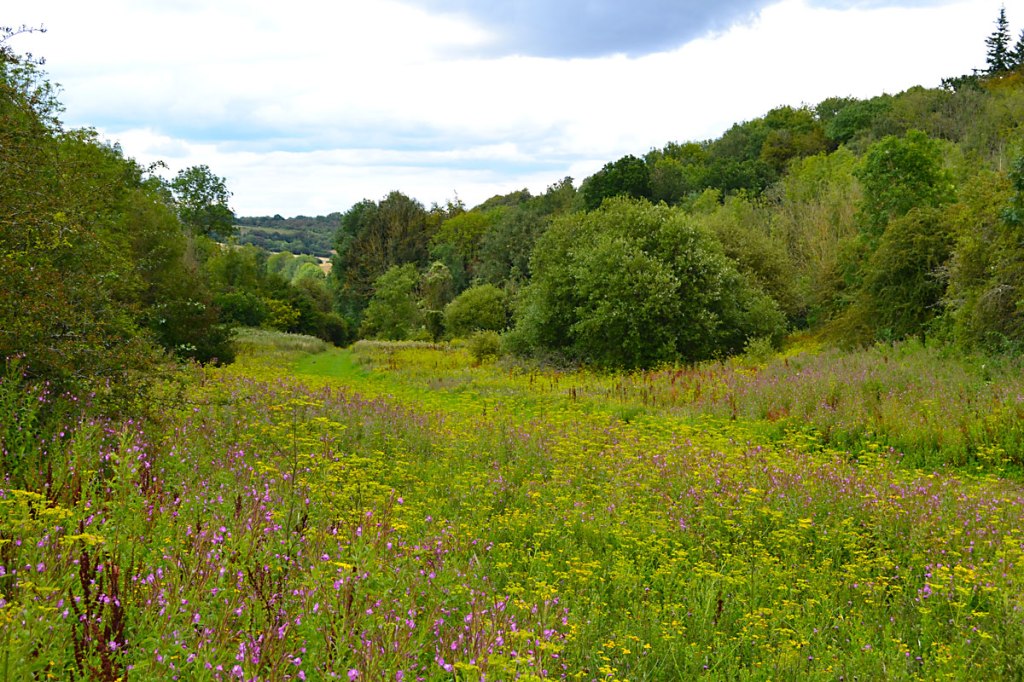
It’s not a spectacular walk with awe-inspiring vistas, unlike say the One Tree Hill, Ide Hill or Fackenden routes, but there’s some lovely woodland, views over shallow valleys, amazing conifers in the Lubbock estate next to Shire Lane at High Elms and lots of bluebells, orchids (pictured in Cuckoo Wood, lead image) and birds at various times of the year. Right now it’s a bit bleak of course but there’s still much to enjoy. The ‘home stretch’ as you reach Cuckoo Wood then get nearer the cafe and nature centre (called Beeche) at High Elms is quite busy with dog walkers, as are the initial fields after starting the walk in Tye Lane. In between though, it’s very quiet. There are no stiles so suitable for a hardy push chair (I think!). There are three roads to cross; the first – Shire Lane – is a notorious rat run where for some reason cars are often driven recklessly fast, so take care.

Pictured above in dull winter conditions: 1 Lubbock’s conifer plantation dating from mid-19th century; 2 the High Elms area near the cafe is popular with dog walkers; 3 A holm oak, an evergreen oak from southern Europe, offers winter cover in High Elms’s western woods; 4 New growth shoots from a fallen giant sequoia in the western woods close to the High Elms ‘nature field’; 5 Looking bleak in winter, this field close to the start of our walk is excellent for small mammals and their predators such as kestrel, owls and buzzards; 6 Church of St Giles the Abbot, Farnborough, has a nave dating from the 12th century; 7 Woodland meadow in High Elms woods – from April this patch is alive with wildflowers; 8 pine trees near the church at Farnborough

This walk was first tried on 7 January 2024 after weeks of rain. We revisited the following week in slightly better weather hence the appearance of blue sky in a couple of photos. The mud wasn’t too terrible by 14 January. The chalk beneath the thin soil has done its job well draining the water so it’s probably a safer bet for having less mud than the nearby Cudham walk.

If you have children it‘d probably be better to start and finish the walk at the High Elms car park so they can enjoy hide and seek and a picnic in the beautifully decayed old gardens of the Lubbock manor house (burned down in 1967 possibly by a discarded cigarette).

New route: Heaverham/Kemsing circular

New route: Heaverham/Kemsing circular

This route, no 28, is similar to walk 27, but is better for people walking on Sundays, when there is no train service. You can start it from the lovely Chequers Inn, Heaverham (if you buy a drink/meal); Kemsing village car park; or Mon-Sat from Kemsing station. Rather like the Chevening/Knockholt walk it’s another chalk escarpment route that drops down into the Vale of Holmesdale, and uses short stretches of the North Downs Way. The link below includes the usual Google map and the more useful OS map, plus written directions. PDF to download will follow in a few days!

Click here for full description and maps

Pluto promenade

Pluto promenade

The Polhill/Pluto walk was a delight this week; a chance encounter with a brown argus butterfly (pictured below by sort-of-accident while focusing on scabious flowers) on the Polhill Kent Wildlife Trust patch a highlight. The Andrew’s Wood segment of Shoreham Woods was full of great willowherb, marjoram and wild parsnip – a colourful brew. On the Darent Valley floor itself the sunflowers at Filston Farm were a treat and there were still some wild verbascum flowers in bloom at Sepham Farm. Very few birds were seen which is quite normal for this time of year although a hobby, a buzzard and a suspected corn bunting at Filston Farm were notable spots, while swallows were beginning to gather for their big goodbye. Yellowhammer were heard but not seen at the foot of Polhill.