Secret valleys on these NW Kent walks

Secret valleys on these NW Kent walks

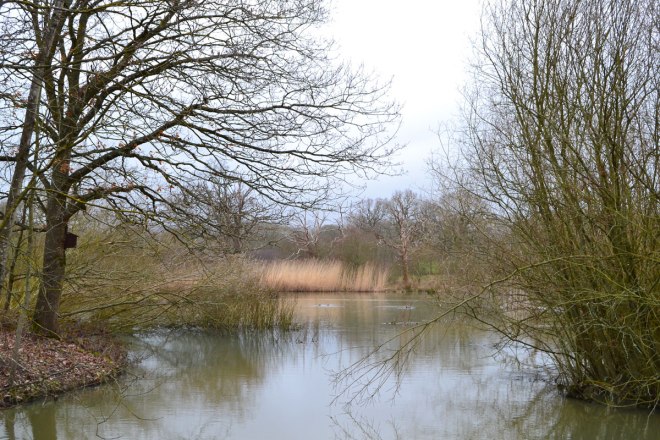
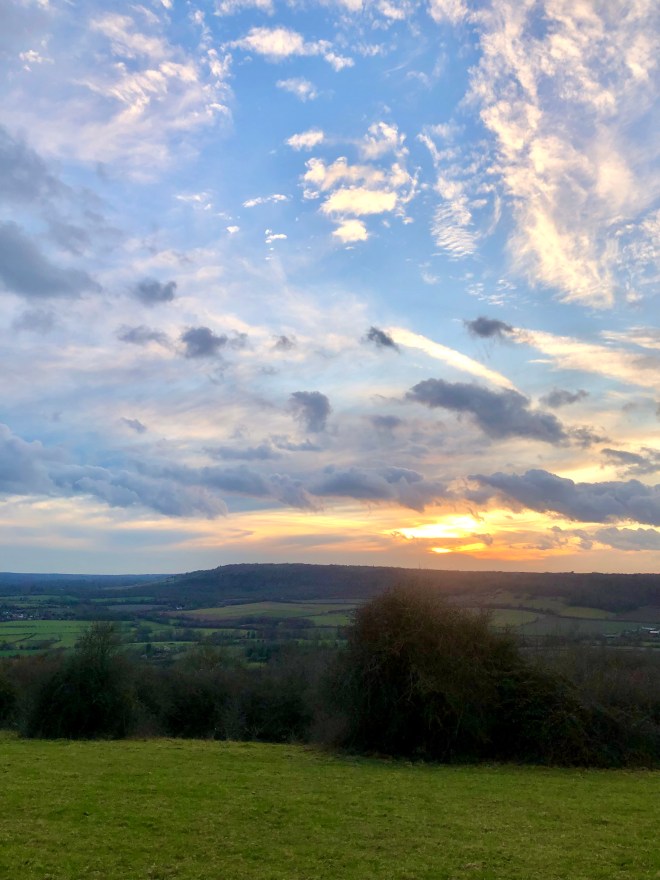
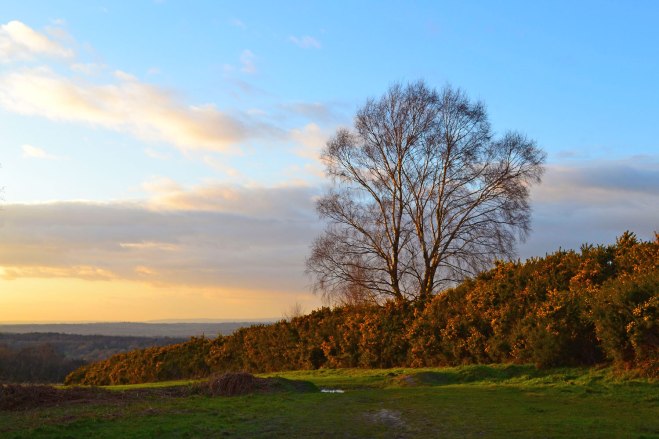
Kent Walks Near London can offer several lovely, lonely little valleys with their own microclimates, special flora, shelter and that precious sense of seclusion. Here are four of the best on the walks here.

1 The Darent… but not as you know it

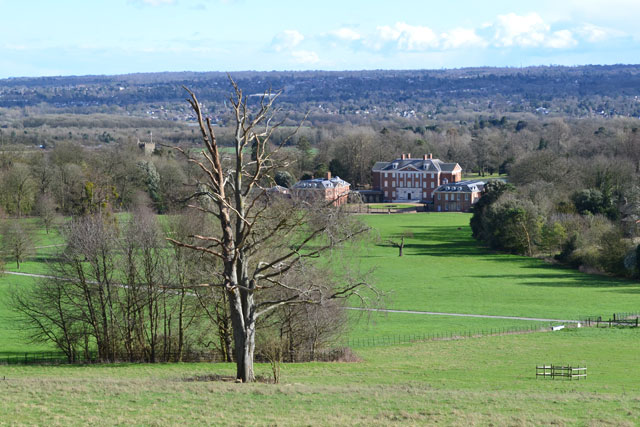
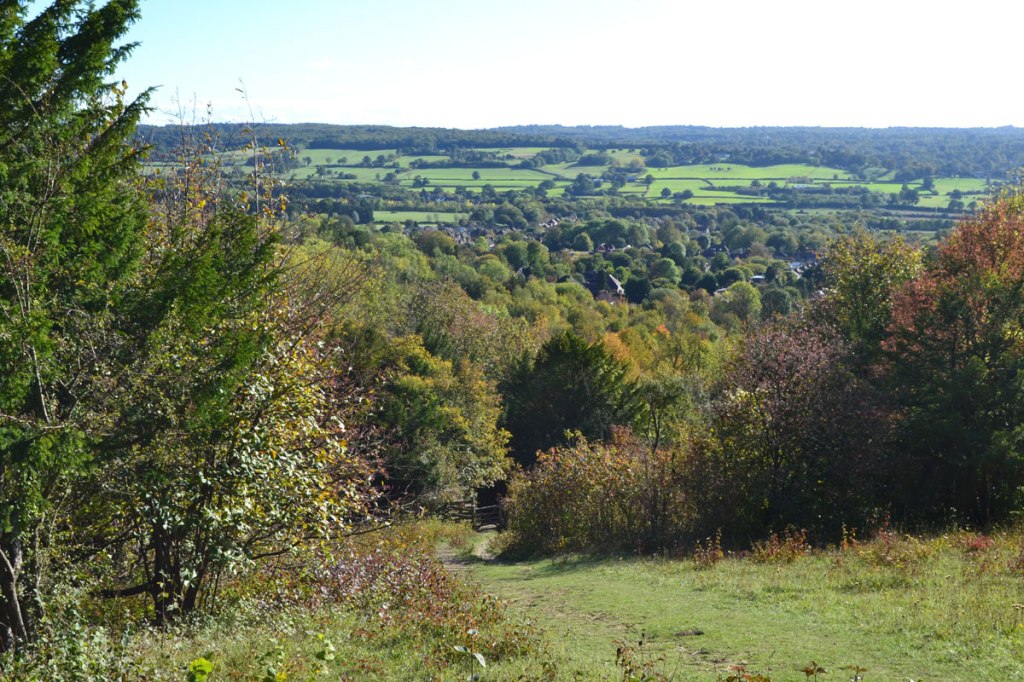
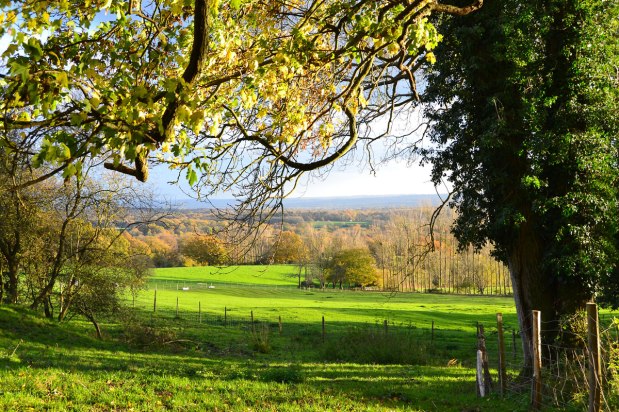
Tower Hill, Westerham viewed from the ‘secret‘ valley of the infant Darent stream

On the Hosey and Westerham walks I love the little south-north valley that winds its way from the sandstone ridge at Mariner’s Hill down to Westerham. It’s actually the valley of the River Darent just after it rises from a spring just behind the Greensand Ridge. I was delighted to realise this was where the Darent started, the stream is more associated with the chalk of the proper Darent Valley of Samuel Palmer fame – Shoreham, Otford and so on – not this obscure place near Chartwell.

Harebells
Harebells in the shadow of Tower Hill, Hosey walk

The river is bounded by beech and conifer (with Tower Hill a dark bump just to the east) and initially runs through a delightful meadow of wild grasses, unseen from the path. It suddenly broadens into large shallow pools as it heads to Westerham before turning east and making its way to its ‘proper’ valley. Autumn colours here are wonderful.

2 Magpie Bottom – great name, great valley

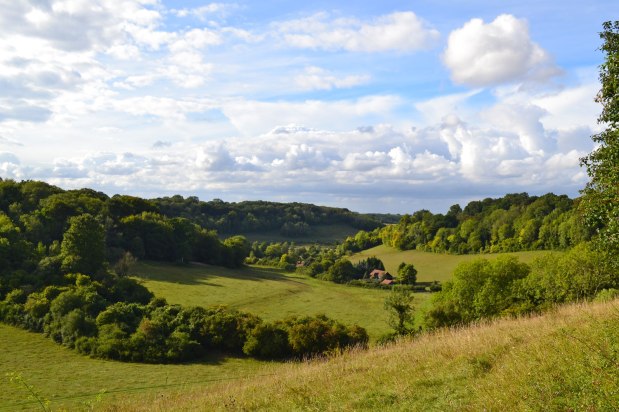
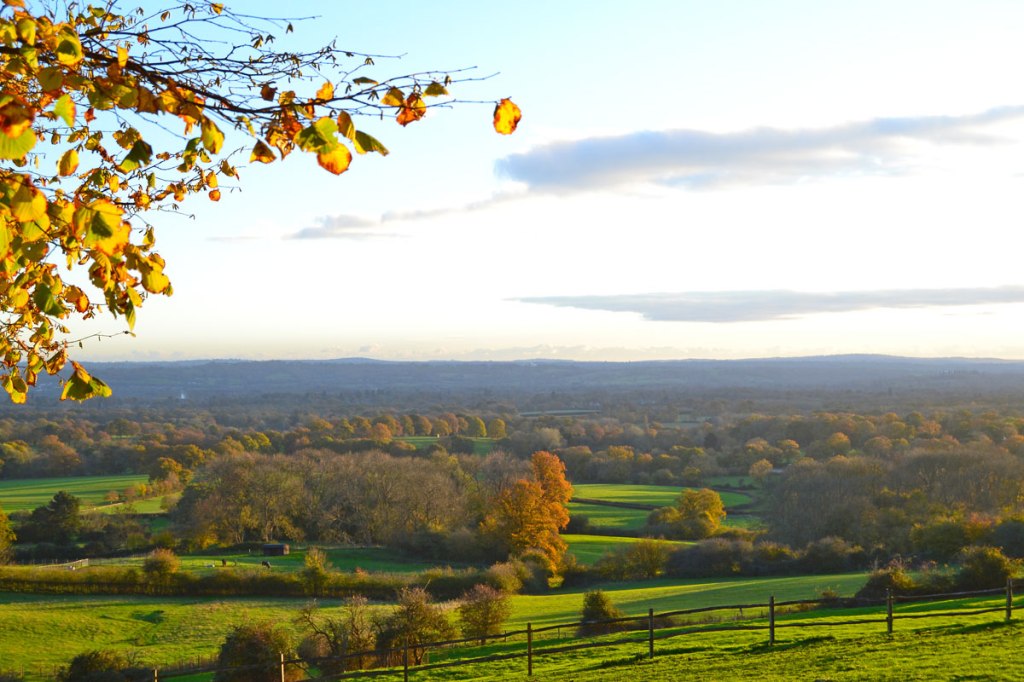
Magpie Bottom viewed from Austin Spring on the Fackenden walk

This stunning little rift in the landscape features on the Fackenden Down, Otford/Romney Street/Shoreham and the Eastern Valleys walk in different guises. It is so secluded that only walkers know of it. And the few residents of the curious hamlet I think called Upper Austin Lodge on the OS map.

Magpie Bottom is a classic steep-sided chalk dry valley (similar to but more dramatic than the ones on the Downe, Polhill and Cudham walks) running north to south from behind the escarpment. These are caused by glacial meltwater long departed. The valley’s head at Great Wood and Eastdown just behind the chalk escarpment of the North Downs to Rose Cottage farm is a series of wonderful spots unreachable by car, but really it’s gorgeous all the way down past Romney Street, Round Hill, Upper Austin Lodge and Eynsford where it meets the Darent Valley. Possibly my favourite place on all the walks, and all the better for no longer having a golf course in it!

3 A verdant vale on the way to Ightham Mote

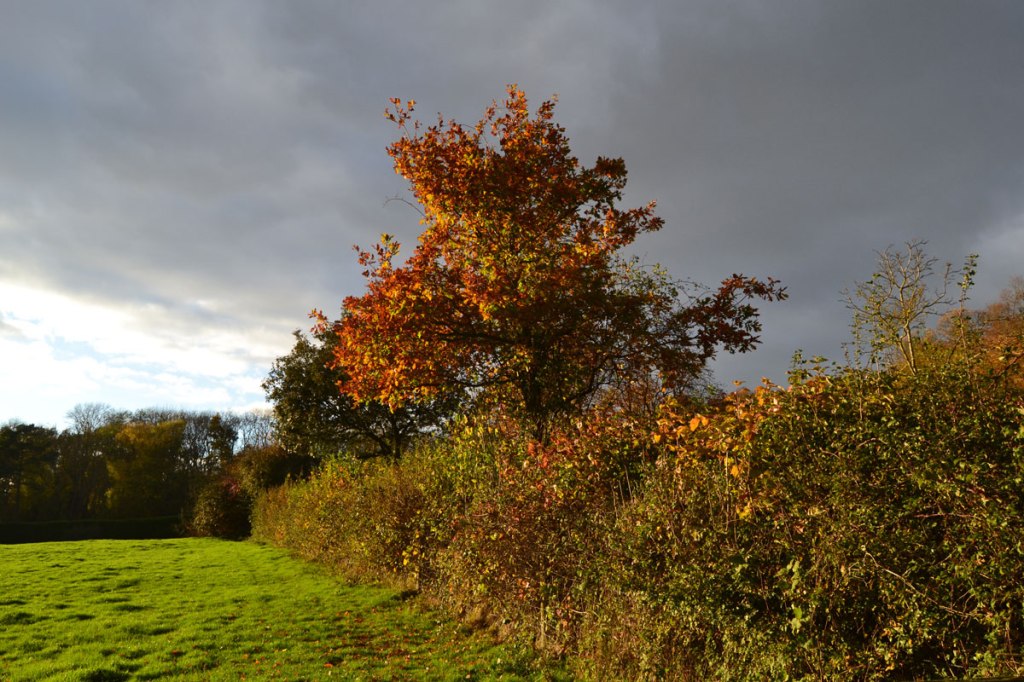
Hidden valley behind Wilmots Hill, Ightam Mote
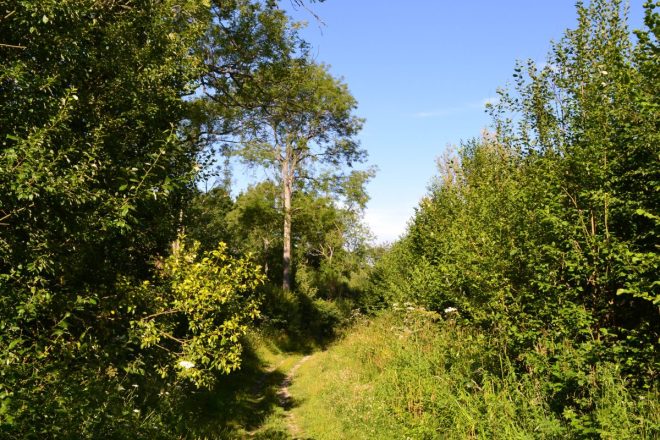
Broadhoath woods in the hidden valley behind Wilmots Hill, near Ightham Mote

My final Kent canyon (it’s not a canyon) features on the longer version of the Oldbury/Ightham Moat route and is mentioned as a route alternative on the One Tree Hill figure of eight walk (see the blue line on the Google map at the KWNL page). So on the One Tree Hill routes it’s a diversion, a short cut that you’ll have to check your maps to include. But on the longer Oldbury walk it’s part of the deal. What shall we call it? It’s round the back of Ightham Mote and passes through a wood called Broadhoath behind Wilmot Hill (which has some of the greatest views in Kent). It has a lively little stream that rises just behind the Greensand Ridge, a terrific pond with viewing platform and interesting flora as it descends west to east to Ightham Mote itself, passing a shed built to house early 20th century hop pickers (you’d think hop pickers were in fact horses judging by the design of the housing – the landowners obviously weren’t too bothered by other people’s comfort levels). Like the other little valleys it’s good for birds: marsh tit and bullfinch have been seen here. It’s another totally secret dip, accessible only to walkers, that’s like an entry to another realm; a world away, but its paths are only 55 minutes from Sydenham.

Take secateurs on your Kent walk!

Take secateurs on your Kent walk!

Things have got a bit overgrown on some of the more neglected paths. Despite the lack of rain, brambles have been getting busy and are giving their full attention to any bare legs they come across. Nettles too. The brilliant Eastern Valleys of Shoreham walk is the worse offender here… along the field edge coming up to point 3 in particular. That path is little used and things have got a little wild (there could well be an alternative route on a path within the woods, not along the field but I’m a little hazy on the details, it’s hot and I’ve been watching Glasto). I say secateurs, but a sickle or shears wouldn’t go amiss – whatever your implement, it’ll help keep things civilised. Obvs, don’t go crazy, just a little snip here and there to clear your path, we don’t want anything apart from brambles, the odd nettle and dogwood being snipped. Even on my brief Bough Beech stroll today I was assailed by prickles while on the pavement walking back towards the nature reserve (the kingfisher was showing well if you must know). Still, I survived; I always seem to, whatever terrible hazards the Kent walks near London throw at me.

The orchids of Oldbury, Kent

The orchids of Oldbury, Kent

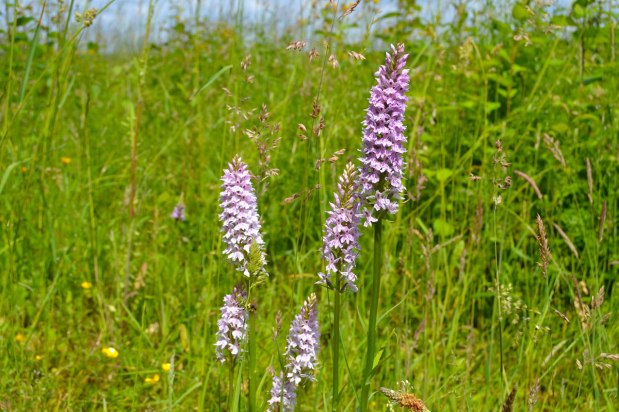
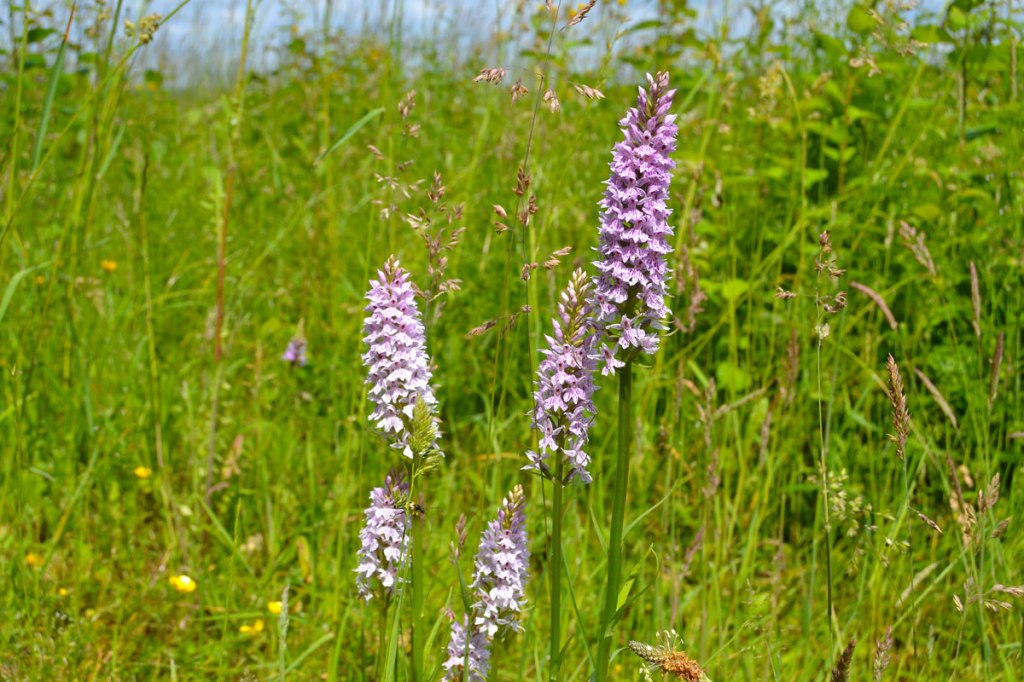
Orchids are in full flower across almost all the Kent Walks Near London. They particularly like the chalky North Downs routes, such as Heaverham, Chevening, Fackenden Down, Polhill, Lullingstone, Eastern Valleys etc (see list of walks above) but I’ve found great clusters at Hever and meadow fringes at Oldbury too, on the sandstone/clay of the weald and Holmesdale Vale. We unexpectedly came across the pictured common spotted orchids (the UK’s most often seen variety) on the Oldbury walk this week. This is one of the routes I’ve walked the least often; in fact I can count the times I’ve hiked the long and short versions on the fingers of one hand. I don’t know why, they are both brilliant strolls. The shorter version is mainly through woods and is one of the quietest walks on this website (apart from the bit near the A25). It takes in an enormous Iron Age fort, meadows facing the North Downs escarpment and a sandy trail past beautiful old fish ponds in rich woodland. I really recommend it – it’s got a special atmosphere, some might say even a bit spooky.

See the best places to see orchids on these routes.

Where’s best for orchids in Kent (but near London)?

Where’s best for orchids in Kent (but near London)?

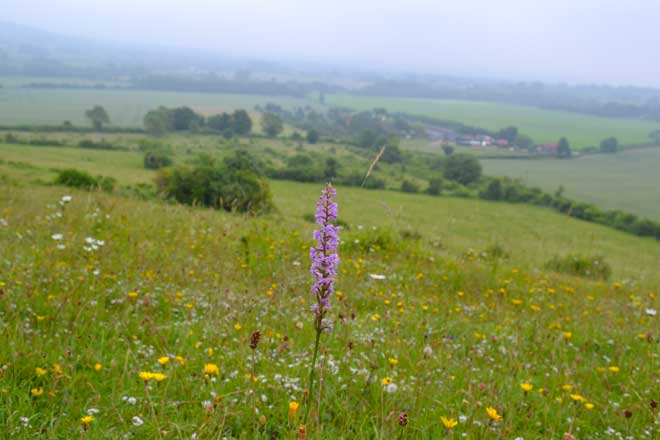
Us south-east Londoners are blessed with proximity to great places to see orchids at this time of year. The chalk hills from Downe to Heaverham, along the North Downs escarpment are full of them, splashing vivid purple, pink and cream among the whites and yellows of ox-eye daisies, trefoil and buttercups. They are beautiful flowers and vital in the lifecycles of loads of insects.
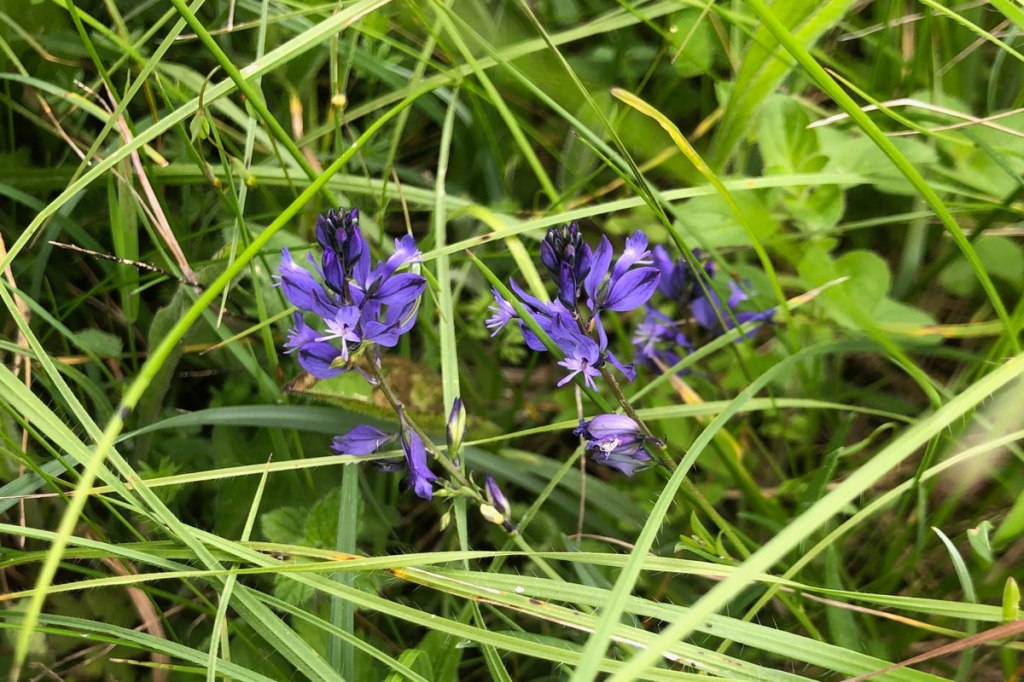
They can be found on all the walks from May to July, but here are the best routes that feature them:

1 Fackenden Down
2 Eastern Valleys walk – the hillside that runs into Magpie Bottom from the south
3 Lullingstone
4 Downe (extend the walk to Downe Bank). Also should be a few on the Cudham walk.
5 High Elms (mostly in the woodland glades near the visitor’s centre)
6 Polhill

I also hear the water meadows just north of Keston ponds are a good spot. Perhaps southern marsh orchids there. I’d better go…

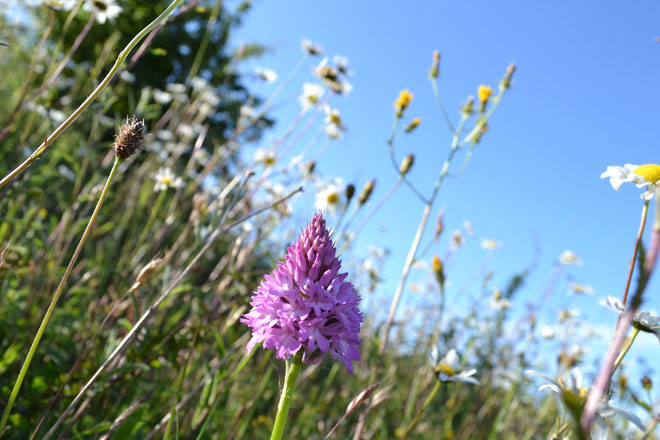
Various orchids pictured below include southern marsh, bee, fragrant, common spotted and pyramidal orchids at Hever, White Hill (Fackenden Down), Magpie Bottom, Polhill, Pilot Wood, and Downe.

  • Pyramidal orchid

I’m sure you can see loads too on the Knockholt/Chevening route, all the Otford/Shoreham routes and Kemsing or Otford to Heaverham trail too – I just haven’t been on those recently to check. On the Greensand and the Weald they can also be seen in certain meadows and along hedges on the Bough Beech, Hever and Chiddingstone routes. But not quite as many as on the the chalk of the North Downs.

  • Pyramidal orchid, Downe

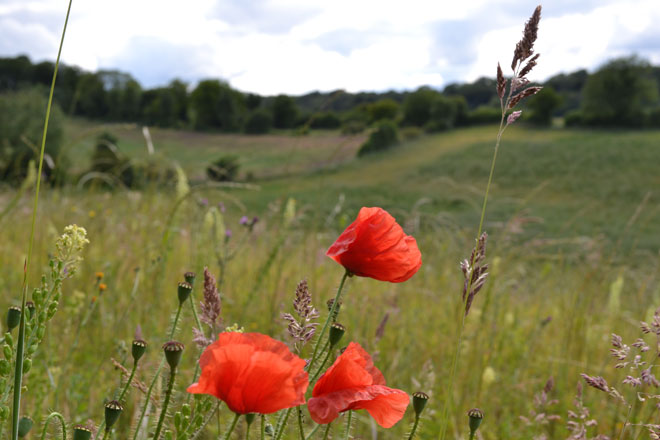
There are so many other great wildflowers to enjoy at this time. Sainfroin, for example, poppy, bugle, ox-eye daisy, and the lovely milkwort. Some are pictured below.

New route: Heaverham/Kemsing circular

New route: Heaverham/Kemsing circular

This route, no 28, is similar to walk 27, but is better for people walking on Sundays, when there is no train service. You can start it from the lovely Chequers Inn, Heaverham (if you buy a drink/meal); Kemsing village car park; or Mon-Sat from Kemsing station. Rather like the Chevening/Knockholt walk it’s another chalk escarpment route that drops down into the Vale of Holmesdale, and uses short stretches of the North Downs Way. The link below includes the usual Google map and the more useful OS map, plus written directions. PDF to download will follow in a few days!

Click here for full description and maps

Here’s something I’ve never seen before …

Here’s something I’ve never seen before …

Walking on the path through the scabious, ragwort, marjoram, yew trees and grasses on the chalky west-facing slopes of White Hill/Fackenden Down last Saturday I spotted a wasp spider – a creature I’d never seen personally. It’s a spectacular arachnid, one that has been increasing its numbers in the south-east over the past 15 years. I guess a powerful orb weaver like this will be snaffling up drowsy late summer insects in the coming weeks. The walk itself was as beautiful as ever but quite bereft of bird life, which isn’t unusual for late August just prior to the large migrations. Only a solitary buzzard and a charm of goldfinches being of note, though we weren’t being particularly observant. Oddly, not a single swallow was noted – unlike during the walk at Cudham the following day, where a red kite was also seen. My friend Teri took the spider photos.

Birding on the Greensand Ridge at Underriver

Birding on the Greensand Ridge at Underriver

The Underriver walk – short and long version – was the focus this weekend. Just south of Sevenoaks this lovely walk, part of the One Tree Hill “suite” of routes, offers great views across the Kent weald and superb woods and hedgerows. There’s a lot of interesting geology too, as you encounter greensand (sandstone) boulders, a greensand cliff, and plenty of springs as the sandstone hits the weald clay.

I was joined by birder Dave on Saturday which as usual led to an exponential increase in sightings and bird calls identified. Within a few paces of entering the first horrendously muddy field we heard and saw a flock of newly arrived fieldfares some 50 strong, a troop of long-tailed tits, goldcrests flitting in the bordering trees and overflying redwings. You can see birds like that in your local park if you’re lucky – these sightings aren’t exclusive to the countryside at all. Later on a marsh tit flew past us, which was probably the most noteworthy bird of the day and another feather in Dave’s cap as he recognised the fleeting call just as the bird, in silhouette, zoomed past us. Dave reckons the area’s bird life would perk up with a bit more arable land and fewer livestock pastures. Scrubby unkempt arable fields are a big favourite for les oiseaux it’s true.

I had been hoping for bullfinch, siskin and most of all, brambling. But it was not to be. Barely a chaffinch as it happened but quite a few goldfinches. Later on there was a kingfisher at the lovely pond on the path below St Julian’s Club and tawny owls calling at Rooks Hill, Wilmotts and Underriver itself. The truth is that there are fewer birds around these days, just as there are fewer insects. I guess it’s farming methods, climate change, all that stuff. But anyway, it was good fun just to be out there listening and watching.

We went again on Sunday. Conditions were gloomier in the afternoon than they had been on Saturday, with quite a large shower making birding more difficult. But it mattered not, the views were still great and the excellent White Rock Inn was open and offered a friendly welcome.

Bats in the mist – dusk at Downe, Keston and Polhill

Bats in the mist – dusk at Downe, Keston and Polhill

Exceptionally mild temperatures have lured bats out into the autumnal gloaming to catch late flying insects. I love watching these animals swoop, flutter and flit around and it’s a bonus to see them so late in the year. Usually you can only pick them out against the sky but at Downe and Keston on last weekend’s strolls I was buzzed by bats so closely I sensed rather than saw them zooming past. Yesterday at Polhill one or two emerged from the mist to pass close over our heads before vanishing into the gloom.

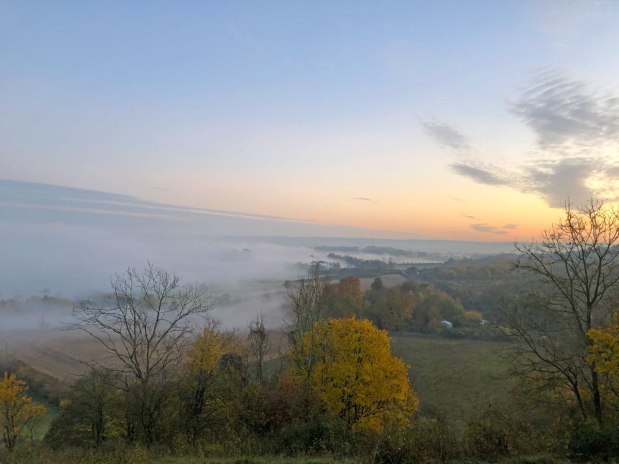
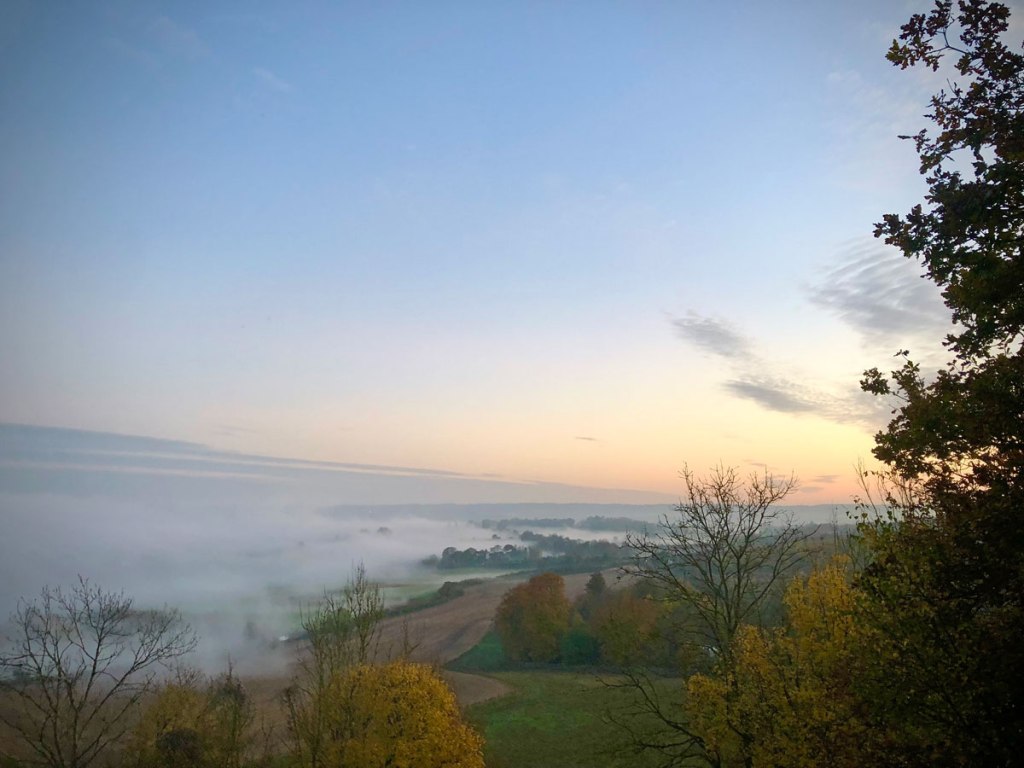
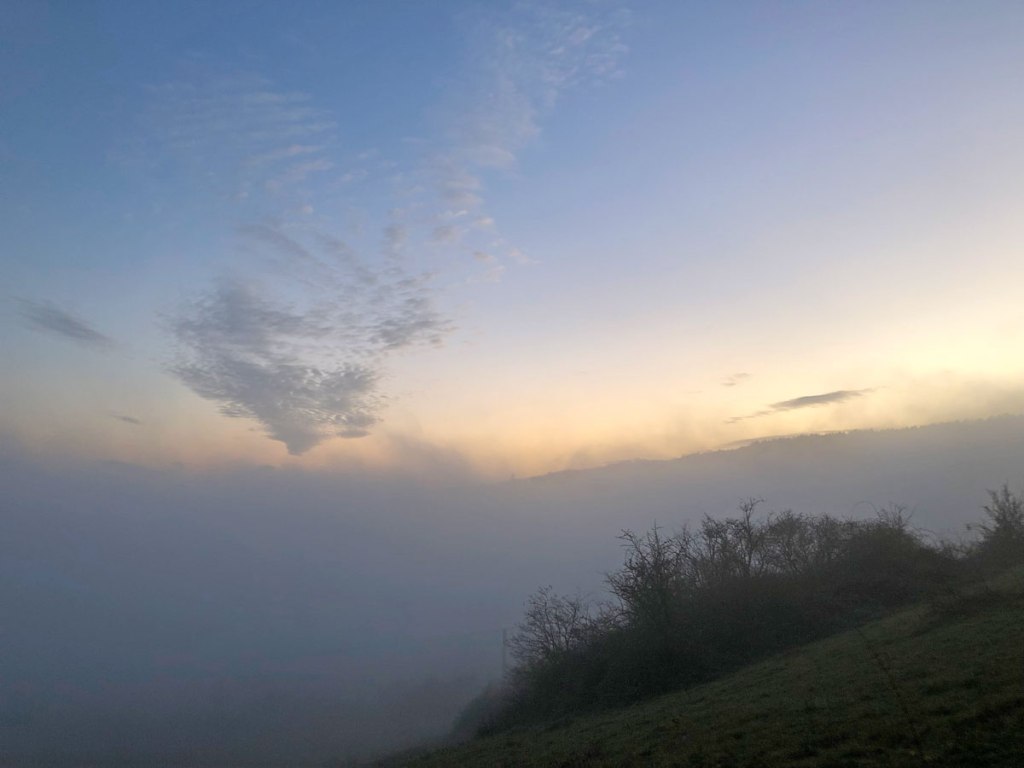
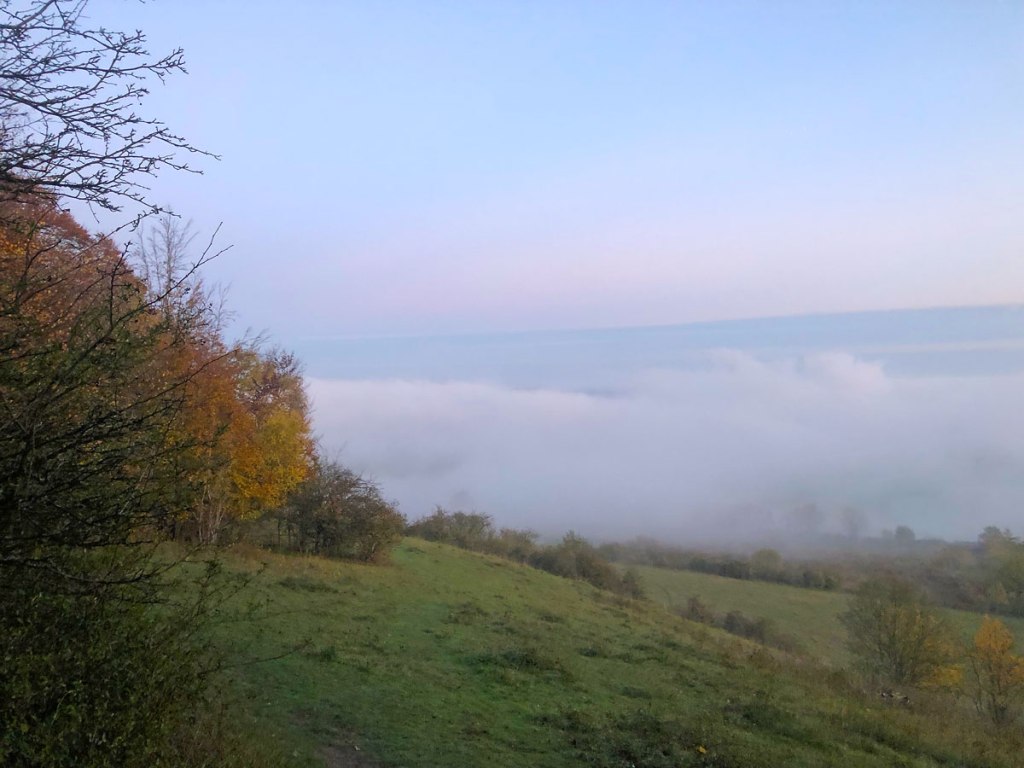
I’d thought we’d set off rather too late for a walk. Traffic was bad on the A21 slowing us further (the train is by far the best option for Shoreham walks) and low cloud had covered the sky. But by Locksbottom the skies cleared and we were bathed in a beautiful golden light. This was a false dawn: by the time we parked up by Meenfield Woods above Shoreham we were in quite dense fog. This magically cleared at Polhill, the walk’s halfway point, to give us unusual views before swirling back in as the sun set. With the mist below we had the feeling we were much higher above the valley than we were. I think this weather effect is called a temperature inversion, where warmer air passes over the relatively cold air on the valley floor, causing condensation.

By the time we finished the walk, visibility was down to about 50 metres and driving home the twisty, twiny country lanes needed total concentration if we were to avoid a close encounter with a hedgerow.

  • Mist obscures Sevenoaks
  • Mist at Polhill looking towards Otford, November 2022
  • Mist at Polhill looking towards Otford, November 2022
Wet, wild and wonderful

Wet, wild and wonderful

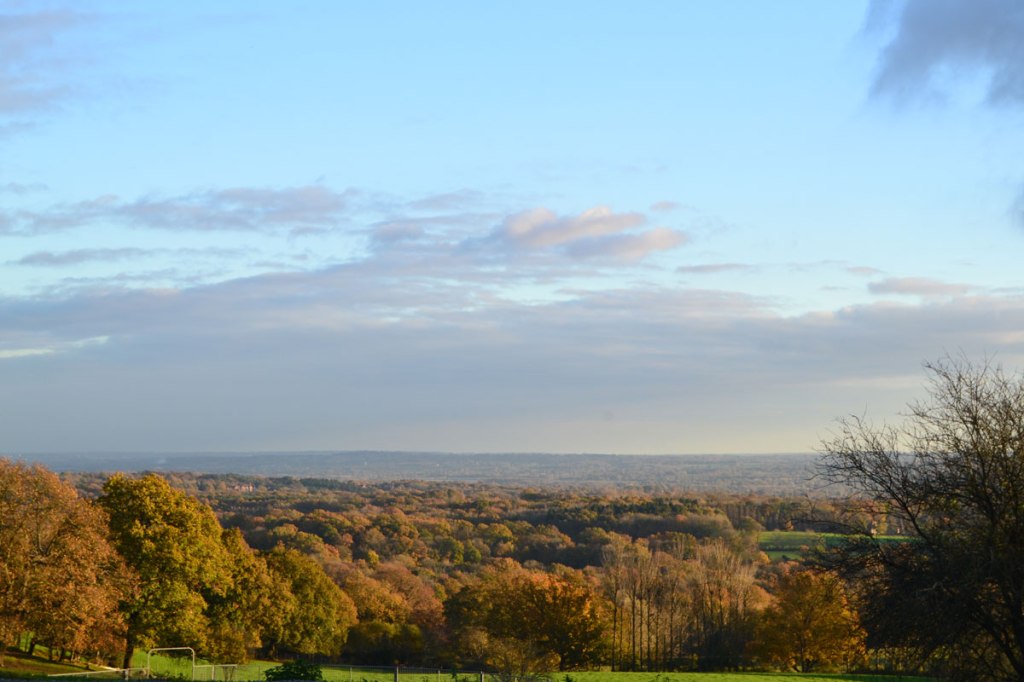
I’m intrigued about how many of us look outside on a day like today – drab, cold, raining – and just think that curling up with a book or making a great meal or something would be a far better use of time than a walk. Who can blame those who decide such days are for doing stuff indoors? But judging by the views on this website there is a hardcore who come what may will not only brave the elements, they will relish them. I’m in this camp – although I do have a good book to read. Anyway, lovely autumn colour awaits those who make it out, all the more inspiring against the grey backdrop. Waterproof trousers and good boots will be handy though. Photos are from the Fackenden Down route last weekend on which the weather was actually fine as it turned out. Scroll through the photo gallery below right for autumn colour from all the walks.

A wintry reminder

A wintry reminder

The gloom of December and early January has lately given way to bright, often mild conditions.
Great tits are blasting out their rhythmic calls optimistic that spring is around the corner and thrushes have been showing off at dusk with their varied, almost tropical-sounding tones. But this time last year all was silent: we were in the grip of a rare icy blast with heavy snow on the 7th and freezing conditions for the following week. If you’d stayed in south-east London you might have thought the snowfall was very light. But out in Kent, beyond the M25 and on the escarpments of the chalk North Downs and the Greensand ridge, the storm struck more powerfully. It seemed a good time to get out and get the feel of things, so here’s a photographic reminder of what real cold actually looks like. And believe me, the top of Fackenden Down on 12 February was bone-shakingly cold. Enjoy the photos! (Pictured are scenes from the Knole and Fackendon walks)