Things have got a bit overgrown on some of the more neglected paths. Despite the lack of rain, brambles have been getting busy and are giving their full attention to any bare legs they come across. Nettles too. The brilliant Eastern Valleys of Shoreham walk is the worse offender here… along the field edge coming up to point 3 in particular. That path is little used and things have got a little wild (there could well be an alternative route on a path within the woods, not along the field but I’m a little hazy on the details, it’s hot and I’ve been watching Glasto). I say secateurs, but a sickle or shears wouldn’t go amiss – whatever your implement, it’ll help keep things civilised. Obvs, don’t go crazy, just a little snip here and there to clear your path, we don’t want anything apart from brambles, the odd nettle and dogwood being snipped. Even on my brief Bough Beech stroll today I was assailed by prickles while on the pavement walking back towards the nature reserve (the kingfisher was showing well if you must know). Still, I survived; I always seem to, whatever terrible hazards the Kent walks near London throw at me.
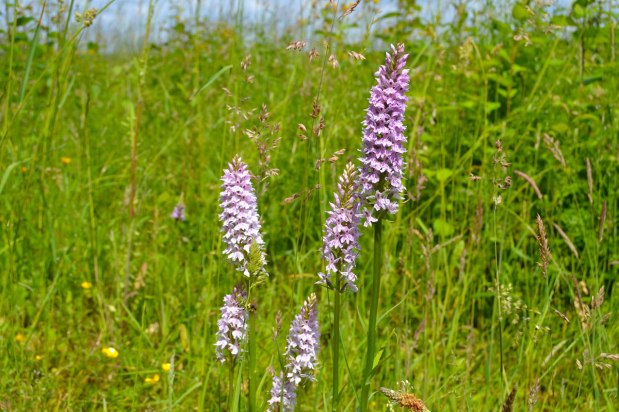
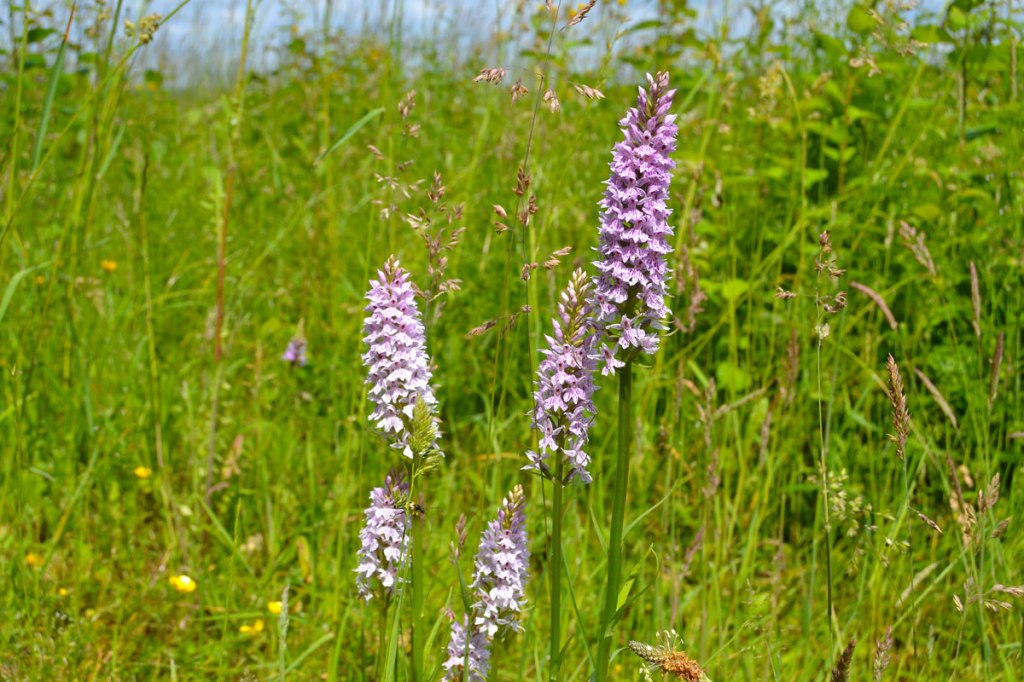
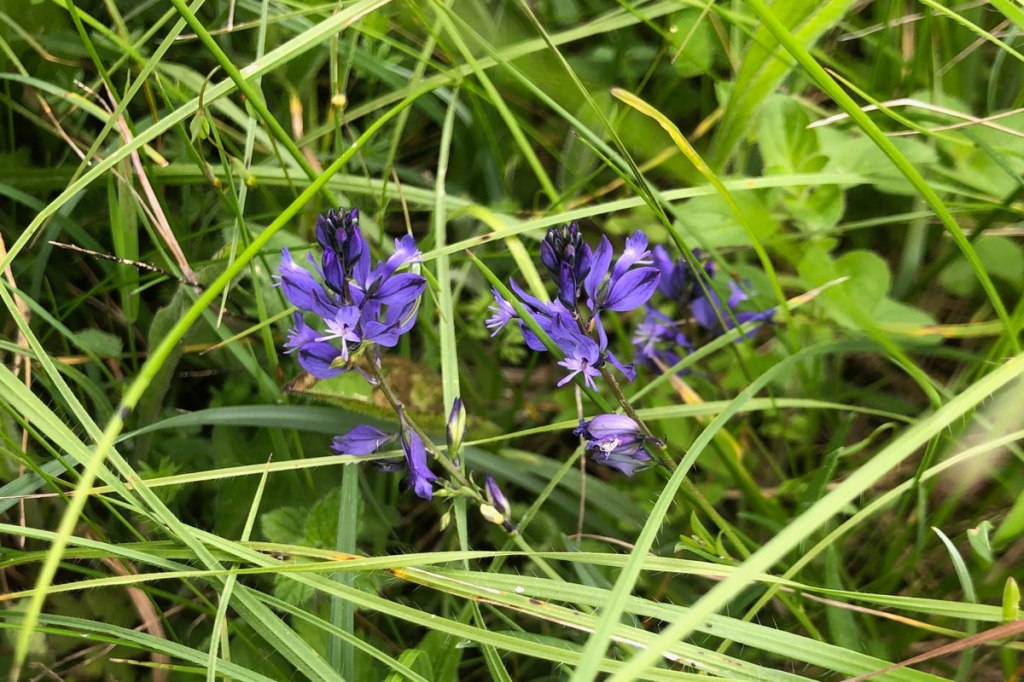
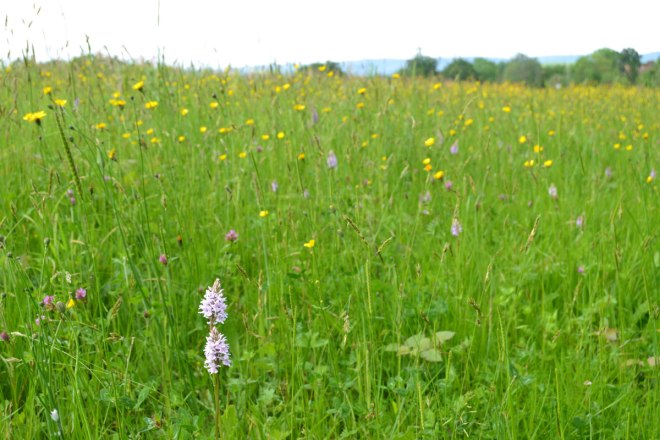
Orchids are in full flower across almost all the Kent Walks Near London. They particularly like the chalky North Downs routes, such as Heaverham, Chevening, Fackenden Down, Polhill, Lullingstone, Eastern Valleys etc (see list of walks above) but I’ve found great clusters at Hever and meadow fringes at Oldbury too, on the sandstone/clay of the weald and Holmesdale Vale. We unexpectedly came across the pictured common spotted orchids (the UK’s most often seen variety) on the Oldbury walk this week. This is one of the routes I’ve walked the least often; in fact I can count the times I’ve hiked the long and short versions on the fingers of one hand. I don’t know why, they are both brilliant strolls. The shorter version is mainly through woods and is one of the quietest walks on this website (apart from the bit near the A25). It takes in an enormous Iron Age fort, meadows facing the North Downs escarpment and a sandy trail past beautiful old fish ponds in rich woodland. I really recommend it – it’s got a special atmosphere, some might say even a bit spooky.
The season is now over. It was as beautiful as ever at its peak, but this year the dry weather and maybe the cold wind, were not conducive to the bloom’s longevity. Last weekend at Ide Hill and Emmetts Garden the bluebells were gorgeous but already well on the wane. In fact at Ide Hill, brambles have taken over some of the areas where once bluebells thrived. Some of my favourites this year were at the top of Wilmot’s Hill near Ightham Mote; but what has struck me in recent weeks is how pretty bluebells are when mingled with other flowers – notably cuckoo flowers, red campion and stitchwort – at the foot of hedgerows. The Bough Beech walk has some of my favourite examples, Underriver too. Oh yes, and below Polhill Bank on the path to Sepham Farm, where you are likely to be serenaded by yellowhammers (that’s a bird by the way, not a construction tool).
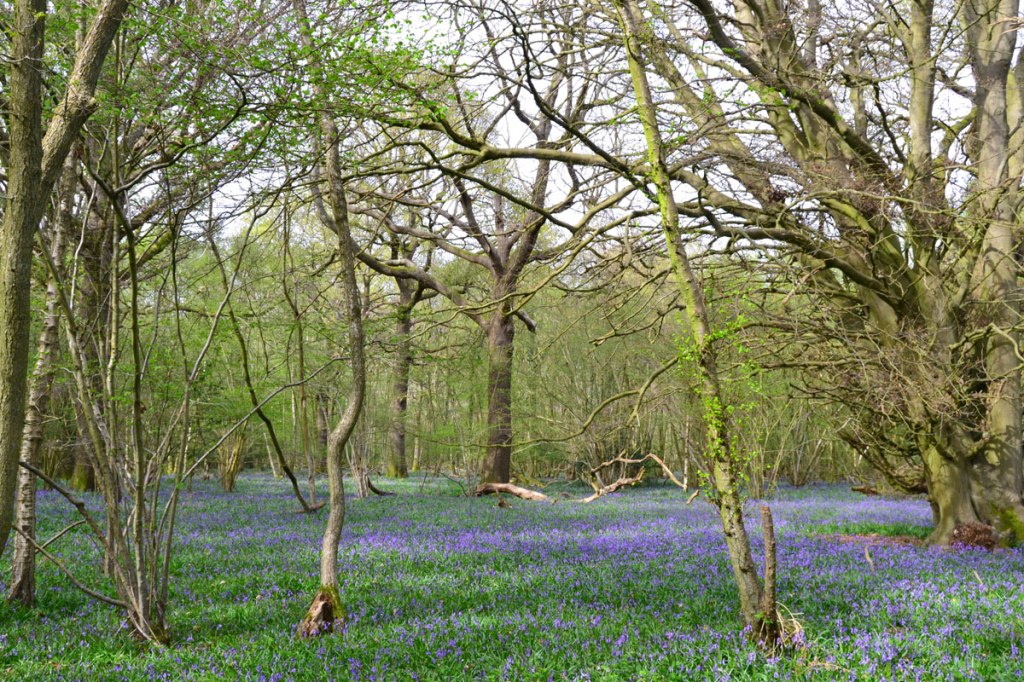
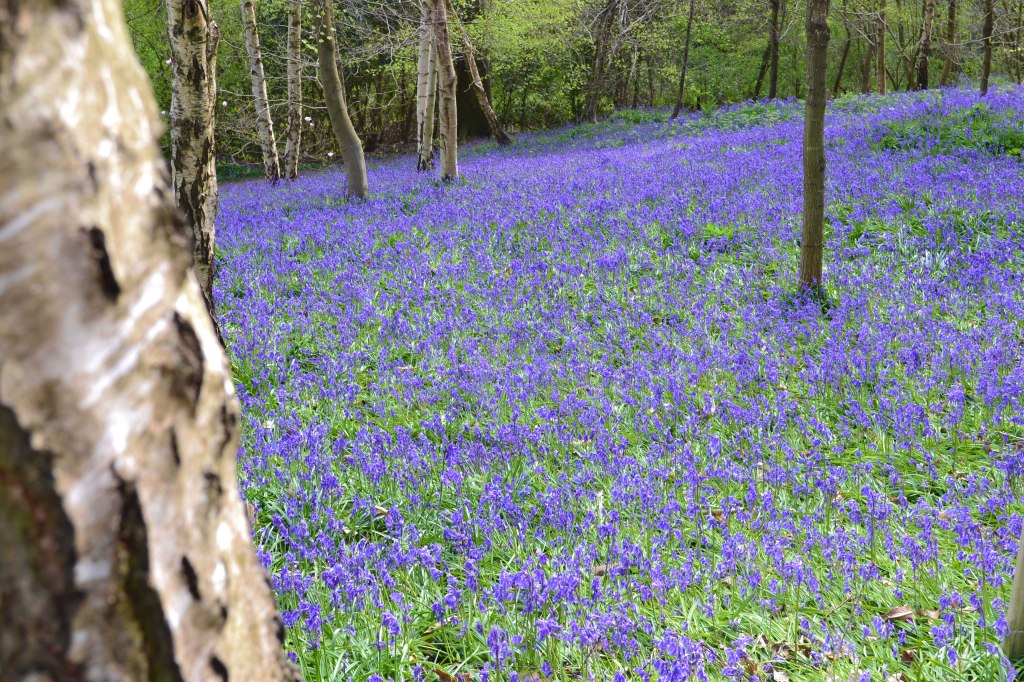
New Year’s Wood, Cudham
New Year’s Wood, Cudham
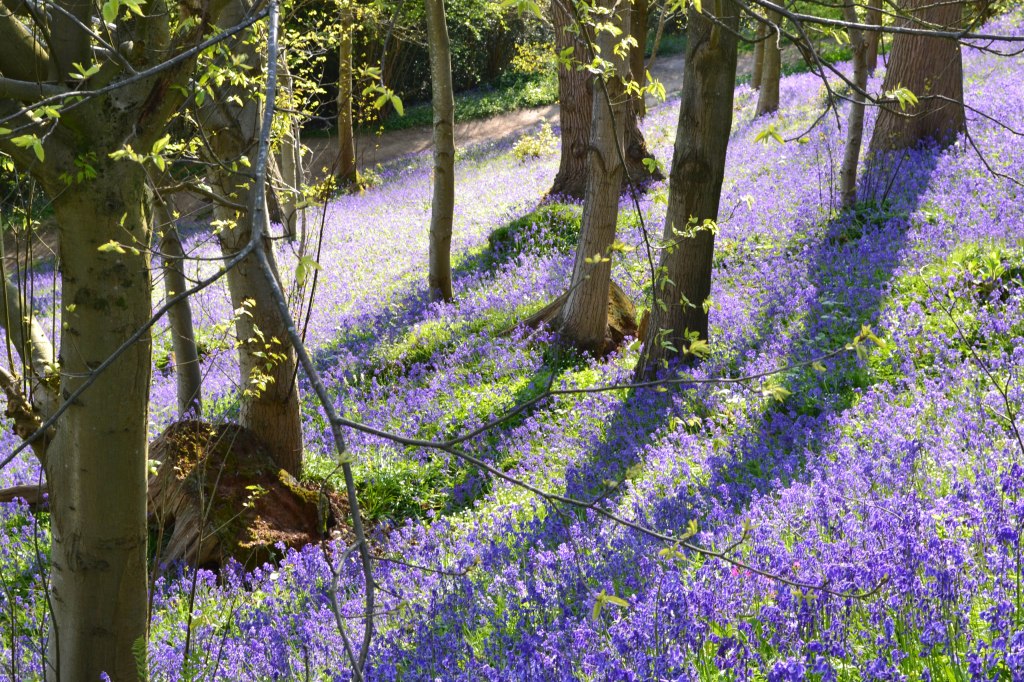
Emmett Gardens
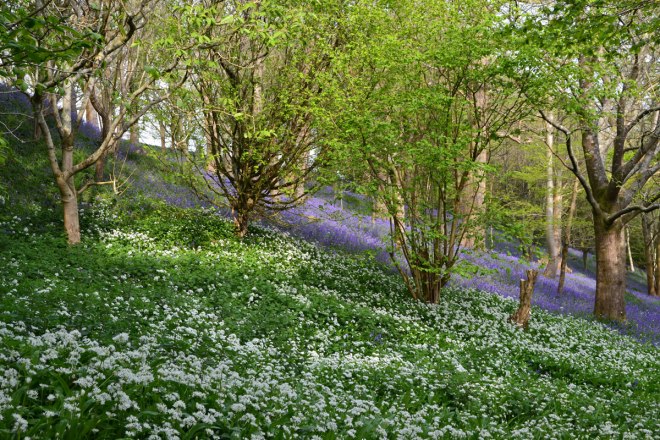
Wild garlic and bluebells, Emmett
Emmett Gardens
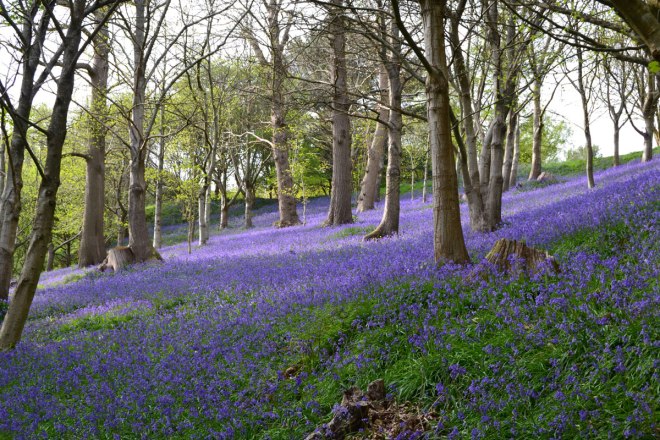
Scord Wood, near Ide Hill
Ide Hill 2025
Wilmott Hill bluebells
Cuckoo flowers and bluebells near Bore Place, Bough Beech
Wood anemones and early bluebells, Andrew’s Wood, near Shoreham
Lullingstone
So, to the winner and runners-up of the annual Kent Walks Near London bluebell competition:
Last year’s winner, the Blueberry Lane meadow, at Knockholt was obviously utterly stunning but the rules state that the same location can’t win the following year. I actually visited New Year’s Wood very early in the bluebell season, before they’d quite found their colour, but the seas of young flowers in the late afternoon sunlight were truly beguiling in that quiet, mysterious wood.
Please contact me with any omissions in my not particularly extensive bluebell research. The season only lasts a couple of weeks so it’s not always possible to get around all the walks to view them – I didn’t go to High Elms, Oldbury, Petts Wood, Meenfield Wood (recently scarred by timber work) or Lullingstone over the past month so no idea how good they were.
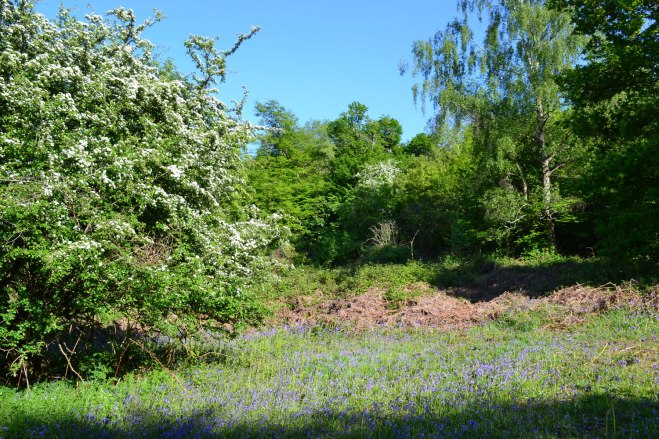
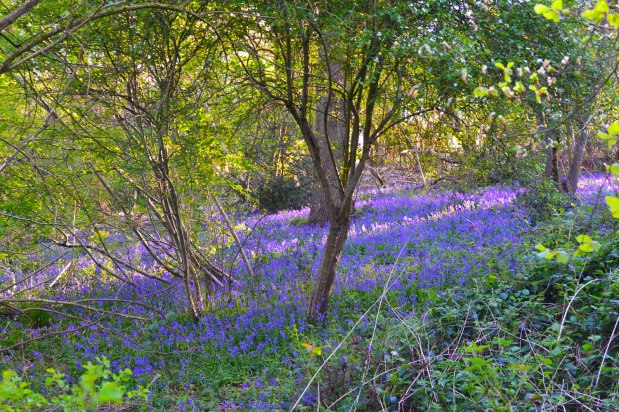
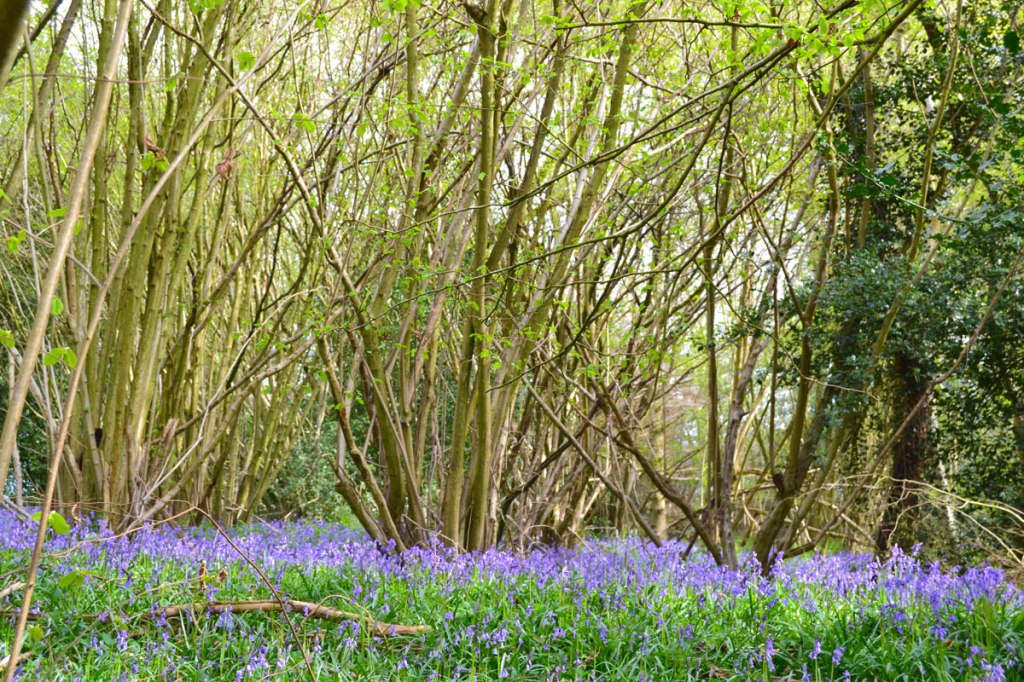
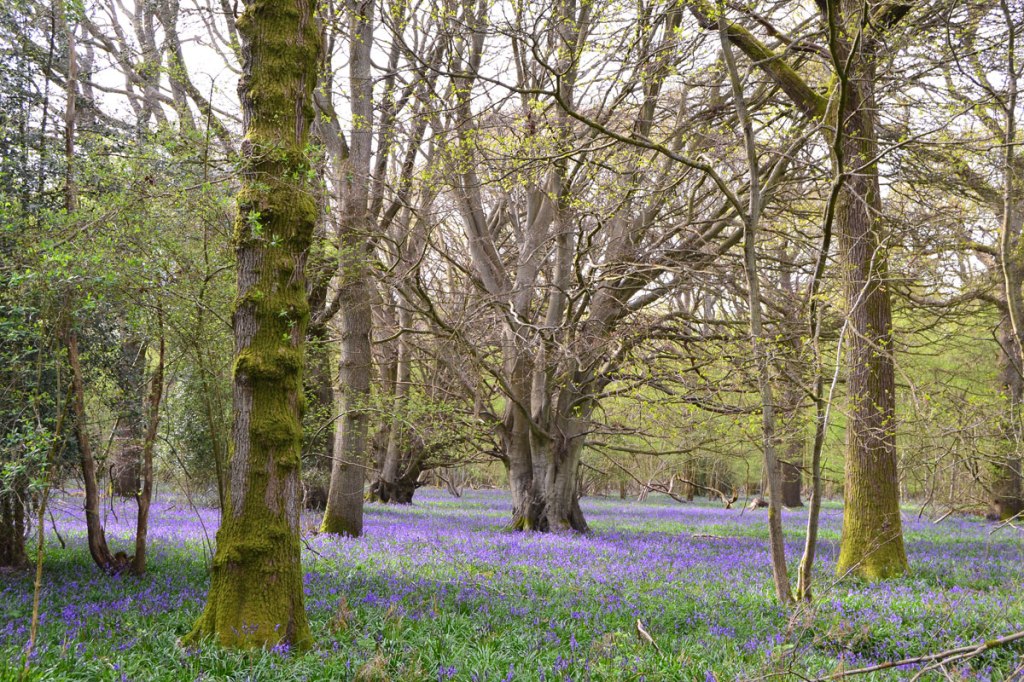
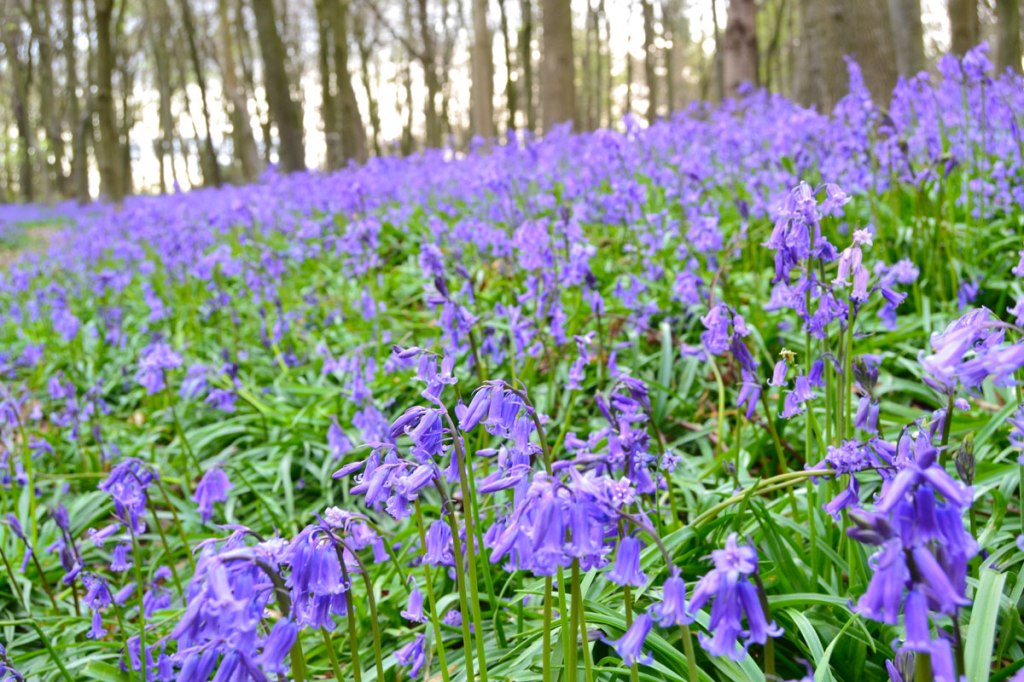
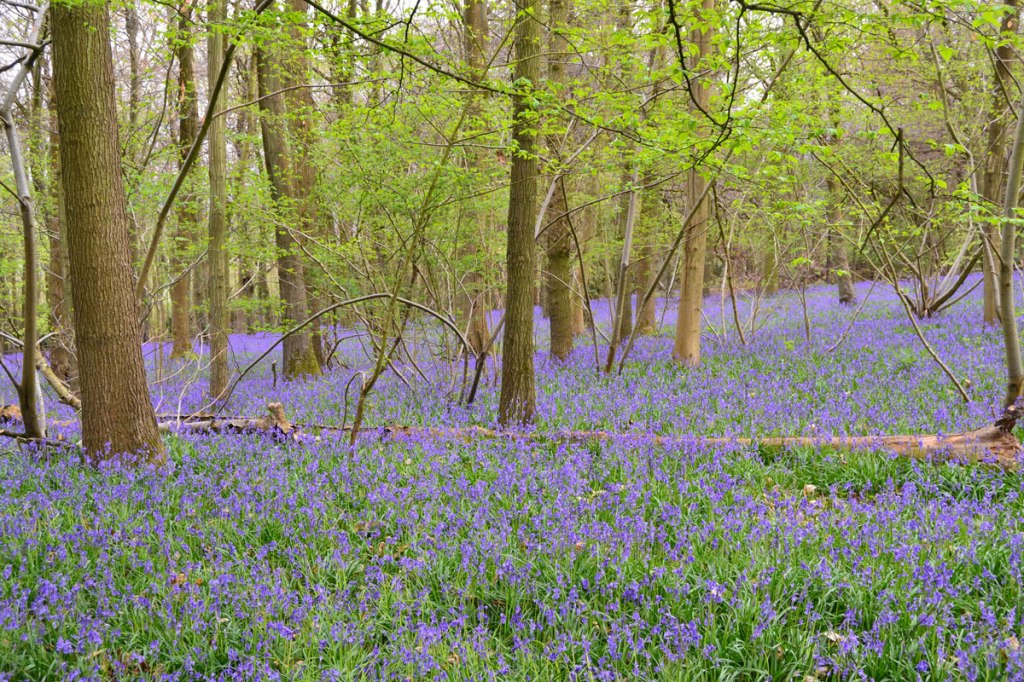
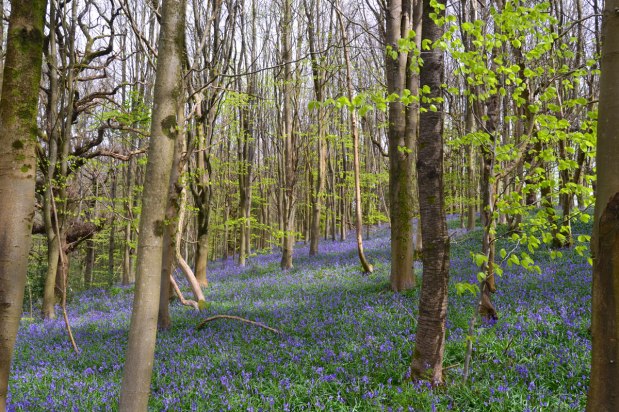
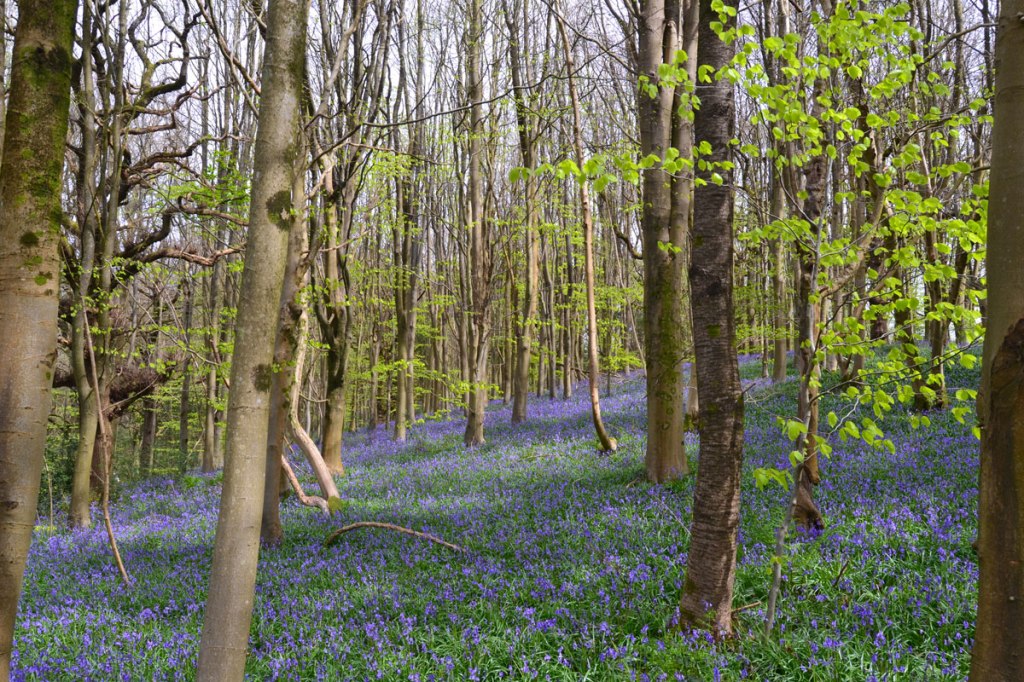
It’s fair to say the cobalt carpet has finally spread its magic in many of the woods covered in the KWNL area. Bluebells are now almost fully out on the North Downs chalk hills walks such as the Cudhamstroll (in New Year’s Wood particularly), and the various Shoreham circular and Polhill routes. Alas, the timber work going on in Meenfield Wood above Shoreham (west side of valley) may hinder your enjoyment of bluebells there. Further south the Greensand Ridge walks at Underriver, One Tree Hill, Ide Hill (perhaps the best bluebells – so you won’t be alone), Oldbury and Hosey Common are awash with blue. Closest to south-east London, Beckenham Place Park, High Elmsand Petts Wood-Hawkwood Estate(in the lower, damper parts) has several swathes too. The Downe walk mk1 doesn’t have a lot of bluebell action en route but a quick diversion down to Downe Bank (the west side of the Cudham valley) from point 3 or at the start of the walk should see you in the magical blue realm. Following the Downe Mk2 walk will be kind of blue too, particularly at Downe Bank and Blackbush and Twenty Acre Shaw woods. The Chiddingstone and Hever routes don’t have many bluebells I can confirm, not that this detracts from these superb strolls. (Pictured below: from 2022 and 2021 bluebells at New Year Wood on Cudham walk; Meenfield wood, Shoreham circular/Polhill routes; Ide Hill route)
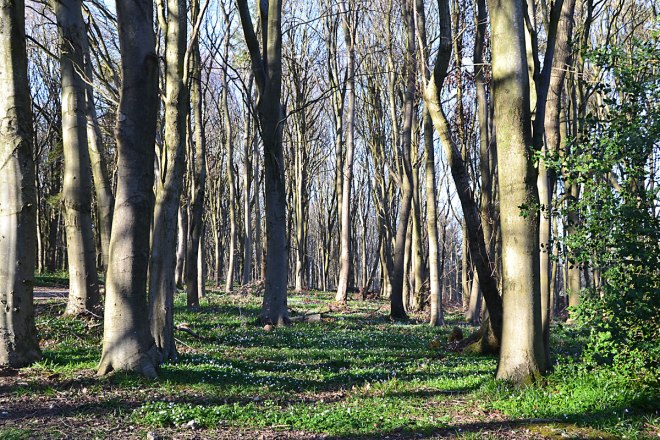
New Year’s Wood, Knockholt/Cudham: early bluebells
They are uniquely adapted to suited the multispecies ancient woodlands of the UK
Low temperatures trigger their growth (but might delay their blooming if in April). Bluebell seeds germinate when the temperature drops below 10°C.
Bluebells predominantly convert sunlight into fructose allowing them to photosynthesise at low temperatures.
They are supreme competitors with other plants, allowing them to carpet woodland floors. But they get help in the form of mycorrhiza, a symbiotic fungi.
Almost half the world’s bluebells are found in the UK, they’re relatively rare in the rest of the world.
But please be careful never to tread on any; it takes bluebells years to recover from damage. Digging them up – surely no one visiting this site would consider such a thing – is illegal, and please don’t let dogs trample them either – keep them on the lead.
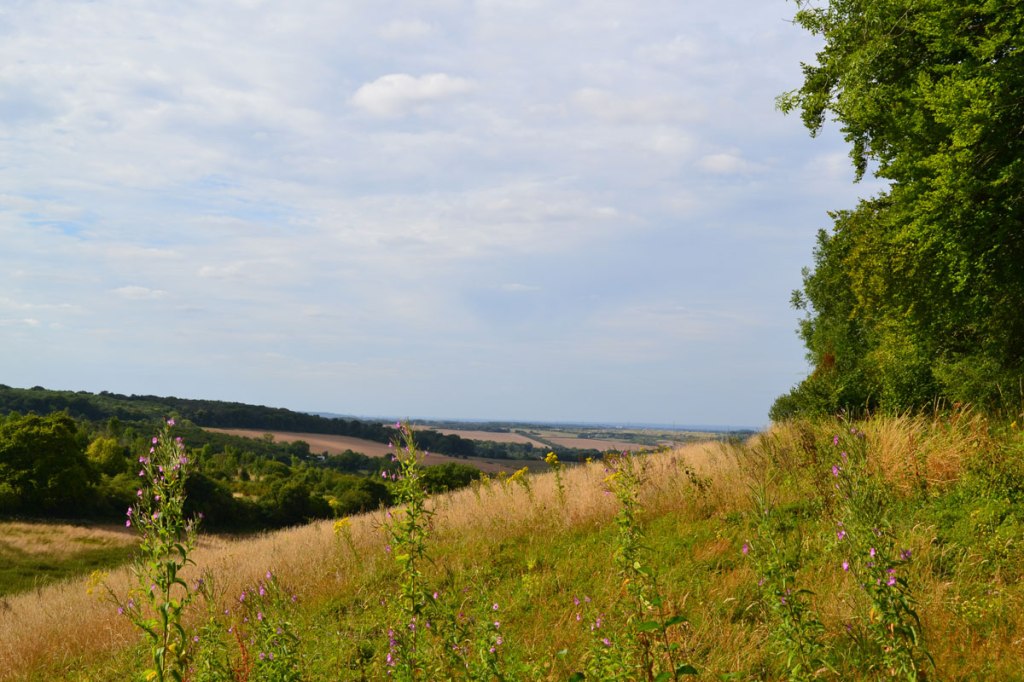
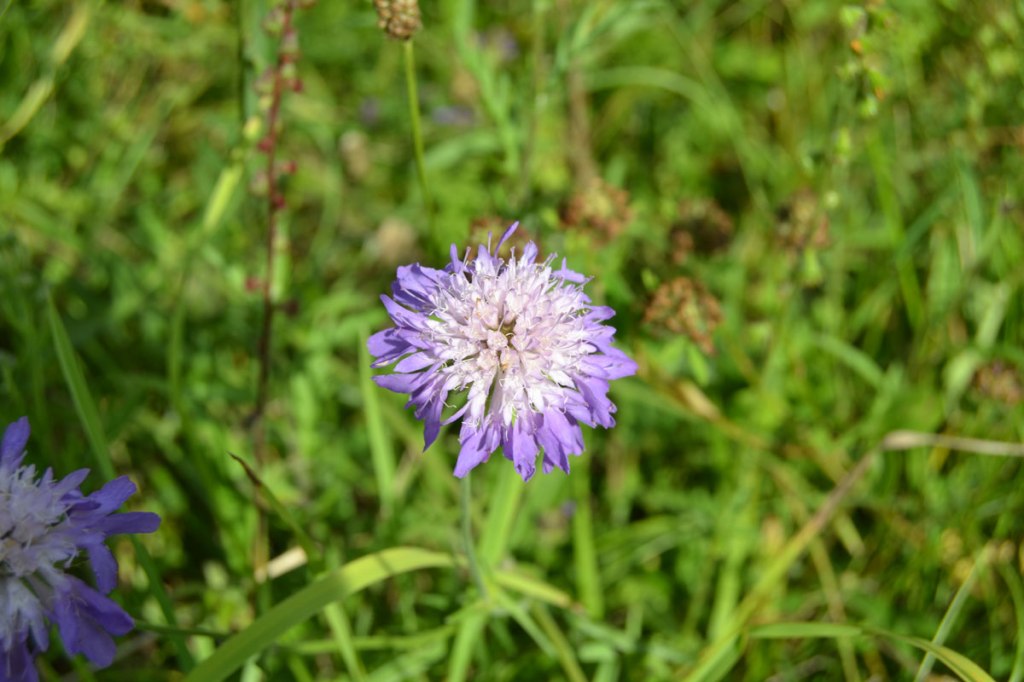
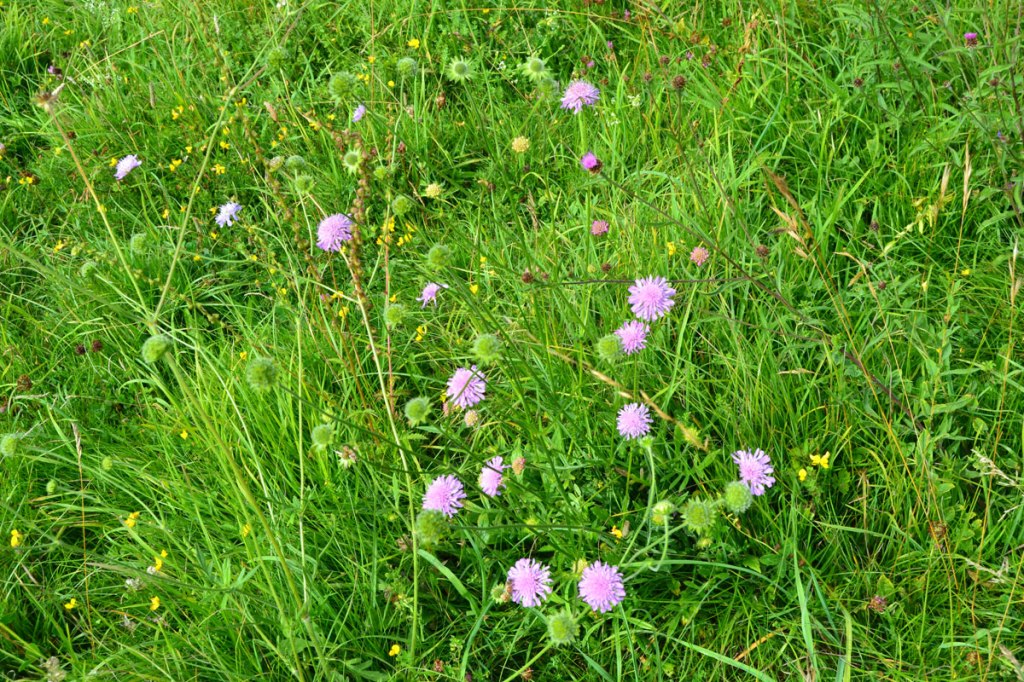
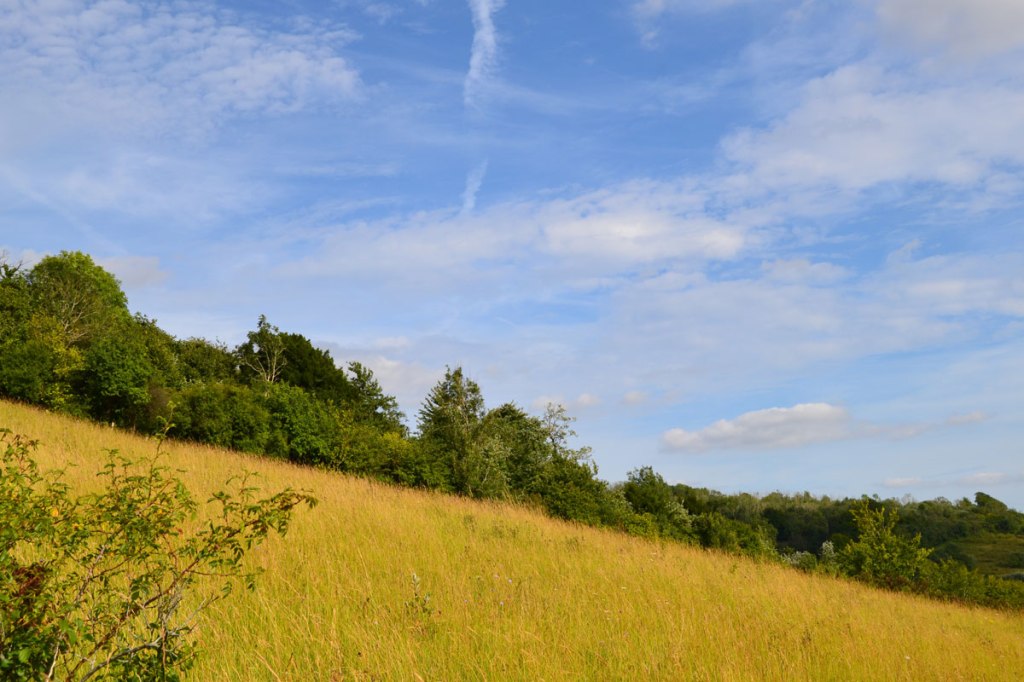
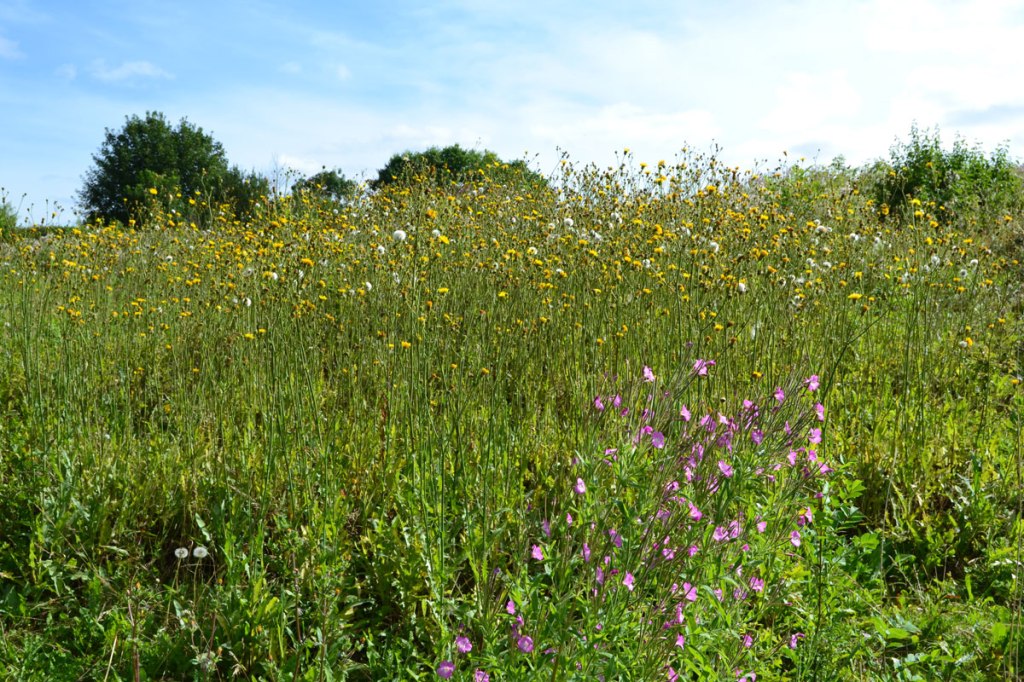
Sunny weekends have been in short supply this year. Hopefully we are overdue some. It’s a great time for butterflies and wildflowers like scabious, particularly in the chalky North Downs walks. I also love the displays of rosebaywillow herb… so colourful alongside ragwort. And there’s the wild marjoram and thyme to enjoy. It’s a great time of year, though look carefully and you’ll notice the grass is yellowing, the trees looking a little tired in places as August continues. I love a hot walk, and nothing beats the Mysterious eastern valleys and Fackenden Down walks for trapped heat and big-time humidity. These walks can be combined for a 7-mile epic, as can all the Shoreham, Otford and Eynsford routes. And they are only a 40-minute train journey away from Peckham Rye/Crofton Park/Catford etc. I’ll be setting off shortly …
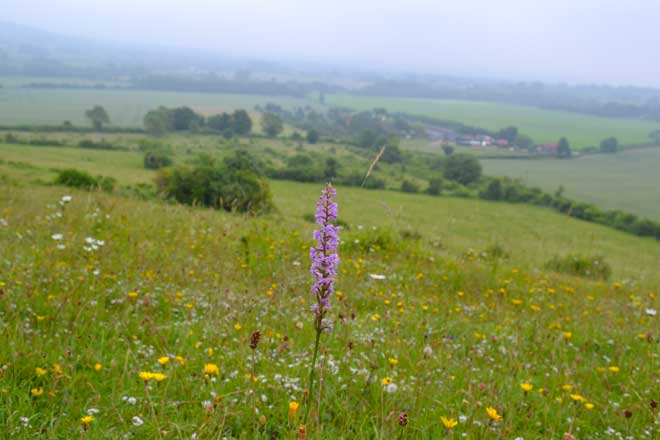
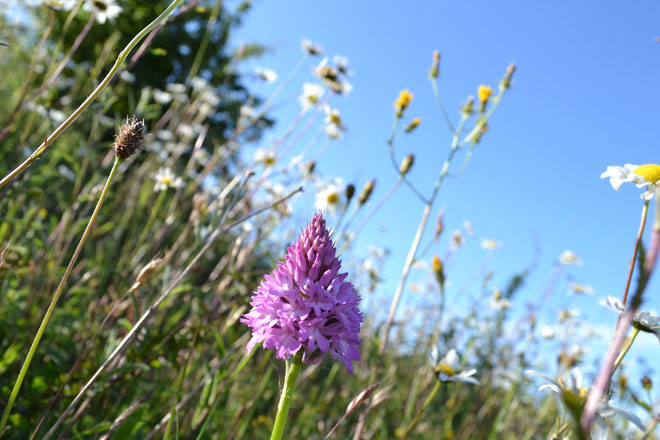
Us south-east Londoners are blessed with proximity to great places to see orchids at this time of year. The chalk hills from Downe to Heaverham, along the North Downs escarpment are full of them, splashing vivid purple, pink and cream among the whites and yellows of ox-eye daisies, trefoil and buttercups. They are beautiful flowers and vital in the lifecycles of loads of insects.
They can be found on all the walks from May to July, but here are the best routes that feature them:
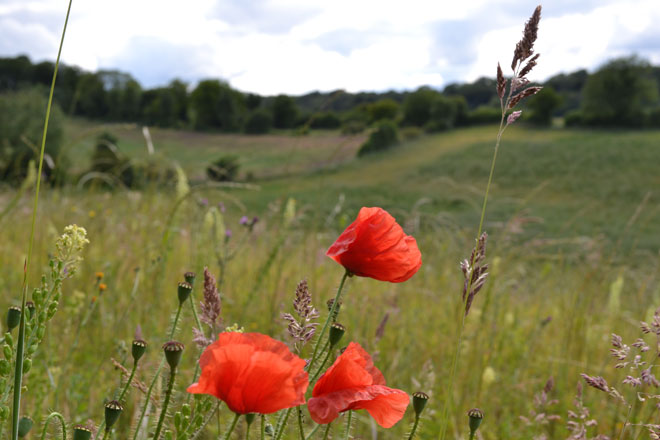
There are so many other great wildflowers to enjoy at this time. Sainfroin, for example, poppy, bugle, ox-eye daisy, and the lovely milkwort. Some are pictured below.
My wellies came in useful on the Hever walk on Saturday. I’ve never worn them in early summer before. But my hunch was right… there are still a few quagmires out there. Watching a young couple ahead of me try to negotiate the mud in lightweight trainers made me wince. There’s not really the same problem on the North Downs chalk walks, where the drainage is much better thanks to the geology. Except where there’s clay (Andrew’s Wood hillside I’m looking at you).
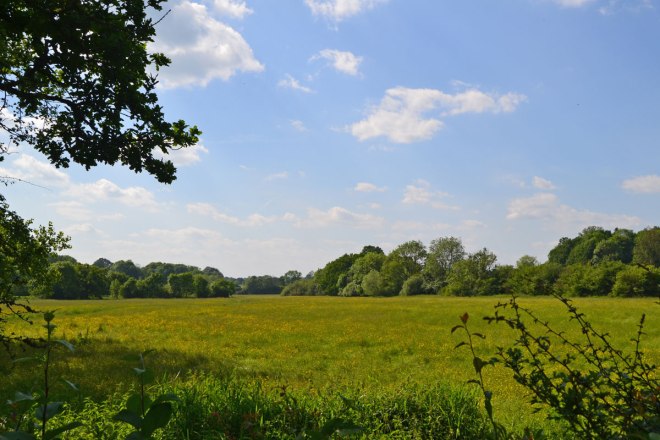
Meadow, Penshurst
Common spotted orchids, Hever
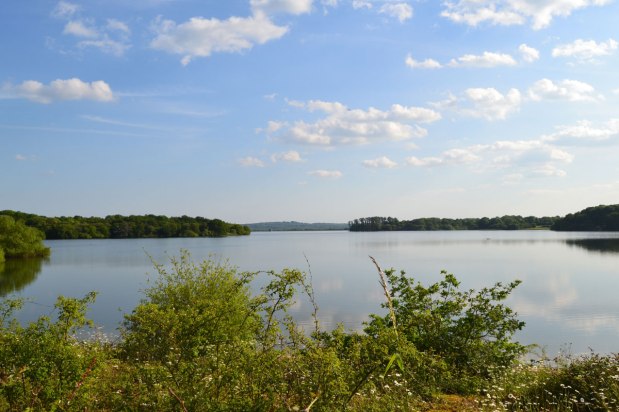
Northern lake at Bough Beech
In June it’s generally a good idea to stick a pair of secateurs or tough old scissors in your rucksack if you’re doing a Kent walk. It seems odd I know. One or two of the less well used paths become entangled in brambles, nettles etc this month and next. This is particularly the case this year because rain has kept hikers away and some of the paths have been left unused. The Eastern Valleys walk east of Shoreham definitely requires a bit of snipping as you walk along the fields on the Darent Valley rim. The diversion to the Percy Pilcher memorial viewpoint is in need of a trim at the best of times. And at Chiddingstone, near the start, the path leading into the swampy woods is nearly impassable. If you prefer, you can divert to walk along the field edge – it joins the main path as you enter the woods. The same thing happens later as you near the River Eden on the return leg. There are parts of the Hever walk, in Stock Wood and Newtye Hurst Wood where you might need to divert off the main path and it‘s easier to do a little judicious snipping than try to battle your way through. Especially if you’re wearing shorts!
Overall the Weald of Kent is obviously wetter than normal for the time of year. Bough Beech reservoir is brimful for once and the mires and ponds in the woods of Hever and Chiddingstone are well topped up.
The Fackenden Down walk in late May on a breezy sunny day cannot be bettered. This is the walk on this site with most rewilding going on and plenty of Kent Wildlife Trust-maintained land. The results are a good variety of wildflowers, including several orchid species and sainfoin, lots of butterflies, burnet moths and birds such as buzzards (very common), whitethroat (from May to September) and yellowhammer (if you’re lucky). Some ancient species of livestock such as highland cattle are often used to graze the grasses in small numbers. My route is brilliant, if I do say so myself, and easily accessible by train. There’s a great pub at the end of the walk too – the Samuel Palmer.
I love Magpie Bottom in particular, a sheltered secret feeling valley alive with flowers and great variety of tree foliage colours. Then there the views from Fackenden Down itself, the wild “garden“ along the foot of White Hill and the Down, the view of London and Essex from the high point at Romney Street … it’s terrific, and a good workout with a few steep sections. It comes in at around 12,500 steps.
The Kent Wildlife Trust is in need of volunteers to monitor its livestock. Also it’s looking for urgent donations to enable it to purchase more land at Polhill, across the valley from Fackenden, where it monitors and maintains similarly superb chalk hillside. I’ve diverted the donations to this site to the appeal, but please make sure you chip in.
The inaugural KWNL bluebell award results are in, now that the bluebell season is drawing to a close. The judge (that’s me) has visited a number of sites renowned for their bluebells at this time of year and come to his decision, without seeking the opinions of others (I prefer it that way, for clarity of thought). First, let’s be honest, it’s been a slightly underwhelming field this year compared with previous years, when this competition wasn’t held. It’s pissed down with rain largely, the sun has generally refused to appear, and it’s been so windy that lots of branches have fallen in the woods disrupting the shimmering fields of azure and making the place look untidy generally.
4th PLACE – EMMETTS/SCORDS WOOD on the IDE HILL ROUTE
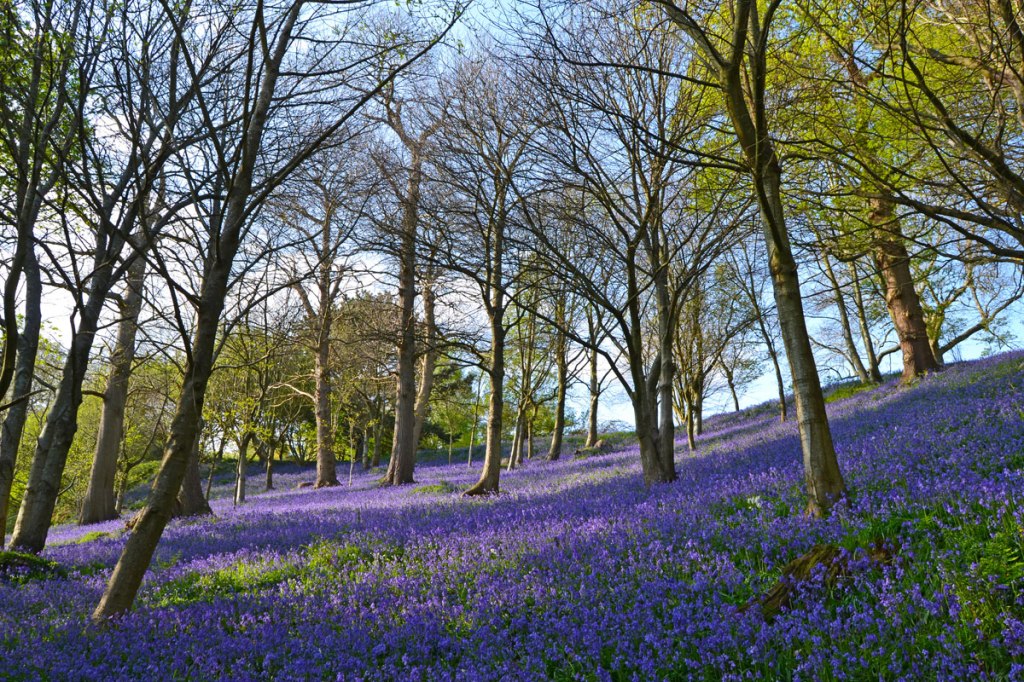
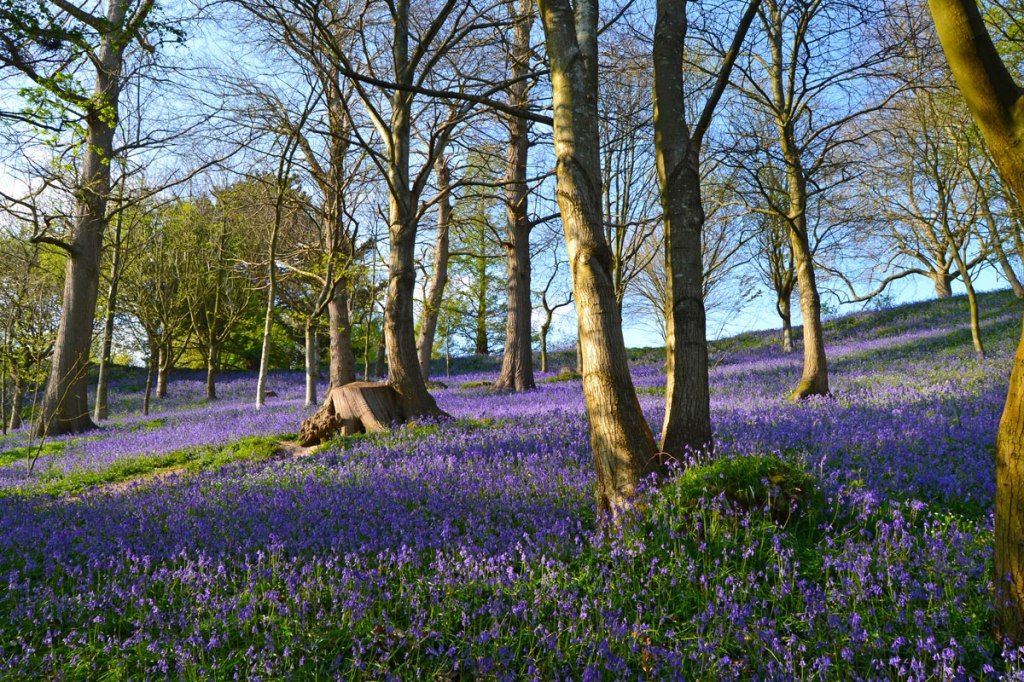
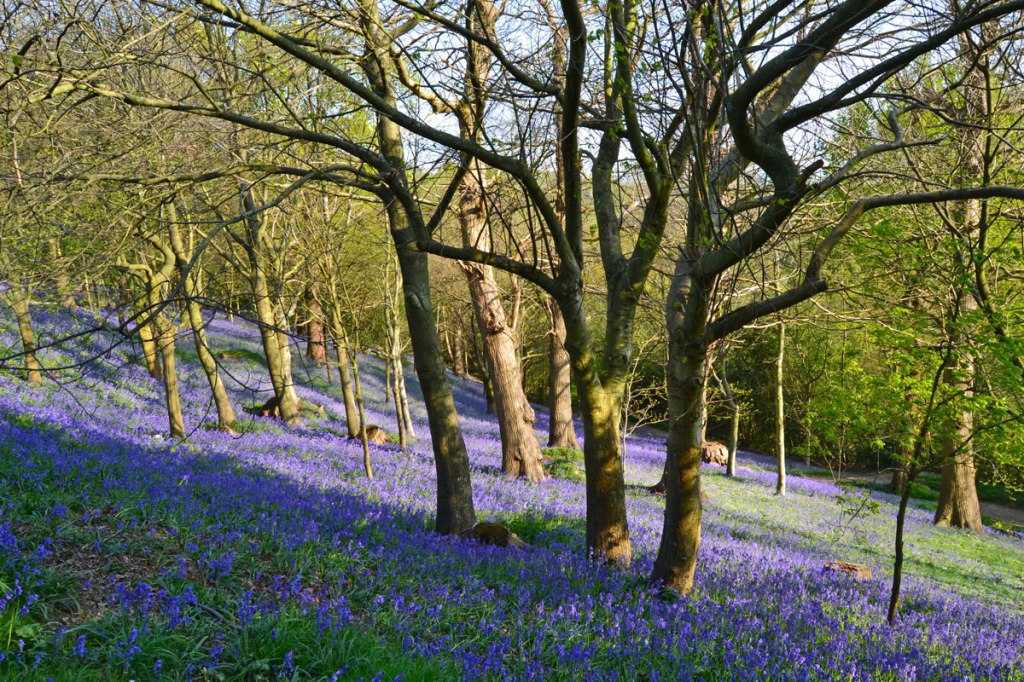
Emmetts Garden/Scord Wood was the strong favourite to be the winner given their popularity and reputation so it is something of a shock to see it down in fourth in 2024. The position of the flowers on the slope and the widely space trees help makes them easy to photograph nicely, especially with late afternoon sun casting long shadows – the perfect bluebell shot. However, it was grey and cold during my visit and there were a few too many bare patches – unlucky, but rather like an Ofsted inspection on the way day the usually impeccably behaved pupils have nicked the headmaster’s car and left it upside down on the cricket pitch. Beautiful of course, but somehow not quite up to usual levels of greatness. No trophy but Champions League nonetheless.
Meenfield Wood on the various Shoreham/Polhill western Darent Valley routes was also expected to make the top two, but just fell short. The full inspection took place on a Saturday again heavy with cloud with approaching rain from the south. The lime green of the beeches coming into leaf contrasted with the blue flowers to make for a colourful sight despite the conditions. Splotches of stitchwort added to the jollity at times. Many might argue it was a worthy contender to win; and in another year it may have.
Doing much better than expected this year was New Years Wood, on the Cudham circular route. A lovely, quiet woods without many paths to interrupt the swathes of blue. More mysterious feeling even than Meenfield and it was easier to imagine the bluebells somehow continuing for miles into the distance – you couldn’t see where they ended.
1st PLACE – BLUEBERRY LANE MEADOW, KNOCKHOLT POUND
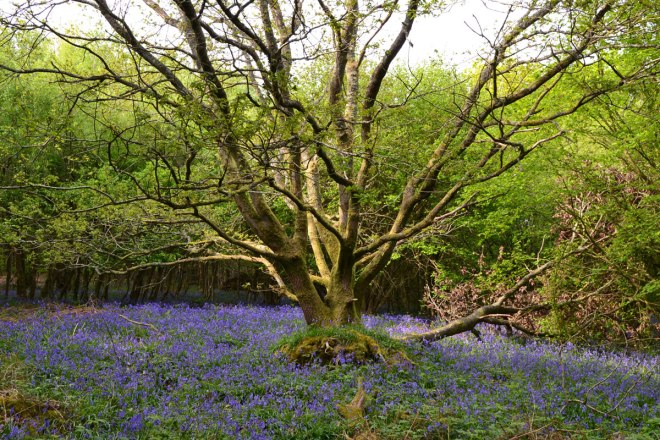
Close to the Cudham circular and Chevening walks, this magical spot (view from the gate: no entry into field) was not considered a contender until the judge happened to cycle past it on Sunday 5 May. This grassy field dotted with outstanding oaks, one of which appears damaged by lightning or storm, had never previously attracted the judge’s attention. The flowers appeared a very dense dark blue instead of rather milky blue of the previous two entrants, perhaps because of some trick of the light. There was some consideration that it should not qualify because it’s not strictly speaking on one of the walks, but this was overruled eventually, as cycle routes at KWNL also count.
Submissions from One Tree Hill, Lullingstone, Ide Hill, Hever and Oldbury were received too late to be considered unfortunately. They also breached the judge’s criteria of “not too much mud”.
I think there’s good bluebell viewing until around 13 May, but the beginnings of the end are already visible, so good luck! See my cycle routes at Plot A Route
“When spring came, even the false spring, there were no problems except where to be happiest. The only thing that could spoil a day was people and if you could keep from making engagements, each day had no limits.”
That’s a fun quote from Hemingway. I take it to mean prioritise walks above socialising, now it’s a bit warmer (I reserve the right to be wrong about that) and to get out in the woods and downs, witness the transformation from grey and brown to green, blue and yellow. I say “witness” but it happens suddenly, overnight perhaps, when you’re not looking. Suddenly the air is soft, the countryside hues have changed and spirits have lifted.
We chose the 3.5-mile Knockholt/Chevening North Downs route for late Saturday afternoon and a 4.5-mile stroll on the Greensand Ridge at Hosey for the following morning. On the Hosey route bluebells were two-thirds in bloom and were mixed beautifully with stitchwort and anemone. We heard coal tit, nuthatch, song thrush, chaffinch joining in the merry burble of song from great and blue tits, robins and wrens. A delightful pint of Westerham Brewery’s Light Ale ensued after the walk at Squerry’s Winery.
At Knockholt, along the escarpment, three red kites drifted overhead throughout the walk and a pair of buzzards hung in the air. These raptors love the updraft along the ridge and I think this walk is the most reliable route for seeing them on of all the walks here, though they can pop up on any. Please don’t think me callous but I rather hope the birds of prey feast on pheasants; there are too many of the latter human-introduced birds in these parts and they kill a large number of reptiles and amphibians.
Redwood tree above Chartwell, at Mariner’s Hill on the Hosey/Westerham route
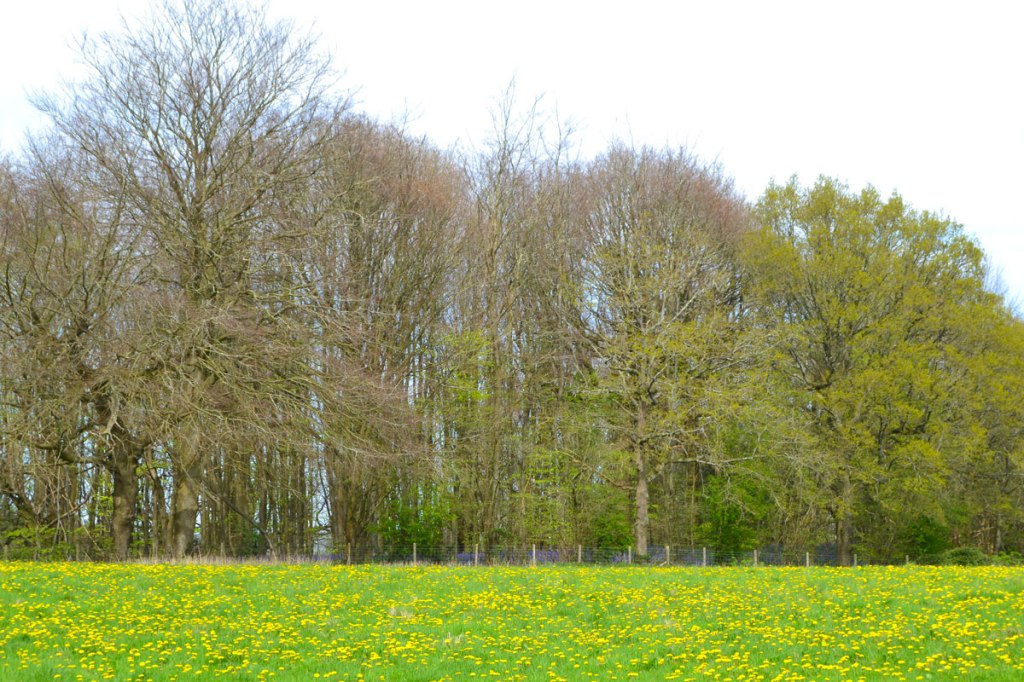
Dandelions on Mariner’s Hill, mid-April.
Bluebells on Mariner’s Hill on the Hosey/Westerham walk
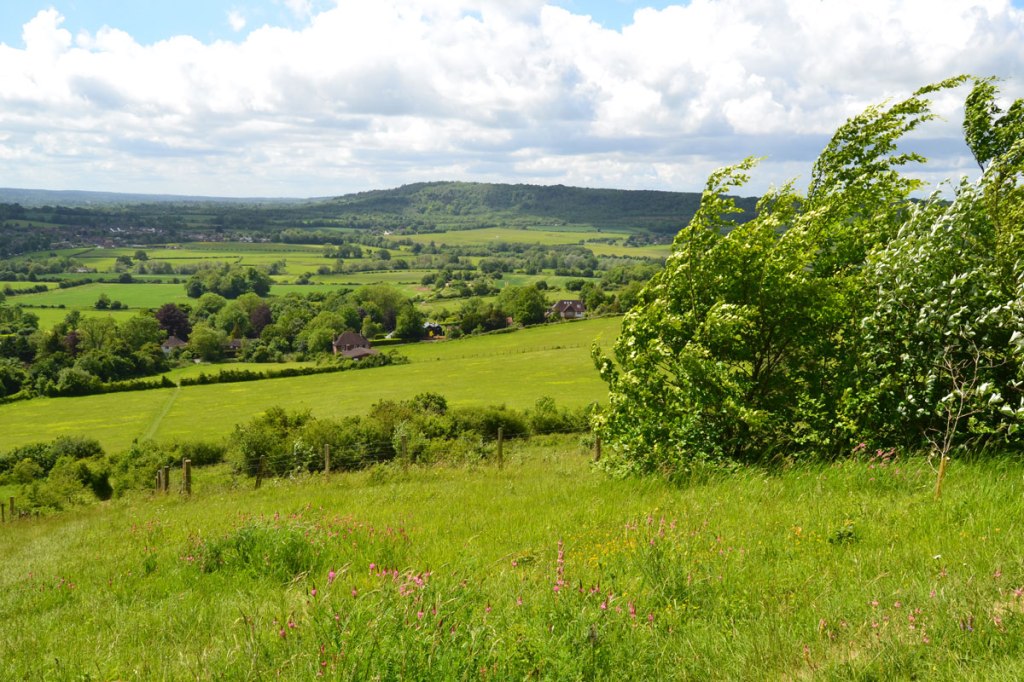
A view of Chevening House and the Vale of Holmesdale from the chalk escarpment near Knockholt Pound. The Hosey and Westerham walks are the Greensand Ridge in the distance
The cleft in the Downs on the Knockholt/Chevening shorter version
Marsh marigold by the infant Darent river, on the Hosey/Westerham routes
The chalk Knockholt/Chevening walk on the North Downs ridge is separated from the Hosey walk on the Greensand Ridge by the clay Vale of Holmesdale, an east to west valley that runs in parallel to the two lines of hills and which contains the M25 and M20 motorways. Holmesdale clay runs between the chalk and sandstone yet despite the starkly different geology in such a small distance the plants and tree species don’t superficially appear to differ that much – presumably the plants have adjusted to the contrasting soils over the millennia. But there are some differences – there are more likely to be orchids and expanses of grassland on the less densely wooded chalk hills; while on the greensand the woods seem a tad more extensive and are more likely to include stands of pine, which like the sandier soils. I’m no expert so I won’t go on. Bluebells like both; that’s the main thing and this week they are reaching their peak at sites like Meenfield Wood, Scords Wood, and Mariners Hill. Enjoy them, they’ll be gone within about four weeks.






























 Kent walks near London