The woody wonder of ancient Oldbury: a shorter route

The woody wonder of ancient Oldbury: a shorter route

Click here for full directions for Walk 29 at KWNL.

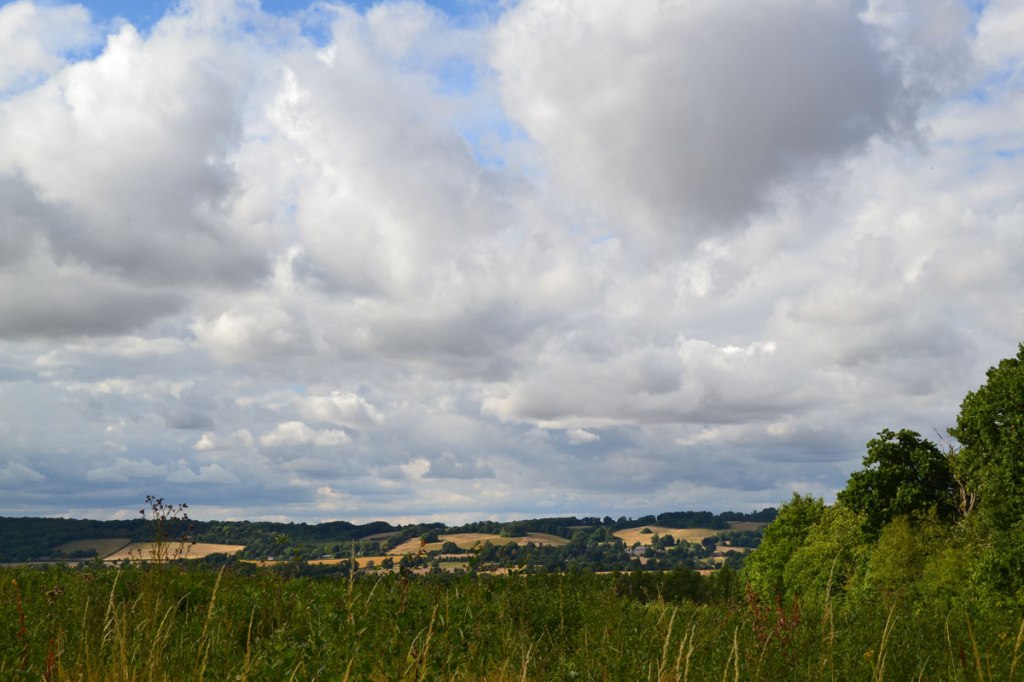
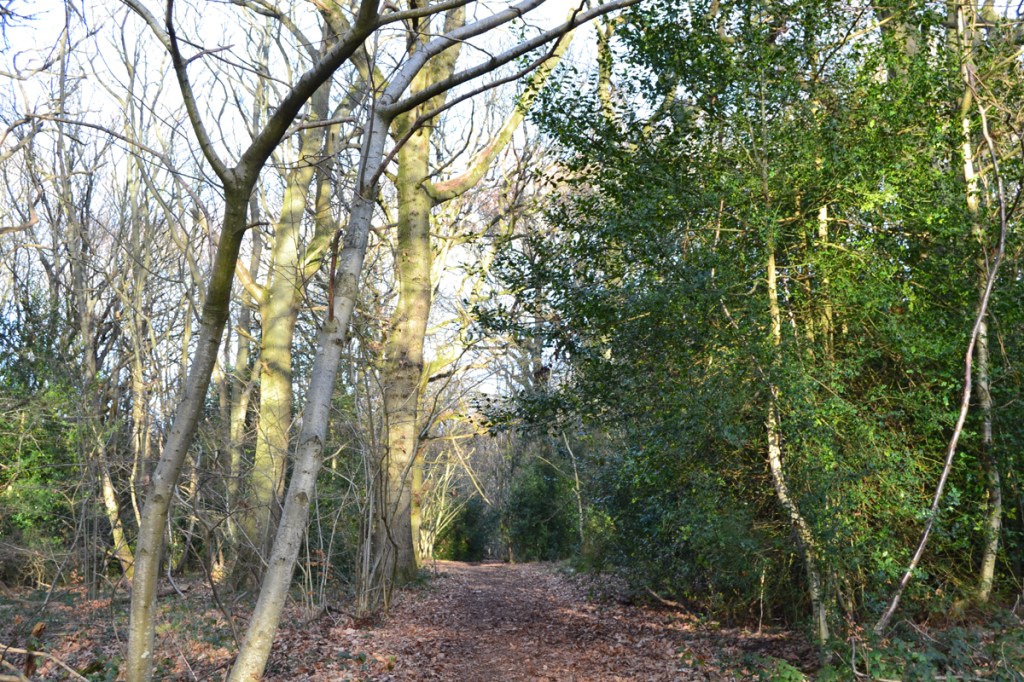
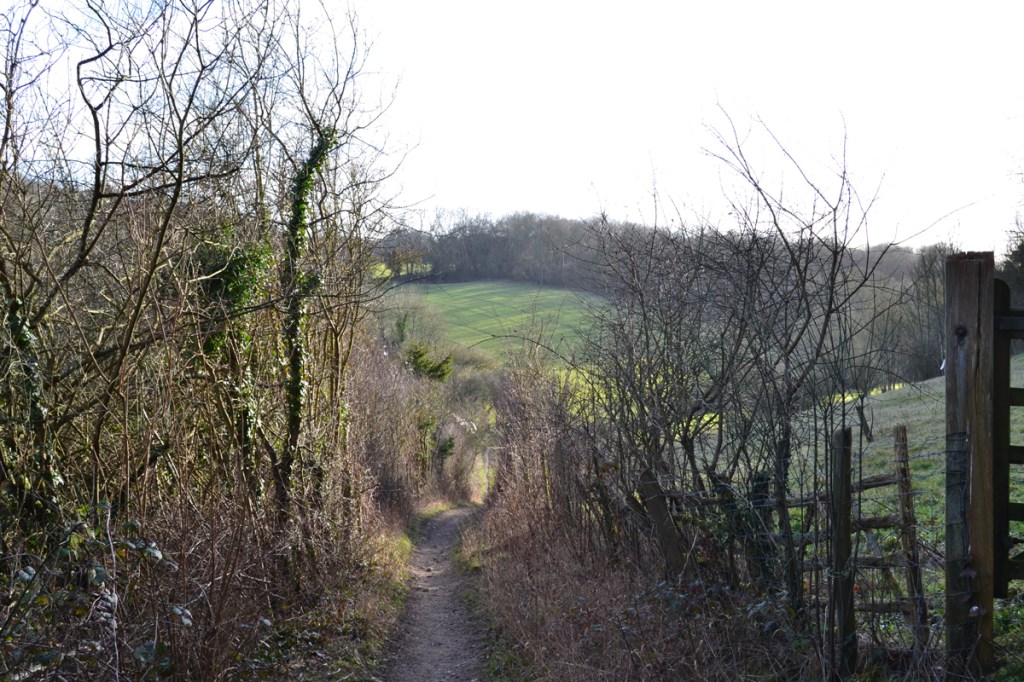
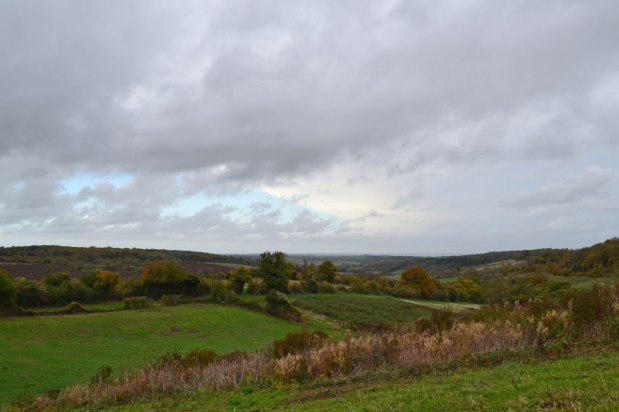
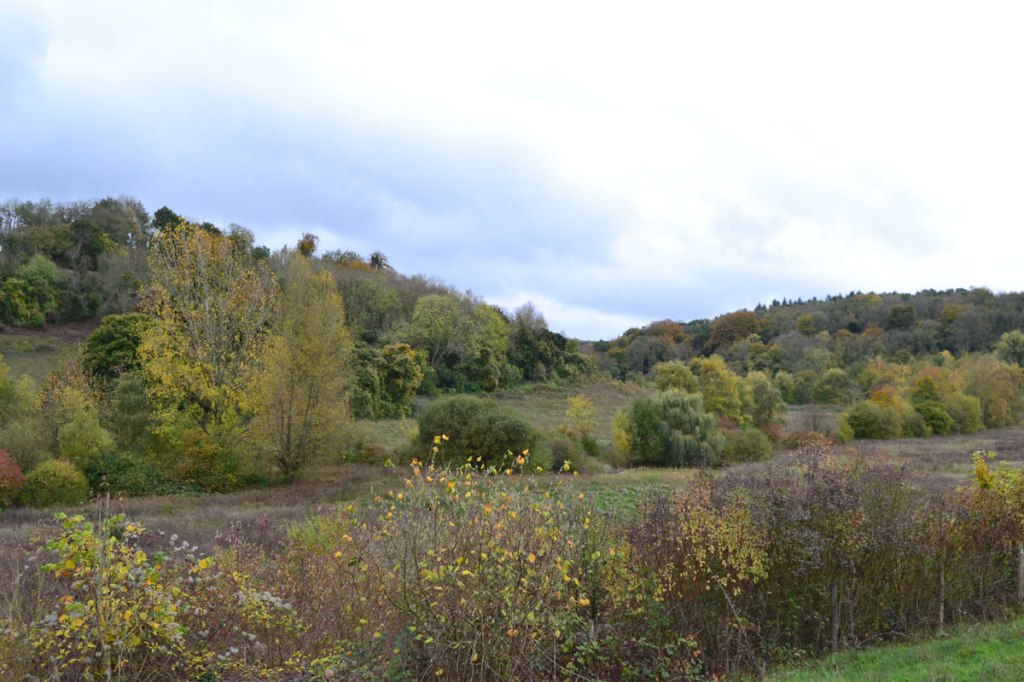
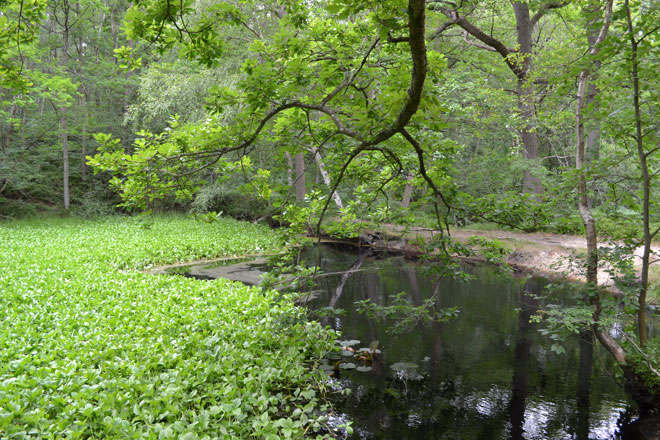
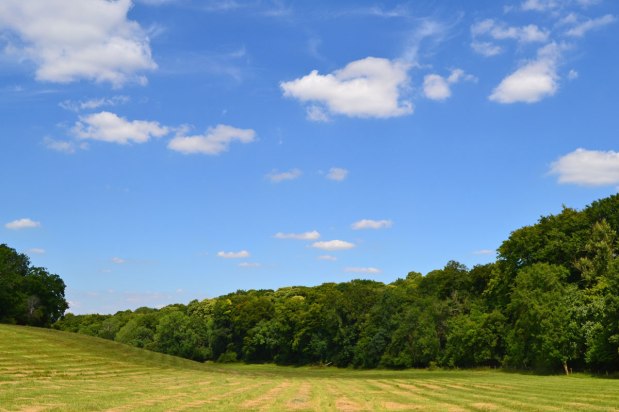
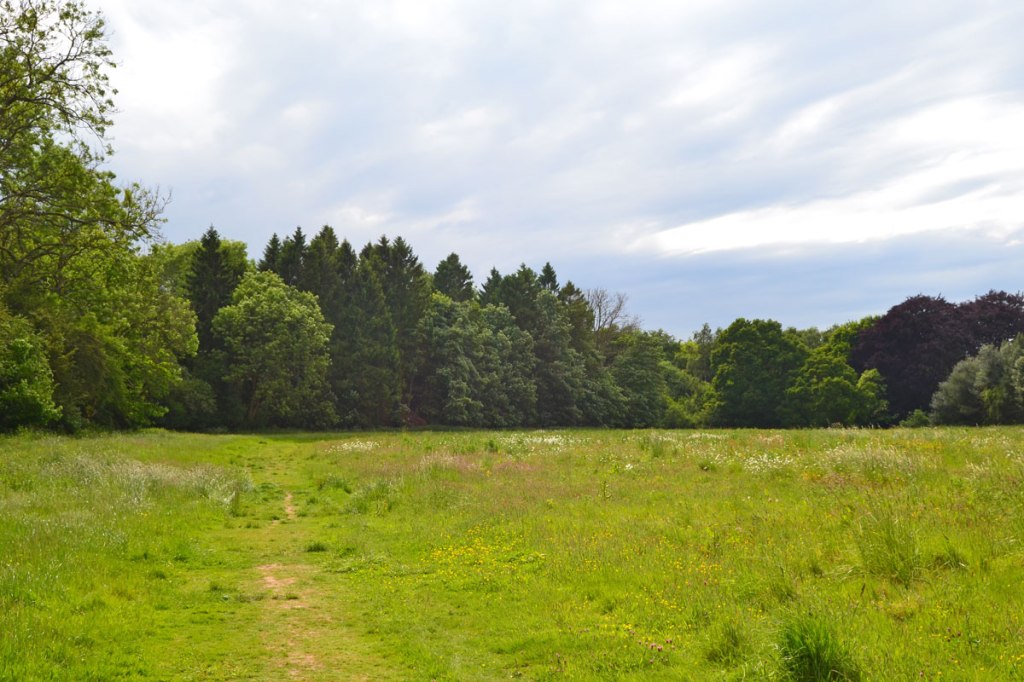
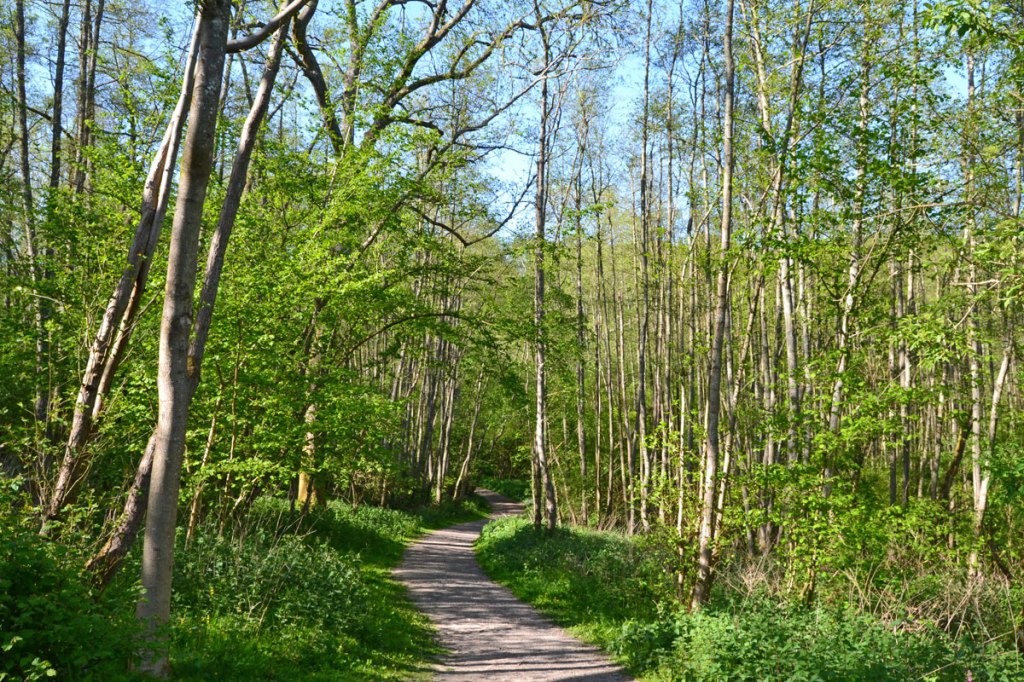
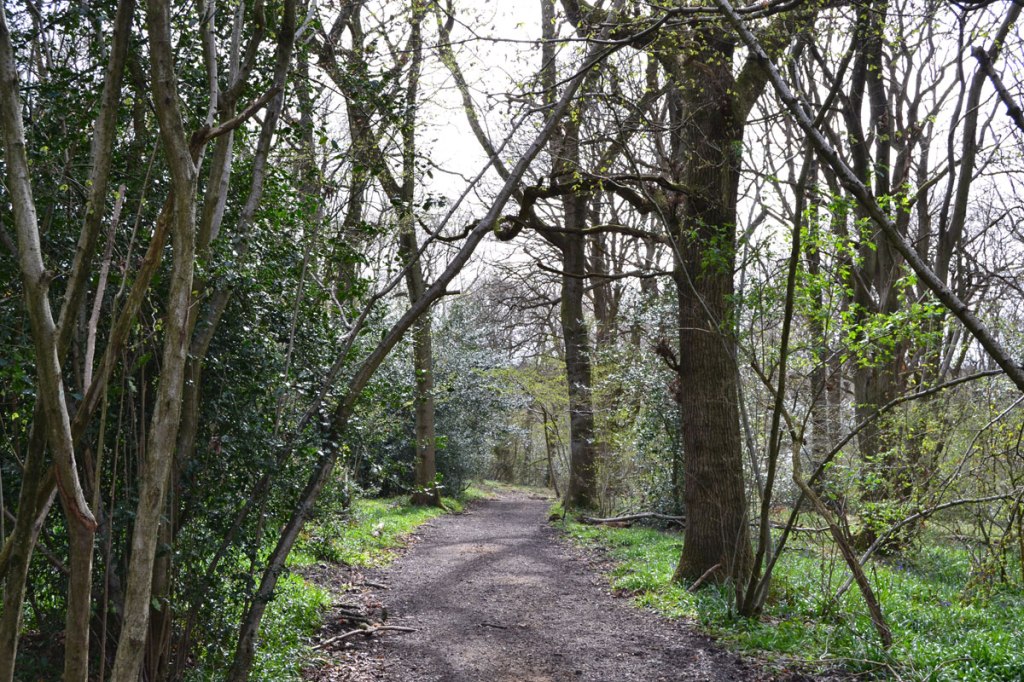
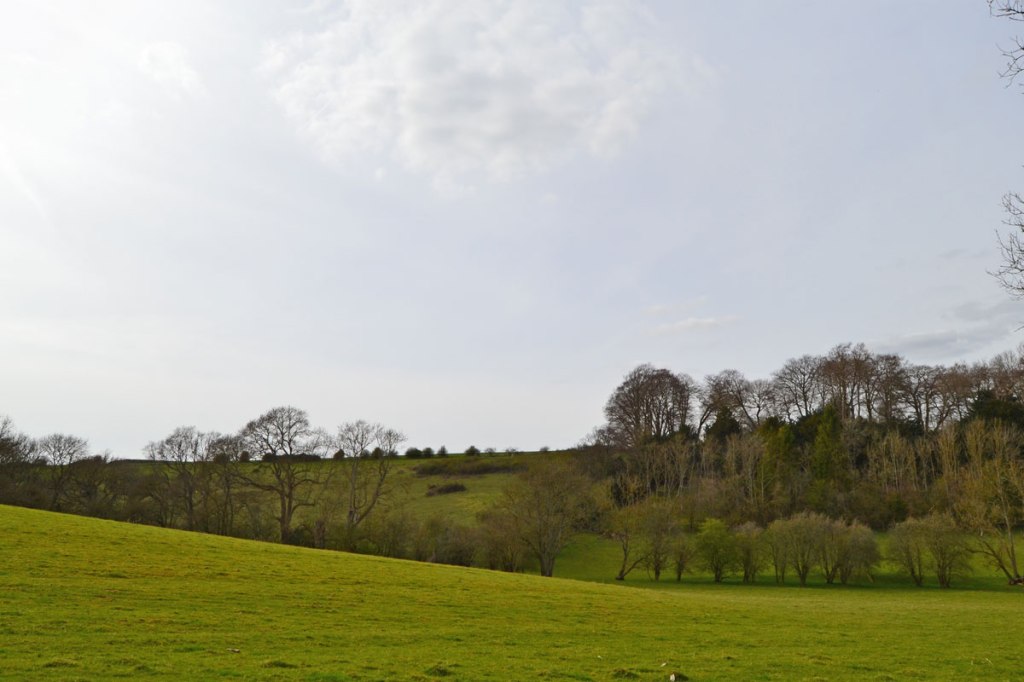
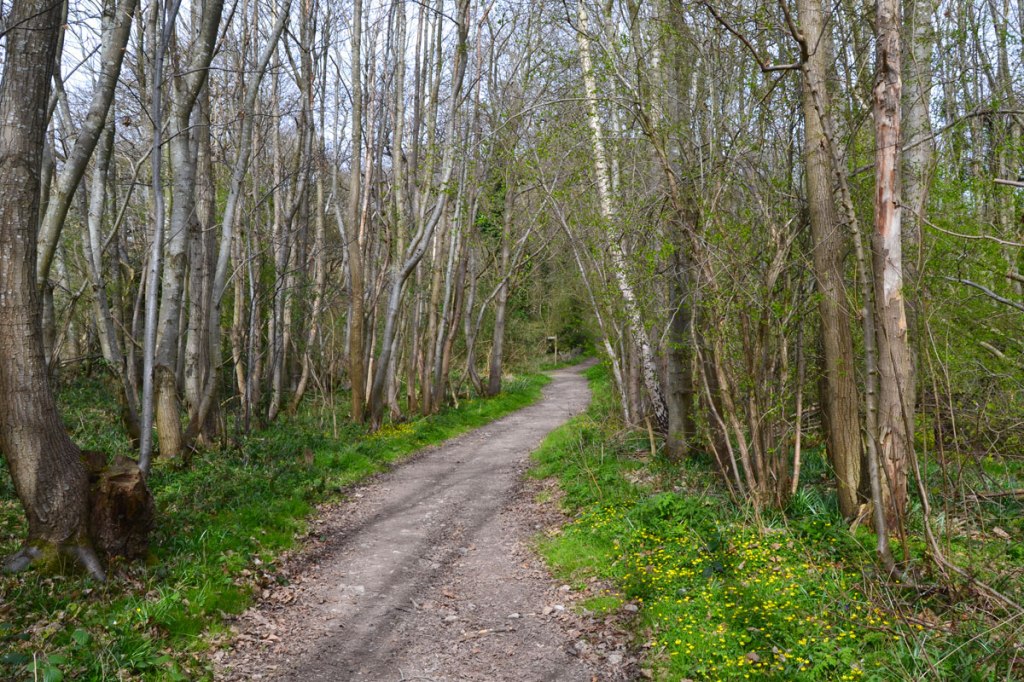
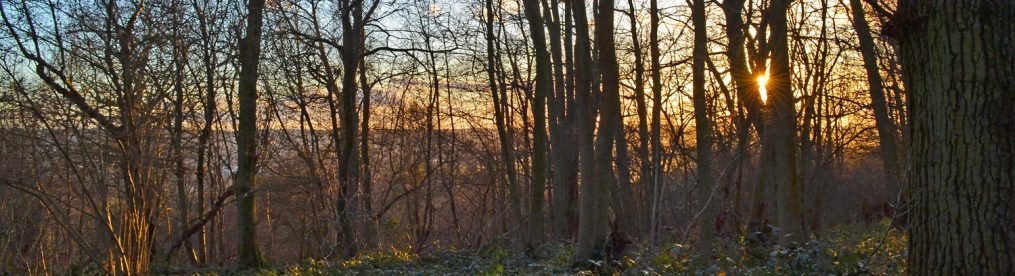
This is a shorter version of a really great woodland autumnal route. The Oldbury walk comes in at around seven miles once you wander around a bit. That may be a bit offputting for some, who prefer a 90-minute-2-hour stroll, no more, no less. So click here for a clipped version (Ordnance Survey GPX map). On this shorter 4.2-mile version you miss out on Ightham Mote and its secret valley but other walks on this site include these superb spots, such as the two One Tree HIll walks (walk 6 and 7). So, starting in the Styants Bottom Rd car park the new walk sets off east and around the Iron Age Fort of Oldbury Hill. On the fort’s northern side there are great views to Kemsing Down and the St Clere estate at Heaverham if you walk along the field edge. Then it’s back into the woods, crossing the A25 at Crown Point and walking up towards St Lawrence church above Stone Street. Just before reaching the church turn sharp left and follow the path along a cliff edge set back from the main greensand ridge before turning left down giant steps and following the sand path north through mysterious Fishpond Wood back to the A25 then on to the car park.
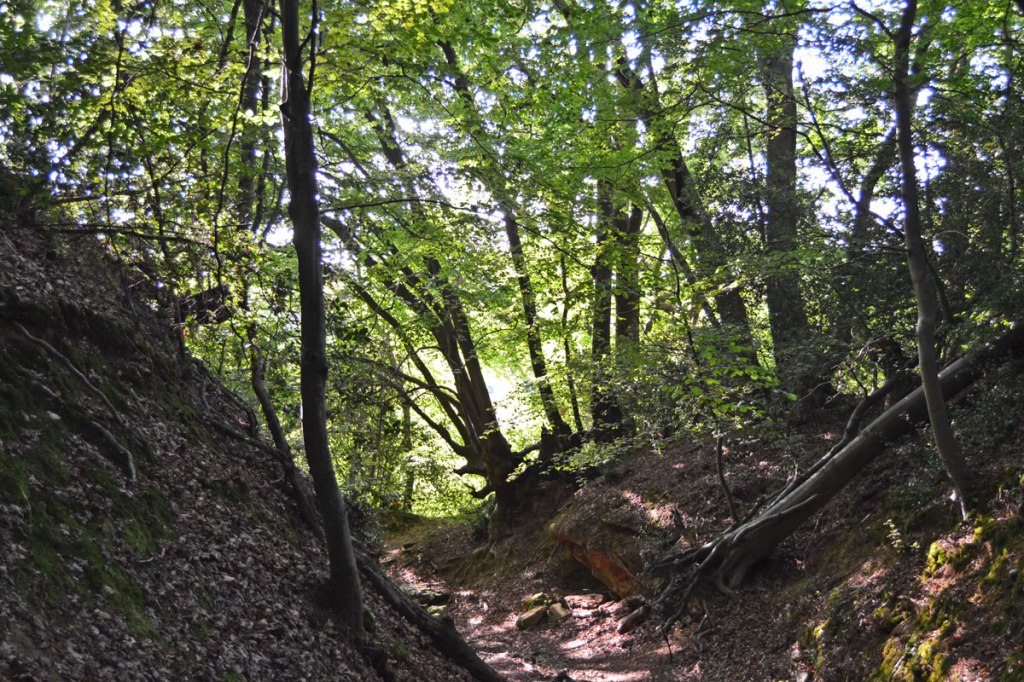
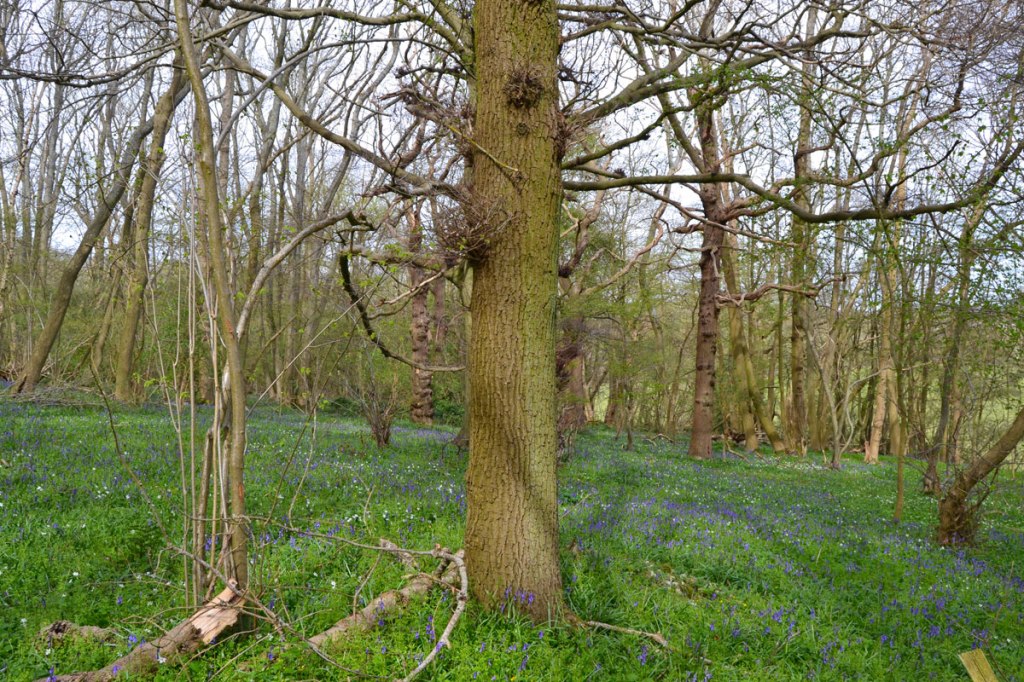
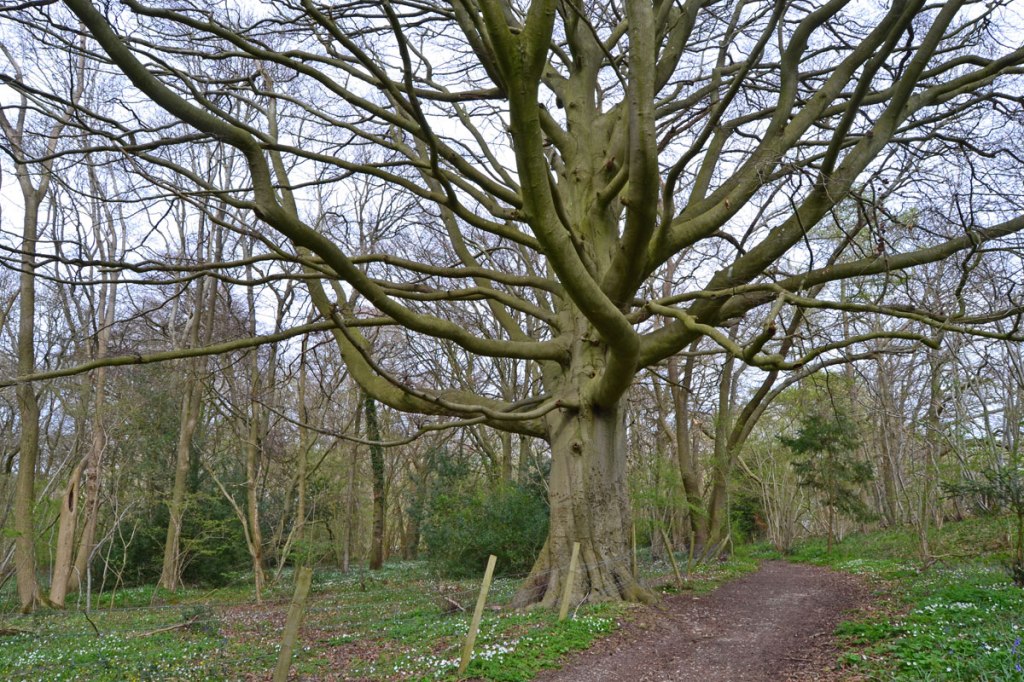
  • Oldbury Hill Fort
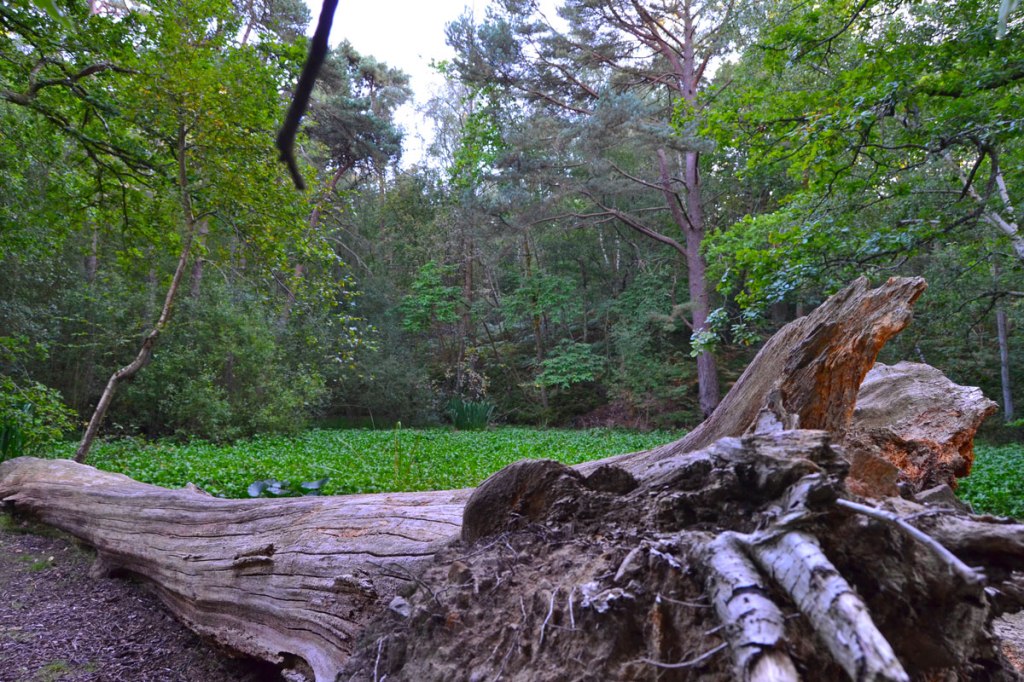
  • A log looking like the remains of a prehistoric creature
  • fish ponds
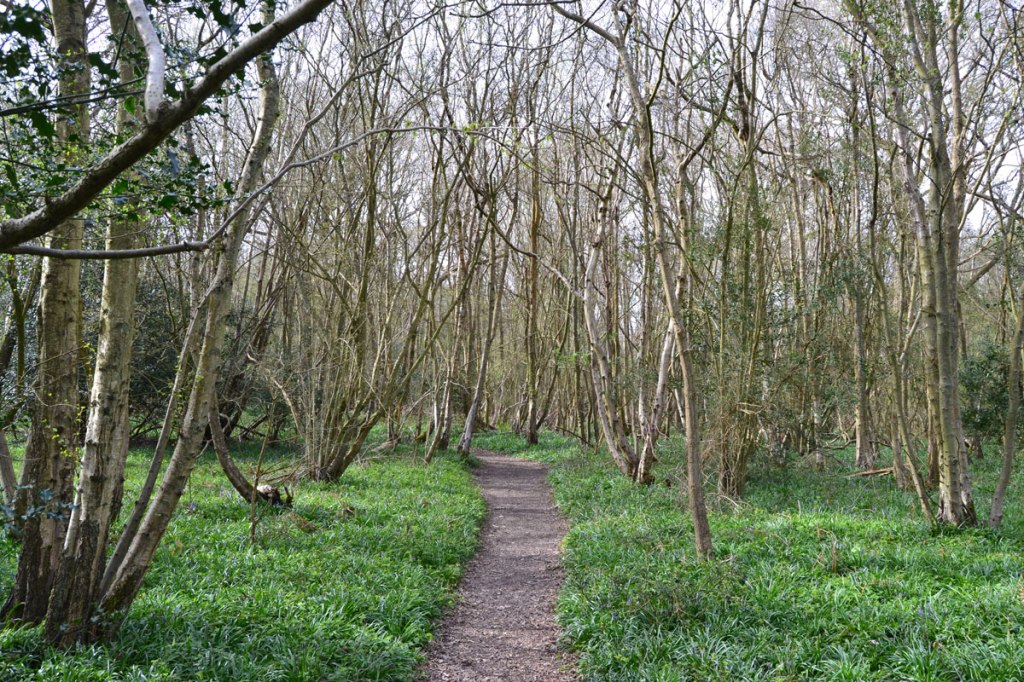
  • Sand path through Fishpond Woods, Oldbury

I’ve added some waypoints to the GPX map mentioned above to help you navigate. Some have labels (church, for example) others have Ordnance Survey grid references (TQ 5764 5613 etc) to help you pinpoint location on your smarphone (if you have one). I recommend using the GPX map because being mostly in woods it’s hard, otherwise, to know what path you’re on; however, walking around a bloody great lump in the form of south-east England’s largest iron age fort should help! Here’s the NT page, and here’s more about the history of the place here.

There’s also a Google map of the route here, but this isn’t GPX so not as useful.

One more thing about this walk: it’s a bit spooky. The woods, the ancient fort, the hidden cliff, the mysterious ponds in the woods. It’s … atmospheric let’s say.

Woody wildflowers on display before the big blue

Woody wildflowers on display before the big blue

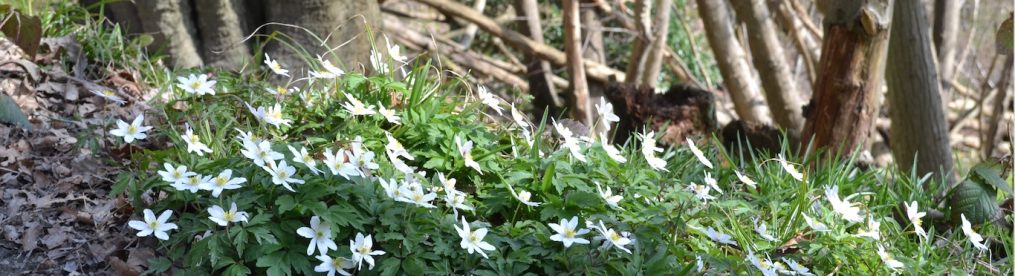
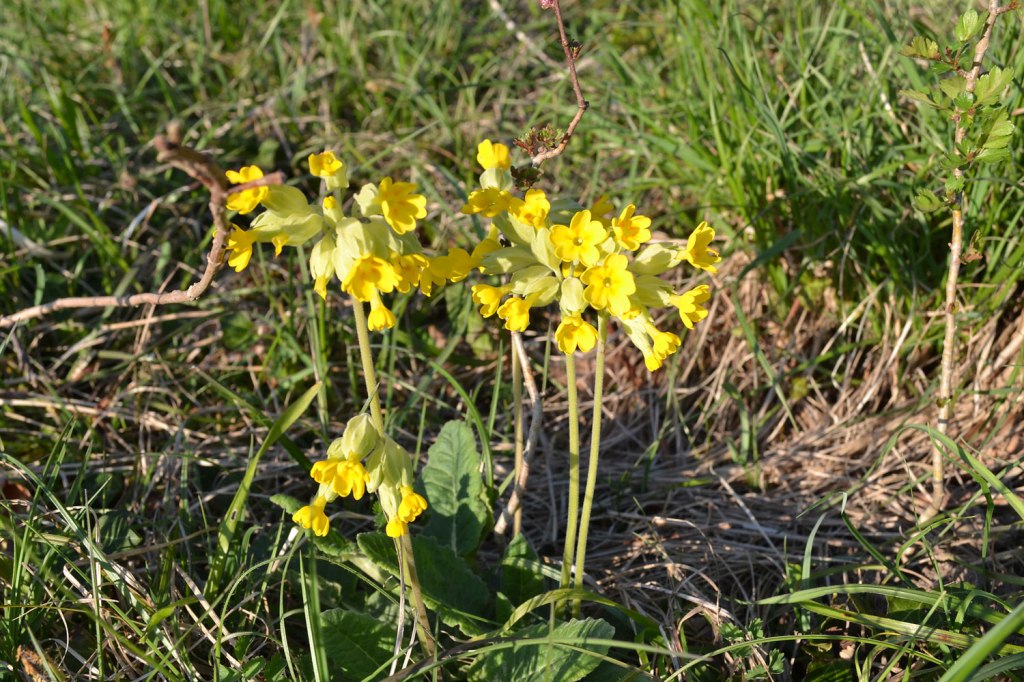
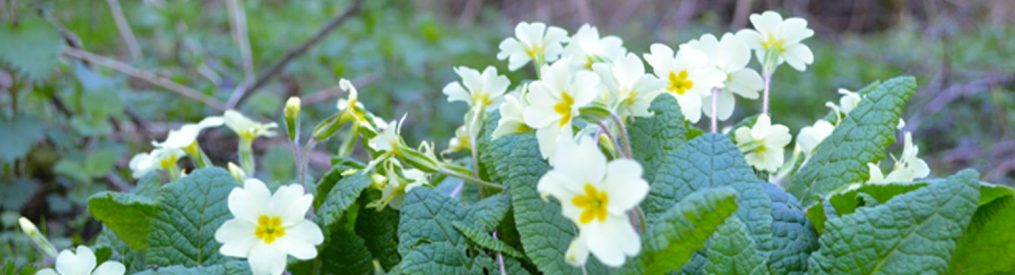
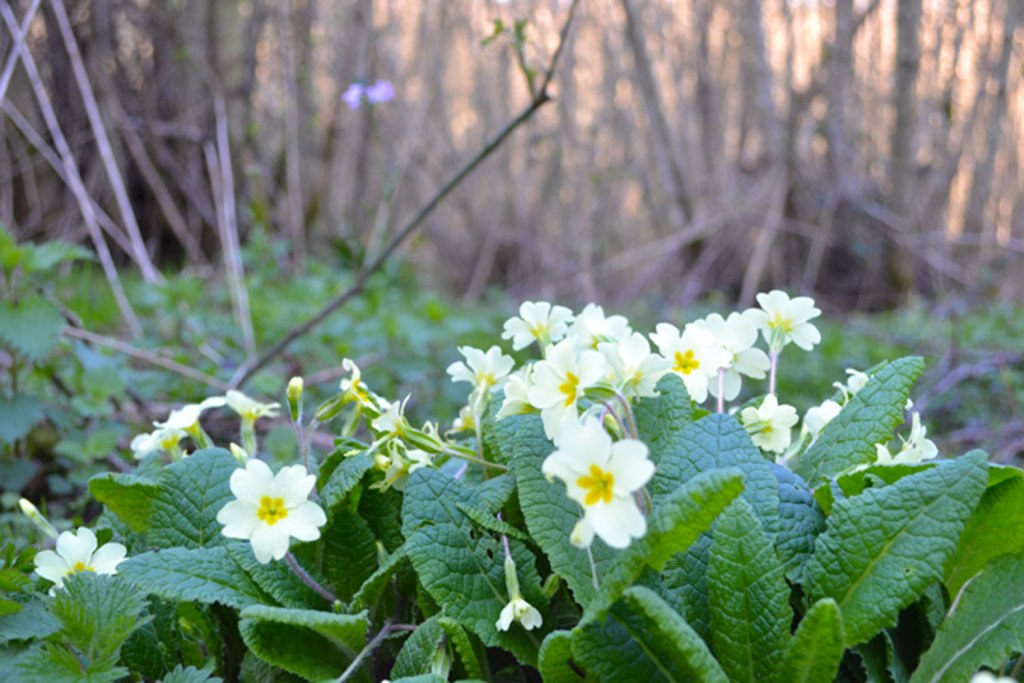
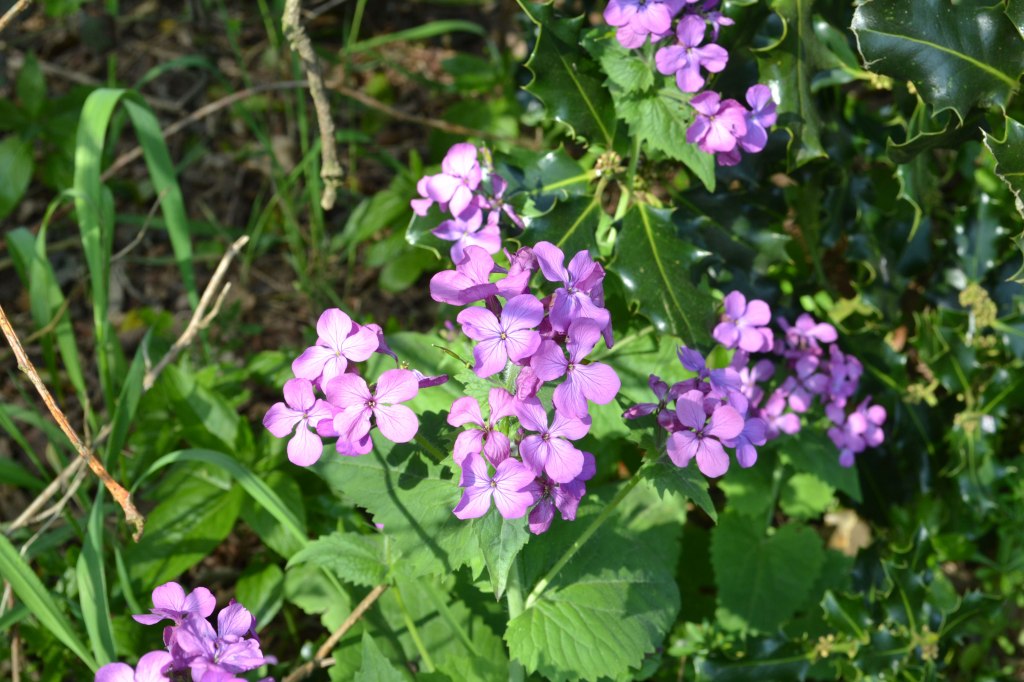
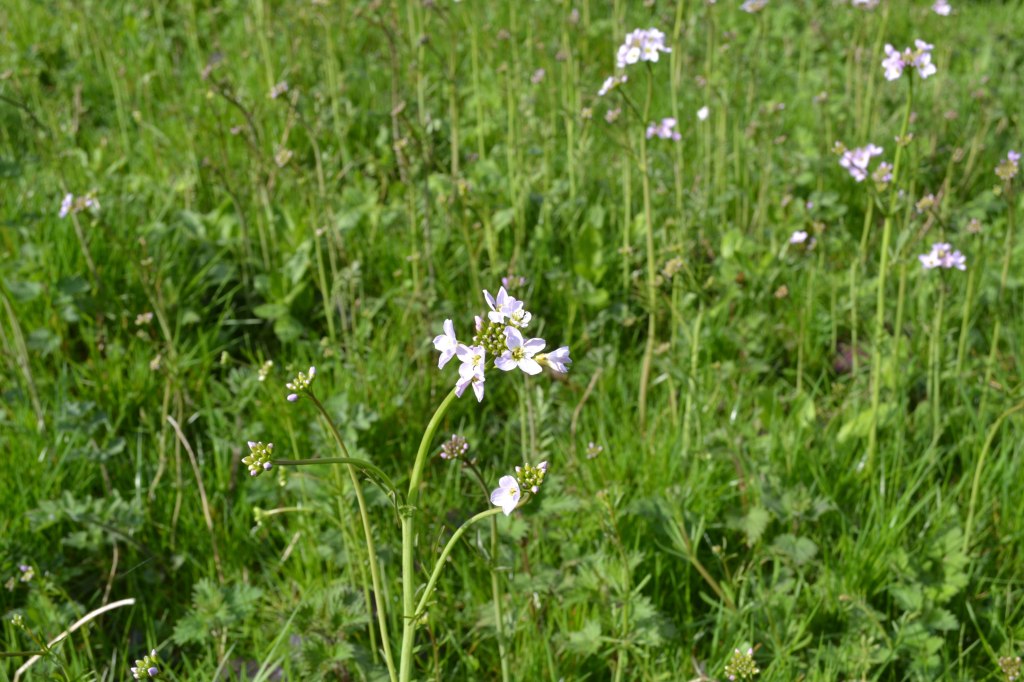
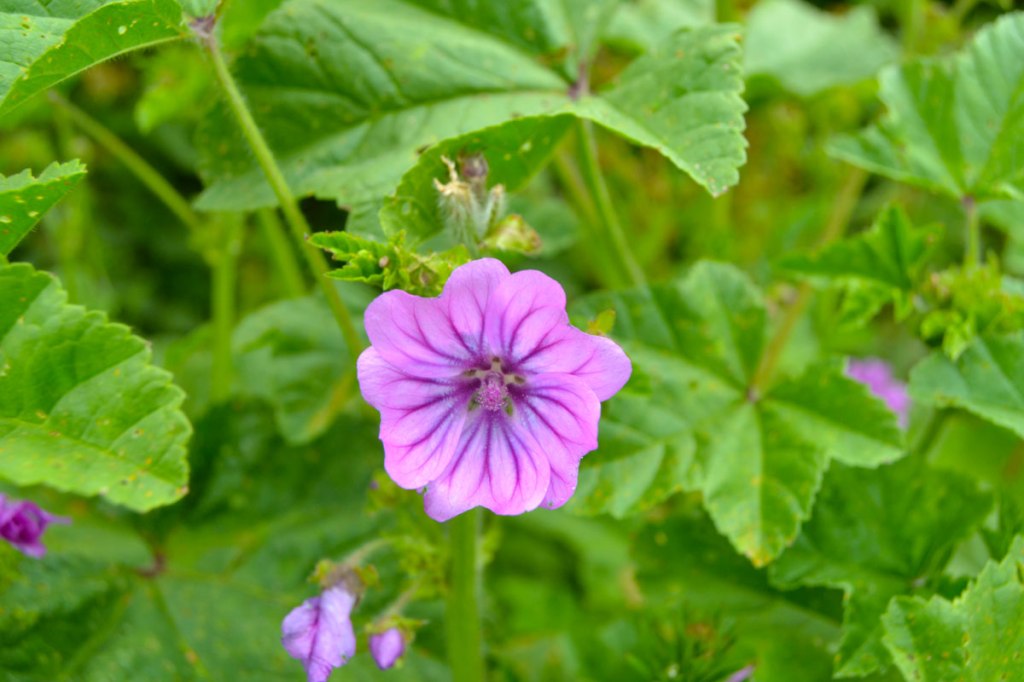
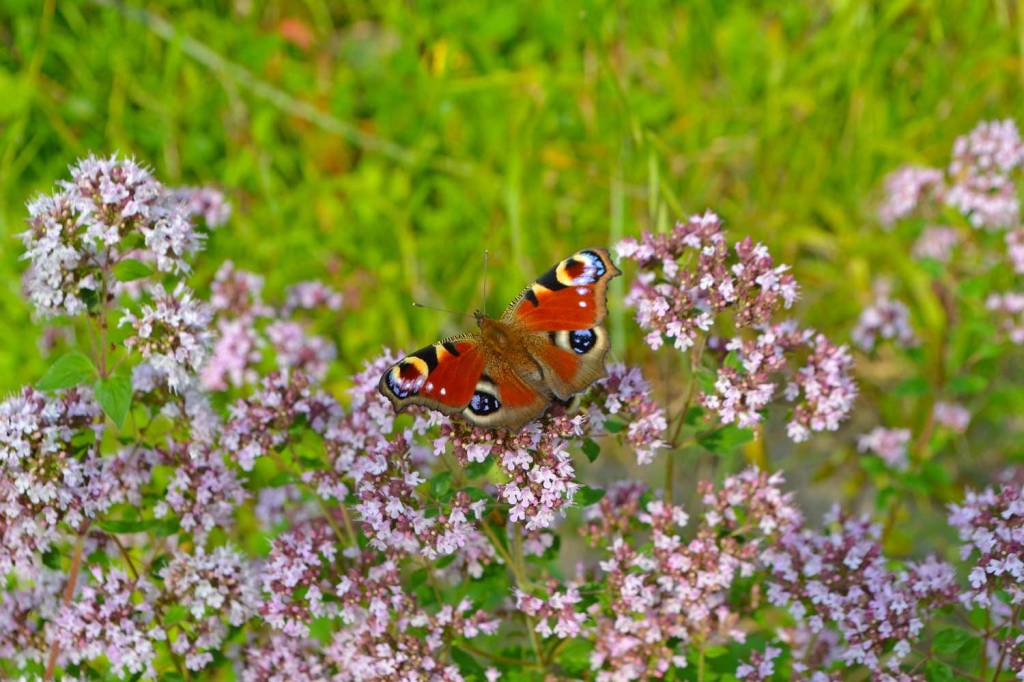
With a dry and potentially quite sunny week before us at long last it’s a great time for checking out emerging wildflowers on the walks. I must underline that I’m no expert and rely on apps to confirm by sightings in many cases. But below are a few species you’ll see in most of the woods encountered in woods and fringes on the KWNL routes in April.

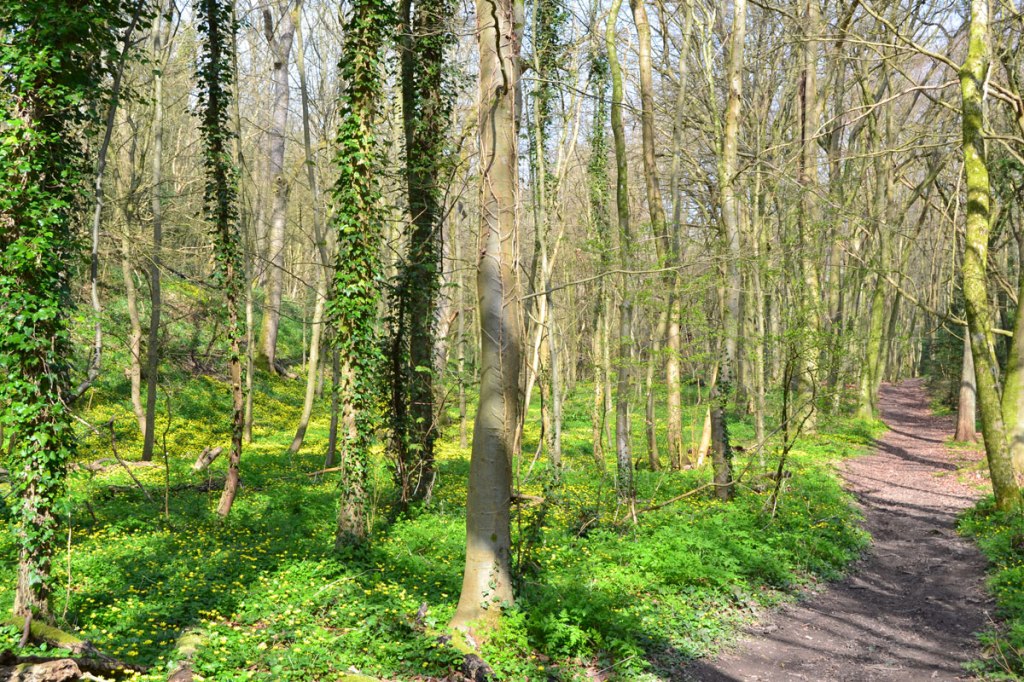
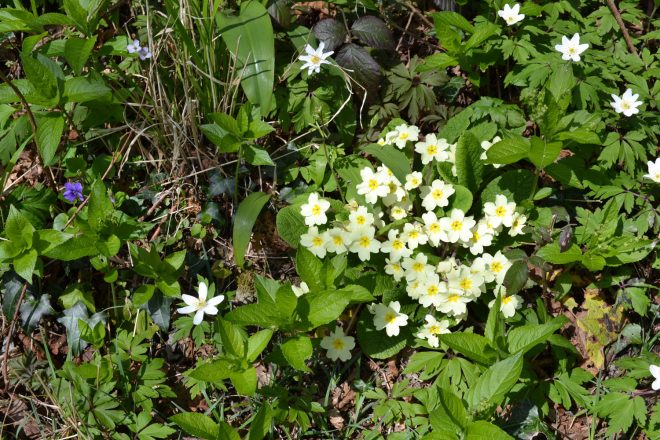
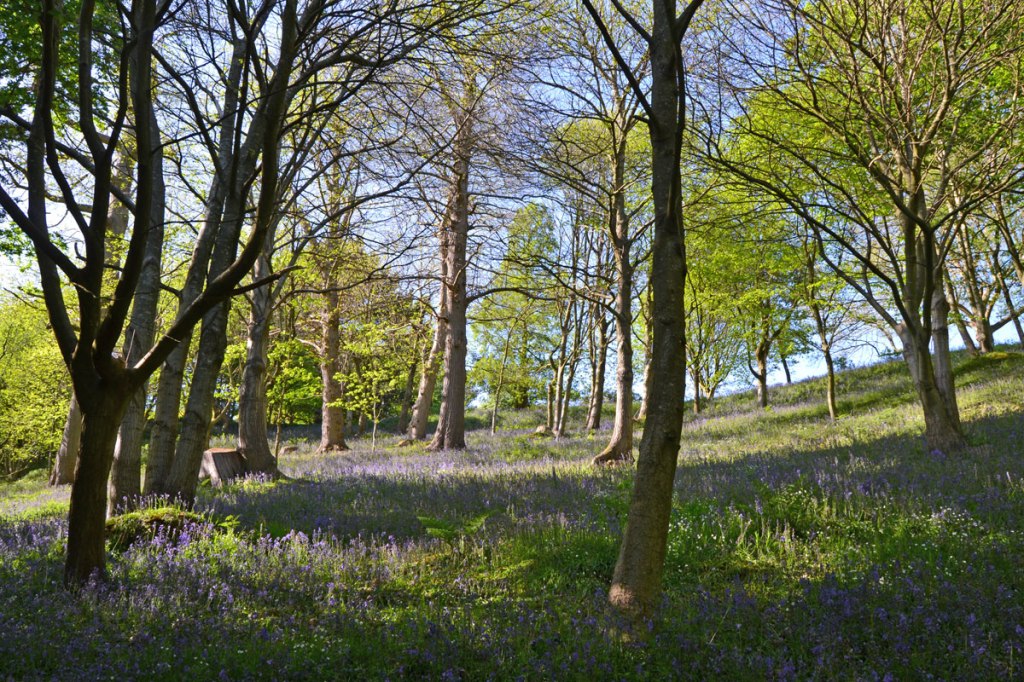
Within a couple of weeks bluebells will be taking over in the woods – the first are already in bloom – but until then there’s plenty to enjoy: cuckoo flower, celandine, wood anemone, primrose and cowslip in particular. There are early orchids too; at Polhill, Strawberry Bank (on the Cudham walk), High Elms country park in the glades within the woods and Downe Bank (a detour on the Downe walk). I particularly enjoy the first sightings of butterflies: I’ve seen brimstone (usually the first to emerge), small tortoiseshell and peacocks so far this year. At Fackenden last week, all three species were fluttering in Magpie’s Bottom. In the woods behind adjacent to Magpie Bottom (the OS map calls it Great Wood), the celandine carpeting the ground under the beech trees was spectacular. Things change fast at this time of year though and pretty soon, all will be blue.

Early February sun, then gloom. But let there be jazz!

Early February sun, then gloom. But let there be jazz!

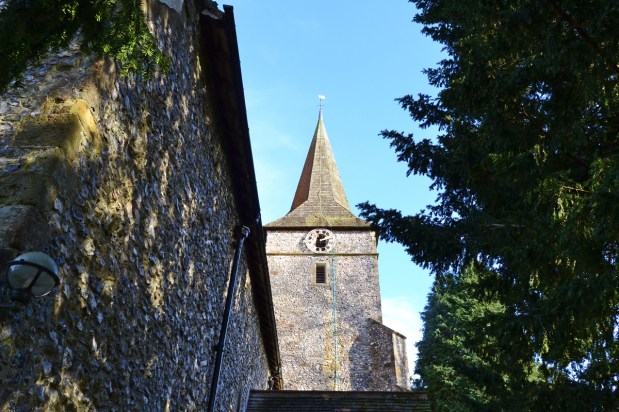
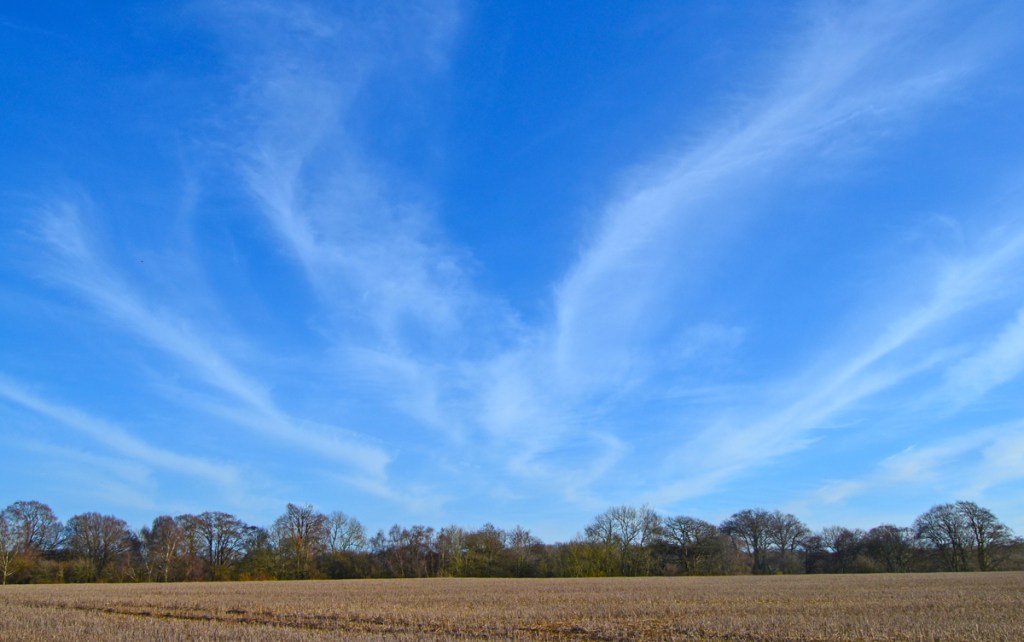
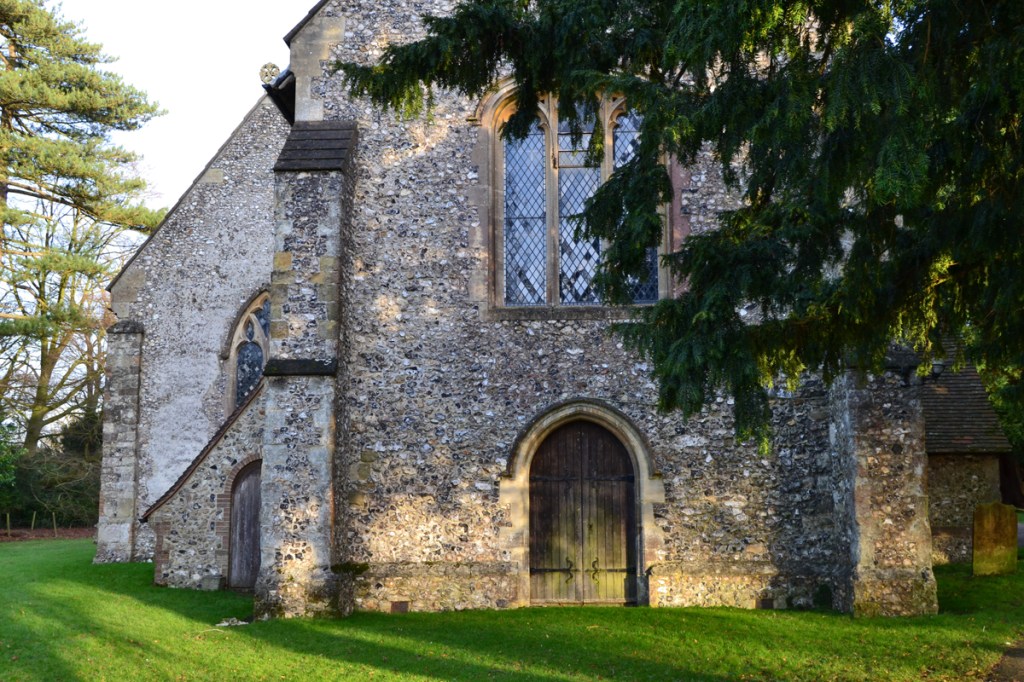
Last week, the Cudham walk was terrific with sunshine and wisps of high cirrus stippling the sky. The medieval flint church (pictured), shaded by ancient yews was beautifully lit as was the wonderful New Year’s Wood. There was little in the way of mud, but also few birds for some reason, even among the hedgerows. This drop off in the numbers of birds is something I’ve seen right across the walks lately. It seems to me that rich, well kept woodland areas such as Scords Wood and Petts Wood aren’t doing quite as badly as farming and pasture areas. This is what worries me about those new fences at Downe – does it mean more grazing and less space for wildflowers? Steve Gale’s blog North Downs and Beyond has some more on the drop off in bird populations. Steve is an expert observer of fauna and flora and has the experience to observe and record changes in numbers.

Unlike that sparkling Sunday in Cudham, the weekend just past was so gloomy that I only managed a brief cycle to Beckenham Place Park and back. I found little to inspire to be honest. Let’s hope for better in the weeks ahead.

Come along and enjoy top quality live jazz

Not venturing out at the weekend actually suited me as I needed to practise my saxophone (and watch some sport) in readiness for a gig tonight (Monday 13th). So if big band jazz is your thing come along to Sundridge Park WMC at 134 Burnt Ash Lane, BR1 5AF. It’s £6 to get in and the band starts at 8.30pm and finishes at 10.30 with a short break. There’s no need to book (you can’t anyway!) but there’s a decent bar at hand and lots of seating in a large room with good acoustics. The next performance after this is on 6 March at the same venue. The music we play is by arrangers and composers such as Thad Jones, Bob Florence, Gil Evans, Kenny Wheeler and Mike Gibbs, the sort of material performed by the Woody Herman, Stan Kenton, Count Basie bands etc. What else can you do on a bleak Monday night that’ll be as uplifting? Don’t answer that!

Wet, wild and wonderful

Wet, wild and wonderful

I’m intrigued about how many of us look outside on a day like today – drab, cold, raining – and just think that curling up with a book or making a great meal or something would be a far better use of time than a walk. Who can blame those who decide such days are for doing stuff indoors? But judging by the views on this website there is a hardcore who come what may will not only brave the elements, they will relish them. I’m in this camp – although I do have a good book to read. Anyway, lovely autumn colour awaits those who make it out, all the more inspiring against the grey backdrop. Waterproof trousers and good boots will be handy though. Photos are from the Fackenden Down route last weekend on which the weather was actually fine as it turned out. Scroll through the photo gallery below right for autumn colour from all the walks.

A waft of Knole

A waft of Knole

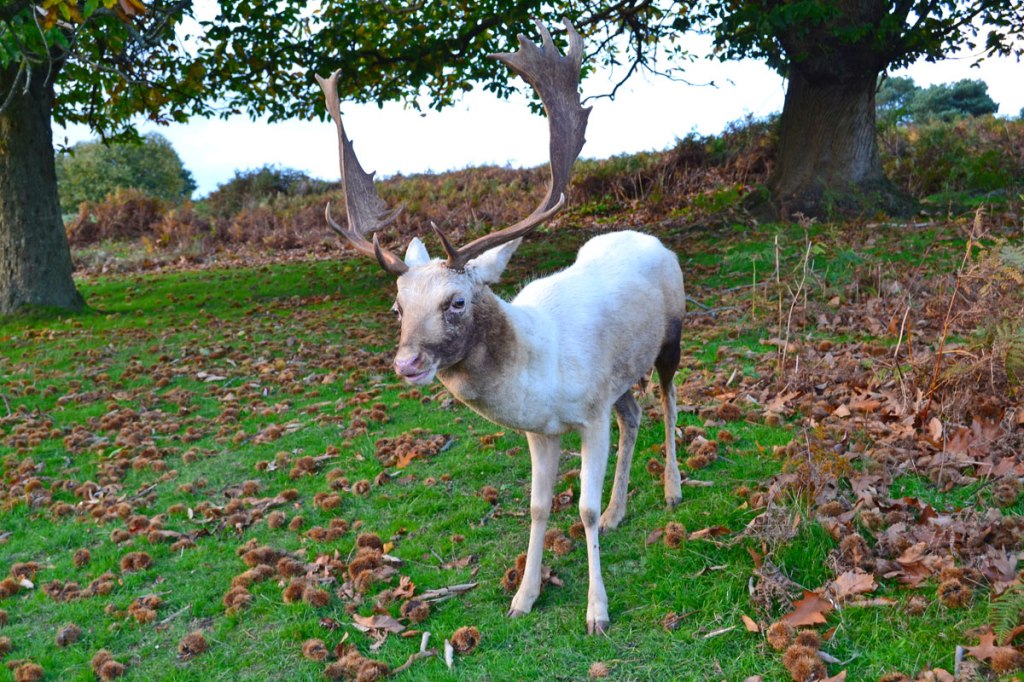
A walk in late afternoon around Knole was superb for autumn colour, acorn-munching deer and beautiful tints of pink and orange in the sky and reflected on the austere frontage of that superb medieval-Tudor house. We ventured off the main path as usual and veered through woods on minor trails discovering yellow and ochre fungi. The walk ended amid wafts of woodsmoke at One Tree Hill. Wonderful.

The sand paths of Oldbury

The sand paths of Oldbury

What a wonderful walk today. The Oldbury-Ightham-Stone Street jaunt is a bit of an epic by KWNL standards at 6 miles, but every metre is worthwhile. I started badly, however, by telling a group of mountain bike riders they were wrongly cycling on a footpath. I was sure I was right but it turned out I was wrong. It was a bridlepath and they were fully entitled to ride on it. It wasn’t an unpleasant exchange and it was quite funny that I had to admit I was wrong after being shown the map. I ended up saying “Well I haven’t seen any horses, have you?” but I was trying not to laugh. I’m a country lane cyclist myself; I can’t understand cycling down paths and bumping over roots and being brushed by nettles. And I can’t understand cyclists steaming or wobbling down main roads with queues of nervous car drivers behind them. For me, the whole point is a bit of peace and quiet. But that’s me. Live and let live I say; each to their own.

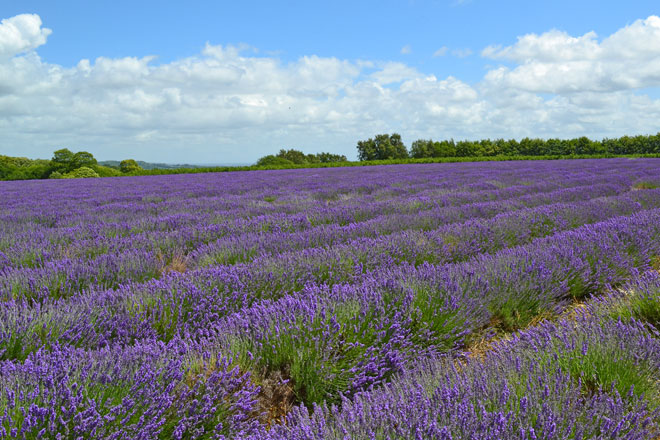
I hadn’t done this walk since Covid. My friend Steve introduced me to it in July 2020. The lavender has been largely harvested but as a result, on that section of the walk I didn’t pass a soul. Interestingly the springs of the Greensand Ridge seemed to be unaffected by the dry and hot weather, so ponds were looking healthy-ish, and the little streams near Ightham tinkled beautifully.

One of the oddities of the walk is that despite being on the Greensand Ridge you don’t get the same extensive Weald of Kent views that you do further west, at One Tree Hill and around Ide Hill. There are just too many trees in the way! But I did get great views of the Spitfires from Biggin Hill on their joyride flights; they seem to use this area to break away from the accompanying photo plane.

Pond at Point 1-2

Oldbury woods cover an iron age fort. It’s easy to see how this would have been a fortification in the centuries leading up to the Roman invasion but surely the Britons must have chopped down loads of trees to give themselves a field of view.

There is a similar feature at Keston, just south of the ponds. Navigation is not so straightforward at two points: between Stone Street hamlet and St Lawrence’s Church, and on Oldbury Hill itself, so check the GPX. Despite going slightly wrong twice (but quickly getting back on track thanks to the OS GPX) I was back home for the very enjoyable England v Germany football final – an excellent end to the afternoon. It’s a great walk, I really recommend it.

Mitchell and Peach lavender, point 3-4 pictured in early July 2020 – it’s harvested by August (earlier, if it’s been hot)
The heat is on – escape from SE London?

The heat is on – escape from SE London?

For many of us, the coming heatwave will be a bit OTT what with not being particularly near a beach and with so little access to open-air pools in London – unless you are lucky enough to live close to one. There was a time when we were much better served with lidos but – rather like the railway cuts 60 years ago – short-term profit for a few was allowed to triumph over health and environmental benefits for the many in the early 1980s. The result is that the queue for places like Brockwell Park Lido is usually pretty mega in hot weather. Crap isn’t it? But there it is. Compare with Germany where every city seems to provide fantastic open water swimming spaces. Beckenham to the rescue. The pleasant lake there offers £5.80 tickets for an hour long swim and it looks as if slots are still available this week. (Pictured below: the woods on the Cudham and Downe walks offer respite from the heat)

Anyway, I’ve noticed my old blog post on Bough Beech reservoir getting a lot of hits. This is probably because people are dreaming of having a swim. Forget it. It’s not possible there I’m afraid and strictly forbidden – it’s a nature reserve and an important facility, so it’s definitely a no-go zone. I’ve noticed people taking to local rivers; the River Pool, the Darent, the Medway, the Eden and the Cray, in certain places. I wouldn’t recommend it: there are just too many issues, including pollution, dangerous substances in the water etc, and although I know a few places where I might take a dip it would be irresponsible to recommend them to others (he said, pompously). OK, OK, OK … cycle or walk from Tonbridge Castle to Penshurst Place on the Hayden country park path; there’s a lovely spot a mile short of Penshurst for a dip in the Medway. But you won’t be alone!

Summer evening sky, early July

The beach is the best option along with dedicated sites such as Leybourne Lakes just west of Maidstone, and the previously mentioned Beckenham Place Park. But other than swimming, woodland walks are great for getting exercise while staying cooler at this time of year: Petts Wood, the Meenfield woods routes near Shoreham, the Hever walk and Hosey Common are the best for shade, along with walks within Bromley borough (but not yet on this site) at High Elms and Hayes Common towards Downe. Yesterday on the superb, understated Cudham walk, just as we began to feel the power of the sunshine we would enter the cool woods and comfort levels shot up. Take water obvs. It was on 10 July that the Battle of Britain started, so a good day to hear the distant murmur of Merlin engines as the Biggin Hill Spitfires headed out on their joyriding sorties.

Give Chevening a chance

Give Chevening a chance

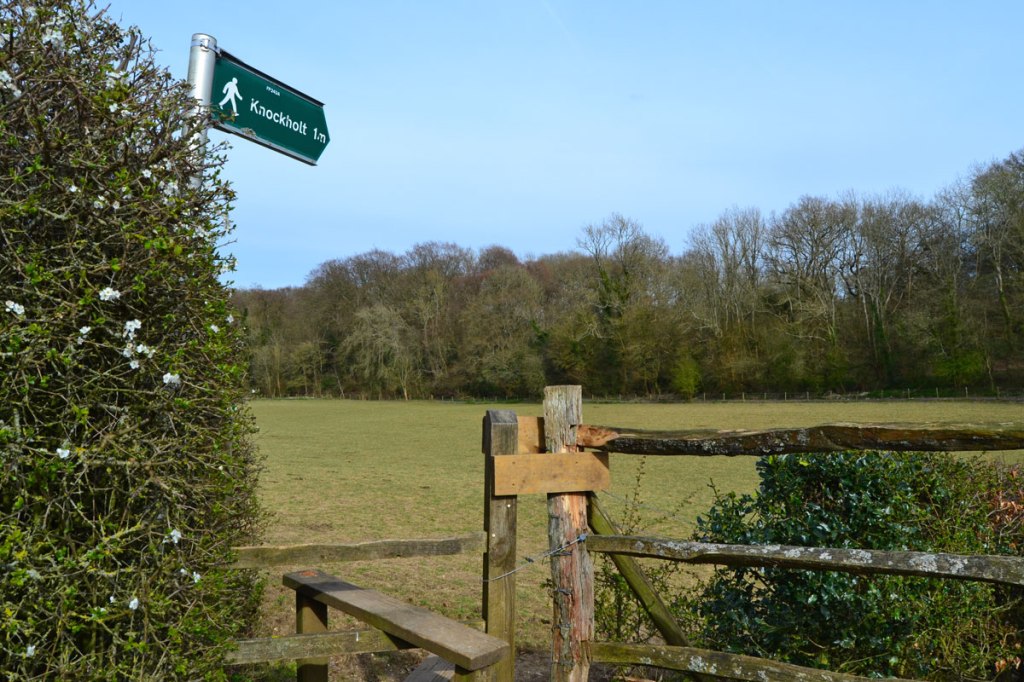
Of all the walks on this site the one I’ve done the least is probably the Knockholt/Chevening circuit. I’ve not always been wildly effusive about it, even describing the early stages as dull. I was completely wrong it turns out. I strolled the route today and found it superb. The fields on the right of the North Downs Way in the early stages have been left fallow and look to be in a pretty advanced stage of rewilding – the flora is high enough to hide the odd lynx! As I hit Sundridge Hill the instantly recognisable and repetitive song of the yellowhammer burst from the hedgerows like some sort of alien morse code. A huge buzzard (what are they feeding them around here?) eyed me up from above. The views over Chevening House towards Ide Hill were delightful as I cleared the scarp face woodland. Chevening hamlet was as spooky as ever and the following climb back to Knockholt took in a broad vista of the Vale of Holmesdale under a moody sky with plenty of butterflies and wildflowers to admire. A red kite skidded and yawed above in the thermals and I startled a pair of greater spotted woodpeckers which suddenly took off from a fallen tree trunk a couple of metres ahead of me. I think my previous aversion to this walk was to do with the “private” signs around Chevening House, its association with some deeply unpleasant national figures, and the slightly creepy feel of the hamlet – it’s just so quiet, but it’s me, it’s not them – the road noise between points 4 and 5, and having to walk on the road for 100 metres by the farm at point 5. The truth is, there are great views, loads of wildflowers, wonderful trees and nothing much not to like.

As quite often happens in these parts the camera doesn’t capture the walk; slopes are flattened out so the scenery looks blander than it really is.

Moody blues on the way out

Moody blues on the way out

The bluebells have faded a little earlier than usual this year. It seemed to me on the Ide Hill walk today that the south-facing slopes may be drier than normal for spring, which has affected bluebells’ longevity while those in more sheltered parts of the woods were still full of colour. There’s certainly been a marked lack of rain this year – last month just 18mm fell in north-west Kent, about one-third of the usual April total.

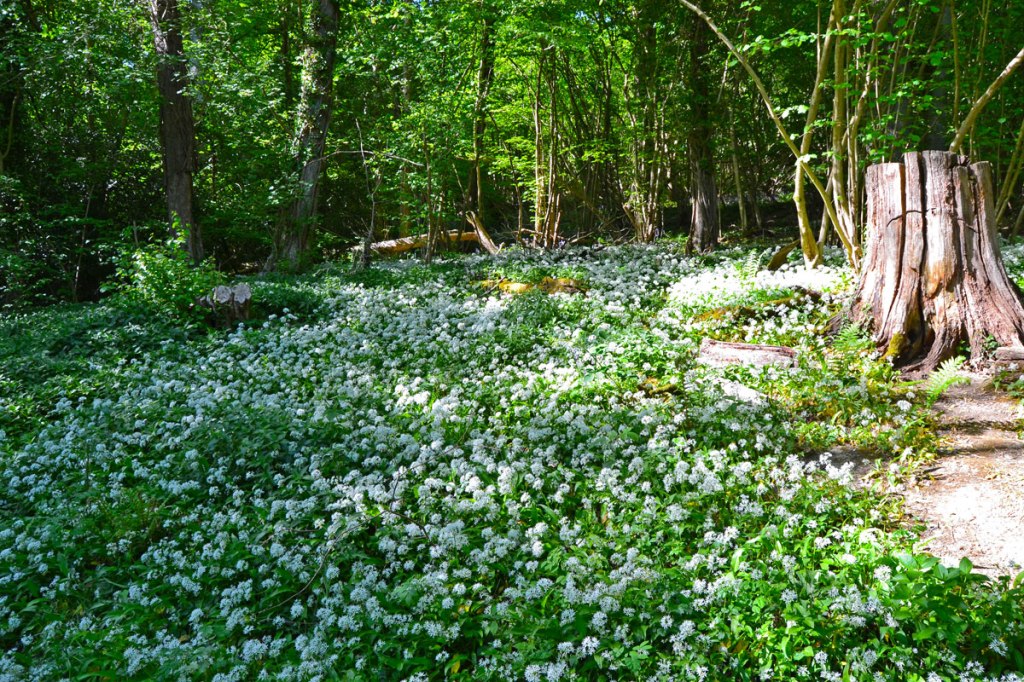
In Meenfield woods, on the Shoreham and Polhill walks, the bluebells, while fading, were still hanging on last weekend – perhaps those woods have retained a little more moisture. I’m no expert. Anyway, instead of bluebells, look out now for wild garlic (or ransoms) growing in profusion in woods on Kent Walks near London. Their brilliant white/cream flowers (pictured above at Rook’s Hill on the One Tree Hill walk) are a sight for sore eyes where there are damp woods and subterranean water close to the surface. The Ide Hill walk is quite unusual for KWNL in having plenty of gorse (near the walk’s start) which is looking brilliant in the spring sunshine, too.

As for birds, things still seem a little quiet with few swallows, martins and swifts making it to the region so far, but I was delighted to see my first whitethroat of the year in one of the many superb country lane hedgerows between Shoreham and Well Hill, a great bird to watch for when on a country cycle. (Pictured in slideshow: whitethroat, Darent Valley view, faded bluebells, Ide Hill view, Scord’s wood, wild garlic in Scord’s wood, azalea in Emmett’s and faded bluebells of Meenfield Wood).

Cudham route firmed up – literally

Cudham route firmed up – literally

The Cudham chalk paths route is a superb saunter through meadows, valleys and woods; its lack of grandiose views doesn’t detract at all. There’ll be plenty of bluebell vistas though from this weekend onwards, but the other day wood anemone and celandine were still the stars, waiting to be eclipsed by the vast swathes of dark green shoots just waiting to burst into glorious dark blue flower. Gamboling lambs, buzzards and the growl of the occasional Spitfire overhead, heading back to Biggin Hill, provided additional entertainment. On entering the wonderful New Year’s Wood, on the second half of the stroll, I was delighted to see the normally muddy path (actually a bridlepath) had been surfaced with mulch and stone – I don’t know the name of that kind of surface – adding to the pleasure of this lovely walk. Great!