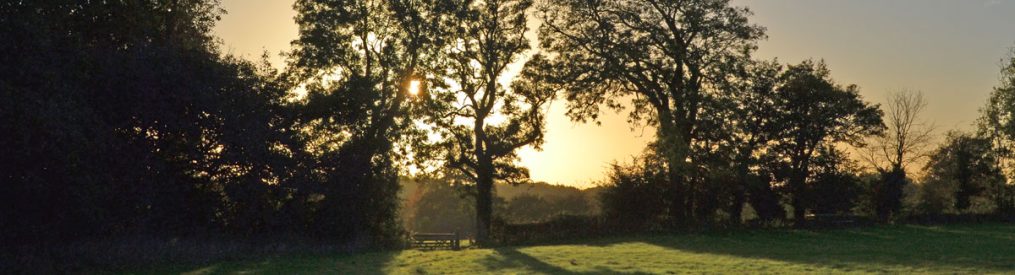
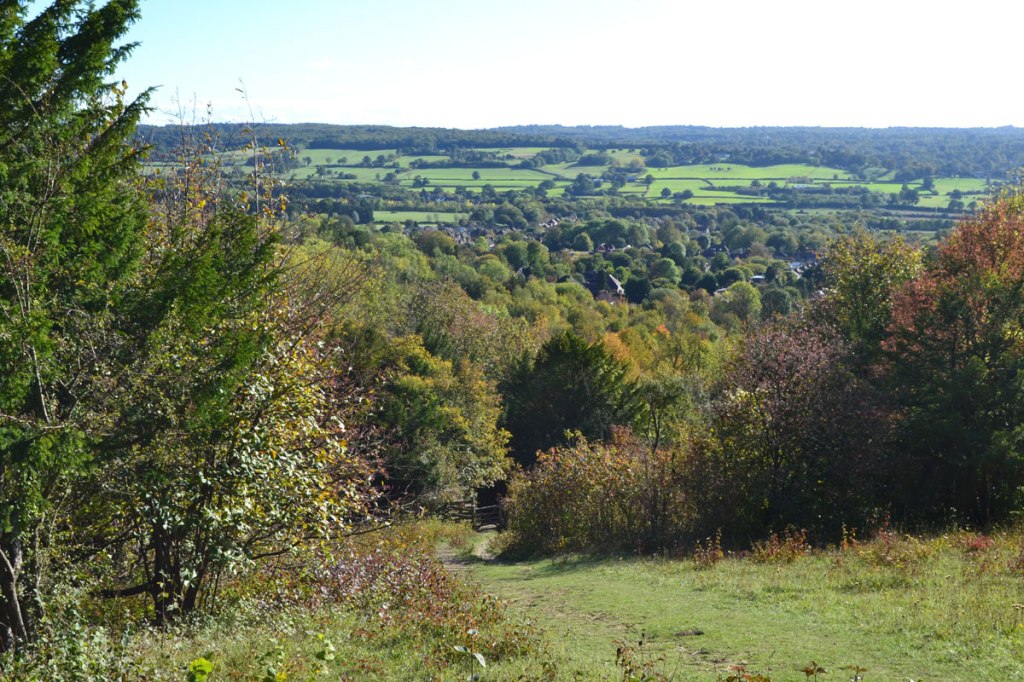
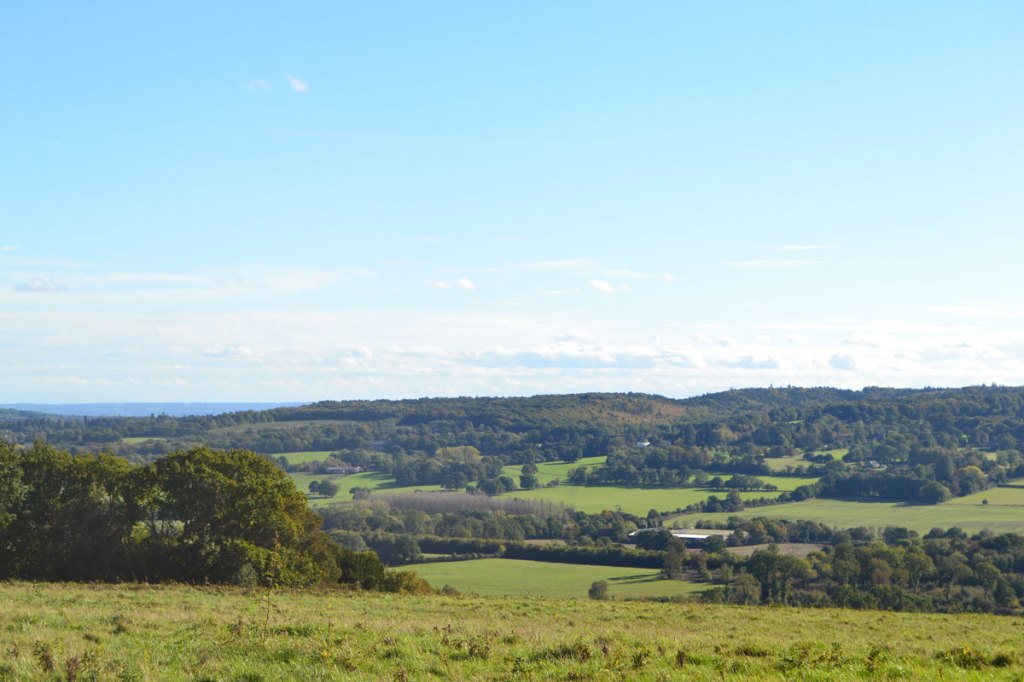
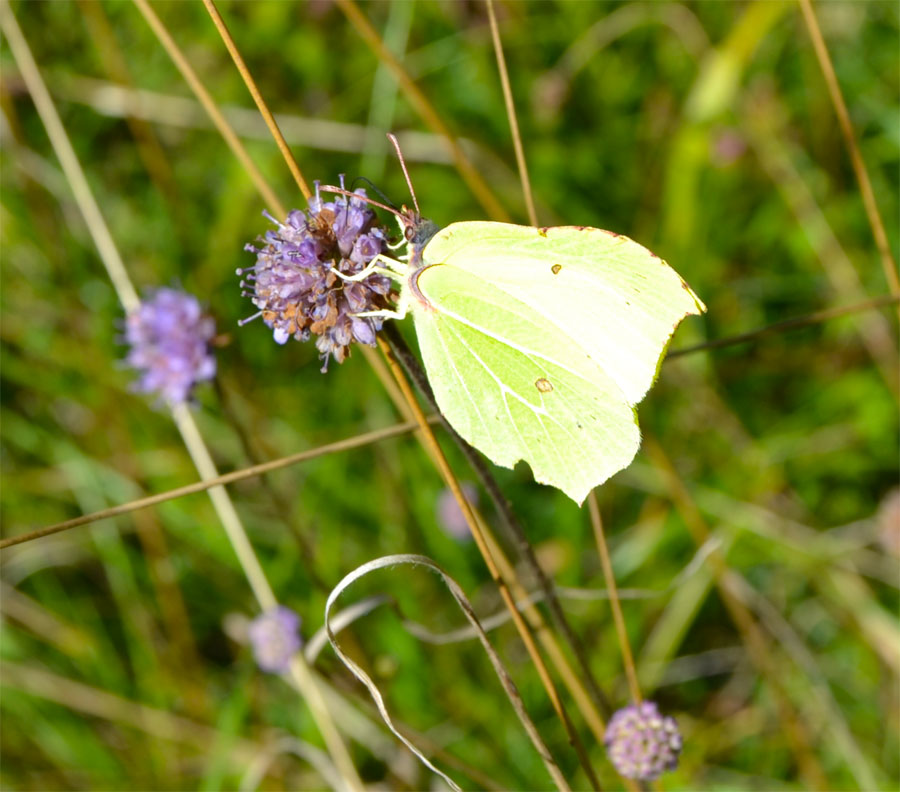
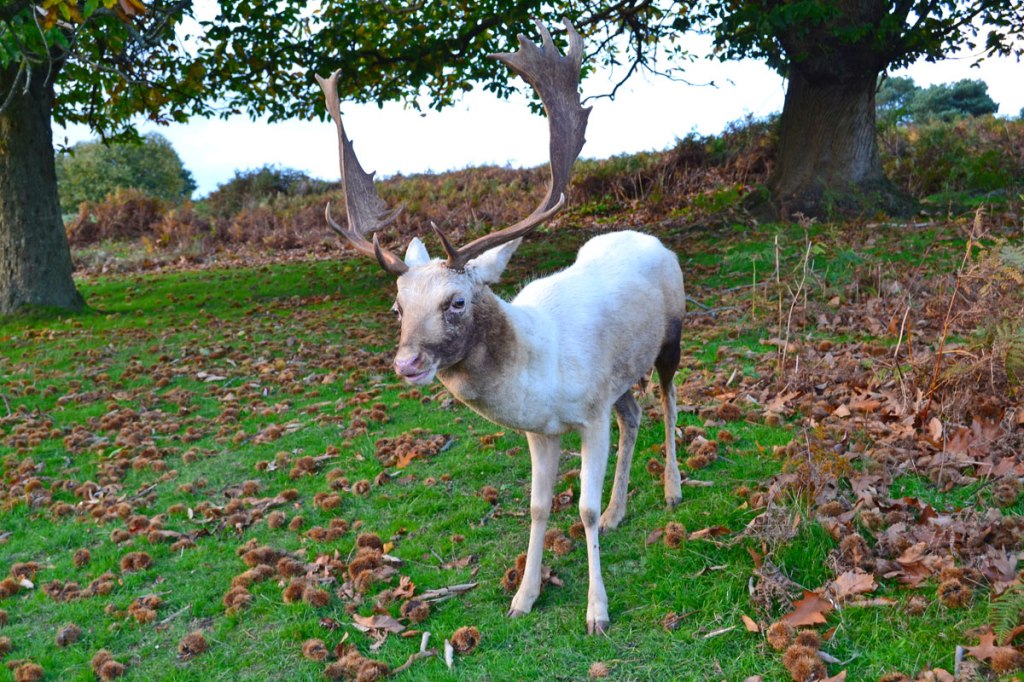
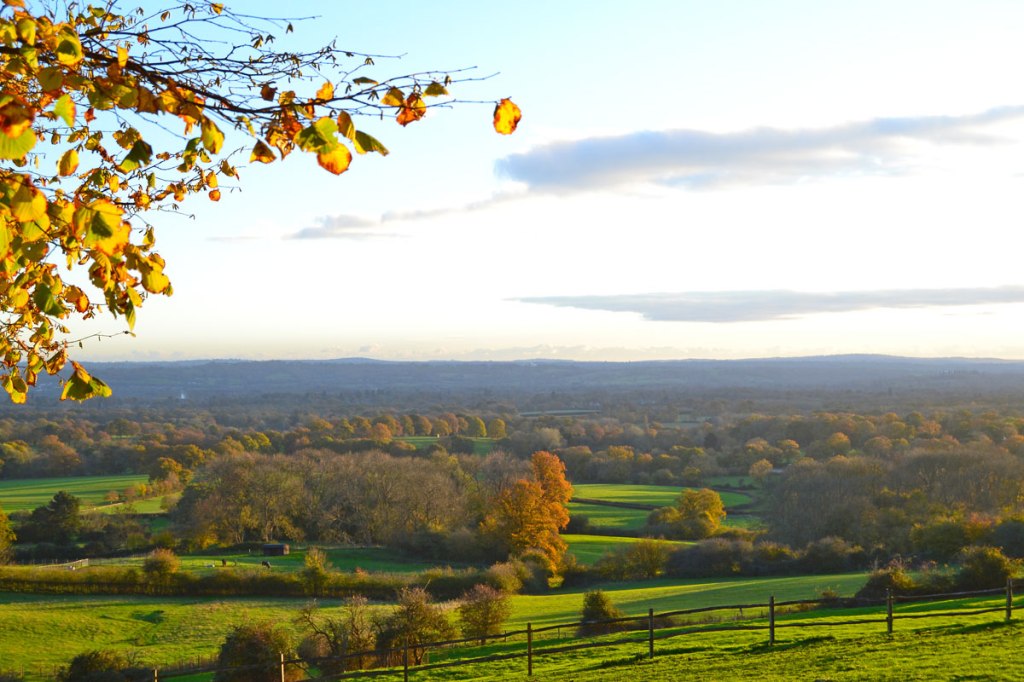
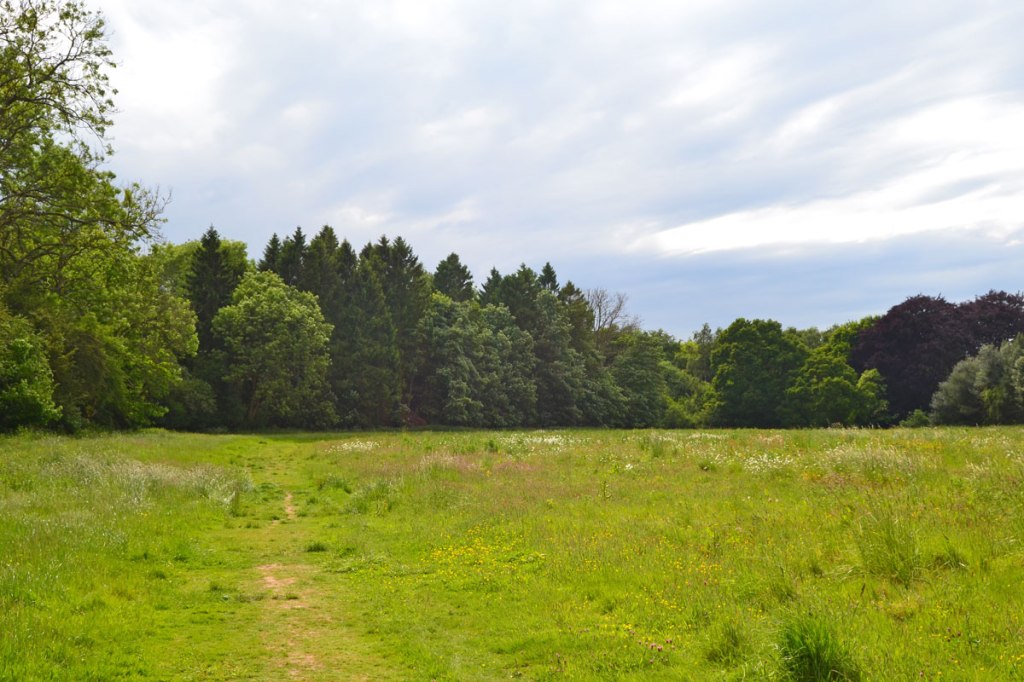
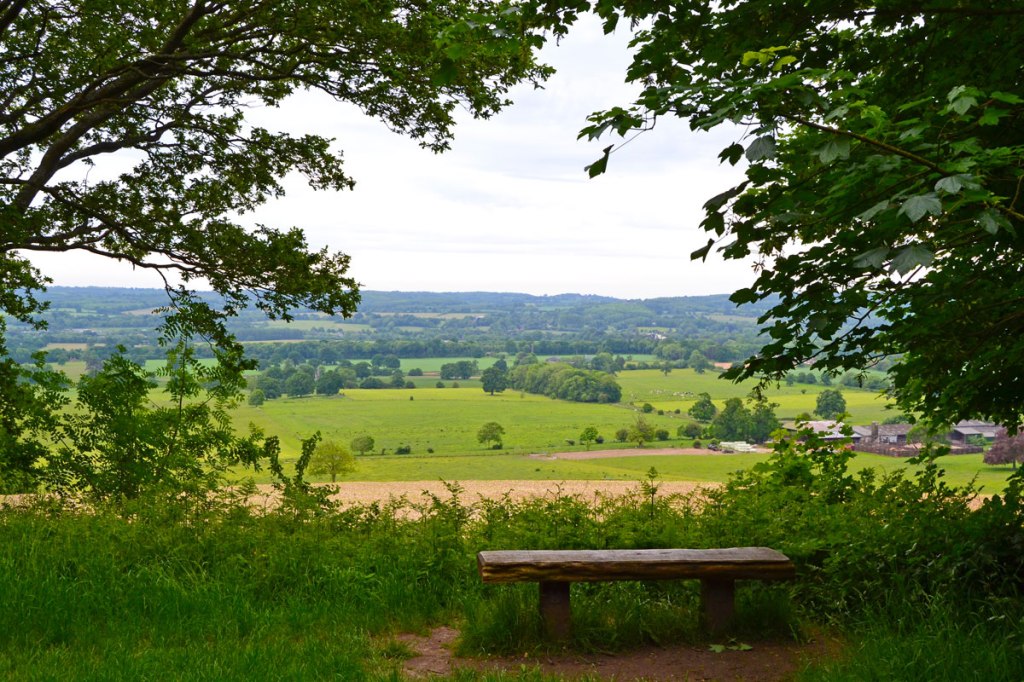
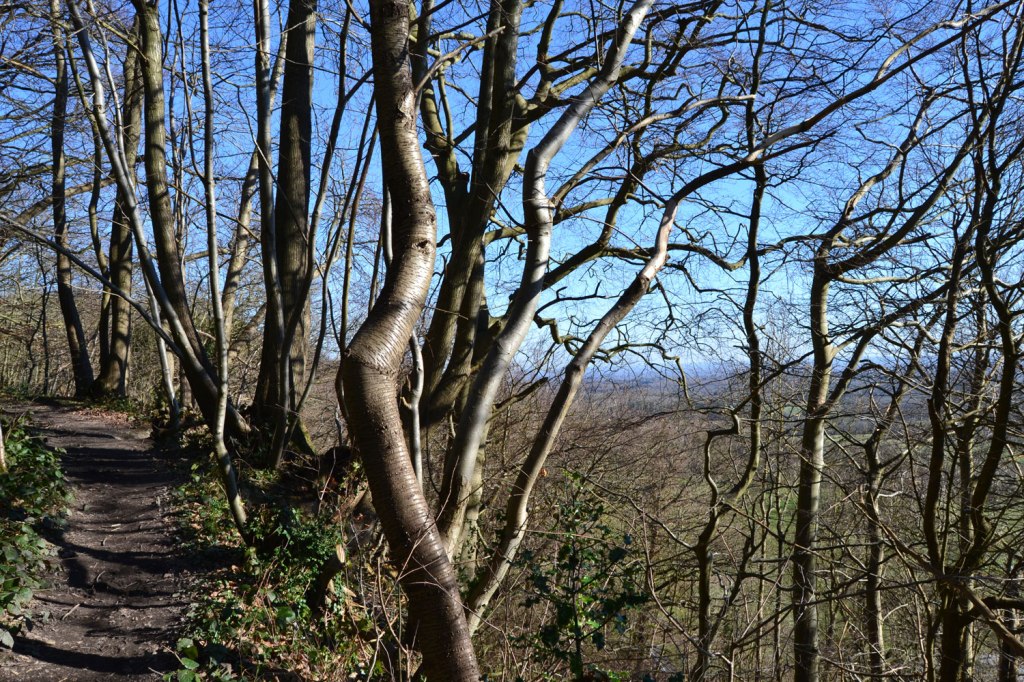
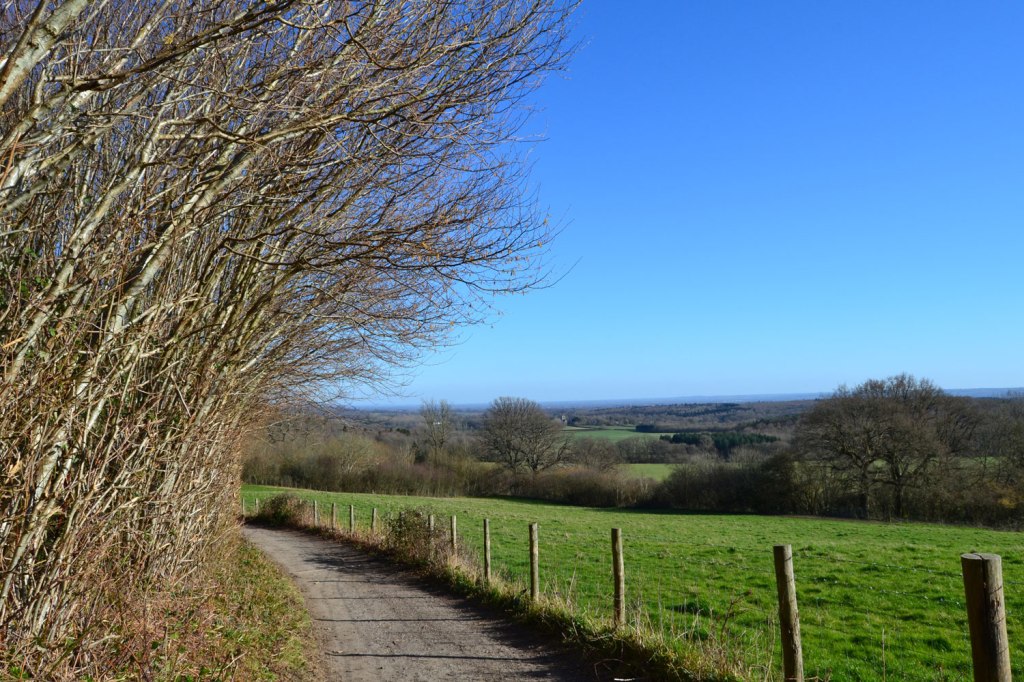
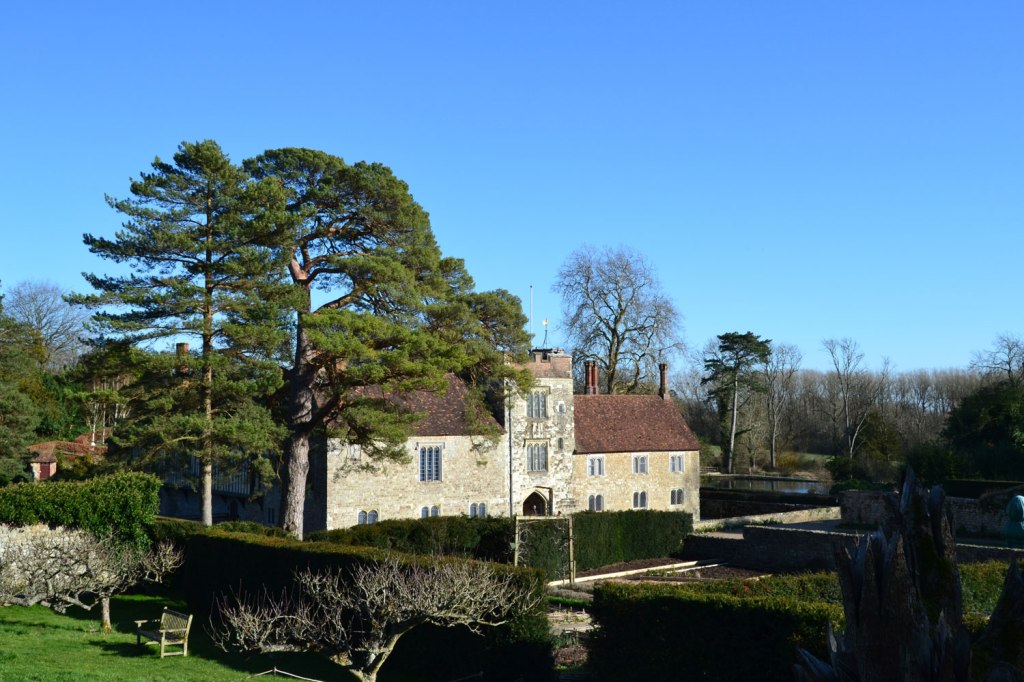
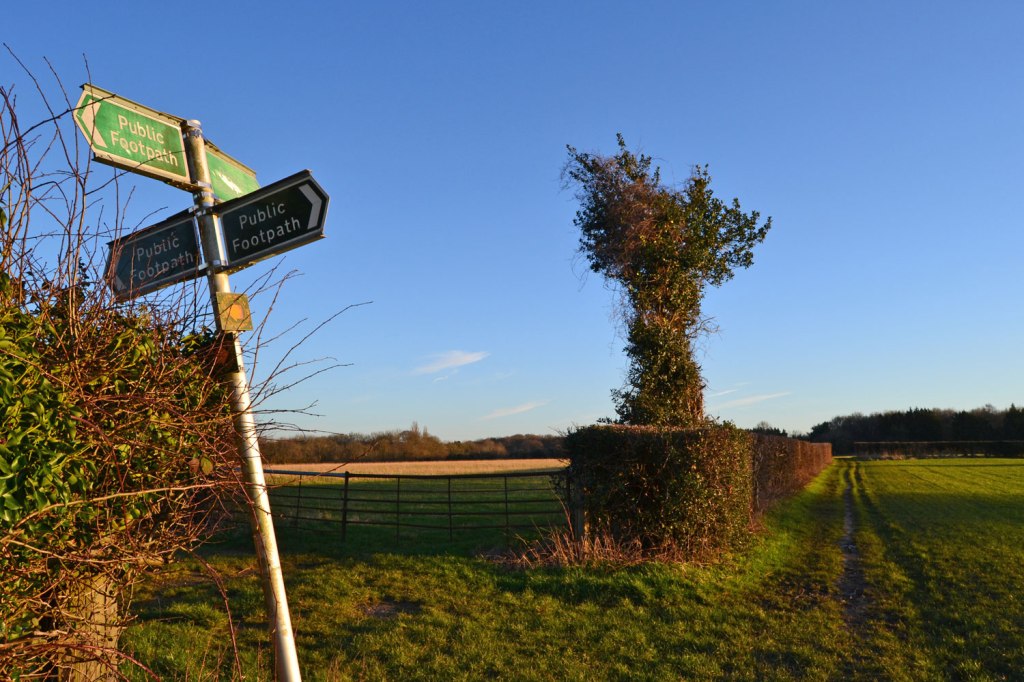
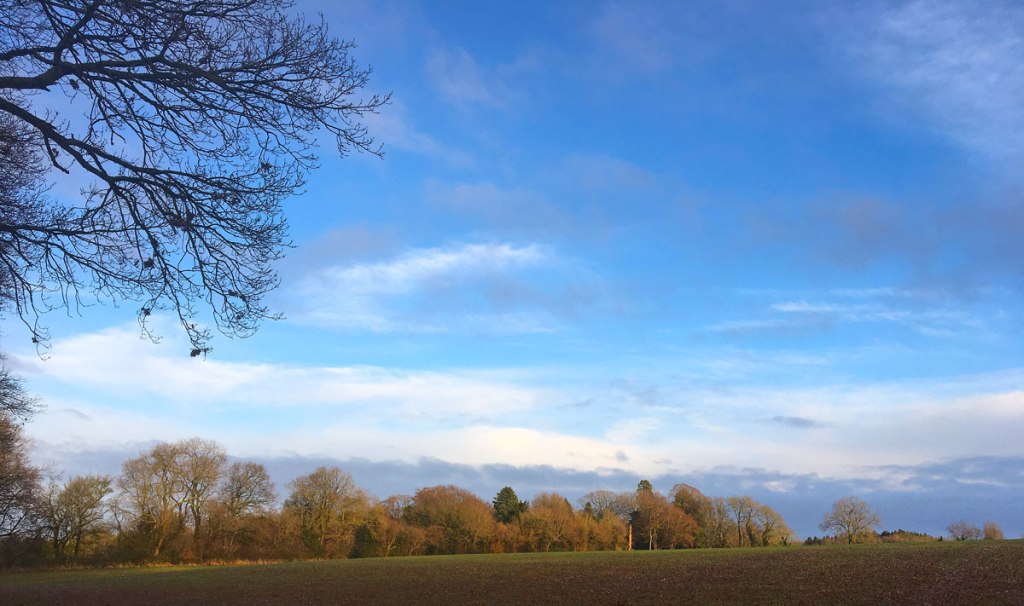
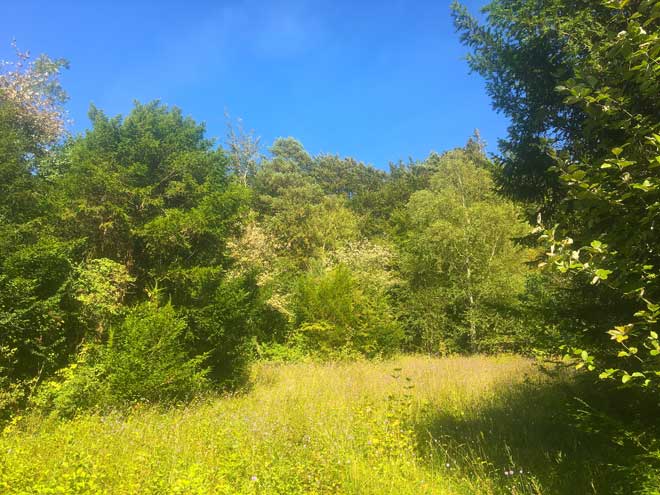
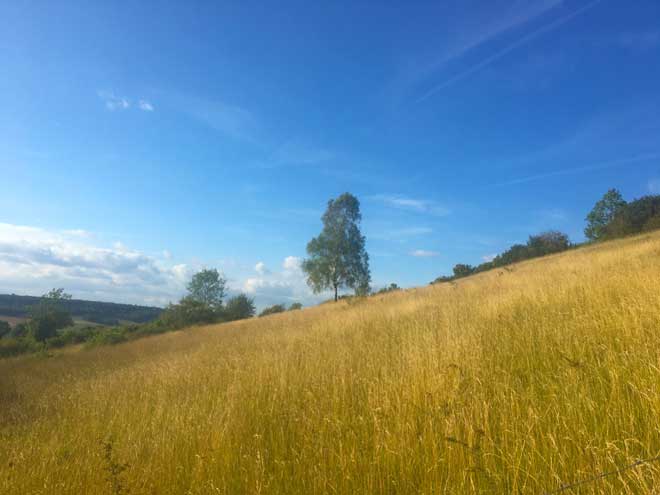
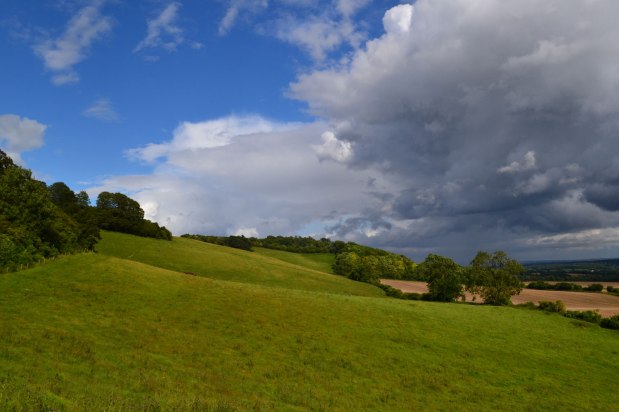
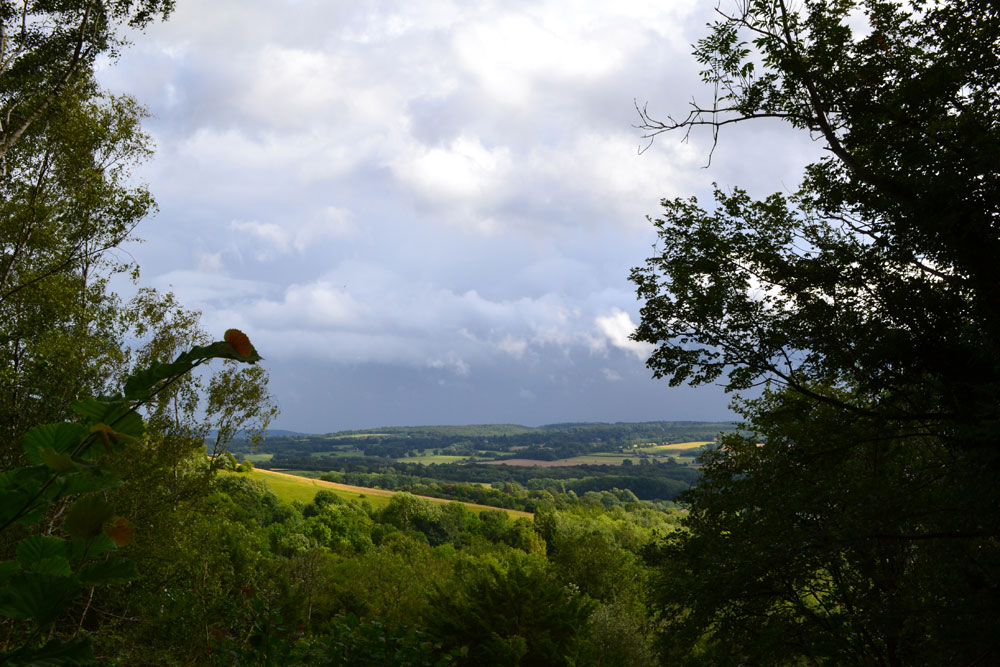
This route, no 28, is similar to walk 27, but is better for people walking on Sundays, when there is no train service. You can start it from the lovely Chequers Inn, Heaverham (if you buy a drink/meal); Kemsing village car park; or Mon-Sat from Kemsing station. Rather like the Chevening/Knockholt walk it’s another chalk escarpment route that drops down into the Vale of Holmesdale, and uses short stretches of the North Downs Way. The link below includes the usual Google map and the more useful OS map, plus written directions. PDF to download will follow in a few days!
The hot sunny weather – this September has been pronounced already as one of the hottest on record in the UK – has been good news for butterflies. The Fackenden walk is particularly good for viewing them; the first few sections after the right turn on White Hill were awash with chalkhill blues, red admirals, large whites, meadow browns and gatekeepers this week. I was particularly intrigued by the numbers of brimstones flying during my sultry stroll there last Monday. These beauties are the offspring of the butterflies that emerged from hibernation in April and May. With so many scabious and devil’s-bit scabious still flowering along with the likes of fading marjoram, valerian, wild carrot and trefoil, there is plenty of foodstuff still around. That wonderful ‘garden’ running halfway up between White Hill and Fackenden Down is great for other creatures too: it’s clearly good habitat for reptiles and birds, though I’ve never personally seen much there, not even a whitethroat, blackcap or yellowhammer this summer – just a few goldfinches (a beautiful but common bird), red kite, buzzards and green woodpeckers after the many ants on these slopes. I did spot a rapidly disappearing common lizard though, after hearing a rustle in the leaf litter. Earlier in the walk, at Austin Spring I was delighted by a view of a hobby (a smallish, fast-flying falcon) hurtling straight towards me, presumably chasing dragonflies.
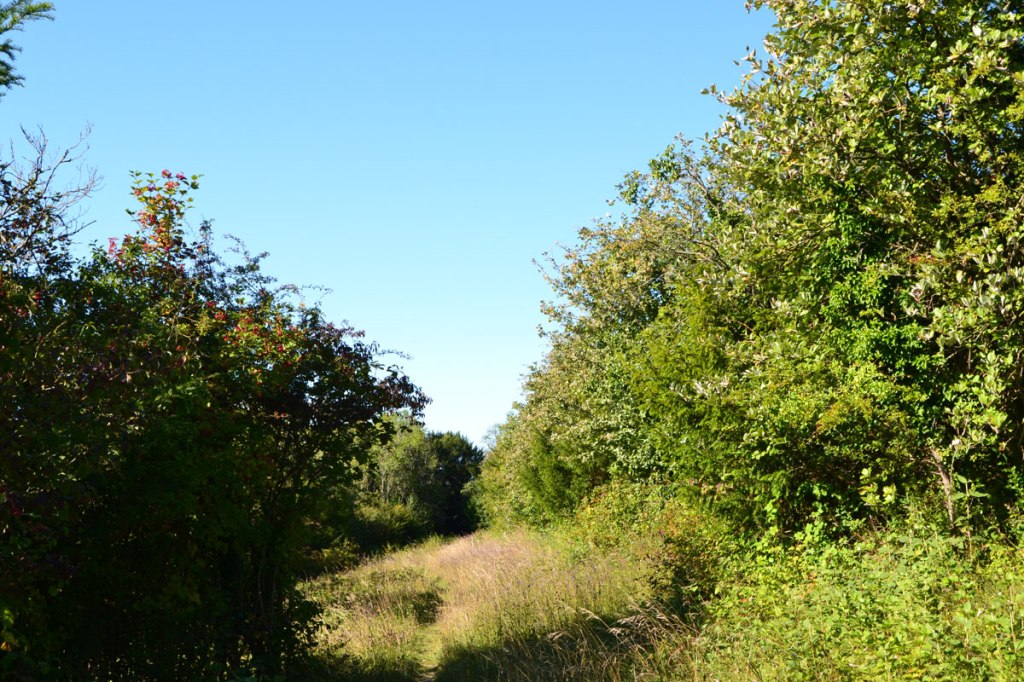
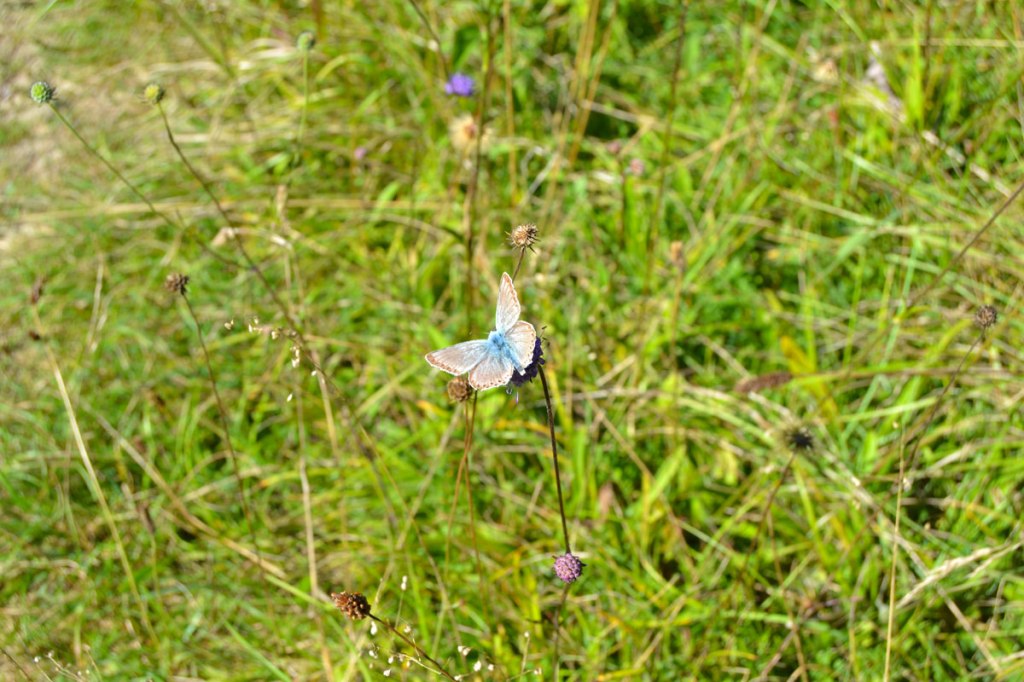
I’ve taken to doing the Fackenden route the ‘wrong’ way round these days: so I take the path on the left up White Hill that culminates in the steps, then across the Dunstall Farm fields to Austin Spring and Romney Street, Magpie Bottom (also great for flowers and insects) and eventually to Fackenden Down. Either way is great, I suppose I just want to save that ‘garden’ with its kaleidoscopic haze of grasses, scabious and insects until last. (Pictured: red admiral, brimstone, red admiral, the path linking White Hill and Fackenden Down looking north, a scabious flower and, below, a male chalkhill blue.)
The Polhill/Pluto walk was a delight this week; a chance encounter with a brown argus butterfly (pictured below by sort-of-accident while focusing on scabious flowers) on the Polhill Kent Wildlife Trust patch a highlight. The Andrew’s Wood segment of Shoreham Woods was full of great willowherb, marjoram and wild parsnip – a colourful brew. On the Darent Valley floor itself the sunflowers at Filston Farm were a treat and there were still some wild verbascum flowers in bloom at Sepham Farm. Very few birds were seen which is quite normal for this time of year although a hobby, a buzzard and a suspected corn bunting at Filston Farm were notable spots, while swallows were beginning to gather for their big goodbye. Yellowhammer were heard but not seen at the foot of Polhill.
It’s proved an unexpectedly dry month, which has meant less mud when walking at this time of year than in any February I can remember (I don’t take measurements to be fair). There have been some gloomy weekends but some bright ones too leading to loose talk of spring having sprung. It hasn’t. Appreciating the longer daylight hours, we headed off in late afternoon for a circuit of Lullingstone yesterday, taking in the superb Beechen woods, the views down the Darent Valley and the blackthorn/hawthorn-dotted grassy high chalk hillsides on the return (we’d started the walk from the golf club car park, not the visitor’s centre). The cloud-shrouded sunset was magnificent with glimpses of Jupiter and Venus in the twilight. Very few birds around apart from a few fieldfare feeding late on the eighth hole fairway in the gloom. The last golfers had gone and with few people around it was all very tranquil, leaving a lovely imprint on the memory that will last me through the week.
To mark the year’s passing I’ve picked one photo from each month looking back over the year so will hope to show the passage of the seasons. In some months I took few photos … which is why September’s picture is a bit “meh”. One photo is a complete cheat because it’s not from the walks here, but from north-west Scotland! I think my favourites are the final two of the year: Underriver view and Lullingstone in the snow, although the sharpness of that Cudham shot in remarkably clear July air does a lot for me.
I don’t rate myself as any kind of photographer, and I’m sure a true pro could do a lot better, but I do enjoy capturing an atmosphere or certain aesthetic. If others like them too, even better!
Happy Christmas to all who visit and use this website and best wishes for 2023.
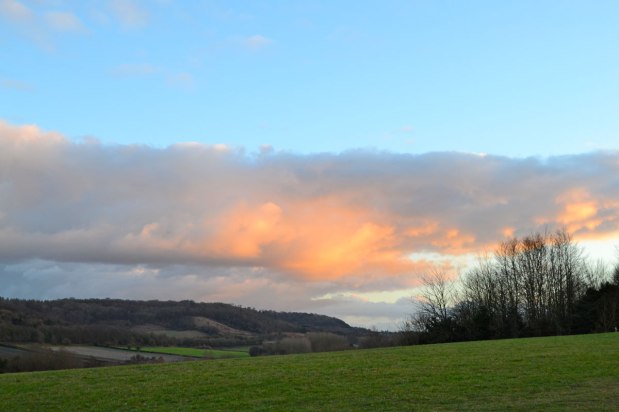
A cloud layer produces a false sunset at Ide Hill, January
Downe walk, February
Flooded woods, Bough Beech, March
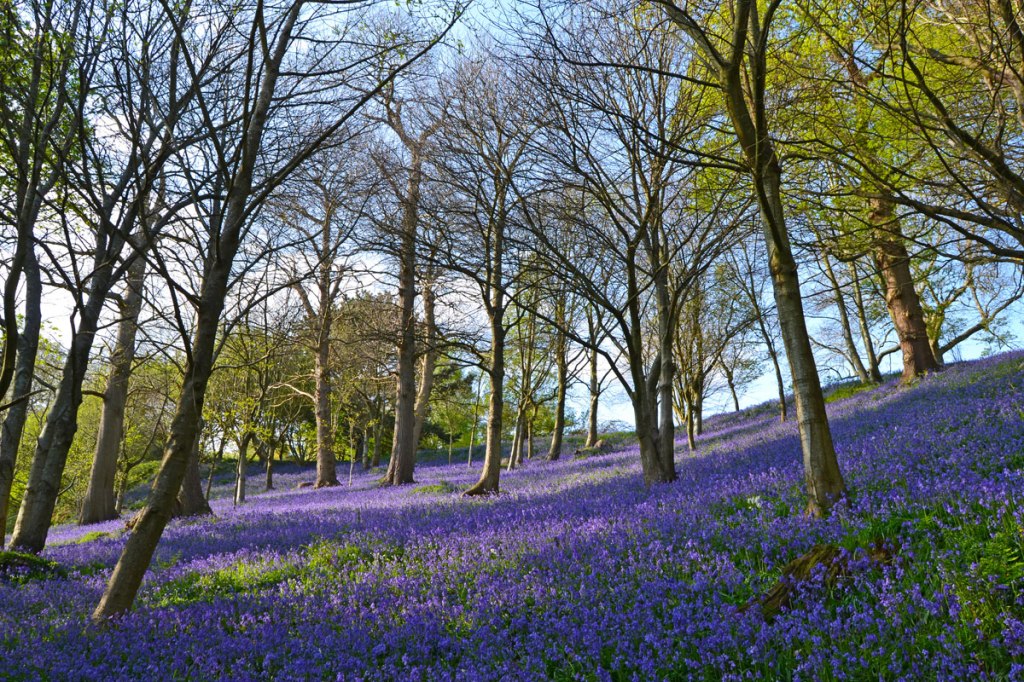
Bluebells in Emmetts Garden/Scord’s Wood, April 2022
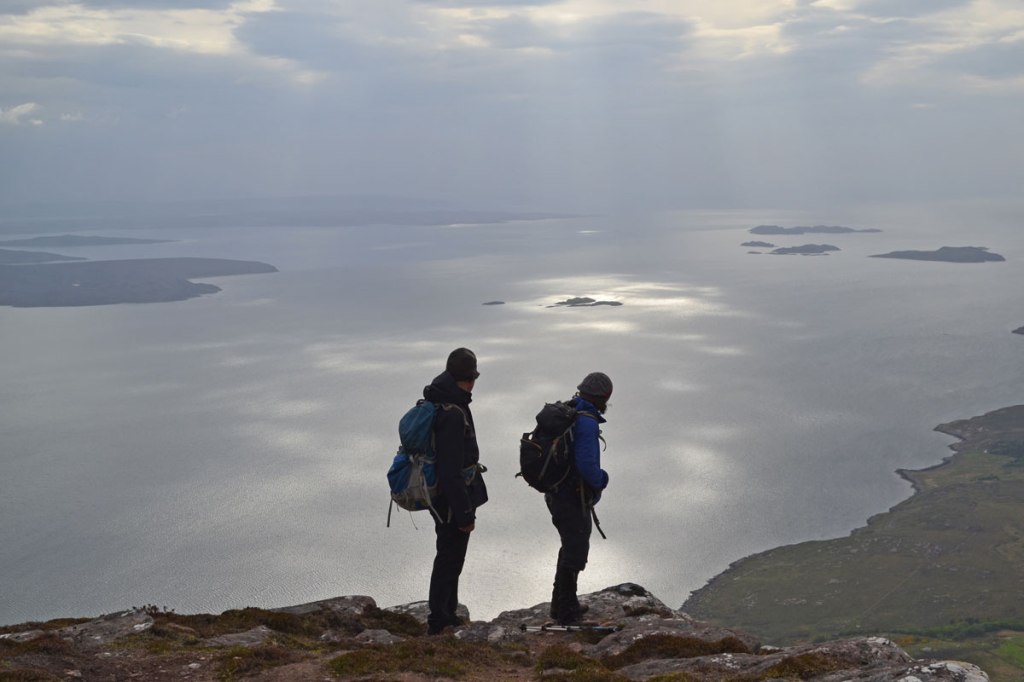
View over Summer Isles from Ben Mor Coigach, near Ullapool, May.
Pyramidal orchid in the Andrews Wood-Meenfield Wood gap, June
Cudham walk, July, between point 2 and 3, the field short cut
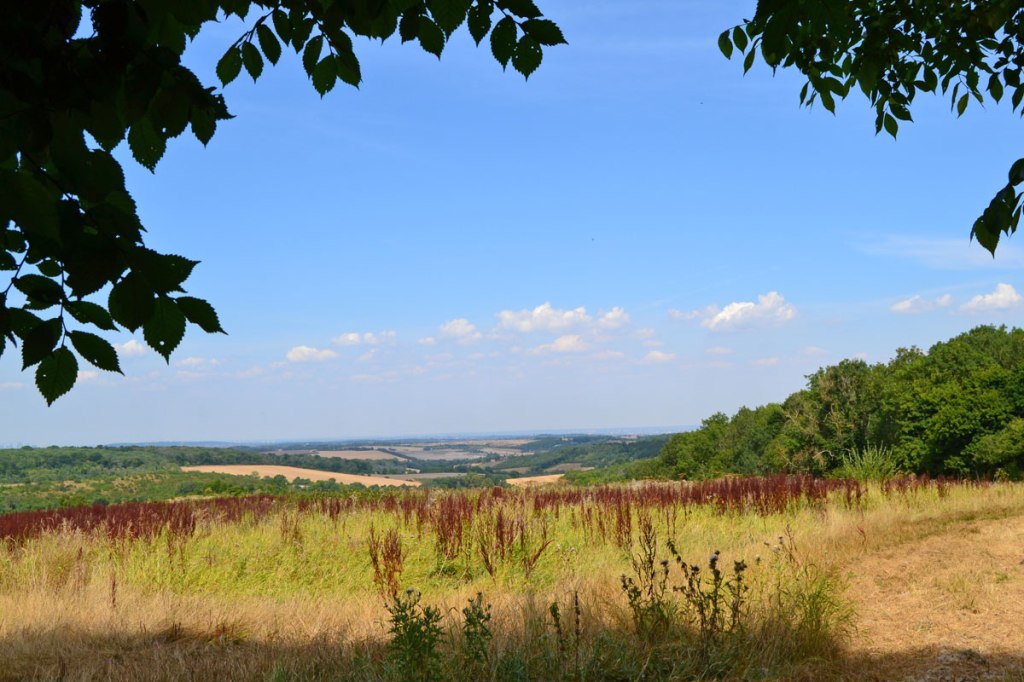
View from Romney Street, August, Fackenden Down walk
Of all the walks on this site the one I’ve done the least is probably the Knockholt/Chevening circuit. I’ve not always been wildly effusive about it, even describing the early stages as dull. I was completely wrong it turns out. I strolled the route today and found it superb. The fields on the right of the North Downs Way in the early stages have been left fallow and look to be in a pretty advanced stage of rewilding – the flora is high enough to hide the odd lynx! As I hit Sundridge Hill the instantly recognisable and repetitive song of the yellowhammer burst from the hedgerows like some sort of alien morse code. A huge buzzard (what are they feeding them around here?) eyed me up from above. The views over Chevening House towards Ide Hill were delightful as I cleared the scarp face woodland. Chevening hamlet was as spooky as ever and the following climb back to Knockholt took in a broad vista of the Vale of Holmesdale under a moody sky with plenty of butterflies and wildflowers to admire. A red kite skidded and yawed above in the thermals and I startled a pair of greater spotted woodpeckers which suddenly took off from a fallen tree trunk a couple of metres ahead of me. I think my previous aversion to this walk was to do with the “private” signs around Chevening House, its association with some deeply unpleasant national figures, and the slightly creepy feel of the hamlet – it’s just so quiet, but it’s me, it’s not them – the road noise between points 4 and 5, and having to walk on the road for 100 metres by the farm at point 5. The truth is, there are great views, loads of wildflowers, wonderful trees and nothing much not to like.
As quite often happens in these parts the camera doesn’t capture the walk; slopes are flattened out so the scenery looks blander than it really is.
Kent walks near London scrub up well on crisp late winter days like … today! Here are views of the One Tree Hill walks and the Downe walk from recent sunny days.
I hope everyone who dips into this website had a decent Christmas.
Yesterday (Boxing Day) there was a strange interlude on the Downe walk: a shard of blue sky suddenly appeared ahead, to the north. This was a most welcome sight given I’d accepted the walk would be a uniformly grey and dank trudge. It was also completely out of context with what has been a remarkably gloomy couple of months.
I hadn’t realised that a similar clear gap had developed behind me to the south west. Suddenly, without warning, the landscape was bathed in an utterly spellbinding glow. This reminder that the sun also rises in the UK lingered on for 45 minutes or so as curtains of impenetrable low cloud with rain began to threaten from the London direction. It was pure magic while it lasted.
The final field on the walk (pictured below) was laughably squelchy – definitely wellies only. The mud on all the walks is fairly horrendous at the moment. I was concerned to see the Polhill Bank/Pluto walk being viewed a lot on this site over the past 24 hours. The steep escarpment slope will be absolutely treacherous at the moment. The Fackenden route would be best avoided for the same reason. The best bets for lower mud levels are Knole and Lullingstone (although the woods will be a quagmire). One thing about mud though: I reckon you get more fitness benefits from trying to squelch your way round the walks, necessitating extra and lighter steps. (Best not to take dogs to Knole because of deer; they must be kept on lead at all times.)
The final (horrendously muddy) field during Boxing Day 2021’s half hour sunny interlude. This was once a lovely wildflower meadow with hawthorn trees, alive with bees and home to yellowhammers and bullfinches. But all biodiversity was ripped out around 2014.
Devil’s-bit scabious (Succisa pratensis) is a flower from the honeysuckle family and it looks so cool right now. Maybe not for much longer but it’s currently fairly prominent on the chalky walks such as Fackenden, Polhill, Chevening and Kemsing. Where the grassy hilly slopes are looked after by naturalists, the Kent Wildlife Trust for example, the flower supplants regular scabious – another superb flower and particularly sweet smelling – by mid September. The marjoram is no longer flowering much, and thyme has died down somewhat too so for pollinators the devil’s-bit, which looks a bit like knapweed at first sight, is the main show in town. It is certainly being enjoyed by butterflies and bees on the wonderful ‘wild garden’ path – which in June is great for orchids – leading to Fackenden Down this week. But the star of the walk – apart from the landscape and sky – was a superb green common lizard in a sunny spot near the top of the down. Few birds were in evidence but chiffchaffs called from the hedgerows, a buzzard soared in the distance and being I’m optimistic I’d say I may have seen a pair of late-migrating turtle doves heading south. Apparently devil’s-bit scabious got its name from its ability to treat scabies, a property that the devil didn’t like much (the devil wants us all to be itchy you see). Slightly weird but there you go.
The accompanying photos were taken on my iphone and hence are poor quality – they certainly don’t do the blue-purple sparks of devil’s-bit any justice; my camera is once again defunct at the moment. (Close up of flower photo by Anne Burgess/Geograph creative commons.)
It’s good to avoid using the car when possible – the traffic at the moment heading out of town seems pretty bad – so I’m hoping that when I add new routes there are viable public transport options.
At Heaverham hamlet you emerge close to the super Chequers Inn. There’s still a good mile walk to the eccentrically positioned Kemsing station though on some quite indistinct footpaths through pastures. You have to cross over the M26 on a bridge (making navigation a bit easier) then cross the railway line 200 metres west of Kemsing station at a foot crossing hidden in woods (making navigation a bit more difficult!).
Now, here’s the twist; trains back to SE London from Kemsing are infrequent (usually once an hour, with an easy short change at Bromley South) but they are fast. So timing the inevitable beverage at the Chequers can be tricky. If you overcook it, then it’s a 15-minute walk straight down Watery Lane (no pavement so frankly dangerous) to the station. But allow 30 minutes at least for the far more attractive footpath route. If in doubt, just stay for another drink and take your time.
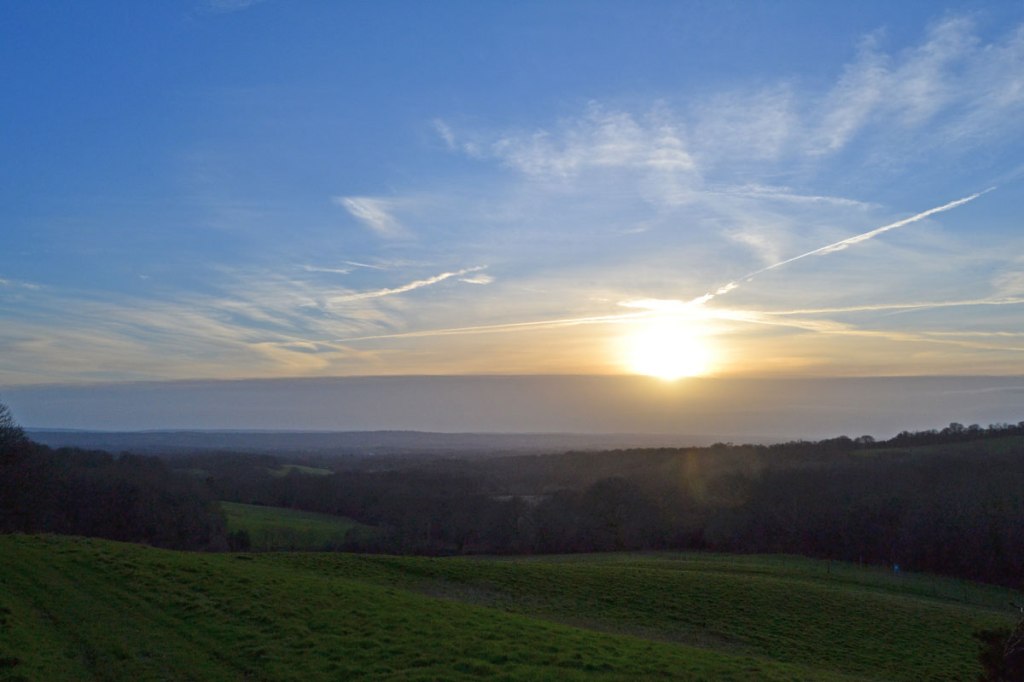
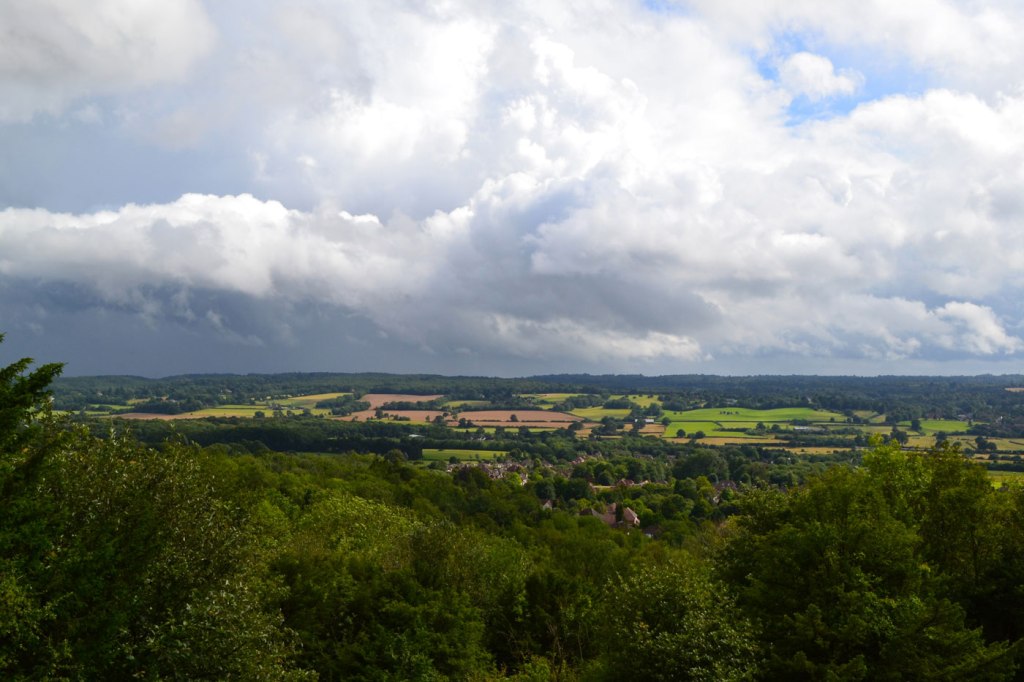
View above Kemsing
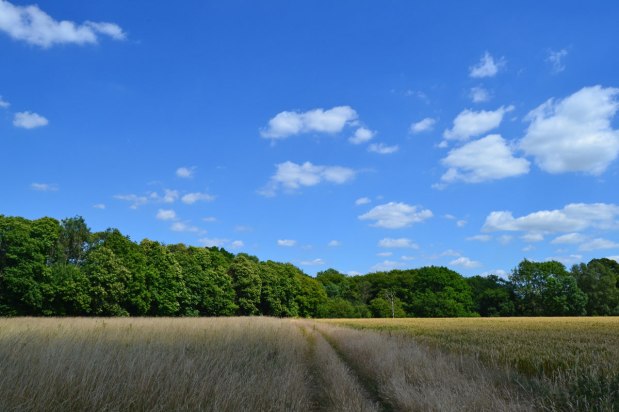
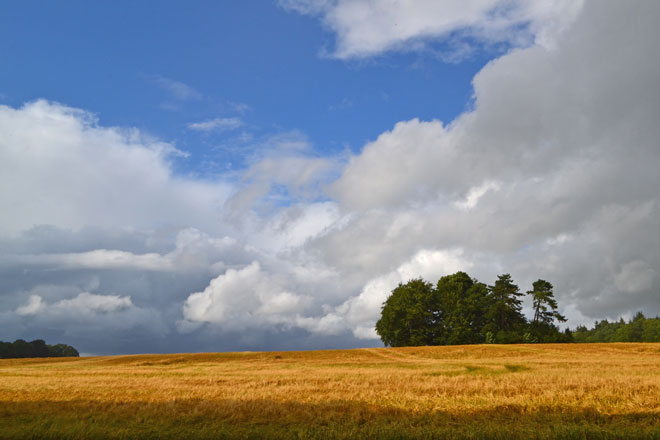
Wheat above Heaverham
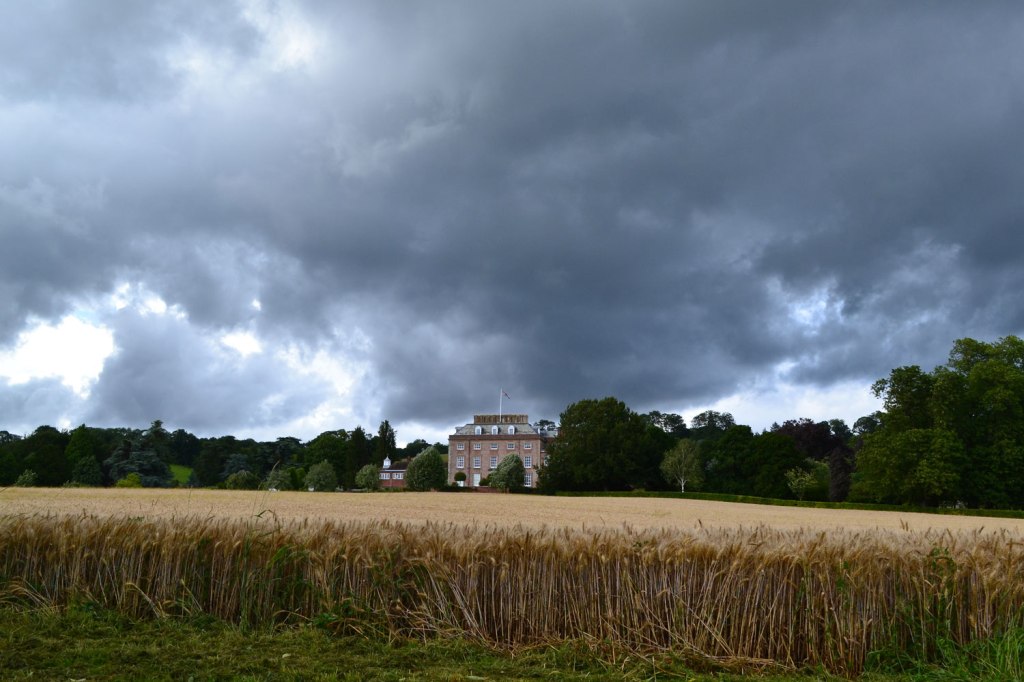
St Clere estate house
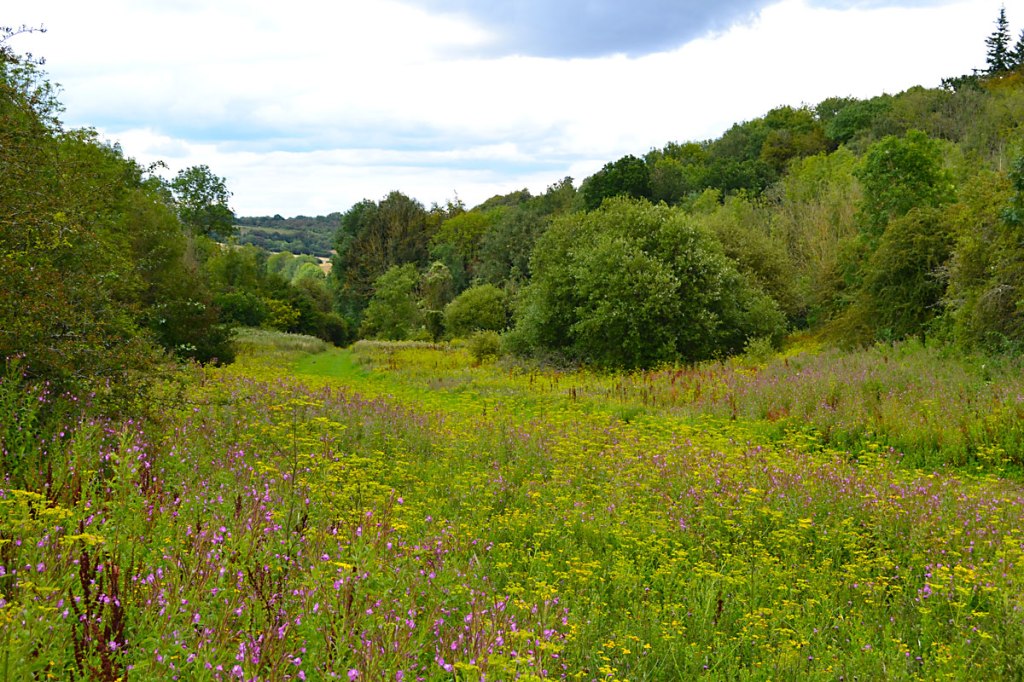
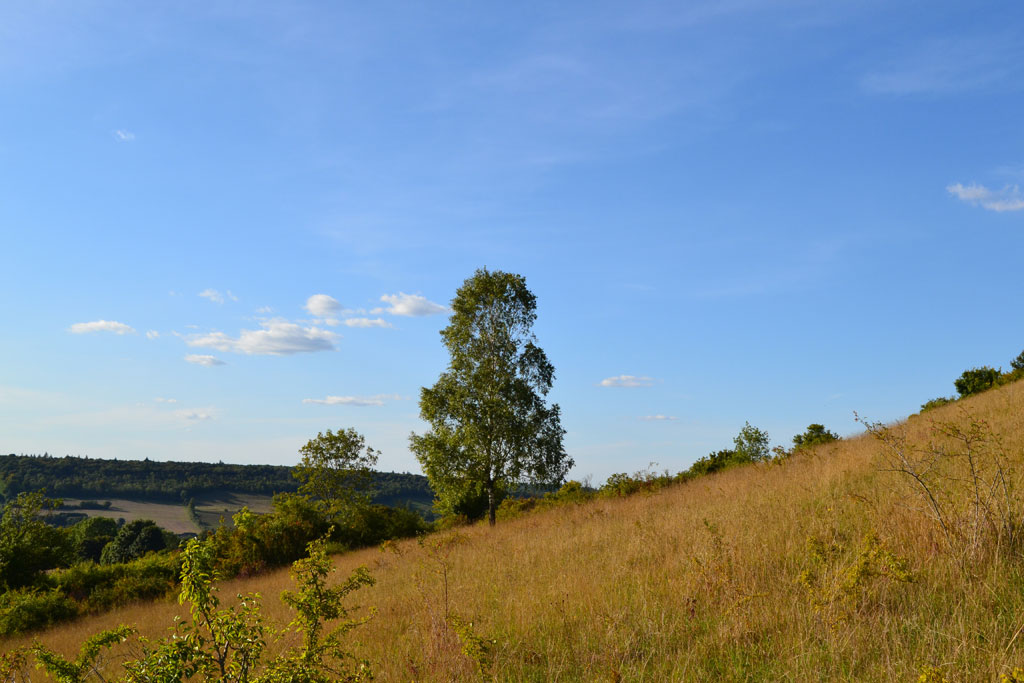
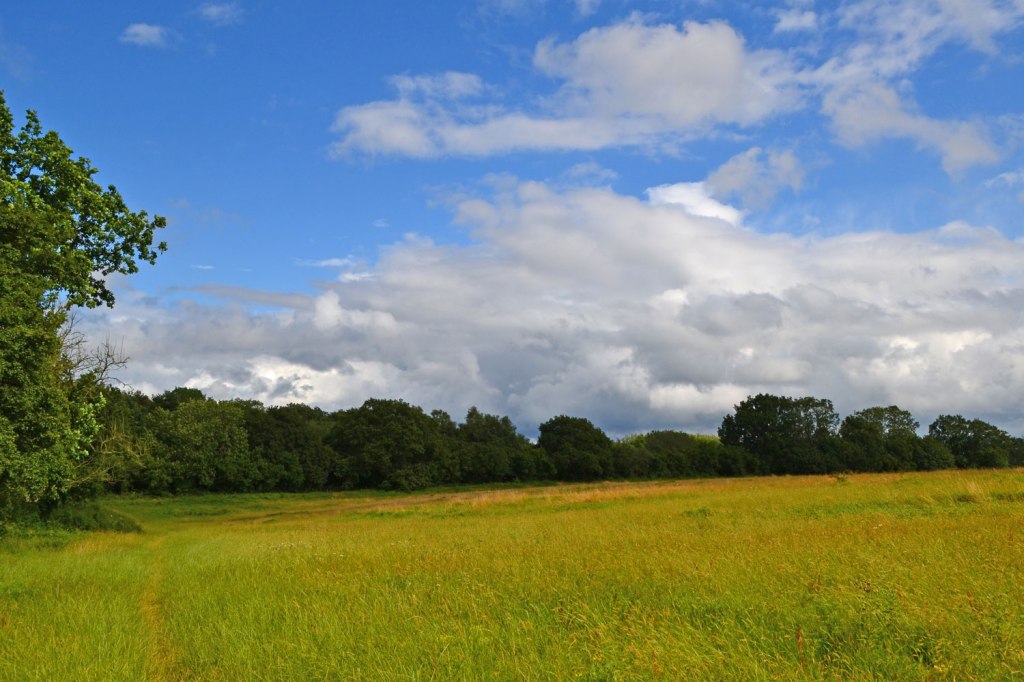
Meadow on North Downs escarpment
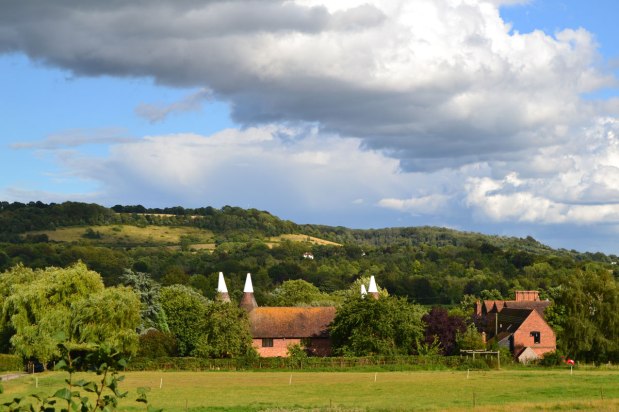
View across to Ightham and Gover Hill from North Downs Way near Kemsing
View above Kemsing. Ragwort in foreground and a grave or commemorative cross in centre of picture
Thanks to Steve for getting me out to walk much of this route recently (and telling me about the friendly pub), and thanks to Will for agreeing to join me on a chaotic romp through the molehills and long grass of the last mile as I attempted to ‘pioneer a route’ on vague footpaths to Kemsing station in a doomed attempt to catch the 17.50.
Find directions for the walk here. In the meantime, if you are confident enough to give it a go without a description, here’s a GPX map, but I’d recommend taking an OS Map. I haven’t been able to embed a Google map for the walk thanks to WordPress’s new restrictive new rules. I’ll do a PDF soon.
For that last awkward bit, cross the M26 by a footbridge (easy to find) then head across a grassy, lumpy field aiming for a stile leading into woods close to the railway line. Immediately after climbing over the wonky stile you will see the foot crossing over the railway lines themselves. Cross then turn left along lovely Honeypot Lane to walk 200 metres to Kemsing station, which is opposite (wait for it) the Chaucer industrial estate.